Bench press form shoulder pain happens when your bar path, grip, and shoulder position fail to share the load across your chest, front delts, and triceps. Benching with proper form keeps your shoulders healthy while you build upper body muscle on a weight bench.
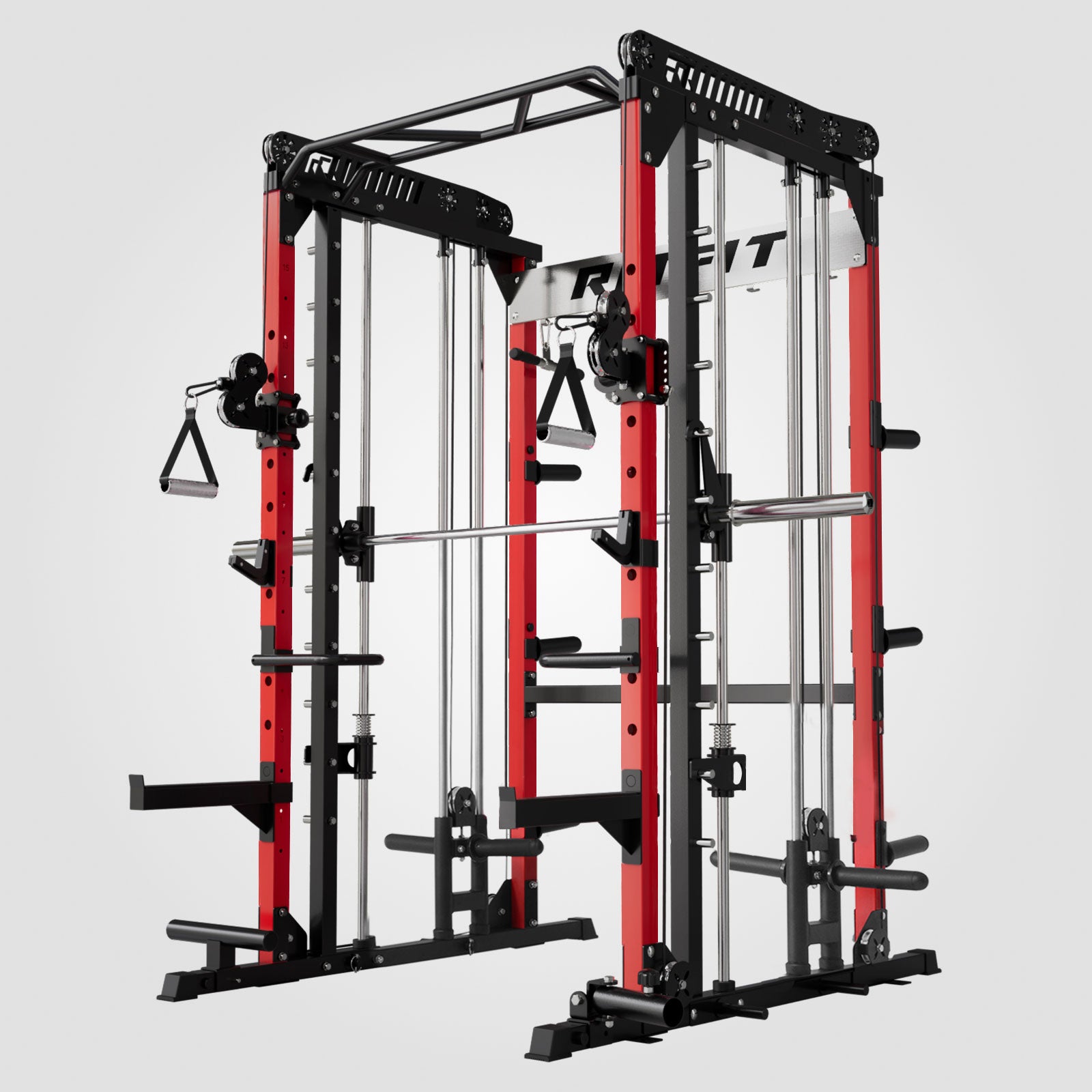
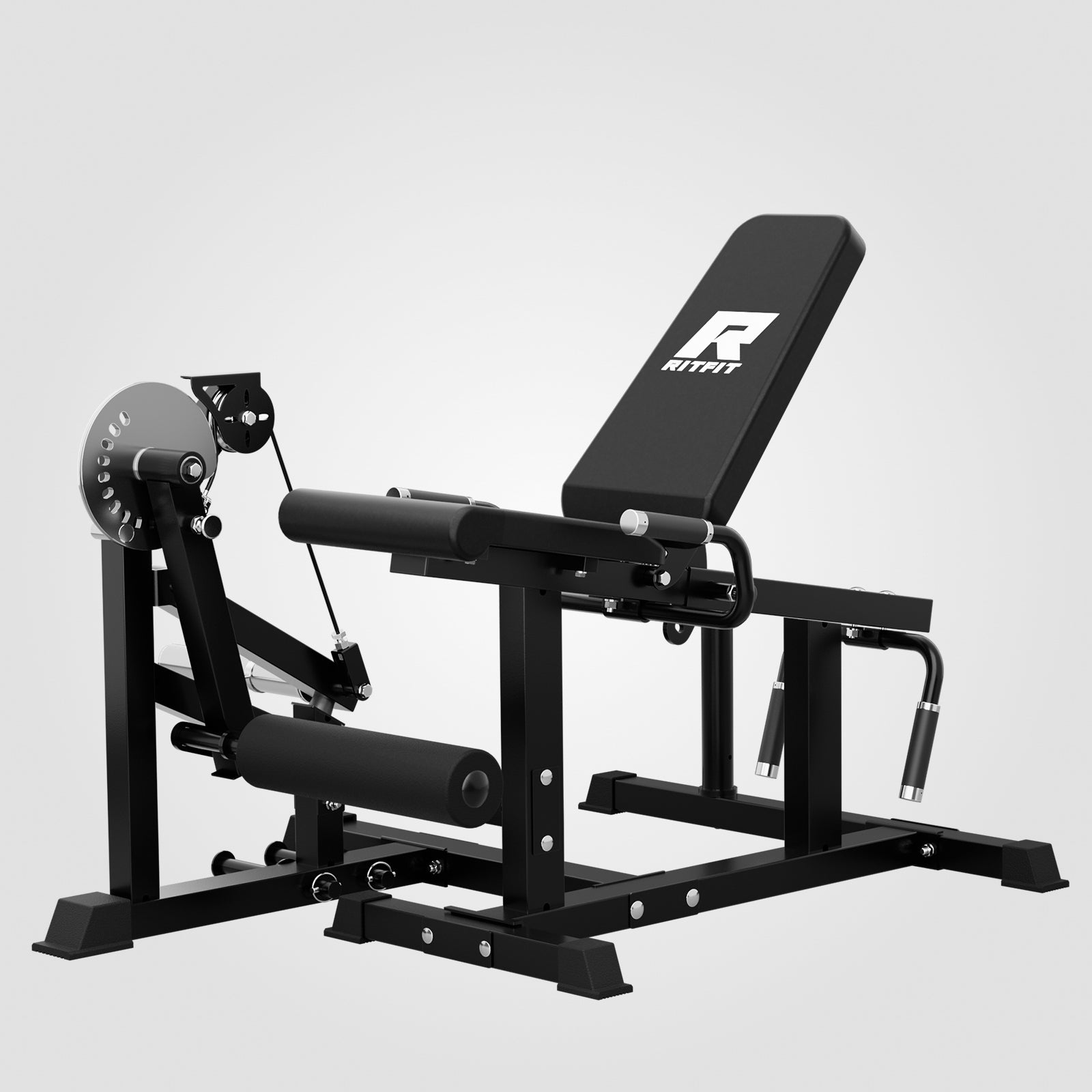
This guide covers the muscles a bench press works, the most common bench press injuries, and the exact setup changes that prevent shoulder pain. You will also learn how a chest and shoulder press machine and a foldable weight bench make pain free benching repeatable at home.
Quick Answer: Bench press form shoulder pain is usually caused by a straight bar path, shoulders that drift forward, or a grip that jams the shoulder joint. Fix the lift by tucking the bar to your lower chest and retracting your shoulder blades, because pain during or after benching signals a form problem, not a strength problem.
Key Takeaways
- Muscles: The bench press targets the pectoralis major, anterior deltoid, and triceps, with the upper and lower pecs driven by bar angle.
- Injury risk: A rotator cuff injury is the leading bench press injury, caused by overloading the bar with poor shoulder position.
- Bar path: A curved bar path that tucks the bar to the lower chest spares the shoulder joint and recruits more chest.
- Setup: Retracted shoulder blades and an arched upper back keep the shoulders externally rotated through the whole rep.
- Pain signal: A burning pain in the shoulder during pressing means stop the set and fix the form before adding weight.
What Muscles Does Bench Press Work?
The bench press works the chest, shoulders, and triceps, with the chest as the main mover. Knowing the exact muscles helps you place the bar and set the angle for pain free pressing.
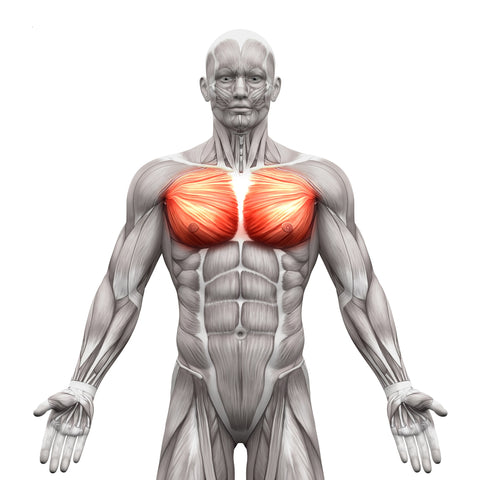
1. Chest Muscles
The pectoralis major is the main chest muscle, with an upper (clavicular) head and a lower (sterna) head. The upper head helps with shoulder flexion, while the lower head assists the arms moving together from the front.
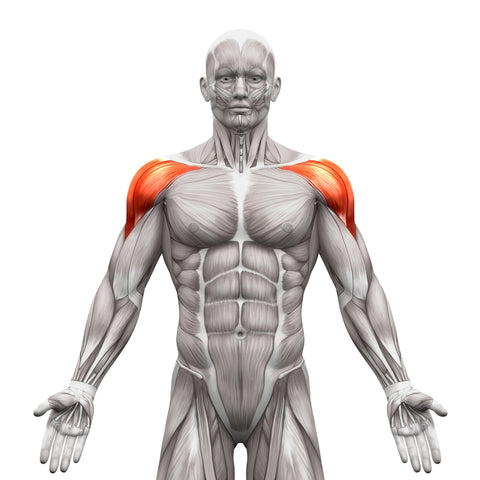
2. Shoulder Muscles
The shoulder has the anterior, medial, and rear deltoid heads. Only the anterior deltoid works as a prime mover in the bench press, which is why front delt fatigue can mask shoulder pain.
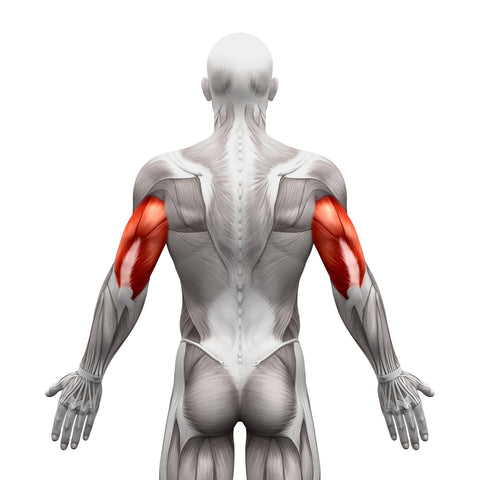
3. Tricep Muscles
The triceps include the medial, lateral, and long head. Only the medial and lateral heads extend the elbow in the bench press, so a narrow grip shifts more work to the triceps and less to the chest.
How Do Common Bench Press Injuries Happen?
Wrong bench press form converts load into joint stress, and the rotator cuff often takes the hit first. The two most common bench press injuries share the same root cause of a locked shoulder position.
1. Rotator Cuff Injury
The rotator cuff is a group of four muscles and tendons that stabilize the shoulder joint during the press. Overloading the barbell with a forward shoulder position crushes the tendons under the acromion.
Improper technique and poor posture turn an acute inflammation into a progressive tendon tear. The safest fix is to check your best bench press form before you add a single plate.
2. Pectoralis Major Tendon Injury
The pectoralis major tendon injury is frequent in weight lifting, usually from losing control of the weight mid rep. Studies show it can take 6 months to resume full activity after the strain.
Lift lighter weights with more repetitions and keep the bar under control at all times. It is pointless to display a big bench total if you end the workout in pain.

How Do You Bench Press Without Shoulder Pain?
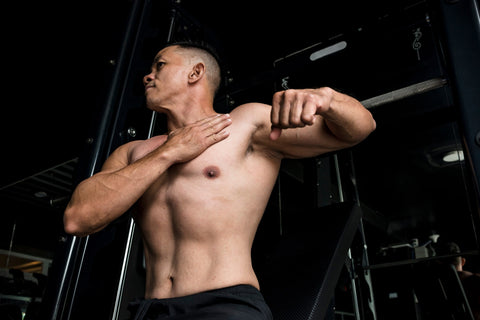
Bench press without shoulder pain starts with a stable setup and a curved bar path that spares the shoulder joint. Fix the three setup points below and the chest takes the load instead of the front delts.
- Set the feet and glutes: Plant your feet and squeeze your glutes so your body stays tense from start to finish.
- Retract the shoulder blades: Pinch them together and down into the bench to protect the shoulder joint through the press.
- Arch the upper back: Leave a small arch under your upper back so your shoulders stay externally rotated and your chest stays tall.
A stable setup lets you press heavier weight with a shorter, safer range of motion. Practice the bench shoulder exercises you can do on a foldable bench to build the support muscles before you load the bar.
"There's a little bit of confusion around what the best angle is for the bench on an incline bench press to hit the upper chest.
It's pretty conclusive.
30 degrees is a really good place for most of us!
"
Jeff Cavaliere, MSPT, CSCS, Physical Therapist and Strength Coach, former Head Physical Therapist for the NY Mets, ATHLEAN-X
What Bench Press Mistakes Cause Shoulder Pain?
Four bench press mistakes cause most shoulder pain, and all four are easy to fix. Correct them one at a time and your pressing will feel smoother within a single session.
Mistake 1: Hips Off the Bench or a Flat Back
Keep your head, shoulders, and hips evenly placed on the bench. Raising your hips shortens the range of motion and puts extra strain on the lower back.
Leave a small space between your lower back and the bench while arching your upper back. This keeps your shoulders externally rotated and safe from the internally rotated position that causes pain.
Mistake 2: Pressing Straight Up and Down
The bar should follow a curved path that tucks to the lower chest, not a straight line from the rack. Lift the bar diagonally back to the starting point to protect the shoulder joint.
Mistake 3: Bouncing the Bar Off Your Chest
Bouncing the bar off your chest to start the press is dangerous and loads the shoulder unpredictably. Always choose a weight you can control through the full movement.
Mistake 4: Letting Your Shoulders Drift Forward
Forward shoulders turn the bench press into a front delt exercise and jam the shoulder joint. Keep your shoulders down, squeeze the blades together, and contract the upper back to support the press.
Warm up your shoulders and avoid these mistakes before you touch a heavy bar. Press inside a RitFit weight bench setup with a spotter or a power rack so a failed rep never lands on your chest.

How Do You Train Chest at Home Without a Spotter?
You can train chest at home without a spotter by using a foldable weight bench with safety features and controlled pressing. A RitFit GATOR adjustable weight bench or a chest and shoulder press machine gives you a safe pressing line without a partner.
Set the bench to a 30 degree incline for upper chest work, the angle that keeps the load off the front delts. Pair the press with chest press vs shoulder press guidance and best incline for your bench press reading to plan smart sessions.
For a full home plan, follow the weight bench workouts for muscle growth without shoulder pain guide on the same foldable bench. A chest and shoulder press machine is another option that keeps both joints stable on fixed paths.
FAQs About Bench Press Form Shoulder Pain
Why does my shoulder hurt when I bench press?
Your shoulder hurts because the bar path or shoulder position forces the joint into an internally rotated position.
Tuck the bar to your lower chest, retract your shoulder blades, and keep your forearms vertical.
If the sharp pain continues, stop the set and check your form before adding weight.
What is the correct bench press form to protect the shoulders?
Correct bench press form starts with feet planted, glutes squeezed, and shoulder blades retracted into the bench.
Keep a slight arch in your upper back and move the bar in a curved path toward your lower chest.
This keeps the shoulders externally rotated and shifts the load to the chest muscles.
How do you fix shoulder pain from bench pressing?
Fix shoulder pain from bench pressing by lowering the weight, retracting the shoulder blades, and pressing in a curved bar path.
Add rotator cuff and rear delt work between sessions to support the joint.
If pain persists for more than a few sessions, see a physical therapist before returning to heavy pressing.
What muscles does a bench press work?
A bench press works the pectoralis major, the anterior deltoid, and the triceps.
The upper and lower pecs respond to the bench angle, while the front delt assists near the top of the press.
A wider grip shifts work to the chest and a narrower grip shifts work to the triceps.
Can I bench press at home without a spotter?
Yes, you can bench press at home without a spotter using a foldable weight bench with safety racks or a chest press machine. A 30 degree incline reduces front delt strain and a fixed path machine removes the risk of a failed rep. Always use a power rack or safety arms if you train alone.
Conclusion
Bench press form shoulder pain is a form problem, not a strength problem, and the fix is a stable setup with a curved bar path.
Retract your shoulder blades, arch your upper back, and press to your lower chest so the chest takes the load.
Warm up the rotator cuff, correct the four common mistakes, and add weight only when the press feels smooth.
Start with a foldable weight bench and light controlled sets at home. Check the full collection at RitFit sales to build a pain free home gym today.
Disclaimer
This article is for general fitness education and does not replace professional medical advice. Stop any exercise that causes sharp pain and consult a physician or physical therapist before returning to training.
References
1. de Castro Pochini A, Andreoli CV, Belangero PS, et al. Clinical considerations for the surgical treatment of pectoralis major muscle ruptures based on 60 cases: a prospective study and literature review. Am J Sports Med. 2014;42(1):95-102. doi:10.1177/0363546513501789. PMCID: PMC4615309
2. Hegmann KT, et al. Rotator cuff disorders. J Occup Environ Med. 2015;57(7):e88-e95. doi:10.1097/JOM.0000000000000405. PMCID: PMC4755800