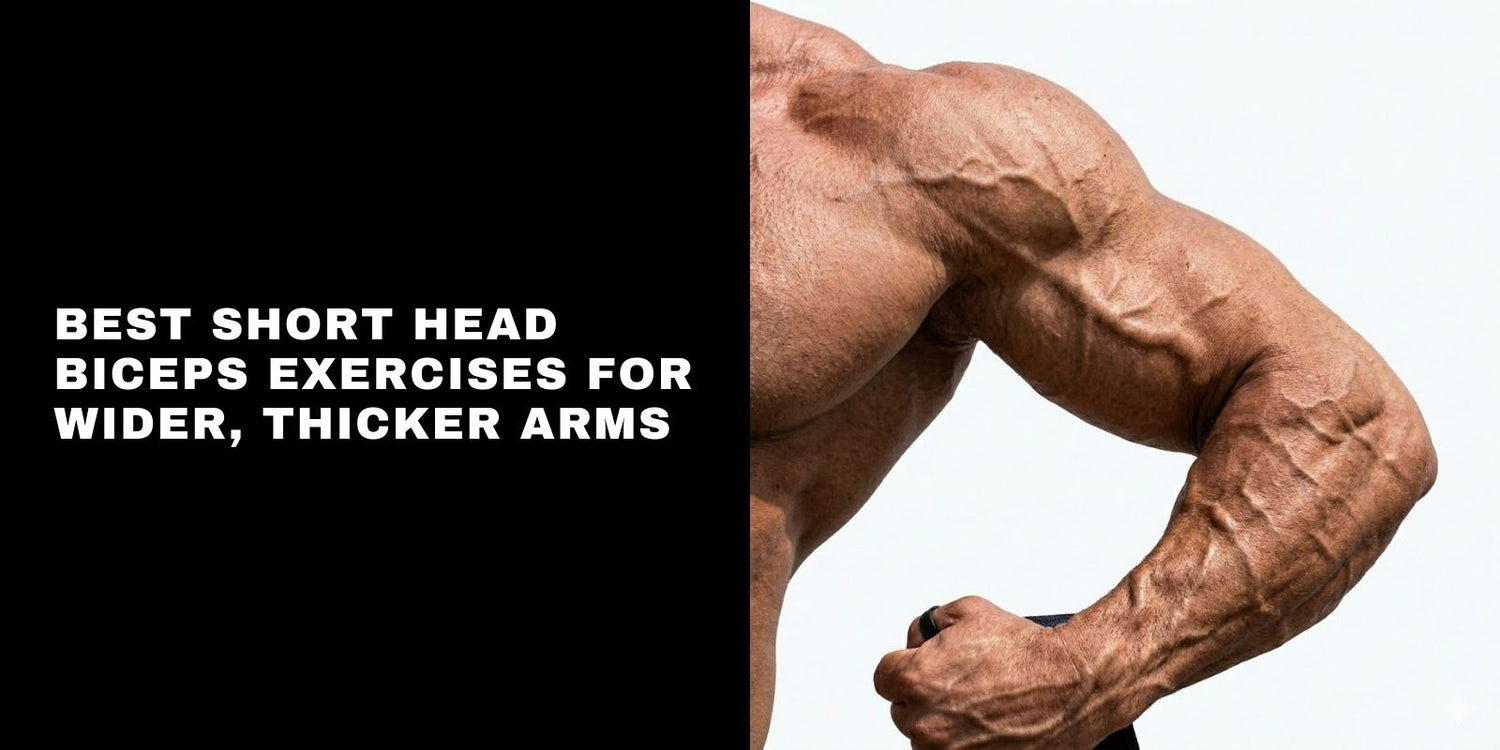
The best short head bicep exercises are wide grip curls, preacher curls, spider curls, concentration curls, and supinating dumbbell curls. These movements can help bias the inner portion of the biceps by using wider grips, elbows forward positions, strong supination, and strict control.
The short head cannot be fully isolated, because both biceps heads work together during curls. This guide shows how to train it more effectively for arm width, better curl form, and safer home gym programming.
Table of Contents
- What Is the Short Head of the Biceps?
- Can You Isolate the Short Head of the Biceps?
- How to Target the Short Head of the Biceps
- Best Short Head Bicep Exercises
- Best Short Head Bicep Exercises by Equipment
- Sample Short Head Bicep Workouts
- Technique, Form, and Progression Tips
- Common Mistakes in Short Head Bicep Training
- Recovery and Injury Prevention
Key Takeaways
- Short head training supports arm width: The short head contributes to the fuller inner arm look, especially when your arm is viewed from the front.
- You cannot fully isolate it: Both biceps heads work during curls, but grip width, elbow position, and supination can shift emphasis.
- Elbows forward can help: Preacher curls, spider curls, and concentration curls often make it easier to feel the inner biceps.
- Control matters more than load: Strict reps, a 2 to 3 second lowering phase, and full palm up finish usually beat heavy swinging.
- Joint comfort decides exercise choice: Use EZ bars, cables, and dumbbells if straight bars irritate your wrists or elbows.
What Is the Short Head of the Biceps?
The short head is the inner head of the biceps brachii, and it helps create a fuller upper arm appearance from the front. It originates from the coracoid process of the scapula, while the long head originates from the supraglenoid tubercle, and both heads join into one muscle belly before inserting near the radius.[1]
- Location: The short head sits on the medial side of the upper arm, closer to the chest.
- Main actions: The biceps helps bend the elbow, rotate the palm up, and assist shoulder movement.
- Visual role: The long head is often linked with peak, while the short head is often linked with width.
- Training reality: Arm shape also depends on genetics, total muscle size, body fat level, and long term consistency.
Can You Isolate the Short Head of the Biceps?
No, you cannot fully isolate the short head because both biceps heads contract during curling movements. You can only bias the short head by changing grip, elbow position, wrist rotation, and equipment choice.
This is why a good short head biceps workout should not chase one magical exercise. It should combine 2 or 3 short head biased curls with smart weekly volume and strict form.
How to Target the Short Head of the Biceps
To target the short head more effectively, use a wider grip, keep the elbows slightly in front of the body, and finish each curl with strong palm up supination. These adjustments can improve the training signal without pretending to fully isolate one biceps head.
- Use a wider grip: A grip slightly wider than shoulder width can help many lifters feel more inner biceps tension.
- Bring elbows forward: Spider curls, preacher curls, and concentration curls place the elbows in front of the torso.
- Supinate hard: Rotate the palm up and think about turning the pinky slightly higher at the top.
- Control the lowering phase: Lower each rep for 2 to 3 seconds to keep tension on the biceps instead of the lower back.
- Keep the shoulder quiet: If the front delt burns more than the biceps, reduce load and keep the ribs down.
Best Short Head Bicep Exercises
The best short head bicep exercises are the ones that keep tension on the inner biceps while allowing pain free, repeatable form. Choose movements that match your equipment, joint comfort, and ability to control the full range of motion.
Wide Grip Barbell Curl
The wide grip barbell curl is a strong mass builder for lifters who can use a straight bar without wrist discomfort. Take a grip slightly wider than shoulder width, keep your elbows stable, and curl without leaning back.
- Best for: Lifters who want a simple short head biased curl with heavier loading potential.
- Form cue: Keep your elbows close to your sides instead of letting them flare outward.
- Common mistake: Do not turn it into a hip swing or lower back extension drill.
- Home gym note: Pair this with a quality barbell setup from the RitFit barbells and weight plates collection if you train arms inside a full strength station.
EZ Bar Wide Grip Curl
The EZ bar wide grip curl is often more wrist friendly than a straight bar while still allowing short head focused hand placement. Use the outer angled grips, keep your wrists stacked, and stop the set before your elbows drift.
- Best for: Lifters who feel wrist pressure during straight bar curls.
- Form cue: Keep the knuckles angled naturally instead of forcing a painful grip.
- Progression: Add load only after you hit the top of your rep range with clean control.
Dumbbell Supinating Curl
The dumbbell supinating curl is one of the best short head bicep exercises for home gyms because it trains elbow flexion and forearm supination together. Start with a neutral grip, rotate palm up early, and squeeze hard at the top.
- Best for: Home gym users with adjustable or fixed dumbbells.
- Form cue: Rotate before the top half of the rep instead of twisting only at the finish.
- Equipment match: Use RitFit dumbbells for curls, rows, presses, and other compact strength work.
- Alternative: If you prefer pairs by weight, consider RitFit rubber hex dumbbells for stable floor storage and repeatable arm workouts.
Spider Curl
The spider curl places the arms in front of the body, which often makes the short head easier to feel. Set your chest against an incline bench, let the arms hang down, and curl without lifting your chest off the pad.
- Best for: Strict form, reduced swinging, and high biceps tension.
- Form cue: Pause for 1 second at the top to remove momentum.
- Equipment match: A stable adjustable bench like the RitFit GATOR adjustable weight bench can support spider curls, incline curls, presses, and rows.
Preacher Curl
The preacher curl keeps the elbows in front of the torso, which makes it a useful short head focused curl when performed carefully. Use a moderate range, avoid hard elbow lockout, and keep the pad height comfortable.
- Best for: Lifters who need a strict curl that limits shoulder cheating.
- Form cue: Stop just before painful extension at the bottom.
- Joint note: If preacher curls bother your elbows, switch to cables or spider curls.
- Equipment match: Browse RitFit weight benches if your arm training needs a more stable setup for chest supported curls.
Cable Wide Grip Curl
The cable wide grip curl gives smooth tension through more of the movement than many free weight curls. Set the pulley low, use a straight or EZ attachment, and curl with elbows still.
- Best for: Lifters who want a joint friendly short head bicep exercise with steady resistance.
- Form cue: Step back slightly so the cable stays loaded at the bottom.
- Equipment match: A home cable station such as the RitFit cable crossover machine can support curls, rows, flyes, pulldowns, and triceps work.
Cable Rope Supinating Curl
The cable rope supinating curl lets the wrists move naturally while keeping cable tension on the biceps. Start with a neutral grip, curl up, split the rope, and finish with palms facing upward.
- Best for: Lifters who want smoother wrist motion than a fixed bar allows.
- Form cue: Pull the rope ends apart at the top and show your palms forward.
- Equipment match: Add variety with RitFit cable machine attachments for curls, pulldowns, rows, and triceps extensions.
High Cable Curl
The high cable curl trains the biceps with the upper arms lifted, creating a different angle from standard curls. Keep your shoulders down, curl toward your head, and avoid shrugging to finish the rep.
- Best for: Pump work, high rep finishers, and cable based arm days.
- Form cue: Keep the elbows high but relaxed instead of forcing the shoulders upward.
- Common mistake: Do not turn the rep into a trap shrug.
Concentration Curl
The concentration curl is a strict dumbbell curl that places the working arm in front of the body. Sit tall, brace the elbow against the inner thigh, and curl with a full palm up finish.
- Best for: Beginners who need to feel the biceps without using heavy weights.
- Form cue: Keep your torso still and let the biceps move the weight.
- Equipment match: Compact options like RitFit PVC coated round dumbbells work well for lighter, controlled curls.
Best Short Head Bicep Exercises by Equipment
The best exercise depends on what you have available and what your joints tolerate. Use this table to choose the most practical short head bicep exercise for your setup.
| Equipment | Best Exercise | Why It Works | Joint Friendly Tip |
|---|---|---|---|
| Dumbbells | Supinating curl | Allows strong palm up rotation | Rotate early and lower slowly |
| Bench | Spider curl | Keeps elbows in front of torso | Keep chest glued to the pad |
| Cable machine | Cable rope curl | Provides smooth, steady tension | Use a pain free wrist angle |
| Curl attachment | Supported bicep curl | Limits body swing and improves control | Start light and avoid hard lockout |
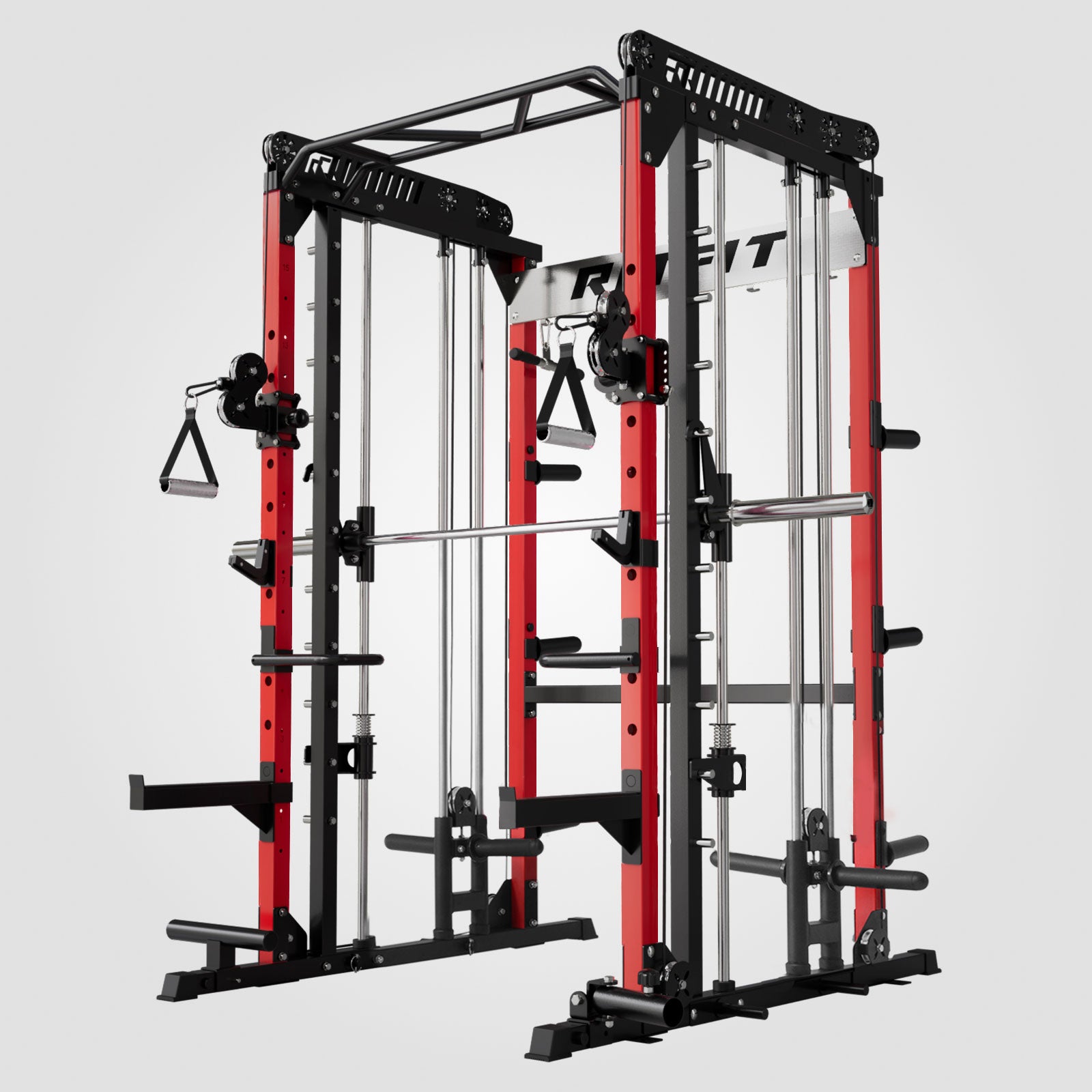
For rack based home gyms, a dedicated attachment can make arm training more stable and repeatable. The RitFit hip thrust and bicep curl attachment is relevant when you want supported curl work inside a power cage setup.
Sample Short Head Bicep Workouts
A short head bicep workout should use enough volume to grow while leaving the elbows and wrists ready for your next pull day. Hypertrophy focused resistance training generally depends on mechanical tension, adequate volume, and progressive overload rather than constant exercise novelty.[2]
Beginner Short Head Biceps Workout
This workout is best for beginners who need strict reps, moderate volume, and simple progression. Use RIR 2 to 3 on every set and rest 90 to 120 seconds between sets.
- Wide grip EZ bar curl: 3 sets of 10 to 12 reps.
- Dumbbell supinating curl: 3 sets of 10 to 12 reps.
- Light preacher curl or cable curl: 2 sets of 12 to 15 reps.
- Progression rule: Add 2 to 5 lb only after all sets hit the top of the rep range with strict form.
Intermediate Short Head Focus Day
This workout is best for lifters who already train biceps regularly and want more inner arm emphasis. Use RIR 1 to 2 on the first exercise and RIR 1 to 3 on the remaining work.
- Wide grip EZ bar curl: 4 sets of 6 to 8 reps.
- Spider curl: 3 sets of 10 to 12 reps.
- High cable curl: 3 sets of 12 to 15 reps.
- Machine or cable preacher curl: 2 sets of 15 to 20 reps.
Home Gym Short Head Biceps Workout
This workout is best for lifters training with dumbbells and a bench. Keep the load moderate and make every rep slow enough that the biceps, not the hips, finish the curl.
- Dumbbell supinating curl: 3 sets of 10 to 12 reps.
- Spider curl on incline bench: 3 sets of 10 to 15 reps.
- Concentration curl: 2 sets of 12 to 15 reps per side.
- Optional finisher: Use one light set of 20 controlled reps if your elbows feel good.
Technique, Form, and Progression Tips
The most effective short head bicep training uses strict reps, repeatable setup, and controlled progression. A 2 to 3 second lowering phase is a practical tempo choice because controlled eccentric work can support strength and hypertrophy without requiring sloppy heavy loads.[3]
- Use double progression: Stay inside the target rep range until every set reaches the top number with clean form.
- Add small loads: Increase by 2 to 5 lb when your reps stay strict and pain free.
- Control the eccentric: Lower the weight smoothly instead of dropping it.
- Keep the wrist stacked: Avoid letting the wrist bend backward or collapse forward.
- Train biceps 1 to 2 times weekly: Most lifters can start with 10 to 14 total weekly biceps sets.
- Use a deload when needed: Cut biceps volume in half for 1 week if elbows feel irritated or progress stalls.
Common Mistakes in Short Head Bicep Training
The most common short head bicep mistake is using too much weight and losing the position that made the exercise useful. If the shoulder, lower back, or forearm takes over, the set is no longer giving the biceps the main training signal.
- Swinging the body: Momentum removes tension from the biceps and makes progression harder to measure.
- Skipping supination: If you never finish palm up, you lose one of the main benefits of dumbbell and rope curls.
- Cutting the range short: Partial reps can be useful, but beginners should first master controlled full reps.
- Letting elbows drift back: Elbows drifting behind the torso can reduce the short head bias you are trying to create.
- Training through sharp pain: Muscle burn is acceptable, but sharp elbow, wrist, or shoulder pain is not.
Recovery and Injury Prevention
Recovery matters because biceps training also stresses the elbow, wrist, and forearm tendons. For elbow related tendon irritation, research and clinical reviews commonly emphasize progressive loading, symptom management, and a broader upper limb approach rather than relying on one painful exercise.[4]
- Warm up first: Use 1 to 2 light sets before heavy curls.
- Use joint friendly tools: Choose EZ bars, cables, or dumbbells when straight bars feel uncomfortable.
- Stop sharp pain early: Reduce load, shorten range, or swap exercises before symptoms escalate.
- Balance pulling work: Rows and pulldowns help distribute upper body training stress beyond curls.
- Manage total volume: More sets only help if you can recover from them.
FAQs
Can you isolate the short head bicep completely?
No. You cannot fully isolate the short head because both biceps heads work during curling. You can bias the short head with wide grips, elbows slightly forward, full palm up supination, and strict form that keeps tension on the inner upper arm.
What are the best short head bicep exercises?
The best short head bicep exercises are wide grip curls, preacher curls, spider curls, concentration curls, and supinating dumbbell curls. These movements place the elbows or grip in positions that often bias the inner biceps while still training the whole biceps muscle.
Is a wide grip curl better for short head biceps?
Yes. A wider grip can help bias short head biceps for many lifters when the wrists and shoulders stay comfortable. It works best with a controlled bar path, stable elbows, full palm up finish, and a load light enough to avoid swinging.
How often should I train short head biceps?
Train short head focused biceps one to two times per week as part of your total arm training. Most lifters can start with 4 to 8 short head biased sets inside 10 to 14 total weekly biceps sets, then adjust based on recovery.
Which dumbbell exercise is best for short head biceps?
Supinating dumbbell curls are the best dumbbell option for short head biceps for most home gym users. Start neutral, rotate the palm up early, squeeze at the top, and lower slowly so the biceps work harder than the forearms.
Do preacher curls hurt elbows during short head bicep training?
Yes. Preacher curls can irritate elbows if you go too heavy, lock out hard, or chase deep ranges that your joints cannot tolerate. Use lighter loads, stop short of painful extension, switch to cables, and reduce volume if discomfort appears.
Can cable curls build the short head bicep?
Yes. Cable curls can build the short head bicep because they provide smooth resistance and consistent tension. Use a straight bar, EZ attachment, or rope, keep elbows stable, finish with strong supination, and choose a weight you can control.
Should I train the long head and short head biceps together?
Yes. Train both heads together because every curl uses the biceps as one working muscle. Pair one short head biased move, such as spider curls, with one long head biased move, such as incline curls, for balanced arm development.
Conclusion
Short head bicep training is not about finding one secret curl. It is about using wide grips, elbows forward positions, strong supination, controlled tempo, and enough weekly volume to build fuller arms while keeping your joints healthy.
Start with one short head focused exercise and one standard curl twice per week. Track reps, add weight slowly, and keep every set strict enough that the biceps stay in control.
Disclaimer
This article is for general fitness education and is not medical advice. If you have current elbow, wrist, shoulder, tendon, or nerve symptoms, consult a qualified healthcare professional or certified fitness professional before changing your training plan.
References
- Landin D, Thompson M, Jackson MR. Actions of the biceps brachii at the shoulder: a review. J Clin Med Res. 2017;9(8):667-670. doi:10.14740/jocmr2901w
- Krzysztofik M, Wilk M, Wojdała G, Gołaś A. Maximizing muscle hypertrophy: a systematic review of advanced resistance training techniques and methods. Int J Environ Res Public Health. 2019;16(24):4897. doi:10.3390/ijerph16244897
- Azevedo PHSM, Oliveira MGD, Schoenfeld BJ. Effect of different eccentric tempos on hypertrophy and strength of the lower limbs. Biol Sport. 2022;39(2):443-449. doi:10.5114/biolsport.2022.105335
- Stasinopoulos D. Lateral elbow tendinopathy: evidence of physiotherapy management. World J Orthop. 2016;7(8):463-466. doi:10.5312/wjo.v7.i8.463