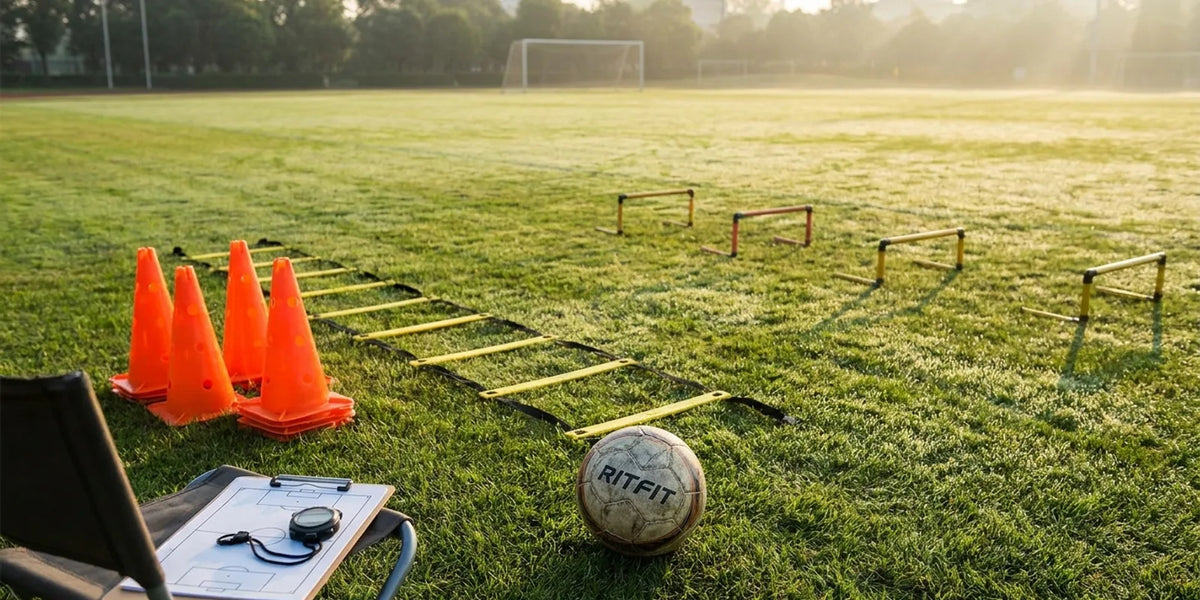
The best soccer conditioning drills for beginners are interval runs, shuttle runs, acceleration sprints, agility drills, dribble intervals, bodyweight circuits, and small sided games. These drills build the stamina, speed, agility, and strength needed to keep playing well late in a match.
Soccer fitness is not just long distance running. Beginners need a balanced plan that trains repeated sprint ability, quick recovery, change of direction, ball control under fatigue, and basic strength.
Key Takeaways
- Soccer conditioning is specific: Beginners need endurance, speed, agility, and strength rather than only steady jogging.
- Intervals build match fitness: Repeated short efforts train the body to recover between sprints and high pressure plays.
- Agility matters every minute: Shuttle runs, T drills, and 5 10 5 drills train cutting, stopping, and restarting.
- Strength supports performance: Squats, lunges, split squats, and Romanian deadlifts help sprinting, balance, and contact resistance.
- Recovery protects progress: Beginners should increase training gradually, sleep well, hydrate, and avoid stacking hard sessions.
Table of Contents
- Quick Answer
- Understanding Soccer Fitness
- Endurance Drills
- Repeated Sprint Drills
- Speed and Acceleration Drills
- Agility and Change of Direction Drills
- Strength Training for Soccer Conditioning
- Plyometric Conditioning
- Soccer Specific Conditioning with the Ball
- Warm Up and Cool Down
- 4 Week Beginner Training Plan
- How to Track Progress
- Nutrition and Recovery
Quick Answer
Beginners should start with 3 to 4 soccer conditioning sessions per week using intervals, shuttle runs, agility drills, ball based conditioning, and basic strength work. The goal is to build an engine that can repeat short bursts, recover quickly, and stay technically sharp when tired.
Understanding Soccer Fitness
Soccer fitness is the ability to repeat high intensity actions while staying coordinated and alert. A beginner plan should train aerobic recovery, anaerobic power, acceleration, agility, functional strength, and movement quality.
- Endurance: This is the ability to recover between hard efforts. It helps beginners stay active late in a match.
- Speed: This is the ability to accelerate over short distances. Most beginner game sprints happen over 5 to 30 meters.
- Agility: This is the ability to stop, cut, pivot, and restart with control. It supports both attacking and defending.
- Functional strength: This is usable strength for sprinting, shielding, jumping, and absorbing contact. It also supports safer movement mechanics.
Endurance Drills
Endurance drills build the base that helps beginners recover between sprints and stay involved for the full game. Start with low to moderate volume before adding more intense intervals.
Drill 1: Steady Running
Steady running builds a basic aerobic base without overwhelming the legs. Run at a conversational pace for 20 to 30 minutes once per week.
- Best for: Beginners who get tired quickly during games or practices.
- How to do it: Keep the pace easy enough to speak in short sentences.
- Beginner volume: Start with 15 to 20 minutes if 30 minutes feels too demanding.
- Common mistake: Do not turn every easy run into a race.
Drill 2: Fartlek Training
Fartlek training teaches beginners to change pace like they would in a real match. Jog for 5 minutes, then alternate relaxed running, fast running, short sprints, and walking for 20 minutes.
- Best for: Players who need better comfort with stop and start running.
- How to do it: Use simple changes such as 20 seconds fast, 40 seconds easy, then 1 minute moderate.
- Beginner volume: Use 15 to 20 total minutes after the warm up.
- Common mistake: Do not sprint every fast section at maximum effort.
Drill 3: 30 Second Intervals
Interval running trains the ability to recover after hard efforts. Sprint or run hard for 30 seconds, then walk or jog for 60 seconds, and repeat 8 to 10 times.
- Best for: Building repeated effort capacity in a simple format.
- Progression: Move from 30 seconds hard and 60 seconds easy to 30 seconds hard and 30 seconds easy.
- Research note: In season HIIT improved conditioning in high school soccer players, which supports interval work as a useful soccer fitness tool [1].
- Common mistake: Do not add more intervals if your sprint form breaks down.
Repeated Sprint Drills
Repeated sprint drills are more game specific than slow distance running because soccer requires many short bursts. Use these drills once or twice per week with at least one easy day between hard sessions.
Drill 4: Shuttle Runs
Shuttle runs build repeated acceleration, braking, and recovery. Mark 5, 10, 15, and 20 yards, then sprint out and back to each line in sequence.
- Best for: Match fitness, defensive recovery runs, and late game stamina.
- Sets: Complete 4 to 6 sets with 60 to 90 seconds of rest.
- Technique cue: Lower your hips before each turn and push the ground away.
- Common mistake: Do not stand upright during turns.
Drill 5: Pyramid Sprints
Pyramid sprints train short, medium, and longer sprint efforts in one drill. Sprint to 20 meters and back, then 40 meters and back, then 60 meters and back, before working back down.
- Best for: Players who need better sprint endurance across different distances.
- Sets: Complete 2 to 3 pyramids with 3 minutes of rest.
- Intensity: Use strong but controlled effort rather than all out sprinting on every run.
- Common mistake: Do not rush the recovery between pyramids.
Drill 6: 30 30 Intervals
30 30 intervals are a simple way to build anaerobic capacity. Run hard for 30 seconds, jog for 30 seconds, and repeat 8 to 12 times.
- Best for: Beginners who want a clear and repeatable conditioning format.
- Progression: Add 2 reps every 1 to 2 weeks until you can complete 15 to 20 reps.
- Safety cue: Keep the hard effort around 80 to 85 percent instead of full speed.
- Common mistake: Do not use this drill on sore legs after heavy strength training.
Speed and Acceleration Drills
Soccer speed is mostly about the first few steps. Beginners should practice short, high quality sprints with enough rest to stay explosive.
Drill 7: Standing Start Sprints
Standing start sprints improve first step acceleration. Start from a still position and sprint 20 meters with maximum focus on the first 5 meters.
- Best for: Winning loose balls, chasing passes, and closing down opponents.
- Sets: Complete 6 to 8 sprints with 60 to 90 seconds of rest.
- Technique cue: Lean forward slightly and drive the arms aggressively.
- Common mistake: Do not shorten the rest so much that speed drops.
Drill 8: Flying Starts
Flying starts train acceleration when you are already moving. Jog through a 20 meter build up zone, then sprint through a 20 meter speed zone.
- Best for: Overlapping runs, through balls, and attacking transitions.
- Sets: Complete 4 to 6 sprints with 90 seconds of rest.
- Technique cue: Stay tall in the sprint zone and keep the stride smooth.
- Common mistake: Do not start the sprint too early in the build up zone.
Drill 9: Reaction Sprints
Reaction sprints train decision speed and acceleration together. Have a partner move or pass the ball in any direction, then sprint to reach it before it stops.
- Best for: Loose ball reactions, pressing, and defensive recovery.
- Sets: Complete 8 to 10 reps with 45 to 60 seconds of rest.
- Progression: Add a dribble or pass after reaching the ball.
- Common mistake: Do not guess the direction before the ball moves.
Agility and Change of Direction Drills
Agility drills train the body to slow down, cut, and restart safely. Good agility work should emphasize control before speed.
Drill 10: Ladder Footwork
Ladder drills develop quick feet, rhythm, and coordination in tight spaces. Use patterns such as in and out steps, lateral shuffles, single leg hops, and icky shuffle variations.
- Best for: Beginners who need better foot coordination and balance.
- Sets: Complete 3 sets per pattern with 30 seconds of rest.
- Technique cue: Keep the chest tall and land lightly.
- Common mistake: Do not look down the whole time if it makes posture collapse.
Drill 11: T Drill
The T drill trains forward sprinting, lateral shuffling, and backward movement. Place cones in a T shape, sprint forward, shuffle across the top, return to center, then backpedal to start.
- Best for: Defenders, midfielders, and players who need better multi direction movement.
- Sets: Complete 4 to 6 sets with 60 seconds of rest.
- Technique cue: Keep the hips low during lateral shuffles.
- Common mistake: Do not cross the feet during the shuffle phase.
Drill 12: 5 10 5 Shuttle
The 5 10 5 shuttle trains fast 180 degree changes of direction. Start at the middle cone, sprint 5 yards to one side, touch the line, sprint 10 yards across, touch, then sprint back through the middle.
- Best for: Cutting, pressing, and recovering after being beaten.
- Sets: Complete 4 to 6 sets and alternate the starting direction.
- Technique cue: Plant the outside foot firmly and push out of the cut.
- Common mistake: Do not reach with a straight leg into the turn.
Strength Training for Soccer Conditioning
Strength training helps beginners sprint, cut, jump, shield the ball, and resist fatigue. Soccer strength should focus on the legs, hips, trunk, and upper body control.
Reviews of soccer strength training suggest that well planned strength work can support physical capacity in players, especially when combined carefully with endurance training [2]. Beginners should start with controlled technique before adding heavier loads.
Bodyweight Strength Circuit
A bodyweight circuit is the safest entry point for most beginners. Complete 2 to 3 rounds with smooth technique and 60 to 90 seconds of rest between rounds.
- Squats: Perform 12 to 15 reps with the chest tall and feet flat.
- Walking lunges: Perform 8 to 10 reps per leg with a controlled step.
- Push ups: Perform 8 to 12 reps, using an incline variation if needed.
- Plank: Hold 20 to 40 seconds while keeping the ribs and hips aligned.
- Glute bridges: Perform 12 to 15 reps and squeeze the glutes at the top.
- Burpees: Perform 6 to 8 reps only if landing control stays clean.
Weighted Strength Training
Weighted strength training should begin after bodyweight movements feel stable and pain free. Use light to moderate loads and progress slowly.
- Back squats: Train the quads, glutes, trunk, and total lower body force.
- Romanian deadlifts: Train the hamstrings, glutes, and hip hinge mechanics used in sprinting.
- Bulgarian split squats: Train single leg strength and balance for soccer specific movement.
- Dumbbell lunges: Build leg strength with a practical balance demand.
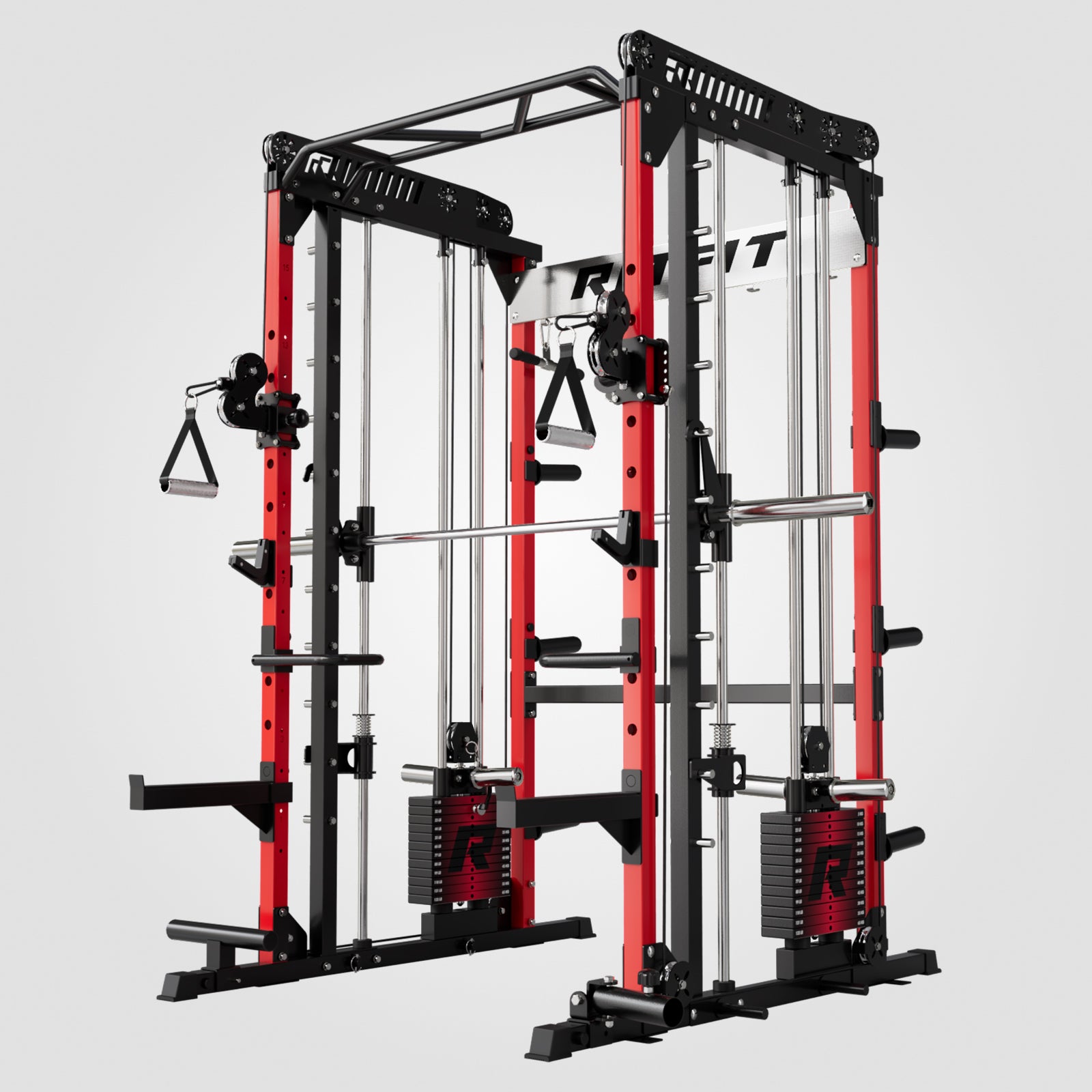
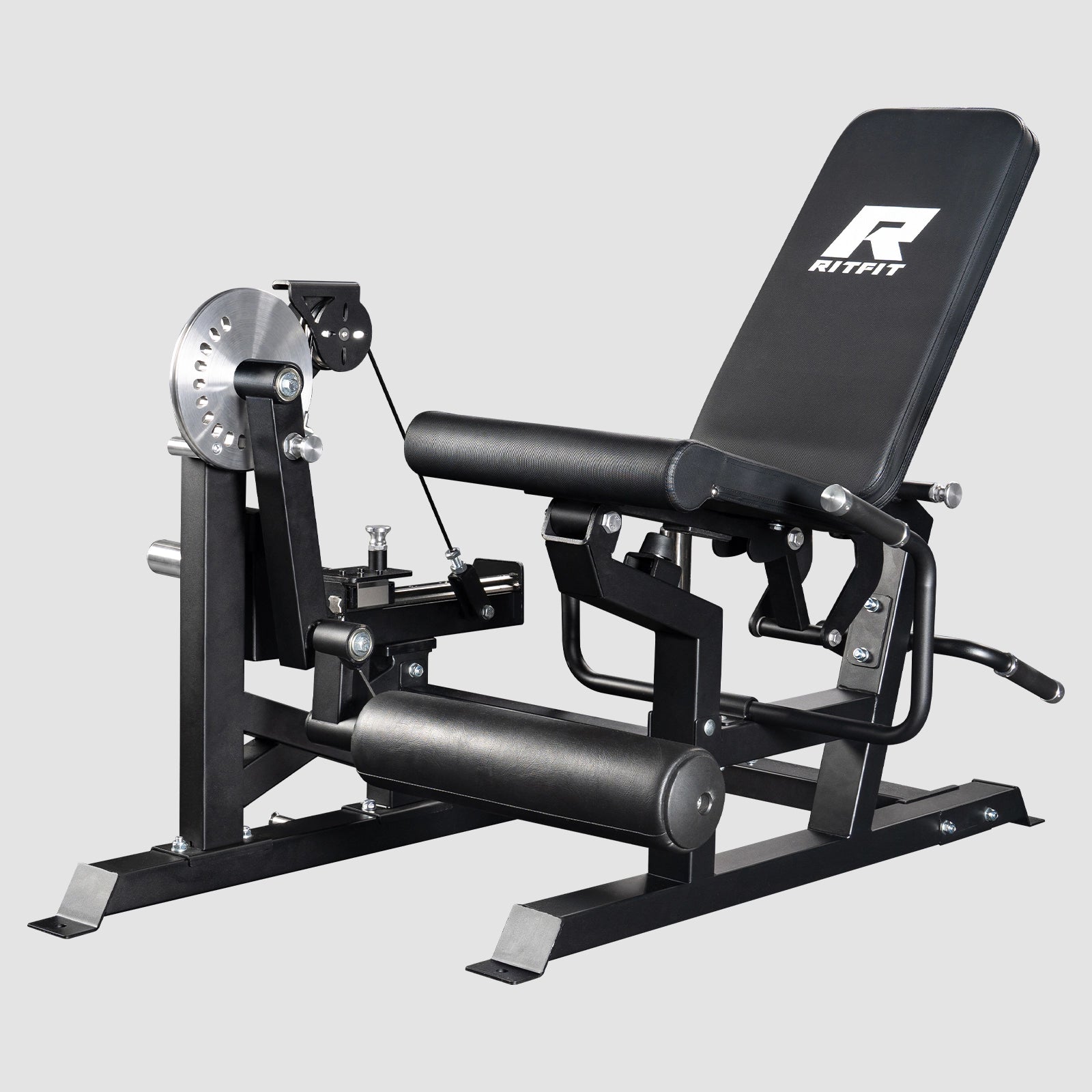
For home training, a stable rack and bench can make soccer strength work easier to repeat safely. Beginners can explore RitFit power racks and cages, the RitFit GATOR Adjustable Weight Bench, and RitFit dumbbells to support squats, split squats, lunges, and core training.
Plyometric Conditioning
Plyometrics train the body to produce force quickly. Beginners should use low volume, soft landings, and at least 48 hours between intense jump sessions.
Plyometric Circuit
This circuit develops explosive power for sprinting, jumping, and changing direction. Perform 2 to 3 rounds and stop if landings become loud or unstable.
- Squat jumps: Perform 6 to 8 reps and land softly.
- Box jumps: Perform 4 to 6 reps on a low, stable box.
- Lateral bounds: Perform 5 to 6 reps per side and stick the landing.
- Tuck jumps: Perform 5 to 6 reps only if the knees track cleanly.
- Single leg hops: Perform 6 to 8 short hops per leg with control.
Combined plyometric and short sprint training has been shown to improve athletic performance measures in male U19 soccer players, supporting the value of controlled jump and sprint work for soccer conditioning [5]. A RitFit 3 in 1 Soft Foam Plyo Box can help beginners start box jumps at a manageable height.
Soccer Specific Conditioning with the Ball
Ball based conditioning is valuable because it trains fitness and skill together. Use these drills after beginners understand the running patterns without the ball.
Drill 13: Dribble Intervals
Dribble intervals build conditioning while challenging touch quality under fatigue. Dribble fast for 30 seconds, then jog dribble for 60 seconds, and repeat 8 to 10 times.
- Best for: Ball control when tired.
- Technique cue: Keep the ball close enough to take the next touch quickly.
- Progression: Add a turn or pass at the end of each fast section.
- Common mistake: Do not let the ball run too far ahead during the sprint phase.
Drill 14: Continuous Possession Game
Continuous possession trains game fitness in a competitive setting. Play 5 v 5 or 6 v 6 in a compact grid for 8 to 10 minutes with immediate transitions after each turnover.
- Best for: Conditioning, decision making, scanning, and technical speed.
- Setup: Use a 25 by 35 yard grid when space allows.
- Research note: Meta analysis suggests small sided games and HIIT can both support soccer related fitness outcomes, so beginners can use both formats across a training week [4].
- Common mistake: Do not make the grid too large for beginners.
Drill 15: Conditioning Circuit with Ball
A mixed circuit combines running, agility, power, and ball control. Use 45 seconds of work and 15 seconds to change stations for 3 to 4 rounds.
- Station 1: Sprint dribble for 20 yards and return under control.
- Station 2: Complete lateral shuffles through cones without the ball.
- Station 3: Complete squat jumps or step ups with soft landings.
- Station 4: Play a 20 second 1 v 1 against a passive defender.
Warm Up and Cool Down
A proper warm up prepares the body for sprinting, cutting, and jumping. A proper cool down helps beginners shift into recovery and notice early warning signs.
Dynamic Warm Up
Use a 10 minute dynamic warm up before every conditioning session. FIFA 11+ based warm up research has reported reduced injury odds and lower injury severity in soccer players, which supports structured preparation before training [3].
- Light jog: Move easily for 3 to 5 minutes.
- Dynamic mobility: Use leg swings, hip circles, arm circles, and ankle bounces.
- Movement prep: Add high knees, butt kicks, side shuffles, and carioca.
- Build up sprints: Complete 3 short strides at about 70 to 80 percent effort.
Cool Down
Use a 10 minute cool down after hard sessions. Walk or jog lightly, stretch the major lower body muscles, breathe slowly, and hydrate.
- Easy movement: Walk or jog for 3 to 5 minutes.
- Static stretching: Hold gentle stretches for hamstrings, quads, calves, hip flexors, and glutes.
- Breathing: Take 5 to 10 slow breaths to lower arousal.
- Hydration: Drink water and consider electrolytes after long or hot sessions.
4 Week Beginner Soccer Conditioning Plan
This 4 week plan builds volume gradually so beginners can improve without doing too much too soon. Adjust the number of reps if soreness, poor sleep, or joint discomfort increases.
Week 1: Build the Base
Week 1 should feel controlled and technical. Use 3 sessions focused on easy running, basic agility, and bodyweight strength.
- Session 1: Steady run for 15 to 20 minutes plus core work.
- Session 2: Ladder footwork, T drill practice, and bodyweight circuit.
- Session 3: Dribble intervals for 6 to 8 rounds plus stretching.
Week 2: Add Repeated Efforts
Week 2 introduces more soccer specific conditioning. Use 3 to 4 sessions with one full rest day after the hardest session.
- Session 1: 30 second intervals for 8 rounds.
- Session 2: 5 10 5 shuttle, ladder drills, and light strength work.
- Session 3: Fartlek running for 20 minutes.
- Optional session: Easy technical ball work only.
Week 3: Add Speed and Power
Week 3 adds acceleration and low volume plyometrics. Keep sprint quality high and stop jump work before fatigue changes landing mechanics.
- Session 1: Standing start sprints and shuttle runs.
- Session 2: Strength circuit with squats, lunges, planks, and glute bridges.
- Session 3: Plyometric circuit and dribble intervals.
- Session 4: Small sided game or possession session.
Week 4: Make It Game Specific
Week 4 combines running, agility, strength, and ball based conditioning. Use this week to test progress without turning every session into maximum effort.
- Session 1: 30 30 intervals for 10 to 12 rounds.
- Session 2: T drill, 5 10 5 shuttle, and controlled strength training.
- Session 3: Conditioning circuit with ball for 3 to 4 rounds.
- Session 4: Game day, pickup game, or continuous possession.
Home gym strength sessions can stay simple and efficient. Use adjustable benches for single leg strength work, barbells and weight plates for progressive lower body training, and rubber gym flooring mats to create a safer training surface.
How to Track Progress
Progress tracking helps beginners know whether conditioning is working. Test only once every 2 to 4 weeks so training does not become constant testing.
- 20 meter sprint: Track first step acceleration and short sprint speed.
- 5 10 5 shuttle: Track change of direction and braking control.
- 30 30 completion: Track how many quality reps you can complete without form collapse.
- Heart rate recovery: Track how quickly breathing settles after a hard interval.
- Ball control under fatigue: Track whether your first touch stays clean late in drills.
Nutrition and Recovery
Training creates the stimulus, but recovery creates the improvement. Beginners should keep nutrition simple, consistent, and matched to training demands.
Carbohydrates
Carbohydrates are useful fuel for high intensity soccer activity. Choose rice, oats, pasta, potatoes, fruit, and whole grains around harder sessions.
Protein
Protein supports muscle repair after conditioning and strength work. Most beginners should spread protein across meals rather than relying on one large serving.
Hydration
Hydration affects energy, focus, and heat tolerance. Drink water regularly and use electrolytes when sessions are long, hot, or sweat heavy.
Sleep
Sleep is one of the most important recovery tools for beginners. Aim for consistent sleep and reduce training intensity when sleep quality is poor.
Rest Days
Rest days help the body adapt to hard training. Use at least 1 to 2 rest or active recovery days each week.
Common Beginner Mistakes
Most beginner conditioning mistakes come from doing too much intensity too soon. The goal is steady improvement, not exhaustion after every session.
- Only jogging: Long jogging can help the base, but it does not fully train sprinting, cutting, and fast recovery.
- No warm up: Skipping movement preparation increases the risk of poor sprint and cutting mechanics.
- Too many hard days: Stacking intervals, plyometrics, and heavy legs without rest can increase soreness and reduce performance.
- Poor landing control: Plyometrics should stop when landings become loud, stiff, or unstable.
- No strength work: Weak legs and trunk muscles can limit acceleration, balance, and contact tolerance.
Frequently Asked Questions
What are the best soccer conditioning drills for beginners?
The best soccer conditioning drills for beginners are interval runs, shuttle runs, T drills, ladder footwork, dribble intervals, bodyweight circuits, and small sided games. These drills build endurance, acceleration, change of direction, balance, and ball control without requiring advanced equipment or a full team practice setup.
How many times per week should beginners do soccer conditioning?
Beginners should do soccer conditioning three to four times per week. This gives enough practice to improve stamina and speed while leaving recovery time for muscles, joints, and the nervous system, especially when sessions include sprints, agility drills, or plyometric jumps.
Can soccer conditioning drills be done at home?
Yes. Soccer conditioning drills can be done at home with cones, a ball, a small open space, and basic strength equipment. Short shuttle runs, ladder patterns, bodyweight circuits, dumbbell lunges, split squats, and core work can all support match fitness when space is limited.
Should beginners do long distance running for soccer fitness?
Beginners can use some steady running, but it should not be the whole program. Soccer requires repeated bursts, quick recovery, acceleration, and direction changes, so interval runs, shuttle sprints, agility drills, and ball based conditioning are usually more game specific.
How long does it take to improve soccer stamina?
Most beginners can notice better soccer stamina within three to four weeks of consistent training. Larger improvements in repeated sprint ability, agility, and late game energy usually require eight to twelve weeks, especially when training volume increases gradually and recovery is respected.
What strength exercises help soccer conditioning the most?
The most useful strength exercises for soccer conditioning are squats, lunges, Romanian deadlifts, split squats, glute bridges, calf raises, planks, and push ups. These movements train the legs, hips, trunk, and upper body control needed for sprinting, cutting, shielding, and absorbing contact.
How do beginners avoid injury during soccer conditioning?
Beginners avoid injury by warming up, increasing volume gradually, using proper footwear, and keeping hard sessions separated by recovery days. Sharp pain, joint pain, dizziness, or pain that worsens during training should be treated as a stop signal, not something to push through.
What equipment do I need for beginner soccer conditioning?
You need very little equipment for beginner soccer conditioning. A ball, cones, comfortable shoes, water, and a clear training space are enough to start, while dumbbells, an adjustable bench, a plyo box, and a power rack can expand strength training options at home.
Conclusion
Soccer conditioning for beginners should be progressive, specific, and balanced. Start with intervals, shuttle runs, agility drills, basic strength work, and ball based conditioning, then build volume slowly over several weeks.
The best results come from consistency rather than punishment. Train hard on planned days, recover well, track progress, and use strength equipment only when technique is stable and controlled.
Disclaimer: This article is for general educational purposes only and is not medical advice. Beginners, youth athletes, and anyone with pain, injury, dizziness, heart concerns, or a medical condition should consult a qualified coach or healthcare professional before starting a new conditioning program. Stop training if sharp pain, unusual shortness of breath, or worsening joint discomfort occurs.
References
- Howard N, Stavrianeas S. In-Season High-Intensity Interval Training Improves Conditioning In High School Soccer Players. Int J Exerc Sci. 2017;10(5):713-720.
- Silva JR, Nassis GP, Rebelo A. Strength training in soccer with a specific focus on highly trained players. Sports Med Open. 2015;1(1):17. doi:10.1186/s40798-015-0006-z
- Nuhu A, Jelsma J, Dunleavy K, Burgess T. Effect of the FIFA 11+ soccer specific warm up programme on the incidence of injuries: A cluster randomised controlled trial. PLoS One. 2021;16(5):e0251839. doi:10.1371/journal.pone.0251839
- Kunz P, Engel FA, Holmberg HC, Sperlich B. A Meta-Comparison of the Effects of High-Intensity Interval Training to Those of Small-Sided Games and Other Training Protocols on Parameters Related to the Physiology and Performance of Youth Soccer Players. Sports Med Open. 2019;5:7. doi:10.1186/s40798-019-0180-5
- Aloui G, Souhail H, Hayes LD, Bouhafs EG, Chelly MS, Schwesig R. Effects of Combined Plyometric and Short Sprints Training on Athletic Performance of Male U19 Soccer Players. Front Psychol. 2021;12:714016. doi:10.3389/fpsyg.2021.714016