Living in a tiny apartment does not mean giving up a serious home gym. The best space-saving solutions for home gyms combine foldable, adjustable, and wall-mounted equipment so a full-body setup fits in a corner and disappears between sessions.
This guide covers the minimum footprint you need, the compact equipment that earns its square footage, a simple measuring plan, and the RitFit machines that deliver the most versatility per square foot. It also flags the mistakes that waste space in small apartments.
Quick Answer: The best space-saving solutions for home gyms in tiny apartments rely on foldable benches, adjustable dumbbells, wall-mounted bars, and compact multi-functional machines. With roughly a six by six foot training zone, you can cover squat, press, pull, and hinge work and store everything vertically when you finish.
Key Takeaways
- Minimum footprint: A roughly six by six foot zone supports a full-body setup when every piece folds, stacks, or mounts to the wall.
- Best equipment types: Foldable benches, adjustable dumbbells, wall-mounted bars, and resistance bands replace bulky fixed gear.
- Versatility per square foot: A compact multi-functional machine packs squat, press, and cable movements into one footprint.
- Plan before you buy: Measure doorways and ceiling height, then mark the layout with tape before ordering.
- Proven at home: Home-based training programs improved leg power in a pilot study, even with no specialist equipment.
What is the minimum space you need for a home gym in a tiny apartment?
A complete home gym works in roughly a six by six foot open area when you choose equipment that folds, stores vertically, or mounts to the wall. This footprint is enough to deploy a folding bench, adjustable dumbbells, and resistance bands for a full-body session.
- Zero dedicated space: A doorway pull-up bar, adjustable dumbbells stored under a bed, and resistance bands in a drawer let you train in any open six by six foot area.
- Permanent machine footprint: A compact multi-functional machine needs about a seven by seven foot zone with ceiling clearance for overhead presses.
- Storage is the plan: Every piece returns to a closet, wall, or corner after training, so the room stays liveable between workouts.
A pilot study found that a four-week home-based training program improved leg power by 16.9 percent in older adults with no specialist equipment.[1] In practice, this means the gap between a tiny apartment gym and a full facility is smaller than it looks, provided you train consistently.
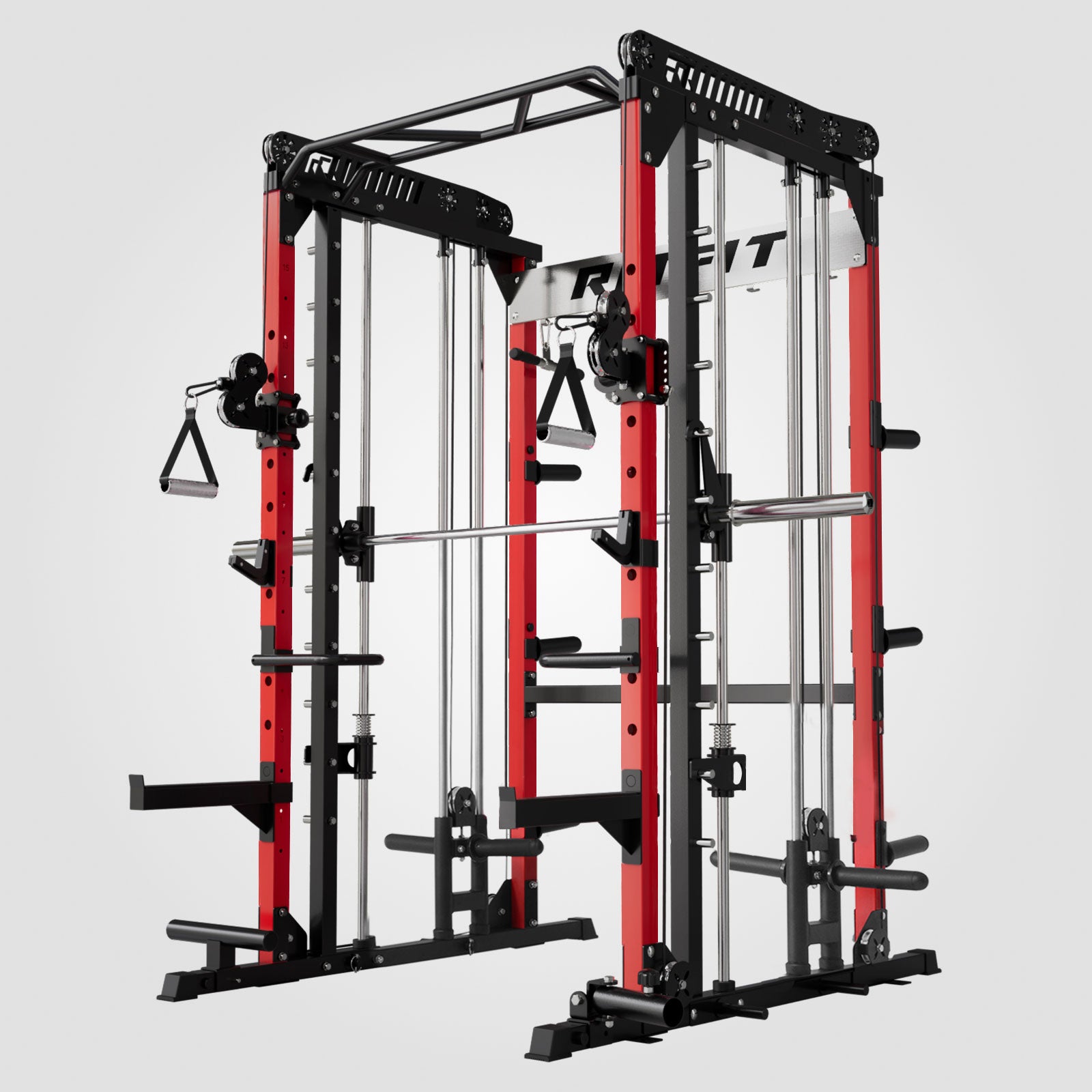
If you want a single machine anchor, start with a compact RitFit M1 Multi-Functional Home Gym Smith Machine that keeps the footprint tight.
Why foldable, adjustable, and wall-mounted equipment wins in a small footprint
Foldable, adjustable, and wall-mounted equipment wins in a small footprint because it compresses storage to a fraction of its deployed size. This approach turns one square foot of floor space into many usable pieces of gear.
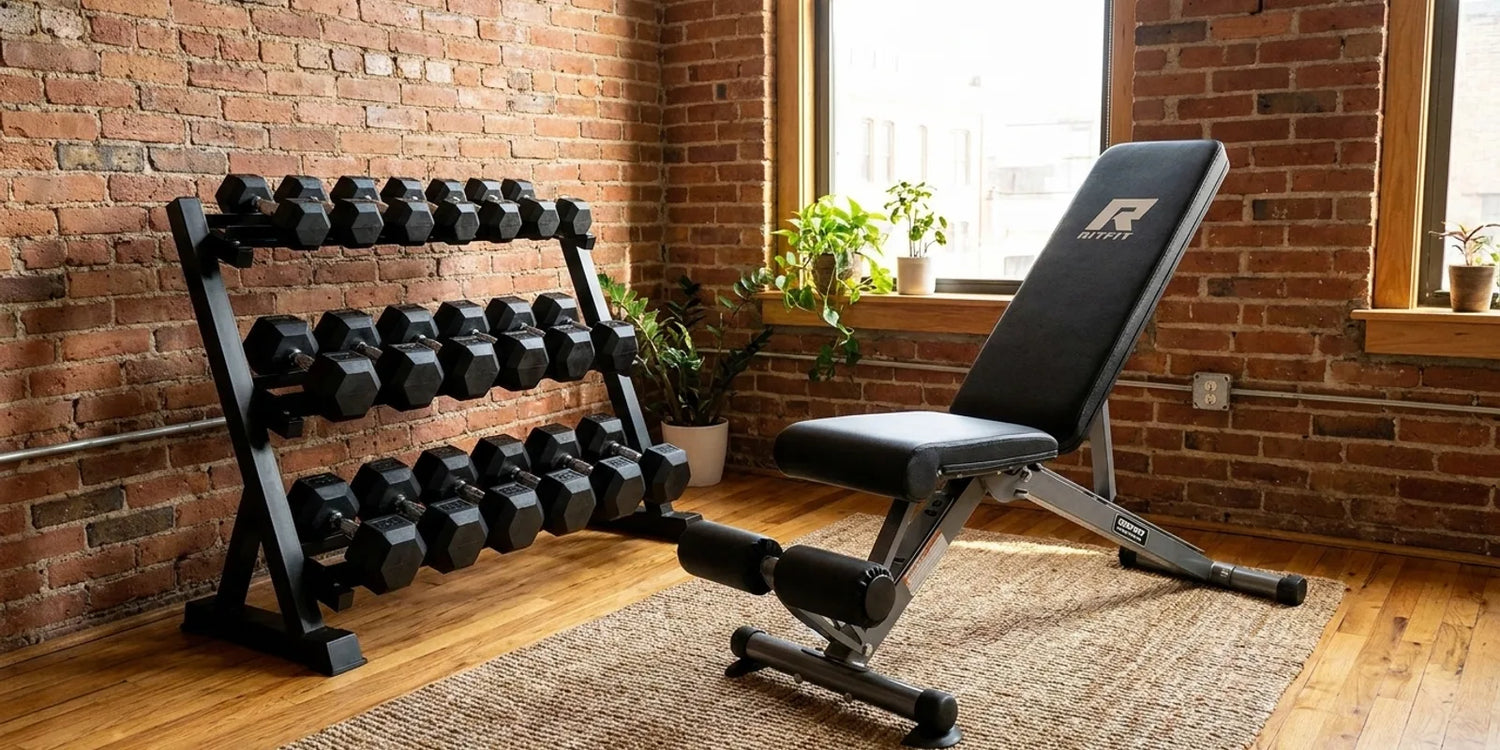
- Adjustable dumbbells: One pair replaces an entire rack of fixed dumbbells in the footprint of a single pair, and it lets you progress weight in small steps.
- Foldable benches: A folding bench stores upright against a wall and covers pressing, rowing, and core work without a permanent footprint.
- Wall-mounted bars and racks: Pull-up bars and fold-down racks take zero floor space when not in use, and they bolt to wall studs for a safe anchor.
For apartment dwellers this category-first approach matters more than chasing the largest machine. Browse the adjustable dumbbells collection to see how one compact pair can replace a full weight rack.
"If your space is limited, a good set of adjustable dumbbells might be your better option. They will allow you to progress to heavier weight as you get stronger."
Jeff Cavaliere, MSPT, CSCS, Physical Therapist and Strength Coach, ATHLEAN-X
What are the best compact and multi-functional machines for small spaces?
The best compact and multi-functional machines for small spaces combine a smith machine, a cable system, and accessory stations in one frame, so a single unit replaces several single-purpose pieces. This is the highest versatility-per-square-foot approach for a tiny apartment.
- All-in-one smith machines: A guided bar path plus cable handles covers squat, press, row, and pull movements in one footprint, ideal for a corner gym.
- Compact power cages: A cage with a built-in pull-up bar serves as a squat rack, bar storage, and attachment platform in one unit.
- Package deals: A machine plus bench and plates bundle keeps the count of separate purchases low, which also keeps storage simple.
For a tight corner, the RitFit BPC06 All-In-One Smith Machine Home Gym Package consolidates the core stations into one unit, while the Ritfit Home Gym Package M1 Smith Machine bundles the essentials for a first-time apartment setup. The video below shows how a space-saving smith machine fits into a small training area and stores cleanly when you are done.
How do you measure and plan your apartment gym layout?
The best way to plan an apartment gym layout is to measure the room, record each machine's deployed and stored footprint, then mark the layout with tape on the floor before you order. This sequence prevents buying equipment that will not fit through the door or in the room.
- Measure the room: Record the length, width, and ceiling height in inches, plus the width of every doorway and hallway the equipment must pass through.
- Add clearance: Leave at least 12 inches around a bench or barbell for pressing movements, and confirm overhead lifts clear the ceiling.
- Tape the layout: Lay out each footprint with painter's tape so you can walk the space and test the flow before spending money.
Treat every square foot as planned real estate. The Home Gym Guide walks through room-by-room setups, so you can match the layout to the machine instead of the other way around.
Which RitFit machines deliver the most versatility per square foot?
RitFit machines that deliver the most versatility per square foot are compact all-in-one units such as the M1 Smith Machine, plus smaller accessory machines that add a movement without adding much floor. The right pick depends on how much room you have and which movements matter most.
| RitFit Machine | Best for | Space profile |
|---|---|---|
| M1 Multi-Functional Smith Machine | Squat, press, fly, and cable rows | Compact all-in-one, one footprint |
| P3 Power Cage 1200 lbs | Barbell lifts with a pull-up bar | Rack footprint with more attachments |
| BPC06 All-In-One Smith Machine | Tight corners wanting one unit | All-in-one package |
| BE01 Back Extension Machine | Hinge and core accessory work | Smallest footprint |
Compare within the RitFit product line to match a machine to your available floor space.
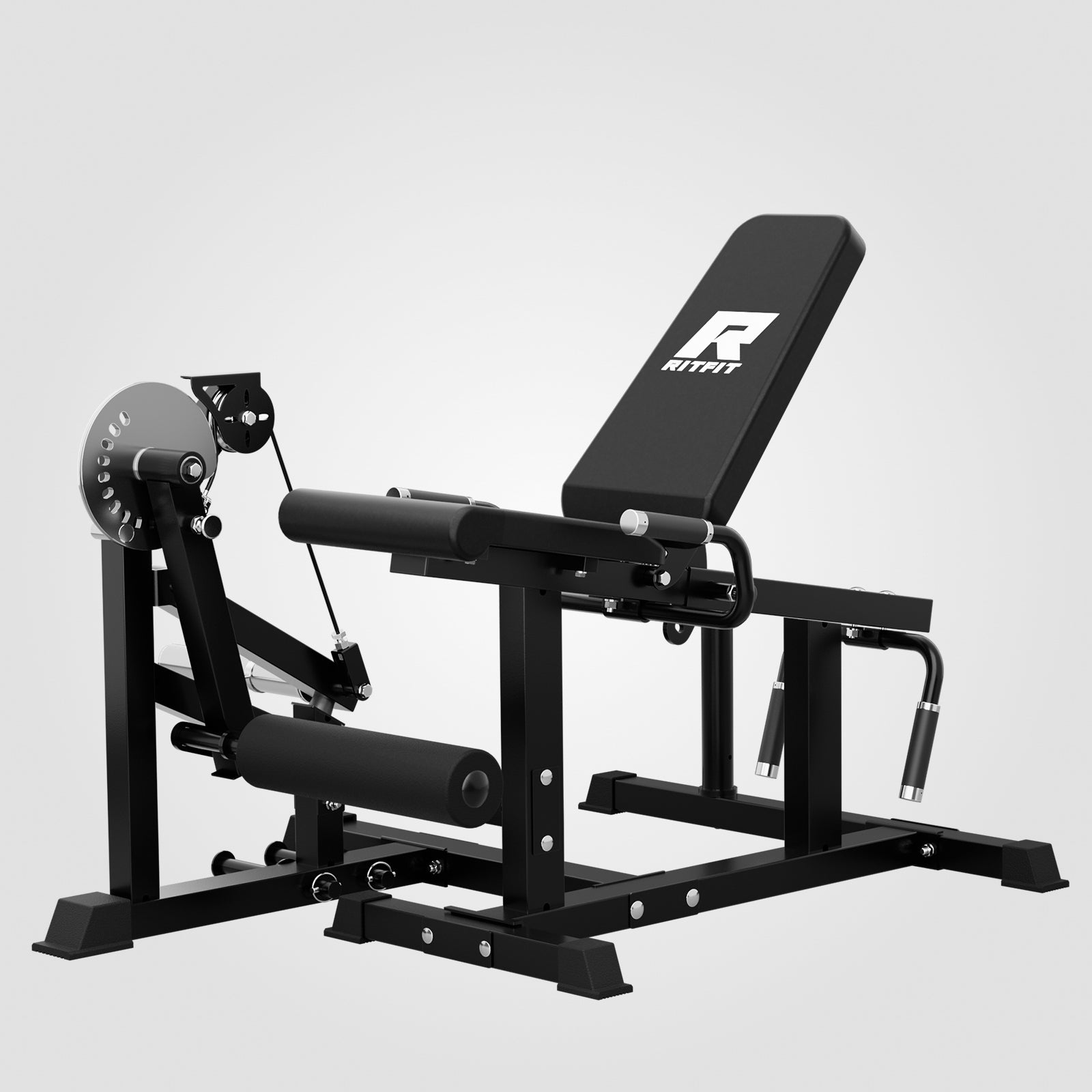
Pair your main machine with a compact accessory unit. The RitFit BE01 Adjustable Back Extension Machine adds hinge and core work in a small footprint, while the Ritfit Home Gym Package Psr05 Smith Machine suits a slightly different layout.
For powerful lower-body work, a compact jump box fits the same tight space. A 2023 study found that box jumps reduced peak impact force by roughly 51 percent compared to countermovement jumps,[2] which is useful when neighbors live below, and a clinical review found that plyometric programs of 6-24 weeks consistently improved vertical jump height.[3]
What are the most common mistakes people make with small home gyms?
The most common mistake in a small home gym is buying permanent, oversized equipment that consumes floor space for a single modality and cannot move when you relocate. The fix is to make every purchase earn its footprint.
- Full-size cardio machines: A treadmill or elliptical can dominate a room for one modality, while a compact stepper, jump rope, or walking pad serves a tiny apartment better.
- Fixed dumbbell racks: Ten pairs of fixed dumbbells need a wall, but one adjustable pair replaces them in a fraction of the space.
- Mounting to drywall: Wall-mounted racks and bars must bolt into wall studs, never drywall, or they can pull away under load.
- Ignoring ceiling height: Overhead presses and pull-ups need clearance, so measure the ceiling before you buy a tall rack.
Budget for the long game by starting with one compact anchor and adding smaller accessories over time. A cage such as the RitFit P3 Power Cage 1200 lbs Home Gym Package gives you rack, pull-up bar, and attachments in one unit, which is easier to grow with than a collection of single-purpose machines.
FAQs About Space-Saving Solutions for Home Gyms
Can you build a real home gym in a tiny apartment?
Yes, a functional home gym can fit in a corner of a small apartment.
Choose equipment that folds, stores vertically, or mounts to the wall, such as adjustable dumbbells, a folding bench, and a compact machine.
Home-based training studies show real strength gains with minimal gear, so consistency matters more than floor space.
What is the smallest space that still allows a complete workout?
Roughly a six by six foot area lets you deploy a folding bench, adjustable dumbbells, and resistance bands for a full-body session.
Everything returns to storage afterward, so the corner becomes a gym only when you train.
For a permanent machine footprint, plan for at least seven by seven feet with overhead clearance.
Are adjustable dumbbells really better than a fixed set for small spaces?
Yes for most apartment setups.
One adjustable pair replaces an entire rack of fixed dumbbells in a fraction of the floor space.
It also lets you add weight in small steps as you get stronger, supporting progressive overload without buying new pairs.
Pair them with a folding bench for pressing, rows, and curls.
What equipment should you avoid in a tiny apartment gym?
Avoid permanent, oversized pieces such as full-cage power racks, large cardio machines, and fixed dumbbell racks with many pairs.
They consume floor space for a single modality and are hard to move if you relocate.
Choose one versatile multi-functional machine plus adjustable and folding tools instead, so every square foot serves more than one purpose.
Can you use a multi-functional smith machine safely in an apartment?
Yes, when you respect the space and the floor.
Confirm the ceiling height clears overhead exercises, place impact-absorbing mats under the machine, and avoid dropping loaded weights onto shared floors.
Wall-mounted and compact all-in-one designs keep the footprint small while giving guided bar paths for squats, presses, and rows in a rental-friendly way.
How do you measure your apartment before buying equipment?
Measure the planned training area in inches, including door clearance and ceiling height.
Write down the footprint of each machine when deployed and when stored, then add 12 inches of clearance around a bench or bar for pressing.
Mark the layout on the floor with tape before ordering.
What is the safest way to set up a home gym in a shared or rental space?
Keep the setup rental-friendly and protect shared spaces.
Use impact-absorbing mats under heavy equipment, bolt wall-mounted bars into studs, and avoid dropping loaded weights on upper floors.
Confirm ceiling height clears overhead presses, and keep gear compact so it stores away and does not block doorways or common areas.
Conclusion
A tiny apartment can hold a complete, consistent strength setup when every piece of gear earns its square footage. Foldable benches, adjustable dumbbells, wall-mounted bars, and a compact multi-functional machine cover the major movement patterns and store away between sessions, which is the real test of any space-saving home gym.
Start by measuring your training zone, taping out the layout, and choosing one versatile machine that fits the footprint you actually have. Compare current packages on the RitFit sales page to find a space-saving setup that stays inside your budget.
Disclaimer
This guide is for general informational purposes and does not replace professional medical or training advice, especially if you have a pre-existing injury or condition. Consult a qualified healthcare provider before starting any new exercise program, and always follow the manufacturer's safety instructions for equipment installation and use.
References
1. Maden-Wilkinson TM, et al. A 4-week, lifestyle-integrated, home-based exercise training program elicits improvements in physical function and lean mass in older men and women: a pilot study. Physiological Reports. 2017. PMCID: PMC5680536
2. Janikov MT, Pádecký J, Doguet V, Tufano JJ. Countermovement, hurdle, and box jumps: data-driven exercise selection. J Funct Morphol Kinesiol. 2023;8(2):61. PMCID: PMC10204452
3. Manske R, Riemann BL. Current concepts of plyometric exercise. Int J Sports Phys Ther. 2015;10(6):760-786. PMCID: PMC4637913