








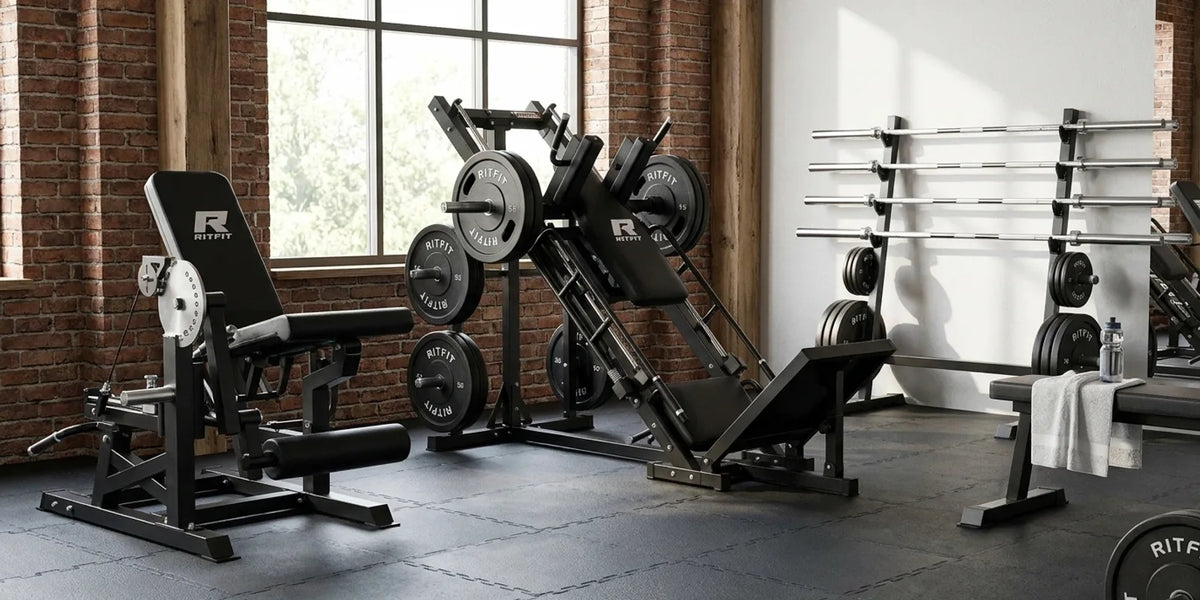
The best way to build leg muscle is to train your quads, hamstrings, glutes, and calves with progressive overload, enough weekly volume, and consistent recovery. A complete plan should combine heavy compound lifts, targeted isolation exercises, smart home gym equipment, protein rich nutrition, and safe form.
This guide explains the best leg exercises, sets, reps, training frequency, equipment options, and recovery habits for stronger legs at home.
Key Takeaways
- Train every major leg muscle: Build balanced legs by training quads, hamstrings, glutes, calves, adductors, and abductors.
- Use progressive overload: Add weight, reps, sets, control, or range of motion over time.
- Combine compound and isolation work: Squats, leg presses, lunges, hinges, curls, extensions, and calf raises all serve different roles.
- Train legs two to three times weekly: Most lifters grow better with repeated weekly stimulus and enough recovery between hard sessions.
- Choose equipment by movement pattern: A home gym should cover squat, press, hinge, curl, extension, and calf raise patterns.
What Is the Best Way to Build Leg Muscle?
The best way to build leg muscle is to train hard enough to challenge the muscles, then recover well enough to adapt. Research shows that resistance training prescription should consider load, sets, and frequency because these variables all affect strength and hypertrophy outcomes.[1]
For most home gym lifters, the practical formula is simple. Train legs two or three times per week, use mostly 6 to 15 reps, keep one or two reps in reserve on most sets, and track your progress.
Which Leg Muscles Should You Train?
To build bigger legs, you need more than squats alone. Complete leg development requires direct work for the front, back, inner, outer, and lower parts of the legs.
| Muscle Group | Main Function | Best Exercise Types |
|---|---|---|
| Quadriceps | Straightens the knee and drives squat power | Squat, leg press, hack squat, leg extension |
| Hamstrings | Bends the knee and extends the hip | Romanian deadlift, leg curl, hip hinge |
| Glutes | Extends the hip and supports lower body power | Hip thrust, squat, lunge, split squat |
| Calves | Raises the heel and supports ankle strength | Standing calf raise, seated calf raise, leg press calf raise |
| Adductors and Abductors | Stabilize the hips and control thigh movement | Wide stance squat, lateral lunge, hip abduction, hip adduction |
Best Exercises to Build Leg Muscle
The best leg muscle exercises cover both heavy loading and targeted muscle tension. Use the list below to build a complete lower body plan instead of relying on one movement.
Squats
Squats are one of the best exercises for building quads, glutes, and overall lower body strength. Use a barbell, dumbbells, or a Smith machine depending on your space, experience, and safety needs.
Leg Press
The leg press is excellent for loading the quads and glutes while reducing balance demands. Home gym owners can explore a dedicated RitFit GAZELLE PRO 3 In 1 Leg Press and Hack Squat Machine when they want machine based lower body training.
Hack Squat
The hack squat keeps the movement more guided and can help lifters emphasize the quads. It is especially useful for people who want a machine based squat pattern without balancing a free bar.
Romanian Deadlift
The Romanian deadlift builds the hamstrings and glutes through a hip hinge pattern. Keep the spine neutral, push the hips back, and stop before your lower back takes over.
Bulgarian Split Squat
The Bulgarian split squat builds quads, glutes, balance, and single leg strength. An adjustable bench such as the RitFit GATOR Adjustable Weight Bench can support rear foot elevated work in a home gym.
Leg Extension
The leg extension trains the quadriceps directly and is useful after heavier compound exercises. For home isolation work, the RitFit PLC01 Leg Extension Curl Machine helps cover both knee extension and leg curl patterns.
Leg Curl
The leg curl directly trains the hamstrings through knee flexion. This matters because Romanian deadlifts train the hamstrings mainly through hip extension.
Calf Raise
Calf raises build the gastrocnemius and soleus when performed with full range and control. Use higher reps, pause at the top, and stretch under control at the bottom.
How Many Sets and Reps Build Leg Muscle?
Most lifters should start with 10 to 16 hard working sets per major lower body muscle group each week. Trained lifters may need more volume, and one study in trained men found higher volume produced greater hypertrophy than lower volume protocols.[2]
For hypertrophy, use 6 to 12 reps for heavy compound movements and 10 to 20 reps for isolation exercises. Load can be heavy, moderate, or lighter if the set is challenging and performed with strong control.[3]
| Training Goal | Best Rep Range | Rest Time | Good Exercise Choices |
|---|---|---|---|
| Strength and muscle | 5 to 8 reps | 2 to 3 minutes | Squat, hack squat, leg press |
| Muscle growth | 8 to 12 reps | 90 to 150 seconds | Leg press, split squat, Romanian deadlift |
| Isolation and pump | 12 to 20 reps | 60 to 90 seconds | Leg extension, leg curl, calf raise |
How Often Should You Train Legs for Growth?
Most people build leg muscle best by training legs two times per week. Three weekly lower body sessions can also work if each session is managed carefully and recovery stays strong.
A beginner can start with one quad focused day and one hamstring and glute focused day. An intermediate lifter can add a lighter pump session for calves, leg extensions, and leg curls.
Beginner Leg Muscle Workout Plan
This beginner plan trains the main leg muscles without excessive volume. Start with conservative loads and add reps before adding weight.
| Exercise | Sets | Reps | Main Focus |
|---|---|---|---|
| Goblet Squat or Smith Machine Squat | 3 | 8 to 12 | Quads and glutes |
| Leg Press | 3 | 10 to 12 | Quads and glutes |
| Romanian Deadlift | 3 | 8 to 10 | Hamstrings and glutes |
| Leg Curl | 2 | 12 to 15 | Hamstrings |
| Calf Raise | 3 | 12 to 20 | Calves |
Intermediate Home Gym Leg Workout Plan
This plan separates quad dominant work from hamstring and glute dominant work. It gives each movement pattern enough attention without making every session maximal.
| Day | Focus | Workout |
|---|---|---|
| Day 1 | Quad dominant | Smith machine squat, leg press, leg extension, standing calf raise |
| Day 2 | Glute and hamstring dominant | Romanian deadlift, hip thrust, leg curl, Bulgarian split squat |
| Day 3 | Optional pump session | Light leg press, walking lunges, leg curl, calf raise |
Best Home Gym Equipment for Building Leg Muscle
The best home gym setup for leg growth should cover squat, press, hinge, curl, extension, and calf raise patterns. You do not need every machine, but you do need enough variety to train each muscle through a useful range of motion.
- Smith machine: A Smith machine supports guided squats, lunges, calf raises, hip thrusts, and solo lower body training. Explore RitFit Smith Machines if your priority is safer guided lifting at home.
- Leg press and hack squat machine: A leg press and hack squat setup lets you load the legs hard without relying only on free bar squats. The RitFit BLP01 3 In 1 Leg Press and Hack Squat Machine is relevant for compact lower body training.
- Leg extension curl machine: A leg extension curl machine fills the gap between compound lifting and direct muscle isolation. It is useful for lifters who want more quad and hamstring volume without adding more heavy squats.
- Dumbbells: Dumbbells support goblet squats, Romanian deadlifts, lunges, split squats, step ups, and calf raises. The RitFit Dumbbells Collection can support scalable lower body training in small spaces.
- Bench: A stable bench supports Bulgarian split squats, step ups, hip thrusts, and single leg work. Browse RitFit Weight Benches if you want more lower body exercise variety at home.
- Strength machines: Strength machines are helpful when you want guided loading and targeted lower body work. The RitFit Strength Machines Collection gives home gym owners more options for leg focused programming.
How to Progress Without Getting Hurt
Progress should be gradual, trackable, and repeatable. The goal is to create more useful training stress over time, not to force heavier weights every session.
- Add reps first: If you can complete all sets with clean form, add one or two reps before adding more weight.
- Add weight second: Increase load only when technique stays stable through the full range of motion.
- Control the lowering phase: A slower eccentric phase can increase tension without requiring an unsafe jump in weight.
- Keep one or two reps in reserve: Most working sets should feel hard but not chaotic.
- Deload when performance drops: Reduce volume or load for a week if joints ache, sleep worsens, or strength falls across several sessions.
Nutrition and Recovery for Leg Growth
Leg muscle grows when training stimulus is supported by enough protein, calories, sleep, and rest. A large meta analysis found that protein supplementation enhanced gains in muscle mass and strength during prolonged resistance training in healthy adults.[4]
A practical target for many lifters is about 1.6 to 2.2 grams of protein per kilogram of body weight daily. Spread protein across meals, include carbohydrates around hard leg sessions, and sleep seven to nine hours when possible.
Common Mistakes That Stop Leg Muscle Growth
Most leg growth plateaus come from poor exercise selection, weak progression, low effort, or poor recovery. Fixing these basics usually works better than adding advanced intensity methods too early.
- Only doing squats: Squats are valuable, but they do not fully replace leg curls, calf raises, lunges, and direct quad work.
- Changing workouts too often: Keep the main exercises stable long enough to measure progress.
- Skipping hamstrings: Hamstring work supports knee health, hip power, and balanced leg development.
- Training too light forever: Light loads can work, but sets still need to be challenging and close enough to failure.
- Ignoring recovery: More sets are not better if performance, sleep, and joint comfort are declining.
How RitFit Fits a Home Leg Muscle Plan
RitFit equipment is most useful when it is matched to a movement pattern, not forced into the article as a generic product mention. For example, a Smith machine supports guided squats and calf raises, a leg press supports heavy quad work, and dumbbells support unilateral training.
If you want more lower body ideas, read the RitFit guide to ultimate dumbbell leg workouts or the guide to best quad exercises for strength and muscle growth. These supporting pages help connect exercise education with practical home gym planning.
Frequently Asked Questions
What is the best way to build leg muscle?
The best way is to train squats, presses, hinges, lunges, curls, extensions, and calf raises with progressive overload. Use enough weekly sets, keep form controlled, eat enough protein, and recover between sessions so your quads, hamstrings, glutes, and calves can adapt.
How often should I train legs to build muscle?
Most lifters should train legs two times per week for muscle growth. Beginners can use two balanced sessions, while intermediate lifters may add a lighter third session for calves, leg extensions, or leg curls if soreness and performance stay manageable.
Can I build leg muscle at home without a gym?
Yes. You can build leg muscle at home with dumbbells, a bench, a Smith machine, or a leg press machine. The key is not the building, it is whether your setup lets you train hard, progress gradually, and cover all major lower body movement patterns.
Are squats or leg presses better for leg growth?
Both can build leg muscle, and the better choice depends on your goal and comfort. Squats train more whole body control, while leg presses let many lifters load the quads and glutes hard with less balance demand and simpler setup.
How many sets should I do for bigger legs?
Most people should start with 10 to 16 hard weekly sets for each major lower body muscle group. Add volume slowly only when your form, recovery, joint comfort, and workout performance stay strong for several weeks.
What home gym equipment is best for building leg muscle?
The best home gym equipment covers squat, press, hinge, curl, extension, and calf raise patterns. A Smith machine, leg press, leg extension curl machine, dumbbells, weight plates, and adjustable bench can support a complete lower body muscle plan.
How long does it take to build noticeable leg muscle?
Most beginners can notice strength gains within a few weeks and visible leg muscle changes within eight to twelve weeks. Results depend on training consistency, protein intake, sleep, starting point, exercise form, and whether the program becomes progressively harder over time.
Why are my legs not growing even though I train them?
Your legs may not be growing because the workout lacks progressive overload, enough weekly volume, full range of motion, or recovery. Common issues include changing exercises too often, avoiding hard sets, skipping hamstrings, eating too little, or training through fatigue.
Conclusion
The best way to build leg muscle is to train every major lower body muscle with progressive overload, enough weekly volume, and proper recovery. Build your plan around squats, leg presses, hinges, lunges, leg curls, leg extensions, and calf raises, then use home gym equipment that supports those movement patterns safely.
Disclaimer: This article is for general fitness education only and is not medical advice. Stop any exercise that causes sharp pain, dizziness, numbness, or unusual joint discomfort, and consult a qualified health or fitness professional if you have an injury, medical condition, or special training limitation.
References
- Currier BS, McLeod JC, Banfield L, et al. Resistance training prescription for muscle strength and hypertrophy in healthy adults: a systematic review and Bayesian network meta-analysis. Br J Sports Med. 2023;57(18):1211-1220. doi:10.1136/bjsports-2023-106807. PMC
- Schoenfeld BJ, Contreras B, Krieger J, Grgic J, Delcastillo K, Belliard R, Alto A. Resistance training volume enhances muscle hypertrophy but not strength in trained men. Med Sci Sports Exerc. 2019;51(1):94-103. doi:10.1249/MSS.0000000000001764. PMC
- Lopez P, Radaelli R, Taaffe DR, et al. Resistance training load effects on muscle hypertrophy and strength gain: systematic review and network meta-analysis. Med Sci Sports Exerc. 2021;53(6):1206-1216. doi:10.1249/MSS.0000000000002585. PMC
- Morton RW, Murphy KT, McKellar SR, et al. A systematic review, meta-analysis and meta-regression of the effect of protein supplementation on resistance training induced gains in muscle mass and strength in healthy adults. Br J Sports Med. 2018;52(6):376-384. doi:10.1136/bjsports-2017-097608. PMC
- Bernárdez-Vázquez R, Raya-González J, Castillo D, Beato M. Resistance training variables for optimization of muscle hypertrophy: an umbrella review. Front Sports Act Living. 2022;4:949021. doi:10.3389/fspor.2022.949021. PMC





