








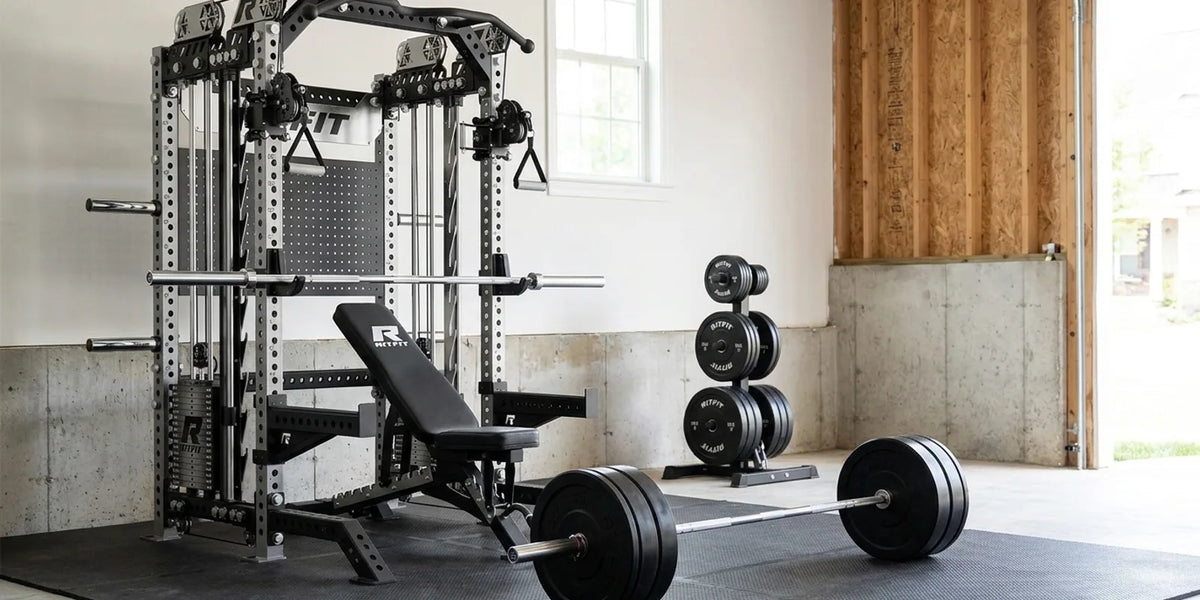
Can you squat and deadlift on the same day? Yes, for most lifters who have trained for at least a year, and the real work is arranging the session so the second lift still gets a fair effort.
This guide covers the order, the load, and the weekly frequency that make the pairing work, plus the machine options and stop signs for the days when your lower back has had enough.
Quick Answer: Yes, you can squat and deadlift on the same day, and the pairing works when the priority lift goes first, the second lift stays lighter, and the next heavy lower-body session waits at least 48 hours. Find the version that fits your week and keep the second lift honest.
Key Takeaways
- Order decides the winner: the lift you want to improve goes first, because the exercise trained first keeps the advantage.
- Load the second lift down: around 70 to 80 percent of its normal heavy load, not a second all-out effort.
- Two sessions a week is enough: squat and pull together twice, then keep the rest of the week lighter.
- Volume drives recovery: start lower than you think, then add sets after two clean weeks.
- Form is the stop sign: a session ends when your technique breaks, not when the plan runs out of sets.
Can You Squat and Deadlift on the Same Day?
Squatting and deadlifting in one session is a normal strength workout, not a recovery mistake.
Both are heavy compound lifts that load the same posterior chain, so the pairing asks more of your recovery than training either lift alone.
- Experienced lifters: with two or more years of consistent training, the pairing fits neatly into a three day week.
- Early lifters: under a year of training, one heavy lift plus a lighter variation usually beats two heavy lifts in one session.
- Meet preparation: a powerlifting meet runs squats and deadlifts on the same platform, so rehearsing both in one session has direct value.
- Busy schedules: if you can only train three days, combining the two lifts protects the rest of your week.
Training at home changes the logistics more than the programming. A power rack package gives you a safe place to squat without a spotter, which matters most on a day when your lower back is already tired.
What Changes When Squat and Deadlift Share One Session?
Residual fatigue is the biggest change when both lifts share a session, and it hits each lift differently.
A 2026 trial with 54 resistance-trained adults found that both lifts reduced countermovement jump performance, yet the two fatigue profiles did not match.[1]
The back squat caused larger and earlier drops across force, displacement, and work, while the deadlift caused smaller reductions in braking rate of force development that lasted longer.
- Lower-back load stacks: both lifts ask the erectors to hold position under load, so weekly volume matters more than the order of any single set.
- Session length grows: two heavy lifts with full rest periods push a workout past the hour mark.
- Skill practice doubles: you touch each lift about twice as often as a split that runs one heavy day per lift.
- Warm-up time adds up: two ramp-up sequences can eat fifteen minutes before the first working set.
Squatting and deadlifting on the same day also means the second lift starts with a partially spent nervous system, which is why the plan below keeps that lift lighter. If you pull at home, a deadlift platform protects the floor and keeps the bar at a consistent height.
How Should You Order Squats and Deadlifts in the Same Workout?
The lift you want to improve belongs first, because the exercise trained first keeps the advantage.
A study of exercise order measured how many repetitions untrained young men completed to failure and how hard the session felt, and both changed with the sequence of exercises.[2]
A meta-analysis of 10 studies adds a second piece of evidence: when resistance and endurance work share one session, putting resistance first produced a 6.91 percent greater change in lower-body dynamic strength, with no order effect for hypertrophy or static strength.[3]
That research covers resistance and endurance sequencing rather than two barbell lifts, so treat it as a principle for your squat and deadlift same workout planning instead of a rule.
- Strength goal: the first lift runs heavy sets of three to five reps, and the second lift runs lighter sets of five.
- Weak point: whatever is lagging goes first for a full training block, then you swap the order.
- Time limit: keep the priority lift intact and shorten the second lift rather than splitting your attention.
- Grip fatigue: if your grip gives out on pulls, squat first so your hands are fresh for the deadlift.
Whichever order you pick, hold it for at least four to six weeks before judging the results.
How Heavy Should You Go When You Squat and Deadlift on the Same Day?
The second lift should stay lighter than the first, usually around 70 to 80 percent of its own heavy day.
The squat and deadlift fatigue trial used 3 sets of 12 reps at 70 percent of estimated one-rep max as its fatiguing protocol, which is a sensible ceiling for a second lift rather than a target for both.
| Session | Priority lift | Second lift | Rest between sets |
|---|---|---|---|
| Squat priority | Back squat, 4 sets of 5 reps | Deadlift, 3 sets of 5 reps at 70 to 80 percent of the squat day load | 3 minutes on squats, 2 minutes on deadlifts |
| Pull priority | Deadlift, 4 sets of 3 to 5 reps | Back squat, 3 sets of 5 reps at a lighter load | 3 minutes on deadlifts, 2 minutes on squats |
| First year of training | Back squat, 3 sets of 5 reps | Romanian deadlift, 3 sets of 8 reps | 2 to 3 minutes on both lifts |
| Short session | Priority lift, 4 sets of 5 reps | Second lift, 2 sets of 5 reps | Drop accessory work before cutting rest |
Loads assume the second lift is trained lighter than the first. Adjust by feel on the day.
If both lifts feel heavy on the same day, the answer is usually less volume rather than a new program.
How Heavy Should Each Lift Be in One Workout?
- Leave reps in reserve: stop the priority lift with one or two good reps left, and leave three on the second lift.
- Percentages guide, effort decides: a percentage of one-rep max is a starting point, not a contract.
- Never chase two personal records: one all-out lift per session is the ceiling on a shared day.
Common Mistakes That Turn a Shared Session Into a Bad One
- Two all-out lifts: chasing a personal record on both lifts in one session usually ends both early.
- Too little rest: trimming rest to save time lowers the quality of the priority lift first.
- Repeating the same mistake weekly: if the second lift stalls for three weeks, the volume is too high, not the effort too low.
- Cold working sets: jumping to working weight without ramp-up sets invites a form breakdown.
How Often Can You Squat and Deadlift in the Same Week?
Two lower-body sessions a week cover both lifts for most lifters, and three is the practical ceiling.
A 2024 systematic review on recovery reports that insufficient recovery between sessions can temporarily impair performance and that higher training volumes raise recovery demands, so a gradual start beats a fast one.[4]
- Two sessions a week: one squat priority day and one pull priority day, both with the second lift kept lighter.
- Three sessions a week: workable for younger lifters and lighter total volume, but the third session should be the lightest.
- Four or more sessions: split the lifts across days instead, since two heavy lower-body days plus accessories rarely recover in time.
- Add weight when: the top set moves easily, the second lift holds its reps, and soreness is gone before the next session.
- Deload when: the bar feels slow for two weeks, sleep drops, or the same load leaves you sorer than usual.
Soreness is a poor progress signal on its own. The squat and deadlift trial checked soreness at 24 and 48 hours and found the two lifts produced similar soreness even though their recovery time courses differed.
If you want a second, lighter lower-body exposure, pairing the main work with a leg day duo keeps accessory work organized without adding another heavy day.
What If Your Lower Back Cannot Handle Both Lifts on the Same Day?
Machine work and pulling variations keep the session productive when the lower back is the limiting factor.
Both lifts ask the erectors to resist a heavy load, so a lifter with a tired or sensitive lower back often feels the second lift before the target muscles do.
- Switch the pull: a trap bar deadlift or a Romanian deadlift from a higher start reduces the demand on the lower back.
- Move the squat to a machine: a 3-in-1 leg press and hack squat machine trains the quads and glutes with the torso supported.
- Keep quad volume with a belt squat: a belt squat attachment loads the legs while the spine stays upright.
- Add a hack squat attachment: a hack squat rack attachment gives you a fixed path for the same pattern.
When to Stop the Session Early
- Sharp pain instead of muscle fatigue or a burn.
- Tingling or numbness running down a leg.
- Rounding under load that you cannot correct on the next rep.
- Warm-up weights already feeling like working weights.
None of those signals improves with one more set. Shut the session down and get the symptom checked before your next heavy day.
"Squats are my favorite exercise, but a lot of people can't do them because of various lower-back issues. In that case, the leg press is also a really good exercise for building the thigh. It baffles me that so many people don't think the leg press is useful. It's such a simple movement that works so well."
John Meadows, IFBB Pro Bodybuilder and Coach, Mountain Dog Diet, Mountain Dog Training for Legs
"My new favorite equipment! We also have a Smith machine. Is completes our home gym. Very happy with everything we have purchased from Ritfit!"
Cara, Verified Buyer, RitFit The Ultimate Leg Day Duo
Can a Leg Press or Hack Squat Machine Replace the Squat on Leg Day?
A leg press or hack squat machine can carry the squat slot when the goal is quad and glute volume.
Neither machine teaches barbell skill or balance, so the swap works best for a second weekly session rather than every session.
- Best fit: lifters chasing muscle size, lifters with a long torso, and anyone training in a garage with limited ceiling height.
- Poor fit: lifters who need squat technique for a meet, since machine paths do not transfer to a free bar.
- Programming: run the machine lift for the same sets and reps you would use for the squat, then keep one barbell squat day in the week.
- Recovery: because the torso is supported, machine work usually leaves the lower back fresher for the next pull session.
A compact frame that handles both movements suits small home gyms, which is where the GAZELLE PRO leg press and hack squat machine fits. You can compare other options in the leg machine category.
Squat and Deadlift Same Day Sample Workout
A squat and deadlift same day workout runs the priority lift first and keeps the second lift lighter.
Use it as a starting point for a squat priority day, then flip the two lifts for a pull priority day.
- Step 1: five minutes of easy cardio, then light sled or bike work to raise body temperature.
- Step 2: ramp the priority lift in small jumps until the first working set weight feels fast.
- Step 3: run 4 sets of 5 reps, resting three minutes between sets.
- Step 4: move to the second lift at 70 to 80 percent of its usual load, 3 sets of 5 reps, resting two minutes.
- Step 5: finish with two or three accessory sets for hamstrings, calves, or core, then stop.
Loading the bar is its own fatigue source on a heavy pull day, and a deadlift jack and barbell stand takes that work off your back. If you still need a bar for both lifts, browse the olympic barbells lineup before you commit.
FAQs About Squat and Deadlift on the Same Day
What happens if you squat and deadlift on the same day?
You can train both, but the session is harder than either lift alone. The second lift gets a fatigued body, and both load the lower back. Keep the second lift lighter than the first and treat the day as heavy lifting plus one secondary strength block, not two full strength sessions.
Which lift should come first in a squat and deadlift same day workout?
Put the lift you care about most first. The exercise trained first keeps the advantage, while later exercises drop in repetitions and feel harder. If your squat is the goal, squat first and pull second, then rotate the order in the next block.
How many sets should you do when you squat and deadlift in the same workout?
Start with three to five working sets of the priority lift and two to three lighter sets of the second lift. That keeps weekly volume high enough to grow while limiting total lower-back fatigue. Add sets only after you recover well for two straight weeks.
What are the benefits of squatting and deadlifting same day?
The main benefits are time efficiency and practice frequency. Two big lifts in one session fit a three day week, and both movements get trained twice as often as a split where each lift appears once. Both lifts also build the quads, glutes, and posterior chain together.
When should you split squats and deadlifts into separate days?
Split them when the second lift keeps stalling, when your lower back stays sore into the next session, or when soreness from one lift is still limiting the other. Three day schedules often do better with one heavy squat day and one heavy pull day plus lighter accessory work.
How long should you rest between squats and deadlifts in one session?
Rest as long as the next set needs. For heavy work that usually means two to four minutes on the priority lift and slightly less on the second lift, where the load is lighter. If your form changes on the first rep, add time or stop the session there.
Conclusion
Squatting and deadlifting on the same day works when you treat it as one heavy lift plus one lighter lift rather than two competitions. Decide which lift matters most this block, put it first, and hold the second lift around 70 to 80 percent.
Run two sessions a week, add sets only after two clean weeks, and switch to machine work or a full split when your lower back stops cooperating. Build the setup with our RitFit discount guide before you buy.
Disclaimer
Squatting and deadlifting are demanding lifts that carry injury risk, and this article provides general training information rather than medical advice. Consult a qualified physician or coach before starting a new program, especially if you have a history of back, hip, or knee issues.
References
1. Gervasi M, Formiglio E, Padulo J, Belmonte G, Patti A, Fernández-Peña E. Back squat and deadlift fatiguing protocols elicit distinct countermovement jump profiles: phase-specific predictors and soreness responses. Br Med Bull. 2026;158(1). doi:10.1093/bmb/ldag013. PMCID: PMC13092287
2. Romano N, Vilaça-Alves J, Fernandes HM, et al. Effects of resistance exercise order on the number of repetitions performed to failure and perceived exertion in untrained young males. J Hum Kinet. 2013;39:177-83. doi:10.2478/hukin-2013-0080. PMCID: PMC3916922
3. Eddens L, van Someren K, Howatson G. The Role of Intra-Session Exercise Sequence in the Interference Effect: A Systematic Review with Meta-Analysis. Sports Med. 2018;48(1):177-188. doi:10.1007/s40279-017-0784-1. PMCID: PMC5752732
4. Sousa CA, Zourdos MC, Storey AG, Helms ER. The Importance of Recovery in Resistance Training Microcycle Construction. J Hum Kinet. 2024;91(Spec Issue):205-223. doi:10.5114/jhk/186659. PMCID: PMC11057610





