








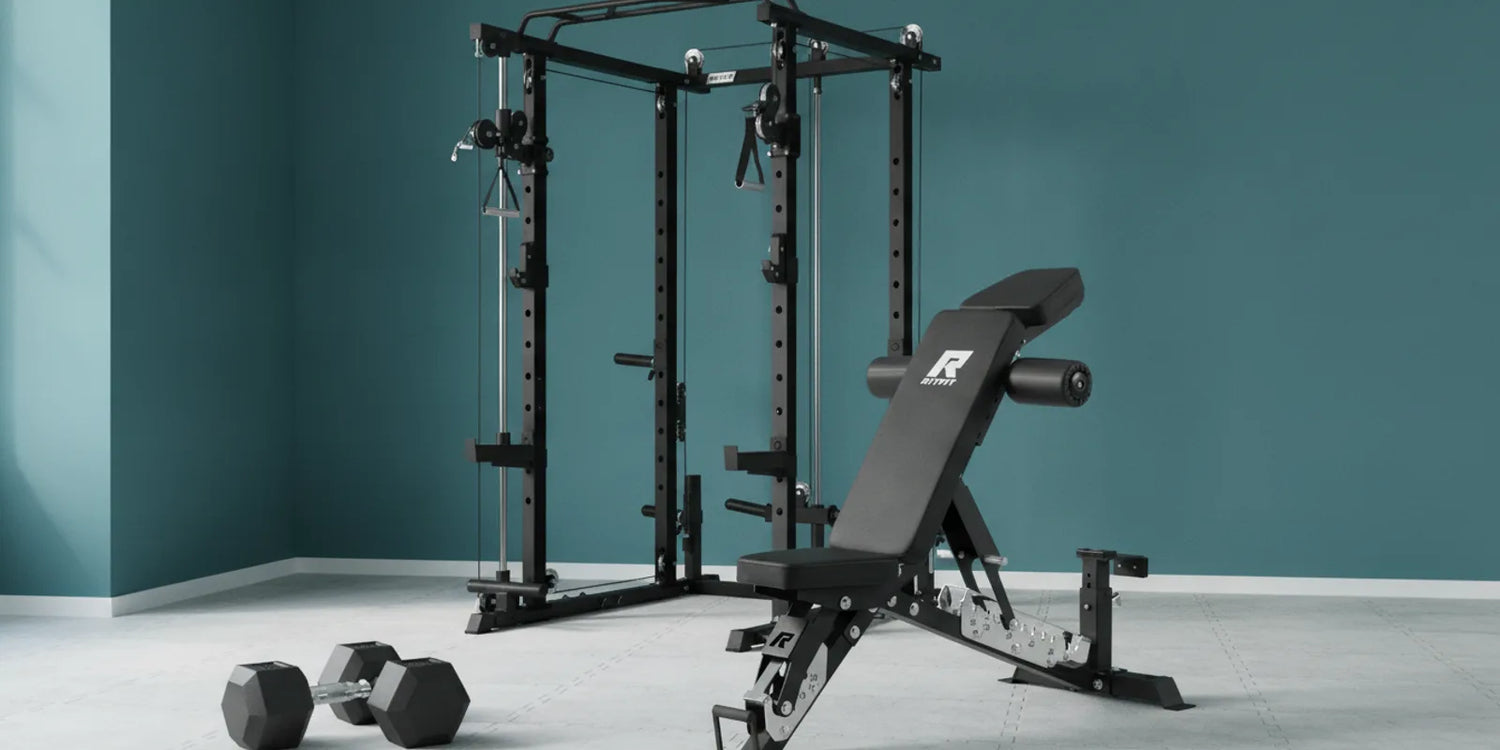
Choosing the best color for your home gym comes down to three things: how you train, how much light the room gets, and how big the space feels. This guide gives you a clear framework plus specific shades that work in real garages, basements, and spare rooms.
A well-designed home gym is worth the effort because training at home genuinely works. Whether you are picking one wall color or planning a full makeover, you will leave with a palette, a finish, and a lighting plan you can act on this weekend.
Quick Answer: The best color for a home gym is the one that matches your training style and lighting: deep navy or charcoal for focus and strength work, crisp off-white or cool gray to open up small or dark rooms, and a single energizing accent wall in red or orange for high-intensity training.
Key Takeaways
- Match color to training: dark, grounded tones like navy and charcoal suit lifting and HIIT, while cool blues and light neutrals support cardio and yoga.
- Lighting decides everything: check LRV before you buy and pair wall color with 90+ CRI LED bulbs, 4000K to 5000K for energy zones and 2700K to 3000K for recovery spaces.
- Small gyms go light: high-LRV shades reflect light and make compact or windowless rooms feel larger, while dark colors need strong lighting to avoid feeling closed in.
- Use accents, not overload: one saturated accent wall energizes a gym, but painting every wall red or neon can cause visual fatigue.
- Finish matters: eggshell or satin resists scuffs from equipment and cleans more easily than flat or matte paint.
What Is the Best Color for a Home Gym?
The best color for most home gyms is a deep, grounded neutral such as charcoal, navy, or a balanced cool gray, adjusted for your lighting and training style. These shades hide scuffs, reduce visual distraction, and pair naturally with black rubber flooring and steel equipment.
Training at home delivers real results, so the space deserves real design. One preliminary six-month trial found that older adults doing home-based resistance training improved chair-stand performance by 19.8%,[1] and structured home training is a safe, effective way to maintain functional strength without a commercial gym membership.[2]
- For strength and HIIT: charcoal, matte navy, or black with bright LED lighting.
- For cardio: cool blues and crisp off-whites that keep the room feeling fresh over long sessions.
- For yoga and recovery: soft greens, warm taupe, and other nature-inspired tones.
- For mixed use: a light neutral base with one energizing accent wall.
If you are still planning the room itself, our complete home gym guide covers layout, flooring, and equipment sizing. A space you enjoy walking into also pays off in consistency, one of the benefits of a home gym owners notice first.
How Should Your Workout Style Guide Your Home Gym Colors?
Your training style should be the first filter for home gym paint colors because each workout type asks for a different mental state. Strength and high-intensity work benefit from grounded, energizing surroundings, while cardio, yoga, and mobility sessions feel better in cooler, calmer palettes.
Design guides note that shorter-wavelength colors like blue and green tend to lower heart rate and support calm focus, while longer-wavelength colors like red and orange feel stimulating. A psychology principle known as the Yerkes-Dodson law suggests arousal helps performance only up to a point, so keep intense reds on a single accent wall rather than the whole room.
The training environment also connects to mood. One pilot study found that eight weeks of home-based resistance training improved depression scores in middle-aged adults, with p=0.003.[3]
Strength Training and HIIT: Grounded, Energizing Darks
Deep charcoal, navy, and black create a focused, immersive backdrop that keeps attention on the bar instead of the walls. Popular designer-cited examples include Sherwin-Williams Tricorn Black, Sherwin-Williams Iron Ore with an LRV of 6, and Benjamin Moore Hale Navy.
Cardio and Endurance: Cool Blues and Crisp Lights
Cool blues and crisp lights fight the mental boredom of long treadmill or bike sessions by keeping the room feeling open and alert. For a bolder morning-energy option, designers point to minty greens like Farrow and Ball Arsenic with an LRV of 42.
Yoga, Mobility, and Recovery: Calm, Nature-Inspired Tones
Earthy greens, soft terracotta, and warm whites lower the visual temperature of a room and encourage slower, deeper breathing. These biophilic palettes work especially well in a corner of a multi-use gym.
| Training Style | Color Family | Example Shades |
|---|---|---|
| Strength and HIIT | Grounded darks | Tricorn Black, Iron Ore, Hale Navy |
| Cardio and endurance | Cool blues, crisp lights, mint | Sky blue, cool off-white, Arsenic |
| Yoga and recovery | Nature-inspired neutrals | Soft green, terracotta, warm white |
Example shades are designer-cited illustrations, not a brand ranking. Test any shade in your own lighting before committing.
How Does Lighting Change the Best Color for Your Home Gym?
Lighting changes everything about how gym paint reads, so the best color for a sunny garage can fail in a dim basement. Lighting guides recommend bulbs with a CRI of 90 or higher so colors render true, with cool white 4000K to 5000K for high-energy zones and warm white 2700K to 3000K for recovery spaces.
Basement Gyms: Compensate for Low Natural Light
Basement gyms get little natural light, so very dark walls can feel heavy unless you add strong artificial lighting. Keep the ceiling lighter than the walls and spread several bright LED sources around the room rather than relying on one overhead bulb.
Garage Gyms: Durable Color for a Working Space
Garage gyms handle darker, durable palettes well because they are larger and can take high-lumen lighting. In one documented garage makeover, a creator painted a two-car garage with about 5 gallons of Sherwin-Williams Iron Ore in two coats, then added bright dimmable LED lighting and white wall panels for contrast.
Spare Rooms With Windows: Test Swatches Morning and Evening
Natural light shifts across the day, so a color that feels crisp at noon can look muddy at 6 AM when you actually train. Paint large sample boards and check them at the exact hours you work out.
- Step 1: paint two or three large poster boards with your shortlisted colors.
- Step 2: move them around the room and view them under your actual gym bulbs.
- Step 3: observe morning and evening for two or three days before buying full gallons.
Can Dark Paint Work in a Small Home Gym?
Dark paint can work in a small home gym when lighting is planned first, because deep colors feel cozy rather than cramped under bright, high-CRI LEDs. LRV runs from 0 for pure black to 100 for pure white, and decor guides favor high-LRV light shades for making compact or windowless rooms feel larger.
- Light base, dark accents: keep three walls light and use one dark feature wall for depth.
- Mirrors: a mirror panel doubles perceived space and bounces light into dark corners.
- Ceiling trick: a lighter ceiling keeps the room feeling tall even with darker walls.
- Compact equipment: a smaller footprint like the PSR05 Smith machine package leaves breathing room, and our home gym size guide helps you plan clearances.
Safety comes first in a dark, compact room. Make sure walkways and plate storage stay brightly lit so you can see collars, pins, and floor edges clearly.
Should You Use Accent Walls, Ceilings, and Color Zones?
Accent walls and color zones are the safest way to bring bold color into a home gym without overwhelming it. One saturated wall behind the rack or cardio area adds energy while neutral walls keep equipment visually clean.
- Accent wall placement: put the bold color on the wall you face during hard sets, or the one behind your main station.
- Ceiling strategy: a dark matte ceiling hides exposed pipes and ductwork in basements and creates an immersive feel, while a light ceiling lifts small rooms.
- Color zones: use different tones to separate a lifting zone from a stretching corner in a multi-use room.
- Red in doses: a deep red accent wall gives a shot of adrenaline for HIIT without the oppressive feel of four red walls.
For layout inspiration that pairs zones with equipment placement, browse our home gym ideas page before you tape off the walls.
What Paint Finish Is Best for Home Gym Walls?
Eggshell or satin is the best paint finish for most home gym walls because it resists scuffs from plates and benches and wipes clean more easily than flat paint. Matte suits dark, moody gyms but shows marks faster, and humid garages need a durable, moisture-resistant formula.
- Eggshell or satin: the default choice for lifting zones where walls take contact.
- Matte: best reserved for ceilings and low-contact accent walls.
- Moisture-resistant formulas: important in garages and basements with humidity swings.
- Low-VOC paint: choose low-VOC cans and ventilate well, since home gyms are often enclosed spaces where you breathe hard.
Fix any moisture or mold issue before painting rather than covering it up. Paint is a finish, not a repair.
What Home Gym Color Mistakes Should You Avoid?
The home gym colors to avoid are large areas of flat builder-grade gray, very dark walls in poorly lit rooms, and extremely bright neons on every wall. Many designers say flat gray can feel draining over time, and wall-to-wall neon causes visual fatigue within weeks.
- Flat gray everywhere: the most common default, and the one homeowners most often repaint.
- Dark colors without a lighting plan: a charcoal room with one dim bulb feels like a cave, not a studio.
- Neon on every wall: high-chroma colors work as accents, not as the base.
- Ignoring undertones: a gray with a beige undertone can clash with black equipment and blue-toned flooring.
How Do You Coordinate Wall Color With Your Gym Equipment?
Coordinating wall color with gym equipment starts from a simple fact: most racks, plates, and flooring are black or neutral, so they pair with almost any palette. Treat your largest equipment pieces as fixed anchors and choose wall colors that frame them.
- Black equipment: charcoal or navy walls with white trim create a clean studio look.
- Color-matched setups: echo an accent wall in your gear, like the pink gym equipment for home gyms or the RitFit Pink Series collection.
- Anchor machines: a centerpiece like the M1 multi-functional Smith machine or the RitFit M1 home gym package looks sharpest against a single contrasting wall.
- Browse by category: the strength machines collection shows the finishes you will be matching.
One caution before you default to an all-gray room to match gray equipment. Color specialists see that choice backfire often.
"Gray shuts you down. Color is much more than a visual stimulus, when used thoughtfully, it can help create environments that support physical, mental, and emotional well-being."
Mehnaz Khan, Interior designer and color psychology specialist, Your Colorful Home Interiors
FAQs About Home Gym Paint Colors
What is the best color to paint a home gym?
There is no single best color for every home gym. Deep navy and charcoal suit strength and focus training, off-whites and cool grays brighten small or dark rooms, and greens or warm neutrals calm yoga spaces. Match the color to your workout style, lighting, and room size for the best result.
Should a home gym be painted dark or light?
It depends on your lighting and goal. Dark colors like charcoal or navy create a focused, immersive feel but need strong LED lighting, so they work best in garages and larger rooms. Light, high-LRV shades reflect light and make small or windowless basement gyms feel bigger and more open.
What color is most motivating for a workout room?
Warm, saturated colors like red and orange feel the most energizing, which is why many designers suggest them for accent walls in high-intensity training spaces. Used on every wall they can feel overwhelming, so most home gyms do better with an energizing accent plus a calmer base color.
What paint finish is best for home gym walls?
Eggshell or satin finishes are the best choice for home gym walls because they resist scuffs from equipment and wipe clean more easily than flat paint. Matte works for dark, moody gyms but shows marks faster. In humid garages, choose a durable, moisture-resistant formula.
Can I use dark paint in a small basement gym?
Yes, but plan your lighting first. Dark walls in a small basement gym feel cozy rather than cramped when you add bright, high-CRI LED lighting around 4000K and keep the ceiling lighter. Without enough light, very dark colors can make a compact basement feel closed in.
What colors should you avoid in a home gym?
Avoid large areas of flat, builder-grade gray, which many designers say can feel draining over time, and very dark colors in rooms with poor lighting. Extremely bright neons on every wall can also cause visual fatigue. Test large swatches at different times of day before committing.
Conclusion
The best color for your home gym is the one matched to your training style, your lighting, and your room size, not the one trending on social media. Pick a grounded base, add one energizing accent, choose a scrubbable finish, and test swatches at the hours you actually train.
Ready to finish the room? Pair your new walls with equipment that fits the space, and check current RitFit deals to build out your gym for less.
Disclaimer
This article is for general informational purposes and does not constitute professional interior design, safety, or fitness advice. Consult a qualified professional before making structural, electrical, or health-related decisions for your home gym.
Save on your next RitFit order
Tap the button to copy your code, then paste it at checkout.
References
1. Vitale JA, Bonato M, Borghi S, et al. Home-Based Resistance Training for Older Subjects during the COVID-19 Outbreak in Italy: Preliminary Results of a Six-Months RCT. Int J Environ Res Public Health. 2020;17(24). doi:10.3390/ijerph17249533. PMCID: PMC7767132
2. De Maio M, Bratta C, Iannaccone A, et al. Home-Based Physical Activity as a Healthy Aging Booster before and during COVID-19 Outbreak. Int J Environ Res Public Health. 2022;19(7). doi:10.3390/ijerph19074317. PMCID: PMC8998434
3. Kikuchi N, Ohta T, Hashimoto Y, et al. Effect of Online Home-Based Resistance Exercise Training on Physical Fitness, Depression, Stress, and Well-Being in Middle-Aged Persons: A Pilot Study. Int J Environ Res Public Health. 2023;20(3). doi:10.3390/ijerph20031769. PMCID: PMC9914297





