








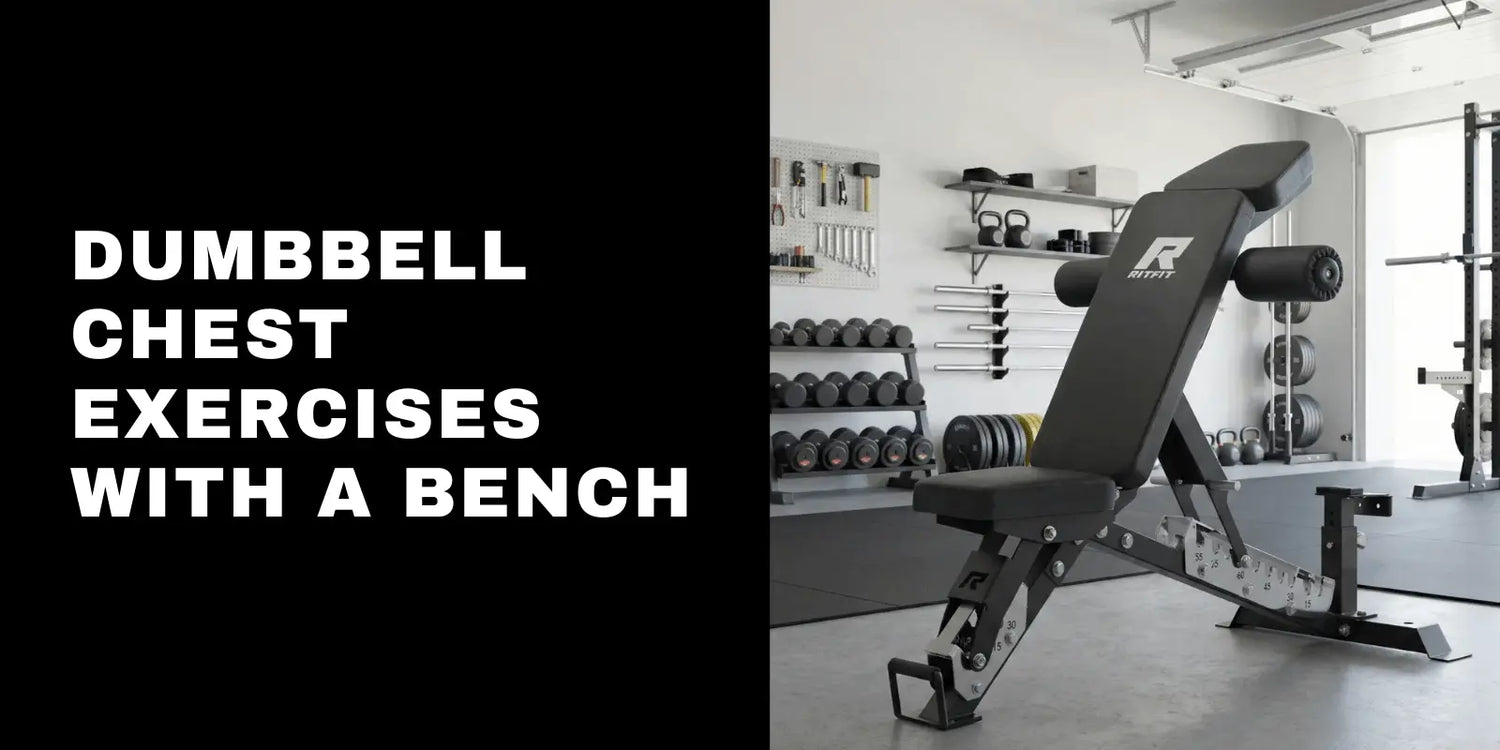
Dumbbell chest exercises with a bench can build a strong chest at home when you use stable equipment, safe form, and progressive overload. This guide explains the best exercises, bench angles, shoulder friendly cues, and an 8 week routine for better chest growth.
Table of Contents
Key Takeaways
- Dumbbells improve control: Each arm moves independently, which can help many lifters find a more comfortable pressing path.
- A bench improves range: A stable adjustable bench lets your chest stretch deeper than floor pressing while keeping your back supported.
- Low incline targets upper chest: A 30 degree incline is usually a better starting point than a steep shoulder dominant angle.
- Form protects shoulders: Keep your shoulder blades controlled, avoid excessive elbow flare, and stop any range that causes sharp pain.
- Growth needs progression: Add reps first, improve control second, and increase dumbbell weight only when form stays clean.
Why the Bench Is Your Best Investment
A bench is valuable because it lets you train the chest through multiple angles and a longer range of motion than floor work. Floor presses are useful, but the floor stops your elbows before many lifters reach a full chest stretch.
The main chest muscle is the pectoralis major, which includes upper, middle, and lower fiber regions. A flat bench, low incline bench, and controlled fly pattern help train those fibers from different pressing and stretching positions.
Research on resistance training technique suggests that muscle growth is supported by controlled repetitions and ranges of motion that emphasize useful stretch positions.[1] This makes a stable weight bench more than a seat, it becomes the foundation for safe and repeatable chest training.
For a simple home setup, pair a strong adjustable bench with a dependable set of dumbbells. If you want a dedicated bench option, the RitFit GATOR 1600LB Adjustable Weight Bench is a relevant choice for flat and incline dumbbell work.
Muscles Worked During Dumbbell Chest Exercises
Dumbbell chest exercises with a bench mainly train the pectoralis major, anterior deltoids, and triceps. The exact emphasis changes with bench angle, grip, elbow path, and how deeply you lower the dumbbells.
- Pectoralis major: This is the main chest muscle responsible for pressing and bringing the upper arm across the body.
- Clavicular head: This upper chest region is emphasized more when you use a low incline press.
- Sternocostal head: This middle and lower chest region works strongly during flat pressing and controlled fly variations.
- Anterior deltoid: This front shoulder muscle assists pressing, especially when the bench angle becomes too steep.
- Triceps: These muscles help extend the elbows and finish the top portion of each press.
The Anatomy of a Perfect Chest Workout
A perfect dumbbell chest workout trains the chest hard while keeping the shoulder joint controlled. Dumbbells can feel more natural than a fixed bar because each arm can follow its own path.
Bench press technique research shows that grip width, shoulder abduction angle, and scapular position can change shoulder loads during pressing.[2] For most home lifters, the practical goal is simple, keep the shoulder blades stable, control the lowering phase, and avoid flaring the elbows straight out.
The Flat Dumbbell Bench Press
The flat dumbbell bench press is the main strength builder for a complete chest workout. Pull your shoulder blades down and back before pressing, then keep your elbows slightly below shoulder height instead of flared wide.
- Setup: Sit on the bench with dumbbells on your thighs, then rock back and bring the weights to chest level.
- Press: Drive the dumbbells upward over your chest while keeping your wrists stacked over your elbows.
- Lower: Bring the dumbbells down slowly until they reach chest level or a pain free depth.
- Best cue: Think about bringing your upper arms toward each other, not just pushing the weights up.
Low Incline Dumbbell Press
The low incline dumbbell press targets the upper chest better than a steep incline for many lifters. Research comparing bench angles found that 30 degrees produced greater upper pectoralis activation, while angles above 45 degrees increased anterior deltoid involvement.[3]
- Bench angle: Start around 30 degrees and avoid turning the movement into a shoulder press.
- Elbow path: Keep your elbows about 30 to 45 degrees from your torso.
- Grip: Use a neutral or slightly angled grip if your shoulders feel better that way.
- Tempo: Lower the dumbbells for about 2 to 3 seconds, then press with control.
The Dumbbell Bench Fly
The dumbbell bench fly trains the chest in a stretched position, but it should never feel like a shoulder strain. Use lighter dumbbells than your press and keep a soft bend in your elbows during the full rep.
- Arm shape: Imagine hugging a large barrel and keep that arm shape from start to finish.
- Depth: Stop when your elbows reach torso level or slightly below, depending on comfort.
- Load: Use a weight that you can control without bouncing at the bottom.
- Safety cue: If you feel sharp front shoulder pain, shorten the range immediately.
The Dumbbell Pullover
The dumbbell pullover trains the chest, lats, and serratus anterior through a long overhead arc. It works best as a controlled accessory exercise after your main presses.
- Setup: Lie flat on the bench with your head supported and hold one dumbbell with both hands.
- Lower: Move the weight slowly behind your head while keeping a slight elbow bend.
- Return: Pull the dumbbell back over your chest without bending and extending your elbows like a triceps exercise.
- Best use: Keep the load moderate and focus on a smooth stretch through the chest and upper back.
If you need a full dumbbell setup for home training, RitFit Hex Rubber Dumbbells are a direct match for pressing, flys, pullovers, rows, and total body strength work.
The Safe and Swollen Routine
This dumbbell chest workout with bench is designed to build muscle in 30 to 45 minutes. Train it 1 to 2 times per week, leaving at least 48 hours between hard chest sessions if soreness or joint irritation is noticeable.
Resistance training research suggests that muscle growth can occur across different loads when sets are performed with sufficient effort, while heavier loading tends to support greater strength gains.[4] For this routine, choose weights that leave about 1 to 3 good reps in reserve on most working sets.
- Warm up: Do 2 rounds of band pull aparts, arm circles, and light push ups before the first working set.
- Flat Dumbbell Bench Press: Perform 3 sets, 6 to 8 reps on set 1, 8 to 10 reps on set 2, and 10 to 12 reps on set 3.
- Low Incline Dumbbell Press: Perform 3 sets of 8 to 12 reps with a 2 to 3 second lowering phase.
- Dumbbell Bench Fly: Perform 3 sets of 12 to 15 reps with light weight and strict control.
- Dumbbell Pullover: Perform 2 sets of 12 to 15 reps with a smooth stretch and no bouncing.
- Rest times: Rest 2 to 3 minutes after heavy presses, 90 seconds after flys, and 60 seconds after pullovers.
A stable training area also matters because wobbling can reduce force output and make form harder to repeat. For garage or spare room setups, high density interlocking gym flooring mats can help protect the floor and create a more consistent lifting surface.
Troubleshooting Common Issues
Most dumbbell chest problems come from poor shoulder position, too much load, or an unstable setup. Fix those three areas first before adding more exercises.
- Shoulder pain at the bottom: Your elbows may be flaring too wide or dropping too deep. Tuck the elbows slightly, use a neutral grip, and stop before sharp pain appears.
- Feeling arms instead of chest: You may be pressing with the triceps instead of bringing the upper arms together. Lower the weight and focus on squeezing the chest as the dumbbells rise.
- Bench wobbling: A shaky bench makes it harder to generate force safely. Use a firm adjustable bench and place it on a flat surface before loading heavier dumbbells.
- Upper chest not growing: You may be using only flat pressing or setting the incline too high. Add low incline pressing and keep the angle near 30 degrees.
- Progress stalling: You may be jumping weight too quickly. Add reps first, improve control second, then increase dumbbell load.
If you want machine based chest and shoulder pressing in addition to dumbbells, the RitFit Gorilla 2 in 1 Chest and Shoulder Press Machine can support a more guided strength setup.
Progressive Overload: How to Keep Growing
Progressive overload means giving your chest a slightly harder challenge over time. With dumbbells, the safest path is usually adding reps before adding weight.
- Increase reps first: If you can press 50 lb dumbbells for 3 sets of 10, aim for 3 sets of 11 next week.
- Increase control second: Slow the lowering phase to 3 or 4 seconds when adding weight feels too large.
- Increase load third: Move to the next dumbbell pair only after you reach the top of your rep range with clean form.
- Track recovery: Reduce volume if shoulder discomfort, poor sleep, or repeated performance drops appear.
For lifters planning a larger strength space, a complete system like the RitFit Home Gym Package M1 Smith Machine can expand beyond dumbbell chest training into squats, rows, cable work, and full body programming.
FAQs
What are the best dumbbell chest exercises with bench?
The best dumbbell chest exercises with bench are flat dumbbell press, low incline dumbbell press, dumbbell bench fly, and dumbbell pullover. These movements cover pressing strength, upper chest focus, stretch based chest work, and accessory control when performed with stable setup and clean form.
Can I build a big chest with only dumbbells and a bench?
Yes. You can build a strong chest with only dumbbells and a bench if you train consistently, use enough effort, and progress over time. The key is combining flat pressing, incline pressing, controlled flys, and steady overload without sacrificing shoulder position or range quality.
Is incline dumbbell press better than flat dumbbell press?
No. Incline dumbbell press is not better overall, it is better for emphasizing the upper chest. Flat dumbbell press usually allows heavier loading and broader chest stimulation, while a low incline angle helps target the clavicular fibers without turning the lift into a shoulder dominant press.
How heavy should dumbbells be for chest workouts?
Choose dumbbells that leave about 1 to 3 good reps in reserve on most working sets. If your wrists bend, shoulders shift forward, or range becomes shorter before the target reps, the dumbbells are too heavy for productive chest training.
Should dumbbell chest flys hurt my shoulders?
No. Dumbbell chest flys should create a chest stretch, not sharp shoulder pain. Reduce the weight, keep soft elbows, stop around torso level, and shorten the range if the front of the shoulder feels pinched or unstable during the lower position.
How often should I do dumbbell chest exercises with bench?
Most lifters should train dumbbell chest exercises with bench 1 to 2 times per week. Use at least 48 hours between hard chest sessions if soreness, shoulder irritation, or weaker performance appears, and adjust total sets based on recovery.
What bench angle is best for upper chest dumbbell exercises?
A low incline around 30 degrees is usually best for upper chest dumbbell exercises. This angle tends to emphasize the upper pectoral fibers while limiting excessive front shoulder takeover, especially when you keep the elbows slightly tucked and press with control.
Can beginners do dumbbell chest exercises with bench safely?
Yes. Beginners can do dumbbell chest exercises with bench safely by starting light, using a stable bench, and learning shoulder blade control first. The safest approach is to master flat pressing before adding incline presses, flys, heavier loads, or advanced volume.
Conclusion
You do not need a full commercial gym to build a stronger chest. You need dumbbells, a stable adjustable bench, clean technique, and a progression plan you can repeat.
Use the flat press, low incline press, bench fly, and pullover as your foundation for the next 8 weeks. Add reps before adding weight, keep your shoulders controlled, and let consistency do the work.
Disclaimer: This article is for general educational purposes only and is not medical advice. Stop any exercise that causes sharp pain, numbness, dizziness, or unusual joint discomfort. Consult a qualified healthcare professional or certified trainer before starting a new workout program if you have an injury, medical condition, or uncertainty about exercise technique.
References
- Korakakis PA, Wolf M, Coleman M, Burke R, Piñero A, Nippard J, Schoenfeld BJ. Optimizing resistance training technique to maximize muscle hypertrophy: a narrative review. J Funct Morphol Kinesiol. 2024;9(1):9. doi:10.3390/jfmk9010009
- Serrancolí G, García-Vallejo D, Lipphaus A, Noteboom L, Belli I, Hoozemans MJM, Seth A, Veeger HEJ, van der Helm FCT. Effects of bench press technique variations on musculoskeletal shoulder loads and potential injury risk. Front Physiol. 2024;15:1393235. doi:10.3389/fphys.2024.1393235
- Rodríguez-Ridao D, Antequera-Vique JA, Martín-Fuentes I, Muyor JM. Effect of five bench inclinations on the electromyographic activity of the pectoralis major, anterior deltoid, and triceps brachii during the bench press exercise. Int J Environ Res Public Health. 2020;17(19):7339. doi:10.3390/ijerph17197339
- Lopez P, Radaelli R, Taaffe DR, Newton RU, Galvão DA, Trajano GS, Teodoro JL, Kraemer WJ, Häkkinen K, Pinto RS. Resistance training load effects on muscle hypertrophy and strength gain: systematic review and network meta-analysis. Sports Med. 2021;51(8):1559-1576. doi:10.1007/s40279-020-01414-5





