








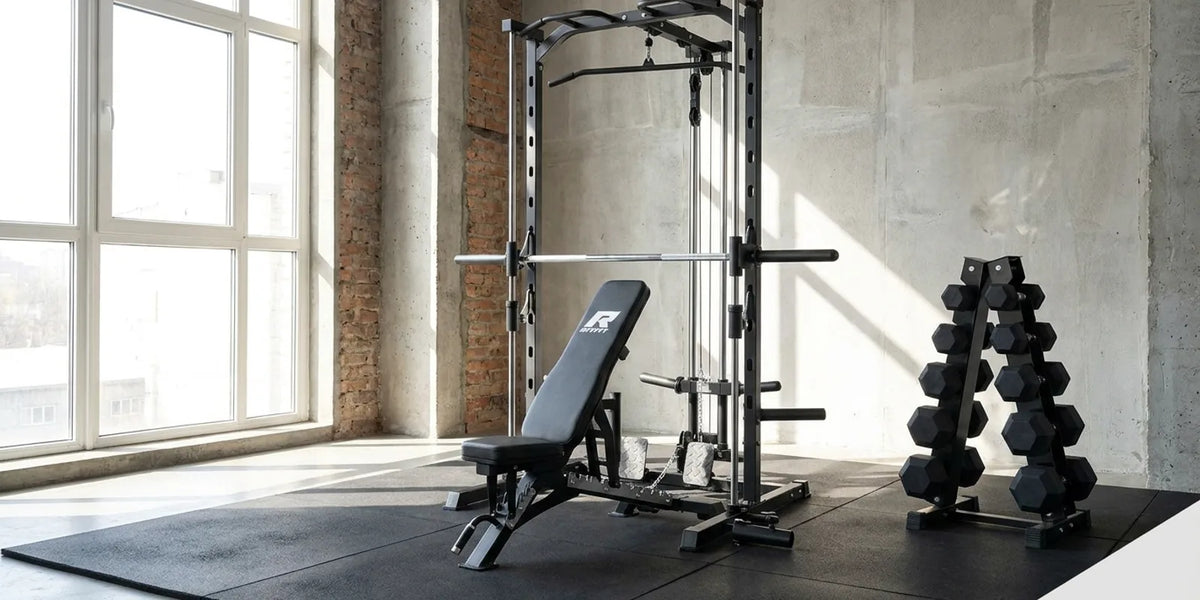
fitness center equipment packages planning works best when a fitness center begins with a versatile all-in-one Smith Machine Package, then adds specialty machines only when member demand proves the need.
This guide helps facility teams organize strength training coverage, staff workflow, and future expansion without treating a crowded equipment list as a plan.
Quick Answer: fitness center equipment packages should begin with a versatile RitFit M1 PRO Smith Machine Package because one organized strength-training zone can support core squats, presses, pulls, rows, and cable work. Fitness centers can then add specialty machines only when real member demand, program requirements, safety needs, or persistent queues show a clear gap.
Key Takeaways
- Point 1: Start with broad movement coverage, not a long equipment list.
- Point 2: Use one organized strength zone to protect floor space and simplify staff routines.
- Point 3: Treat specialty machines as demand-led additions, not opening-day defaults.
- Point 4: Compare equipment by coverage, access, maintenance, and future expansion.
- Point 5: Give every shared station clear setup, storage, and inspection rules.
What should a fitness center buy first?
For most facilities, a package-first strength zone is the most flexible starting point.
A fitness center should buy the equipment that covers the most repeatable strength patterns before adding specialty stations. The RitFit M1 PRO Smith Machine Package can anchor squats, presses, pulls, rows, and cable work in one training zone.
Start with a rack, guided bar path, cable stations, adjustable bench, and attachments, This lets members progress through compound lifts and accessories without waiting for a separate machine for every movement, Smith Machine package options.
Which training needs can one all-in-one package cover?
For most facilities, a package-first strength zone is the most flexible starting point.
One all-in-one package can support lower body, upper body, pulling, pressing, and accessory training when the layout includes a Smith bar, rack positions, cables, and a bench. The key is programming distinct stations around one frame rather than treating it as a single exercise machine.
Map each purchase to a movement pattern, Squats and split squats need a stable bar path, presses need bench positions, rows and pulldowns need cable access, and pull-ups need a secure overhead station, Smith Machine collection.
A 2022 bench press study used 60% 1RM and found no significant difference in prime mover activation between Smith and free-weight bench press for untrained men.[1]
How does a package simplify daily operations?
For most facilities, a package-first strength zone is the most flexible starting point.
A package simplifies daily operations because staff check one integrated training zone instead of a row of disconnected specialty machines. Fewer separate frames also make cleaning routes, member orientation, and floor supervision easier.
Build a simple opening checklist for pins, cables, benches, storage, and walking clearance, Keep frequently used attachments visible and return less common attachments to labeled storage after each session, M1 Pro Smith Machine package.
One study followed resistance training for 7 weeks and reported task-specific strength improvement with Smith machine practice.[2]
“For $1,800, this machine delivers a combination of build quality, stability, and versatility that is rare at this price. The BUFFALO is not a machine that excels at one thing. It is a platform that lets you program an entire training week without ever stepping off the frame.”
BJ Nelson, Head of Field Testing, The Iron Clinic, source
"Very easy to put together, and came with everything needed to start working out at home."
Austin C., Verified Buyer, RitFit M1 PRO Smith Machine Home Gym Package Comprehensive All-In-One Workout System
When should a fitness center add specialty machines?
For most facilities, a package-first strength zone is the most flexible starting point.
A fitness center should add a specialty machine after its member demand, coaching program, or accessibility requirement is clear. A specialty purchase is most useful when it solves a repeated problem that the all-in-one training zone cannot solve safely or efficiently.
Review usage patterns every quarter, Add equipment when queues are persistent, classes require dedicated stations, or a member group needs a specific supported movement, Buffalo Smith Machine package.
A 2021 network meta-analysis reinforces the need to match progressive overload to the training goal instead of assuming one tool fits every situation.[3]
How can members train safely on a shared Smith Machine Package?
For most facilities, a package-first strength zone is the most flexible starting point.
Members should receive a short orientation on bar stops, cable adjustments, bench setup, and attachment storage before using a shared Smith Machine Package. A consistent setup sequence reduces confusion when different people use the same training zone.
Post a one-page setup guide nearby, keep collars and handles in marked locations, and ask members to choose loads they can control with sound technique, adjustable weight benches.
FAQs About fitness center equipment packages
What is the first priority for fitness center equipment packages?
Start with a versatile strength training zone that covers common pushes, pulls, squats, rows, and accessory work. Add specialty equipment only after the facility has evidence that members need a dedicated station which the core package cannot support safely or efficiently.
Can an all-in-one Smith Machine Package support different experience levels?
Yes. A shared package can support different experience levels when the facility provides clear setup guidance, organizes attachments, and keeps traffic paths open. Newer members should use conservative loads and experienced members should follow the same equipment return and inspection routine.
How do I avoid overbuying gym equipment?
Build a movement coverage list before choosing equipment. Select a core training zone first, review member demand after opening, and add a specialty machine only when queues, coaching needs, accessibility requirements, or verified requests show that a meaningful gap remains.
What should be checked before opening a strength training area?
Check cable condition, attachment storage, bench stability, bar stops, floor contact points, cleaning access, and walking clearance. Give staff a documented inspection routine, assign accountability, and make the member setup instructions easy to find before the first workout begins for every shift.
When should a facility add a specialty training machine?
Add a specialty machine when it solves a repeated training or operations problem that the core package cannot solve efficiently. Use actual demand, class programming, safety needs, and room circulation to justify the purchase rather than buying a long list at opening.
Conclusion
fitness center equipment packages is not a contest to buy the most machines. Start with a versatile strength zone, train staff to support it, and use real demand to guide every later specialty purchase.
Choose a package-first layout if your facility needs broad strength coverage and a clear expansion path. Compare a modular M2 Smith Machine and review the RitFit discount guide when you are ready to compare a package-first purchase with your facility plan.
Disclaimer
This article provides general facility planning information, not engineering, legal, medical, or individualized training advice. Follow manufacturer instructions, local codes, and qualified professional guidance for installation, supervision, accessibility, and safe equipment use.
References
1. Wang L. A comparison of muscle activation and concomitant intermuscular coupling of antagonist muscles among bench presses with different instability degrees in untrained men. Front Physiol. 2022;13:940719. PMCID: PMC9486837
2. Saeterbakken AH, Olsen A, Behm DG, Bardstu HB, Andersen V. The short- and long-term effects of resistance training with different stability requirements. PLoS One. 2019;14(4):e0214302. PMCID: PMC6443166
3. Lopez P, Radaelli R, Taaffe DR, et al. Resistance Training Load Effects on Muscle Hypertrophy and Strength Gain: Systematic Review and Network Meta-analysis. Med Sci Sports Exerc. 2021;53(6):1206-1216. doi:10.1249/MSS.0000000000002585. PMCID: PMC8126497





