
A floor press on a Smith machine works because the rail already guides the bar straight up and down, and the floor stops the elbows at the bottom of the range. That makes it easier to learn than a barbell floor press and safer to escape from than a bench press.
This guide covers the setup inside the rack, foot position, hook and safety heights, and how to unrack and rerack alone. It also explains when the floor press fits your program and how it differs from a pin press.
Quick Answer: The floor press on a Smith machine is a half range press performed lying on the floor inside the rack. The rails keep the bar vertical, the floor stops your upper arms, and the safety catches hold the bar if you fail, so you set the hooks just above your reach and rerack on your own.
Key Takeaways
- Setup: Lie on the floor inside the rack with the bar over your mid chest, feet flat, knees bent, and the rails just outside your shoulders.
- Depth: The rep ends when the backs of your upper arms touch the floor, so the elbows stay level with the torso instead of dropping behind it.
- Safety: Set the safety catches one notch below your lowest press position and they take the place of a spotter.
- Muscles: The floor press leans on the triceps brachii and pectoralis major, with less demand on the anterior deltoid.
- Difference: A pin press stops on pins you place, while a floor press stops at a depth your own body fixes.
Why a Floor Press Works on a Smith Machine
A floor press works on a Smith machine because the fixed rail path and the bar path of the lift are both almost perfectly vertical. The rails hold the bar over your mid chest through the whole rep, so you only manage speed and effort. The floor then acts as the bottom stop, which is the same job a bench press uses your chest for.
- Vertical path: The bar travels straight up from the elbows, which is the direction a Smith rail already moves.
- Fixed depth: Your upper arms stop on the floor, so the bottom of the rep is set by your body rather than by a spotter.
- No leg drive: Floor pressing removes the leg drive and low back arch that a bench press uses, which keeps the effort on the upper body.
- Two safety layers: The floor limits how far the bar can travel, and the catches catch a failed rep.
That combination is why a shortened range still trains hard. In a bench press test at a 10RM load on 19 men, the upper half of the range produced the highest triceps brachii excitation, and both partial ranges produced greater pectoralis major and anterior deltoid excitation than the full range.[1]
That fixed path is also why the setup works on a guided rail rather than a free barbell. A Smith machine holds the bar in line with your forearms, and an all in one multifunctional Smith machine adds a cable station for the rest of your chest day.
How to Set Up a Floor Press on a Smith Machine
Setting up a Smith machine floor press takes three decisions: bar height, body position, and catch height. Get those right and the bar lands over your mid chest on every rep.
Choosing Hook Height and Safety Catch Height
- Step 1: Set the hook height. Set the J-hooks one or two notches above the height your hands reach when you lie down, so you can take the bar without lifting your shoulders off the floor.
- Step 2: Set the safety catches. Place the catches one notch below the lowest point your chest can press from, so a failed rep settles on the catches instead of on you.
Where to Lie Down and Where Your Feet Go
- Step 3: Lie inside the rack. Lie on the floor with the bar over your mid chest and the uprights just outside your shoulders, so your arms stay in line with the rail.
- Step 4: Set your feet. Plant both feet flat on the floor, knees bent, roughly shoulder width apart, with your heels pulled in toward your hips.
- Step 5: Check floor contact. Slide up or down until the backs of your upper arms rest on the floor at the same moment the bar sits at chest level.
Taking the Bar Off the Hooks
- Step 6: Take the bar. Reach up, grip slightly wider than shoulder width, and press the bar up and off the hooks.
Common Mistakes to Avoid
- Setting the hooks out of reach: Hooks that sit too high force you to lift your shoulders off the floor to unrack the bar.
- Letting the elbows drop behind the torso: Stop the descent when the upper arms meet the floor instead of hunting for extra depth.
- Bouncing off the floor: Pause on contact, then press, so the floor does not become a trampoline.
Because Smith machine uprights use stepped hole spacing, hook and safety positions move in whole steps rather than freely, so choose the closest setting that still clears your reach.
How to Press and Rack Safely Without a Spotter
Pressing alone on a Smith machine is safe when the safety catches sit just below your lowest press position. Keep your hands on the bar until it is hooked, because the floor gives you a second stop if a rep fails.
- Bottom position: Let the backs of your upper arms settle on the floor, then press again without bouncing off the floor.
- Bar path: Press straight up, since the rail will not let the bar drift toward your face or your feet.
- Failed rep: Stop the press, lower the bar onto the catches, and let it settle before you move your hands.
- Rerack: Push the bar up, rotate your wrists to hook it on both sides, then check the hooks before you sit up.
- Stop signs: End the set and drop the movement if the shoulder or elbow hurts at the floor contact point.
The smith machine is great because it's going to take a lot of the pressure out of your shoulders because it's supporting itself and you can do a little bit more weight on here. So it can help you break some barriers too, and also if you don't have a spotter you can utilize the tabs
Scott Herman, Certified Trainer and YouTube Creator, How To: Smith Machine Bench Press
Smith Machine Floor Press vs Pin Press
A floor press depth is fixed by your arm length, while a pin press depth is set by the pins you choose. Both variations shorten the range on the same rail, but they stop the bar for different reasons.
| Feature | Smith Machine Floor Press | Smith Machine Pin Press |
|---|---|---|
| Bottom stop | The floor under your upper arms | Adjustable safety pins |
| Depth control | Fixed by your arm length and body position | Chosen from the pin settings |
| Typical bottom height | Around mid range for most lifters | Higher, and easy to raise |
| Best for | Shoulder friendly pressing and lockout work | Heavy partial reps at one chosen height |
Comparison of the two variations as they are set up on the same Smith machine.
A study of ten resistance trained men found mean bench press force was higher in the top half of the range than in the full range, 817 N versus 657 N, and triceps brachii activity tracked that difference between ranges.[2]
That is why the floor press is often used to load the lockout and mid range without the deepest part of the bench press.
Muscles Worked, Weight Selection, and When to Use It
The Smith machine floor press trains the triceps and pectorals hardest, with less work from the anterior deltoid, and it fits a program as a second pressing movement. Weight selection and rep range decide whether it builds strength or triceps endurance.
A systematic review of 14 bench press studies found the triceps brachii and pectoralis major show similar activity, both higher than the anterior deltoid.[3]
- Weight selection: Start lighter than your bench press working weight and add load in small steps as the pattern cleans up.
- Rep range: Three to five sets of five to eight reps covers strength work, while higher reps build triceps endurance.
- Frequency: Twice a week is enough for most lifters, usually after the main press of the session.
- When to add weight: Add load when every set finishes at the top of your range without the triceps failing first.
- Substitutions: Use a bench press, a pin press, or a dumbbell floor press for a different angle, and add a chest and shoulder press machine when you want a fixed pressing station.
- When to stop: Stop the movement if pressing from the floor irritates the shoulder or elbow.
The variation earns its place when a full bench press depth is the part that causes trouble rather than the pressing itself.
Is the RitFit M2 Smith Machine Worth Choosing for Floor Presses?
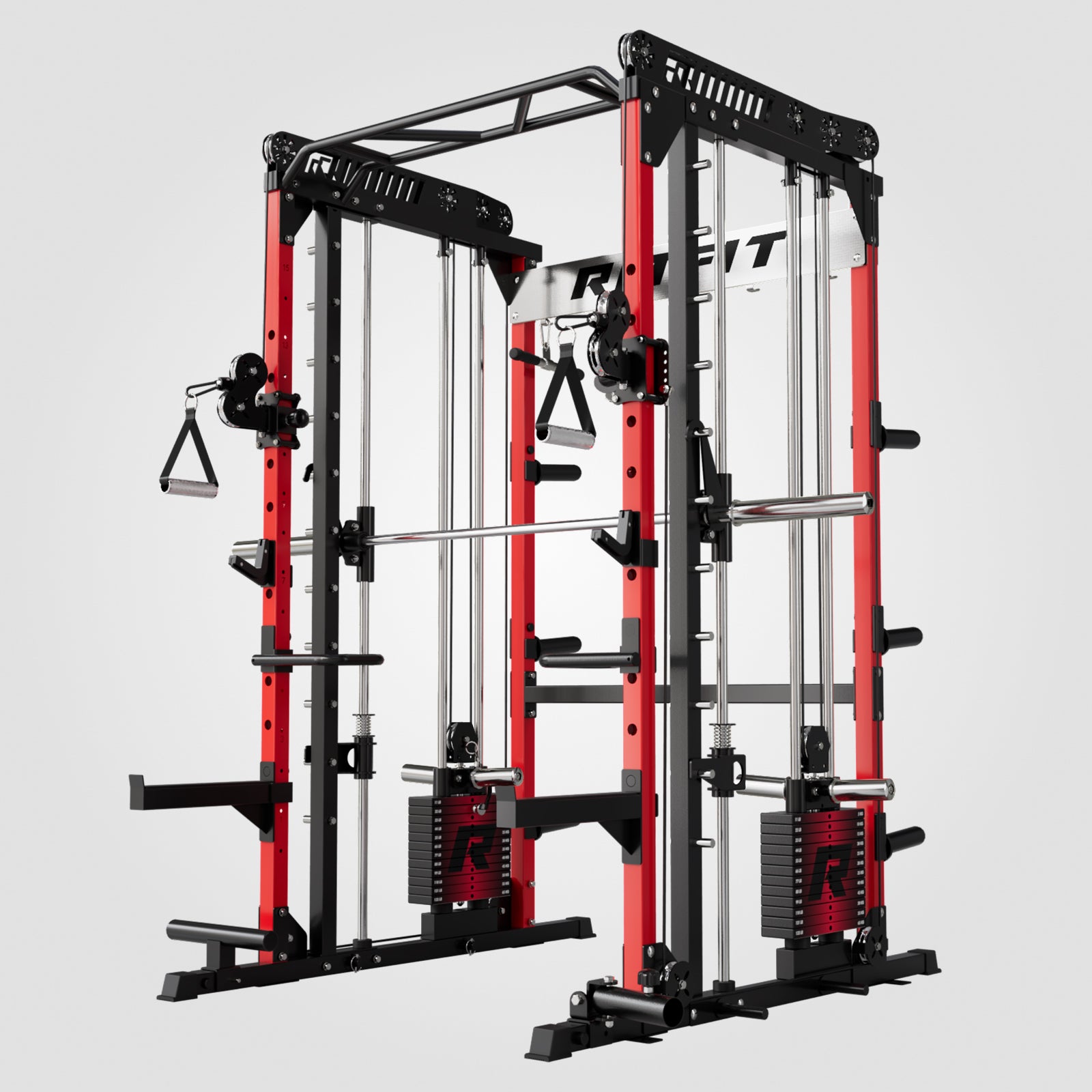
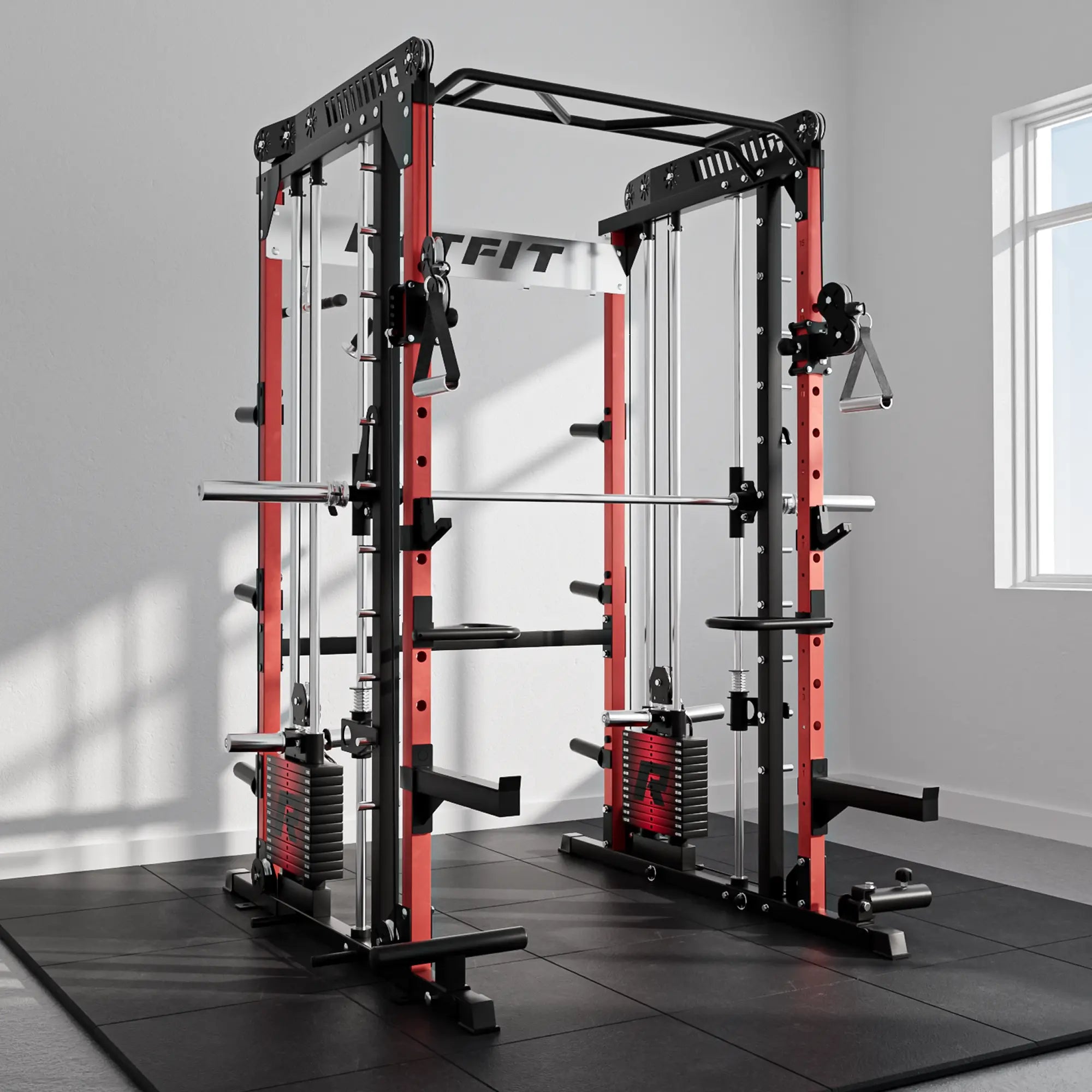
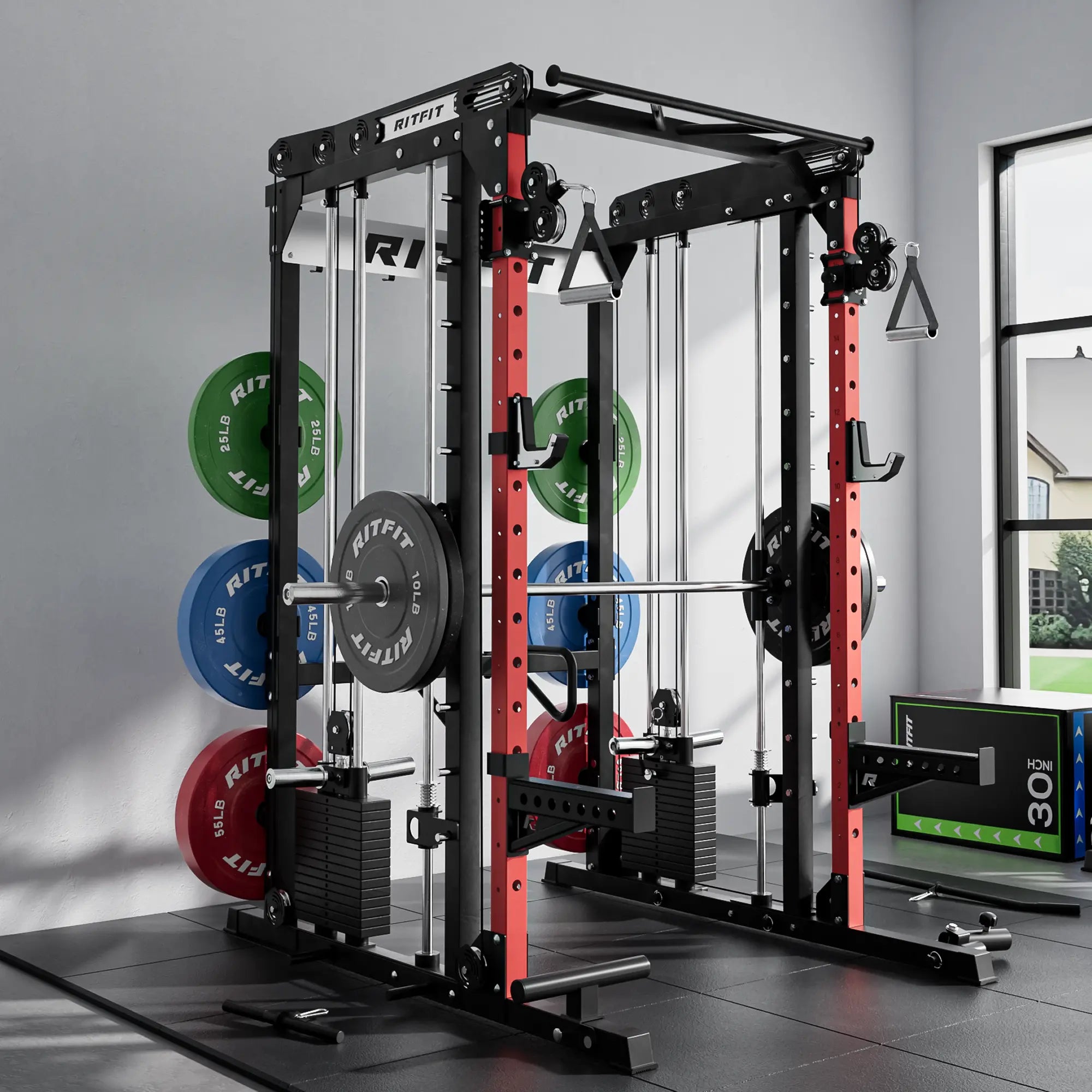
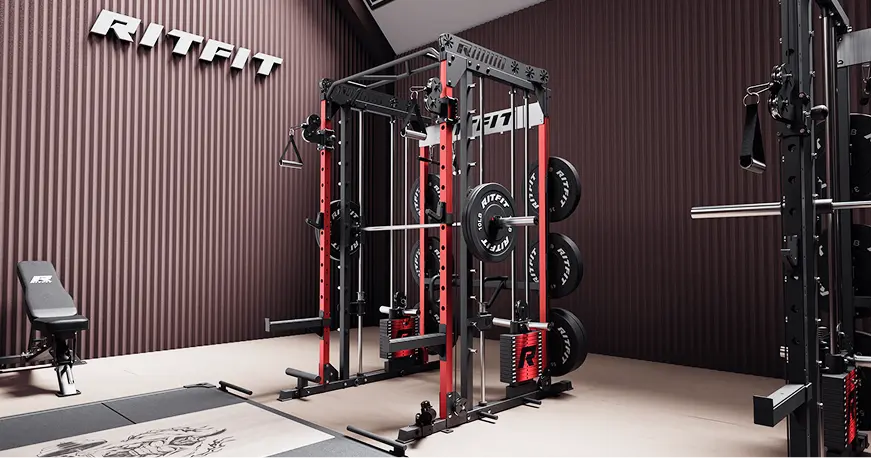
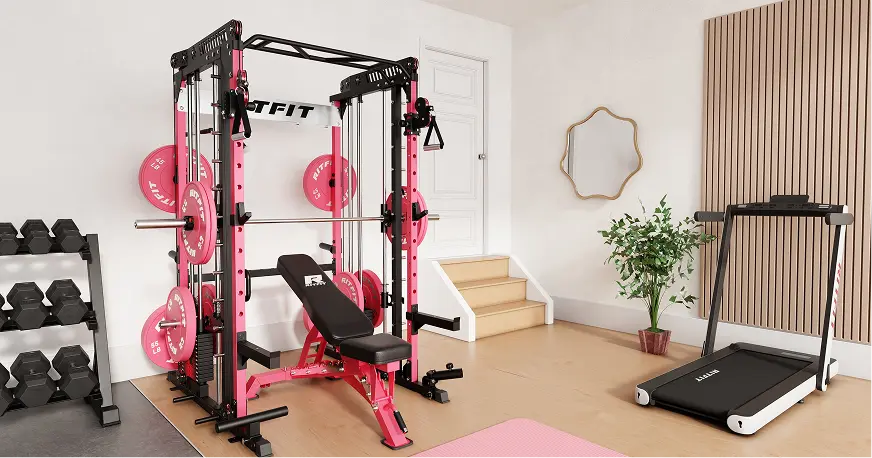
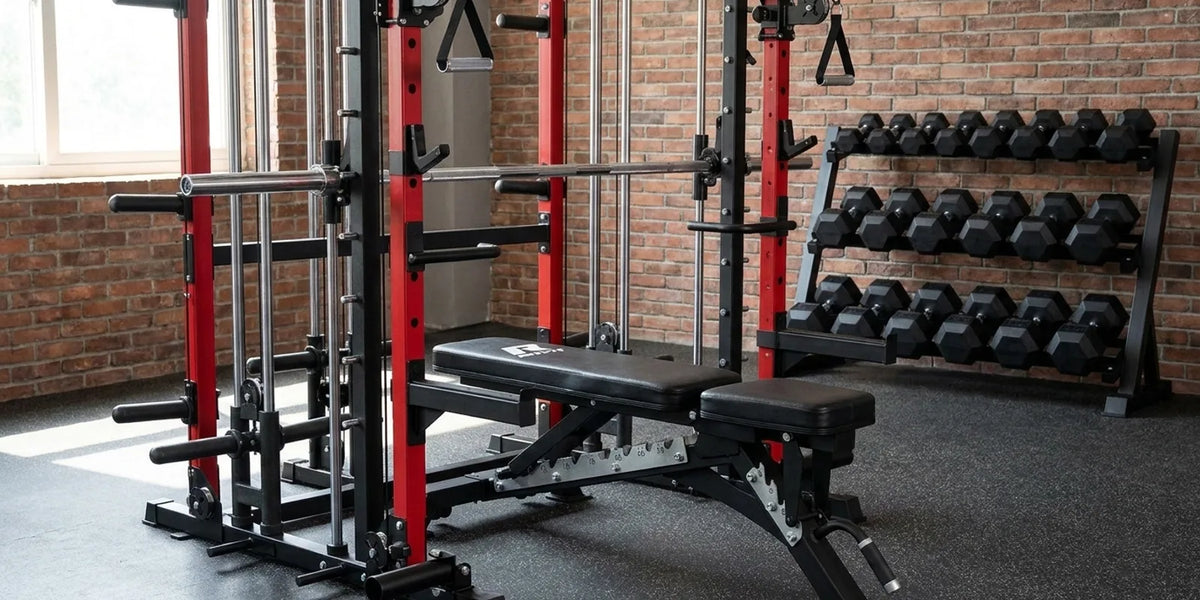
The RitFit M2 Smith Machine suits floor presses because the rail keeps the bar vertical and the safety catches sit in fixed positions below your floor level. That combination removes the balance work and gives a failed rep somewhere to land.
- Bar path: The rail removes the sideways wobble that makes a free weight floor press harder to balance.
- Safety: Fixed catch positions let you set a height just below the bottom of your floor press.
- Variety: Owners report using the machine for a wide range of pressing and pulling movements.
- Space: One all in one station covers pressing work that would otherwise need a separate bench and rack.
The RitFit M2 Smith Machine pairs a guided rail with a cable station, so you can run the floor press on the bar and finish chest work on the cables. A RitFit M1 Smith Machine covers the same pressing work in a smaller footprint, and lifters who want a larger station can look at the M3 Power Rack Cable Crossover Smith Machine.
"We love our 3d smith machine. It took me and my wife a few hours to put it together. Pretty straight forward. Great machine and products."
EVAN E. Verified Buyer, RitFit M2 Multi-Functional Modular Home Gym Smith Machine Tailored to All Fitness Levels
FAQs About the Smith Machine Floor Press
Can you do a floor press on a Smith machine?
Yes. A Smith machine keeps the bar on a fixed vertical track, and the floor simply stops the elbows at the bottom, so the movement needs no leg drive and no bench. Set the hooks just above your reach, lie under the bar with your mid chest beneath it, and press straight up to lockout.
How low should the bar go in a Smith machine floor press?
The bar stops when the backs of your upper arms touch the floor, which usually lands the elbows at roughly 45 degrees from your torso. That is a half range press, so the bar travels less far than in a bench press and the bottom position never loads your shoulder as deeply.
Is a Smith machine floor press the same as a pin press?
No. A pin press rests the bar on adjustable safety pins, so you choose the depth and it is usually higher. A floor press stops when your upper arms reach the floor, so the depth is fixed by your arm length and body position rather than by a pin setting.
What muscles does the Smith machine floor press work?
The Smith machine floor press trains the triceps brachii and pectoralis major, with the anterior deltoid contributing less. Removing the bottom half of the range puts more of the lockout work on the triceps, and an upper half range test produced the highest triceps excitation of the three ranges studied.
How much weight should I use for a Smith machine floor press?
Start lighter than your bench press working weight and add load slowly. Because the floor press removes leg drive and shortens the range, most lifters can handle a similar or slightly higher load once they learn the setup, but the triceps fatigue faster. Use a weight you can control for three sets of five to eight clean reps.
Can you do a floor press on a Smith machine without a spotter?
Yes. The safety catches act as your spotter. Set them one notch below the lowest point of your press, so the bar settles on the catches if you fail, and keep your hands on the bar until it is fully hooked before you sit up and step away.
How often should you do a Smith machine floor press?
Twice a week is plenty for most lifters, usually as a second pressing movement after your main bench work. Keep it in a block for four to six weeks, then rotate it out. Add a small amount of weight when you can complete all your sets at the top of your rep range without the triceps giving out first.
Conclusion
The floor press fits your program when you want a pressing variation that stops at the elbows and keeps the shoulder out of the deepest part of the range. The Smith machine makes it practical, because the rail steadies the bar and the catches hold a missed rep.
Start with three sets of five to eight reps after your main press and add small amounts of weight as the triceps adapt. Build the setup around an M1 home gym package if you are starting a garage gym, and check the RitFit discount guide before you order.
Disclaimer
Training carries an inherent risk of injury, and this article is general information rather than individual coaching. Consult a qualified medical or fitness professional before starting a new pressing variation, especially if you have a history of shoulder or elbow problems.
References
1. Fischer J, Burger C, Manieu Seguel JA, et al. Acute muscle excitation response across various bench press ranges of motion. Sci Rep. 2025;15(1):14105. doi:10.1038/s41598-025-98354-9. PMCID: PMC12019332
2. Tsoukos A, Wilk M, Krzysztofik M, Zajac A, Bogdanis GC. The Impact of Range of Motion on Applied Force Characteristics and Electromyographic Activity during Repeated Sets of Bench Press Exercise. J Hum Kinet. 2024;91(Spec Issue):189-204. doi:10.5114/jhk/186341. PMCID: PMC11057621
3. Stastny P, Gołaś A, Blazek D, et al. A systematic review of surface electromyography analyses of the bench press movement task. PLoS One. 2017;12(2):e0171632. doi:10.1371/journal.pone.0171632. PMCID: PMC5295722