Table of Contents
- The Foundation of Flow: Strategic Layout and Spatial Planning
- Vertical Volume: Ceiling Height and Clearance
- Zoning Your Space
- Floor Marking for Safety and Order
- The Power Cage Ecosystem
- Taming the Iron: Weight Plate Organization
- Barbell Logic: Protection and Access
- Dumbbells: The Sprawl Problem
- Wall Control: The Pegboard Revolution
- Bench Intelligence: Mobile and Vertical
- The Accessory Ecosystem: Cable Attachments and Small Goods
- Environmental Control: Lighting, Climate, and Rust
- Maintenance: The Habit of Order
Walking into your garage gym should feel like stepping into a sanctuary of strength, not an obstacle course of tripping hazards. We all know the feeling: you’re ready to crush a personal best, but first, you have to move the leaf blower, untangle a resistance band from your lawnmower, and step over a pile of disorganized weight plates. It kills your momentum before you even touch a barbell.
A disorganized gym isn’t just ugly; it’s a safety risk and a motivation killer. But with a strategic approach to layout, smart storage solutions, and the right equipment, you can transform even the tightest garage into a pro-level training facility.
Let’s build a space that works as hard as you do.
Key Takeaways
- Flow is the goal, storage is the method. Design your layout so you can move through workouts without constant reshuffling.
- Define a safety box first, then build zones so equipment always returns to the same home.
- Use the walls and the ceiling before you add more floor racks. Floor space is your training space.
- Choose one centerpiece unit or rack ecosystem that stores plates, bars, and attachments on the same footprint.
- Make cleanup automatic with a two-minute reset rule and a simple weekly maintenance routine.
The Foundation of Flow: Strategic Layout and Spatial Planning
The difference between a cramped, frustrating garage gym and a spacious, inspiring training hall often has nothing to do with the square footage and everything to do with flow.
Flow is the invisible architecture of your workout, the ability to move from a heavy squat to a pull-up and then to a dumbbell accessory movement without needing to reshuffle equipment or contort your body to avoid hitting a wall. Before you drill a single hole or buy a single mat, you must master the floor plan.
The Safety Box Concept
The first rule of gym organization is defining your Safety Box. This is the non-negotiable footprint required for your primary compound lifts.
Many homeowners make the mistake of measuring only the equipment's footprint (for example, “The rack is 4 feet wide, so I only need 4 feet of space”). This is a recipe for disaster.
For a standard barbell workflow, you need a functional area of approximately 10 feet by 10 feet. Here is the breakdown of why this space is critical:
- Barbell Length: A standard Olympic barbell is roughly 7.2 feet long.
- Loading Clearance: You cannot safely load a 45 lb plate if the barbell sleeve is flush against a wall. You need at least 18 to 24 inches of clearance on each end of the bar to stand comfortably and slide a plate on.
- Lateral Stability: When squatting or pressing, lifters naturally sway or adjust their feet. Having walls or clutter too close creates a subconscious “cramping” effect that can alter your form and lead to injury.
Therefore, your power rack serves as the anchor of this safety box. If you place a rack like the RitFit Power Cage, it should ideally be centered on a wall or positioned with sufficient buffer zones on either side.
Quick check
Stand with a bar in your hands and mimic your widest setup for squat and press. If you feel like you must move carefully to avoid contact, your Safety Box is too small.
The Half Garage Protocol
Most of us don’t have the luxury of a dedicated 1,000-square-foot warehouse. We are working in two-car garages that still need to house a sedan or single-car garages that double as storage units.
This requires the “Half-Garage” layout strategy.
In this setup, the gym must coexist with a vehicle. The key is to linearize your layout. Instead of building a “center of room” island, you push the gym infrastructure to the perimeter.
- The Shared Lane: Keep the center of the floor clear. This serves as your deadlift platform and lunge lane when the car is pulled out and the parking spot when the car is pulled in.
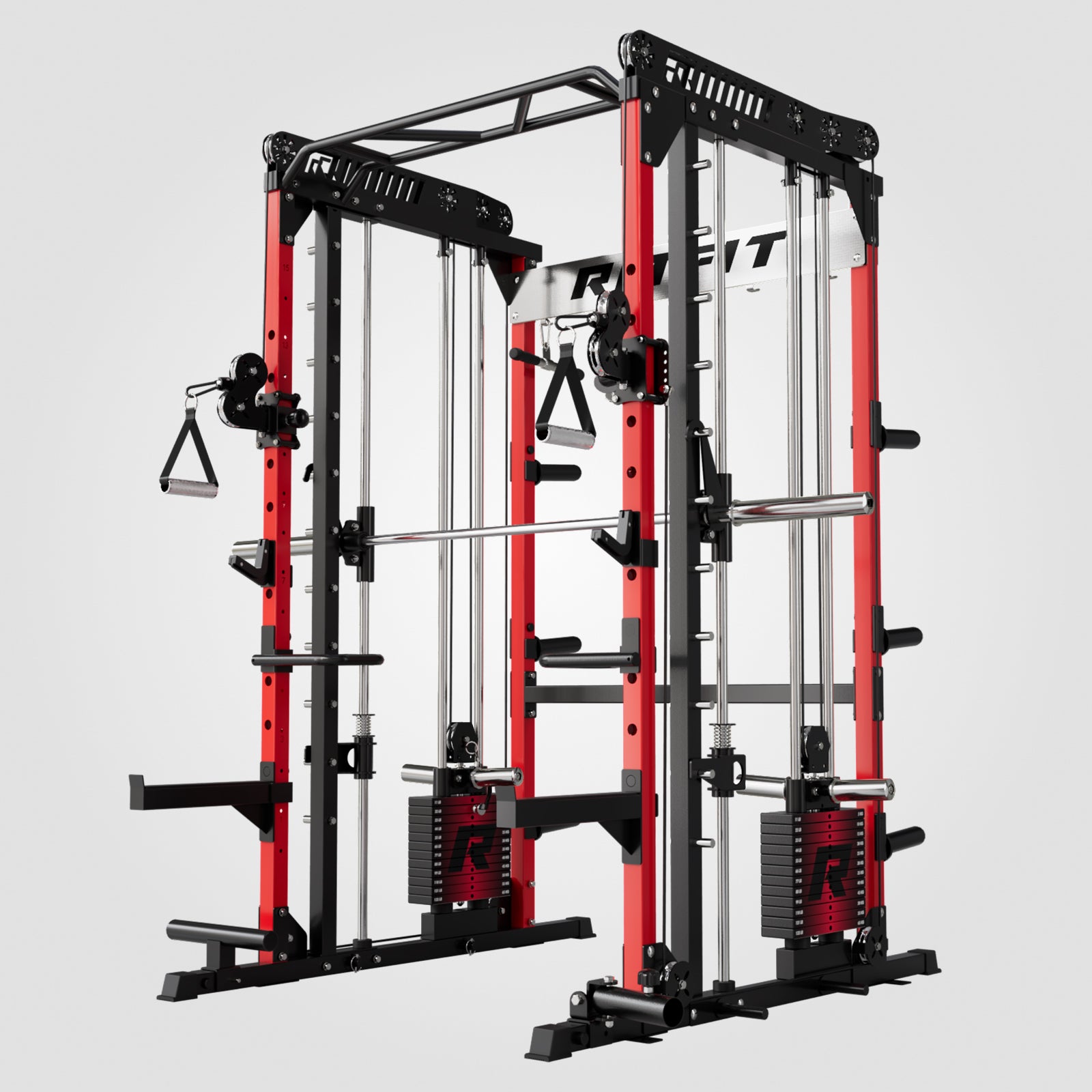
- Depth Management: Choose equipment with a shallow depth profile. A full power cage is excellent, but if space is extremely tight, consider how far the uprights protrude. However, modern all-in-one machines, like the RitFit M1 Series, are designed specifically for this. They pack the footprint of a rack, a Smith machine, and a cable system into a single unit that sits relatively flush against a back wall, preserving the depth of the garage for parking.
- Vertical Volume: Ceiling Height and Clearance
Vertical Volume: Ceiling Height and Clearance
Floor space is 2D; your gym is 3D. The vertical dimension is the most often ignored storage asset.
Standard residential garages vary in height, but for a fully functional gym where you plan to do standing overhead presses or pull-ups, you ideally want 8.5 to 9 feet of clearance.
- If you are blessed with high ceilings (10 ft+), you have “free” storage real estate. This is where you can install overhead racks for non-gym items (camping gear, holiday decorations) to clear the floor for your weights.
- If your ceilings are lower (under 8 ft), your storage strategy must stay grounded. You won’t be able to utilize vertical barbell holders that require lifting the bar high to slide it out. Instead, you will need to rely on horizontal wall gun racks.
Zoning Your Space
Organization is about categorization. To keep your gym tidy, divide it into functional zones. This prevents “equipment migration,” where dumbbells end up near the squat rack and bands end up tangled in the lat pulldown.
Zones (text version of the layout table):
| Zone | Primary Activity | Key Equipment | Storage Focus |
| The Power Zone | Heavy Compounds | Rack, Barbell, Plates | Weight trees, Rack attachments |
| The Accessory Zone | Hypertrophy, Arms | Dumbbells, Bench | Tiered Racks, Wall Control |
| The Cardio/Mobility | Conditioning, Warm-up | Jump rope, Yoga mat | Wall hooks, High shelves |
| The Hybrid Lane | Deadlifts, Lunges, Car | Stall mats, Open floor | Must remain clear |
By strictly adhering to these zones, cleanup becomes automatic. You don’t have to think about where the dumbbells go; they go to the Accessory Zone.
The Floor Plan: Ground-Up Organization
We can’t talk about storage without talking about the floor. The floor dictates where you can place heavy storage racks and how you define your zones. Concrete is the enemy of organization; it is cold, dusty, slippery, and loud.
The Stall Mat Standard
Forget expensive, flimsy foam puzzle tiles that pull apart when you do a burpee. The gold standard for garage gym flooring is the 3/4-inch rubber horse stall mat. These are typically 4x6 feet and weigh about 100 pounds each.
Why they aid organizations: Mats create a visual boundary. If you lay down a 10x10 block of mats, that is your gym. Anything off the mats is “out of bounds.” This visual containment helps keep clutter from spreading into the rest of the garage.
Installation: To keep your layout tight, you may need to cut these mats. Use a sharp utility knife and a straight edge (like a T-square). Score the mat multiple times rather than trying to slice through in one pass. Place a 2x4 under the cut line to open up the seam as you slice, reducing friction.
Floor Marking for Safety and Order
In a tight garage, precise equipment placement is key. Professional gyms use floor markings to ensure benches and racks are always centered. You can do the same.
- Tape Zones: Use high-quality vinyl floor tape (like 3M 471) to mark the “feet” of your bench. This ensures that when you pull the bench out for a workout and put it back, it always returns to the exact optimal storage spot.
- The “No-Go” Zone: If you have a swing radius for a door or a zone where the garage door tracks come down, mark this with yellow/black hazard tape. This prevents you from storing a plate tree or dumbbell rack in a spot where it will get hit by a door.
The Centerpiece: Selecting Equipment with Storage Intelligence
The single biggest space-saver in a garage gym is choosing a “centerpiece” unit that doubles as a storage hub. If you buy a bare-bones squat stand, you still need a place to put your plates, your bar, and your cable attachments. This forces you to buy more storage racks, cluttering the floor.
The All-In-One Solution
This is where machines like the RitFit M1 Series or the RitFit Buffalo shine. These aren’t just workout stations; they are storage ecosystems.
- Integrated Plate Storage: These units typically feature weight horns on the rear or side uprights. This allows you to store 300+ pounds of plates on the machine itself. This creates a “gravity anchor,” making the machine more stable, while eliminating the need for a separate weight tree.
- Barbell and Accessory Docking: High-end all-in-ones often include vertical barbell holders built into the frame and hooks for cable attachments. By centralizing all your gear onto one footprint, you free up the rest of the garage for movement.
The Power Cage Ecosystem
If you prefer a traditional power cage (like the RitFit Power Cage), view the uprights as storage potential.
- Band Pegs: Utility pins at the base or top of the rack can hold resistance bands, chains, or jump ropes.
- Weight Horn Attachments: Most 2x2 or 3x3 racks allow for add-on weight horns. If you have a 4-post rack, use the rear posts for plate storage.
- Crucial Note: Ensure your rack is bolted down or heavy enough that loading plates on the back doesn’t cause tipping issues during heavy racking on the front.
Taming the Iron: Weight Plate Organization
Weight plates are the “entropy” of a gym; they naturally want to end up scattered on the floor. This is a massive trip hazard and creates a chaotic visual environment. You need a dedicated system.
Strategy 1: The Vertical Weight Tree
If you have a mobile setup (meaning you might rearrange your gym often), a dedicated weight tree on wheels is ideal. It keeps the plates condensed into a 2x2 foot square.
- Organization Tip: Always stack the heaviest plates on the bottom and the lightest on top. This lowers the center of gravity, preventing the tree from tipping over.
Strategy 2: Wall-Mounted Storage (The Zero-Footprint Hack)
For narrow garages, floor space is gold. Wall-mounted plate pegs are the ultimate hack. These are sturdy steel pins that lag-bolt directly into your wall studs or a wooden stringer.
Why it works: It takes the plates completely off the floor. You can mount them vertically, 45s at the bottom, then 35s, 25s, etc. This utilizes the “dead space” on your wall that is too low for shelving but perfect for heavy iron.
Structural Warning: You must hit the center of the studs. Weight plates generate massive shear force. Do not use drywall anchors; use 3-inch lag screws into solid wood or masonry anchors for concrete walls.
Bumper Plate Management
If you use bumper plates (like the RitFit Patriotic Color Bumper Plates), be aware they are much thicker than iron plates. A standard weight peg that holds five iron 45s might only hold two or three bumper 45s. You will need more storage pegs or a specifically designed “toaster rack” (a floor rack with dividers) to hold bumpers efficiently.
Barbell Logic: Protection and Access
Your barbell is likely the most expensive single piece of steel in your gym. Leaning it against a wall in the corner is a crime against equipment. It puts pressure on the bearings/bushings and exposes the sleeve to moisture and dust from the floor.
The Gun Rack (Wall Mount)
The horizontal wall rack (often called a “gun rack”) is the best way to display and protect bars. It holds the bar by the shaft, keeping the sleeves free from contact. This also keeps the bars high, away from any water that might pool on a garage floor during rain.
The Vertical 9-Bar Holder
If you have a collection of bars (power bar, Olympic bar, curl bar, safety squat bar), a wall rack takes up too much vertical space. A vertical 9-bar holder box sits on the floor and occupies less than 1 square foot while holding nearly 10 bars. This is dense, efficient storage.
Dumbbells: The Sprawl Problem
Dumbbells are tricky because there are so many of them. A full set of fixed dumbbells (5–50 lbs) takes up a lot of linear wall space.
The Tiered Rack Necessity
If you own a set of fixed hex dumbbells (like the RitFit Rubber Hex Dumbbells), you absolutely need a 3-tier rack. Do not try to line them up on the floor; you will lose 10 feet of usable space. A 3-tier rack condenses that same set into about 4 feet of width.
- Ergonomics: Store your heaviest bells on the middle shelf (waist height). This saves your lower back from having to deadlift the 80s off the floor or reach high overhead to rack them. Put the light weights (5s, 10s) on the bottom shelf.
The A-Frame Solution
For smaller sets (for example, 5–30 lbs), the A-frame rack is a space-saving miracle. It utilizes vertical space rather than horizontal width. An A-frame can sit in a corner or between two larger machines, occupying a tiny 2x2 footprint.
Adjustable Dumbbells: The Ultimate Space Hack
If your garage is truly tiny (for example, a 10x10 room), consider swapping a full set of fixed bells for adjustable dumbbells. While you sacrifice the convenience of “grab and go,” you gain back an enormous amount of floor space. A single pair of adjustable bells replaces 15 pairs of fixed weights and can live tucked under your bench or in a closet.
Wall Control: The Pegboard Revolution
Once the big iron is sorted, you are left with the “clutter items”: resistance bands, lifting belts, chains, collars, fractional plates, and cable attachments. These are the items that make a gym look messy.
The solution is the pegboard. But not the flimsy particle board from the hardware store; you need heavy-duty metal systems or specific gym pegboards like the RitFit PBM1 Pegboard Attachment.
The RitFit PBM1 Advantage
Designed specifically to integrate with racks like the M1, the PBM1 pegboard offers a dedicated zone for accessories. Instead of drilling into your drywall, you attach the storage directly to your rack structure. This keeps your bands and chains right where you use them.
Stringers and Strip Walls
If you need more space, install a “stringer” board. Screw a 2x6 piece of lumber horizontally across your wall studs. This gives you a solid wood anchor point along the entire length of the wall.
- Utility: You can drive heavy-duty garage hooks into this stringer anywhere you want, without hunting for a stud every time. This is perfect for hanging heavy chains, weighted vests, or multiple lifting belts.
DIY Band Storage
Resistance bands are annoying to store because they tangle.
- The Hack: Use a simple coat rack or a “tie and belt” rack mounted to your stringer. The individual fingers of the rack allow you to separate bands by color/tension so you can grab the specific one you need without fighting a rubber knot.
Bench Intelligence: Mobile and Vertical
The bench is the most movable piece of equipment in the gym. It needs to be versatile.
Vertical Storage Capability
When buying a bench, look for “stand-on-end” capability. Benches like the RitFit Gator Adjustable Bench are designed to be tipped up and stored vertically. This reduces the bench’s footprint from ~10 square feet to ~2 square feet. When you need the floor space for deadlifts or plyometrics, you simply tip the bench up and push it to the wall.
Foldable Options
For extreme space saving (for example, in a multi-use room), a foldable bench like the RitFit PWB01 is ideal. It can collapse flat and slide under a bed or hang on a wall hook. However, ensure that the folding mechanism is robust (high weight capacity) so safety isn’t compromised for storage.
The Accessory Ecosystem: Cable Attachments and Small Goods
If you have a functional trainer or lat pulldown, you have handles: ropes, V-bars, D-handles, and straight bars.
Shelf vs. Bin
- The Bin Mistake: Do not throw all your handles in a plastic bin. You will never find the one you want, and the metal will clang and chip.
- The Shelf Solution: Install a shallow floating shelf or use a specialized cable attachment rack. These racks have specific slots for each handle type, displaying them like tools in a workshop.
- Pegboard Hooks: Heavy-duty hooks on your RitFit PBM1 pegboard are perfect for hanging D-handles and ropes. Gravity does the organizing for you.
The “Pockets” of the Gym
Where do you put your phone, keys, and water bottle?
- Hack: Install a small “valet shelf” or a magnetic spice rack near the entrance or on the side of your power rack. This gives you a dedicated spot for your personal items so they don’t end up on the floor where they might get crushed by a dumbbell.
Environmental Control: Lighting, Climate, and Rust
Organization isn’t just about where things go; it’s about the environment they live in. A dark, damp garage destroys equipment.
Lighting: Banishing the Dungeon
Stop relying on the single dim bulb that came with your garage opener. Good lighting makes the space feel bigger and cleaner.
- Hexagon LED Grid: These are trendy for a reason. They provide massive, shadow-free light coverage and look incredible.
- Budget Hack (Deformable LEDs): For under $30, you can buy screw-in “deformable” LED garage lights. They screw into a standard light socket but have 3–4 adjustable LED panels that blast out 6000+ lumens. It’s a 30-second install that transforms the room.
Rust Prevention: The Invisible Clutter
Rust is equipment cancer. In a garage, humidity is the enemy.
- Dehumidifier: If you live in a humid climate, a dehumidifier is not optional. Run it to keep humidity below 50%.
- Oil Your Bars: Every month, take 5 minutes to brush the chalk out of your barbell knurling (chalk absorbs moisture) and wipe the bar down with a light coat of 3-in-1 oil or a specific barbell maintainer. This keeps them spinning freely and rust-free.
- Insulation: Insulating your garage door with a simple DIY foam kit helps regulate temperature, preventing the condensation swings that cause rust.
Heating and Cooling
If the gym is miserable to be in, you won’t use it.
- Cooling: In summer, air movement is key. Wall-mounted industrial fans or high-velocity floor fans can make a 90-degree garage bearable. Ideally, open the garage door and place a fan blowing out to exhaust the hot air, creating negative pressure that pulls cooler air in.
- Heating: For winter, an oil-filled radiator heater is safe and effective for taking the chill off. Avoid propane heaters unless you have excellent ventilation to avoid carbon monoxide buildup.
Maintenance: The Habit of Order
The best organization system in the world fails without a maintenance habit. Treat your home gym like a commercial facility where you are the manager.
- The “Rack Your Weights” Rule: It applies at home too. Never end a workout until every plate is on the tree and every dumbbell is in the rack. This resets the space for tomorrow.
- Weekly Clean: Every Sunday, take a leaf blower to the garage. Open the door and blow out the dust, chalk, and leaves. It takes 2 minutes and keeps the mats pristine.
- Quarterly Tightening: Go around your rack and bench with a wrench. Vibrations from dropping weights loosen bolts over time. A tight gym is a safe gym.
FAQ
How much space do I really need for a safe rack setup?
A practical target is a safety box around ten feet by ten feet for barbell work, including room to load plates and step back safely. If your garage is tighter, prioritize clearances on both ends of the bar and keep the floor around the rack free of storage items.
What is the fastest way to make a messy garage gym feel organized?
Start with plates and dumbbells. Put plates on a tree, rack horns, or wall pegs, then get dumbbells onto a tiered rack. Once the heavy items are off the floor, add hooks or a pegboard for bands and attachments.
Are wall-mounted plate pegs safe?
They can be safe if you mount them into solid studs or masonry with appropriate hardware. Avoid drywall anchors for heavy plates. If you are not sure about your wall structure, use a floor rack instead or consult a professional.
How do I store a barbell so it does not rust or get damaged?
Use a wall-mounted horizontal rack or a vertical multi-bar holder to keep sleeves off the floor. Keep humidity controlled, wipe chalk off monthly, and apply a light protective oil when needed.
What flooring is best for a garage gym?
Three-quarter-inch stall mats are a durable standard for many garage gyms. They reduce noise, protect the slab, add traction, and visually define your training zone so clutter does not creep across the whole garage.
How do I keep the gym usable when I still need to park a car?
Use the Half Garage layout strategy. Push equipment to the perimeter, keep a shared lane clear, and store movable items like benches and dumbbells along the wall. Mark a consistent parking boundary so the gym and car do not fight for the same space.
Conclusion
Your garage gym is more than just a place to sweat; it is a physical manifestation of your discipline. When you master the organization of your space, you remove the friction that stands between you and your workout. No more hunting for clips, no more tripping over plates, and no more dreading the setup.
By implementing these strategies, establishing a “Safety Box,” utilizing the storage power of equipment like the RitFit M1, mastering vertical wall control, and maintaining your environment, you create a flow that pulls you in. The iron doesn’t get lighter, but the burden of training does.
Reclaim your space, organize your gear, and let the gains begin.