








Table of Contents
- The Thermodynamics of the Ice Box
- Active Heating Strategies
- Comparison of Heating Options
- The Moisture Menace: Condensation and Dew Point
- Controlling the Dew Point
- The War on Rust: Prevention and Maintenance
- Winterizing the Envelope: Insulation and Seals
- Building a Thermal Fortress: Flooring Solutions
- The Human Element: Clothing and Physiology
- Equipment Care in Extreme Cold
This guide is for informational purposes only. Always follow local codes, manufacturer instructions, and professional advice when modifying your garage or using heating equipment.
Walking into a garage gym in January is an experience that separates the committed from the casual. The air is still and heavy, the concrete slab radiates a bone-deep chill, and the barbell sits in the rack like a dormant icicle, waiting to strip the heat from your hands the moment you grip it. For the garage gym owner, winter isn't just a season; it is a logistical adversary. Training in these conditions requires a fundamental shift in mindset, from expecting the climate-controlled comfort of a commercial facility to mastering the raw elements of your own domain. It is about reclaiming consistency when the thermometer drops and ensuring that neither your motivation nor your expensive equipment succumbs to the freeze. This guide is a tactical manual for that battle.
Key Takeaways
- Winter garage training is mostly a humidity and condensation problem, not just an air temperature problem.
- If your equipment is ice-cold, avoid blasting it with humid heat, because condensation forms fast and triggers flash rust.
- The fastest comfort win is sealing drafts and insulating the garage door, then adding targeted heat in your lifting zone.
- For equipment protection, “dry heat” plus humidity control beats raw heating power.
- A simple post-workout barbell routine prevents most winter rust issues.
- If you can keep a steady baseline temperature, you dramatically reduce cold soak and condensation risk.
The Thermodynamics of the Ice Box
To defeat the cold, you must first understand the battlefield. A garage is typically the most thermally compromised space in a home. Unlike the living quarters, which are wrapped in a continuous envelope of insulation and vapor barriers, the garage is often an afterthought in construction. It is a box designed to shelter vehicles, not humans. The walls may be uninsulated stud bays, the ceiling might be open to a vented attic, and the floor is almost certainly a slab on grade, a massive thermal bridge that conducts heat directly into the frozen earth.
The primary challenge is not just heating the air but managing the "cold soak" of the thermal mass. When a 45-pound plate sits in a 20-degree garage all night, it becomes a battery of cold energy. Heating the air to a comfortable 60 degrees does not immediately warm that iron. The moment you turn off your heater, the equipment acts as a heat sink, rapidly pulling the warmth out of the air. This dynamic creates the central struggle of the winter lifter: the race to warm the space versus the relentless pull of the thermal mass.
Furthermore, the garage door is a massive vulnerability. It is essentially a moving wall that is often made of thin sheet metal. Even an "insulated" door has gaps at the sides, top, and bottom where the wind can whistle through. In many setups, the garage door acts as a giant radiator in reverse, efficiently transferring any heat you generate inside directly to the outdoors. Understanding these inefficiencies is the first step toward fixing them. You are not just heating a room; you are fighting physics.
Active Heating Strategies
The market is flooded with devices that promise to heat your space, but for the garage gym owner, the choice comes down to a balance of fuel type, installation complexity, upfront cost, and operational noise. The "best" heater is the one that fits your specific infrastructure and tolerance for maintenance.
Forced Air Propane and Kerosene: The Brute Force Approach
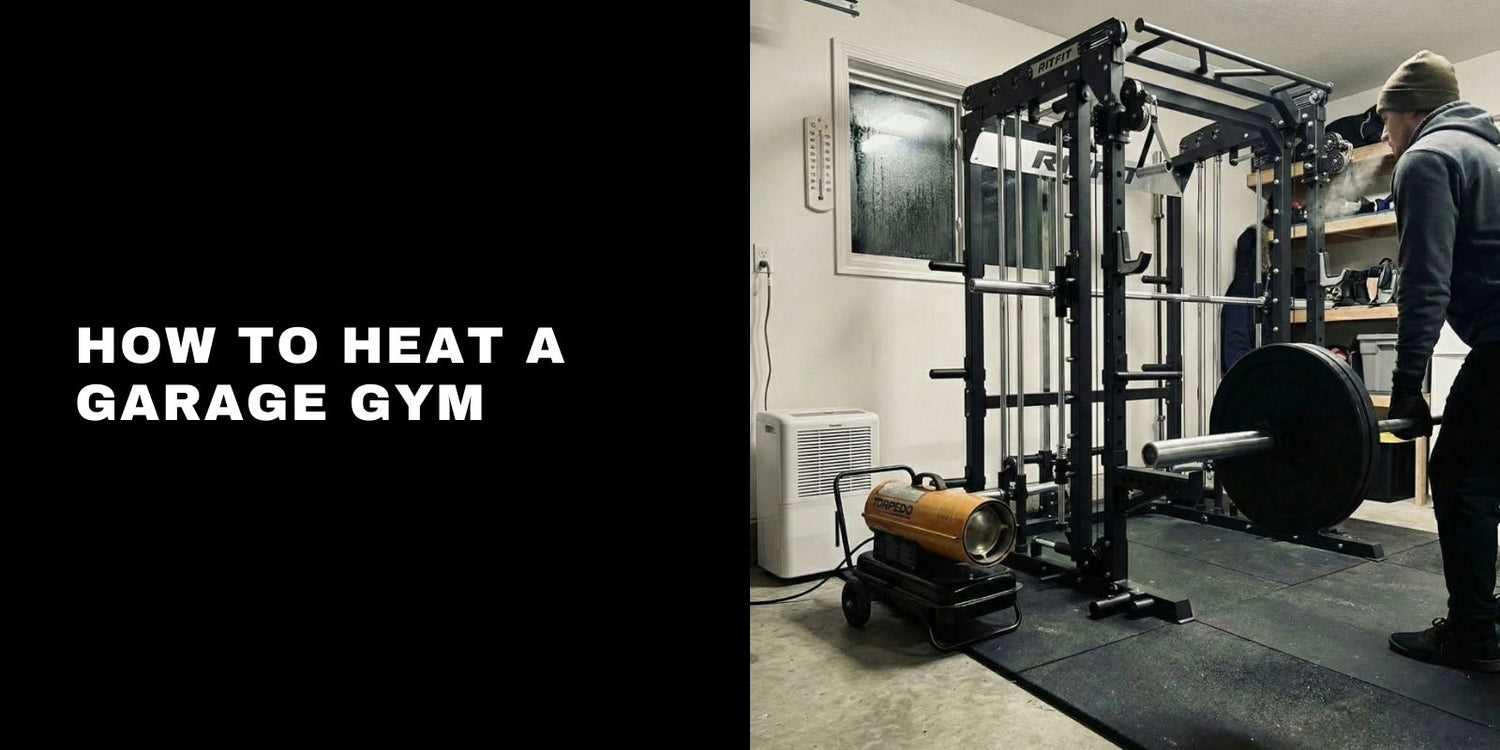
For decades, the "torpedo" or "salamander" heater has been the weapon of choice for those who need immediate, aggressive heat. These units are simple engines of combustion. You hook up a 20-pound propane tank or fill the reservoir with kerosene, plug it in, and it roars to life. A 60,000 BTU torpedo heater can raise the air temperature of a two-car garage from freezing to t-shirt weather in roughly 15 minutes.
The appeal is obvious: speed and power. For the lifter who decides to train on a whim, the ability to "blast and go" is invaluable. You turn it on while you change clothes and drink your pre-workout, and by the time you step into the garage, the air is warm.
However, this power comes with significant drawbacks. The noise is deafening, often comparable to a jet engine idling in your driveway. Listening to music or a podcast is impossible, and the constant roar can be mentally fatiguing during a heavy squat session. More critically, these are usually unvented units. They consume oxygen from the room and release combustion byproducts directly into your breathing space. While modern units have low-oxygen shutoff sensors, they still produce carbon monoxide and, most problematically for a gym, massive amounts of water vapor.
Burning hydrocarbons produces water. An unvented propane heater is essentially a humidifier that also produces heat. In a cold garage, this moisture load is dangerous for your equipment. As the warm, wet air hits the cold steel of your rack and bars, condensation forms instantly. This "sweating" is the primary cause of flash rust in winter gyms. If you use a torpedo heater, you must crack the garage door to allow for air exchange, which seems counterintuitive when trying to heat the space but is necessary for safety and moisture control.
The Diesel Heater Revolution
A fascinating trend migrating from the "van life" and trucking communities into the garage gym world is the use of diesel parking heaters. These small, intricate units operate on a completely different principle than the torpedo heater. They use a heat exchanger. The combustion of diesel fuel happens inside a sealed chamber, and the exhaust gases, along with the moisture, are vented outside through a small pipe. The air that is heated and blown into the garage never touches the flame.
This distinction is revolutionary for the garage gym. Because the exhaust is vented, diesel heaters produce a dry heat. They actively reduce the relative humidity of the space as they warm it up, rather than adding to it. This makes them arguably the best option for preserving equipment in a humid winter environment.
The trade-off is the "tinker factor." These are rarely plug-and-play. You need to mount the unit, drill a hole in the wall or create a window insert for the exhaust pipe, and provide a 12V DC power source (usually a battery or an AC-to-DC power supply). It is a DIY project, not a simple purchase. However, the fuel efficiency is staggering. A small tank of diesel can run a unit for hours on pennies, and the noise is a low hum rather than a roar. For the lifter who enjoys a project and wants the gold standard in dry heat without a gas line, the diesel heater is the current champion.
Electric Heating: Resistance and Infrared
Electric heaters are the cleanest option. There is no carbon monoxide, no moisture production, and no fuel tanks to refill. However, standard 120V household outlets severely limit their power. A typical 1,500-watt space heater produces about 5,100 BTUs. Compared to the 30,000 to 60,000 BTUs of a propane unit, this is negligible. In an uninsulated garage, a 120V heater is fighting a losing battle against heat loss.
To make electric viable, you generally need 240V power, the same outlet used for an electric dryer or oven. A hardwired 240V electric garage heater can pump out 5,000 to 7,500 watts, providing a steady, clean baseline of heat. They are silent and maintenance-free, but installation requires an electrician or serious electrical know-how.
Infrared electric heaters offer a different tactical advantage. Instead of trying to heat the air, which is constantly escaping, infrared heaters emit electromagnetic radiation that heats the objects it strikes. Standing under a mounted infrared heater feels like standing in the sun on a cold day. Your skin gets warm, the floor gets warm, and the bar gets warm, even if the air around you remains chilly.
This is highly efficient for a garage gym where you generally stay in one spot (the power rack or platform). By aiming the heater at your lifting zone, you can create a "cone of warmth" without paying to heat the storage boxes in the corner. The downside is the directional nature; step out of the beam, and you freeze. Additionally, because they don't warm the air, they don't help much with the ambient temperature recovery between sets if you walk away.
Mini-Split Heat Pumps: The Ultimate Solution
The "end game" for garage climate control is the ductless mini-split heat pump. These systems provide both heating and cooling, solving the problem for the entire year. A mini-split doesn't generate heat by burning fuel; it moves heat from the outdoors to the indoors using a refrigerant cycle, even in freezing temperatures.
They are incredibly efficient, whisper-quiet, and allow you to keep the garage at a baseline temperature (say, 50°F) all the time, then ramp it up to 65°F for training. This constant conditioning prevents the "cold soak" of the equipment, meaning your bar is never freezing to the touch. They also actively dehumidify the air, solving the moisture problem.
The barrier, of course, is cost. Between the unit itself and the installation, a mini-split is a significant investment, often running into the thousands if professionally installed. However, DIY-friendly units (like MrCool) have disrupted this market, allowing handy homeowners to install pre-charged systems without specialized HVAC tools. For the serious lifter who views their garage as a permanent gym, this is the best investment you can make.
Comparison of Heating Options
| Heater Type | Best Application | Pros | Cons | Moisture Impact |
|---|---|---|---|---|
| Forced Air Propane (Torpedo) | Rapid heating of uninsulated spaces | High power, portable, cheap | Very noisy, requires ventilation, fuel handling | High (Adds moisture) |
| Vented Propane/Gas (Unit Heater) | Permanent heating for serious shops | Powerful, thermostat control, clean air | Professional install (gas lines, venting), expensive | Neutral (Vents moisture out) |
| Diesel Heater | DIYers wanting dry, efficient heat | extremely fuel efficient, dry heat, cheap | Complex DIY install, requires 12V power & exhaust | Negative (Dries the air) |
| Electric (120V Space Heater) | Small, insulated rooms or spot heat | Plug-and-play, safe, cheap | Very low power, ineffective in large/cold spaces | Neutral |
| Electric (240V Hardwired) | Maintaining baseline temp | Clean, quiet, zero maintenance | Requires 240V circuit, slower to heat than gas | Neutral |
| Infrared (Radiant) | Drafty garages, specific lift zones | Instant heat sensation, silent, efficient | Only heats what it hits, cold spots remain | Neutral |
| Mini-Split Heat Pump | Year-round climate control | Heats & cools, dehumidifies, super efficient | High cost, complex install, performance drops in extreme cold (< -15F) | Negative (Dehumidifies) |
The Moisture Menace: Condensation and Dew Point
In the context of a garage gym, water is more destructive than cold. The phenomenon that ruins barbells and rusts bolts is condensation. This occurs when warm, moisture-laden air comes into contact with a surface that is below the "dew point" temperature.
Imagine your garage is 30°F. Your barbell, plates, and rack are also 30°F. You walk in and turn on a vent-free propane heater. The heater pumps out hot air and water vapor. You also start exercising, sweating, and breathing heavily, adding more moisture. The air temperature rises to 60°F quickly. However, the heavy steel of your barbell has a high thermal mass; it is stubborn and stays at 30°F for a long time.
When that 60°F, humid air touches the 30°F steel, the air cools instantly. Cold air cannot hold as much water as warm air, so the excess moisture dumps out of the air and onto the bar. This is why you will often see your equipment "sweating" or dripping water in the winter. This water, mixed with the salts from your hands and chalk, is a recipe for rapid corrosion.
Controlling the Dew Point
The battle against rust is actually a battle to control the dew point. You have two levers to pull: raising the temperature of the equipment or lowering the humidity of the air.
Raising Equipment Temperature: Keeping the garage at a steady, moderate temperature (even 45-50°F) prevents the massive temperature delta that causes condensation. This is why insulation and a thermostat-controlled heater (like a mini-split or hardwired electric unit) are superior to the "blast and train" method. If the steel is never freezing, the risk of condensation plummets.
Lowering Humidity: If you cannot keep the garage warm 24/7, you must keep the air dry. A dehumidifier is the weapon of choice here. However, standard "compressor" dehumidifiers (the kind you buy at big box stores) rely on cooling coils to condense water. In a cold garage (below 60°F), these coils can freeze up, making the unit useless.
For the winter garage gym, a desiccant dehumidifier is the correct tool. These units use a silica gel wheel to absorb moisture, similar to the packets you find in beef jerky, but on a massive industrial scale. They work efficiently in temperatures down to 34°F because they don't rely on cooling coils. A side benefit is that the adsorption process generates heat, so a desiccant unit acts as a small heater, blowing warm, dry air into your gym. Running a desiccant dehumidifier on a timer or humidistat is one of the most effective ways to protect your investment in an unheated space.
The War on Rust: Prevention and Maintenance
Despite your best efforts with heating and humidity control, entropy is relentless. Rust never sleeps. Therefore, a proactive maintenance routine is non-negotiable for the garage gym owner.
The Hierarchy of Protectants
Not all rust preventatives are created equal. The goal is to create a barrier between the steel and the oxygen/moisture in the air without making the bar too slippery to use.
3-in-1 Oil: This is the classic "good enough" solution for most lifters. It is a mineral oil blend that is cheap and widely available. The application is simple: brush the chalk out of the knurling, apply a bead of oil along the shaft, brush it in with a nylon brush to penetrate the pores, and then wipe it completely dry with a lint-free cloth. The microscopic film left behind is the protection. If you leave the bar wet with oil, it will attract dust and chalk, creating a grinding paste that destroys the finish.
Fluid Film: For those in coastal environments or high-humidity areas, 3-in-1 may not be enough. Fluid Film is a lanolin-based product (derived from sheep's wool wax). It is legendary for its ability to creep into crevices and self-heal if scratched. It forms a thicker, more durable barrier than mineral oil. However, it has a distinct smell, often described as "barn-like" or "wet sheep," that some find offensive in a closed garage. It also leaves a tackier residue, so it is best used on parts of the gym you don't grip, like the uprights of your rack, the underside of benches, or stored specialty bars.
Boeshield T-9: Developed by Boeing for aviation, this is a paraffin wax-based solvent. It sprays on wet, penetrates, and then dries to a waxy film. This is excellent for garage gyms because, unlike oil or lanolin, the dry wax film does not attract dust or dirt. It is more expensive but offers a cleaner user experience.
Barbell Coatings Matter
When building a winter gym, your choice of barbell finish is the first line of defense.
- Bare Steel: The best feel, but zero protection. In a winter garage, these require daily maintenance, or they will turn orange in weeks.
- Black Oxide: Minimal protection. It is a conversion coating, not a plating, so moisture penetrates easily.
- Zinc (Bright or Black): Good protection, but can become chalky over time as the sacrificial zinc layer oxidizes.
- Stainless Steel: The gold standard. It has no plating to chip or peel, and the rust resistance is intrinsic to the metal. A stainless bar can endure a winter of condensation with a simple wipe-down, whereas a bare steel bar would need aggressive scrubbing. If your budget allows, stainless steel buys you time and freedom from maintenance.
The Maintenance Routine
The discipline of the garage lifter is defined by the post-workout ritual.
- Brush: Use a nylon brush (or brass for bare steel/black oxide) to remove every speck of chalk. Chalk is hygroscopic; it absorbs moisture from the air and holds it against the steel. Leaving chalk on a bar overnight in a humid garage is a guarantee of rust spots.
- Wipe: Run a microfiber cloth over the bar to remove skin oils and sweat salts.
- Inspect: Once a month, strip the sleeves (if you are comfortable) or check the spin. In extreme cold, the grease inside the sleeves can thicken, causing the bar to spin sluggishly or seize. If this happens, bring the bar inside to warm up. Do not spray WD-40 into the sleeves to loosen them; it is a solvent that will dissolve the grease and leave the bearings unprotected.
Winterizing the Envelope: Insulation and Seals
You can buy the most powerful heater on the market, but if your garage leaks air like a sieve, you are just heating the neighborhood. "Winterizing" is about sealing the envelope to retain the heat you generate.
The Garage Door: The Achilles Heel
The garage door is usually the largest uninsulated surface in the house. A standard metal pan door has an R-value near zero. It conducts cold in and heat out with perfect efficiency.
Insulation Kits: Adding insulation to the door panels is the highest ROI project for a garage gym. You can buy kits with pre-cut fiberglass or polystyrene panels, or DIY it with sheets of rigid foam board (XPS or EPS) cut to size. While the R-value increase might seem modest (R-4 to R-8), the real benefit is thermal mass dampening. The insulation prevents the metal door from becoming a super-cooled surface that radiates chill into the room. Note that adding weight to the door may require adjusting the tension on the garage door springs, a task that can be dangerous and is often best left to pros if you are unsure.
Sealing the Gaps: The gaps around the door are often worse than the door itself. Stand in your garage on a sunny day with the lights off. If you see daylight around the perimeter of the door, you are losing heat.
- Bottom Seal: The rubber gasket on the bottom often dries out or cracks. Replacing this with a heavy-duty, rodent-proof seal helps stop drafts and keeps water out.
- Side and Top Seals: Installing vinyl weatherstripping (stop molding) along the exterior frame presses against the door when closed, creating an airtight seal.
- The Threshold: If your concrete floor is uneven, a rubber threshold glued to the floor can fill the gaps that the bottom seal misses.
Walls and Ceiling
If your garage is unfinished (open studs), you have a massive opportunity. Installing fiberglass batts or rock wool is straightforward and transformative. However, do not neglect the ceiling. Heat rises. If you insulate the walls but leave the ceiling open to the rafters, your heat will simply ascend and dissipate through the roof vents. Creating a ceiling, even just stapling up a vapor barrier or rigid foam, traps that heat in the working zone.
Building a Thermal Fortress: Flooring Solutions
Concrete is a heat vampire. It has infinite thermal mass connected to the ground. Standing on bare concrete in winter sucks the heat out of your body through your feet, making it impossible to feel warm. The floor must be insulated.
The Stall Mat Standard
The base layer of any respectable garage gym is the 3/4-inch horse stall mat. Made of vulcanized rubber, these mats are dense, indestructible, and provide a basic thermal break. They lift you off the concrete and provide traction. Covering the entire footprint of your gym, rather than just the lifting area, prevents the cold from radiating up from the exposed slab sections.
The Insulated Lifting Platform: A DIY Masterclass
For the lifter in truly cold climates (Minnesota, Canada, etc.), a simple rubber mat is not enough. You need an insulated lifting platform. This is a DIY project that builds a thermal sandwich under your feet.
The Construction:
- Moisture Barrier: Lay down 6-mil plastic sheeting on the concrete to prevent moisture from wicking up into the wood.
- Insulation Layer: This is the secret weapon. Lay down a sheet of high-density rigid foam insulation. But you cannot use just any foam. Standard white Styrofoam (EPS) will crush. You need Extruded Polystyrene (XPS), usually a pink or blue board. Crucially, you must check the compressive strength. Foamular 150 (15 psi) is common, but for a platform that will take dropped deadlifts, Foamular 250 (25 psi) or higher (Foamular 400/600) is preferred to prevent the platform from becoming "squishy" over time.
- Structural Deck: On top of the foam, lay two layers of plywood (OSB or CDX). Run the bottom layer vertically and the top layer horizontally to lock them together. Screw them into each other (not into the foam or concrete) to create a floating, rigid slab.
- Top Surface: Finish with stall mats on the sides and a nice piece of hardwood or MDF in the center.
The result is a platform that is completely decoupled from the cold earth. Standing on this platform feels significantly warmer than the surrounding floor because the foam prevents the concrete from stealing your body heat. It is a game-changer for long deadlift or squat sessions.
The Human Element: Clothing and Physiology
You cannot change the weather, but you can change your armor. Training in a cold garage requires a clothing strategy that manages sweat while retaining heat.
The Failure of Cotton
Cotton is the enemy in the garage gym. It is hydrophilic; it loves water. When you sweat in a cotton t-shirt, it gets wet and stays wet. In a 40°F garage, a wet shirt becomes a cold compress against your skin the moment you stop moving. This leads to rapid cooling and shivering between sets.
The Merino Advantage
The superior choice is merino wool. Unlike cotton, wool retains its insulating properties even when wet. It pulls moisture away from the skin into the core of the fiber, leaving the surface feeling dry. It is also naturally antimicrobial, meaning you can re-wear a hoodie a few times without it smelling like a locker room, a nice bonus for laundry loads. Synthetic base layers (polyester/spandex) are a good second choice for wicking, but they tend to hold odors aggressively.
Hands and Feet
Cold feet will end a workout faster than fatigue. Thick wool socks are mandatory. Invest in quality hiking socks that offer insulation without being so thick they ruin the fit of your lifting shoes.
Hands are the hardest part. Gripping a freezing barbell is painful and reduces your neural connection to the weight. Thick winter gloves are dangerous for lifting because they effectively increase the bar's diameter and ruin grip security. The solution is thin, high-dexterity gloves. The solution is thin, high-dexterity gloves. ""Mechanix"-style work gloves or cheap nitrile-dipped gardening gloves are excellent. They provide just enough barrier to stop the thermal shock of the cold steel without compromising your grip feel. Many lifters wear these for the warm-up and early sets, shedding them only for the heaviest attempts when the hands and bar have warmed up.
The Extended Warm-Up
Your body is hydraulic. In the cold, your synovial fluid (the oil in your joints) is more viscous. Muscles are stiffer. Ligaments are tighter. You cannot just walk in and put 135 on the bar. The warm-up must be extended and active.
This is not the time for passive stretching on the cold floor. You need to generate internal heat. Jumping jacks, jump rope, or 5 minutes on an air bike are essential to raise the core temperature physically. A good rule of thumb: do not touch the barbell until you have broken a light sweat. Many veterans keep their hoodie and beanie on for the entire session to trap that hard-earned heat.
Equipment Care in Extreme Cold
The cold affects materials in ways you might not expect.
The Frozen Barbell Hack
If you don't have a heated garage, the barbell will be the same temperature as the air. Gripping a 20°F bar is miserable.
- The Indoor Shuffle: The most effective, free solution is to store your barbell inside the house and carry it out for the workout. A room-temperature bar makes a freezing garage feel 10 degrees warmer.
- The Hair Dryer: If carrying the bar isn't an option, use a hair dryer or heat gun to blast the knurling for a few minutes before you start. You only need to heat the part you touch.
- The Electric Blanket: Wrap an electric heating pad or blanket around the bar shaft on a timer 30 minutes before you train. Uncover it, and it's toasty warm.
Resistance Bands and Plastics
Latex does not like freezing temperatures. Resistance bands can become brittle and are more prone to snapping when cold. A snapped band to the face is a terrible injury. Store bands indoors or in an insulated bag. If you must use cold bands, warm them up by stretching them gently and progressively before going to full tension.
Plastic components on cardio equipment (Concept2 rowers, treadmills) can also suffer. LCD screens can freeze, becoming sluggish or damaging the liquid crystals. Batteries drain much faster in the cold. Ideally, remove the monitors or batteries and bring them inside if the garage drops below freezing.
Quick Checklists
Pre-Workout Checklist
- Turn on heat early enough to reduce cold shock, not just to warm the air.
- Check ventilation plan if using combustion heat
- Confirm CO detector is active
- Aim infrared heat at the rack zone if available
- Warm up until you lightly sweat before gripping the bar
- Keep chalk contained and off wet surfaces
During Workout Checklist
- Keep a hoodie or beanie on between sets if you cool down fast
- Avoid leaving wet towels or sweaty clothes on metal surfaces
- If you see equipment sweating, reduce humidity and increase air exchange
Post-Workout Checklist
- Brush chalk from knurling
- Wipe bar and exposed metal surfaces
- Store bands and electronics indoors if temps drop below freezing
- Run dehumidification if humidity spikes after training
- Do a monthly sleeve spin check
FAQ
Q: What is the fastest way to make a freezing garage feel workable?
A: Seal obvious drafts, then use targeted heat where you lift. Infrared aimed at the rack often feels warmer than trying to heat the whole garage with a small space heater.
Q: Why does my bar feel wet after I turn on the heater?
A: That is condensation. Warm humid air hits cold steel and the moisture drops out onto the surface. Controlling humidity and reducing cold soak prevents it.
Q: Should I heat the whole garage or just the lifting zone?
A: If the garage is leaky, spot heating the rack zone is more efficient. If you can keep a steady baseline temperature, whole-room conditioning reduces cold soak and feels best.
Q: Are unvented propane heaters safe for a garage gym?
A: They can be risky because they consume oxygen and can produce carbon monoxide and water vapor. If you use one, you need ventilation and a working carbon monoxide detector, and you should follow the manufacturer guidance exactly.
Q: Why do I feel colder between sets than during the lift?
A: Heat production drops when you stop moving, and sweat can cool you fast, especially in cotton. Use wicking layers and keep a warm outer layer on between sets.
Q: What is the safest warm-up in a cold garage?
A: Start with active movement that raises core temperature, then ramp up sets gradually. Cold joints and stiff tissue increase injury risk if you jump straight to heavy loads.
Q: What is the most cost-effective insulation upgrade?
A: Insulating the garage door panels and sealing gaps usually offers the biggest return because the door is a huge heat-loss surface.
Q: Do stall mats help with warmth or just protection?
A: Both. They protect the slab and create a small thermal break, which helps your feet stay warmer and improves comfort.
Q: How do I reduce rust without running heat all day?
A: Keep humidity controlled, avoid adding moisture with unvented heat, and follow a strict brush and wipe routine after every session.
Conclusion
The feasibility of a winter garage gym is not defined by the weather outside but by the preparation inside. It is a battle fought on multiple fronts: displacing the cold with efficient heat, shielding the steel from the ravages of moisture, and arming the body with the right gear. By sealing the gaps, choosing the right heater, building a thermal fortress under your feet, and adopting a disciplined maintenance routine, the garage becomes more than just a place to store a car; it becomes a forge where discipline is tempered by the elements. The cold bar may never feel welcoming, but for the prepared garage athlete, it is always movable. The iron doesn't care about the temperature, and with the right setup, neither should you. The cold is just another weight to be lifted.





