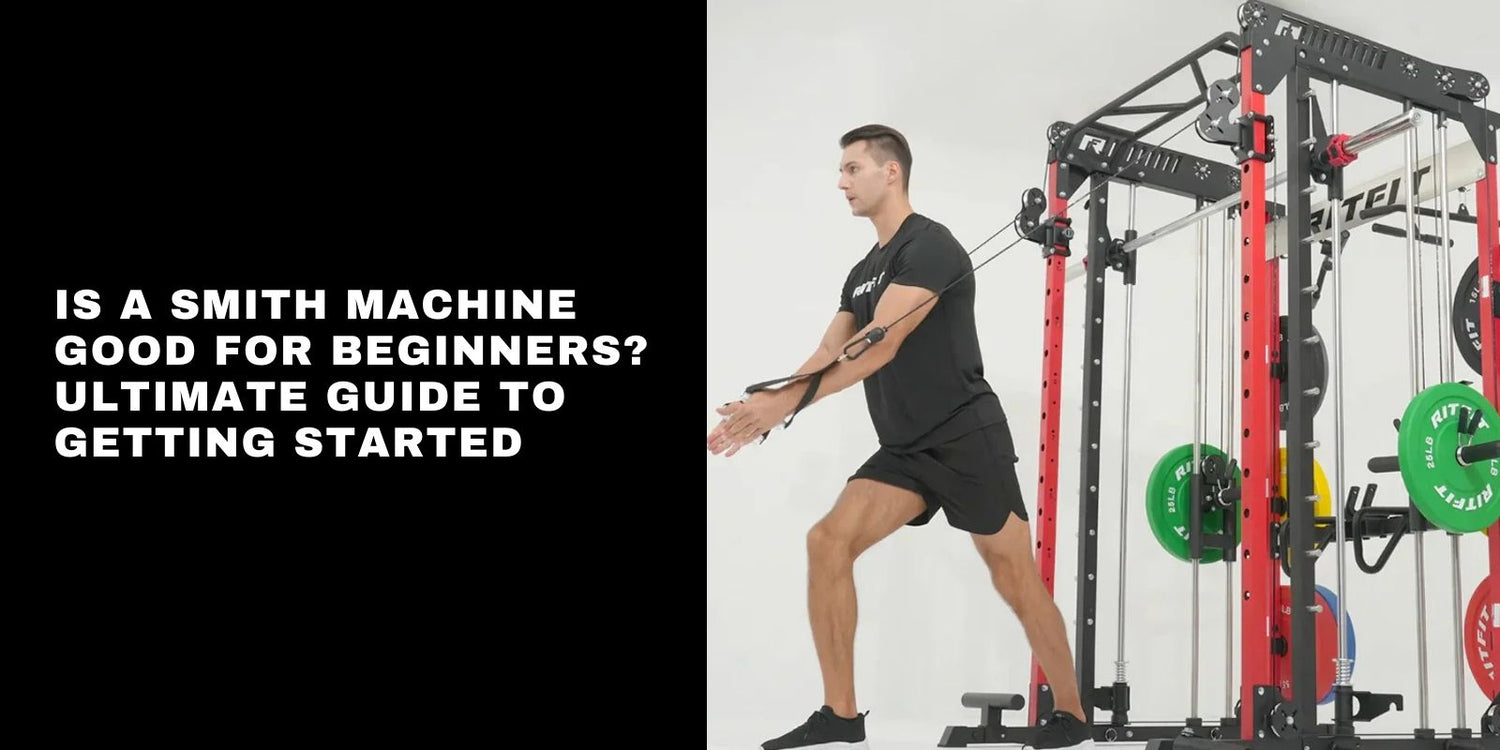
Yes, a Smith machine can be good for beginners when the guided path fits the exercise and you can control the bar. Start by learning the setup, hooks, and safety stops, then choose exercises that feel comfortable.
This guide explains the benefits and limits, how to judge a starting load, and how to use the existing workout example without treating every exercise as a first-day requirement.
Quick Answer: A Smith machine is a useful beginner option for practicing guided lifts, but the rails do not guarantee correct form or injury prevention. Before adding plates, check the instructions, rehearse unracking and reracking, and test the safety stops with help if needed, choosing your starting load by control and comfort because empty-bar resistance varies by model.
Key Takeaways
- Start with operation: Learn how to release and secure the hooks and adjust the safety stops before adding plates.
- Judge the fit: A guided path can simplify bar control, but an uncomfortable setup is a reason to adjust or choose another exercise.
- Avoid a universal starting weight: Check the model's starting resistance and use a load you can move and rerack under control.
- Treat the workout as an example: The listed exercises and numbers are options to review with a trainer, not a requirement to complete everything on day one.
- Choose tools for your goal: You can start on the Smith machine without first mastering free weights, and practice free weight variations when those skills matter to you.
What Is a Smith Machine?
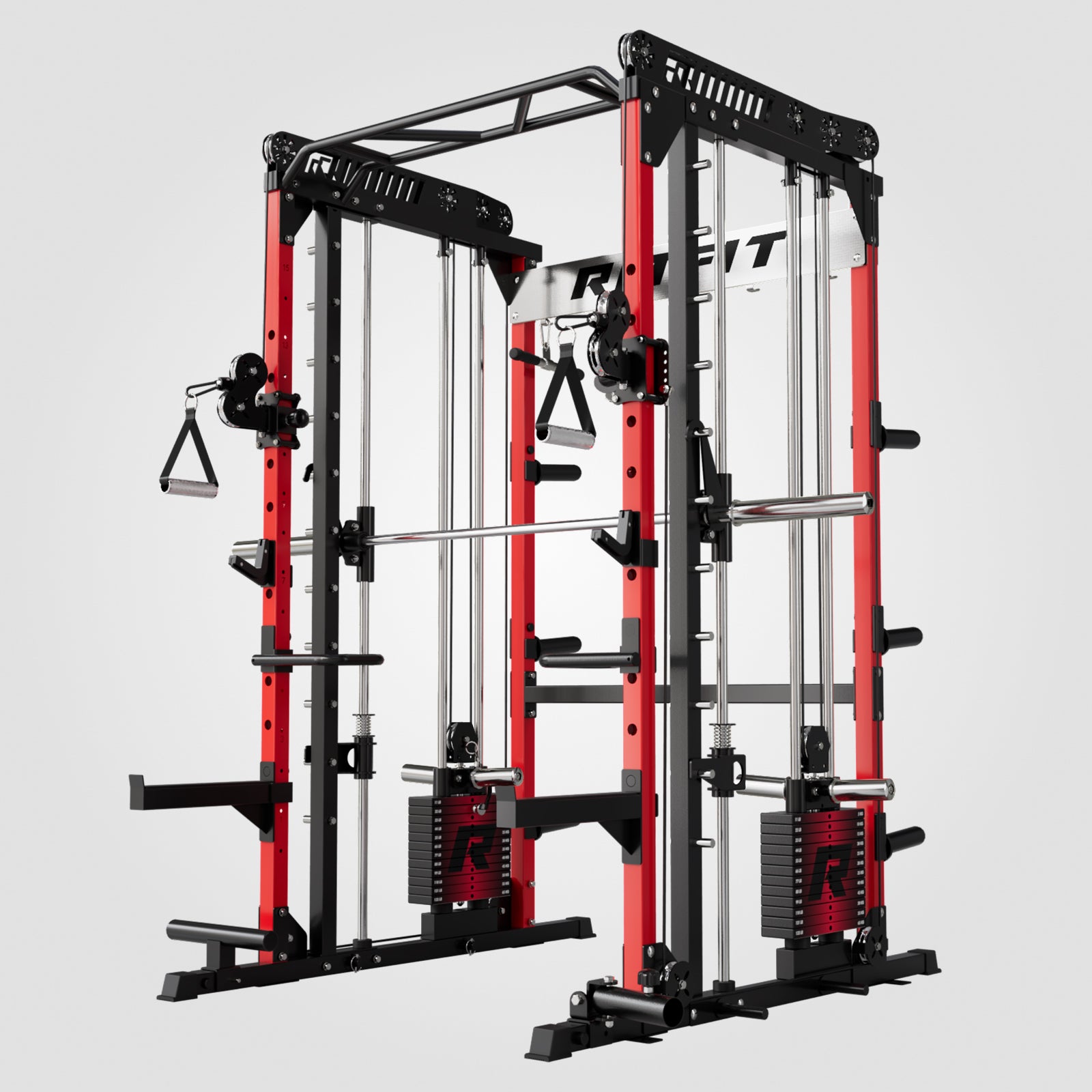
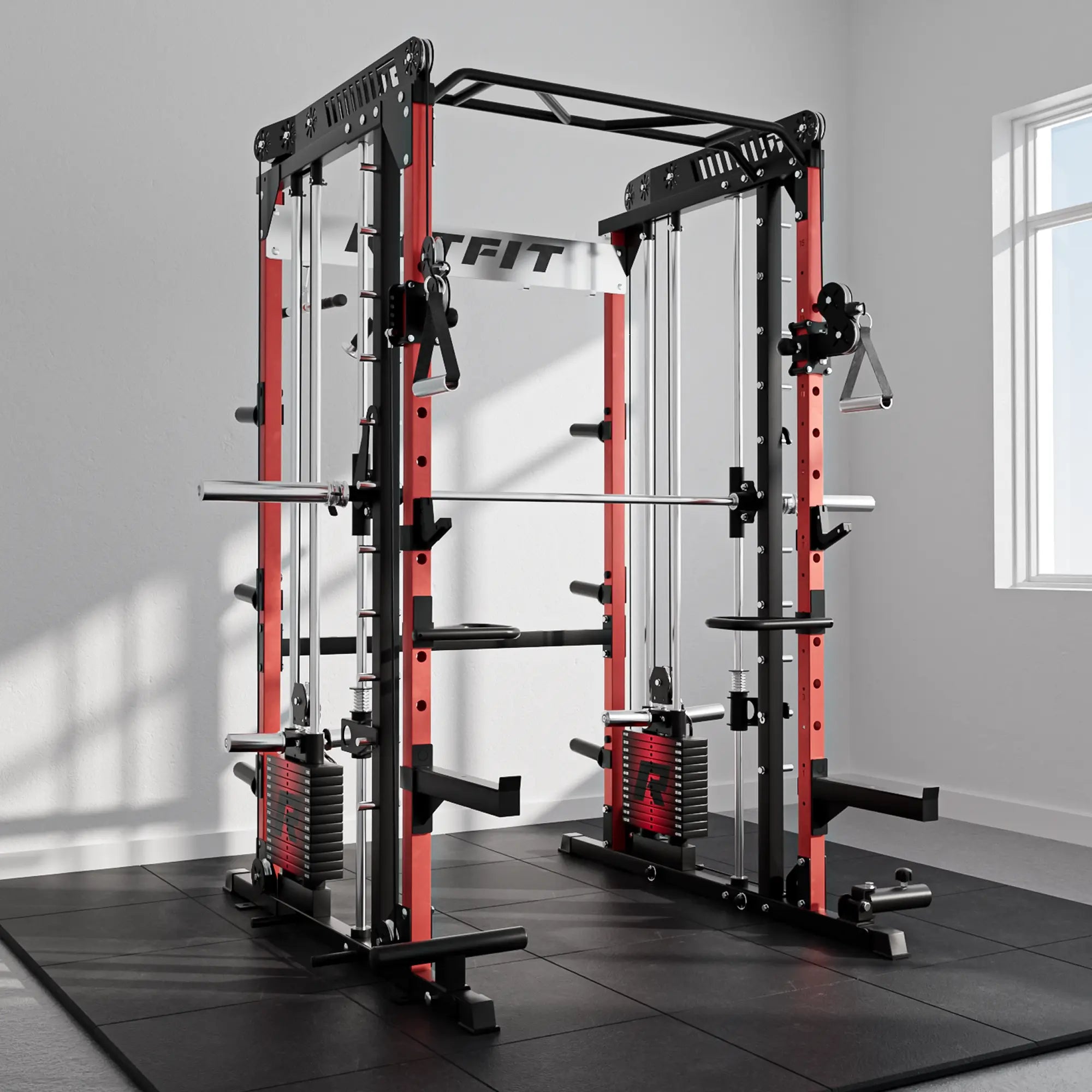
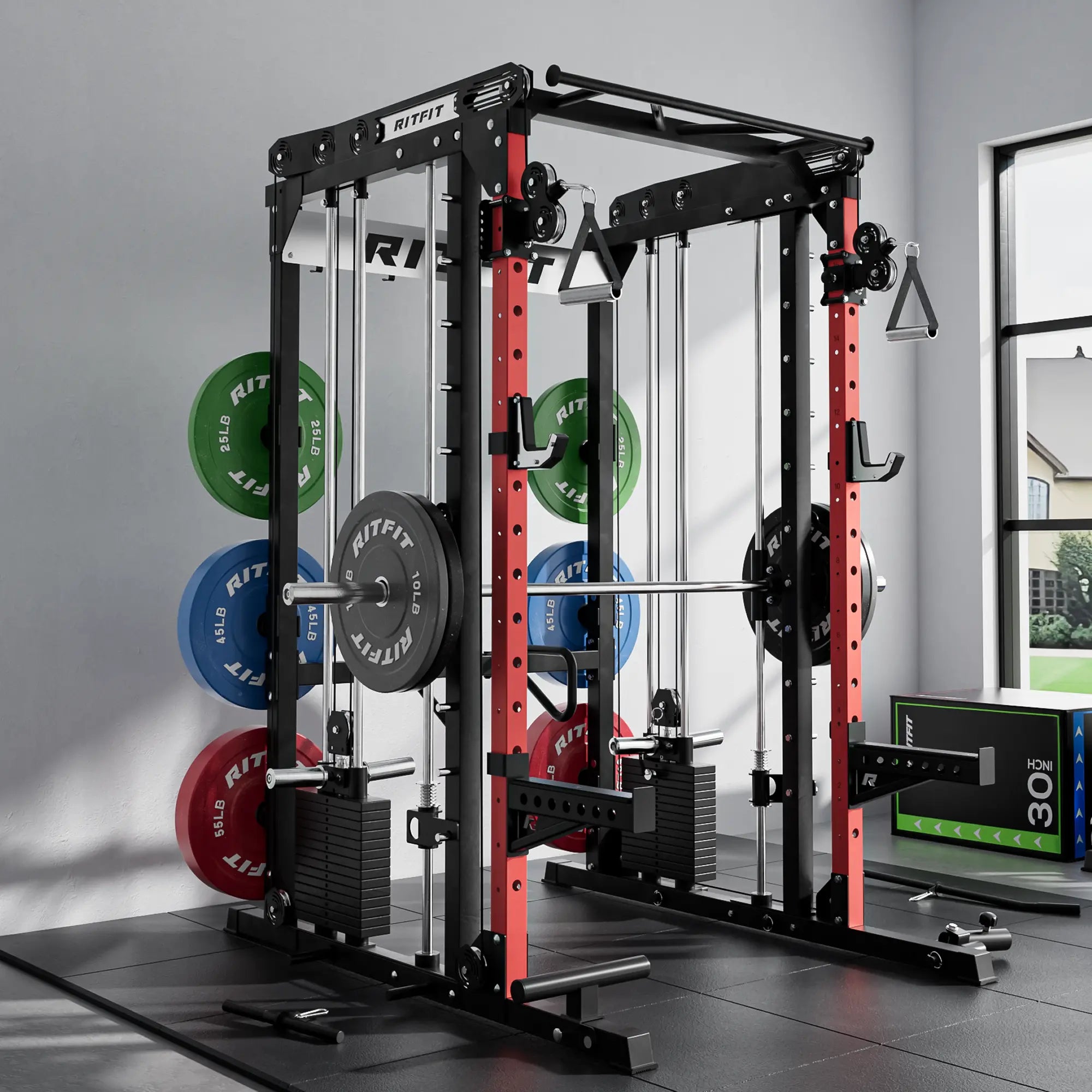
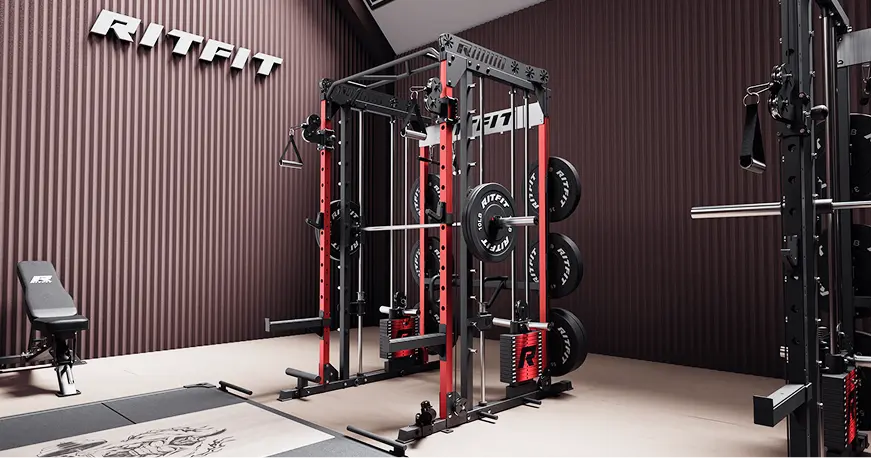
The Smith machine holds a barbell on fixed steel rails that guide a vertical or slightly angled path. This guided-bar design differs from a standard barbell, which you balance freely in space.
The machine also includes hooks or locking points along the frame. By rotating the bar, you can rack it at different heights during a set, which is one reason many beginners find it less intimidating than a free weight rack.
Benefits of the Smith Machine for Beginners
The Smith machine can make initial practice more approachable by guiding the bar and providing adjustable racking points. These Smith machine benefits depend on learning the controls and finding a suitable setup.
Stability and Guided Movement
The Smith machine makes lifting easier to learn because the bar path is guided. This lets beginners focus more on the main movement instead of worrying about keeping the bar steady in every direction.
- That extra stability can help new lifters practice pressing, squatting, and rowing with less wobble. It also lowers the coordination demands enough that many people feel ready to train sooner.
Perceived Safety and Confidence
The Smith machine may feel less intimidating because you can rotate the bar into its hooks and set safety stops. Those features are backups that require correct adjustment, not a guarantee that a lift is safe.
- Practice the controls before increasing effort, and ask a trainer to check an unfamiliar setup. Feeling confident should follow knowing how to secure the bar.
Easier to Learn Basic Lifts
The Smith machine can help beginners learn the general shape of common lifts with fewer moving parts to control. That makes it useful for practicing squats, presses, and lunges before progressing to less stable variations.
- It should still be treated as a learning tool rather than a shortcut. Good reps still require bracing, alignment, and controlled tempo.
Accessibility and Convenience
The Smith machine is easy to set up and usually available in many gyms. Adjusting the starting height takes little time, which makes it practical for a simple full-body workout.
- This convenience helps beginners stay consistent. A tool you can use confidently and quickly often gets used more often than one that feels confusing.
Drawbacks of the Smith Machine for Beginners
The Smith machine's main limitation is that the fixed path may not suit your setup or the lift you want to practice. Consider the setup limits of Smith machine squats before assuming rails make an exercise automatically safer.
Fixed Bar Path and Joint Stress
The Smith machine follows a fixed path, but the human body does not always move best in a perfectly fixed line. If your foot position, bench angle, or body alignment does not match the machine well, the movement can feel awkward on the knees, hips, shoulders, or lower back.
- This does not mean the machine is bad. It means setup matters more than many beginners realize, and you should not force a position that feels unnatural.
Limited Carryover to Free Weights
Smith machine practice does not replace learning how to balance a barbell or dumbbells. Treat a free weight version as a separate skill, and choose its load independently rather than copying the plates used on the machine.
- A difference between your Smith machine and free weight loads does not by itself tell you which tool is better. Compare your control within the same exercise and equipment setup.
Smith Machine vs. Free Weights for Beginners
The Smith machine and free weights are different ways to practice resistance exercises, and either can have a place in a beginner routine. Choose between Smith machine and free weight training based on the movement, setup, and skill you want to practice.
Skill Development
The Smith machine guides the bar, while free weights require you to control its path yourself. If your goal includes a barbell squat or dumbbell press, practice that version with an appropriate load rather than assuming machine practice teaches every part of it.
Muscle Activation and Functional Strength
A guided bar does not establish that an exercise is universally better or worse for muscle building or everyday strength. Judge the exercise against your goal and avoid treating different balancing demands as proof that free weights always produce better results.
When to Prefer Each
Choose the Smith machine when you want a guided lift and can use its controls confidently. Choose free weights when you want to practice controlling an independent load or when the fixed path does not feel suitable.
- You do not need to earn access to the Smith machine by learning free weights first. A Mayo Clinic Press guide to starting resistance training suggests machines as an entry option and adding free weights over time.
Discussing Jay Cutler's use of machines alongside free weights, coach Joe Bennett offered this equipment-choice perspective, rather than a beginner workout prescription.
He used the Smith machine a lot, he used a lot of machines a lot. He still did some free weight stuff as well too and that should help lend this idea that there's not one that is definitively better than the other.
Joe Bennett, Hypertrophy Coach, Independent, Hypertrophy Coach Breaks Down Jay Cutler's Quad Training
Best Smith Machine Exercises for Beginners
The beginner options below include squats, split squats, presses, rows, calf raises, and hip thrusts. Use this Smith machine exercise overview as a menu, and choose movements only after checking their setup.
Lower Body Smith Machine Exercises
Smith Machine Squat
The Smith machine squat is a strong beginner option because it simplifies bar control and helps you focus on depth, bracing, and leg drive. Most beginners do well with their feet slightly forward instead of directly under the bar so the movement feels smoother and more natural.
Set the safeties just below your lowest comfortable depth. Lower under control and stand up by driving evenly through the feet.
Smith Machine Split Squat or Lunge
The split squat is excellent for beginners because the guided bar reduces the balance challenge of single leg work. This lets you focus on the front leg, stay upright, and train the quads and glutes without wobbling.
Keep your front foot planted and move straight down with control. Start with bodyweight or a very light load until the stance feels stable.
Upper Body Smith Machine Exercises
Smith Machine Bench Press
The Smith machine bench press can be a good entry point for chest training because the fixed path adds security and simplifies unracking. It works best when the bench is positioned so the bar lowers naturally to the mid chest rather than too high or too low.
Do not set the bench randomly under the bar. Test the path with light weight first and adjust until the groove feels comfortable.
Smith Machine Shoulder Press
The Smith machine shoulder press is helpful for beginners because it allows focused pressing without needing to stabilize dumbbells overhead. This can make it easier to train the shoulders with control and confidence.
Set the seat and torso angle so the bar path feels smooth around the face and head. Stop if the fixed path causes shoulder pinching or forces an awkward pressing angle.
Smith Machine Bent Over Row
The Smith machine bent over row is useful for beginners who want back training with a controlled bar path. It allows you to focus on pulling the elbows back and squeezing the upper back without managing as much bar drift.
Keep your torso angle steady and avoid jerking the bar up. Use a load you can row without losing posture.
Accessory and Isolation Smith Machine Exercises
Smith Machine Calf Raise
Smith machine calf raises are simple, stable, and easy to load. The fixed path makes it easier to pause at the top and control the stretch at the bottom.
Use a small platform or plate under the balls of the feet if your mobility allows it. Move slowly so the calves do the work instead of bouncing through the reps.
Smith Machine Hip Thrust
The Smith machine hip thrust is one of the most beginner friendly glute exercises because setup is more stable than with a loose barbell. It makes it easier to focus on hip extension, lockout, and consistent range of motion.
Set your upper back securely on a bench and keep the bar centered across the hips. Drive through the heels and pause briefly at the top.
RitFit's official demonstration uses a Buffalo model to illustrate exercise options. Machine controls and starting resistance should be checked on the equipment you actually use.
How Beginners Should Use the Smith Machine Safely
Beginners should learn the hooks, set the safety stops, and rehearse the full movement before adding plates. Use this Smith machine setup guide alongside the instructions for your model, and ask staff to demonstrate unfamiliar controls.
Proper Setup and Form
Set a starting height you can reach without stretching, and adjust your stance or bench to the bar path. With no added plates and assistance if needed, practice releasing the hooks, moving the bar, and securing both hooks again before letting go.
- Adjust the safety stops for the exercise and your intended range of motion, then check that they are engaged. Test that they support the unloaded bar without putting yourself beneath it, following the machine instructions or a staff demonstration.
- Use controlled reps and check that you can rerack without changing position awkwardly. If the path still causes discomfort after setup adjustments, stop that exercise and ask a qualified trainer for an alternative.
- EōS Fitness's setup instructions cover body position, safety stops, light practice, and secure reracking, while Asphalt Green's beginner guide specifically advises practicing the hooks before adding weight.
Load Selection and Progression
There is no single Smith machine starting weight that fits every beginner or exercise. Check the model's stated starting resistance and try the bar without added plates only if you can control it comfortably.
- Counterbalanced models can feel different from other machines, so do not assume the empty bar weighs the same as a free barbell. Check the equipment label or ask staff, and use our explanation of Smith machine bar weight for the distinction between the bar and added plates.
- If the unloaded bar is already too demanding, choose a lighter alternative with a trainer. Add plates only when you can control the movement and rerack confidently, rather than copying another lifter's load.
Warm Up and Mobility
Warm up before working sets so your joints and muscles are ready for the fixed path. A few dynamic movements and one or two lighter practice sets usually make the session feel much better.
- This is especially important for squats, presses, and hip thrusts. The better your setup and warm up, the more useful the machine becomes.
The tutorial below introduces Smith machine operation for different experience levels. Focus on the basic controls with a trainer first, and leave advanced variations for separate instruction.
Integrating Smith Machine Exercises Into a Beginner Program
A beginner program can include Smith machine exercises without requiring every option in the same session. Use the existing full-body Smith machine workout example as a discussion point for a plan that matches your experience and recovery.
Sample Beginner Workout
The exercise list below is an example, not a requirement to complete all five movements on your first day. Ask a trainer which movements and workload fit your current ability before using the listed sets and reps.
-
Smith Machine Squat: 3 sets of 10 to 12 reps
Smith Machine Bench Press: 3 sets of 10 to 12 reps
Smith Machine Bent Over Row: 3 sets of 10 to 12 reps
Smith Machine Overhead Press: 2 sets of 12 to 15 reps
Smith Machine Calf Raise: 2 sets of 15 to 20 reps - Choose a weight that leaves 1 to 3 good reps in reserve at the end of each set. Focus on steady form and repeat the workout consistently before adding more volume.
Combining the Smith Machine and Free Weights
The best beginner plan does not rely only on the Smith machine. Use it for controlled compound lifts, then add dumbbells, cables, or bodyweight work to build balance, coordination, and stabilizer strength.
- For example, you can squat on the Smith machine and do dumbbell lunges afterward. You can also bench on the Smith machine and add push ups or one arm dumbbell rows for more natural movement.
Who Is the Smith Machine Especially Good For?
The Smith machine can suit a beginner who wants a guided lift, understands the controls, and finds the movement comfortable. The deciding factor is a workable setup for your chosen exercise, rather than whether the machine is popular or feels stable.
Good Fit
The Smith machine is worth trying if an unfamiliar free barbell makes you hesitant and a trainer can show you a comfortable setup. Continue using it when you can control the movement, use the safety features, and repeat the setup confidently.
Less Ideal
The Smith machine is less suitable when you cannot find a comfortable position, operate the hooks reliably, or manage the unloaded bar. Choose another exercise with help, and practice free weights separately if your main goal is a specific barbell or dumbbell lift.
FAQs
Is the Smith machine effective for beginners building muscle?
Yes, the Smith machine effectively builds muscle for beginners by providing a guided bar path. This guided movement removes the need to balance the weight, allowing new lifters to focus entirely on pushing or pulling. It provides a safe environment to learn lifting mechanics before transitioning to free weights.
Which exercises are considered the best on a Smith machine for beginners?
The most effective exercises for beginners include squats, split squats, bench presses, and hip thrusts. These specific movements benefit greatly from the added stability and adjustable safety stops. New lifters can easily practice these patterns safely without worrying about dropping heavy weights or losing their balance during the set.
Can a beginner build a full workout routine using only the Smith machine?
Yes, a beginner can easily build a complete full body workout using only this machine. You can perform lower body movements like squats alongside upper body exercises like presses and rows. While it serves as an excellent starting point, adding free weights later will ensure more balanced muscle growth.
What weight should a beginner start with on the Smith machine?
Choose a load you can move and rerack under control, starting with no added plates if the bar itself is manageable. Empty bar resistance differs between models, so check the equipment label or ask staff rather than assuming a standard barbell weight, and use a lighter alternative if needed.
Do beginners need to learn free weights before using a Smith machine?
No, beginners do not need to learn free weights before trying a Smith machine. Learn the machine controls and a comfortable movement first, then practice free weight versions separately when they suit your goals, using a load chosen for that exercise rather than copying the machine setting.
How can a beginner tell if the fixed bar path is unsuitable?
A fixed bar path may be unsuitable when you cannot find a comfortable stance or bench position, or the movement requires awkward adjustments to finish and rerack. Stop the exercise if it causes pain, and ask a qualified trainer to check the setup or suggest another movement.
Conclusion
Yes, the Smith machine can be good for beginners who can control its bar, use its safety features, and find a comfortable setup. Make your first step a supervised setup check and light practice, then choose exercises that fit your goals instead of treating every machine or workout as interchangeable.
Important disclaimer: This article is for general educational purposes only and is not medical advice.
If you have shoulder, neck, back, elbow, or wrist pain, a recent injury or surgery, numbness or tingling, unexplained weakness, or dizziness, consult a qualified clinician before starting.
Stop any exercise that causes sharp pain.