








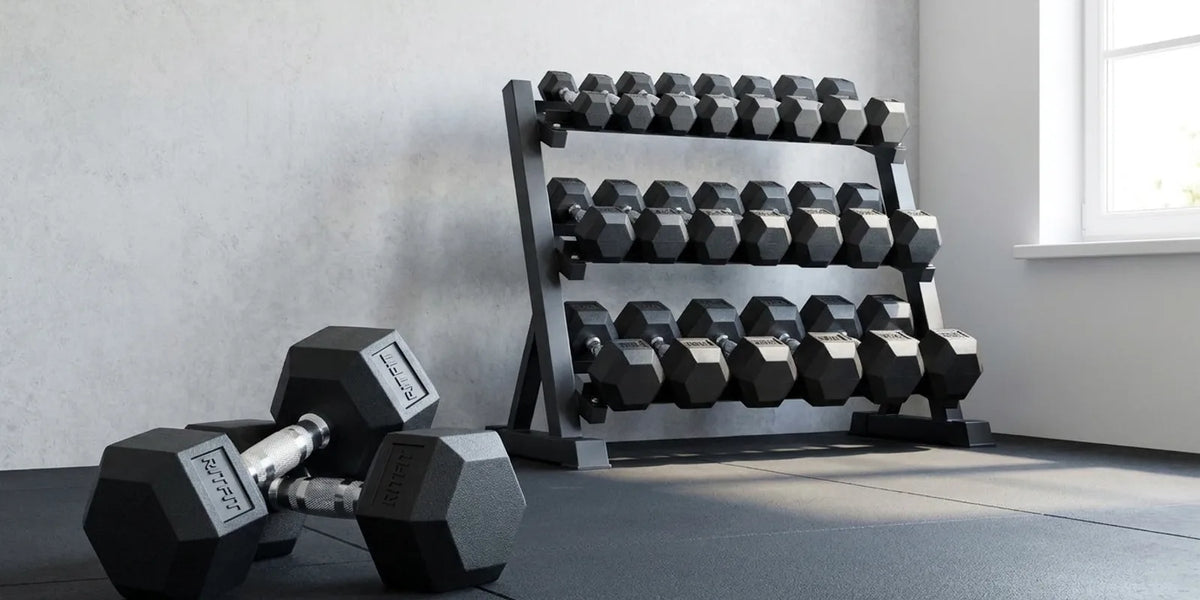
The heaviest dumbbell you can buy as a standard fixed weight tops out around 200 pounds per hand, while one-off custom pieces reach 420 pounds. This guide separates fixed, adjustable, and record-level weight ceilings, then covers what heavy dumbbells are actually for and how to work up to them safely.
You will see exact max weight dumbbell limits by type, real gym examples, and a home gym buying path with honest boundaries. The training sections cover weight selection, progression, and when to stop, and none of it replaces advice from a qualified coach.
Quick Answer: The heaviest dumbbell sold as a standard fixed pair reaches about 200 pounds per hand, selectorized adjustable dumbbells top out near 90 pounds per hand, and loadable handles pass 230 pounds fully loaded. The largest dumbbell ever built weighs 420 pounds, but most lifters only ever need pairs from 5 to 60 pounds.
Key Takeaways
- True ceiling: the heaviest dumbbell ever built weighs 420 pounds, and standard fixed dumbbells reach about 200 pounds per hand.
- Adjustable ceiling: selectorized sets stop near 90 pounds per hand while loadable handles pass 230 pounds fully loaded.
- Training reality: heavy loads above 80 percent of one rep maximum build maximal strength fastest, and every rep range can build muscle.
- Progression rule: add load only when every repetition at the current weight stays controlled.
- Home gym fit: fixed pairs from 5 to 60 pounds plus a rack cover the training needs of most households.
What Is the Heaviest Dumbbell You Can Buy?
The heaviest dumbbell sold as a standard fixed weight reaches about 200 pounds per hand, and pro-style commercial lines sometimes go higher. Specialty makers also sell solid machined dumbbells around 330 pounds for lifters who want one-off iron. One industry guide places the practical fixed range from 1 pound up to 200 pounds or more.
- Pro-style dumbbells: fixed heads bolted to a steel handle, the standard above 100 pounds in commercial gyms.
- Monster dumbbells: oversized specialty heads built for strongman training, commonly 100 to 250 pounds.
- Custom iron: makers machine one-off dumbbells to order, which is how record pieces are produced.
The heaviest dumbbell ever built weighs 420 pounds (190 kg), custom manufactured in Ontario in 2017. Thomas Inch's famous dumbbell from about 1906 weighs 172 pounds (78 kg), and a gym in Yucaipa, California stores a 375 pound dumbbell that only a handful of lifters have raised overhead.
| Dumbbell type | Realistic max weight per hand | Where you find it |
|---|---|---|
| Fixed pro-style | 100-200+ lbs | Commercial gyms and specialty retailers |
| Selectorized adjustable | 50-90 lbs | Home gyms |
| Plate-loaded or loadable | 100-231 lbs loaded | Home gyms and strongman training |
| Solid specialty or custom | Up to 330-420 lbs | Record pieces and special orders |
Weight ranges compiled from industry equipment guides and maker listings, 2026.
If you want the everyday version of this range, the RitFit dumbbell lineup covers fixed pairs from light warm-up sizes up to heavy working weights.
"My wife wanted some quality dumbbells for a decent price and these hit the mark on both points. She loves them and is happy we ordered them."
Daniel H. Verified Buyer, RitFit Rubber Hex Dumbbells Pairs and Sets
How Heavy Do Adjustable Dumbbells Get?
The heaviest adjustable dumbbells reach about 90 pounds per hand in selectorized form, while loadable handles pass 230 pounds fully loaded. Plate-loaded adjustable dumbbells sit between those ceilings and can exceed 100 pounds, so the mechanism you pick decides your max weight dumbbell limit.
- Selectorized dials: fast changes with fixed plates, usually capped at 50 to 90 pounds per dumbbell.
- Plate-loaded handles: you add your own plates, so the ceiling is whatever the handle and sleeve hold, often past 100 pounds.
- Loadable strongman handles: sold empty around 35 kilograms (77 pounds) and loaded up to about 105 kilograms (231 pounds).
Solid retail dumbbells from one specialty maker reach 150 kilograms (330 pounds) per piece, which shows how far the ceiling moves once you leave selectorized designs. For most home gyms, a set of adjustable dumbbells covers the same training ground in a fraction of the space.
"I love that I was able to get a set of 55lb dumbbells through the rewards after ordering a good bit of equipment! Great feel!"
Dalton B. Verified Buyer, RitFit Rubber Hex Dumbbells Pairs and Sets
What Are the Heaviest Dumbbells Used For?
Heavy dumbbells are used for slow strength work like rows, presses, and loaded carries where a barbell is not required. They tax grip, trunk control, and balance more than machines do, which is why serious gyms keep pairs above 100 pounds.
- Dumbbell row: a heavy single-arm row builds back strength and exposes side-to-side imbalances.
- Dumbbell bench press: pressing heavy pairs adds range of motion and stability demand beyond a barbell.
- Farmer's carry: loaded carries with heavy dumbbells train grip, core, and posture in one movement.
- Overhead press: pressing heavy dumbbells overhead develops shoulder strength with a natural bar path.
- Goblet squat: holding one heavy dumbbell at the chest loads the legs for lifters without a barbell setup.
Most lifters cycle these movements with moderate weights and reserve the heaviest dumbbells for the first exercise of the session.
"They're good for everything from chest presses, dumbbell bench presses, incline bench supersets, skull crushers, glute bridges, incline rows to hit your back, ab moves, quad and leg moves like split squats, and more biceps moves than you can imagine."
Ebenezer Samuel, C.S.C.S. Fitness Director, Men's Health, The Best Weight Benches of 2026
"A great set of dumbbells for the home gym, arrived quickly and in good shape. Very little odor to the rubber coating which was a pleasant surprise."
Brian R. Verified Buyer, RitFit Rubber Hex Dumbbells Pairs and Sets
Should You Lift the Heaviest Dumbbell You Can Find?
Most lifters should not chase the heaviest dumbbell on the rack, because training quality beats training size for long-term results. A systematic review and network meta-analysis pooling 178 studies with 5,097 participants found that higher-load prescriptions above 80 percent of one-repetition maximum maximized strength gains while all loading prescriptions comparably promoted muscle hypertrophy [1].
A study of 19 resistance-trained men shows the trade-off directly. A 2-4 repetition strength routine produced greater squat one-rep max gains than an 8-12 repetition routine, while the moderate-load group gained more thigh muscle thickness [2].
- When heavy wins: maximal strength goals on rows and presses respond best to loads above 80 percent of one-repetition maximum.
- When moderate wins: muscle growth tracks hard sets and training volume more than the number printed on the dumbbell.
- Who should go heavy: experienced lifters with clean technique and a spotter for heavy pressing movements.
- Who should wait: anyone still learning the movement pattern at lighter weights, because load amplifies whatever form you bring.
The heaviest dumbbell in the gym is a tool for a specific job, and lifting or buying it before you are ready adds risk without adding results.
"Was hesitant about adding a dumbbell set when I already had the cable-pulley system, but figured it would make a great addition to the overall gym. The weights have a great feel to them. Kind of odd that there is no 40# set, but I can live without that...may add that set later on."
Robert H. Verified Buyer, RitFit Rubber Hex Dumbbell Set with Rack
How Do You Progress to Heavy Dumbbells Safely?
You progress to heavy dumbbells by adding load gradually and only after every repetition at the current weight stays controlled. A 2021 review of the repetition continuum concluded that muscular adaptations can be obtained across a wide spectrum of loading zones [3]. The classic model maps strength work to 1-5 repetitions at 80-100 percent of 1RM and hypertrophy work to 8-12 repetitions at 60-80 percent of 1RM.
- Weight selection: start with a load you can press or row for clean controlled repetitions, then own it for two full weeks.
- Progression pace: add roughly 5 pounds to upper body dumbbell lifts and 10 pounds to lower body lifts when every set looks the same.
- Frequency: train each heavy movement two or three times per week with at least a day of rest between sessions.
- When to add weight: move up only when every set at the current weight finishes with the same control as the first repetition.
- When to stop: end the set when form breaks down, and stop the exercise entirely if you feel sharp joint pain instead of normal muscle fatigue.
- Substitute movements: when the next dumbbell up is too heavy, swap to a supported variation such as a chest-supported row instead of forcing the repetition.
This is progressive overload in practice. Small jumps, clean repetitions, and enough training volume over months to earn the heavier pair.
What to Avoid When Going Heavy
Skip the ego jumps that add 20 pounds at a time, and never trade range of motion for a heavier number. If a set needs a spotter for a dumbbell movement, the weight is ahead of your current strength.
"If your space is limited, a good set of adjustable dumbbells might be your better option. They will allow you to progress to heavier weight as you get stronger."
Jeff Cavaliere, MSPT, CSCS, Physical Therapist and Strength Coach, Creator of ATHLEAN-X, Ultimate Total Body Dumbbell Workout
"Dumbbells. Good quality and weight was accurate within a .3 lb margin"
Matt W. Verified Buyer, RitFit Rubber Hex Dumbbells Pairs and Sets
How Do You Choose the Right Heavy Dumbbell Setup for a Home Gym?
For a home gym, the right max weight dumbbell setup is a fixed pair range you can grow into plus a rack that holds it safely. The RitFit Rubber Hex dumbbells are listed in pairs and sets from 5 to 60 lbs per dumbbell, with rack packages running from a 60 lb set up to a 550 lb set with rack.
- Durability: rubber-coated hex heads resist rolling, protect floors, and shrug off being set down between heavy sets.
- Versatility: a 5 to 60 pound pair range covers warm-ups, rows, presses, carries, and leg work for nearly every household lifter.
- Warranty: coverage terms are published on each product page and vary by item, so confirm what is covered before you order.
- Performance: the hex head stays put on the floor and the knurled handle keeps grip through high-repetition sets.
- Value: buying pairs up to 60 pounds and adding heavier sizes as you progress costs less upfront than jumping straight to specialty heavy iron.
Sets like the Rubber Hex dumbbells set with rack and the 550 lb rubber coated dumbbell set with rack bundle storage with weight. A standalone 3 tier dumbbell rack or the PWR05 3 tier dumbbell rack keeps heavier pairs off the floor as your collection grows.
When several lifters share the space, PVC coated dumbbells add a softer coating for mixed use. The hexagon dumbbell sets and rubber hex dumbbells collections show the set options at each weight step.
"This completes my gym perfectly! Solid rack and dumbbells. Shipped really fast."
Tony M. Verified Buyer, RitFit Rubber Hex Dumbbell Set with Rack
FAQs About the Heaviest Dumbbell
What is the heaviest dumbbell you can buy as a fixed weight?
Fixed dumbbells sold to commercial gyms commonly reach 200 pounds per hand and some pro-style lines go higher, while one specialty maker sells solid dumbbells around 330 pounds. Most home lifters never need those extremes, and pairs in the 5 to 60 pound range cover the majority of training.
How heavy do adjustable dumbbells get?
Most selectorized adjustable dumbbells top out between 50 and 90 pounds per dumbbell. Plate-loaded and loadable adjustable models go well past 100 pounds, and fully loaded strongman style handles reach about 231 pounds, so the heaviest adjustable dumbbell depends on which mechanism you pick.
What is the highest dumbbell weight found in commercial gyms?
Typical commercial gyms stock dumbbells up to about 150 pounds, while powerlifting focused gyms run much heavier with some locations offering pairs up to 300 pounds. One California gym stores a 375 pound dumbbell as a landmark, though most lifters will never need anything close to it.
Is there really a 200 lb dumbbell?
Yes. Fixed dumbbell lines commonly run from 1 pound up to 200 pounds or more, and pro-style models built for commercial gyms exceed 100 pounds as standard. You will mainly find these in professional weight rooms, since home demand is small and the price per pair is high.
Are heavier dumbbells better for building muscle?
Not automatically. A large evidence review found that heavier loads above 80 percent of one rep maximum maximize strength gains while every loading range promoted comparable muscle growth, so the heaviest dumbbell is a strength tool first and muscle growth follows from consistent hard sets.
How do you safely work up to heavy dumbbells?
Start with a weight you can press or row for clean controlled repetitions and add load only when every set looks the same. Train each movement two or three times per week, keep a rep or two in reserve on most sets, and stop the set whenever form breaks down or joints hurt.
Who actually needs the heaviest dumbbells?
Advanced lifters chasing maximal strength on rows, presses, and loaded carries are the main buyers of 100 pound plus dumbbells. Beginners and intermediate lifters get better results from moderate pairs they can control and grow into, since load selection matters more than owning the biggest weight on the rack.
Conclusion
The heaviest dumbbell in the world is a 420 pound custom, but the practical ceiling for training sits near 200 pound fixed pairs and 90 pound selectorized sets. Pick the max weight dumbbell you can control today, progress on a plan, and let consistency do the work.
Start with a 5 to 60 pound pair range, add a rack as your collection grows, and check the RitFit discount guide before you order.
Disclaimer
This article provides general information about dumbbell weights and strength training and is not medical, legal, or professional coaching advice. Consult a qualified physician or certified coach before starting a new training program, especially if you have injuries or health conditions.
References
1. Currier BS, Mcleod JC, Banfield L, et al. Resistance training prescription for muscle strength and hypertrophy in healthy adults: a systematic review and Bayesian network meta-analysis. Br J Sports Med. 2023;57(18):1211-1220. doi:10.1136/bjsports-2023-106807. PMCID: PMC10579494
2. Schoenfeld BJ, Contreras B, Vigotsky AD, Peterson M. Differential Effects of Heavy Versus Moderate Loads on Measures of Strength and Hypertrophy in Resistance-Trained Men. J Sports Sci Med. 2016;15(4):715-722. PMCID: PMC5131226
3. Schoenfeld BJ, Grgic J, Van Every DW, Plotkin DL. Loading Recommendations for Muscle Strength, Hypertrophy, and Local Endurance: A Re-Examination of the Repetition Continuum. Sports (Basel). 2021;9(2). doi:10.3390/sports9020032. PMCID: PMC7927075





