This four week home gym training plan builds strength, movement quality, and training consistency during the 2026 summer soccer season. It uses progressive resistance, manageable session lengths, and clear weekly targets that work in a compact home gym.
The program is designed for generally healthy adults with basic exercise experience. Beginners should use conservative loads, prioritize technique, and stop any exercise that causes sharp pain, dizziness, chest discomfort, or unusual shortness of breath.
Published: June 15, 2026
Last Updated: June 15, 2026
Author: RitFit Editorial Team
Evidence Review: Peer reviewed resistance training research
Commercial Disclosure: RitFit sells some of the home gym equipment mentioned in this guide. Product links are clearly identified and do not affect the training recommendations.
Table of Contents
Key Takeaways
- Flexible Start Date: The program can begin on any Monday during the 2026 summer soccer season, so readers do not need to rely on an expired opening day deadline.
- Three Core Training Days: Weeks one, two, and four use three sessions, while week three introduces four shorter upper and lower body sessions.
- Measured Progression: The plan first increases repetitions, then raises load and frequency, and finally reduces volume to manage accumulated fatigue.
- Technique Before Load: Every compound exercise should finish with controlled form and at least one planned repetition still available.
- Simple Equipment Works: Dumbbells can support the full program, while a rack, Smith machine, bench, and cable system provide more loading options.
Why Use the 2026 Soccer Season as a Training Anchor?
A major international soccer tournament opened on June 11, 2026, but that date has already passed. This guide therefore uses the wider summer soccer season as a flexible motivational anchor instead of presenting an outdated countdown.
- Clear time frame: Four weeks is long enough to establish a repeatable routine while remaining short enough to feel manageable.
- Visible progress markers: Repetitions, working load, session completion, and movement quality can all be recorded each week.
- Social motivation: Soccer viewing schedules can provide natural reminders to train earlier in the day or on nonmatch days.
- Realistic expectations: Four weeks can improve exercise skill and training consistency, but major body composition or strength changes usually require a longer program.
This is an independent fitness guide rather than an event schedule or branded tournament promotion. Readers seeking a longer sport focused routine can also review the complete football workout plan.
How the Four Week Progression Works
Progressive overload means gradually increasing the training demand while preserving safe technique and adequate recovery. A 2023 narrative review concluded that lower volume resistance programs can still improve physical fitness when the training stimulus is consistent and appropriately progressed.[1]
This plan changes the main training emphasis across four phases. Week two adds repetitions, week three adds load and one training day, and week four reduces total working sets while maintaining movement quality.
Four Week Training Framework
| Week | Sessions | Main Prescription | Repetitions in Reserve | Primary Goal |
|---|---|---|---|---|
| Week 1 | 3 full body sessions | 3 sets of 8 repetitions | About 3 | Technique and baseline selection |
| Week 2 | 3 full body sessions | 3 sets of 10 repetitions | About 2 | Repetition volume and control |
| Week 3 | 4 upper and lower sessions | 4 sets of 6 to 8 repetitions | About 1 to 2 | Moderate load progression |
| Week 4 | 3 full body sessions | 2 sets of 6 to 8 repetitions | About 2 to 3 | Fatigue reduction and consolidation |
How to Choose the Starting Weight
Select a load that allows every prescribed repetition to look similar from the first repetition to the last. During week one, finish each set with approximately three controlled repetitions still available.
- Too light: Add a small amount at the next session when the final set feels easy and technique remains stable.
- Appropriate: Keep the load when the final repetitions require effort but remain controlled.
- Too heavy: Reduce the load when range of motion shortens, posture changes, or the target repetition count cannot be completed.
Week 1: Build Your Movement Foundation
Week one establishes starting loads and repeatable movement patterns. A 2025 feasibility study involving older adults reported that a supported transition from gym based resistance training to home based training was practical for participants, although the findings should not be generalized to every population.[3]
Week 1 Full Body Session
- Warm up: Complete five to eight minutes of walking, cycling, bodyweight squats, hip hinges, shoulder circles, and light practice sets.
- Squat pattern: Perform a goblet squat, rack squat, or Smith machine squat for 3 sets of 8 repetitions.
- Hinge pattern: Perform a dumbbell or barbell Romanian deadlift for 3 sets of 8 repetitions.
- Horizontal press: Perform a dumbbell press or bench press for 3 sets of 8 repetitions.
- Upper body pull: Perform a one arm dumbbell row, cable row, or lat pulldown for 3 sets of 8 repetitions.
- Core stability: Perform a plank or dead bug for 3 controlled sets.
Rest for approximately 60 to 90 seconds between moderate sets and up to two minutes after demanding squat, hinge, and press sets. Complete the workout three times with at least one recovery day between sessions.
Week 2: Add Repetitions and Control
Week two keeps the same three day schedule and increases the main exercises from eight to ten repetitions. Keeping frequency stable makes it easier to identify whether the additional repetition volume is recoverable.
Week 2 Progression Rules
- Main exercises: Complete 3 sets of 10 repetitions using the week one load when possible.
- Tempo control: Lower the resistance under control without turning every repetition into an intentionally slow repetition.
- Accessory work: Add one optional exercise at the end of each session rather than adding several movements at once.
- Lower body option: Use reverse lunges or split squats for 2 sets of 8 repetitions per leg.
- Shoulder option: Use lateral raises or face pulls for 2 sets of 10 to 15 repetitions.
- Core option: Use dead bugs, side planks, or Pallof presses for 2 to 3 controlled sets.
Most working sets should finish with approximately two good repetitions still available. The home gym training to failure guide explains how to estimate effort without turning every set into a maximum attempt.
Week 3: Increase Load and Training Frequency
Week three uses four shorter sessions divided into two upper body and two lower body days. This structure allows a modest load increase without placing every compound movement in the same workout.
Suggested Week 3 Schedule
| Day | Session | Primary Movements |
|---|---|---|
| Monday | Lower Body A | Squat, Romanian deadlift, split squat, core |
| Tuesday | Upper Body A | Bench press, row, pulldown, lateral raise |
| Thursday | Lower Body B | Deadlift variation, squat variation, lunge, core |
| Friday | Upper Body B | Incline press, cable row, shoulder press, face pull |
Week 3 Loading Guidelines
- Load increase: Add approximately two to five percent only when week two was completed with stable form.
- Working range: Use 4 sets of 6 to 8 repetitions for the main compound movements.
- Effort target: Finish most sets with one or two controlled repetitions still available.
- Rest periods: Rest for 90 seconds to three minutes when needed for consistent performance.
- Recovery adjustment: Remove one set or reduce the load when performance declines across consecutive sessions.
Readers who want a longer lower body progression after this block can continue with the eight week home gym squat progression plan.
Week 4: Reduce Volume and Finish Fresh
Week four returns to three full body sessions and reduces the number of working sets. The goal is to retain practice and moderate intensity while allowing accumulated fatigue to decrease.
Week 4 Priorities
- Reduce working sets: Complete 2 sets of 6 to 8 repetitions for each primary movement.
- Maintain familiar loads: Use the week three load only when it can be controlled with two or three repetitions still available.
- Remove unnecessary accessories: Keep one optional accessory movement per session or omit accessories when recovery is limited.
- Extend the warm up: Include movement preparation and several gradual practice sets before the first heavy exercise.
- Avoid maximum testing: Do not use the final week to attempt an unplanned one repetition maximum while training alone.
A reduced volume week is not lost training. It gives the body an opportunity to absorb the previous workload and provides a clearer picture of which exercises and loads should carry into the next program.
Home Gym Equipment for the Plan
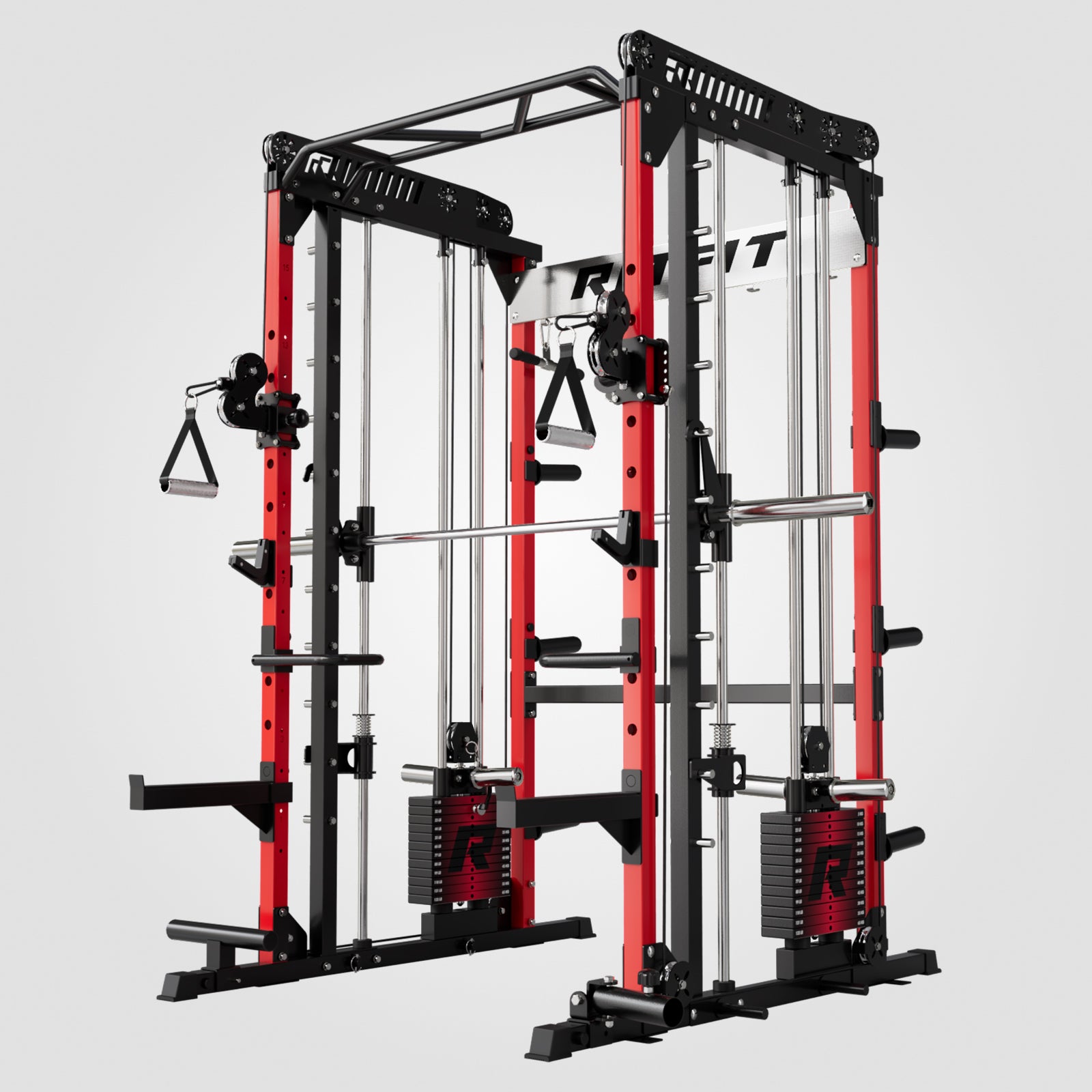
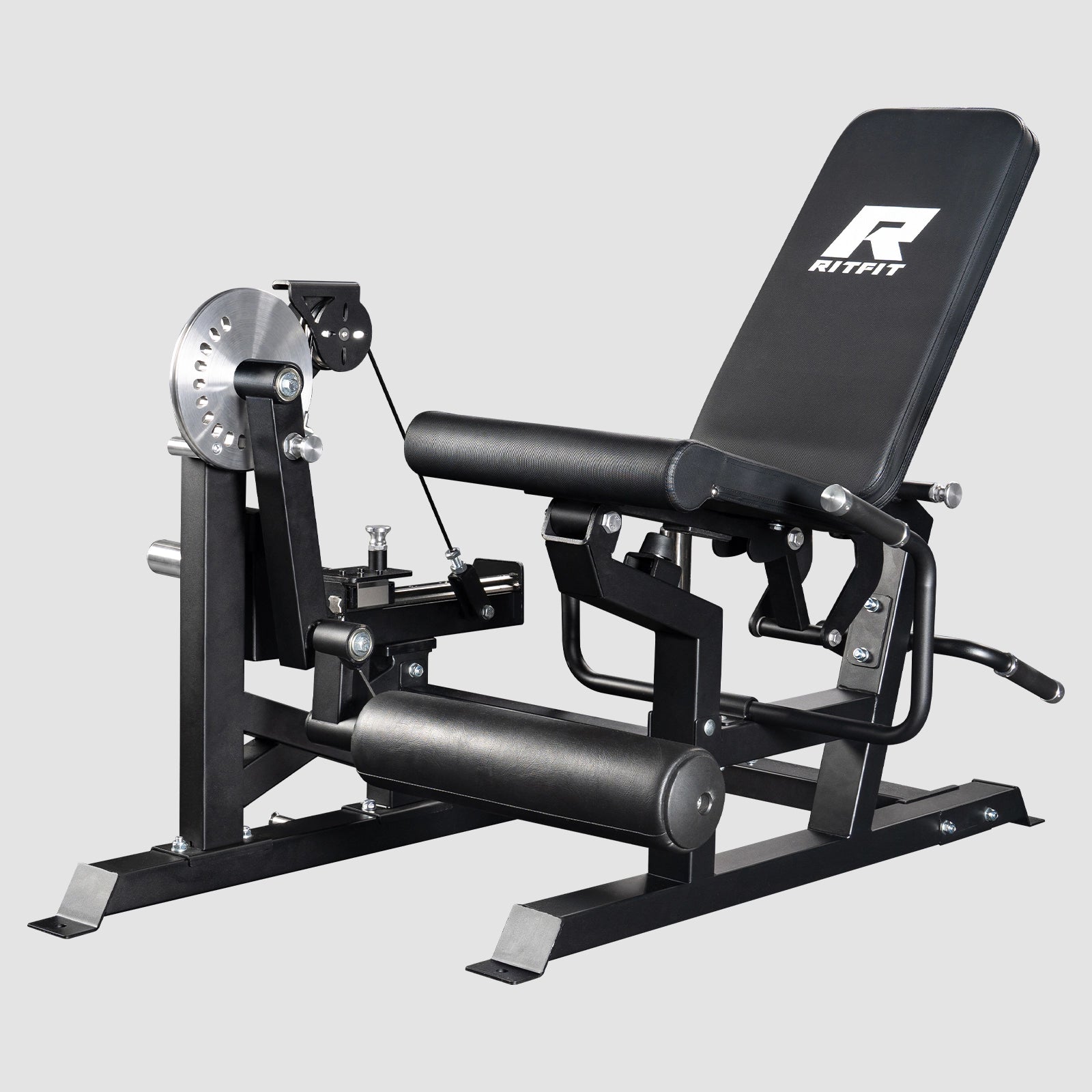
The program can be completed with adjustable dumbbells, a stable bench, and sufficient clear floor space. A rack, Smith machine, barbell, or cable system expands exercise selection and allows smaller load increases over time.
Priority Equipment Categories
- Smith machine or power rack: A stable rack supports squats and presses, while a guided Smith bar can make solo setup more predictable when the safety stops are positioned correctly.
- Adjustable dumbbells: Dumbbells support squats, hinges, presses, rows, lunges, raises, and unilateral exercises without requiring a large equipment footprint.
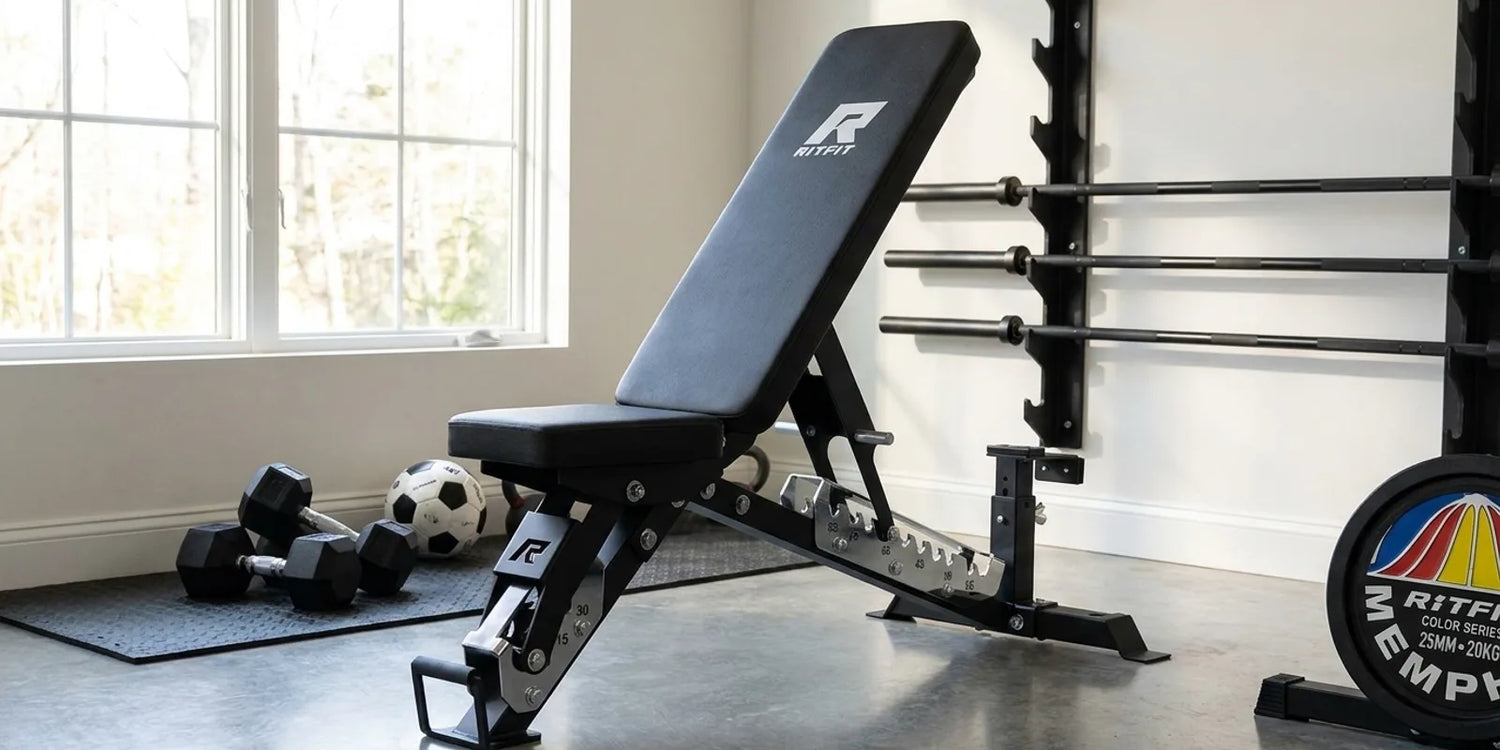
- Adjustable bench: A stable bench supports flat pressing, incline pressing, supported rows, split squats, and seated accessory exercises.
- Weight plates and barbell: Plate loading makes gradual progression practical when the available plates include small increments.
- Cable system: Cable rows, pulldowns, face pulls, and Pallof presses provide useful pulling and core options.
RitFit Equipment Options
RitFit sells the products linked in this section. Review the current product dimensions, capacity information, included attachments, assembly requirements, and safety instructions before purchasing or training.
- All in one training station: The RitFit M1 Smith Machine combines a guided bar path with multiple home strength training stations.
- Adjustable pressing surface: The RitFit adjustable utility bench supports flat and inclined pressing variations.
- Barbell selection: The home gym barbell guide explains bar length, sleeve design, knurling, and intended use.
- Space planning: The complete home gym setup guide covers layout, flooring, equipment spacing, and purchase order.
Equipment does not replace progressive programming. Choose the simplest setup that allows repeatable technique, safe loading, and enough room to enter and exit each exercise without obstruction.
FAQs About the Four Week Home Gym Training Plan
How many days per week should I follow this four week home gym plan?
Three days per week is enough for weeks one, two, and four, while week three uses four shorter sessions. Choose consistent days, leave at least one recovery day between full body workouts, and reduce volume when soreness, sleep loss, or declining technique interferes with the next session.
Can beginners use this four week strength plan at home?
Yes. Beginners can use this plan by selecting conservative loads, stopping each set with about three good repetitions available, and learning each movement before adding weight. A stable bench, clear floor space, and safety catches are more important than using heavy resistance during the first week.
How much weight should I add during progressive overload?
Add the smallest available increase only after every prescribed set is completed with stable technique and the planned repetitions in reserve. For many exercises, an increase of about two to five percent is enough. Keep the same load when form changes, joint discomfort appears, or recovery is incomplete.
Should I train to failure during the four week plan?
No. Most sets should stop with one to three controlled repetitions still available. Training to failure can increase fatigue and technique breakdown without being necessary for steady progress. Save very hard efforts for simple accessory exercises, and avoid failure on squats, presses, and deadlifts when training alone.
What equipment is essential for this home gym workout?
The essentials are resistance that can be progressed, a stable pressing surface, and enough clear space to move safely. Dumbbells can cover the entire plan, while a rack or Smith machine adds convenient loading and safety options. Bands and cable attachments are useful, but they are not required.
Can this four week plan improve recreational soccer performance?
Yes. The plan can support general strength, trunk control, and training consistency, which may complement recreational soccer. It does not replace sprint work, change of direction practice, ball skills, aerobic conditioning, or team sessions. Players should combine this plan with sport specific work and adjust lower body volume around matches.
Conclusion
This four week home gym plan progresses from technique practice to higher repetition volume, moderate loading, and a final reduced volume week. The structure creates a practical starting point without promising unrealistic transformation in one month.
Record each exercise, load, repetition count, and effort level. After week four, repeat the block with small adjustments or move into a longer program based on the exercises you performed most consistently.
Disclaimer
This article provides general fitness information and does not replace medical advice, diagnosis, treatment, or individualized coaching, so consult a qualified professional before starting if you have an injury, medical condition, or other concern. This independent training guide is not affiliated with, sponsored by, endorsed by, or an official partner of any tournament organizer, governing body, team, athlete, broadcaster, or rights holder.
References
- Behm DG, Granacher U, Warneke K, et al. Minimalist training, is lower volume and dose resistance training effective to improve physical fitness? A narrative review. Sports Med. 2023;53(10):1909–1929. https://pmc.ncbi.nlm.nih.gov/articles/PMC10933173/
- Law TD, Clark LA, Clark BC. Resistance exercise to prevent and manage sarcopenia and dynapenia. Annu Rev Gerontol Geriatr. 2016;36(1):205–228. https://pmc.ncbi.nlm.nih.gov/articles/PMC4849483/
- Glavas C, Renault Macklem A, Fiogbee Hickson L, et al. The feasibility and effects of transitioning gym based to home based resistance training. BMC Geriatr. 2025;25(1):1–14. https://pmc.ncbi.nlm.nih.gov/articles/PMC12309126/