








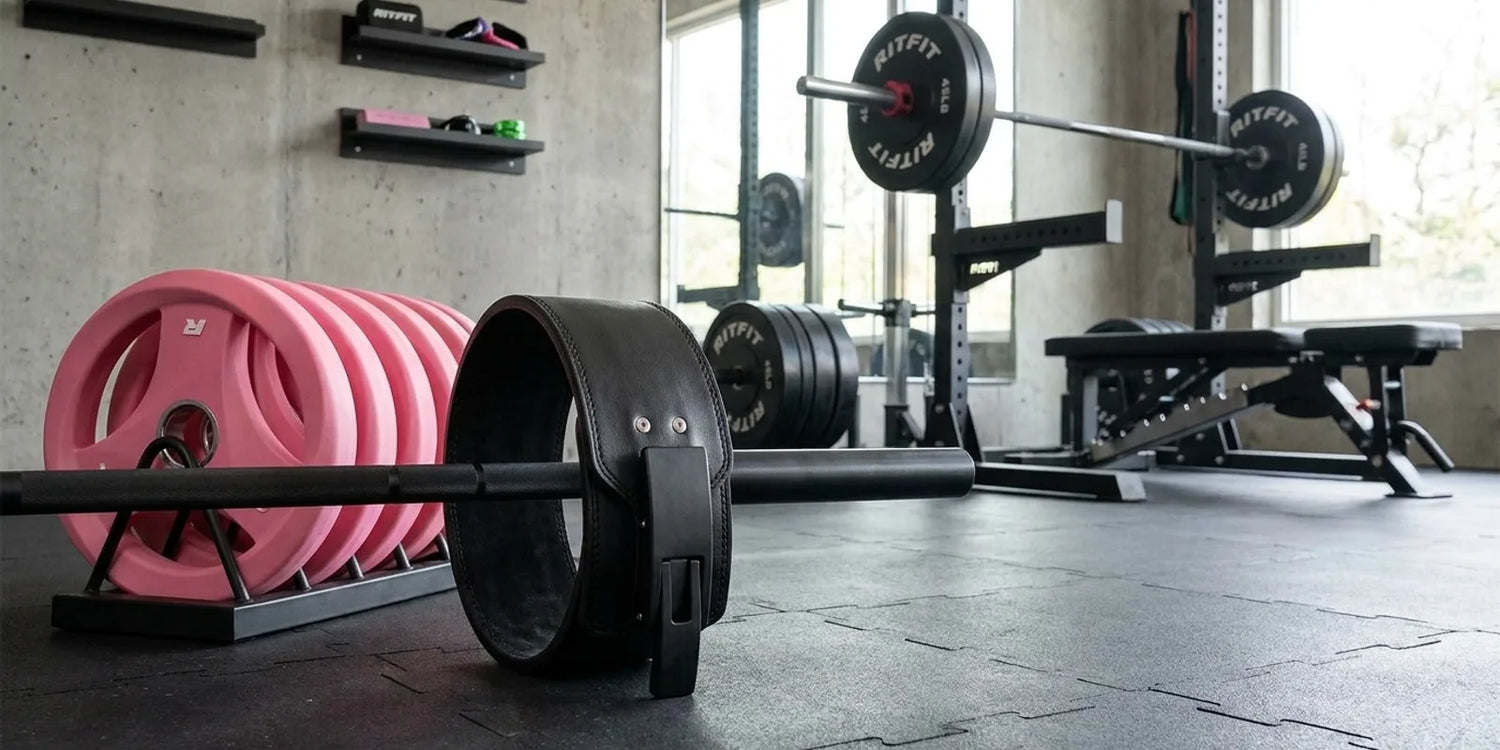
A lifting belt should feel snug enough to brace hard against, but not so tight that it blocks a full 360 degree belly breath or digs sharply into your ribs and hips. The best fit gives you strong outward pressure, stable torso support, and enough room to breathe, brace, and move with control.
A lifting belt works best when it helps your brace, not when it crushes your midsection. This guide shows you how to judge belt tightness, adjust it by lift, and find the notch that feels strong instead of restrictive.
Key Takeaways
- Snug beats suffocating. A good belt feels firm, not crushing.
- Breathing is the first test. If you cannot take a full belly breath, the belt is too tight.
- One notch does not fit every lift. Squats, deadlifts, and presses often need small changes.
- Pain is a warning sign. Sharp pinching, numbness, and bruising are not normal support.
- The right fit is personal. Torso length, belt width, and belt stiffness all change the feel.
What Does a Lifting Belt Actually Do?
A lifting belt gives your trunk a firm surface to brace into, which helps you direct pressure around the midsection and create a more stable torso under heavy loading.[1] It is a performance and positioning tool, not a replacement for good breathing or core control.
That matters most during heavy compound work with barbells and weight plates, where better bracing can help you stay organized from setup to lockout.
General Guideline for Belt Tightness
Start with a tight but breathable fit, not the tightest hole you can force shut. Older research has also linked belt use with less spinal shrinkage after lifting, but that does not justify cranking the belt until it hurts.[4]
You Must Be Able to Take a Full Belly Breath
This is the most important checkpoint. If you cannot pull air into your abdomen, sides, and lower back, the belt is too tight because you cannot build the pressure the belt is supposed to support.
Leave Room for One to Two Fingers Under the Belt
The one to two finger test is a useful starting check, not a perfect law. You should be able to slide your fingers under the belt with effort, then feel the fit become dramatically firmer once you inhale and brace.
The Belt Should Stay Put During the Lift
A properly fitted belt should not spin around your waist, climb into your ribs, or drift so much that you keep adjusting it between reps. Whether you lift with free weights or train on the RitFit Smith machine collection, stable positioning is part of correct belt use.
Avoid Numbness, Sharp Pain, or Bruising
Strong pressure is normal, but numbness, tingling, sharp pinching, or deep bruising are not. Those signals usually mean the belt is too tight, too high, too low, or simply wrong for your torso shape.
Stiffer belts can also change how the trunk moves and feels, which is one reason rigid leather belts may seem harsher than softer options during the early learning phase.[3] If the belt keeps jamming into your ribs or hips, adjust the position first, then reconsider width and stiffness.
How Tightness Varies by Lift and Goal
Belt fit is lift specific, not universal. Deadlift research has also shown that belt use can change setup kinematics and lower perceived exertion, which supports adjusting fit by movement instead of forcing the same notch for everything.[2]
- Squats: Most lifters tolerate a firmer setting because the torso stays more upright and there is more room to expand into the belt. When you practice lower body patterns such as these Smith machine leg workouts, the right fit should feel locked in without stealing your breath.
- Deadlifts: Many lifters do better with one notch less tension or a slightly different height so the belt does not block the hinge. That matters even more when you train posterior chain work like these Smith machine back workouts, where setup position drives everything.
- Overhead press and bench variations: A slightly more forgiving fit often feels better because rib position and torso angle change. If you press on a RitFit Gator adjustable weight bench, the belt should support the brace without jamming into the sternum or lower ribs.
How to Find Your Ideal Notch
- Measure where you actually wear the belt. Belt size should be based on your lifting position, not your jeans size.
- Start slightly looser than expected. It is easier to tighten a belt one step at a time than to learn bracing inside a belt that is already too aggressive.
- Brace before you judge the fit. A belt that feels only moderately tight while standing can feel ideal once you inhale and push out in all directions.
- Test the fit under realistic movement. Use a bodyweight squat, hinge, or light warm up set before deciding that the notch is right.
- Track separate settings by lift. A squat notch, a deadlift notch, and a press notch can all be normal.
Common Mistakes With Belt Tightness
Most belt mistakes come from chasing maximum tightness instead of maximum brace quality. These problems also show up when people move too quickly into loaded sessions such as full body Smith machine exercises or when they misjudge total load because they never checked a Smith machine bar weight guide first.
- Using one setting for every lift: Torso angle changes, so fit should change too.
- Tightening the belt before learning to brace: A belt amplifies bracing, but it does not create it for you.
- Ignoring pain signals: Support should feel firm and productive, not sharp or panicked.
- Wearing the belt for everything: Most accessories, warm ups, and lighter sets do not need the same tight setup as top sets.
FAQs About Lifting Belt Tightness
How tight should a lifting belt be for squats?
A lifting belt for squats should feel snug enough to brace hard into, but not so tight that it blocks a full belly breath. Most lifters do best when the belt feels firm around the midsection, stays in place through the set, and still allows controlled breaths between reps.
Should a lifting belt be tighter for squats than deadlifts?
Yes. Many lifters prefer a slightly tighter setting for squats because the torso stays more upright and there is more room to expand into the belt. Deadlifts often feel better with one notch less tension, or a slightly different belt position, to protect the setup and hinge.
Can a lifting belt be too tight if it feels supportive?
Yes. A belt can feel supportive and still be too tight if it crushes your ribs, limits your brace, or makes your breathing shallow by the second or third rep. Good support feels like outward pressure against the belt, not pain, pinching, or loss of position.
What are signs your lifting belt is too loose?
A lifting belt is too loose when you can breathe easily but do not feel meaningful pressure against it once you brace. If the belt shifts during the lift, spins around your torso, or fails to give you a solid wall to push into, tighten it slightly.
Why does my lifting belt dig into my ribs or hips?
A lifting belt usually digs into the ribs or hips because the fit, width, or position does not match your torso shape and the lift you are doing. Shorter torsos often need more careful placement, and some lifters do better with a narrower or more flexible belt.
How do beginners find the right lifting belt notch?
Beginners should start one notch looser than expected, practice breathing into the abdomen and sides, then tighten only until the belt gives clear feedback. The right notch lets you brace hard, move normally, and finish the set without numbness, sharp pain, or panic breathing.
Do you need to wear a lifting belt for every set?
No. Most people do not need a lifting belt for every set, especially during warm ups, accessories, or lighter technique work. Using it mainly on heavier compound sets helps you practice beltless bracing too, while still getting support when the load becomes demanding.
Which lifts usually need a different belt position or tightness?
Squats, deadlifts, and overhead presses often need slightly different belt settings because the torso angle and breathing demands change. A position that feels perfect for a squat can block the deadlift start or pinch during pressing, so small changes in height or tightness are normal.
Conclusion
A lifting belt should feel tight enough to brace into with confidence, yet loose enough to let you breathe, move, and finish the set under control. The best fit is the one that gives you strong pressure without rib pain, breath restriction, or constant readjustment.
Disclaimer: This article is for general education only and does not replace medical advice, injury assessment, or one to one coaching. If you feel sharp pain, numbness, breathing restriction, or symptoms that persist after training, stop lifting and get qualified medical or coaching support.
References
- Blazek D, Stastny P, Maszczyk A, Krawczyk M, Matykiewicz P, Petr M. Systematic review of intra-abdominal and intrathoracic pressures initiated by the Valsalva manoeuvre during high-intensity resistance exercises. Biol Sport. 2019;36(4):373-386. doi:10.5114/biolsport.2019.88759
- Fong SSM, Chung LMY, Gao Y, Lee JCW, Chang TC, Ma AWW. The influence of weightlifting belts and wrist straps on deadlift kinematics, time to complete a deadlift and rating of perceived exertion in male recreational weightlifters: an observational study. Medicine. 2022;101(7):e28918. doi:10.1097/MD.0000000000028918
- Im SC, Seo SW, Kang NY, Jo H, Kim K. The Effect of Lumbar Belts with Different Extensibilities on Kinematic, Kinetic, and Muscle Activity of Sit-to-Stand Motions in Patients with Nonspecific Low Back Pain. J Pers Med. 2022;12(10):1678. doi:10.3390/jpm12101678
- Bourne ND, Reilly T. Effect of a weightlifting belt on spinal shrinkage. Br J Sports Med. 1991;25(4):209-212. doi:10.1136/bjsm.25.4.209





