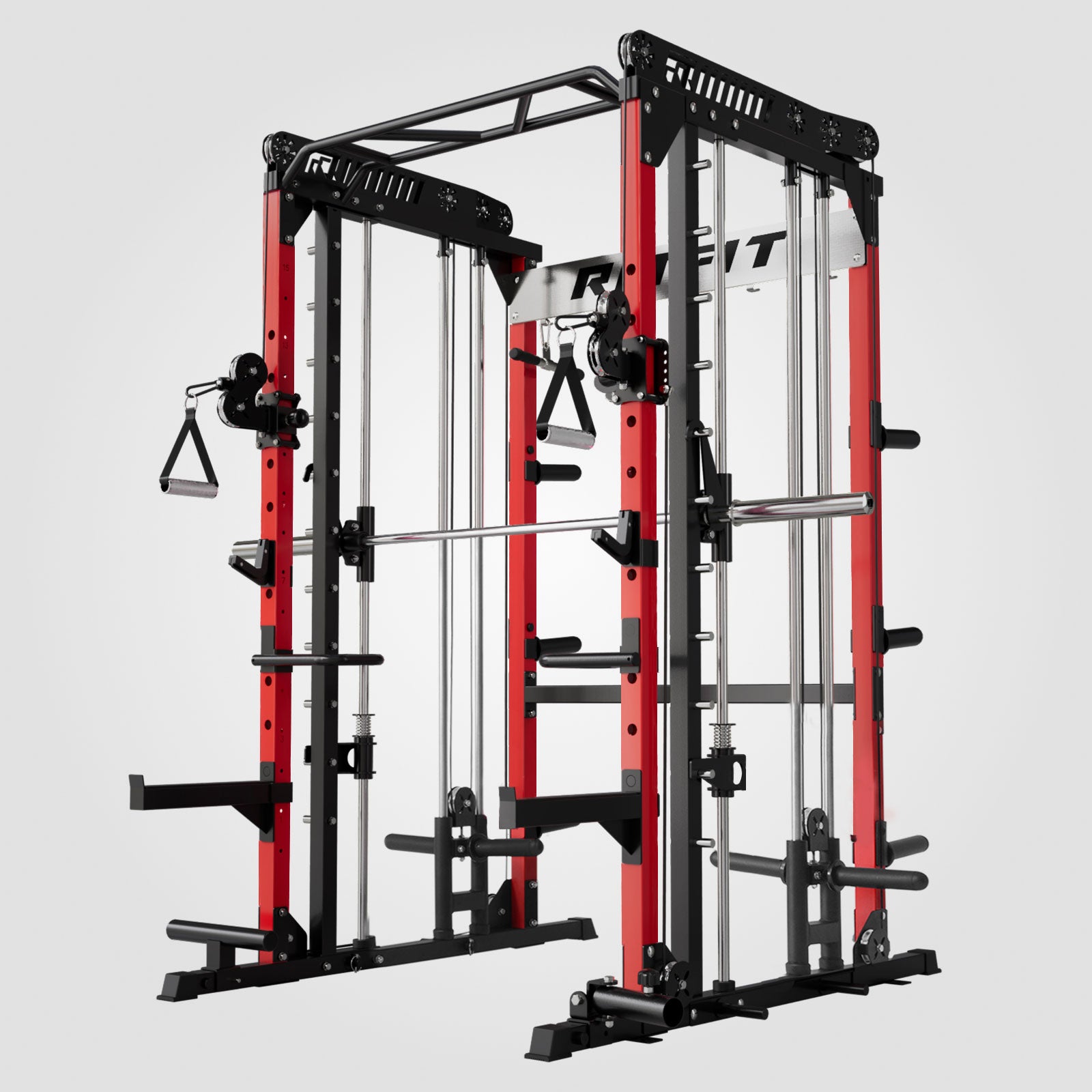
A Smith machine glute bridge is a stable way to train hip extension, build glute strength, and reduce setup guesswork for solo lifters. Many lifters use a bench supported version that overlaps with a short range hip thrust, so this guide explains the setup, form, mistakes, and best use cases clearly.
Key Takeaways
- Stable setup: The Smith machine makes bar path, load progression, and repeatability easier for home gym training.
- Glute first execution: The best reps feel strongest in the glutes, not the lower back or front of the hips.
- Foot position matters: Small changes in bench distance and foot placement can change the entire movement.
- Bridge and hip thrust overlap: Many people say glute bridge when they are really doing a short range bench supported hip thrust.
- Programming drives growth: Controlled reps, progressive overload, and consistent weekly volume matter more than chasing heavy sloppy reps.
Understanding the Smith Machine Glute Bridge
What this exercise really is
A Smith machine glute bridge trains hip extension with a fixed bar path, which helps many lifters focus on tension and position instead of balancing a free bar. Bridge and hip thrust variations are widely used in glute focused training because bodyweight hip extension exercises can produce meaningful gluteus maximus excitation.[1]
- Primary goal: Drive the hips up by squeezing the glutes and extending the hips with control.
- Main training effect: The movement emphasizes the gluteus maximus while also recruiting the hamstrings and trunk stabilizers.
- Why lifters like it: The Smith machine simplifies setup, supports progressive overload, and works well for solo home gym sessions.
Proper Smith Machine Glute Bridge Setup
Bench, bar, and body position
Proper setup matters because most technique problems start before the first rep. You need a stable flat bench, a Smith machine, a bar pad or folded towel, and enough space to place your feet so the top position feels strong and stacked.
- Bench placement: Put the bench behind the bar so your upper back can rest on the edge without forcing your neck back. If the bench is too far away, many lifters lose leverage and feel the movement more in the lower back.
- Upper back contact: Set the lower part of the shoulder blades on the bench edge, not the neck. This creates a stronger pivot point and makes lockout easier to control.
- Bar position: Place the bar in the hip crease with padding. The load should feel secure on the soft tissue of the upper hips, not on the hip bones.
- Foot position: Start around hip width and adjust until your shins are close to vertical at the top. If you mostly feel hamstrings, bring the feet slightly closer and retest.
- Head and ribs: Keep the ribs down and the chin gently tucked. This helps you finish with the glutes instead of overextending the lumbar spine.
- Starting load: Begin with the empty bar or a light load you can pause and control. Clean reps teach the pattern faster than heavy reps with compensation.
How to Do a Smith Machine Glute Bridge
Step by step execution
Proper execution keeps tension on the glutes and makes the movement safer and more repeatable. Use the steps below to lock in position before you add heavier loading.
- Step 1: Set your upper back and bar: Sit in front of the bench and place your upper back on the bench edge. Roll the bar into the hip crease and center it before you unrack.
- Step 2: Plant your feet: Place your feet flat and about hip width apart. Adjust them until the top position gives you a strong glute squeeze with minimal lower back pressure.
- Step 3: Brace before you move: Exhale lightly, bring the ribs down, and brace the abs. This makes the pelvis easier to control through the full rep.
- Step 4: Drive the hips up: Push through the whole foot and squeeze the glutes to lift the hips. Stop when your torso and thighs form a straight line and the glutes are fully contracted.
- Step 5: Lower with control: Bring the hips down slowly without collapsing the torso. Keep tension on the glutes and reset your breath before the next rep.
What Muscles Does a Smith Machine Glute Bridge Work
Primary and secondary muscles
The main target is the gluteus maximus, with the hamstrings and adductors supporting hip extension while the trunk helps maintain position. Loaded hip extension patterns also show high gluteus maximus activation across common strength exercises, which is why this family of movements is so useful in glute focused programming.[2]
- Gluteus maximus: This is the main driver of the lift and the muscle most responsible for lockout strength.
- Hamstrings: They assist hip extension, especially when foot placement shifts slightly farther from the body.
- Adductors: They contribute to hip extension and pelvic control during the rep.
- Core and trunk: They stabilize the torso so force goes into the hips instead of leaking into the lower back.
Benefits of the Smith Machine Glute Bridge
Why this variation earns a place in a lower body program
This variation is useful because it makes glute training more stable, more repeatable, and easier to load progressively. Review data on the barbell hip thrust also support its value for muscular activation and performance oriented programming, which makes bridge and thrust patterns more than simple warm up drills.[3]
- Repeatable setup: The fixed bar path helps you reproduce the same rep pattern from workout to workout.
- Solo friendly loading: Many lifters find it easier to set up alone than a heavy free bar hip thrust.
- High glute tension: The exercise challenges the glutes hardest near lockout, where many lifters want more focused work.
- Home gym practicality: It fits well into a Smith machine collection setup and pairs naturally with a stable adjustable weight bench collection.
Common Mistakes and How to Fix Them
The errors that usually ruin glute tension
Most mistakes come from poor setup, not poor effort. The goal is to finish each rep with glute driven hip extension, not spinal extension or random leg pushing.
- Overarching at the top: If your ribs flare and your chest lifts hard at lockout, you are probably finishing with the lower back. Keep the ribs down, tuck the chin slightly, and think about lifting from the hips.
- Feet too far forward: This often turns the movement into a hamstring dominant grind. Bring the feet a little closer and test whether the glutes take over.
- Feet too close: This can crowd the knees and shorten the working range. Move the feet out until the top position feels strong and clean.
- Wrong bench distance: If you slide or feel unstable, the bench is often too far from the bar. Reset the bench so the upper back stays planted and the bar lines up naturally with the hips.
- Bar too high on the body: If the load feels sharp or unstable, it is probably not sitting in the hip crease. Reposition the pad and settle the bar lower before unracking.
- Chasing load too early: Heavy reps with poor pelvic control usually shift tension away from the glutes. Earn heavier loading only after your pause and lockout are consistent.
Smith Machine Glute Bridge vs Smith Machine Hip Thrust
Why people confuse the two
Many people use the terms interchangeably because the Smith machine setup can look almost identical, especially when the upper back is supported on a bench. A true glute bridge is usually lower and shorter in range, while a hip thrust usually uses more bench support and a longer movement path.
- Glute bridge: Usually feels more compact, more controlled, and slightly easier to learn at lighter loads.
- Hip thrust: Usually allows more range, more load, and a stronger lockout challenge for experienced lifters.
- Practical takeaway: If your setup uses a bench and a clear hip drive to full lockout, many readers will understand it as a hip thrust style bridge.
- Related guide: If you want the longer range version, read this Smith machine hip thrust guide.
The Science Behind Lockout and Hip Drive
Why top end control matters
Biomechanical analysis of the barbell hip thrust shows high hip extensor demand, which helps explain why controlled lockout position matters so much in bridge and thrust style training.[4] If you rush the top or lose trunk position, you usually turn a glute dominant lift into a less efficient rep.
- Strong lockout: Finish by squeezing the glutes hard, not by leaning the ribs upward.
- Controlled descent: Lowering with control preserves tension and helps you repeat the same bar path.
- Better mind muscle connection: Slower reps and short pauses often improve glute feel for beginners.
How to Program the Smith Machine Glute Bridge
Sets, reps, and weekly use
This movement works best when the load and rep target match your goal. Longer term training data suggest hip thrust and back squat training can produce similar gluteal hypertrophy, so bridge and thrust patterns can be serious growth tools when programmed well.[5]
- For hypertrophy: Use 3 to 4 sets of 8 to 15 reps and keep 1 to 3 reps in reserve on most working sets.
- For strength emphasis: Use 3 to 5 sets of 5 to 8 reps with tighter setup and longer rest periods.
- For glute feel and skill: Use 2 to 3 sets of 10 to 15 controlled reps with a brief pause at lockout.
- Weekly frequency: Train it 1 to 3 times per week depending on your total lower body volume.
- Best pairings: It fits well with a Smith machine Romanian deadlift, split squats, leg press work, and other Smith machine full body exercises.
Who Should Use This Exercise
Best fit lifters and training situations
This variation is especially useful for beginners, solo home gym lifters, and anyone who wants more repeatable glute training with less setup chaos. It also works well for people building a home gym around a versatile machine like the RitFit M1 Smith Machine or comparing options in a Smith machine beginner guide.
- Beginners: The fixed path reduces balance demands and simplifies learning.
- Home gym users: The setup is easier to repeat than a free bar variation when training alone.
- Glute focused lifters: It adds targeted hip extension work to a broader lower body plan.
- Readers exploring more options: It connects naturally with guides on the best gym machines for glutes.
FAQs
How do I set up a Smith machine glute bridge without lower back pain?
Set your upper back on the bench edge, place the bar low across the hip crease, and brace before every rep. Most lower back discomfort comes from overextending at lockout, using the wrong bench distance, or placing the feet so far forward that the glutes lose leverage.
What foot position works best for a Smith machine glute bridge?
Start with feet about hip width apart and adjust until your shins are close to vertical at the top. If you feel hamstrings more than glutes, bring the feet slightly closer, and if the knees feel cramped, move them a little farther out and turn the toes out slightly.
Can a Smith machine glute bridge grow your glutes?
Yes. A Smith machine glute bridge can build the glutes when you use a full controlled range, add load over time, and keep the pelvis stable. It is especially useful for home gym lifters who want repeatable setup, safer solo training, and strong glute tension at the top.
Is a Smith machine glute bridge the same as a hip thrust?
No. They overlap, but many lifters use the names interchangeably because the setup can look very similar. A glute bridge is usually shorter in range and lower to the floor, while a hip thrust usually uses more bench support and allows a longer path with heavier loading.
How much weight should beginners use for a Smith machine glute bridge?
Beginners should start with the empty Smith bar or a very light load they can pause and control for every rep. The right starting weight lets you feel the glutes, keep the ribs down, and finish all sets without low back strain or losing bar position on the hips.
Which bench height works best for a Smith machine glute bridge?
Use a bench height that lets your upper back sit on the edge comfortably without forcing your neck backward. If the bench feels too high, many lifters lose position and shift work into the lower back, so a stable flat bench is usually the best starting option.
Conclusion
A Smith machine glute bridge is one of the simplest ways to train glute driven hip extension with stable setup and clear progression. Get the bench distance, foot placement, and lockout position right first, then add load over time and treat every rep like skill practice, not just a strength test.
Disclaimer: This article is for general fitness education and does not replace personal medical advice, diagnosis, or rehabilitation guidance. If you have current hip, back, or knee pain, or a history of injury, get individualized clearance from a qualified healthcare professional before training hard.
References
- Macadam P, Feser EH. Examination of gluteus maximus electromyographic excitation associated with dynamic hip extension during body weight exercise: a systematic review. Int J Sports Phys Ther. 2019;14(1):14-31.
- Krause Neto W, Soares EG, Vieira TL, et al. Gluteus maximus activation during common strength and hypertrophy exercises: a systematic review. J Sports Sci Med. 2020;19(1):195-203.
- Neto WK, Vieira TL, Gama EF. Barbell hip thrust, muscular activation and performance: a systematic review. J Sports Sci Med. 2019;18(2):198-206.
- Brazil A, Needham L, Palmer JL, Bezodis IN. A comprehensive biomechanical analysis of the barbell hip thrust. PLoS One. 2021;16(3):e0249307.
- Plotkin DL, Rodas MA, Vigotsky AD, et al. Hip thrust and back squat training elicit similar gluteus muscle hypertrophy and transfer similarly to the deadlift. Front Physiol. 2023;14:1279170.