Table of Contents
- What Is a Trap Bar Deadlift?
- Benefits of the Trap Bar Deadlift
- Equipment and Setup
- Step-by-Step: How to Do a Trap Bar Deadlift
- Common Mistakes and How to Fix Them
- Breathing, Bracing, and Grip
- How to Choose the Right Load and Progress Safely
- Variations and Modifications
- Programming the Trap Bar Deadlift
- Safety Considerations and Who Should Be Cautious
Important disclaimer: This article is for general educational purposes only and is not medical advice. If you have shoulder, neck, back, elbow, or wrist pain, a recent injury or surgery, numbness or tingling, unexplained weakness, or dizziness, consult a qualified clinician before starting. Stop any exercise that causes sharp pain.
The trap bar deadlift, often called the hex bar deadlift, is a powerful exercise that has gained significant popularity for its effectiveness in building strength and its unique advantages in terms of safety and accessibility. While traditional deadlifts with a straight bar are cornerstones of strength training, the trap bar offers a different biomechanical approach that can be particularly beneficial for many.
This guide is designed for anyone looking to master this lift, from those new to strength training and everyday exercisers concerned about lower back strain to athletes aiming to boost their power and even busy individuals seeking an efficient full-body movement.
Key Takeaways
- Trap bar deadlifts center the load around your body, which often makes it easier to keep a more upright torso and consistent bar path, especially for beginners.
- High handles reduce range of motion and can be a great “on-ramp” for learning the lift or managing mobility limitations.
- Low handles increase range of motion and can feel closer to a conventional deadlift, which is great once you’ve earned clean positioning.
- Your best rep is the one that keeps ribs stacked over pelvis, spine neutral, and feet rooted (tripod foot) from start to finish.
- Progress fastest by stopping sets at “technical failure” (form breaks), not absolute failure.
What Is a Trap Bar Deadlift?

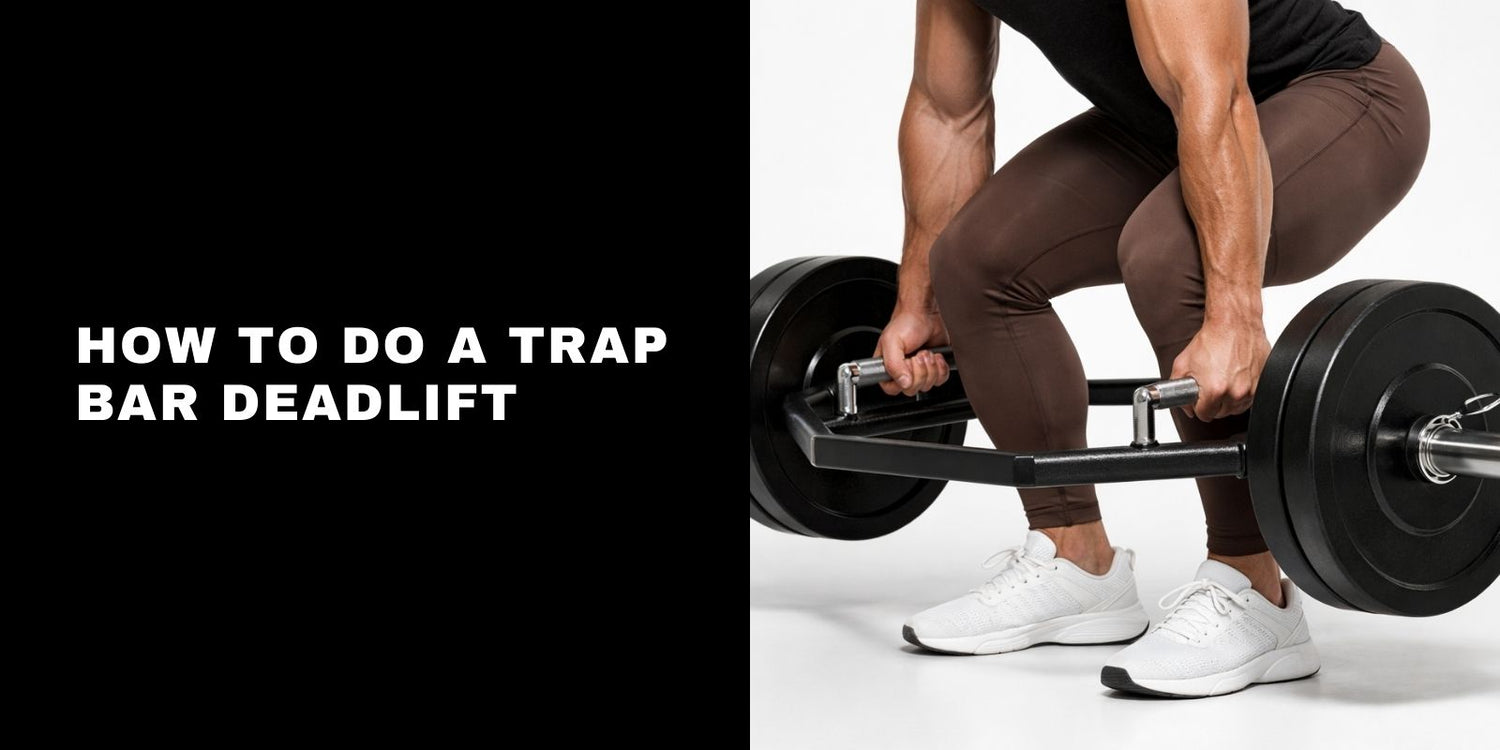
A trap bar, or hex bar, is a specialized piece of equipment characterized by its hexagonal shape, allowing you to stand inside the bar rather than behind it. This design typically includes two sets of handles, high and low, which significantly alter the starting position and overall mechanics of the lift. By standing within the bar, the weight is centered with your body, rather than in front, which allows for a more upright torso[1].
This movement pattern becomes a unique blend, often described as a hybrid between a squat and a hinge. It effectively targets a wide range of muscle groups, primarily engaging the glutes, hamstrings, and quadriceps[2]. Secondary muscles worked include the lower back, traps, core, and forearms, making it a comprehensive exercise for total-body development.
Benefits of the Trap Bar Deadlift
The trap bar deadlift offers a compelling array of benefits that make it a standout exercise. Its design promotes a more upright torso throughout the lift, which can significantly reduce stress on the lower back compared to conventional straight bar deadlifts[3].
This makes the technique generally easier and quicker for many to learn, particularly for those new to lifting. By centering the load, it also reduces shear forces on the spine, enhancing safety. It’s an excellent choice for building total-body strength and explosive power, with specific benefits for athletes looking to improve jump performance and sprinting mechanics. Beyond strength, its versatility allows for heavy strength work, power sets, lighter volume training, or even conditioning, adapting to various fitness goals.
Equipment and Setup
To perform a trap bar deadlift, you’ll need a trap bar (hex bar) and standard weight plates. Choosing appropriate footwear is important; flat shoes with minimal heel elevation are generally preferred as they provide a stable base. While not always necessary, some optional gear can enhance your lift: a lifting belt can offer core support, chalk can improve grip, and lifting straps can be useful for heavier loads when grip becomes a limiting factor (though it’s good to build natural grip strength too). Always ensure your lifting area is clear, use clips or collars to secure plates, and lift on a consistent, stable surface for safety.
Step-by-Step: How to Do a Trap Bar Deadlift
Mastering the trap bar deadlift involves precise execution through each phase. Here’s a detailed, beginner-friendly guide:
- Step 1: Stand centered inside the trap bar with feet hip to shoulder width and toes slightly turned out. Grip the handles evenly and use the high handles if you want a shorter range of motion.
- Step 2: Hinge your hips back and bend your knees until your hands meet the handles while keeping a neutral spine. Keep your chest proud, shoulders down and back, and your midfoot directly under your center of mass.
- Step 3: Take a deep breath, brace your core as if preparing for a light punch, and pack your lats to lock your torso in place. Set your gaze slightly ahead on the floor to keep your neck aligned with your spine.
- Step 4: Drive through your midfoot and heels and think about pushing the floor away rather than yanking the bar up. Let hips and shoulders rise together as the bar tracks close and vertical, then finish tall with glutes tight and ribs stacked over pelvis.
- Step 5: Lower with control by hinging at the hips first, then bending the knees while keeping core and lats engaged. Guide the bar back over your midfoot and set it down softly, then either touch and go or fully reset.
Common Mistakes and How to Fix Them
Understanding and correcting common errors is crucial for safe and effective lifting:
- Rounding the lower back: This often happens when you bend at the waist instead of hinging at the hips. Focus on pushing your hips back more and maintaining a neutral spine. Use lighter loads to practice the hip hinge movement.
- Letting hips shoot up first: If your hips rise significantly faster than your shoulders, you're turning it into more of a stiff-leg deadlift. Cue yourself to "push through the floor" with your legs, driving your feet down to engage your quads and glutes evenly with your back.
- Leaning back excessively at lockout: Hyperextending your lower back at the top puts undue stress on the spine. Aim for a tall, neutral lockout where your hips are fully extended and glutes are squeezed, without leaning backward.
- Knees caving inward (valgus): This can be a sign of weak glutes or poor knee tracking. Focus on driving your knees slightly outward throughout the lift, ensuring they track in line with your toes. Activating your glutes consciously can help.
- Uneven or wandering foot placement: An unstable base can lead to imbalances. Consistently set up with your feet centered within the bar, roughly hip- to shoulder-width apart, and ensure the plates are loaded symmetrically.
- Bouncing reps off the floor: Bouncing can unload tension, making the lift easier but reducing its effectiveness and potentially increasing injury risk. Aim for a full stop at the bottom, or a controlled touch-and-go where you maintain tension.
Breathing, Bracing, and Grip
Proper breathing and bracing are fundamental for spinal stability during the deadlift. A simple pattern involves inhaling deeply and bracing your core before you initiate the pull, then gradually exhaling at or after lockout. The Valsalva maneuver, which involves holding your breath to create intra-abdominal pressure, can enhance stability for heavier lifts but should be used cautiously and briefly, especially by those with certain health conditions. For grip, a standard double-overhand grip is excellent for building forearm strength. For heavier loads, or when grip becomes a limiting factor, a mixed grip (one palm forward, one backward) or lifting straps can be used, though it's important to still train your natural grip strength regularly.
How to Choose the Right Load and Progress Safely
For beginners, it's wise to start with an empty trap bar or a very light load to master the form. Gradually increase the weight once you can perform several perfect repetitions. Your training goals will dictate your reps and sets: for strength, aim for lower reps (1-5) with heavier loads; for muscle growth (hypertrophy), moderate reps (6-12) with moderate loads; and for power/speed, lighter loads with fast, explosive intent. Progressive overload is key to long-term gains, this means gradually increasing the weight, reps, and sets or decreasing rest times. Always stop a set when your form begins to break down (technical failure), rather than pushing to absolute failure, to minimize injury risk.
Variations and Modifications
The trap bar deadlift offers several variations to suit different needs and goals:
- High-handle vs. low-handle: Using the high handles reduces the range of motion, making it easier and often preferred by beginners, those with limited mobility, or longer limbs. Low handles increase the range of motion, more closely mimicking a conventional deadlift depth.
- Paused trap bar deadlift: Pausing 1-2 inches off the floor for a count can build strength in the initial pulling phase and improve control.
- Trap bar deadlift from blocks or deficit: Lifting from elevated blocks shortens the range of motion (useful for overcoming sticking points or managing fatigue), while lifting from a deficit (standing on a small platform) increases it, making the lift harder.
- Tempo trap bar deadlift: Performing the eccentric (lowering) phase slowly can enhance muscle control and hypertrophy.
These modifications make the trap bar deadlift suitable for a wide range of individuals, including taller lifters, people with limited hip mobility, and those rehabilitating from back issues (always with professional clearance).
Programming the Trap Bar Deadlift
Where it fits
- Use it as a main lift on lower body or full body training days
- Place it early in the session while you are fresh
Frequency
- Most lifters do best with one to two sessions per week
- Keep at least two to three days between heavy sessions for recovery
What to pair it with
- Hip hinge support: Romanian deadlifts
- Upper back support: rows or pulldowns
- Core stability: planks, dead bugs, farmer carries
Beginner workout example
- Trap Bar Deadlift: 3 sets of 5 to 8 reps
- Goblet Squat: 3 sets of 10 to 12 reps
- Plank: 3 sets, hold 30 to 60 seconds
Progression and variation
- Add load slowly when all reps feel crisp and your setup stays consistent
- Rotate with conventional or sumo deadlifts every few weeks to change the stimulus and build balanced strength
Safety Considerations and Who Should Be Cautious
While often considered safer than other deadlift variations, the trap bar deadlift still requires caution. Individuals with acute back pain, herniated discs, serious joint problems, high blood pressure, or those who are pregnant should consult with a healthcare professional before attempting this exercise. Always perform a proper warm-up before heavy sets to prepare your body. It’s important to distinguish between normal muscular effort and pain; if you experience sharp or unusual pain, stop the set or session immediately.
Warm-Up and Mobility Guide
A thorough warm-up prepares your body for the demands of the trap bar deadlift:
- General warm-up: Start with 5-10 minutes of light cardio, such as cycling or jogging, to increase blood flow and body temperature.
- Dynamic movements: Incorporate dynamic stretches like leg swings, hip circles, bodyweight squats, and glute bridges to improve range of motion and activate key muscles.
- Specific warm-up sets: Before your working sets, perform several sets with an empty bar or very light load, gradually building up to your intended working weight. This allows you to practice the movement pattern and progressively prepare your muscles and nervous system.
Frequently Asked Questions
Is the trap bar deadlift easier than a conventional deadlift?
Many find the trap bar deadlift easier to learn and perform due to the more upright torso position and centered load, which can reduce strain on the lower back.
Can I replace conventional deadlifts with trap bar deadlifts entirely?
While the trap bar deadlift is an excellent exercise, it works muscles in slightly different proportions than a conventional deadlift. For well-rounded development, incorporating both (or alternating them) can be beneficial, depending on your goals and preferences. However, if your primary goal is general strength and safety, the trap bar deadlift can certainly be your main pulling movement.
How often should I do trap bar deadlifts?
Most people benefit from performing trap bar deadlifts 1-2 times per week, allowing for adequate recovery between sessions.
Is it good for athletes / fat loss / beginners?
Yes, it's excellent for all these groups! Athletes benefit from its power development, it's a great compound movement for calorie expenditure during fat loss, and its relative ease of learning makes it ideal for beginners.
Can I use straps for trap bar deadlifts?
Yes, you can use straps, especially when lifting heavier loads where your grip might fail before your larger muscles. However, also make sure to train without straps to build natural grip strength.
Summary
The trap bar deadlift is a highly effective and versatile exercise that offers a fantastic way to build total-body strength and power with a potentially lower risk of lower back strain. The key takeaways for mastering this lift include focusing on a strong hip hinge, maintaining a neutral spine throughout the movement, and bracing your core effectively. Remember to always use proper form, start with a manageable load, and progress gradually. Incorporating the trap bar deadlift into your routine can lead to significant gains in strength and overall fitness. Don't hesitate to try a beginner routine, log your lifts to track progress, and combine it with other foundational movements for a well-rounded strength program.
References
- Swinton PA, Stewart A, Agouris I, Keogh JW, Lloyd R. A biomechanical analysis of straight and hexagonal barbell deadlifts using submaximal loads. J Strength Cond Res. 2011;25(7):2000-2009. doi:10.1519/JSC.0b013e3181e73f87
- Krause Neto W, Krause TLV, Gama EF. The impact of resistance training on gluteus maximus hypertrophy: a systematic review and meta-analysis. Front Physiol. 2025;16:1542334. Published 2025 Apr 10. doi:10.3389/fphys.2025.1542334
- Brentano MA, Umpierre D, Santos LP, et al. Muscle Damage and Muscle Activity Induced by Strength Training Super-Sets in Physically Active Men. J Strength Cond Res. 2017;31(7):1847-1858. doi:10.1519/JSC.0000000000001511