Incline push-ups on a weight bench build pressing strength with almost no equipment, and this guide covers how to do incline push-ups on a weight bench step by step. The bench works as a difficulty dial that makes each rep easier as your hands rise.
You will get setup cues for the pad and the bench edge, a full form checklist, sets and reps guidance, and the road to floor and decline push-ups. The guide stays on general training guidance, so wrist or shoulder concerns belong with a qualified professional.
Quick Answer: How to do incline push-ups on a weight bench comes down to a stable bench, hands at chest width on the pad or edge, and a straight body line as you lower your chest to the bench and press back up. Raise the hands higher for an easier rep.
Key Takeaways
- Height sets the challenge: Higher hands make each rep easier, so one adjustable bench covers beginner to advanced progressions.
- Form comes first: Keep a straight body line and lower your chest to the bench with elbows around 45 degrees from your body.
- Start with three sets: NASM suggests three sets of eight to fifteen reps before you move to a lower bench height.
- Progress on a ladder: Reach twelve to fifteen clean reps at one height, then drop the bench until the floor version feels the same.
- Stop on pain: Joint pain ends the set on the spot, and persistent discomfort belongs with a qualified professional.
Understand What the Incline Push-Up Trains
The incline push-up trains the pectoralis major, anterior deltoid, and triceps brachii as the main movers, with the serratus anterior and the core stabilizing the shoulder girdle.
It is a closed kinetic chain exercise, meaning your hands stay fixed while your body moves, which builds scapular stability alongside pressing strength.
- Chest and arms: The pectoralis major and triceps brachii do most of the pressing work at every bench height.
- Front shoulders: The anterior deltoid assists the press, and its share grows as your body angle gets steeper.
- Shoulder blade control: The serratus anterior and the muscles around the scapula keep the shoulder girdle steady while your chest travels toward the bench.
A 2019 comparison in 20 resistance-trained men found no differences in kinematics or upper-body muscle activation between push-ups and the bench press across loads [1]. A 2022 scoping review that pooled electromyography data from 30 studies reported that the serratus anterior reached its highest activation in incline push-ups and push-up-plus variations [2].
In practice, the incline push-up counts as real strength work rather than a warm-up filler. Every rep you earn at a given height feeds directly into harder push-up variations later.
Set Up a Stable Bench and Choose Your Hand Position
A steady bench that reaches roughly hip to waist height is the only equipment this exercise needs, and your hand position decides how each rep feels at the wrist. Check the bench before every set, because a sliding or tipping bench is the one failure this movement cannot forgive.
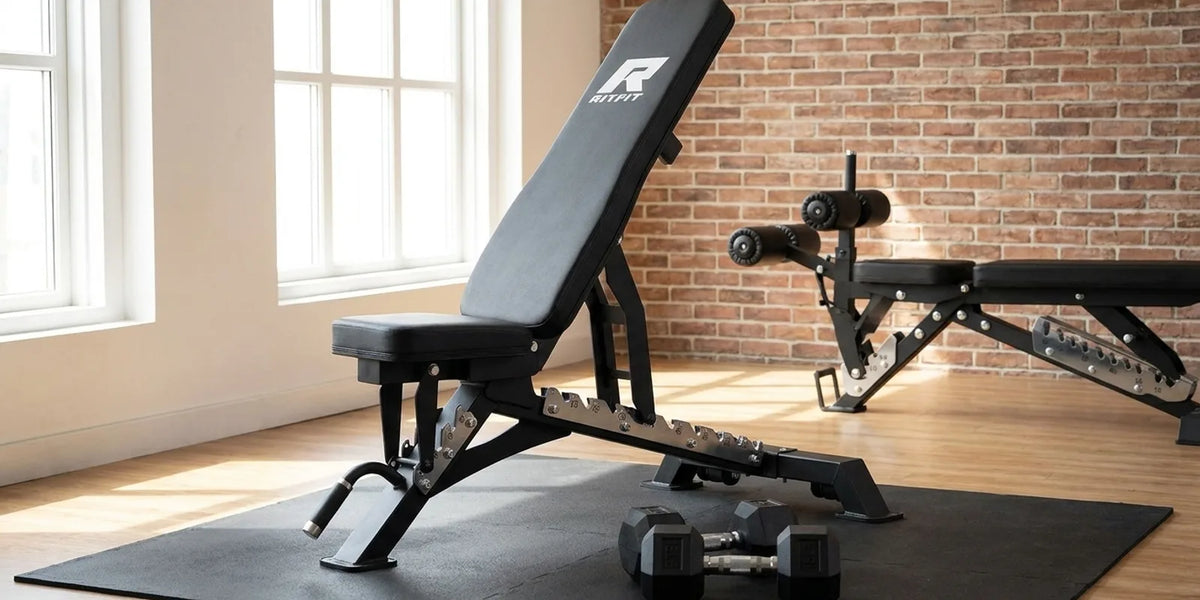
- Lock it down: Set the bench on flat ground, lock every adjustment bracket, and push the frame sideways before you start. A heavy frame with welded footplates and floor stabilizers stays put through every set.
- Hands on the pad: Palms flat on the bench pad keeps the wrist extended like a floor push-up, which most trainees handle fine at this height.
- Hands on the edge: Gripping the bench edge lets the wrist stay closer to neutral, a comfortable option for anyone who feels wrist pressure on the floor.
- Choose one and keep it: Pick the hand position that feels comfortable, set your hands at chest width, and hold that position for the whole set.
If you are still choosing a bench for a home gym, the RitFit 1300lb adjustable weight bench is another solid option, and the full weight benches collection covers flat and adjustable styles. Height range matters more than any other spec here, since it sets how low you can take the exercise.
Is the RitFit Gator Adjustable Weight Bench Steady Enough for Incline Push-Ups?
RitFit lists the RitFit Gator adjustable weight bench at a 1600 lb total load capacity on a 50 by 70 millimeter reinforced steel frame, with welded footplates and floor-protecting stabilizers for grip. Its 14.6 to 51.3 inch height range covers the whole incline push-up ladder in one bench.
They're good for everything from chest presses, dumbbell bench presses, incline bench supersets, skull crushers, glute bridges, incline rows to hit your back, ab moves, quad and leg moves like split squats, and more biceps moves than you can imagine.
Ebenezer Samuel, C.S.C.S. Fitness Director, Men's Health, The Best Weight Benches of 2026
"Wow! This is not my first weight bench, but I am confident it will be my last. The ease of use and ability to move around the cable machine from one exercise to the next is awesome. Regardless of the exercise I am performing I feel secure and stable. It is an awesome product."
Richard R. Verified Buyer, RitFit GATOR 1600LB Adjustable Weight Bench
Do Incline Push-Ups on a Weight Bench Step by Step
The incline push-up uses the same body position as a floor push-up, with hands fixed on the bench and one straight line from head to heels. NASM's exercise library keeps the cues simple, and the five steps below follow its guidance.
- Step 1, set your hands: Place your hands on the pad or the bench edge at chest width, with fingers pointing forward or slightly turned out.
- Step 2, build the line: Walk your feet back until your body forms a straight line from head to heels, then brace your core and squeeze your glutes.
- Step 3, lower with control: Bend your elbows and bring your chest toward the bench, keeping the elbows around 45 degrees from your body instead of flared wide.
- Step 4, press back up: Touch the bench lightly and extend your arms fully, without shrugging your shoulders toward your ears.
- Step 5, breathe and reset: Inhale on the way down, exhale on the way up, and end the set as soon as the straight body line breaks.
According to NASM's exercise library, the chest should nearly touch the bench on every rep and the elbows stay at approximately 45 degrees from the body. Bench height changes the load, but these five steps stay the same at every level.
"Very solid weight bench. Quick adjustments, quick to move with sturdy wheels. Adjustments to declines to seated presses in 10 seconds."
Richard S. Verified Buyer, RitFit 1300LB Adjustable Weight Bench BWB01
Scale the Difficulty With Bench Height and Body Angle
Bench height is the difficulty dial for the incline push-up, and higher hands make each rep easier by shifting a smaller share of your body weight onto the arms. Lower the hands to shift more load onto the pressing muscles, which is exactly how this exercise progresses.
| Hand Height | Difficulty | Who It Suits |
|---|---|---|
| Upright bench backrest, hands high | Easiest | First sessions and beginners building rep counts |
| Bench seat or support at hip height | Moderate | Most beginners doing three sets of eight to fifteen reps |
| Flat bench seat, about 14.6 inches on the Gator | Harder | Trainees close to floor push-ups |
| Hands on the floor, feet raised on the bench | Hardest | Trainees who already own the floor version |
Hand height sets the challenge on a weight bench, and the RitFit Gator height range of 14.6 to 51.3 inches covers the full ladder.
Angle also moves the target. Bench-press electromyography work with 30 trained adults pressing at 60% of 1RM found that upper-chest activation peaked at a 30 degree bench incline, while inclinations above 45 degrees shifted more work toward the front deltoids [3].
That study tested the bench press rather than push-ups, so treat it as a directional guide to how angle changes the target instead of push-up numbers. A steeper body angle with the feet raised loads the shoulders more heavily in the same direction.
If you are still choosing a bench, the RitFit Gator Pink adjustable bench covers the same 14.6 to 51.3 inch height range, and our incline angle guide for pressing digs deeper into angle selection.
Program Your Sets, Reps, and Weekly Frequency
Three sets of eight to fifteen reps, two or three days a week, is a practical starting point for most beginners on the incline push-up. NASM's exercise library sets that range and tells you to adjust it to your fitness level and bench height.
- Pick your rep range: Higher hands let you chase the top of the range, while a lower bench naturally cuts the reps you can do cleanly.
- Add reps before height: Extend the reps first, and drop the bench only when every set in the workout looks the same.
- Leave margin: Finish sets with one or two good reps still in reserve, which keeps the form honest and the session repeatable.
- Space the sessions: Train this movement two to three days a week with a rest day between sessions, since pressing strength adapts during recovery.
Progressive overload on this movement is simple, add a rep, add a set, or lower the hands. Small steps at each height beat jumping to a level you cannot control.
Progress to Floor and Decline Push-Ups
The road from bench to floor runs through a ladder of lower hand heights, and every rung is a height you can own for twelve to fifteen perfect reps.
NASM's exercise library recommends lowering the bench gradually rather than jumping straight to the floor.
- Go down one level: Move from the upright backrest to the seat, then to lower supports, repeating your sets at each height.
- Reach the floor: When the flat bench seat feels easy, around 14.6 inches on the Gator, take the same form to the floor and rebuild your reps there.
- Raise the feet last: Decline push-ups with feet on the bench shift more load onto the shoulders and upper chest, which is the advanced end of this ladder.
- Keep substitutes ready: Wall push-ups or countertop incline push-ups are easier than the bench version and work well for warm-ups or lighter days.
Once floor push-ups are solid, keep progressing by adding reps, sets, or external load such as a weighted vest. Browse weights or exercise weights when that day comes.
Avoid These Common Incline Push-Up Mistakes
Most mistakes on the incline push-up come from rushing the setup, and each one quietly cuts the benefit of the exercise. Fix them in the order below and the movement stays productive at every height.
- Sagging or piked hips: A broken body line turns the rep into a different exercise, so reset the line before the next rep.
- Flared elbows: Elbows at a right angle to the body load the shoulder joint, while the 45 degree position keeps the press balanced.
- Half reps: Stopping short of the bench skips the bottom range where the chest lengthens under load.
- A bench that moves: Skipping the stability check risks a slip mid-set, which is the last thing this exercise should teach.
- Jumping down too fast: Dropping to a lower height before you own the current one trades progress for shaky reps.
- Holding your breath: Breathing out on the way up keeps your core braced through the whole set.
Know When to Stop or Scale Back
The set ends when your form breaks or a joint complains, and both signals are easier to address early than late. Treat the incline push-up as practice rather than punishment, and the strength follows.
- Form breakdown: When the hips sag or the reps slow unevenly, end the set and come back at an easier height.
- Wrist or shoulder discomfort: Stop, switch between the pad and the bench edge, and raise the hands one level to reduce the load.
- Pain that persists: Pain during or after training that does not fade is a signal to pause this exercise and consult a qualified healthcare professional.
None of this article is medical advice, and the general reminders here do not replace individual guidance. Scale down without guilt, because the lower rungs of the ladder are where the clean reps live.
FAQs About Incline Push-Ups on a Weight Bench
Are incline push-ups easier than floor push-ups?
Yes. With your hands elevated on a bench your body is more upright, so a smaller share of your body weight is loaded onto your arms and chest. The higher the bench, the easier the rep becomes, which makes incline push-ups a practical first step toward floor push-ups.
How high should the bench be for incline push-ups?
Start high and come down as you get stronger. An upright bench backrest gives the most assistance, while a flat bench seat makes the same reps harder. NASM recommends lowering the height gradually and keeping form strict at every level, since the goal is clean reps at each height rather than surviving the hardest version.
How many sets and reps of incline push-ups should I do?
NASM's exercise library suggests three sets of eight to fifteen reps, adjusting the range to your fitness level and bench height. Higher rep sets suit beginners building pressing strength. Leave a rep or two in reserve, and add reps or lower the bench only when every set looks the same.
What muscles do incline push-ups work?
Incline push-ups train the pectoralis major, anterior deltoid, and triceps brachii as the main movers, with the serratus anterior and core helping stabilize. A 2022 scoping review of EMG studies noted especially high serratus anterior activity during incline push-ups, along with solid chest and triceps involvement.
When should I move from incline push-ups to floor push-ups?
Move down a height when you can complete twelve to fifteen perfect incline reps without fatigue-driven form loss. Work through progressively lower bench heights until the flat floor version feels the same. From there, raise your feet for decline push-ups, which shift more load onto the shoulders and upper chest.
Can I do incline push-ups on any weight bench?
Yes. Any bench that sits stable on the floor and lands your hands around hip height works, whether it is flat or adjustable. Lock the brackets first, check that the frame does not slide, and use the height range you have to scale the difficulty.
Can incline push-ups bother my wrists or shoulders?
Incline push-ups usually load the wrists less than floor push-ups because the exercise moves a smaller share of your body weight and the hand angle can be gentler. If a joint hurts during or after a set, stop the exercise and check with a qualified professional before training again.
Conclusion
Incline push-ups on a weight bench give beginners a clean path to full push-ups, and bench height keeps the challenge honest at every stage. Start high, own the form, and step down a level only when the reps look perfect.
When you are ready to build the rest of your home gym, browse our RitFit discount guide for the current deals before you buy.
Disclaimer
This article shares general fitness information only and is not medical advice. If you have a wrist or shoulder condition or feel pain during any set, stop the exercise and consult a qualified healthcare professional.
References
1. Tillaar RVD. Comparison of Kinematics and Muscle Activation between Push-up and Bench Press. Sports Med Int Open. 2019;3(3):E74-E81. doi:10.1055/a-1001-2526. PMCID: PMC6728153
2. Kowalski KL, Connelly DM, Jakobi JM, Sadi J. Shoulder electromyography activity during push-up variations: a scoping review. Shoulder Elbow. 2022;14(3):326-340. doi:10.1177/17585732211019373. PMCID: PMC9121296
3. Rodríguez-Ridao D, Antequera-Vique JA, Martín-Fuentes I, Muyor JM. Effect of Five Bench Inclinations on the Electromyographic Activity of the Pectoralis Major, Anterior Deltoid, and Triceps Brachii during the Bench Press Exercise. Int J Environ Res Public Health. 2020;17(19). doi:10.3390/ijerph17197339. PMCID: PMC7579505