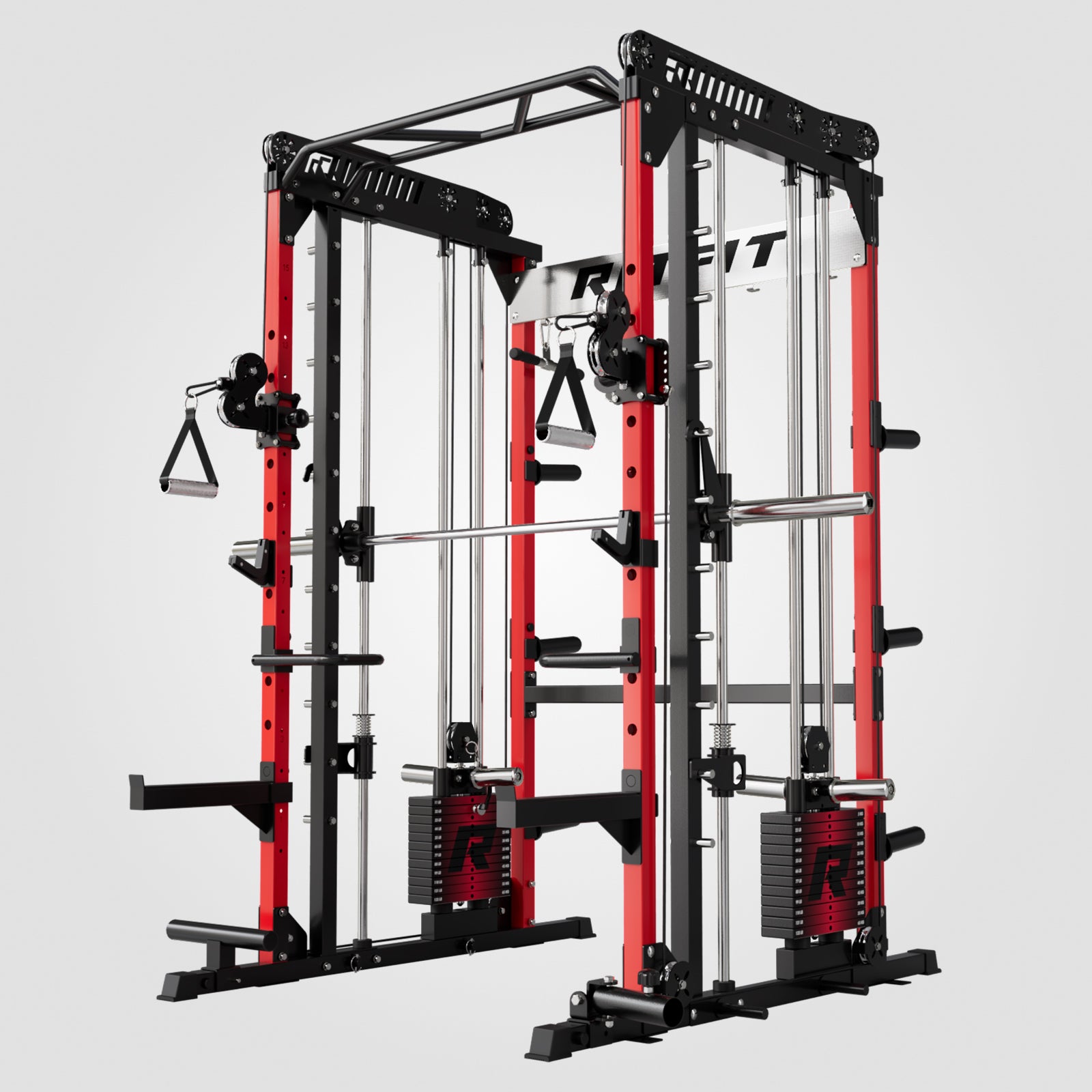

How to do military press on smith machine starts with matching the bar path to your body, setting the catches, and using a load you can control. The fixed track can make setup more repeatable, but it does not make an uncomfortable position safe.
This guide covers a standing setup, the press sequence, conservative progression, common mistakes, and practical alternatives for home or commercial gyms. Stop when pain, loss of control, or a forced bar path changes the movement.
Quick Answer: Set the Smith machine bar around upper chest height, verify the safety catches, use a full grip, brace your torso, and press while keeping the bar path comfortable and your elbows slightly forward. Start with the unloaded bar, add weight gradually, and stop any set that causes sharp pain or loss of control.
Key Takeaways
- Set first: Check the bar height, catches, clearance, and machine direction before loading plates.
- Brace well: Keep your ribs, pelvis, feet, and hands organized so the fixed track does not pull you into an arch.
- Use a repeatable path: Press through the machine track without forcing your head or shoulders into a painful position.
- Progress conservatively: Add load only when every repetition stays controlled and your planned range remains consistent.
- Know when to stop: Sharp pain, worsening symptoms, or loss of control calls for a reset or a different press variation.
Smith Machine Military Press Setup
Set the bar so you can unrack it without reaching, shrugging, or rising onto your toes. The correct position depends on the machine and your body, so use the unloaded bar to confirm the start and end positions.
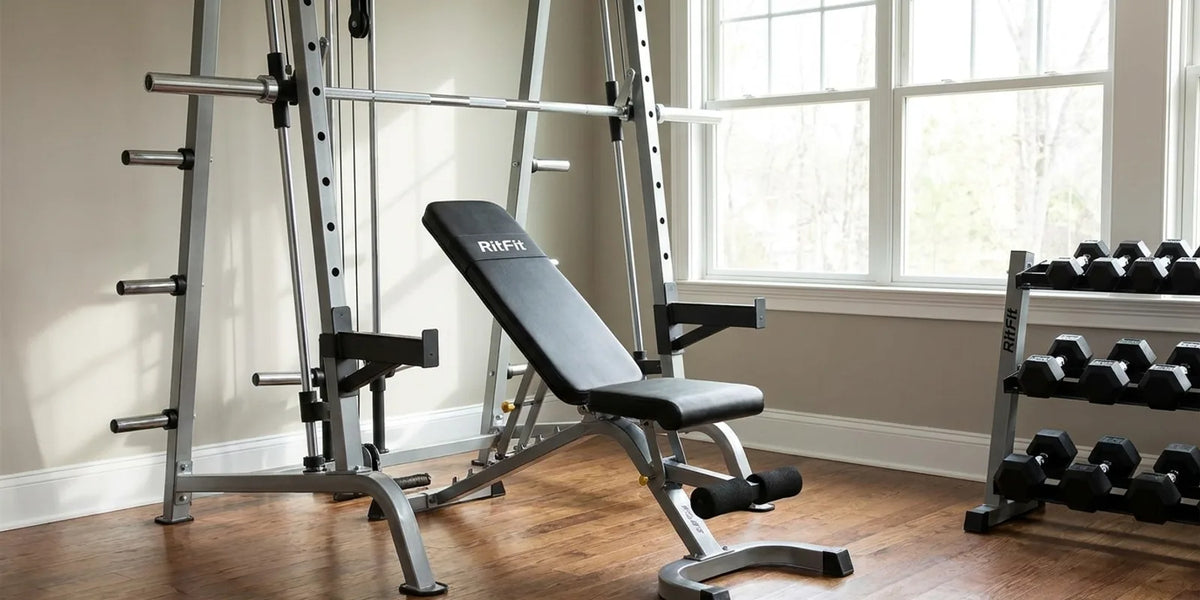
- Check the bar path: Stand where the bar can travel past your face without forcing your head backward. On an angled machine, test both orientations with no load and choose the path that feels natural.
- Set the catches: Place the safety catches below the lowest point you plan to use, then test a partial movement before adding weight. They should stop a failed rep without interrupting normal repetitions.
- Choose your stance: Use feet about hip to shoulder width apart, with the whole foot grounded. A stable stance is more useful than an exaggerated military stance if the machine track requires a small adjustment.
- Build the grip: Wrap your thumbs around the bar, keep wrists stacked over forearms, and choose a grip that lets your elbows stay slightly forward instead of flaring hard to the sides.
Keep a clear escape route and remove distractions before you start. Training alone is reasonable only when the catches work and the load leaves room for a controlled rerack.
How to Perform the Press Step by Step
The Smith machine military press is a controlled press from the upper chest to overhead, followed by a quiet return to the same starting position. Your torso should remain organized while the bar moves through the machine track.
- Brace: Take a comfortable breath, tighten your abdomen, and squeeze your glutes without leaning backward.
- Unrack: Rotate or lift the bar from the hooks according to the machine design, then settle it at the starting position.
- Press: Drive the bar upward while keeping your forearms under your hands. Move your head only enough to let the bar pass without craning your neck.
- Finish: Reach a stable overhead position without forcing the elbows backward. Keep the bar over a balanced base rather than chasing an extreme lockout.
- Lower: Bring the bar back to the upper chest with control, pause if needed, and rebrace before the next repetition.
Use the Smith machine collection to compare equipment layouts, but learn the exact hook and catch action on your own machine before loading it.
What Muscles Does the Smith Machine Military Press Work?
The press mainly trains the deltoids and triceps, with the upper back and trunk helping you maintain position. The fixed path changes the stabilization demand, so research on other press variations should guide questions, not dictate a universal promise.
- Deltoids: The anterior deltoid and medial deltoid contribute strongly to lifting the upper arm, while the posterior portion has a different role and may need separate work.
- Triceps brachii: The triceps brachii help finish the press, especially as the bar moves overhead.
- Scapular upward rotation: The upper back helps guide scapular upward rotation while the trunk maintains position.
- Trunk and upper back: Bracing and scapular control help keep the torso from turning the press into a backward lean.
One study in eight competitive bodybuilders compared front and back barbell and machine overhead press variations, so its acute excitation results provide context rather than a universal safety rule.[1]
A separate study of 13 resistance-trained men found notable deltoid activation during shoulder press compared with its tested exercises, but that does not prove Smith-machine-specific hypertrophy.[2] A preliminary study of 20 subjects found no significant same-load activation difference between dumbbell and kettlebell presses, which should not be generalized to Smith machines or all lifters.[3]
How Should You Choose a Starting Load?
Start with the unloaded Smith bar and learn how its counterbalance and track feel before adding plates. The right load is the one that lets you complete your planned repetitions with the same torso position, bar path, and breathing pattern from the first rep to the last.
- First session: Practice the full movement with the empty bar, then add small increments only if your shoulders and wrists remain comfortable.
- Progression: Repeat the same load until every planned set is controlled. Add a small amount at the next session rather than making a large jump after one good set.
- Substitutions: Use dumbbells when each shoulder needs a self-selected path, a free barbell when you want more balance practice, or the Gorilla chest and shoulder press when a guided press feels more suitable.
- Recovery: Keep the movement easy enough to recover from your other pushing work. The best variation is the one you can repeat with consistent technique.
Do not convert a free-weight number directly to a Smith machine number. Bar weight, counterbalance, angle, and friction vary between machines.
"Super fast shipping! Awesome quality machine! Definitely requires two people to put together it's very well built and heavy! Didn't take long to put together but labeling each piece would be helpful for newbies. Loving this machine so far!!"
Betsy W. Verified Buyer, RitFit BUFFALO Smith Machine Home Gym Package with Lat Pull Down and Cable Crossover
What Common Mistakes Should You Avoid?
Most technique problems begin with a mismatch between the machine path, the lifter position, and the chosen load. Fix the setup before trying to force a cleaner repetition.
| Mistake | What to change |
|---|---|
| Leaning back to clear the bar | Reduce the load, brace the trunk, and test the machine orientation again. |
| Elbows flared hard to the sides | Try a slightly narrower grip and keep the forearms more directly under the hands. |
| Cutting the lower position short | Use a range you can control without shoulder discomfort, then keep that range consistent. |
| Bouncing or rushing | Lower quietly, pause to reset, and stop the set when control disappears. |
| Ignoring the catches | Test the catches before loading, then rerack deliberately after the last rep. |
Scott Herman notes that the Smith machine can support the bar and help a lifter use more weight without a spotter, but that observation does not replace your own setup checks. Stop for sharp pain, worsening symptoms, numbness, or a failed rep that you cannot rerack safely.
"The smith machine is great because it is going to take a lot of the pressure out of your shoulders because it is supporting itself and you can do a little bit more weight on here."
Scott Herman, ScottHermanFitness, How To: Smith Machine Bench Press
Which Smith Machine Setup Fits a Home Gym?
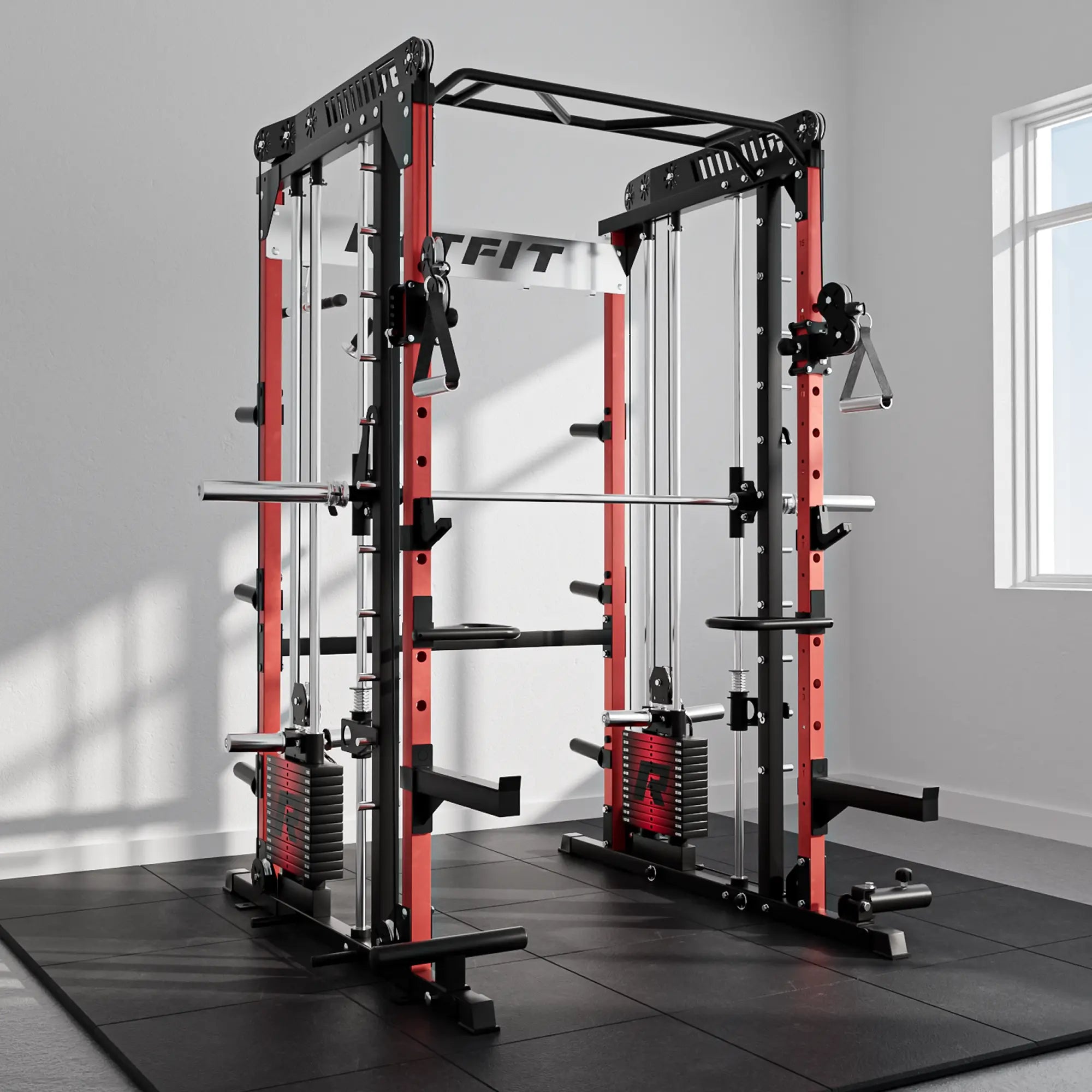
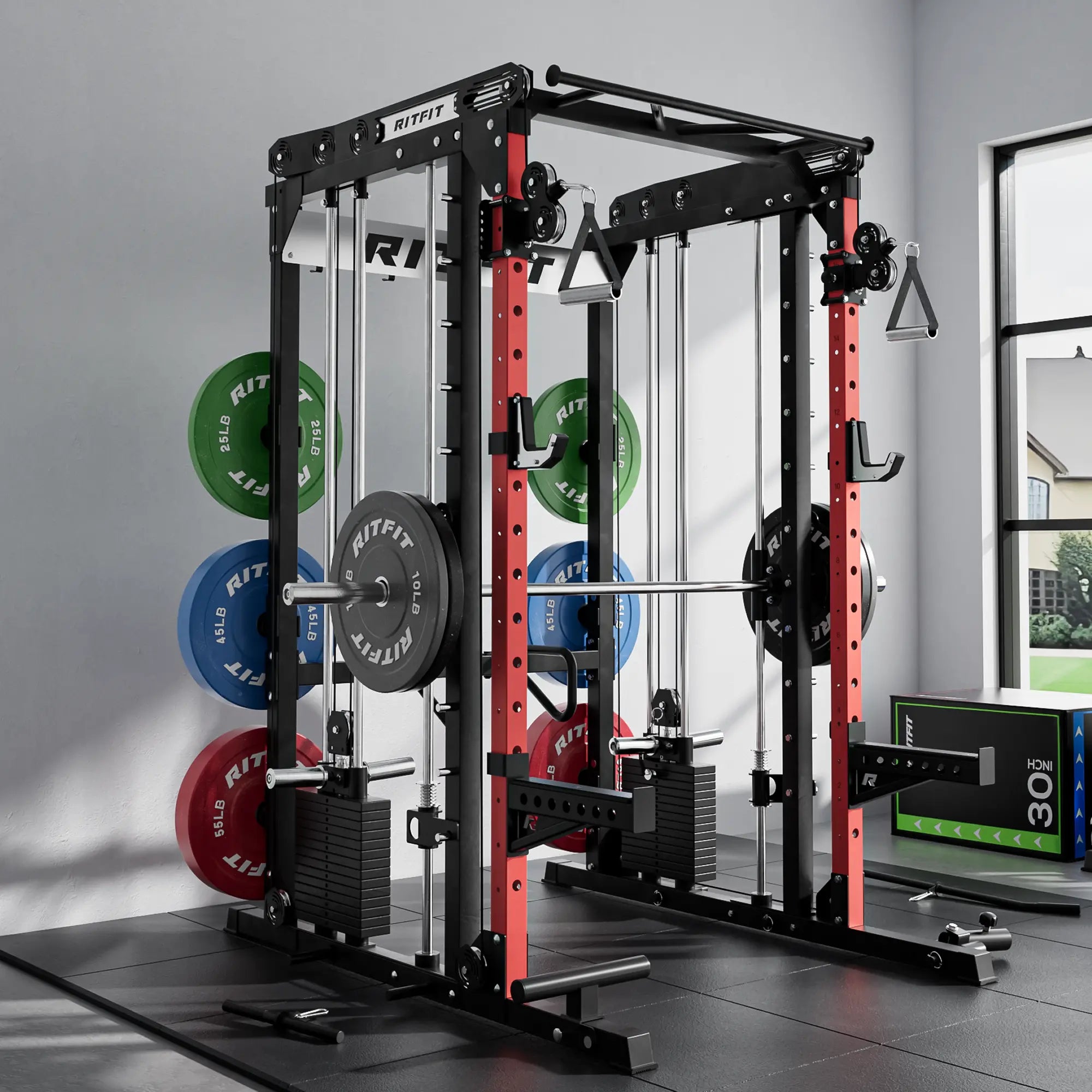
Choose a home Smith machine by how comfortably it supports the movements you will actually perform, not by a single headline feature. Check the bar path, clearance, catches, footprint, and the way accessories affect your pressing space.
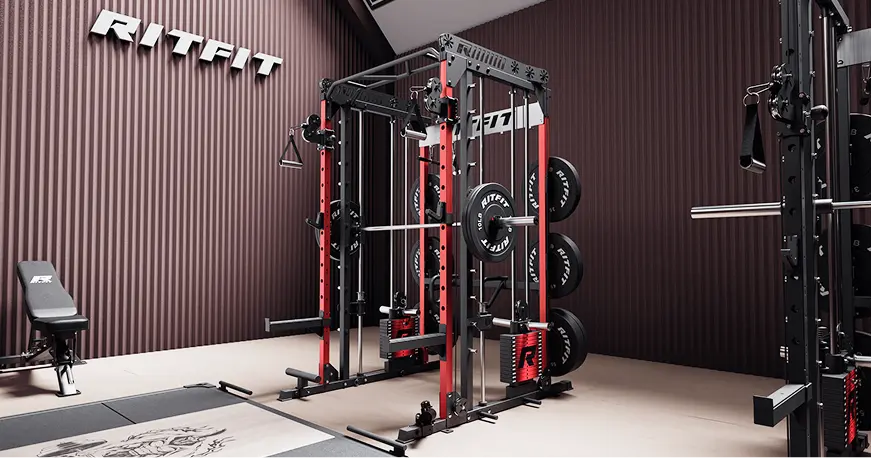
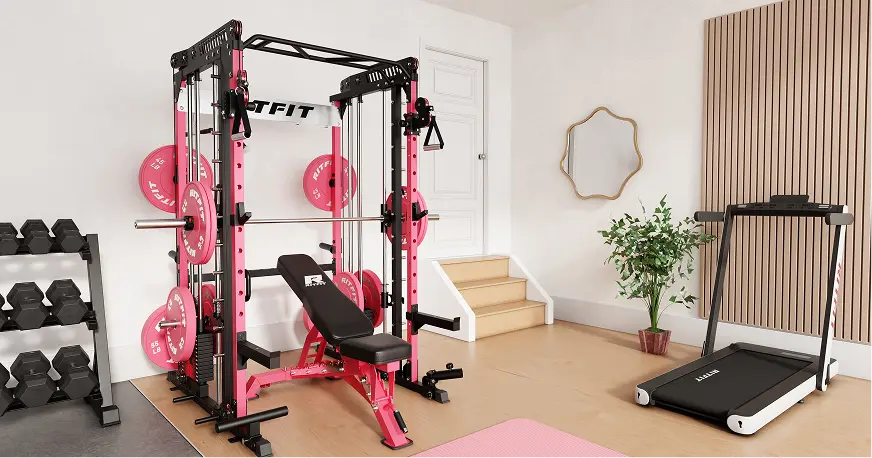
- Compact home setup: A multifunctional Smith machine can combine pressing with other stations, but confirm you have enough headroom and room to step in and out.
- Expandable setup: The M1 Smith machine or an M3 power rack cable crossover Smith machine may suit lifters who want a rack-centered training area.
- Package planning: The M1 PRO Smith machine package and BPC06 all-in-one Smith machine package illustrate how a larger station can serve more than one training goal.
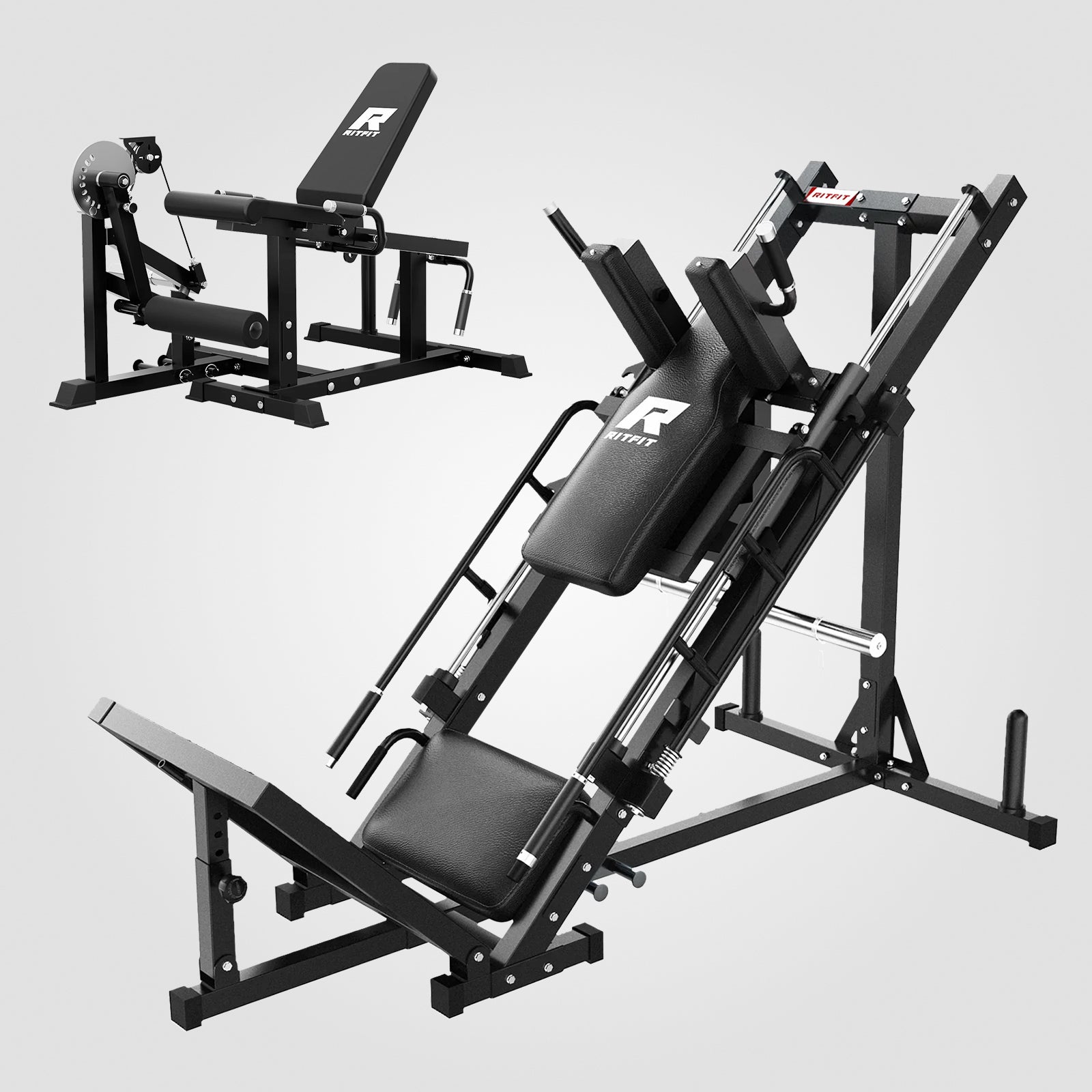
- Space balance: Pair a shoulder press plan with equipment you can use safely, then review related leg press machines only after checking your available clearance.
Measure your room, ceiling, walkways, and plate-loading area before choosing a station. A machine that fits on paper still needs a safe working zone around the bar and catches.
FAQs About How to Do Military Press on Smith Machine
Can you do a military press on a Smith machine?
Yes. Set the bar and catches for your body, brace your torso, and press through the machine path without forcing your head or shoulders into an uncomfortable position. Start conservatively, use a full grip, and stop if you lose control, feel sharp pain, or cannot keep the bar path consistent.
Should you do a Smith machine military press standing or seated?
Both options can work, but standing requires more whole body control and enough clearance for your head. Seated pressing can make setup simpler and reduce balance demands. Choose the position that lets you keep a neutral torso, stable feet, and a repeatable bar path without leaning back.
How do you choose a starting weight for a Smith machine military press?
Start with the unloaded bar to learn its actual resistance because Smith machines differ in counterbalance and bar weight. Add small increments only while every repetition stays controlled. The correct starting load leaves room to stop before form changes, rather than matching a free barbell number.
What muscles does the Smith machine military press work?
The movement primarily trains the deltoids and triceps while also involving the upper back and trunk to maintain position. A fixed bar path can reduce some balance demands compared with a free barbell. Treat muscle activation findings as exercise context, not a guarantee of individual results.
When should you stop a Smith machine military press set?
Stop the set when you cannot keep your torso controlled, the bar no longer follows a comfortable path, or you feel sharp or worsening pain. Recheck the catches and setup before continuing. Persistent symptoms are a reason to seek qualified medical or fitness guidance rather than pushing through.
Conclusion
How to do military press on smith machine comes down to a compatible bar path, tested catches, a full grip, and controlled repetitions. Start light, keep your torso organized, and progress only when the movement stays repeatable.
Reset the setup or switch to another press when pain or control problems appear. For a home gym, measure the working area before selecting a Smith machine.
Disclaimer
This article is for general fitness education, not medical advice. Stop exercise for sharp or worsening pain, and consult a qualified clinician or fitness professional about persistent symptoms, a known condition, or uncertainty about safe technique.
References
1. Coratella G, Tornatore G, Longo S, et al. Front vs Back and Barbell vs Machine Overhead Press: An Electromyographic Analysis and Implications For Resistance Training. Front Physiol. 2022. PMCID: PMC9354811.
2. Botton CE, Radaelli R, Wilhelm EN, et al. Different Shoulder Exercises Affect the Activation of Deltoid Portions in Resistance-Trained Individuals. J Hum Kinet. 2020. PMCID: PMC7706677.
3. Stronska K, et al. The Effect of the Weight and Type of Equipment on Shoulder and Back Muscle Activity in Surface Electromyography during the Overhead Press, Preliminary Report. Sensors. 2022;22(24):9762. PMCID: PMC9781216.