Table of Contents
The Smith machine calf raise is one of the best ways to train your calves with more stability, more stretch, and more repeatable loading. It helps remove balance as the main limiter, so your calves can do more of the work.
If your calves are not growing, the fix is usually better setup, slower reps, and more consistent progression. This guide covers form, muscles worked, beginner programming, common mistakes, and smart ways to use the movement in a home gym or commercial gym.
Key Takeaways
- The Smith machine calf raise is effective because it makes heavy calf work more stable and easier to standardize.
- A raised platform usually improves the exercise by allowing more ankle dorsiflexion and a deeper loaded stretch.
- The movement mainly trains the gastrocnemius and soleus, with the standing setup biasing the gastrocnemius more strongly.
- Most lifters get better results from slower eccentrics, a pause in the stretch, and strict pressure through the forefoot.
- Sharp Achilles pain, bouncing reps, and shortened range of motion usually reduce stimulus and increase irritation risk.
What Is the Smith Machine Calf Raise
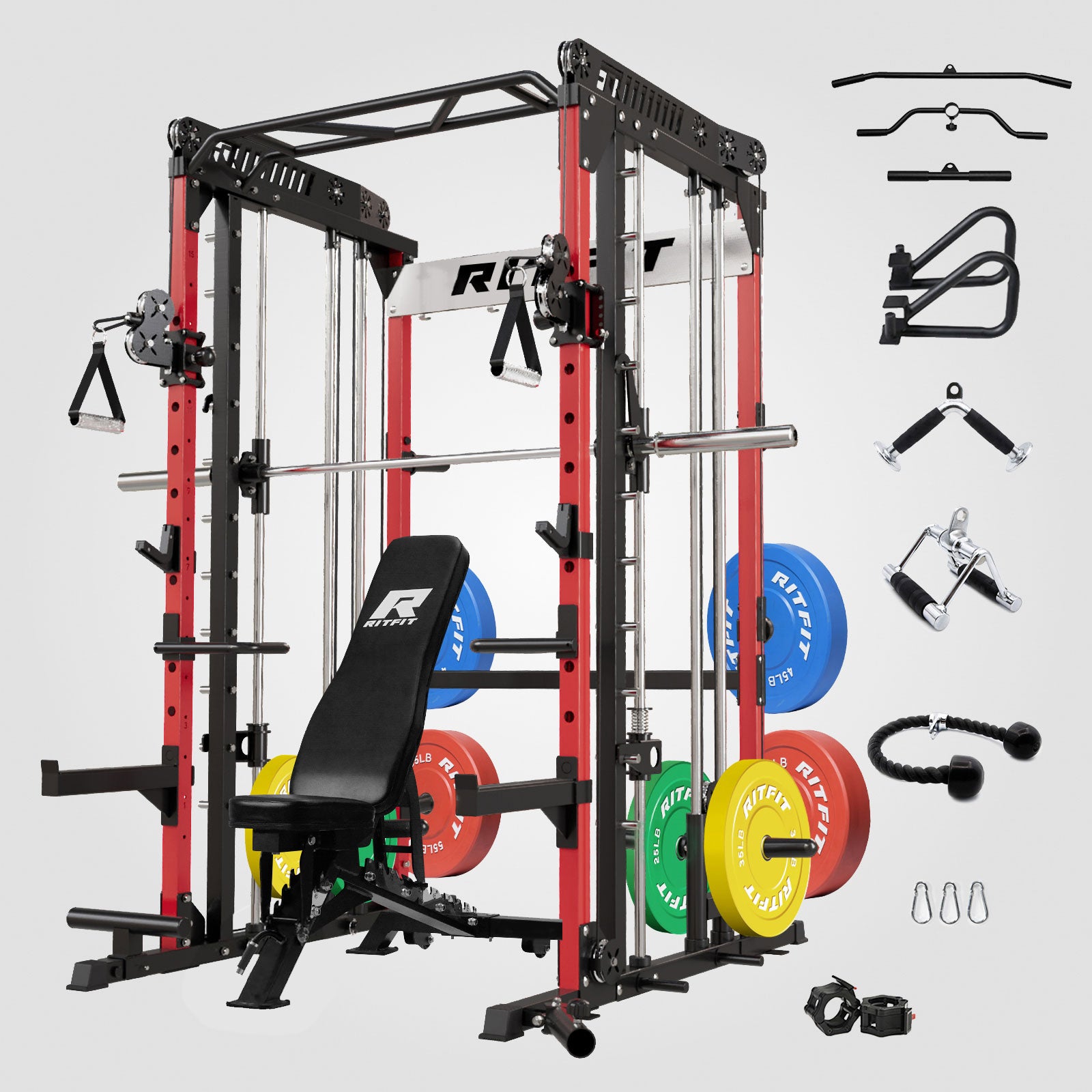
The Smith machine calf raise is a standing calf exercise performed under a guided bar path with the forefoot elevated on a block or plate. If you need a broader refresher on what a Smith machine is, or you want to compare setups in the RitFit Smith machine collection, this move is one of the simplest ways to use the machine for lower leg growth.
Benefits of the Smith Machine Calf Raise
This exercise works well because it combines stable loading with a long calf stretch and a repeatable bar path. That makes it easier to track form, range of motion, and overload from week to week.
Why this exercise works
The Smith machine calf raise is useful for both beginners and experienced lifters because it simplifies setup while keeping the movement easy to load. It also fits naturally into broader Smith machine leg workouts when you want a direct calf movement after compound lower body work.
- Stable loading: The fixed rails reduce the balance demand, so you can focus on the ankle joint and calf tension instead of bar control.
- Better stretch: A plate or calf block lets the heel drop lower, which usually improves the loaded stretch at the bottom of each rep.
- Clear progression: The setup is easy to repeat, so it is simpler to track load, pause quality, rep control, and total weekly volume.
- Safer hard sets: The guided path makes it easier to stop a set cleanly when fatigue rises, especially when you train alone.
- Useful for unilateral work: Once your base technique is solid, the same machine can also support single leg variations to address side to side imbalances.
Muscles Worked by the Smith Machine Calf Raise

The Smith machine calf raise mainly trains the calves through ankle plantar flexion under load. When the knee stays mostly extended, standing calf raise training tends to bias gastrocnemius growth more than seated calf raise work.[1]
Primary muscles
The gastrocnemius is the more visible upper calf muscle, and the soleus sits deeper and adds lower leg thickness. Both contribute to plantar flexion, but the gastrocnemius is especially emphasized when the knee is kept straighter.
- Gastrocnemius: This is the muscle most lifters think about when they want bigger, more defined calves.
- Soleus: This deeper muscle still works hard in standing raises and matters for overall calf size and endurance.
Supporting muscles
Several smaller structures help you stay stable and control the rep from stretch to lockout. These tissues matter more when the platform is narrow, the load is heavy, or fatigue starts to pull the foot out of position.
- Foot and ankle stabilizers: These help keep pressure distributed through the forefoot instead of rolling the ankle inward or outward.
- Tibialis anterior: This muscle helps control the lowering phase between reps and supports smooth ankle motion.
- Intrinsic foot muscles: These small stabilizers help you stay planted on the edge of the platform as the heel drops and rises.
How to Do Smith Machine Calf Raise
Good Smith machine calf raise form depends on setup, ankle range, and tempo more than on load alone. Before your first hard set, review how to train safely on the Smith machine at home gym so your platform, rack height, and re rack position are already dialed in.
Step 1: Set the platform
Place a stable block, step, or wide bumper plate directly under the bar path and stand with the balls of your feet on the edge. The goal is to create enough room for a controlled heel drop without the platform shifting under load.
Step 2: Get under the bar
Position the bar across your upper traps, stand tall, and keep your feet about hip width apart unless another stance feels more natural. Unlock the bar only after your core is braced and you know exactly where you will re rack the set.
Step 3: Lower into the stretch
Lower your heels slowly until you feel a strong calf stretch and keep the movement centered at the ankle. Training the calves at longer muscle lengths appears useful for calf growth, which is one reason the deep bottom position matters so much here.[2]
Step 4: Drive through the forefoot
Press through the ball of your foot and rise as high as you can without bouncing or rolling the ankle. Pause briefly at the top so the rep finishes with calf tension, not momentum.
Step 5: Repeat with control and re rack safely
Keep the same depth, tempo, and top position for every rep until the set ends. When you finish, rotate the bar back into the hooks and step off the platform slowly.
Workout Routine for Beginners
Beginners usually do best with a simple plan they can repeat and progress cleanly. The point is not to chase fatigue at random, it is to build consistent reps, clean stretch tolerance, and measurable overload.
A simple starting plan
Start with two or three weekly sessions, then add weight only after your full range and tempo stay consistent. This gives you enough exposure to learn the movement without turning calf training into junk volume.
- Frequency: Train calves two or three times per week with at least 48 hours between hard sessions.
- Sets: Start with 3 working sets, then move to 4 only if recovery stays good and performance is steady.
- Reps: Use roughly 8 to 20 strict reps per set, because both lighter and heavier plantar flexion loading have produced calf growth when effort is high.[4]
- Tempo: Lower for about 2 to 3 seconds, pause briefly in the stretch, then rise under control.
- Progression: Add a small amount of load only after you can repeat the same heel drop, pause, and top position across all sets.
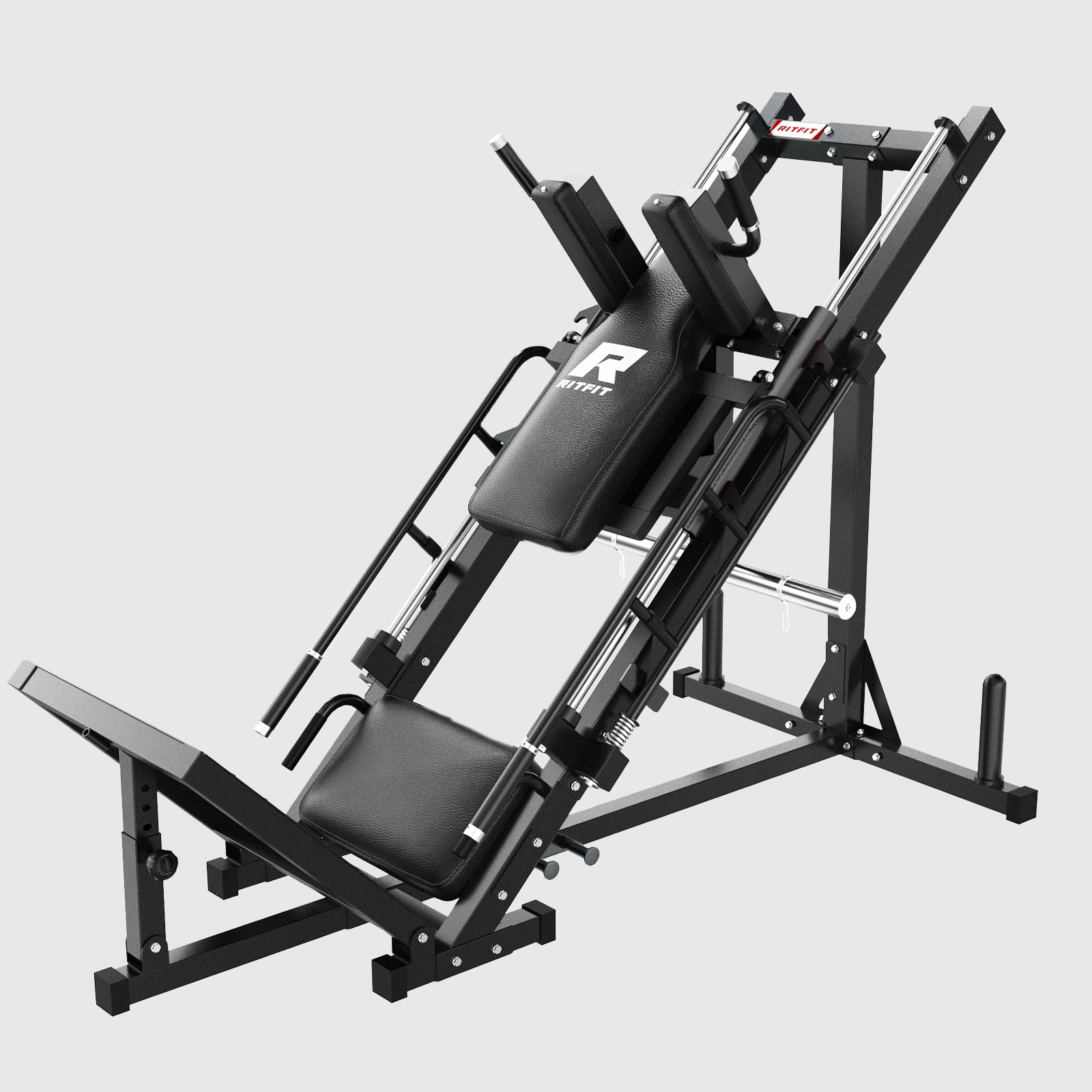
- Pairing: This exercise fits well after a Smith machine front squat or on a lower body day built around leg press and hack squat work.
You can also rotate this move with leg press based plantar flexion on another lower body day, because both calf raise and leg press patterns can activate the plantar flexors well in trained men.[3] This helps you add calf volume without repeating the exact same setup every session.
Smith Machine Calf Raise Tips
The best calf training cues usually look simple, but they matter more than most lifters think. Small changes in pressure, pause quality, and stretch depth often decide whether the calves grow or the ankles just get annoyed.
Use these cues
Most lifters get more from this movement when they make the bottom honest and the top controlled. Your main goal is to keep tension on the calves from the first rep to the last rep.
- Pause in the stretch: A brief pause at the bottom reduces bouncing and makes the calves produce more of the force.
- Keep pressure through the big toe side of the forefoot: This helps many lifters stay more stable and reduces excessive ankle roll.
- Use stable footwear: Flat shoes or a firm non slip surface usually feel better than soft running shoes that compress under load.
- Own the eccentric: A slower lowering phase makes it easier to feel the calves and maintain the same depth every rep.
- Do not force pain: If your Achilles feels irritated, reduce load or switch to a more tolerant setup first, because seated heel raise testing has shown lower Achilles tendon stress than more demanding standing and unilateral versions.[2]
Common Mistakes to Avoid in Smith Machine Calf Raise
This exercise is simple, but it is still easy to waste reps. Most mistakes come from trying to turn a calf movement into a speed movement.
Fix these errors
The best correction is usually not more effort, it is better execution. Clean reps almost always beat rushed reps on calf work.
- Bouncing out of the bottom: This shifts work toward elastic rebound and away from the calves.
- Using too much weight: Heavy load is useful only if you can still reach a real stretch and a real top position.
- Cutting the range short: Short reps often feel heavy, but they usually reduce the main benefit of the movement.
- Rolling the ankles: Letting the foot drift to the inside or outside can reduce stability and make the set feel sloppy.
- Turning it into a knee bend: A soft knee is fine, but excessive knee motion changes the exercise and reduces the standing calf raise bias.
Frequently Asked Questions
How do I feel a Smith machine calf raise more in my calves?
Start by lowering your heels slowly, pausing in the stretched position, and driving through the ball of your foot instead of bouncing. Keep your knees softly unlocked, stay tall under the bar, and think about lifting your heels, not shrugging the weight with your whole body.
Should I use a block for a Smith machine calf raise?
Yes. A block or plate usually makes the Smith machine calf raise better because it increases dorsiflexion and creates a longer loaded stretch. Flat ground can still work, but most lifters lose useful range and turn the movement into short reps that are harder to progress well.
Is the Smith machine calf raise better than seated calf raises?
No. The Smith machine calf raise is not automatically better than seated calf raises, it simply emphasizes the gastrocnemius more when the knee stays extended. Seated work is still useful for the soleus, for tolerance, and for people who need a lower stress option for the Achilles.
What if the Smith machine calf raise hurts my Achilles?
No. Sharp Achilles pain during a Smith machine calf raise is not something to train through. Reduce load, shorten the range, slow the lowering phase, and switch to a more tolerant variation if needed, then get assessed if pain stays sharp, local, or continues outside training.
How heavy should a Smith machine calf raise be?
Use a load that lets you complete about 8 to 20 strict reps with a clear bottom stretch and no bounce. If you can keep the same depth, pause, and heel height from the first rep to the last, the weight is probably in a productive range.
Can beginners build calves with the Smith machine calf raise?
Yes. Beginners can build their calves with the Smith machine calf raise because the fixed bar path removes much of the balance problem. Start light, use a stable platform, learn the pause and stretch first, and add load only after your range and tempo stay consistent.
Final Thoughts
The Smith machine calf raise is a simple movement, but it becomes much more productive when you treat setup, stretch, and tempo as the real skill. For lifters building a fuller lower body setup, it also pairs naturally with the BLP01 leg press, hack squat, and calf raise set when you want more direct calf and leg training options at home.
Disclaimer: This article is for general education only and does not replace medical advice, diagnosis, or treatment. Stop the exercise if you feel sharp pain, numbness, or worsening Achilles symptoms, and work with a qualified clinician or coach if symptoms persist.
References
- Kinoshita M, Maeo S, Kobayashi Y, Eihara Y, Ono M, Sato M, et al. Triceps surae muscle hypertrophy is greater after standing versus seated calf raise training. Front Physiol. 2023;14:1272106. doi:10.3389/fphys.2023.1272106
- Revak A, Diers K, Kernozek TW, Gheidi N, Olbrantz C. Achilles tendon loading during heel raising and lowering exercises. J Athl Train. 2017;52(2):89-96. doi:10.4085/1062-6050-52.1.04
- Gentil P, Souza D, Santana M, Alves RR, Campos MH, Pinto RS, et al. Multi and single joint resistance exercises promote similar plantar flexor activation in resistance trained men. Int J Environ Res Public Health. 2020;17(24):9487. doi:10.3390/ijerph17249487
- Schoenfeld BJ, Vigotsky AD, Grgic J, Haun CT, Contreras B, Delcastillo K, et al. Do the anatomical and physiological properties of a muscle determine its adaptive response to different loading protocols? Physiol Rep. 2020;8(9):e14427. doi:10.14814/phy2.14427