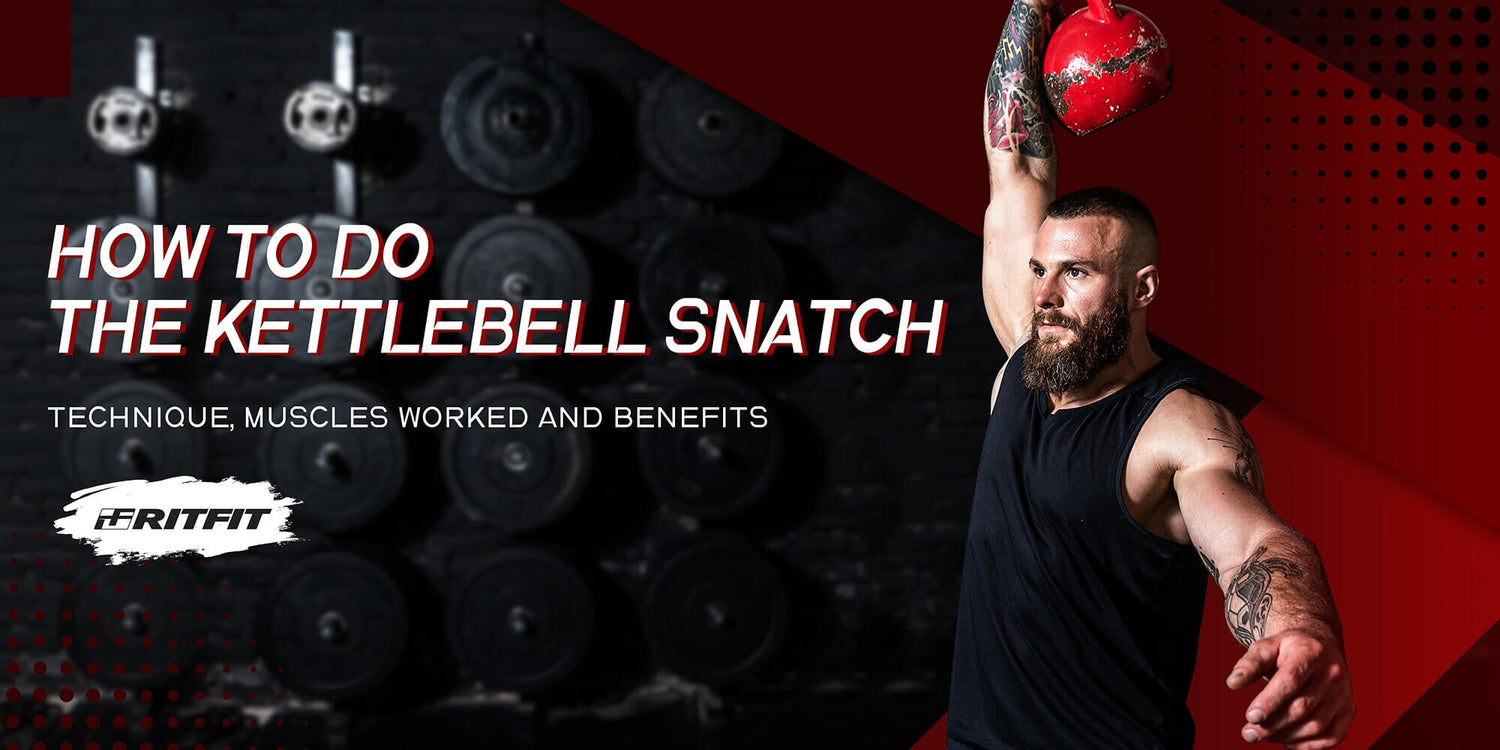
The kettlebell snatch is an advanced full body power exercise that moves a kettlebell from a backswing to an overhead lockout in one smooth motion. It builds hip drive, shoulder stability, grip strength, core control, and conditioning when performed with proper technique.
This guide explains how to do a kettlebell snatch safely, which muscles it works, common mistakes to avoid, useful variations, and how to add it to a home strength routine.
Table of Contents
- What Is a Kettlebell Snatch?
- Kettlebell Snatch Form and Technique
- How to Do a Kettlebell Snatch
- Kettlebell Snatch Common Mistakes
- Kettlebell Snatch Muscles Worked
- Benefits of the Kettlebell Snatch
- Kettlebell Snatch Variations
- Safety and Precautions
- Kettlebell Snatch Alternatives
- How to Program Kettlebell Snatches
Key Takeaways
- The kettlebell snatch is hip driven: Your hips create the force, while your arm guides the bell close to the body.
- It is not a beginner first exercise: Learn the hip hinge, two hand swing, one arm swing, and high pull before full snatches.
- Forearm impact is a technique signal: If the bell crashes onto your wrist or forearm, the turnover is too late or too wide.
- It trains strength and conditioning: Lower rep sets support power, while lighter interval sets support cardiorespiratory fitness.
- Safety comes before volume: Stop the set when shoulder position, grip, breathing, or overhead control begins to break down.
What Is a Kettlebell Snatch?
A kettlebell snatch is a compound kettlebell lift that moves the bell from between your legs to an overhead locked position in one fluid motion. The movement is an extension of the kettlebell swing and includes a backswing, acceleration pull, hand insertion, and overhead fixation phase.[1]
The snatch should feel like a powerful hip hinge rather than an arm pull. If you need a home friendly starting weight, a neoprene coated cast iron kettlebell set can support basic swing, high pull, and snatch progressions.
Kettlebell Snatch Form and Technique
Proper kettlebell snatch form keeps the bell close, protects the shoulder, and reduces forearm impact. The goal is to create force from the hips, guide the bell upward, and finish with a stable overhead lockout.
Before You Start: Requirements and Warm Up
You should not learn the kettlebell snatch before you can control basic hinge and swing mechanics. Start with light loading, clear floor space, and enough shoulder mobility to hold a weight overhead without rib flare or wrist collapse.
- Hip hinge: Practice a Romanian deadlift pattern so your hips move back while your spine stays neutral.
- Two hand swing: Build a strong backswing and hip snap before adding one arm work.
- One arm swing: Learn to keep your shoulder packed and your torso stable under uneven loading.
- High pull: Practice bending the elbow and keeping the bell close before punching through to the top.
- Overhead lockout: Confirm that your wrist, elbow, shoulder, ribs, and hips can stack without pain.
A quick warm up should include light cardio, hip circles, leg swings, arm circles, and several easy swings. If your shoulder feels restricted during warm up, use swings or high pulls instead of full snatches.
How to Do a Kettlebell Snatch
Use a kettlebell you can control without wrist bending, shoulder shrugging, or forearm slamming. Start one arm at a time and focus on smooth reps before adding speed, load, or volume.
- Step 1: Set your stance: Stand with your feet about hip to shoulder width apart and place the kettlebell slightly in front of you. Hinge at the hips, keep your back neutral, and grip the handle with one hand.
- Step 2: Hike the bell back: Pull the kettlebell back between your legs like a football hike. Keep the arm close, ribs down, and tension in the hamstrings and glutes.
- Step 3: Drive with the hips: Snap your hips forward and stand tall with force. The kettlebell should rise because of hip extension, not because you curled it with your arm.
- Step 4: Keep the bell close: As the bell rises, let your elbow bend naturally and guide the handle near your torso. A close path helps prevent the bell from looping away and crashing into the forearm.
- Step 5: Punch through to lockout: As the bell becomes light near chest or face level, slide your hand through the handle and punch upward. Finish with a straight wrist, locked elbow, packed shoulder, ribs down, and glutes tight.
- Step 6: Control the drop: Pull the bell slightly forward, let it roll around the hand, and guide it back into the backswing. Reset your hinge before the next rep.
Key coaching cue: Drive with the hips, keep the bell close, and punch through before the bell flips over. A smooth snatch should not feel like the kettlebell is smashing your wrist.
Kettlebell Snatch Breathing Pattern
Good breathing helps you brace, control rhythm, and manage fatigue. Inhale during the backswing, exhale as you snap the hips and punch overhead, then breathe calmly at the top if you are doing slower strength reps.
Avoid holding your breath through long high rep sets unless you have been coached to brace that way. Continuous breath holding can make the set feel harder and may not be appropriate for people with cardiovascular concerns.
What Weight Should You Use for Kettlebell Snatches?
Choose a weight that lets you complete every rep with a quiet turnover, stable shoulder, and straight wrist. If the bell pulls you forward, bends your wrist, or hits your forearm, reduce the weight and return to high pulls or half snatches.
For home training, your best kettlebell is the one that lets you practice hinge power and overhead control without rushing. You can also pair kettlebell work with home gym dumbbells for balanced strength training and progressive accessory work.
Kettlebell Snatch Common Mistakes
Most kettlebell snatch mistakes come from using the arm too much, swinging the bell too far away, or adding volume before technique is stable. Fix the path first, then increase the training load slowly.
- Keeping the arm locked straight: Do not keep your arm fully straight as the bell rises. Let the elbow bend so the bell stays close, then punch through near the top.
- Using a grip that is too tight: A death grip makes the turnover rough and wastes energy. Hold the handle securely, but allow the bell to rotate smoothly around the hand.
- Swinging the bell too slowly: The snatch needs a crisp hip snap to make the bell feel light. Slow pulling usually turns the exercise into an awkward shoulder lift.
- Letting the bell travel too far forward: A wide arc increases forearm impact and pulls your body out of position. Think about zipping the bell upward close to the torso.
- Losing overhead alignment: Do not finish with flared ribs, bent wrist, or a shrugged shoulder. Stack the wrist, elbow, shoulder, ribs, hips, and feet before starting the next rep.
- Doing too many reps too soon: High volume snatches fatigue grip, breathing, and shoulder control quickly. Stop each set before the bell path becomes messy.
Kettlebell Snatch Muscles Worked
The kettlebell snatch trains the posterior chain, shoulders, arms, grip, and trunk as one coordinated system. Core activation is especially important because the body must resist rotation and stabilize the bell during the swing and overhead position.[4]
- Glutes: The glutes create the main hip extension that drives the kettlebell upward. Strong hip snap reduces the need to pull with the shoulder.
- Hamstrings: The hamstrings load during the backswing and help transfer force into the forward hip drive. They also help protect the lower back by supporting the hinge pattern.
- Back: The upper back helps keep the shoulder packed and the bell close. The spinal erectors help maintain trunk position when the hinge is performed correctly.
- Shoulders: The shoulder stabilizers control the bell at lockout. Overhead work should feel stable, not jammed or painful.
- Core: The abs, obliques, and deeper trunk muscles resist extension and rotation. This is why one arm snatches feel like a full body movement.
- Forearms and grip: The grip controls the handle during the backswing, turnover, and drop. High rep snatches can challenge grip endurance quickly.
Benefits of the Kettlebell Snatch
The kettlebell snatch is valuable because it blends strength, power, coordination, and conditioning in one movement. Research on kettlebell training suggests it can improve aerobic power, muscular strength, grip strength, and health related fitness when programmed appropriately.[2]
- Builds explosive hip power: The snatch teaches you to create force quickly through the hips. This can carry over to swings, cleans, jumps, and athletic movements.
- Improves conditioning: Repeated snatches can raise heart rate and breathing demand. A review of kettlebell exercise supports its use as an option for improving aerobic power and muscle strength.[3]
- Trains shoulder stability: The overhead lockout challenges shoulder control under dynamic loading. Stable scapular mechanics and rotator cuff strength are important for safer overhead performance.[5]
- Develops grip endurance: The handle must be controlled through the backswing, turnover, and drop. This makes snatches useful for lifters who want stronger hands and forearms.
- Saves space for home training: One kettlebell can train power, endurance, and coordination without a large footprint. For broader setups, explore home gym equipment under 2000 to build a more complete training space.
Kettlebell Snatch Variations
Kettlebell snatch variations let you adjust difficulty, loading, rhythm, and training goal. Master the single arm version first before progressing to more complex versions.
Double Kettlebell Snatch: The double kettlebell snatch is an advanced variation that requires both bells to move with control. Use it only after you can perform smooth single arm snatches on both sides.
Single Arm Kettlebell Snatch: The single arm snatch is the standard version for learning timing, path, and overhead lockout. It is the best choice for most home lifters because it trains one side at a time.
Kettlebell Half Snatch: The half snatch brings the bell down to the rack position before returning to the backswing. It is a useful bridge for lifters who are learning the drop phase.
Kettlebell Split Snatch: The split snatch adds a split stance under the bell. It is advanced because it requires overhead stability, footwork, timing, and balance at the same time.
Safety and Precautions
The kettlebell snatch is powerful, but it is not the first kettlebell exercise beginners should learn. Build your swing, high pull, and overhead position first, then progress to snatches when each phase is controlled.
- Do not rush the learning curve: Practice the hinge, two hand swing, one arm swing, and high pull first. These skills reduce the risk of poor bell path and painful impact.
- Use a light to moderate bell first: The right starting weight should feel smooth and repeatable. Heavy snatches with poor turnover can irritate the wrist, elbow, shoulder, or back.
- Respect shoulder symptoms: Stop if you feel sharp pain, pinching, numbness, or unstable overhead movement. Use lower height drills until the shoulder feels controlled again.
- Stop when technique breaks: Grip fatigue, rib flare, loose lockout, and repeated forearm impact are signs to end the set. Quality reps are more useful than forced volume.
- Ask for professional guidance when needed: If you have prior shoulder, wrist, elbow, spine, or cardiovascular issues, speak with a qualified healthcare or fitness professional before heavy or high rep snatches.
Kettlebell Snatch Alternatives
Kettlebell snatch alternatives help you train similar qualities with less technical demand. Choose the alternative that matches your current skill level and training goal.
- Kettlebell swing: The swing is the best base exercise for learning hip drive. You can also compare it with the dumbbell swing technique guide if you train with dumbbells at home.
- Kettlebell high pull: The high pull teaches the close elbow path used before the punch through. It is the most direct snatch preparation drill.
- Kettlebell clean and press: The clean and press separates the rack and overhead press phases. It is easier to control than a full snatch for many lifters.
- Dumbbell snatch: The dumbbell snatch has a simpler turnover because the weight does not rotate around the wrist. It can be a useful bridge before returning to kettlebell snatches.
- Barbell hip thrust: The hip thrust builds glute strength without a ballistic swing. Pair it with a stable adjustable weight bench if your program includes loaded hip extension work.
How to Program Kettlebell Snatches
Program the kettlebell snatch based on whether your goal is power, conditioning, or skill practice. Keep reps lower when learning, then increase volume only when your path and lockout stay consistent.
- Skill practice: Do 3 to 5 sets of 3 to 5 reps per side with a light bell. Rest long enough to keep every rep clean.
- Power training: Do 4 to 6 sets of 3 to 6 reps per side with a moderate bell. Place this near the start of your workout after warm up.
- Conditioning finisher: Use short intervals such as 10 to 20 seconds per side with a light bell. For more cardio ideas, review this HIIT workouts for cardio guide.
- Weekly frequency: Most lifters can start with 1 to 2 focused snatch sessions per week. Avoid doing hard snatch sessions on back to back days until your recovery is predictable.
- Complete home training: Use snatches as one part of a broader strength plan that also includes squats, hinges, pushes, pulls, and loaded carries. If you want machine based options too, explore strength machines for home gyms.
Kettlebell Snatch FAQs
What weight should I use for kettlebell snatches?
Choose a kettlebell you can control without wrist bending, shoulder shrugging, or forearm impact. Start lighter than your swing weight if you are learning the turnover. Increase load only when every rep reaches a stable overhead lockout with smooth breathing and a close bell path.
Can beginners do kettlebell snatches safely?
No. Most beginners should learn the hip hinge, two hand swing, one arm swing, and high pull first. The full kettlebell snatch demands timing, grip control, shoulder stability, and overhead confidence. A coach or experienced trainer can help reduce avoidable technique errors.
Why does the kettlebell hit my forearm during snatches?
The kettlebell usually hits your forearm because the bell path is too wide or the hand inserts too late. Keep the bell close to your body, bend the elbow during the pull, and punch through the handle before the bell flips over your wrist.
How often should I do kettlebell snatches?
Most lifters should start with 1 to 2 kettlebell snatch sessions per week. Leave at least one recovery day between hard sessions while you build technique. Advanced lifters may use 2 to 3 sessions weekly if volume, shoulder recovery, and grip fatigue stay manageable.
Which muscles does the kettlebell snatch work most?
The kettlebell snatch works the glutes, hamstrings, back, shoulders, core, forearms, and grip. The hips create most of the power, while the shoulder and trunk stabilize the bell overhead. This is why the exercise feels more like a full body lift than an arm exercise.
Is the kettlebell snatch cardio or strength training?
The kettlebell snatch can be both cardio and strength training. Heavy low rep sets build power and strength, while lighter interval sets challenge conditioning. Your result depends on load, pace, rest periods, total volume, and whether your technique stays clean under fatigue.
Conclusion
The kettlebell snatch is a demanding but highly useful lift for building hip power, conditioning, grip strength, and overhead control. Learn it through smart progressions, use a manageable weight, and stop every set before form breaks down.
For a complete home routine, combine snatches with squats, presses, rows, carries, and mobility work. You can also explore full body workouts with a home workout bench to build a more balanced weekly plan.
Disclaimer
This article is for general fitness education only and is not medical advice. Stop training if you feel sharp pain, dizziness, numbness, or unstable overhead movement. If you have shoulder, wrist, elbow, spine, heart, blood pressure, or balance concerns, consult a qualified healthcare professional before performing heavy or high rep kettlebell snatches.
References
- Ross JA, Keogh JWL, Wilson CJ, Lorenzen C. External kinetics of the kettlebell snatch in amateur lifters. PeerJ. 2017;5:e3111. doi:10.7717/peerj.3111
- Meigh NJ, Keogh JWL, Schram B, Hing W, Rathbone EN. Effects of supervised high intensity hardstyle kettlebell training on grip strength and health related physical fitness in insufficiently active older adults: the BELL pragmatic controlled trial. BMC Geriatr. 2022;22(1):354. doi:10.1186/s12877-022-02958-z
- Vancini RL, Andrade MS, Rufo Tavares W, et al. Kettlebell exercise as an alternative to improve aerobic power and muscle strength. J Hum Kinet. 2019;66:5-6. doi:10.2478/hukin-2018-0062
- Oliva Lozano JM, Muyor JM. Core muscle activity during physical fitness exercises: a systematic review. Int J Environ Res Public Health. 2020;17(12):4306. doi:10.3390/ijerph17124306
- Cools AM, Johansson FR, Borms D, Maenhout A. Prevention of shoulder injuries in overhead athletes: a science based approach. Braz J Phys Ther. 2015;19(5):331-339. doi:10.1590/bjpt-rbf.2014.0109