









A comprehensive full body weight bench workout allows home lifters to build balanced muscular strength, stability, and size without bulky commercial machines. By adjusting bench angles, you can target nine primary muscle groups through compound presses, rows, and single-leg movements.
This guide outlines essential exercise mechanics, sample beginner and intermediate training splits, and safety guidelines for progressive home training.
Quick Answer: A full body weight bench workout targets 9 major muscle groups by combining multi-angle pressing, rowing, and unilateral lower-body exercises with dumbbells. Performing two to three weekly sessions using structured incline, flat, and decline positions develops balanced chest, back, arm, core, and leg strength effectively at home.
Key Takeaways
- Versatile Angular Range: Adjustable incline, flat, and decline bench angles enable complete stimulation across all 9 major muscle groups.
- Balanced Upper Body Pressing: Pairing flat dumbbell presses with incline presses and bodyweight pushups builds chest and shoulder strength while sparing joint health.
- Targeted Arm Isolation: Incline curls, kickbacks, and skull crushers isolate the biceps, brachialis, and triceps with extended ranges of motion.
- Unilateral Lower Body Power: Bulgarian split squats and elevated hip thrusts deliver intense quad, hamstring, and glute training without heavy spinal compression.
- Optimal Weekly Frequency: Training the full body two to three times weekly on non-consecutive days maximizes muscle protein synthesis and recovery.
Why Is a Weight Bench Essential for Home Full Body Training?
A weight bench provides the mechanical stability and angular versatility required to target every major muscle group safely at home. By adjusting between flat, incline, and decline angles, lifters can alter joint stress and muscle fiber recruitment with minimal equipment.
Unlike fixed commercial machines that force your limbs into rigid paths, a sturdy bench supports your back while allowing natural joint kinematics. This anatomical freedom lets you perform presses, pulls, split squats, and hip thrusts with optimal control.
Investing in high quality adjustable weight benches transforms a compact corner into a complete home training facility. Pairing an adjustable bench with dumbbells provides progressive overload opportunities for lifters of all experience levels.
How Do You Target 9 Major Muscle Groups on a Single Bench?
Training 9 major muscle groups requires pairing specific bench angle adjustments with multi-joint compound and isolation movements. Lifters can systematically target shoulders, chest, biceps, triceps, brachialis, abdominals, back, glutes, and hamstrings across dedicated exercise variations.
A proper warm-up consisting of five to ten minutes of dynamic stretching prepares your connective tissues before handling external loads. Beginners should start with two to three sets of 8 to 12 controlled repetitions, resting 60 to 90 seconds between sets.
Exploring comprehensive weight bench exercises at home helps lifters rotate exercises to avoid training plateaus. Focus on slow eccentric lowering and explosive concentric drives for optimal muscular development.
How Do You Train Shoulders and Chest on an Adjustable Bench?
Shoulder and chest development on a bench relies on varying press angles to stimulate anterior deltoids, clavicular upper pectorals, and sternal mid-chest fibers. Combining bodyweight pushup variations with loaded dumbbell presses builds functional pushing power while maintaining shoulder joint integrity.
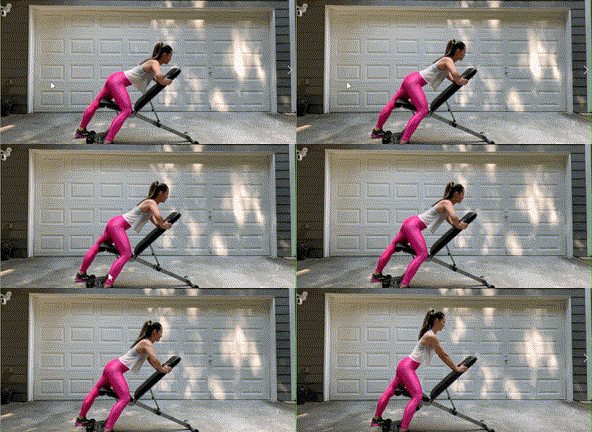
1. Incline Pushup
Incline pushups reduce gravitational resistance by placing your hands on the bench surface, making them an excellent movement for warming up or building baseline upper-body strength. Keep your elbows tucked at roughly 45 degrees to protect your shoulder capsules.
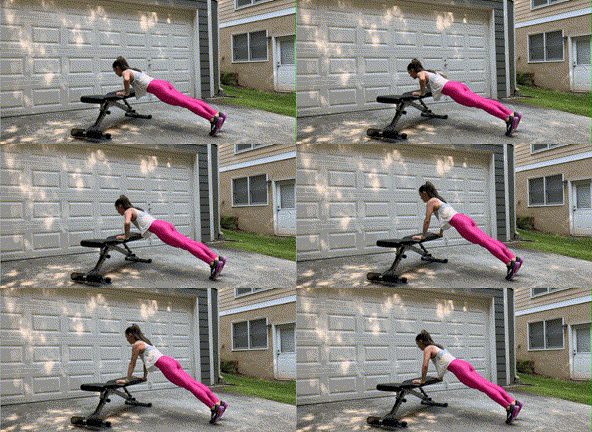
2. Hands-Elevated Pushup
Hands-elevated pushups shift more bodyweight toward your feet, allowing precise shoulder blade retraction and core engagement. Grip the bench firmly and screw your hands outward to stabilize the shoulder joints.
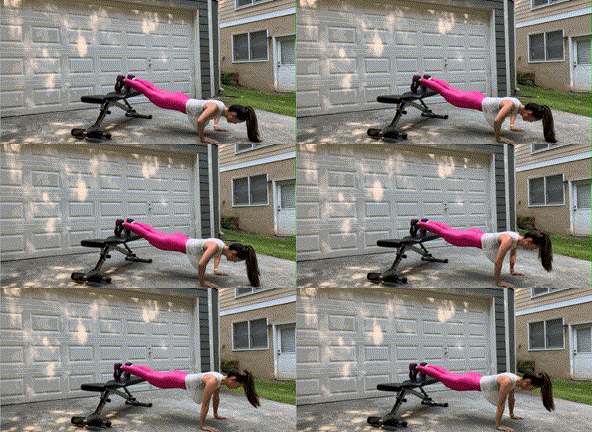
3. Feet-Elevated Pushup
Feet-elevated pushups elevate the lower body on the bench pad, shifting load onto the upper chest and front deltoids. Maintain a rigid plank from head to heels and prevent your lumbar spine from sagging.
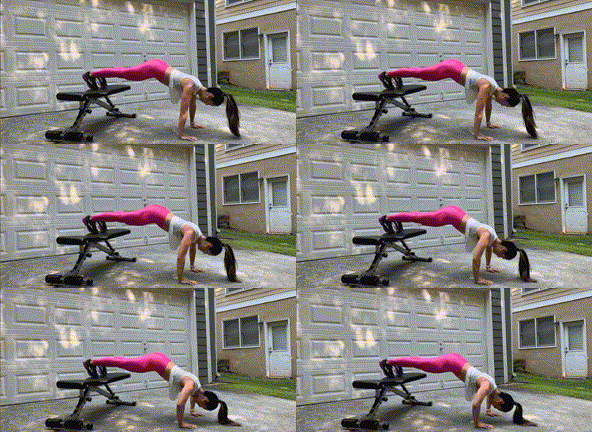
4. Feet-Elevated Pike Pushup
Feet-elevated pike pushups direct mechanical load onto the overhead pressing musculature of the deltoids and triceps. Walk your hands toward the bench until your hips are hinged vertically, then lower the crown of your head smoothly.
5. Dumbbell Bench Press
The flat dumbbell bench press allows independent limb mechanics, eliminating strength imbalances while loading the sternal pectoralis major. Lower the dumbbells until your thumbs touch near chest level, then press upward along a natural converging arc.

6. Incline Dumbbell Bench Press
Setting the bench backrest to a 30-degree incline prioritizes the clavicular head of the pectoralis major. The heavy-duty RitFit 1300lb adjustable weight bench provides solid back support during heavy pressing sets.

7. Decline Bench Dumbbell Pullover
Decline dumbbell pullovers place the latissimus dorsi, serratus anterior, and chest under a deep stretch across an extended arc of motion. Lower the weight behind your head with soft elbows, then pull back over your chest while bracing your core.

How Do You Isolate Biceps, Triceps, and Brachialis on a Bench?
Isolating the upper arm musculature requires manipulating shoulder flexion and extension angles to maximize muscle tension across biceps, triceps, and brachialis heads. Modifying your arm position against the bench pad optimizes leverage and prevents momentum cheating.
1. Incline Bicep Curl
Seated incline curls position the upper arm behind the torso, placing the long head of the biceps under a deep passive stretch for maximum recruitment. Maintain your head against the backrest and curl the dumbbells smoothly without swinging your shoulders.

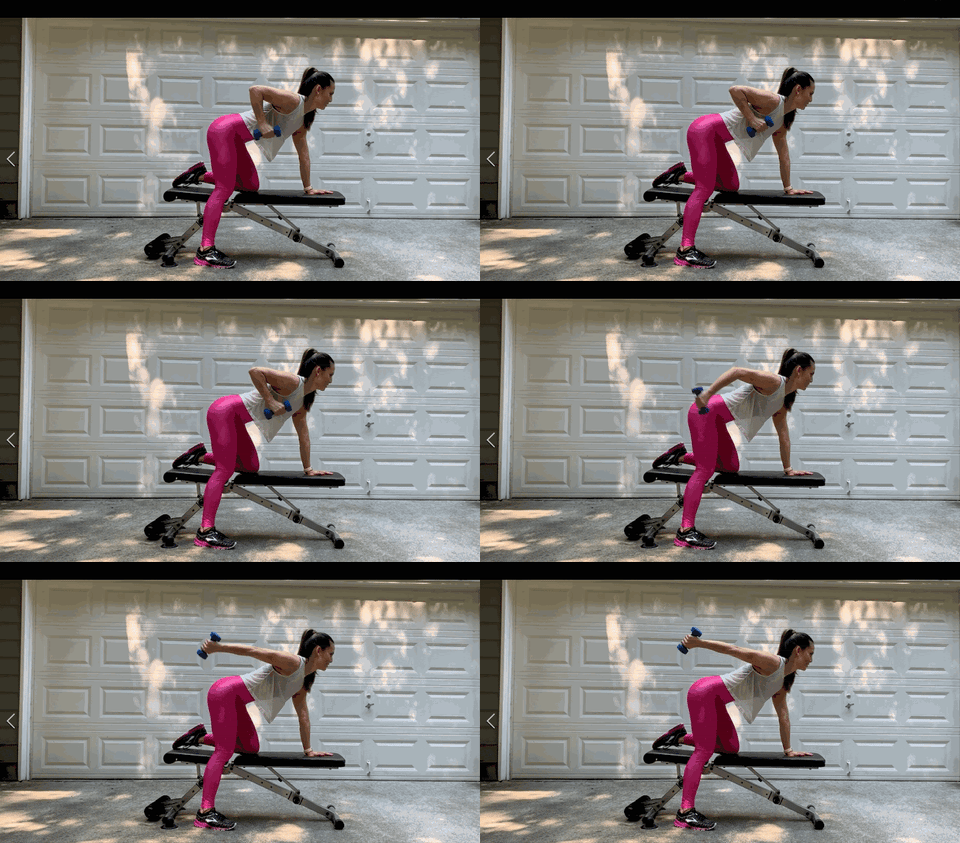
2. Tricep Kickback
Tricep kickbacks provide peak contraction on the lateral and medial triceps heads when the arm reaches full extension parallel to the torso. Support one knee and hand on the bench, keep your upper arm pinned to your side, and extend backward with control.
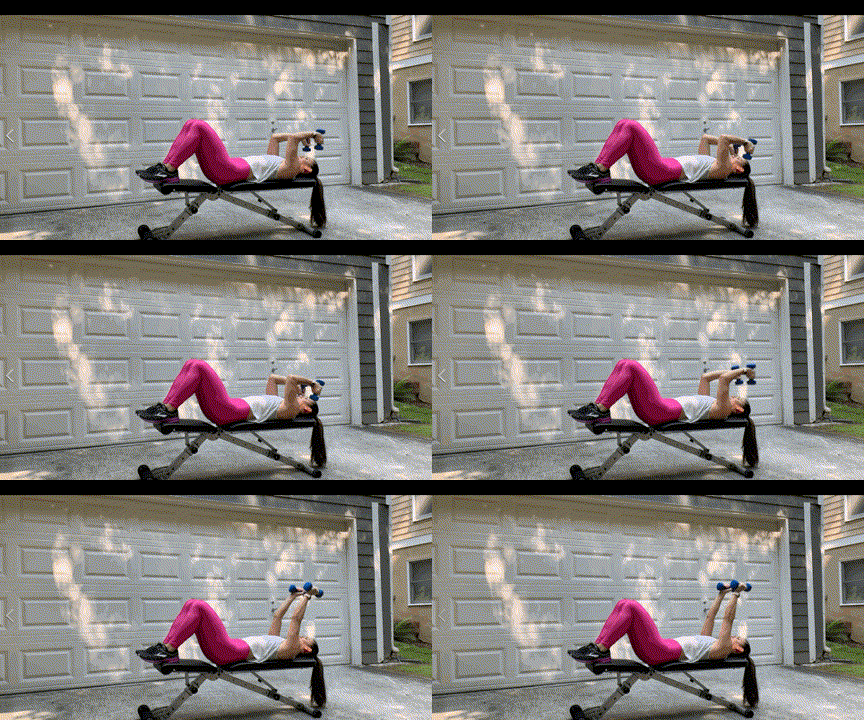
3. Skull Crusher
Lying triceps extensions, commonly known as skull crushers, load all three triceps heads with deep eccentric tension. Lower the weights toward your forehead while keeping your upper arms stationary, then extend your forearms back to lockout.
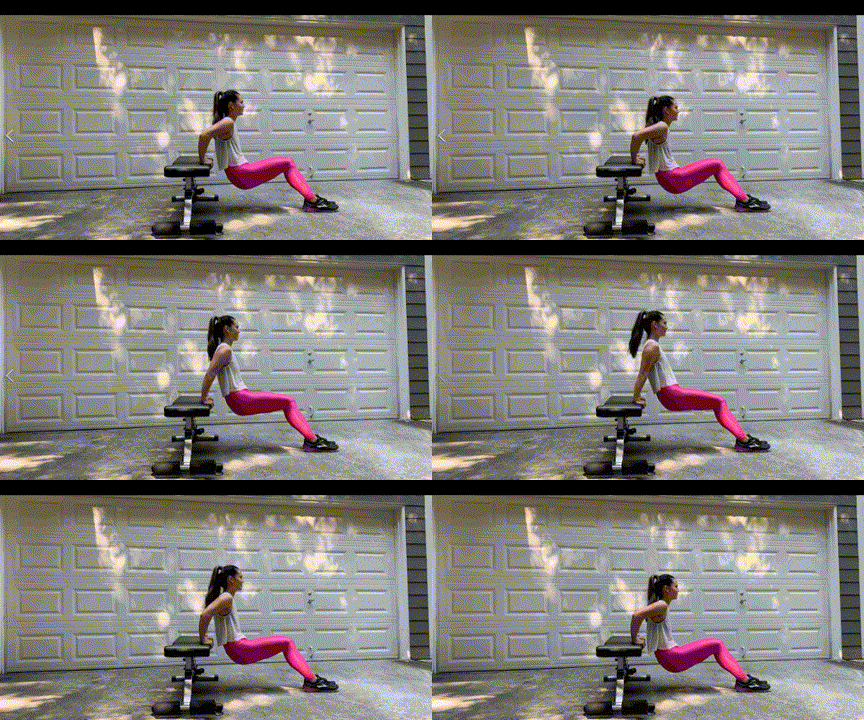
4. Bench Dip
Bench dips utilize your bodyweight to challenge the triceps and anterior deltoids in a closed kinetic chain movement. Sit on the bench edge, step your feet forward, and lower your hips until your upper arms reach parallel with the floor.
5. Dumbbell Curls Lying Against an Incline Bench (Brachialis)
Lying face-down or resting against a steep incline bench with a neutral or pronated grip emphasizes the brachialis muscle beneath the biceps. Developing the brachialis pushes the biceps upward, creating greater arm thickness and elbow flexor strength.

"If your space is limited, a good set of adjustable dumbbells might be your better option. They will allow you to progress to heavier weight as you get stronger."
, Jeff Cavaliere, MSPT, CSCS, Physical Therapist and Strength Coach, Creator of ATHLEAN-X, Ultimate Total Body Dumbbell Workout
How Do You Strengthen Abs and Back Using Weight Bench Angles?
Core and back training on a weight bench utilizes angled planks, dynamic rotation drills, and supported unilateral rows to build posterior chain stability. Elevating your hands or feet alters abdominal shear stress while chest support eliminates lower back fatigue during pulling.
1. Single-Arm Dumbbell Row
The single-arm dumbbell row is the gold standard bench pulling exercise for developing the latissimus dorsi, rhomboids, and rear deltoids. Keeping one knee and hand braced on the bench pad stabilizes your spine while you pull the weight toward your hip.

2. Plyo Bench Plank Hold
The plyometric bench plank hold challenges anti-extension core stability while engaging the serratus anterior and shoulder stabilizers. Hold a rigid straight-line plank on the bench pad, optionally incorporating alternating hand taps to increase rotational resistance.

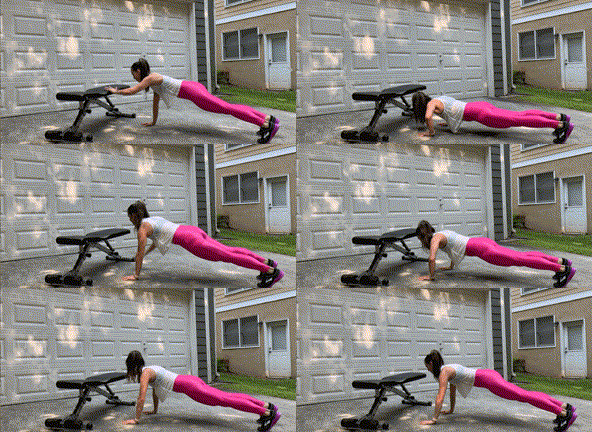
3. Bench Tap Plyo Pushup
Bench tap plyometric pushups build explosive core bracing and upper-body power. Explode upward from the floor, tap the front edge of the bench with your hands, and land softly with controlled elbow flexion.
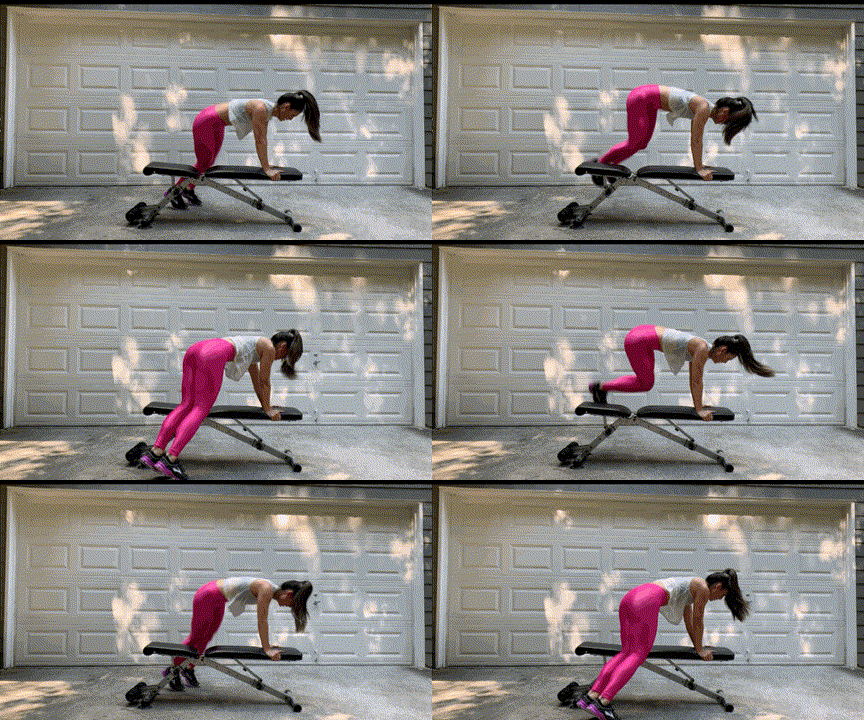
4. Feet-Elevated Cross-Body Mountain Climb
Elevating your feet on the bench increases core recruitment and forces the obliques to stabilize during cross-body knee drives. Drive each knee toward the opposite elbow in a deliberate rhythm, avoiding excessive hip bounce.

Keeping your accessories organized with a dumbbell rack storage stand ensures a clean and safe floor space during explosive movements.
How Do You Build Glutes, Quads, and Hamstrings with a Bench?
Lower body training with a weight bench utilizes elevated foot placement and hip hinge angles to isolate quads, hamstrings, and glutes effectively. Unilateral bench exercises eliminate spinal compression while challenging single-leg balance and joint stability.
1. Feet-Elevated Hip Thrust
Feet-elevated hip thrusts place your heels on the bench pad to challenge gluteal peak contraction and hamstring engagement. Drive through your heels until your hips align with your shoulders and knees, squeezing hard at the top.

2. Bench-Supported Hip Thrust
Positioning your upper back across the bench allows a greater range of motion for direct glute hypertrophy. The ultra-stable RitFit Gator adjustable weight bench provides zero wobble during loaded barbell or dumbbell hip thrusts.
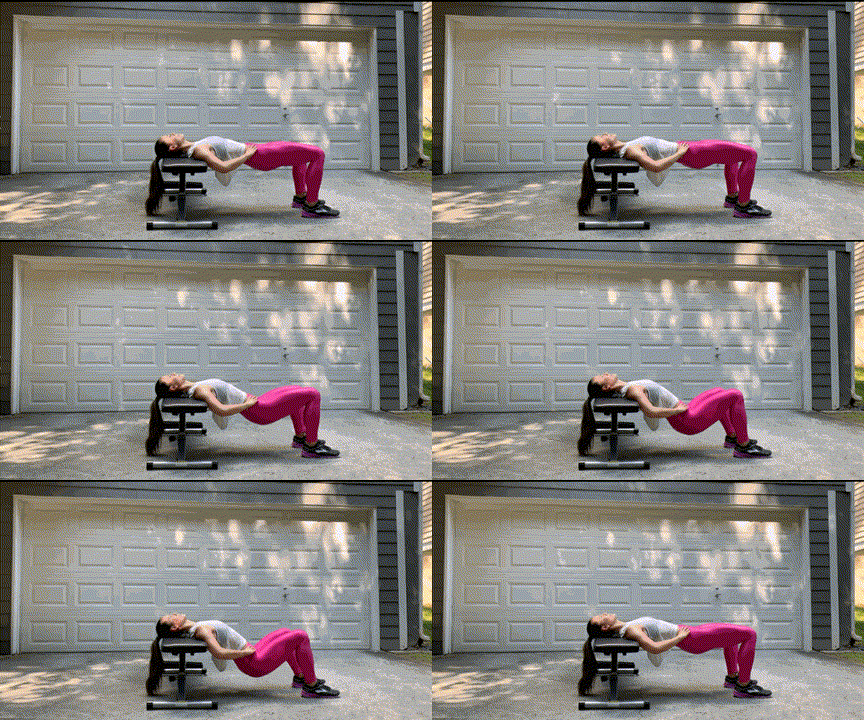
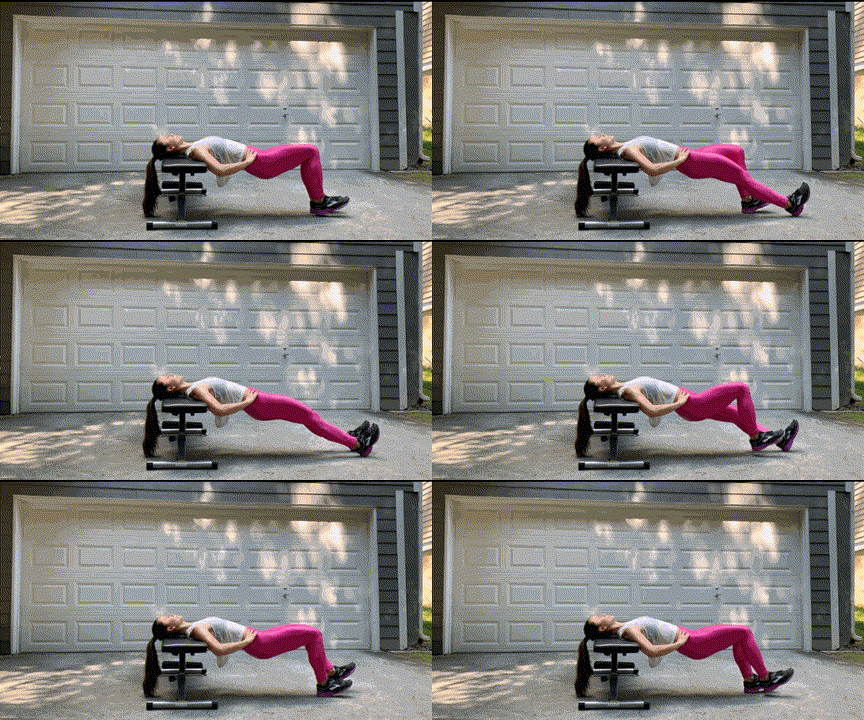
3. Elevated Hamstring Walk
Starting from a bridge with heels on the bench, slowly walk your feet outward and inward to isolate the hamstring musculature. This dynamic movement challenges the hamstrings eccentrically and concentrically while taxing pelvic control.
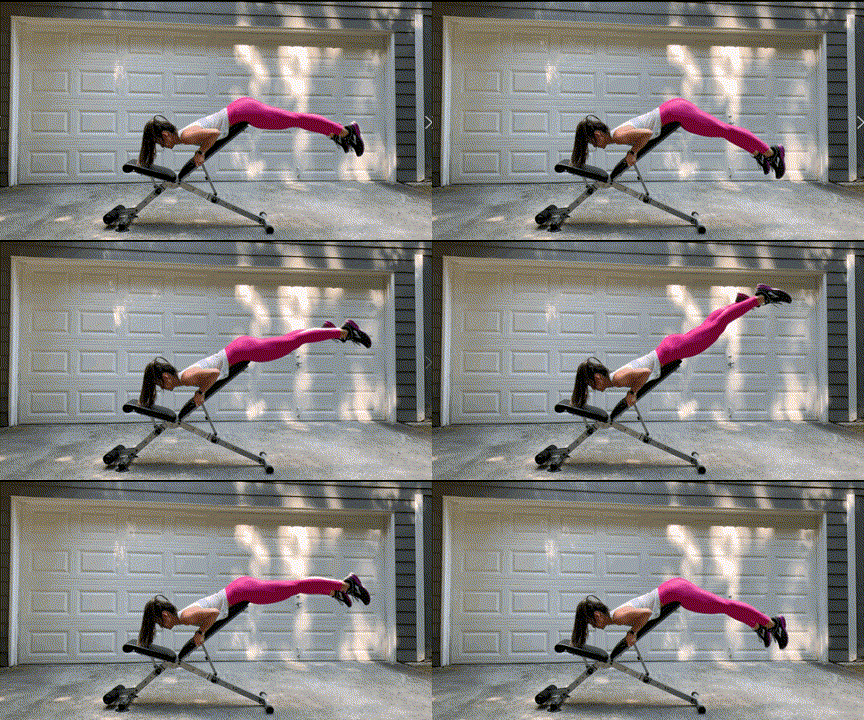
4. Reverse Hyperextension
Lying prone on the bench with your hips near the edge allows you to lift your legs using glute and hamstring tension. This hip extension variation strengthens the posterior chain without loading your lumbar spine.
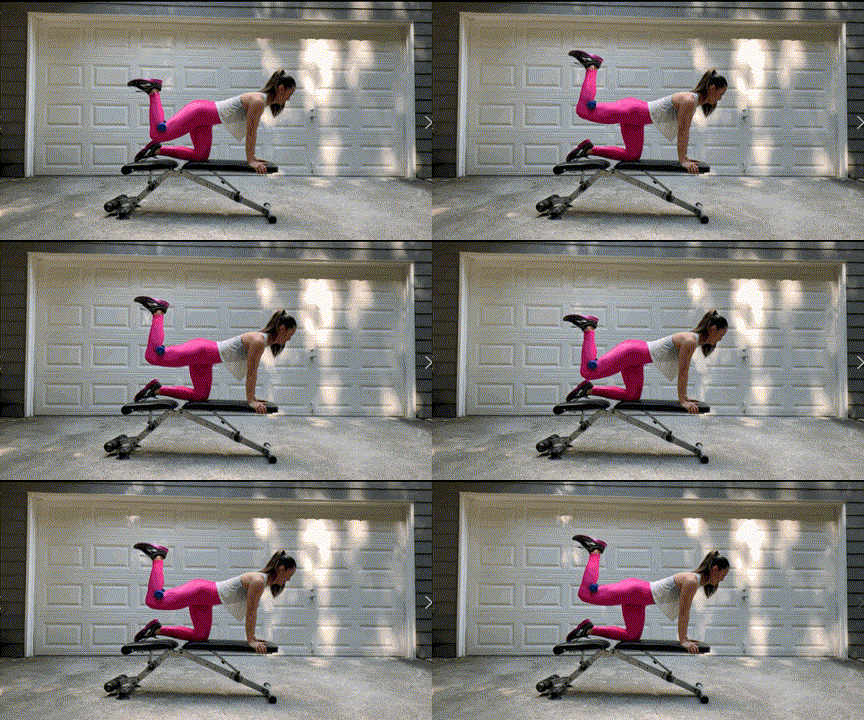
5. Bench-Supported Donkey Kicks
Kneeling against the bench pad allows focused glute isolation with zero lower back strain. Drive the heel upward in a controlled arc, pausing for a peak contraction at the top of each rep.
6. Bulgarian Split Squat
The Bulgarian split squat is an elite unilateral leg exercise targeting quads, adductors, and glutes. Rest your rear foot on the bench and sink your back knee toward the floor, driving through your front heel to stand.

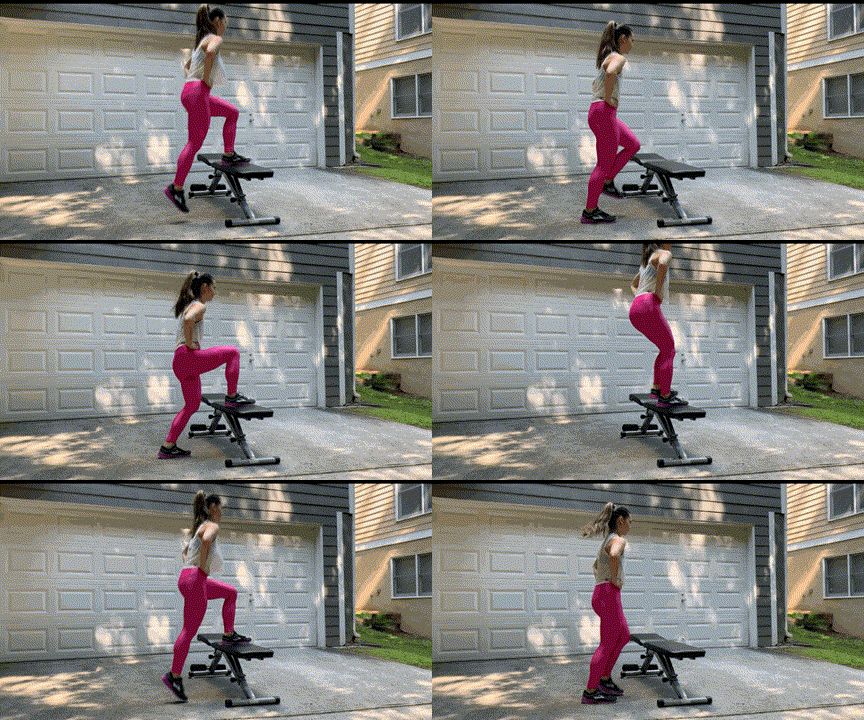
7. Bench Step-Up
Step-ups build unilateral quad strength, knee stability, and functional hip extension. Place your entire foot firmly on the bench and drive upward without pushing excessively off the ground with your trailing leg.
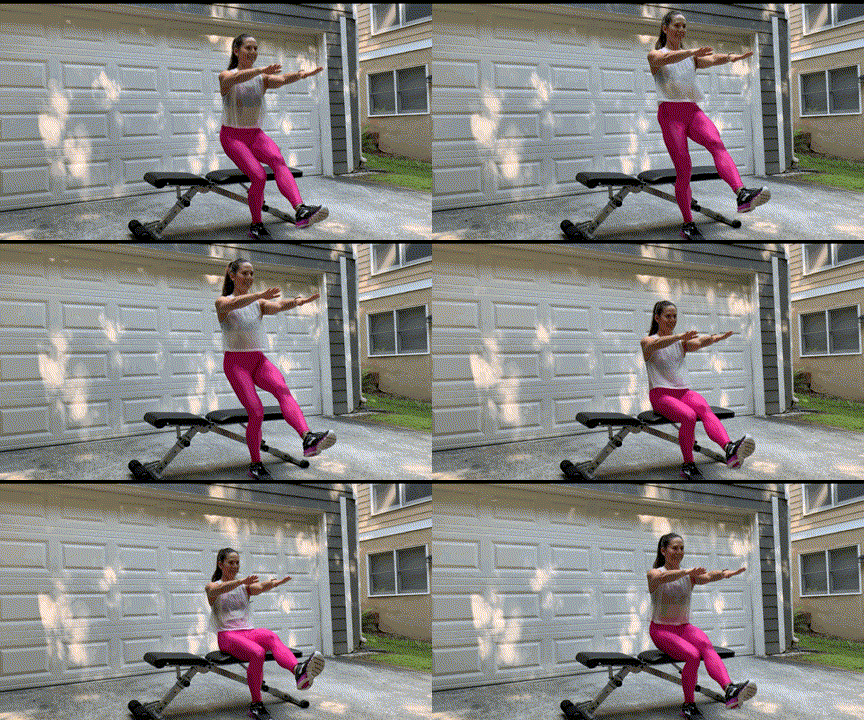
8. Single-Leg Squat
Bench-assisted single-leg squats bridge the gap toward full pistol squats while protecting knee joints. Lower your hips until you lightly touch the bench pad, then drive through your working heel to return upright.
9. Bench Jump
Lateral bench jumps add a high-intensity plyometric stimulus for lower body power and fast-twitch muscle activation. Jump laterally over the bench with soft, controlled landings to protect your ankles and knees.
For more lower body routines, check out our guide on leg workouts at home with a bench to optimize quad and hamstring growth.
What Are the Best Weekly Full Body Bench Workout Routines?
Effective weekly routines structure exercises into balanced full body circuits performed two to three times per week. Beginners should emphasize foundational compound movements, while intermediate trainees can introduce higher angles and unilateral progressions.
For compact spaces, the RitFit adjustable foldable utility bench folds away neatly after every high-intensity workout session.
| Training Level | Target Frequency | Key Exercises | Sets & Reps | Rest Interval |
|---|---|---|---|---|
| Beginner Routine | 2-3 Days / Week | Incline Pushup, DB Bench Press, Incline Curl, Tricep Kickback, DB Row, Hip Thrust, Bulgarian Split Squat | 2-3 Sets of 8-12 Reps | 60-90 Seconds |
| Intermediate Routine | 3 Days / Week | Feet-Elevated Pike Pushup, Incline DB Press, Lying Incline Curl, Skull Crusher, Plyo Plank, Hip Thrust, Step-Up | 3-4 Sets of 8-15 Reps | 45-60 Seconds |
Exercise prescription guidelines based on standard progressive overload protocols.
FAQs About Full Body Weight Bench Workouts
Can you build full body muscle with just a weight bench and dumbbells?
Yes, you can build complete full body muscle using an adjustable bench and dumbbells. The combination provides sufficient progressive overload, mechanical tension, and variable movement angles to stimulate hypertrophy across all major upper and lower body muscle groups effectively at home.
How many days per week should you do a full body weight bench workout?
You should perform a full body bench workout two to three non-consecutive days each week. This schedule allows 48 hours of recovery between sessions, supporting muscle protein synthesis and nervous system recovery while preventing overuse injuries during consistent home strength training.
What bench angle is best for upper chest development?
A low to moderate incline angle of 30 to 45 degrees is optimal for upper chest development. Setting the bench higher than 45 degrees shifts mechanical tension away from the clavicular pectorals and places excessive strain onto the anterior deltoids.
How do you prevent shoulder pain during bench pressing at home?
To prevent shoulder pain, retract and depress your shoulder blades against the bench pad throughout each repetition. Maintain your elbows tucked at roughly a 45-degree angle rather than flared wide, and lower the dumbbells smoothly to mid-chest level under full control.
Is an adjustable bench better than a flat bench for full body training?
An adjustable bench is significantly superior to a flat bench for comprehensive full body workouts. The ability to shift between incline, flat, and decline angles expands exercise selection, allowing lifters to isolate specific muscle heads and modify joint mechanics safely.
Can beginners perform Bulgarian split squats safely on a workout bench?
Beginners can safely perform Bulgarian split squats by starting with bodyweight and establishing balance before adding external resistance. Placing the rear foot flat on the bench pad and keeping the front shin vertical minimizes knee shear stress while building unilateral strength.
Conclusion
A versatile weight bench and a pair of dumbbells provide everything necessary to build balanced full body strength and muscle definition at home. By rotating through multi-angle pressing, pulling, core stabilization, and unilateral leg movements, you can target all nine muscle groups efficiently.
Begin with the foundational routine, prioritize strict lifting technique, and explore the RitFit discount guide to upgrade your home gym setup today.
Disclaimer
Consult a physician before beginning any new strength training program, especially if you have pre-existing cardiovascular or orthopedic conditions. Stop exercising immediately and seek medical attention if you experience sharp pain, dizziness, or joint discomfort during your workouts.





