








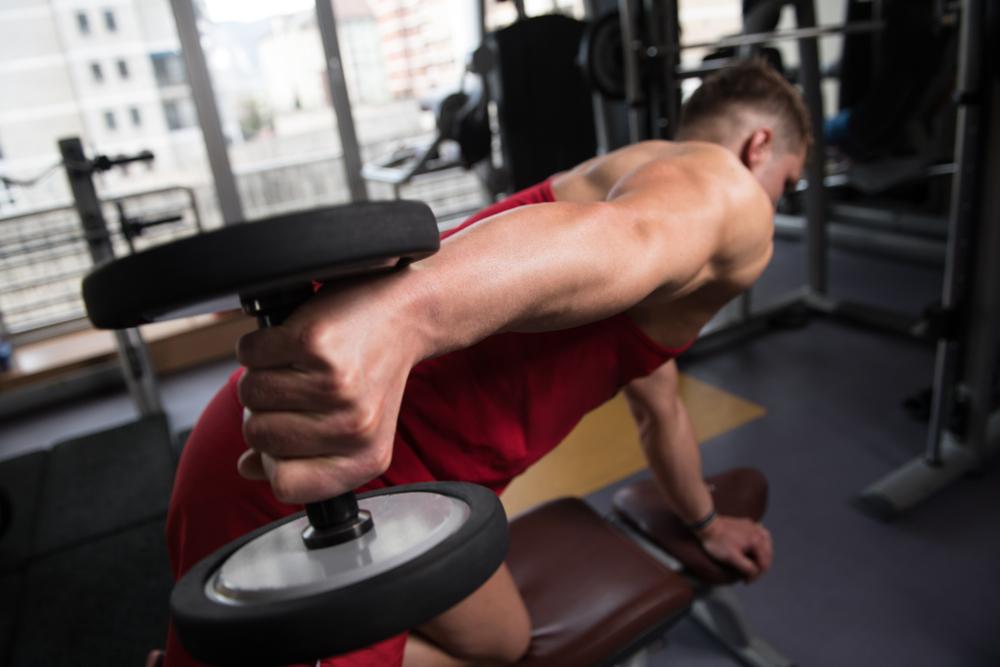
Tricep bench exercises at home build stronger arms by training elbow extension, pressing power, and upper body stability using only a weight bench and dumbbells.
This guide covers four proven bench tricep moves, a sample workout, safe progression steps, and how to choose a weight bench and dumbbells for a small home gym.
Quick Answer: You can build stronger triceps at home using just a weight bench and dumbbells by rotating four exercises, the tricep kickback, skull crusher, bench dip, and close-grip dumbbell chest press, for three to four sets each, one to two times per week, while adding reps before adding weight.
Key Takeaways
- Best equipment: A stable weight bench and a pair of dumbbells cover every exercise in this routine.
- Best beginner move: The close grip dumbbell chest press is usually the easiest bench tricep exercise to control.
- Best isolation moves: Skull crushers and kickbacks train elbow extension directly when performed with slow reps.
- Safety priority: Bench dip depth should match your shoulder tolerance, not the deepest range you can force.
- Training frequency: Most home lifters do well with one or two focused tricep bench sessions per week.
Why Does Tricep Training Matter for Home Lifters
Your triceps extend the elbow during every press, pushup, and lockout, so stronger triceps directly support better bench press strength and steadier overhead pressing. The muscle group also makes up a large share of upper arm mass, so direct training matters for visible arm size.
- Elbow extension: The triceps straighten the arm during every press and push movement.
- Pressing strength: Stronger triceps help you finish the top half of presses with better control.
- Arm size: The triceps brachii has three heads, the long, lateral, and medial head, and each contributes to overall arm mass.
- Shoulder support: Controlled tricep work helps stabilize the arm during upper body training.
An EMG study on the triceps push down found that fatigue patterns differed across the three tricep heads depending on exercise intensity and speed, which supports mixing rep tempos and loads across a tricep session.[1] Pair this workout with bench shoulder exercises for a complete push day.
Who Should Do This Tricep Bench Workout
A tricep bench workout using close grip presses, skull crushers, kickbacks, and bench dips suits home gym users who want stronger arms without a full commercial setup. It also fits beginners, busy lifters, and anyone who already owns a bench and dumbbells.
- Best for home training: The exercises need minimal equipment and fit small home gym spaces.
- Best for push day: The routine pairs well with chest, shoulder, or full upper body sessions.
- Best for controlled strength work: The bench stabilizes your torso so you can focus on elbow extension.
- Not ideal for pain: If you have sharp shoulder, elbow, or wrist pain, skip painful movements and seek professional guidance.
How Should You Warm Up Before Tricep Bench Training
A short warm up prepares your elbows, shoulders, upper back, and wrists before you load the triceps. Spend about five minutes moving smoothly before your first working set.
- Light cardio: March, walk, or jump rope for one to two minutes to raise body temperature.
- Arm circles: Perform 10 to 15 circles forward and backward to warm the shoulders.
- Scap squeezes: Pull the shoulder blades back and down for 10 to 15 reps to activate upper back support.
- Bodyweight elbow extensions: Straighten and bend the elbows slowly for 10 to 15 reps before adding weight.
- First working set: Use a lighter dumbbell than usual and confirm the movement feels smooth before loading up.
A narrative review on resistance training technique found that controlling range of motion, including training at longer muscle lengths, is one of several technique variables that can influence hypertrophy outcomes.[2] If you train with minimal equipment, resistance band exercises at home make a useful warm up or travel backup.
What Are the 4 Best Tricep Bench Exercises
The best tricep bench exercises combine one compound press, one bodyweight move, and two isolation exercises. This mix gives your triceps heavy tension, controlled stretch, and higher rep finishing work.
1. Tricep Kickback
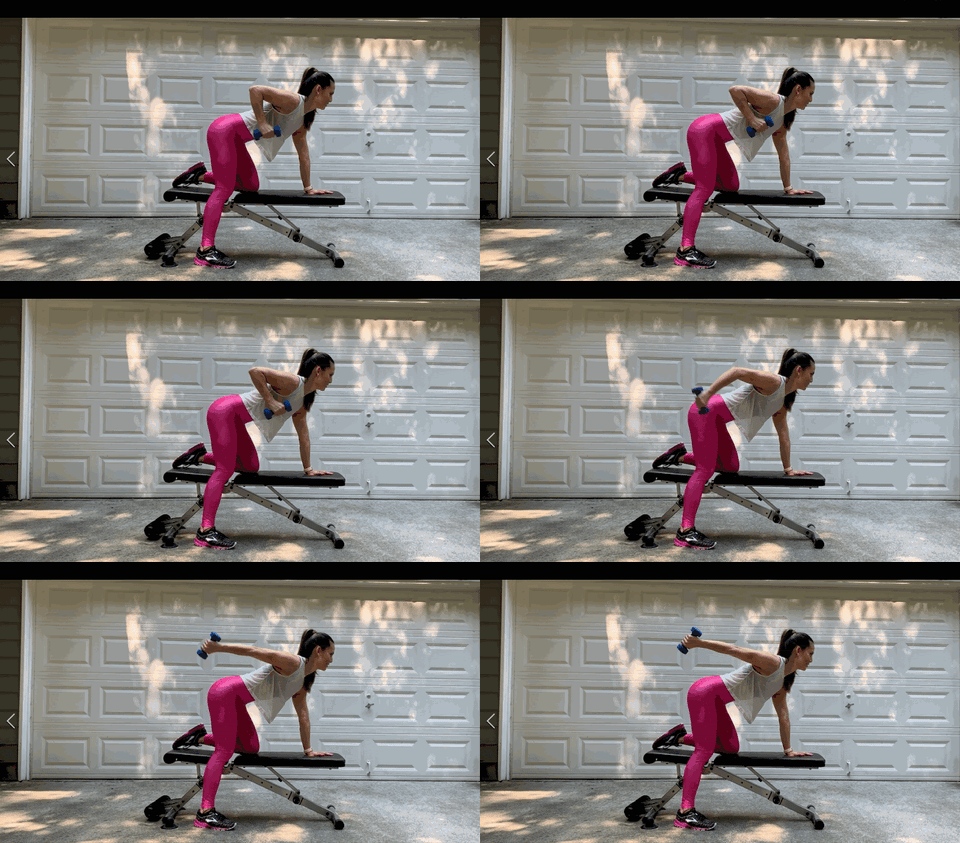
The tricep kickback is a simple dumbbell isolation exercise that trains elbow extension with very little equipment. It works best with light to moderate weight, slow control, and a strong squeeze at the top.
- Muscles worked: Triceps, rear delts, upper back stabilizers, and core.
- Best for: Higher rep isolation work after heavier pressing.
- Sets and reps: 3 sets of 10 to 15 reps per arm.
- Step 1: Place one knee and the same side hand on the bench, then plant the opposite foot on the floor.
- Step 2: Hold one dumbbell with your palm facing your torso and keep your back flat.
- Step 3: Pull your upper arm close to your side until your elbow is bent to about 90 degrees.
- Step 4: Extend your elbow until your arm is straight and your triceps are squeezed.
- Step 5: Lower the dumbbell slowly and repeat before switching sides.
Common mistake: Do not swing the dumbbell, because momentum reduces tricep tension. Beginner adjustment: Use a lighter dumbbell and pause for one second at the top.
2. Skull Crusher
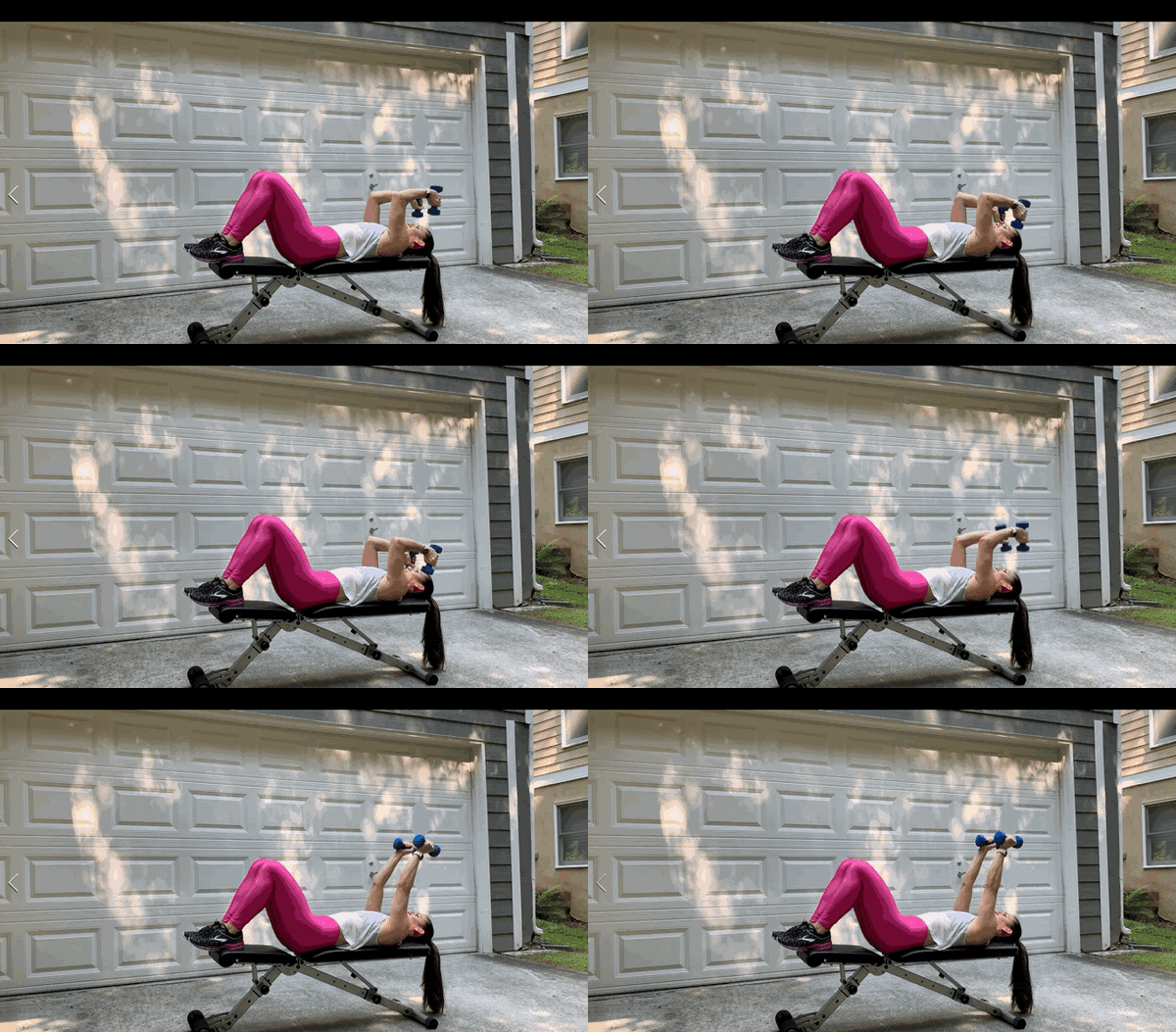
The skull crusher trains the triceps through a strong elbow extension pattern while your torso stays supported on the bench. It builds arm size well, but it should be performed slowly to protect the elbows.
- Muscles worked: Long head, lateral head, medial head, forearms, and shoulder stabilizers.
- Best for: Direct tricep strength and hypertrophy work.
- Sets and reps: 3 to 4 sets of 8 to 12 controlled reps.
- Step 1: Lie flat on your bench with your feet planted firmly on the floor.
- Step 2: Hold one dumbbell in each hand and press them over your shoulders.
- Step 3: Keep your upper arms steady and bend only at the elbows.
- Step 4: Lower the dumbbells toward your temples or slightly behind your head.
- Step 5: Extend your elbows until your arms are straight and your triceps are contracted.
Common mistake: Do not let your elbows flare wide, because it reduces control and elbow safety. Beginner adjustment: Hold one dumbbell with both hands if two dumbbells feel unstable.
3. Bench Dip
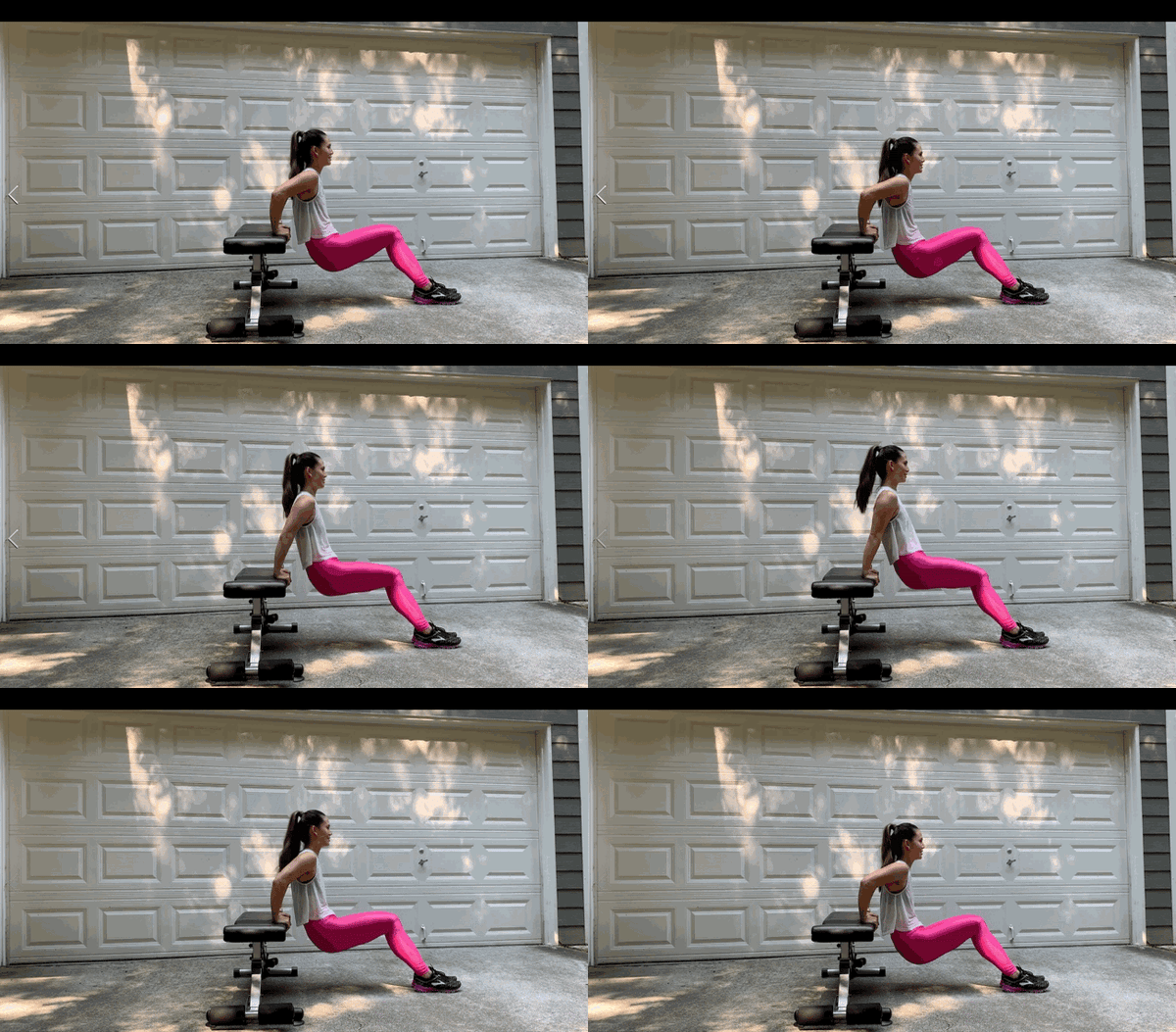
The bench dip is a bodyweight tricep exercise that loads elbow extension using only the bench. It can be useful at home, but shoulder comfort should decide how deep you go.
- Muscles worked: Triceps, chest, front delts, and upper back stabilizers.
- Best for: Bodyweight tricep training with no dumbbells required.
- Sets and reps: 3 sets of 8 to 15 reps with one to two reps left in reserve.
- Step 1: Sit on the bench edge and place your hands next to your hips.
- Step 2: Walk your feet forward and slide your hips off the bench.
- Step 3: Bend your elbows and lower your body while keeping your chest lifted.
- Step 4: Stop before your shoulders roll forward or feel uncomfortable.
- Step 5: Press through your hands and extend your elbows to return to the top.
A study comparing bench, bar, and ring dips found the bench dip produced lower peak triceps brachii activation, about 0.83 mV, than the bar dip at 1.04 mV and the ring dip at 1.05 mV, while also requiring a greater shoulder extension range, so dip progression should match your shoulder tolerance.[3]
Common mistake: Do not drop too low, because deep shoulder extension can feel stressful for some lifters. Beginner adjustment: Bend your knees and keep your feet flat to reduce load.
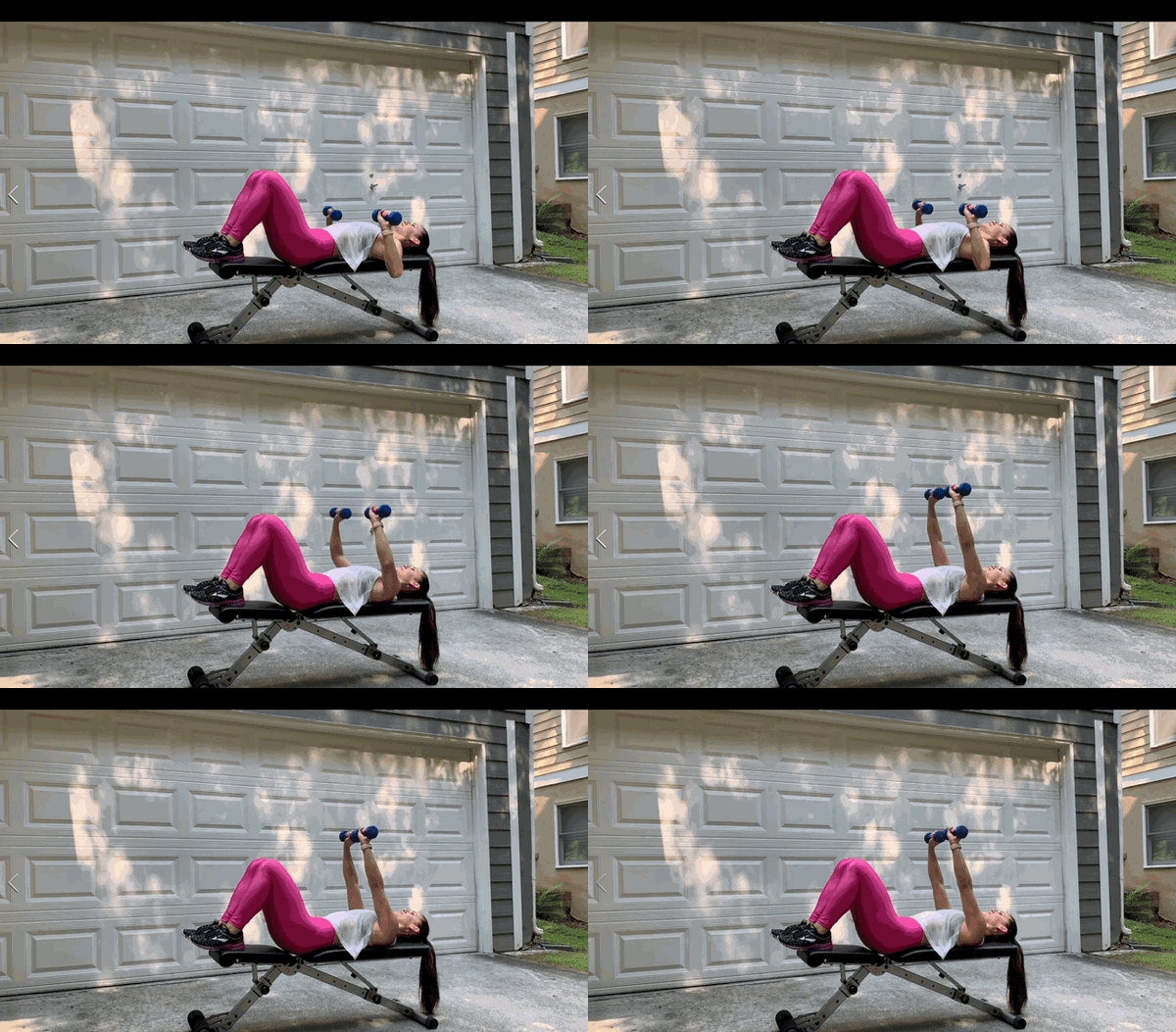
4. Close Grip Dumbbell Chest Press
The close grip dumbbell chest press is a compound bench exercise that shifts more attention to the triceps by keeping the elbows tucked. It is usually the strongest and most beginner friendly tricep bench movement in this guide.
- Muscles worked: Triceps, chest, front delts, and forearm stabilizers.
- Best for: Heavy tricep loading and pressing strength.
- Sets and reps: 3 to 4 sets of 6 to 10 reps.
- Step 1: Lie on the bench with your feet flat and your shoulder blades lightly set.
- Step 2: Hold the dumbbells over your chest with your palms facing each other.
- Step 3: Keep your elbows close to your sides as you lower the dumbbells.
- Step 4: Stop when your upper arms reach a comfortable depth near bench level.
- Step 5: Press up by extending your elbows and squeezing the triceps at the top.
A study on bench press grip width found that a narrower, close grip position alters muscle activity compared with a wider grip, which is why lifters use closer grips when they want more tricep emphasis.[4]
Common mistake: Do not turn the movement into a wide elbow chest press. Beginner adjustment: Start with moderate reps and stop before form breaks down.
What Does a Sample At Home Tricep Bench Workout Look Like
A complete tricep bench workout uses all four exercises in one session, moving from heavier compound work to lighter isolation finishers. Use this plan once or twice per week as part of a push day or upper body session.
- Close Grip Dumbbell Chest Press: 4 sets of 8 to 10 reps, rest 90 seconds.
- Dumbbell Skull Crusher: 3 sets of 10 to 12 reps, rest 60 to 90 seconds.
- Bench Dip: 3 sets of 8 to 15 reps, rest 60 seconds.
- Tricep Kickback: 3 sets of 12 to 15 reps per arm, rest 45 to 60 seconds.
If you are new to lifting, start with two sets of each exercise and add sets only when your joints feel good. Pair this session with leg workouts at home with a bench to build a full weekly split using the same equipment.
How Do You Choose Weight and Swap Exercises
Choose a dumbbell weight that lets you complete every rep in your target range with clean elbow control. Skull crushers and kickbacks usually need lighter loads because the elbow joint needs precision, while close grip presses can handle heavier weight since the chest and shoulders share the work.
- If skull crushers bother your elbows: Swap in close grip dumbbell presses or single arm overhead extensions.
- If bench dips bother your shoulders: Swap in kickbacks or close grip presses and reduce dip depth.
- If you want more pressing load: Prioritize the close grip chest press earlier in the session while you are fresh.
- If you outgrow dumbbells: Look into Smith machine tricep exercises for added loading options.

How Do You Progress a Tricep Bench Workout Safely
Progress your tricep bench workout by adding reps first, then adding weight once you reach the top of your rep range. This order protects technique while still giving your triceps a clear growth signal.
- Week 1: Start near the low end of the rep range and leave two reps in reserve.
- Week 2: Add one or two reps per set if your form stays clean.
- Week 3: Reach the top of the rep range before increasing dumbbell weight.
- Week 4: Add a small amount of weight and return to the lower rep range.
- Pain rule: Reduce range, load, or exercise difficulty the moment elbow or shoulder irritation appears, and stop the set entirely if pain is sharp.
An umbrella review on resistance training variables found that total weekly training volume is a key driver of hypertrophy, while excessive volume packed into a single session can raise fatigue without adding extra benefit.[5]
Which Bench and Dumbbells Work Best for Home Tricep Training
The right home setup should feel stable, adjustable, and safe under pressing pressure. A bench that wobbles during dips or presses is not a good fit for serious tricep training.
- Bench stability: Choose a bench that feels solid when you lie, sit, and press against it.
- Bench angle options: A flat and adjustable bench gives you more exercise variety over time.
- Pad support: The pad should support your back and hips without sliding.
- Dumbbell options: Fixed dumbbells are simple, while adjustable dumbbells save space and cover a wide weight range.
- Small space setup: Compact benches and organized dumbbell storage keep a home gym usable.
If you are building a simple home gym, start with a reliable bench from the RitFit weight bench collection. The RitFit GATOR adjustable weight bench and a set of adjustable dumbbells from 40 to 100 lbs together cover every exercise in this guide as your strength grows.
"Guys, with all this talk of triceps, I don't want you to get the wrong idea.
I want you to keep doing compound tricep exercises such as the Bench Press, not just isolation exercises.
Stick to basic movements.
"
Jeff Cavaliere, MSPT, CSCS, Physical Therapist and Strength Coach, How To Get Big Triceps
FAQs About Tricep Bench Exercises at Home
Can I build triceps with only a bench and dumbbells at home?
Yes, you can build stronger triceps with a bench and dumbbells by training close to fatigue and progressing over time. Use close grip presses, skull crushers, kickbacks, and controlled bench dips to cover pressing strength, isolation work, and bodyweight loading.
What tricep bench exercise should beginners start with?
Beginners should usually start with the close grip dumbbell chest press because the bench supports the whole body and the pattern is easy to control. It also trains the triceps with chest and shoulder assistance before you progress to harder isolation moves like skull crushers.
Are bench dips safe for shoulders?
Bench dips can be safe when shoulder position stays comfortable, but they demand a large shoulder extension range that can stress sensitive shoulders. Keep your chest lifted, avoid dropping too deep, and switch to close grip presses if dips cause discomfort.
How often should I do tricep bench exercises?
Most home lifters get good results training triceps with a bench one or two times per week with at least 48 hours of recovery between sessions. This frequency supports steady progress while giving your elbows, shoulders, and connective tissue time to recover.
What should I do if skull crushers hurt my elbows?
Reduce the weight first and shorten the range of motion so the elbows do not reach full lockout under load. If discomfort continues, switch to close grip presses or lighter kickbacks, since elbow pain signals you to reduce load, slow the tempo, or change the exercise.
How heavy should dumbbells be for tricep bench exercises?
Choose a dumbbell weight that lets you complete every rep in your target range with clean elbow control. Skull crushers and kickbacks need lighter weights because the elbow joint requires precision, while close grip presses can handle heavier loads from the chest and shoulders.
Should I train triceps before or after chest exercises?
Train triceps after your main chest or pressing exercise if your goal is overall upper body strength, since pre fatiguing the triceps can cut pressing performance. Train triceps first only when direct arm growth is the priority and you accept slightly weaker chest sets.
Which bench angle is best for tricep exercises?
A flat bench is the best starting point for close grip presses, skull crushers, bench dips, and kickbacks because it keeps the torso stable and the range of motion consistent. An adjustable bench adds variety later for incline pressing angles and supported single arm positions.
Conclusion
You do not need a crowded gym to build stronger triceps. A stable weight bench, a pair of dumbbells, and these four exercises can train pressing strength, elbow extension, and arm size at home.
Start with lighter loads, master clean reps, and add weight only when your elbows feel stable. Pair this routine with hip exercises at home to round out a balanced weekly training plan.
Disclaimer
This article is for general fitness education and is not medical advice. Stop any exercise that causes sharp pain, numbness, or joint instability, and consult a qualified healthcare professional or certified trainer before starting a new training program.
References
1. Hussain J, Sundaraj K, Subramaniam ID, Lam CK. Muscle Fatigue in the Three Heads of Triceps Brachii During Intensity and Speed Variations of Triceps Push-Down Exercise. Front Physiol. 2020;11:112. doi:10.3389/fphys.2020.00112. PMCID: PMC7047337
2. Androulakis Korakakis P, Wolf M, Coleman M, et al. Optimizing Resistance Training Technique to Maximize Muscle Hypertrophy: A Narrative Review. J Funct Morphol Kinesiol. 2023;9(1). doi:10.3390/jfmk9010009. PMCID: PMC10801605
3. McKenzie A, Crowley-McHattan Z, Meir R, Whitting J, Volschenk W. Bench, Bar, and Ring Dips: Do Kinematics and Muscle Activity Differ?. Int J Environ Res Public Health. 2022;19(20). doi:10.3390/ijerph192013211. PMCID: PMC9603242
4. Saeterbakken AH, Stien N, Pedersen H, Solstad TEJ, Cumming KT, Andersen V. The Effect of Grip Width on Muscle Strength and Electromyographic Activity in Bench Press among Novice- and Resistance-Trained Men. Int J Environ Res Public Health. 2021;18(12). doi:10.3390/ijerph18126444. PMCID: PMC8296276
5. Bernárdez-Vázquez R, Raya-González J, Castillo D, Beato M. Resistance Training Variables for Optimization of Muscle Hypertrophy: An Umbrella Review. Front Sports Act Living. 2022;4:949021. doi:10.3389/fspor.2022.949021. PMCID: PMC9302196
Save on your next RitFit order
Tap the button to copy your code, then paste it at checkout.





