








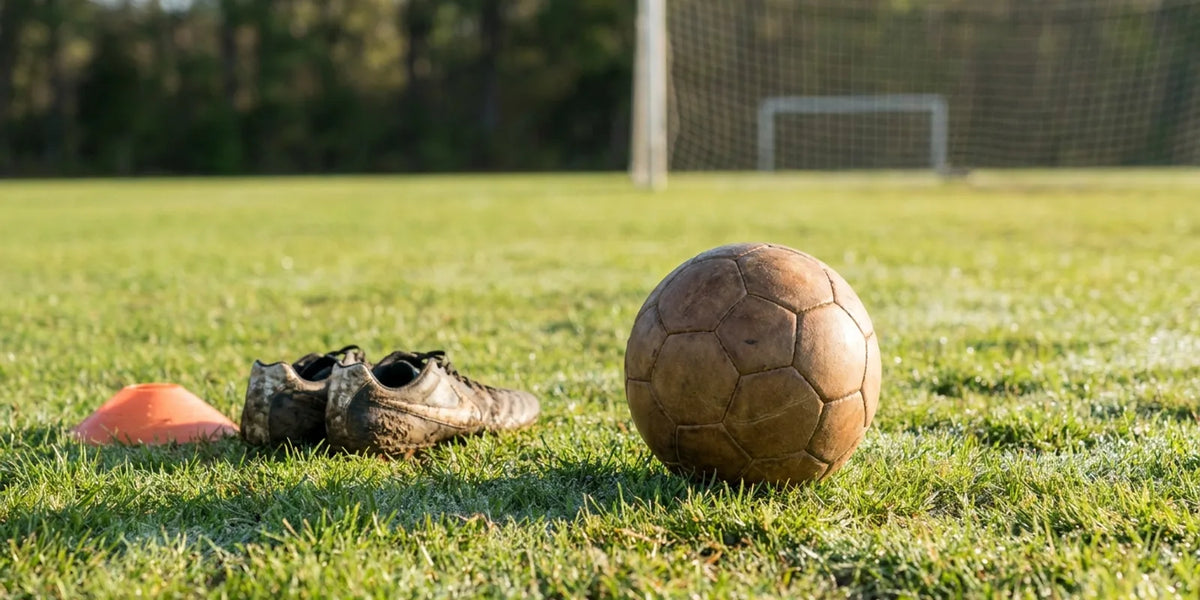
Learning how to juggle a soccer ball helps beginners build softer touch, sharper coordination, and more confidence on the ball. Start with one controlled touch, then progress to alternating feet, thigh touches, simple patterns, and game ready control.
This guide gives you a clean beginner progression, common fixes, a four week practice plan, safe heading guidance, and simple strength support for soccer training.
Key Takeaways
- Best starting point: Begin with one touch catch before trying continuous juggling.
- Main contact point: Use the laces or instep area, not the toes.
- Ideal ball height: Keep most touches between knee and waist height for better control.
- Practice target: Short daily sessions build skill faster than long occasional sessions.
- Biggest beginner fix: Pop the ball upward instead of kicking it forward.
- Quick Answer
- Why Juggling Matters
- Proper Soccer Juggling Setup
- Correct Body Position
- How to Juggle a Soccer Ball Step by Step
- Beginner Soccer Juggling Drills
- Common Mistakes and Quick Fixes
- Four Week Practice Plan
- Advanced Juggling Skills
- How Juggling Helps in Real Games
- Strength and Mobility Support
- How to Track Progress
- Safety Tips
Quick Answer: How Do You Juggle a Soccer Ball?
To juggle a soccer ball, drop the ball from your hands, use the laces area of your foot to pop it straight up, and catch it after one controlled touch. Once that feels easy, move to two touches, alternating feet, thigh touches, and continuous juggling.
Why Juggling Matters
Soccer juggling improves ball control because every touch teaches your body how much force, timing, and foot angle the ball needs. Research on football juggling describes it as a complex learning task that depends on multisensory feedback and coordinated limb movement.[1]
- First touch: Juggling helps you cushion the ball and prepare your next move.
- Foot eye coordination: You learn to track the ball while adjusting your body quickly.
- Weak foot control: Alternating touches forces both feet to become more useful.
- Balance: Most touches happen while standing briefly on one leg.
- Confidence: Repeated clean touches make beginners calmer when the ball arrives in games.
Proper Soccer Juggling Setup
Proper setup makes juggling easier because beginners need predictable ball response, safe footing, and enough space to recover mistakes. Use a properly inflated soccer ball, comfortable shoes, a flat surface, and a short warm up before starting.
Choose the Right Ball
Use a properly inflated size 5 soccer ball if you are 12 or older, or use the age appropriate ball recommended by your coach or league. A consistent ball helps you feel whether your touch is too hard, too soft, or off center.
Wear Comfortable Soccer Shoes
Wear shoes that match your surface and fit securely without squeezing your toes. Cleats work on grass, while indoor soccer shoes or turf shoes are better for hard courts and artificial surfaces.
Find a Safe Practice Space
Choose a flat open area with enough headroom and no nearby glass, furniture, traffic, or sharp objects. A backyard, driveway, gym, park, or indoor court can work if the surface is safe and predictable.
Warm Up Your Ankles and Hips
Warm up for three to five minutes with ankle circles, toe taps, high knees, and easy leg swings. The goal is to feel light on your feet before the first touch.
Correct Body Position
Correct body position helps you keep the ball close instead of chasing it after every touch. Stay light, balanced, and slightly forward so your feet can adjust under the ball.
Feet Position
Stand on the balls of your feet with your knees slightly bent and your feet about shoulder width apart. This stance keeps you ready to move in any direction after a bad touch.
Upper Body
Keep your chest slightly over the ball and look down with your head relaxed. Avoid leaning back, because that usually sends the ball forward and away from your body.
Arms
Keep your arms slightly out to the sides with relaxed elbows. Your arms act like balance tools when your standing leg shifts under you.
Contact Surface
Use the laces or instep area of your foot and keep your ankle firm at contact. Avoid poking the ball with your toes, because toe contact creates unpredictable spin and direction.
How to Juggle a Soccer Ball Step by Step
The best way to learn soccer juggling is to master one controlled touch before adding more touches. Each step should feel repeatable before you move to the next one.
Step 1: Drop, Kick, and Catch
Hold the ball at chest height, drop it, pop it back up with the laces of your dominant foot, and catch it. Move on when you can complete 10 controlled touches without stepping more than once.
Step 2: Add Your Weaker Foot
Repeat the same drop, kick, and catch drill with your weaker foot. Keep the ball low and accept slower progress, because weaker foot control improves through repetition.
Step 3: Try Two Touches
Drop the ball, touch it once with your right foot, touch it once with your left foot, and then catch it. The goal is to make both touches rise straight up instead of drifting sideways.
Step 4: Build Alternating Rhythm
Once two touches feel controlled, continue right foot, left foot, right foot, left foot without catching the ball. Think of the movement as light popping, not hard kicking.
Step 5: Add the Thigh
Lift your thigh until it is almost parallel to the ground and let the ball rebound upward from the soft upper leg. Use thigh touches only when the ball rises too high for a clean foot touch.
Step 6: Combine Feet and Thighs
Practice simple patterns such as right foot, right thigh, left thigh, left foot. Patterns teach you to control the ball at different heights without panicking.
Step 7: Add the Head Carefully
Use forehead touches only after you are comfortable with feet and thighs, and avoid repeated heading if you are young, inexperienced, or following a no heading rule. Youth heading exposure has been studied for its relationship with clinical outcome measures, so heading practice should be conservative and coach guided.[5]
Beginner Soccer Juggling Drills
Beginner juggling drills should be short, measurable, and focused on control rather than record chasing. Use these drills for 10 to 20 minutes per session.
One Touch Catch Drill
Drop the ball, pop it once, and catch it at chest height. Complete 10 reps with each foot before trying continuous juggling.
Bounce Juggle Drill
Let the ball bounce once, then pop it back up and catch it. The bounce gives beginners more time to read the ball and time the touch.
Two Touch Catch Drill
Take one touch with each foot before catching the ball. This drill builds the rhythm needed for alternating juggling.
Weak Foot Only Drill
Use only your weaker foot for one touch catch or bounce juggling. Stop before frustration turns the drill into random kicking.
Low Touch Challenge
Try to keep every touch between knee and waist height. Low touches improve control and make the ball easier to recover.
Common Mistakes and Quick Fixes
Most juggling mistakes come from poor contact point, too much power, or unstable body position. Use the table below to diagnose the problem quickly.
| Mistake | Likely Cause | Quick Fix |
|---|---|---|
| The ball flies forward | You are leaning back or swinging your foot forward. | Keep your chest over the ball and pop straight up. |
| The ball spins sideways | You are striking the side of the ball. | Contact the bottom center with a firm laces surface. |
| You kick too hard | Your leg swing is too big. | Use a short lift from the knee and keep the ball low. |
| Your weaker foot ruins the rhythm | Your timing and ankle position are less developed on that side. | Practice one touch catch with the weaker foot before continuous juggling. |
| You lose balance | You are flat footed or reaching too far from your body. | Stay on the balls of your feet and move under the ball early. |
Four Week Soccer Juggling Practice Plan
A simple four week plan gives beginners enough repetition without making practice feel overwhelming. Practice four to six days per week and stop each session while your touches still feel sharp.
| Week | Main Goal | Daily Practice | Move On When |
|---|---|---|---|
| Week 1 | Control one clean touch | One touch catch, bounce juggle, weak foot one touch | You can complete 10 clean touches per foot |
| Week 2 | Build two touch control | Right left catch, left right catch, low touch challenge | You can complete five two touch sequences in a row |
| Week 3 | Create rhythm | Alternating feet, thigh pops, weak foot only reps | You can reach 10 to 20 controlled juggles |
| Week 4 | Improve consistency | Continuous juggling, pattern juggling, progress tracking | You can beat your record without losing clean form |
Advanced Juggling Skills
Advanced juggling skills should come after you can complete 50 controlled touches without chasing the ball. These skills improve touch variety, but they should not replace basic foot control.
Foot Stall
Pop the ball gently and cushion it on top of your foot until it stops moving. This teaches soft control and ankle awareness.
Pattern Juggling
Create a repeatable sequence such as right foot, left foot, right thigh, left thigh. Pattern work builds smoother transitions between surfaces.
Walking Juggles
Juggle while moving slowly forward in a straight line. This turns stationary control into game like movement.
Smaller Ball Challenge
Use a smaller ball only after your regular ball control is consistent. A smaller ball demands sharper contact but can frustrate beginners too early.
How Juggling Helps in Real Games
Juggling helps real soccer skills because it improves how your body reads and controls a moving ball. It does not replace passing, dribbling, and shooting practice, but it supports all three.
- First touch: You learn to soften the ball and set up the next action.
- Dribbling: Close control improves because your feet become more sensitive to ball speed and spin.
- Volleys: Airborne touches improve timing for balls arriving above the ground.
- Weak foot play: Alternating touches make your non dominant foot more useful under pressure.
- Confidence: More ball familiarity reduces panic when a pass arrives awkwardly.
Strength and Mobility Support
Strength and mobility work can support juggling by improving balance, ankle control, and single leg stability. Studies on adolescent soccer players suggest that balance training can improve balance and technical skills, including juggling and related soccer actions.[2]
- Ankle circles: Use ankle circles before practice to improve comfort and control around the foot.
- Single leg balance: Stand on one leg for 20 to 30 seconds to support alternating foot touches.
- Calf raises: Use controlled calf raises to strengthen the lower leg for quick adjustments.
- Core stability: Add dead bugs or planks to help keep your torso steady while one leg moves.
- Dumbbell work: Use dumbbell strength training to build general athletic strength without needing a full gym setup.
- Home equipment option: A pair of RitFit hex rubber dumbbells can support lunges, carries, and core work for soccer conditioning.
Proprioceptive training has been studied for balance, strength, agility, and dribbling in adolescent male soccer players, which makes it a useful support category for soccer skill practice.[3] Ankle proprioception is also closely related to balance control in sport performance and injury contexts.[4]
- Quick footwork: Use the RitFit plyo box collection for low impact step ups and controlled landing drills.
- Explosive power: The RitFit classic 3 in 1 foam plyo box can support basic jumps, step ups, and balance drills when used safely.
- Bench support: The RitFit Gator adjustable weight bench can support seated core work, split squat progressions, and general home training.
- Full body training: Explore RitFit strength machines if you want a broader home gym setup for lower body strength and conditioning.
How to Track Progress
Tracking progress keeps juggling practice motivating because improvement is easy to measure. Record your best clean streak, not just your highest lucky number.
- Total juggles: Count the longest streak without the ball touching the ground.
- Foot only juggles: Count touches using only the feet.
- Weak foot touches: Count clean touches using only the weaker foot.
- Pattern completion: Count how many full patterns you complete without losing control.
- Consistency score: Track how many sessions per week you practiced for at least 10 minutes.
Safety Tips for Soccer Juggling
Safe juggling practice means using a clear space, avoiding pain, and choosing drills that fit your age and skill level. Beginners should focus on foot and thigh control before adding advanced tricks.
- Start low: Keep the ball below waist height until control improves.
- Avoid hard surfaces near hazards: Do not practice close to stairs, traffic, glass, or sharp objects.
- Limit heading: Follow coach, league, and age based heading rules before practicing head touches.
- Stop when dizzy or sore: End practice if you feel headache, dizziness, joint pain, or unusual discomfort.
- Use short sessions: Ten focused minutes can be more useful than a long session with sloppy touches.
FAQs
How long does it take to learn how to juggle a soccer ball?
Most beginners can learn a few controlled soccer ball juggles within two to four weeks. Progress depends on practice frequency, starting coordination, ball quality, and patience. Ten to twenty focused minutes most days usually works better than one long session each week.
What part of the foot should beginners use to juggle a soccer ball?
Beginners should use the laces or instep area to juggle a soccer ball. This surface gives a flatter contact point and better upward control. Avoid toe pokes, because they usually create extra spin and send the ball away from your body.
Why does the soccer ball keep flying away when I juggle?
The soccer ball usually flies away because your foot is angled forward or your body is leaning back. Keep your chest over the ball, contact the bottom center, and use a short upward pop. Aim for low touches before trying higher juggles.
Should beginners practice soccer juggling with both feet?
Yes. Beginners should practice soccer juggling with both feet because real ball control requires left and right foot confidence. Start with your dominant foot to learn the motion, then give your weaker foot separate practice through one touch catch drills.
Is juggling a soccer ball useful in real games?
Yes. Juggling a soccer ball supports real game skills by improving first touch, timing, balance, and comfort with airborne balls. It does not replace passing or dribbling practice, but it helps players feel calmer and more coordinated when the ball arrives awkwardly.
How many soccer juggles should a beginner aim for?
A beginner should first aim for five clean soccer juggles, then ten, then twenty. Quality matters more than the record number. Clean touches stay close to your body, rise to a controllable height, and allow you to reset your balance quickly.
Can I practice soccer juggling indoors?
Yes. You can practice soccer juggling indoors if the area is open, flat, and free from fragile objects. Use soft touches, keep the ball below waist height, and consider starting with bounce juggles or one touch catches until control improves.
Should kids practice head juggling with a soccer ball?
No. Kids should not add head juggling without coach guidance and age appropriate heading rules. Young players can build excellent ball control through feet, thighs, balance drills, and passing practice. Heading should be conservative because safety matters more than advanced juggling tricks.
Conclusion
Learning how to juggle a soccer ball starts with one clean touch and grows through consistent practice. Keep the ball low, use the laces area, train both feet, and follow a simple progression before adding advanced skills.
For extra support, combine juggling with balance, ankle mobility, and light strength training. Better control comes from patient repetition, not from rushing toward a big juggling record.
Disclaimer: This article is for general sports education only and is not medical advice. Players should adjust drills based on age, skill level, surface, injury history, and coach guidance. Stop training if pain, dizziness, headache, or unusual discomfort occurs, and consult a qualified coach, athletic trainer, or healthcare professional when needed.
References
- Dong X, Gui X, Klich S, et al. The effects of football juggling learning on executive function and brain functional connectivity. Front Hum Neurosci. 2024;18:1362418. doi:10.3389/fnhum.2024.1362418
- Mitrousis I, Bourdas DI, Kounalakis S, et al. The effect of a balance training program on the balance and technical skills of adolescent soccer players. J Sports Sci Med. 2023;22(4):645-657. doi:10.52082/jssm.2023.645
- Gidu DV, Badau D, Stoica M, et al. The effects of proprioceptive training on balance, strength, agility and dribbling in adolescent male soccer players. Int J Environ Res Public Health. 2022;19(4):2028. doi:10.3390/ijerph19042028
- Han J, Anson J, Waddington G, Adams R, Liu Y. The role of ankle proprioception for balance control in relation to sports performance and injury. Biomed Res Int. 2015;2015:842804. doi:10.1155/2015/842804
- Wahlquist VE, Buckley TA, Caccese JB, Glutting JJ, Royer TD, Kaminski TW. Youth soccer heading exposure and its effects on clinical outcome measures. Sports. 2024;12(12):342. doi:10.3390/sports12120342





