You can train for your first pull up by building grip strength, shoulder blade control, back strength, and assisted pulling volume in a structured progression.
This guide shows beginners how to move from dead hangs and rows to assisted pull ups, negative pull ups, and finally a full bodyweight pull up.
Key Takeaways
- Your first pull up is a strength skill: Train grip, lats, arms, shoulder blades, and core together instead of only testing full reps.
- Start with easier patterns: Dead hangs, scapular pull ups, inverted rows, and lat pulldowns prepare your body for vertical pulling.
- Use assisted reps before max attempts: Bands, cable assistance, or a foot supported setup help you practice clean form with less frustration.
- Control the lowering phase: Slow negative pull ups build eccentric strength, but they should be used in low volume to protect elbows and shoulders.
- Progress by quality first: Add time, reps, and range of motion only when each rep stays smooth and pain free.
What Is a Pull Up?
A pull up is an upper body bodyweight exercise where you hang from a bar with an overhand grip and pull your chin above the bar.
It mainly trains the latissimus dorsi, biceps, brachialis, forearms, rear delts, rhomboids, lower traps, and core.
Traditional pull ups create high activation demands in the lats, biceps, posterior delts, and middle trapezius, which is why they are a valuable but challenging strength benchmark.[1]
- Pull up: Uses a pronated overhand grip and usually feels more demanding for beginners.
- Chin up: Uses a supinated underhand grip and often allows more biceps help.
- Neutral grip pull up: Uses palms facing each other and may feel more shoulder friendly for some lifters.
- Assisted pull up: Reduces the load with a band, machine, cable system, or foot support.
Why Pull Ups Are Hard for Beginners
Pull ups are hard because they require you to lift your bodyweight while controlling the shoulder blades, elbows, grip, and trunk at the same time.
Most beginners fail not because of one weak muscle, but because grip strength, lat strength, scapular control, and pulling coordination are not ready yet.
- Grip limitation: If your hands fail first, your back never gets enough quality pulling work.
- Weak starting position: If you cannot hold an active hang, the first inch of the pull up will feel nearly impossible.
- Poor scapular control: If your shoulders shrug toward your ears, the lats cannot produce force efficiently.
- Limited pulling volume: If you only attempt full pull ups, you may not get enough successful reps to build strength.
- Body position drift: If your ribs flare or legs swing, energy leaks away from the pulling muscles.
Pull Up Readiness Test
Use this quick test before starting your pull up plan so you can choose the right progression level.
Do not force any test that causes shoulder, elbow, wrist, or neck pain.
- Dead hang: Aim to hang from a bar for 15 to 30 seconds with a secure grip.
- Active hang: Pull your shoulder blades slightly down and hold for 5 to 10 seconds without bending the elbows.
- Inverted row: Complete 8 controlled reps with your body in a straight line.
- Flexed arm hold: Hold your chin near bar height for 3 to 5 seconds with controlled shoulders.
- Negative rep: Lower from the top position for 3 to 5 seconds without dropping.
If you cannot pass these tests yet, start with hangs, rows, and lat pulldowns before attempting full pull ups.
Four Phase Pull Up Progression Plan
The best beginner pull up plan moves from control to strength to assisted practice to full reps.
Stay in each phase until you can complete the target with clean form for two sessions in a row.
Phase 1: Build the Hang and Shoulder Position
Start with dead hangs, active hangs, and scapular pull ups to build grip endurance and shoulder blade control.
- Dead hang: Perform 3 sets of 10 to 30 seconds while keeping your grip secure.
- Active hang: Perform 3 sets of 5 to 10 seconds while gently pulling the shoulders away from the ears.
- Scapular pull up: Perform 3 sets of 5 to 8 reps without bending your elbows.
- Progress when: You can hold a 30 second dead hang and complete 8 smooth scapular pull ups.
Phase 2: Build Horizontal Pulling Strength
Use inverted rows and dumbbell rows to strengthen the upper back before asking it to pull your full bodyweight vertically.
- Inverted row: Perform 3 to 4 sets of 6 to 12 reps using a rack, Smith machine, or stable bar.
- One arm dumbbell row: Perform 3 sets of 8 to 12 reps per side with a stable bench setup.
- Tempo focus: Pause briefly at the top and lower with control.
- Progress when: You can complete 12 clean inverted rows with your body nearly straight.
Phase 3: Add Lat Pulldowns and Assisted Pull Ups
Lat pulldowns and assisted pull ups let beginners practice vertical pulling volume before full bodyweight reps are possible.
Research on recreationally active men found that 8 weeks of lat pulldown training improved pull up endurance, which supports using pulldowns as a practical bridge toward full reps.[2]
- Lat pulldown: Perform 3 to 4 sets of 8 to 12 reps with a grip slightly wider than shoulder width.
- Band assisted pull up: Perform 3 sets of 3 to 6 reps while keeping the body quiet and controlled.
- Foot assisted pull up: Use a low box or bench to reduce load while practicing the full path.
- Progress when: You can perform 6 assisted reps with smooth control and no swinging.
Phase 4: Train Negatives and First Full Reps
Negative pull ups help build control in the lowering phase, but beginners should keep the volume low to avoid excessive elbow stress.
Strength training adaptations come from repeated exposure to progressive mechanical and neural demands, so small weekly progress is more reliable than frequent max testing.[3]
- Top hold: Step or jump to the top and hold for 3 to 5 seconds.
- Negative pull up: Lower for 3 to 5 seconds for 2 to 4 reps per set.
- First rep practice: Try one full rep only after your warm up and stop before form breaks.
- Progress when: You can lower under control and start the pull without shoulder shrugging.
Weekly Beginner Pull Up Workout Plan
Train pull up skills two to three days per week so your grip, elbows, shoulders, and back can recover.
Use nonconsecutive days such as Monday, Wednesday, and Saturday if you are new to strength training.
Workout A: Technique and Control
Use this session to practice clean shoulder mechanics and controlled pulling before fatigue becomes high.
- Dead hang: 3 sets of 15 to 30 seconds.
- Scapular pull up: 3 sets of 5 to 8 reps.
- Inverted row: 4 sets of 6 to 10 reps.
- Hollow body hold: 3 sets of 15 to 25 seconds.
Workout B: Strength and Assistance
Use this session to build vertical pulling strength with adjustable assistance and controlled volume.
- Lat pulldown: 4 sets of 8 to 12 reps.
- Band assisted pull up: 3 sets of 3 to 6 reps.
- One arm dumbbell row: 3 sets of 8 to 12 reps per side.
- Farmer carry: 3 carries of 30 to 45 seconds.
Workout C: Negative Rep Practice
Use this session only when your shoulders and elbows feel fresh from the previous workout.
- Active hang: 3 sets of 5 to 10 seconds.
- Top hold: 3 sets of 3 to 5 seconds.
- Negative pull up: 3 sets of 2 to 4 reps.
- Easy inverted row: 2 sets of 8 to 10 reps.
For strength focused work, moderate to higher training loads generally support greater strength gains than very light loads, while muscle growth can occur across a broader range when effort is high.[4]
Best Home Gym Setup for Pull Up Training
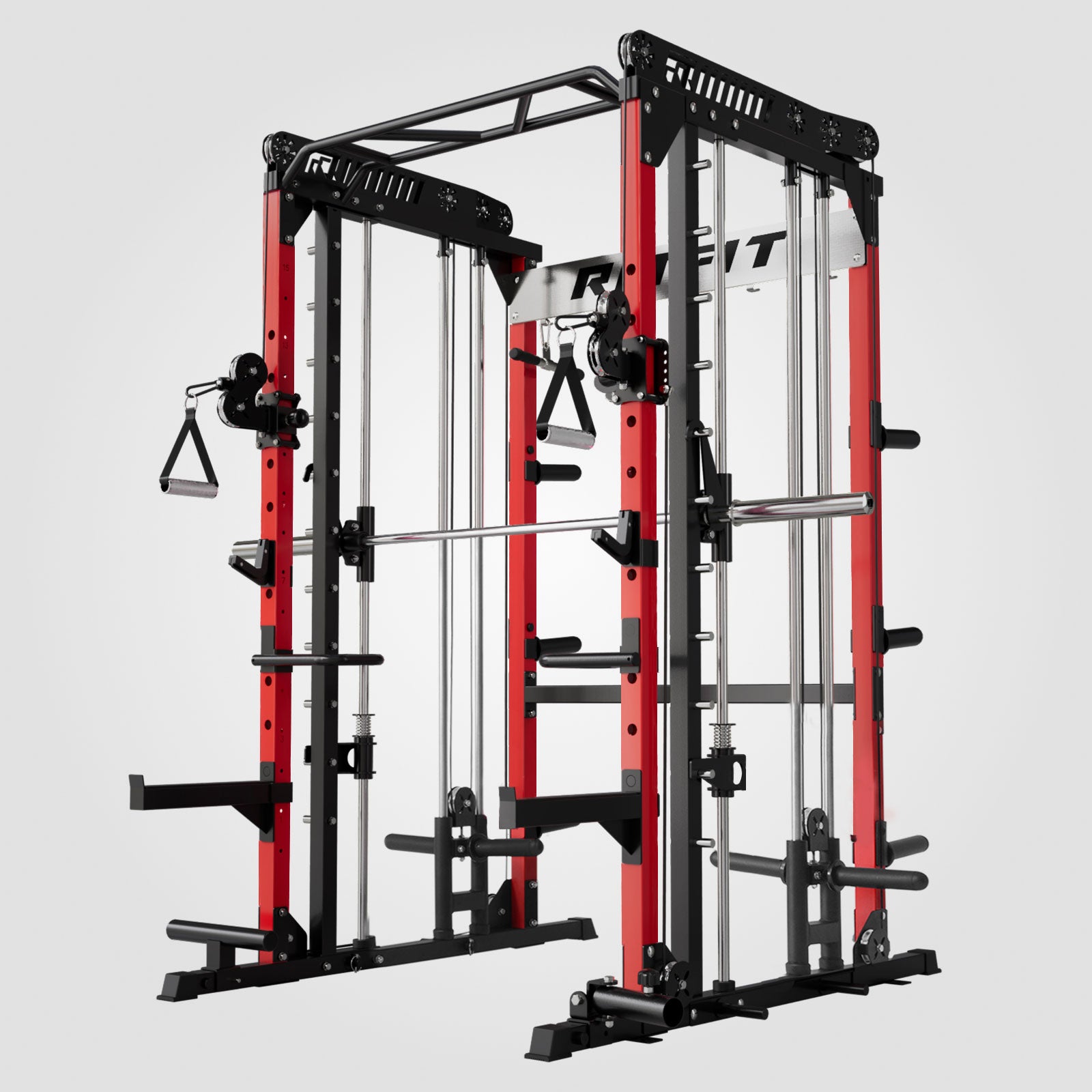
A good home pull up setup should give you a stable bar, adjustable assistance, enough floor space, and options for rows and pulldowns.
Beginners should prioritize stability and clear movement space before adding more advanced variations.
- Power rack setup: A rack with a pull up bar supports dead hangs, assisted pull ups, band work, and inverted rows. For a stable rack based setup, review the RitFit P3 1200lbs Power Cage.
- Smith machine setup: A Smith machine can support inverted rows, assisted pull up drills, and cable based back training when used with a safe setup. See the RitFit M1 Pro Smith Machine with Cable Crossover for an all in one home gym option.
- Lat pulldown option: A cable station helps beginners add vertical pulling volume before full pull ups are possible. You can also read how to do a lat pulldown on a Smith machine.
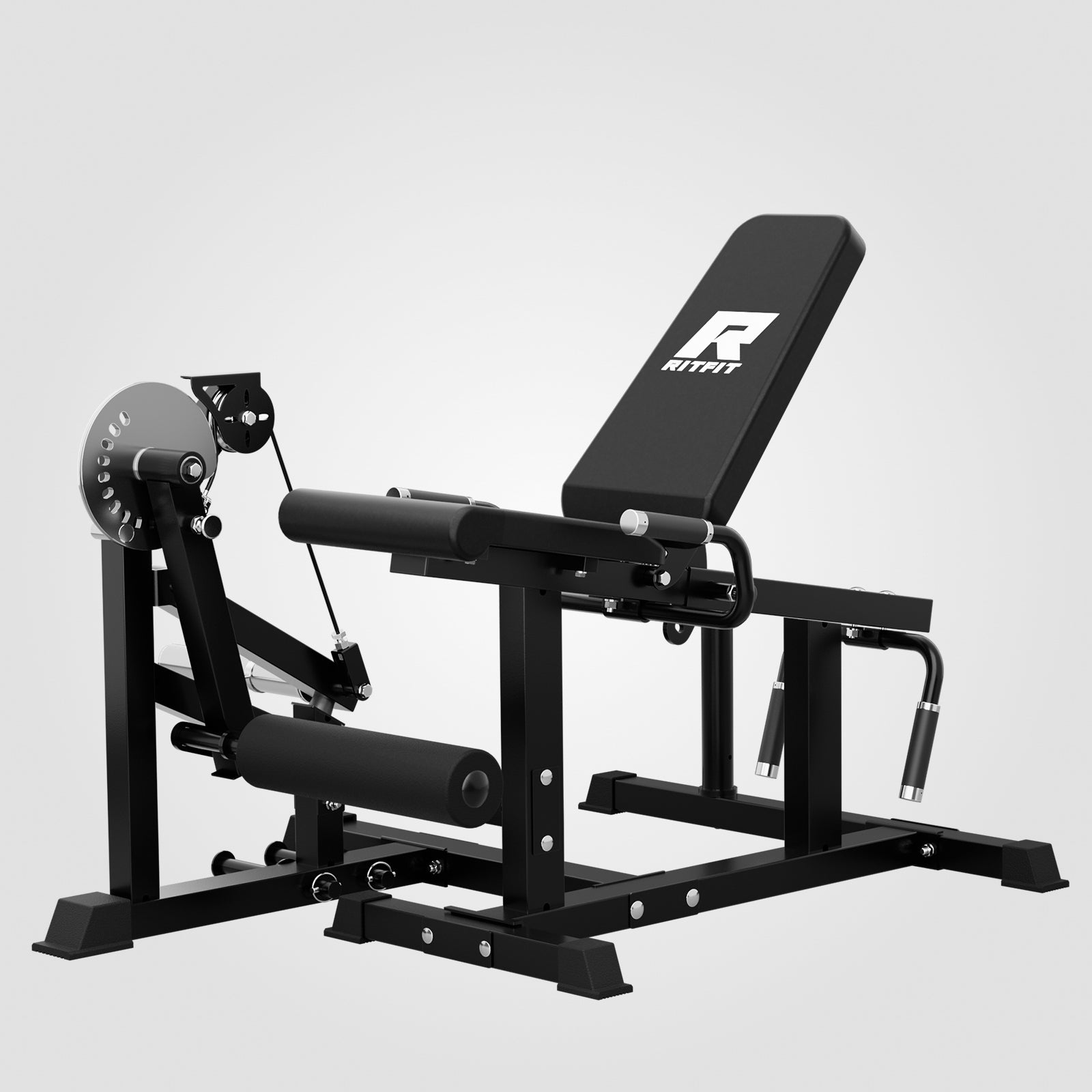
- Bench support: An adjustable bench can support dumbbell rows, foot assisted pull ups, and accessory work. For bench based home training, see the RitFit GATOR Adjustable Weight Bench.
- Dumbbell support: Dumbbells help build one arm row strength, grip endurance, and upper back volume. Explore RitFit dumbbells for row and carry progressions.
For more movement options, use the Smith machine pull up guide and the best back workouts at home guide to connect pull up training with a complete back routine.
Pull Up Form Cues for Beginners
Good pull up form starts before the first rep because your shoulder and trunk position control how efficiently you pull.
Keep each rep smooth, quiet, and repeatable before adding more volume.
- Grip: Hold the bar slightly wider than shoulder width with a full hand grip.
- Shoulders: Start by pulling the shoulder blades slightly down instead of yanking with the arms.
- Ribs: Keep the ribs down so your body does not overarch during the pull.
- Legs: Keep the legs still and slightly in front of the body if swinging is a problem.
- Top position: Finish with the chin clearing the bar without craning the neck forward.
- Lowering: Return to the bottom with control and avoid dropping into the shoulders.
Tempo can change training difficulty and fatigue, so beginners should use controlled lowering rather than rushing through reps.[5]
Common Pull Up Training Mistakes
The most common beginner mistake is testing pull ups too often instead of training the strength pieces that make a pull up possible.
Fixing these errors usually improves progress faster than adding more random exercises.
- Testing every day: Daily max attempts often create fatigue without enough successful training volume.
- Skipping rows: Inverted rows and dumbbell rows build the upper back base needed for stronger vertical pulling.
- Using bands poorly: A very strong band can hide weak starting strength if you bounce out of the bottom.
- Doing too many negatives: Negative reps are useful, but high volume can irritate elbows and forearms.
- Ignoring body position: Swinging, rib flare, and loose legs make the movement harder to control.
- Training through pain: Sharp shoulder, elbow, wrist, or neck pain means you should stop and adjust the plan.
How to Know You Are Ready for a Full Pull Up
You are likely ready to test a full pull up when you can hang securely, control your shoulder blades, complete assisted reps, and lower slowly from the top.
Test your first rep when you are fresh, after a light warm up, and before any high fatigue accessory work.
- Green light sign 1: You can hold a 30 second dead hang.
- Green light sign 2: You can complete 8 scapular pull ups with control.
- Green light sign 3: You can complete 3 sets of 6 assisted pull ups without swinging.
- Green light sign 4: You can lower from the top for 5 seconds for multiple reps.
- Green light sign 5: Your elbows and shoulders feel normal during and after training.
FAQs
How many days per week should beginners train for a pull up?
Beginners should train pull up skills two to three days per week. This gives enough practice for grip, back, and arm strength while leaving recovery time for the elbows and shoulders. Add rows, hangs, or lat pulldowns on separate days only if soreness stays manageable.
What is the fastest way to get your first pull up?
The fastest safe way is to combine dead hangs, scapular pull ups, inverted rows, lat pulldowns, assisted reps, and controlled negatives. This builds grip strength, shoulder control, and vertical pulling power together. Avoid daily max attempts, because they often create elbow irritation before strength improves.
Can lat pulldowns help you do a pull up?
Yes. Lat pulldowns can help build the same vertical pulling pattern when the grip width and arm path are similar. They are especially useful for beginners who cannot complete full reps yet, because the load can be adjusted while technique and upper back strength improve.
Is a band assisted pull up better than a negative pull up?
Neither is always better. Band assisted pull ups help you practice the full upward path, while negative pull ups build eccentric control from the top position. Most beginners progress best when they use both, but keep negative reps slow and low in volume.
What muscles should I strengthen for pull ups?
You should strengthen the lats, biceps, brachialis, forearms, lower traps, rhomboids, rear delts, and core. Pull ups are not only a back exercise, because your grip and trunk must keep the body stable while the shoulder blades move under control.
Should beginners use a Smith machine for pull up training?
Yes. A Smith machine can support beginner pull up training when it has a stable bar position for inverted rows, assisted pull up setups, and controlled bodyweight progressions. Always check setup stability, use a clear training area, and avoid any movement that makes the bar or body shift unexpectedly.
How long does it take to get your first pull up?
Most beginners need several weeks to several months, depending on body weight, grip strength, training history, and consistency. A better target is steady progress in hangs, rows, pulldowns, assisted reps, and negatives. Testing one full pull up every two weeks is usually enough.
Conclusion
Your first pull up becomes much more realistic when you train the pieces behind the movement instead of only attempting full reps.
Build hangs, rows, pulldowns, assisted reps, and negatives in order, then test full pull ups only when your form is controlled and pain free.
Disclaimer
This article is for general educational purposes only and is not medical advice. Stop training and consult a qualified professional if you feel sharp pain, numbness, joint instability, or symptoms that do not improve with rest and technique changes.
References
- Snarr RL Hallmark AV Casey JC Esco MR. Electromyographical comparison of a traditional, suspension device, and towel pull up. J Hum Kinet. 2017;58:5-13. doi:10.1515/hukin-2017-0068.
- Li Q Yan J Qiao M Quan J Chen Y Gong M Niu W Wang L. Eight week lat pull down resistance training with joint instability leads to superior pull up endurance performance and reduced antagonist coactivation in recreationally active male college students. Eur J Sport Sci. 2024;24:e12243. doi:10.1002/ejsc.12243.
- Hughes DC Ellefsen S Baar K. Adaptations to endurance and strength training. Cold Spring Harb Perspect Med. 2018;8(6):a029769. doi:10.1101/cshperspect.a029769.
- Lopez P Radaelli R Taaffe DR Newton RU Galvão DA Trajano GS Teodoro JL Kraemer WJ Häkkinen K Pinto RS. Resistance training load effects on muscle hypertrophy and strength gain, systematic review and network meta analysis. Med Sci Sports Exerc. 2021;53(6):1206-1216. doi:10.1249/MSS.0000000000002585.
- Wilk M Zajac A Tufano JJ. The influence of movement tempo during resistance training on muscular strength and hypertrophy responses, a review. Sports Med. 2021;51(8):1629-1650. doi:10.1007/s40279-021-01465-2.