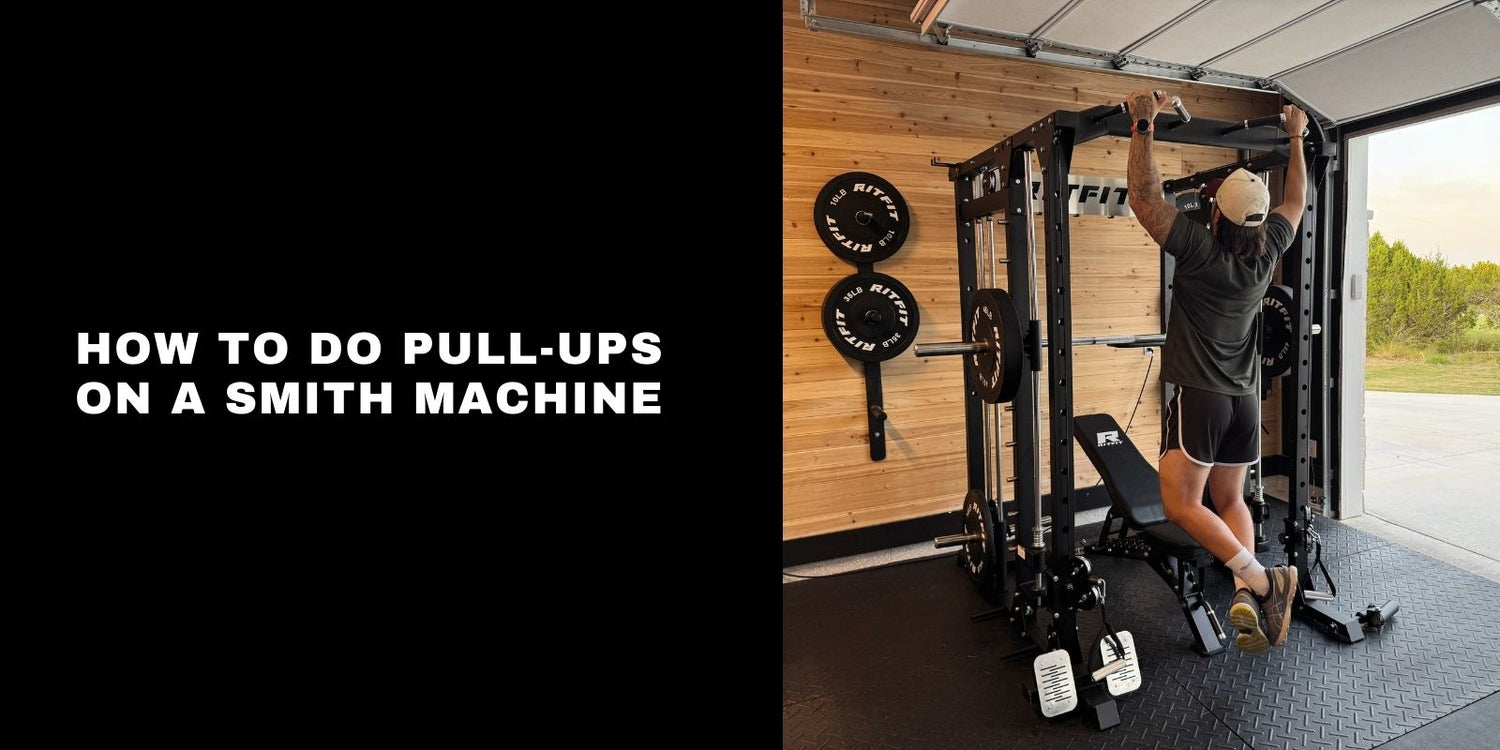
Yes, you can build real pull-up strength on a Smith machine, and this guide shows you exactly how to do it. The guided bar removes swinging and scales to your level, so beginners can progress from inverted rows to full unassisted pull-ups.
You will get setup steps, technique cues, a 4-week progression plan, and answers to common questions. Train at home or in a commercial gym and build back strength without swinging or struggling for stability.
Quick Answer: Smith machine pull-ups are any pulling movement done on a guided barbell, from inverted rows to full hanging pull-ups. The fixed bar removes swinging and lets you scale resistance by height, making them ideal for beginners building lat and upper-back strength before attempting unassisted pull-ups.
Key Takeaways
- Stable scaling: The Smith machine gives beginners a height-adjustable bar for building pull-up strength without the swinging of a free-hanging bar.
- One machine, many steps: Changing the bar height lets you move from horizontal inverted rows to vertical assisted pull-ups in one piece of equipment.
- Engage the lats: Depress your shoulder blades and drive your elbows down so the lats, not the biceps, do the work.
- Follow a plan: A structured multi-week plan that lowers the bar or reduces leg assistance is the fastest route to an unassisted pull-up.
- Own the negative: Controlling the lowering phase adds time under tension, which supports muscle growth and back strength.
Why Use a Smith Machine for Pull-Ups?
The Smith machine makes pull-ups accessible because its guided bar removes instability and its height adjusts to any strength level. Controlled lowering on the fixed track raises time under tension, which research links to upper-body strength gains.[1]
- Beginner-friendly scaling: Raise or lower the bar to change the leverage, so anyone can pull at a level easier than full bodyweight.
- Stable bar path: The guided track stops the bar from swinging, letting you focus on the lats and upper back instead of stabilizing in free space.
- Built-in versatility: Switch from inverted rows to assisted pull-ups to negatives by changing the bar height or your foot position.
- Progression bridge: It connects machine-assisted pulling to free-hanging pull-ups, so you build strength one step at a time.
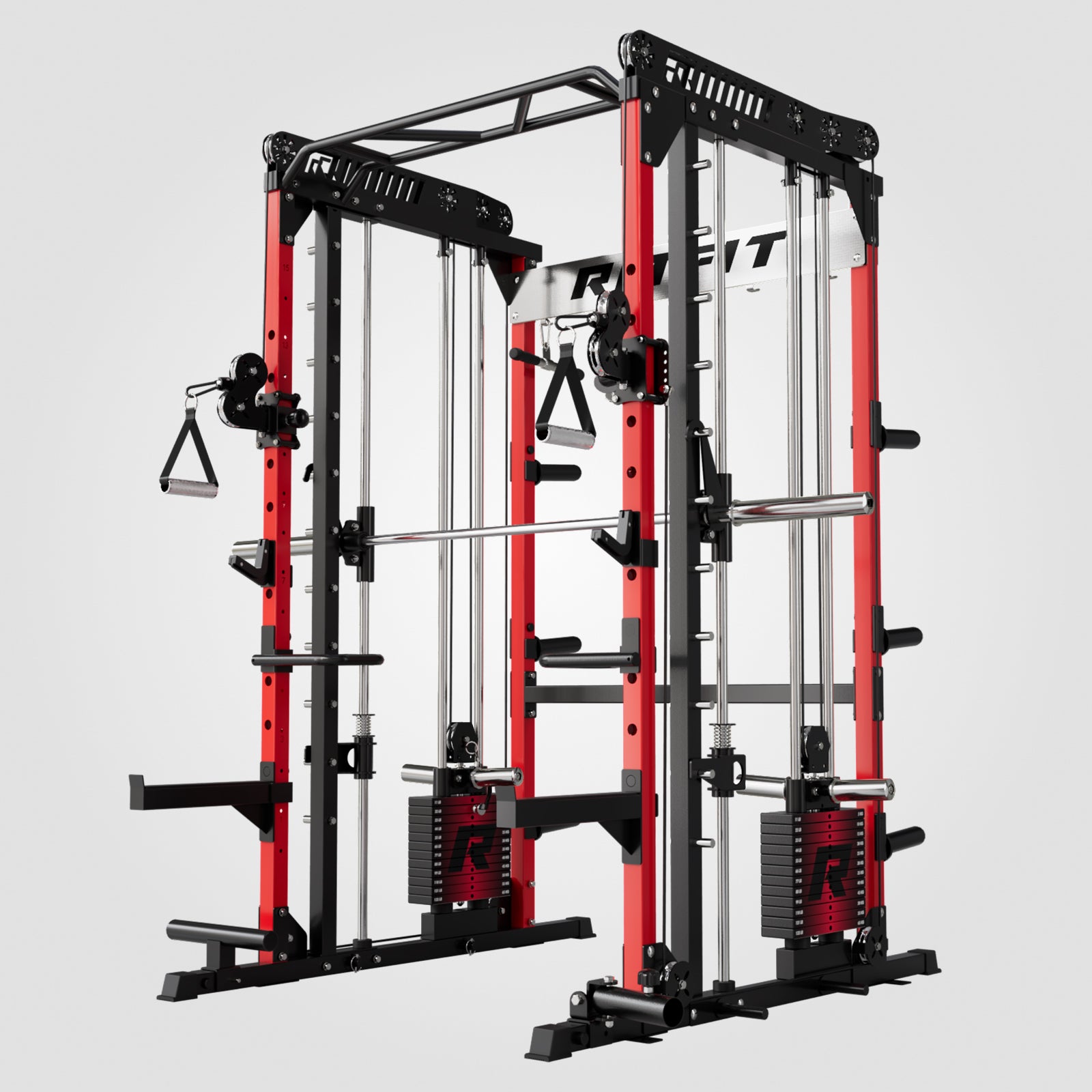
A home machine like the RitFit M1 Multi-Functional Smith Machine gives you the same guided bar plus a lat pulldown station for even more vertical pulling options in one footprint.
What Safety Checks Matter Before You Start?
Bar safety starts with locking the bar into its hooks, clearing overhead space, and warming up your shoulders and back before you pull. These checks stop the bar from slipping and keep your head clear of the top frame.
- Lock the bar hooks: Rotate the bar to seat it into the hooks at your chosen height, then tug it firmly to confirm it will not slip.
- Confirm overhead clearance: Make sure you will not hit the top frame, and clear loose plates and dumbbells from the area around the machine.
- Dry your grip: Wipe your hands or use chalk, and wear non-slip shoes if your feet or heels touch the floor.
- Warm up first: Do shoulder circles, band pull-aparts, and scapular push-ups to activate the muscles you will pull with.
How Do You Set Up the Smith Machine for Pull-Ups?
The bar height on a Smith machine determines which pull-up variation you can train. Set it at waist level for inverted rows, chest level for assisted pull-ups, and the highest position for a full hang.
Choosing the Right Bar Height
Bar height sets the difficulty and the pattern you train.
- Inverted rows: Set the bar around waist or mid-thigh level. The lower the bar, the harder the exercise.
- Assisted pull-ups: Set the bar between chest and head height so you can keep your feet on the floor and offload weight.
- Full hang: Set the bar to the highest position and bend your knees if your feet touch the ground.
Body Position and Grip
Stand directly under the bar with a neutral spine and grip it with an overhand hold, hands slightly wider than your shoulders. Wrap your thumbs around the bar for a secure grip.
This setup works on any Multifunctional Smith Machine because the bar adjusts across the full frame height.
How Do You Do Pull-Ups on a Smith Machine?
Each Smith machine pull-up variation uses a specific bar height and a wide grip to pull your chest toward the bar. Start with the easiest pattern and move up as your back strength improves.
Beginner Variation: Inverted Row-Style Pull-Up
This is the best starting point for building pulling strength.
- Set the bar to hip or waist height.
- Lie underneath the bar and grab it with an overhand grip, hands wider than your shoulders.
- Walk your feet out so your body forms a straight line from head to heels, with only your heels on the floor.
- Engage your core and squeeze your glutes to keep your body rigid.
- Pull your chest up toward the bar by driving your elbows down and back.
- Pause briefly at the top, then lower slowly to full arm extension.
Intermediate Variation: Feet-Elevated Smith Machine Pull-Up
Once the floor row becomes easy, increase the difficulty.
- Place a flat bench in front of the machine and set the bar slightly lower.
- Rest your heels on the bench so your body sits parallel to the floor.
- Grip the bar and pull your chest toward it, keeping your hips lifted and core tight.
- Control the descent back to the starting position.
Assisted Smith Machine Pull-Up (Rack Chins)
This variation mimics the vertical angle of a traditional pull-up while letting your legs offload weight.
- Set the bar at chest or neck height and take a wide overhand grip.
- Lower your hips and bend your knees, placing your feet flat or propping your heels on a bench.
- Pull your body vertically until your chin clears the bar.
- Use your legs as little as possible, then lower under control.
Full Hanging Smith Machine Pull-Up
If the machine is tall enough, you can perform standard pull-ups here.
- Set the bar to the highest position and stand on a bench to reach it.
- Step off so you hang, bending your knees and crossing your ankles behind you if needed.
- Engage your core, pull your shoulders away from your ears, and pull up until your chin clears the bar.
- Lower slowly to a full hang.
What Technique Tips and Common Mistakes Should You Avoid?
Proper Smith machine pull-up technique drives the elbows down while keeping the shoulder blades depressed. Avoid pushing too hard with your legs and keep your shoulders away from your ears.
Key Technique Tips
- Elbow drive: Drive your elbows down into your back pockets rather than pulling with your biceps.
- Core tension: Keep your ribs tucked and abs braced to stop your lower back from over-arching.
- Scapular movement: Initiate the pull by depressing your shoulder blades before bending your arms.
Common Mistakes
- Excessive leg drive: In assisted variations, push lightly with your legs and let your upper body lead the pull.
- Shrugging: Do not let your shoulders rise toward your ears. Keep them depressed to target the lats.
- Partial reps: Avoid short, jerky movements. Lower to a full stretch and pull all the way up.
- Chin reaching: Do not crane your neck forward to clear the bar. Keep your neck neutral.
How Should You Program Sets, Reps, and Progression?
A 4-week Smith machine pull-up plan starts with inverted rows and advances to assisted and eccentric pull-ups as strength improves. Train your back two to three times per week with at least 48 hours between sessions.
| Week | Primary Exercise | Target Volume | Primary Focus |
|---|---|---|---|
| Week 1 | Inverted Rows (Waist Height) | 3 sets x 8-12 reps | Scapular control and mind-muscle connection. |
| Week 2 | Inverted Rows (Mid-Thigh Height) | 3 sets x 8-12 reps | Increasing load by adjusting leverage. |
| Week 3 | Assisted Pull-Ups (Chest Height) | 3 sets x 6-10 reps | Vertical pulling mechanics and minimal leg drive. |
| Week 4 | Eccentric Pull-Ups (Highest Position) | 3 sets x 3-5 reps | Pure strength using a 5-second slow negative descent. |
The plan assumes you can complete the listed reps with clean form. Lower the bar or add leg assistance if you cannot finish a set.
Every model in the Smith Machine collection uses the same height-adjustable bar and locked safety hooks, so this plan transfers directly to your home setup.
What Variations and Modifications Can You Use?
Grip width, tempo, pauses, and added weight let you scale Smith machine pull-ups to match your strength. These tweaks keep the exercise challenging long after the basic pattern feels easy.
- Grip variations: A wider grip targets the upper lats, while a narrow underhand grip shifts focus to the biceps.
- Tempo: Slow the lowering phase to add time under tension and build strength faster.
- Pauses: Hold the top position for 2 seconds to improve static strength and stability.
- Added weight: Wear a weighted vest or place a plate on your lap during inverted rows when bodyweight gets easy.
For a full back-training station, the Buffalo Smith Machine home gym package adds a lat pulldown and cable crossover so you can pair pulls with rows.
How Do Smith Machine Pull-Ups Compare to Regular Pull-Ups?
Smith machine pull-ups use a fixed bar path that needs less shoulder stabilization, while regular pull-ups build more total-body coordination. Both exercises work the lats, biceps, upper back, and core.
Use the Smith machine as a stepping stone or a volume supplement, then master the free-hanging pull-up as your end goal. A taller frame like the M3 Power Rack Cable Crossover Smith Machine supports a full hang, while the RitFit BPC06 all-in-one Smith machine adds a weight stack for lat pulldowns.
FAQs About Smith Machine Pull-Ups
Can I build real pull-up strength using a Smith machine?
Yes, absolutely. By progressively lowering the bar on rows or using less leg assistance on vertical pulls, you directly strengthen the latissimus dorsi and rhomboids. This scalable resistance perfectly mimics the biomechanics required to eventually conquer a standard, unassisted pull-up.
How often should I train these pulling movements?
Train your back two to three times per week. Treat Smith machine pull-ups like any other major compound movement. Ensure you allow at least 48 hours of rest between sessions to promote optimal muscle recovery and central nervous system adaptation.
Is doing pull-ups on a Smith machine safe for my shoulders?
Yes, it is generally very safe. The fixed, stable track of the Smith machine reduces unpredictable swinging, which actually protects the rotator cuff. However, always listen to your body and avoid forcing a range of motion that causes pinching or joint pain.
Should I use an overhand or underhand grip?
Use an overhand (pronated) grip to primarily target your latissimus dorsi and upper back. If you want to shift more focus to your biceps, switch to a narrow, underhand (supinated) grip, commonly known as a chin-up. Both are valuable for overall strength.
Why do I feel this more in my arms than my back?
You are likely pulling with your biceps rather than driving your elbows down. Initiate the movement by depressing your shoulder blades first. Focus on the mind-muscle connection, imagining your hands merely as hooks while your back muscles perform the actual lifting.
Which home Smith machine is best for pull-up training?
The best choice for your home depends on your space and budget. A tall frame with a lat pulldown station, like the PSR05 2.0 Pink Smith Machine, lets you train vertical pulls in a compact footprint. Measure your ceiling height before you choose.
Can I do full hanging pull-ups on a Smith machine?
Yes, if the machine is tall enough for you to hang with your feet off the floor. Set the bar to the highest position, step on a bench to reach it, and bend your knees behind you if needed. If your machine is too short, use assisted pull-ups or rows instead.
Conclusion
The Smith machine is a versatile tool for learning pull-ups because it removes instability and scales to your strength level. Train consistently, prioritize clean form over rep count, and increase the difficulty gradually.
Start with the beginner inverted row in your next back workout. Pair it with the RitFit discount guide to plan your home gym purchase, and you will build a stronger, more defined back.
Disclaimer
This article is for general educational purposes only and is not a substitute for medical advice. Consult a qualified clinician before starting any new exercise program, especially if you have shoulder, neck, back, elbow, or wrist pain, a recent injury or surgery, or any unexplained weakness or dizziness.
References
1. Li A, Tang J, Zheng K, Chen J, Wang G, Feng D. Effects of low-load blood flow restriction vs. high-load resistance training on upper-body strength in male collegiate gymnasts: A randomized controlled trial. J Exerc Sci Fit. 2026;24(2):200456. doi:10.1016/j.jesf.2026.200456