Converting a garage into a home gym works best when you solve space, ceiling height, flooring, power, climate, and storage before you buy big equipment. A dedicated home strength space can improve training consistency, and home based exercise adherence plus resistance training benefits help explain why a well planned setup can support long term results and quality of life.
Key Takeaways
- Measure ceiling height, door clearance, wall depth, and slab condition before you choose equipment.
- Build the floor first, because flooring affects comfort, noise, durability, and equipment stability.
- Plan strength, cardio, storage, and mobility zones before you buy large machines.
- Use a licensed professional for permanent electrical, structural, HVAC, or permit sensitive work.
- Buy the equipment you will use every week first, then expand only after the room proves its flow.
Start With a Reality Check
Measure the room before you buy anything
Your garage can become a high performance training room only if the space matches your training style. Measure ceiling height, wall depth, garage door travel, slab slope, and walking clearance before you compare racks, benches, or cardio machines.
- Ceiling height: Overhead pressing, pull up stations, taller racks, and some cable systems need more vertical room than most buyers expect.
- Door clearance: Garage door tracks and openers can block rack placement, pull up bars, and taller storage solutions.
- Slab condition: Cracks, uneven spots, and visible slope matter because they affect rack stability and bar path control.
- Access path: Leave a clean route for loading plates, moving benches, and entering the room without stepping over equipment.
Zone the room like a working gym
A garage gym feels bigger when each task has a defined home. Split the room into strength, conditioning, storage, and mobility zones before you start filling the floor.
| Garage type | Best layout approach | Best equipment profile |
|---|---|---|
| Single car garage | Use one main wall and preserve one clear training lane. | Compact rack or Smith machine, bench, vertical storage, one conditioning tool. |
| Shared double garage | Anchor the gym to the back wall and keep one side open for parking. | Main strength station, bench, storage, limited cardio, folding or movable pieces. |
| Dedicated double garage | Create separate strength, conditioning, and open floor zones. | Full size rack or Smith machine, bench, storage, dumbbells, specialty accessories. |
Build the Floor First
Flooring is the first upgrade, not the last
Good flooring protects the slab, reduces noise, improves grip, and makes the room feel finished from day one. It also helps your equipment sit flatter and your joints feel better during repeated strength sessions.
- Rubber rolls or tiles: These work well for mixed use rooms where you need coverage, traction, and easier cleaning.
- Thicker lifting zones: Heavier barbell work benefits from denser protection under the main strength station.
- Leveling matters: If the slab slopes, fix the training zone before the rack goes down so the bar does not drift or sit unevenly.
- Start with the highest stress area: Protect the rack, deadlift, or Smith machine zone first if you are building in phases.
If you need a product starting point, garage gym flooring mats are the most practical first purchase for many conversions.
Control Heat, Airflow, and Moisture
Comfort decides whether you will actually use the room
A garage can look great and still fail if it is too hot, too cold, too damp, or too stagnant to train in comfortably. The goal is not perfect climate control, it is repeatable training conditions across most of the year.
- Seal obvious air leaks: Gaps around doors, weak weather stripping, and exposed transitions make heating and cooling less effective.
- Insulate where it changes the experience most: Garage doors, outer walls, and ceilings often improve comfort more than random cosmetic upgrades.
- Move air on purpose: Fans help, but they work best when paired with fresh air exchange or better room sealing.
- Watch humidity: Moisture speeds rust, dulls grip, and can make the room smell bad fast.
Plan Power and Lighting Before Equipment Delivery
Electrical planning should happen before the room fills up
Most garage gym electrical mistakes come from adding large equipment first and solving outlets later. If you expect a treadmill, cooling unit, TV, mini split, or multiple powered machines, ask an electrician to review the room before installation.
- Use grounded outlets: Higher demand machines should not rely on long extension cord chains across the floor.
- Ask about dedicated circuits: Some cardio units, cooling systems, and future upgrades may benefit from their own circuit.
- Improve lighting over the main lift area: Bright, even light helps setup quality, safety, and video review.
- Keep cords outside the training lane: The cleanest room usually feels safer and easier to use immediately.
Know When Permits and Pros Matter
Movable gym equipment is simple, permanent building work is not
A basic garage gym setup often stays simple when you add flooring, storage, and movable equipment only. The moment you alter wiring, framing, doors, HVAC, plumbing, or wall assemblies, local rules and professional review may become necessary.
- Call a licensed electrician: Do this for panel work, new outlets, dedicated circuits, or major cooling equipment.
- Call a contractor or engineer: Do this if you plan to change framing, door systems, or any element that may affect structure.
- Check local code early: Permit requirements vary widely, so confirm the rules before you start demolition or permanent upgrades.
- Protect resale flexibility: A clean, reversible conversion is usually easier to live with and easier to explain later.
Make Shared Garage Layouts Work
A half garage gym can work if the footprint stays disciplined
Shared garage layouts succeed when the training side feels intentional instead of temporary. Keep the heaviest equipment tight to one wall, keep storage vertical, and leave one clean vehicle boundary that never gets crossed.
- Use folding or shallow equipment where possible: This is especially useful in low ceiling or tight depth garages.
- Move storage off the floor: Vertical sleeves, shelves, and pegboards free up the most valuable square footage.
- Respect the parking line: A shared room works better when the car zone is physically obvious every day.
- Keep one fast reset routine: If cleanup takes too long, the room starts to lose function.
If your ceiling is limited, review the best Smith machine for low ceilings before you lock in a rack height.
Choose Equipment by Training Frequency, Not Hype
Your first equipment should match your weekly training, not your wish list
The best garage gym is built around movements you repeat often, because repeatable training is what drives progress. Structured home based resistance training can improve body composition and muscle function when the program is consistent and easy to follow.
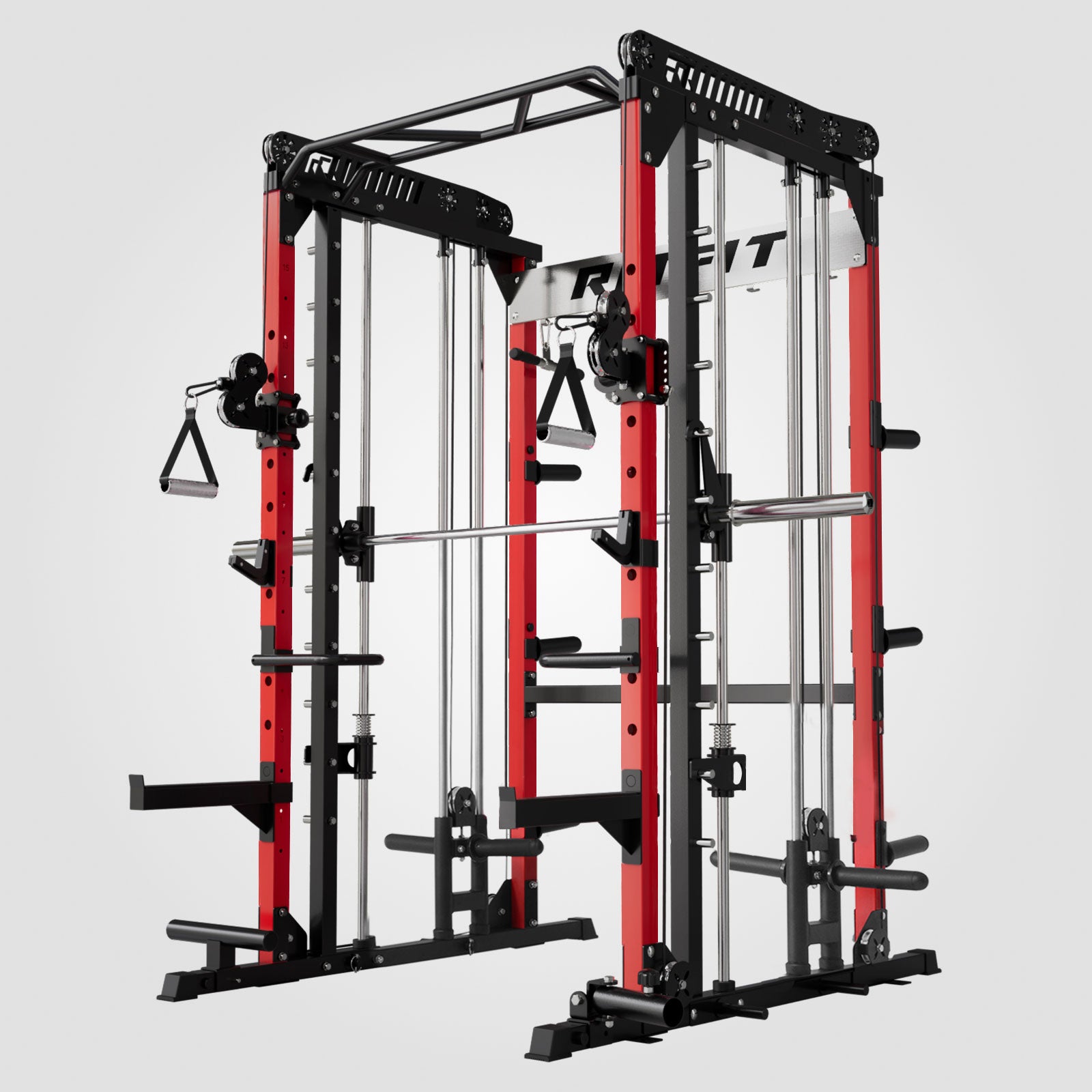
- Main strength station: Start with a rack or Smith machine if strength training is the center of your plan.
- Bench: A stable adjustable bench expands pressing, rowing, and accessory work without adding much footprint.
- Plates and dumbbells: Buy enough load to train properly, not just enough to decorate the room.
- Storage: Plate trees, wall storage, and shelves protect floor space more than most buyers expect.
If you are comparing formats, start with the Smith machine collection, then read Smith machine vs power rack before choosing a permanent anchor piece.
Pair that main station with home gym benches and a realistic storage plan so the room stays usable after the first month.
Progressive overload needs equipment that fits your real goal
If your goal is maximal strength, your setup should let you add load safely and repeatably over time. Higher load resistance training tends to produce larger strength gains, which is why bar path quality, stability, and load access matter so much in a home setup.
- For full body strength: A Smith machine or rack, bench, plates, and a few accessories often cover most programs.
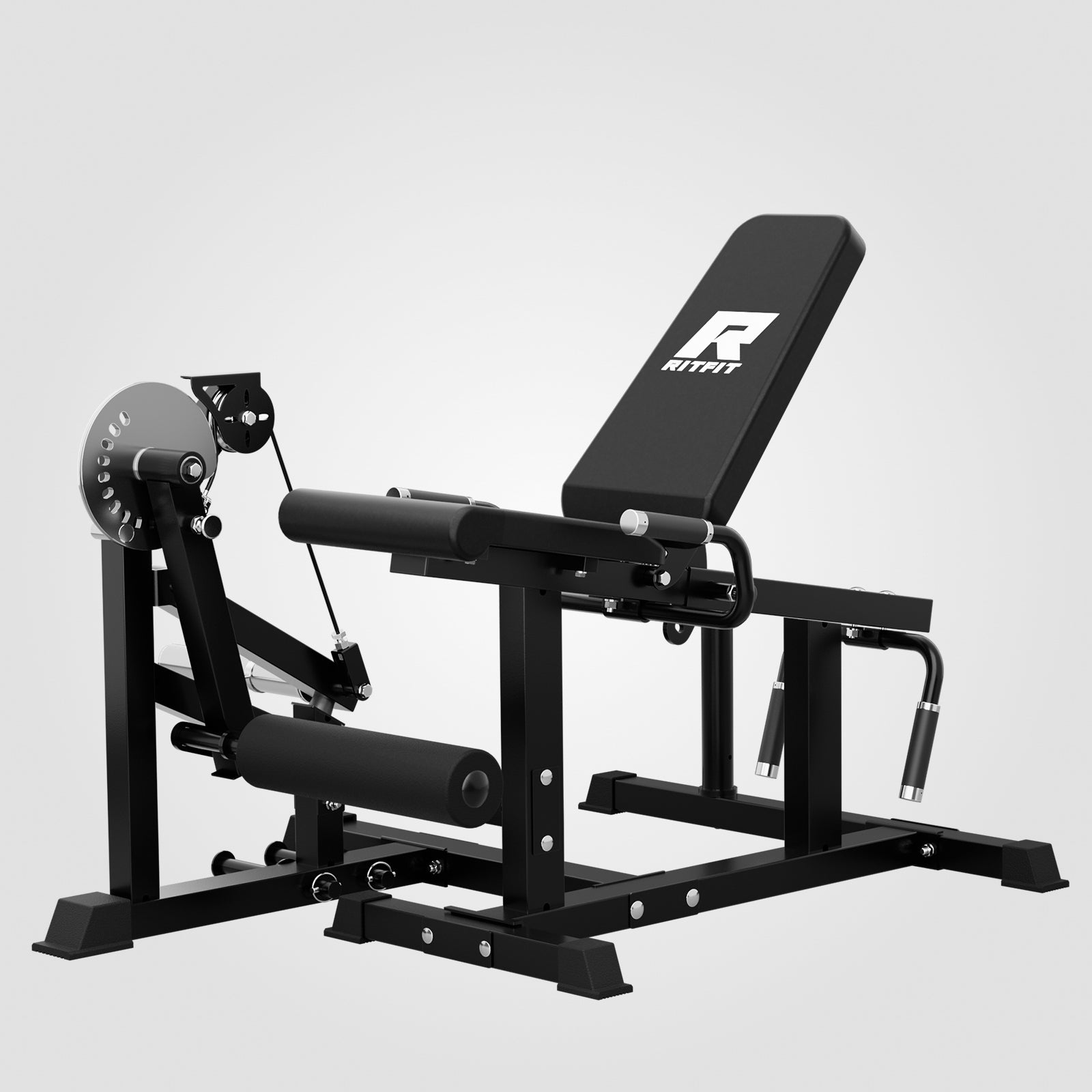
- For glute and leg focus: Add targeted lower body equipment only after your primary station is locked in.
- For mixed training: Leave enough open floor for carries, mobility, warm ups, and bodyweight circuits.
For exercise planning after the room is built, see best gym machines for glutes and explore a multifunctional Smith machine if you want one station to cover more training patterns.
Budget in the Right Order
Spend first on the pieces that change safety and consistency
A smart garage gym budget does not start with specialty machines, it starts with the room itself. Flooring, main equipment, lighting, climate basics, and storage usually create more long term value than impulse accessories.
- Tier 1: Flooring, main strength station, bench, plates, lighting, storage.
- Tier 2: Dumbbells, cardio, mirrors, cooling upgrades, cable attachments.
- Tier 3: Specialty machines, aesthetic upgrades, extra accessories, duplicate tools.
Garage Gym Conversion FAQs
How much space do you need for a garage gym conversion?
Most garage gym conversions work best when you protect one clear training lane first. A single car garage can handle a rack, bench, storage, and a small conditioning area if you measure ceiling height, wall depth, and door clearance before buying equipment.
Can you build a garage gym conversion and still park a car?
Yes. A garage gym conversion can still share space with one vehicle if you keep the footprint tight and storage vertical. Folding racks, wall mounted storage, movable benches, and a defined parking line help the room stay usable without constant rearranging.
What is the best flooring for a garage gym conversion?
Rubber flooring is usually the best starting point for a garage gym conversion because it protects the slab, reduces noise, and improves comfort. Thicker flooring works better under heavy strength zones, while roll or tile systems can make mixed use layouts easier to manage.
Do you need permits for a garage gym conversion?
Maybe. A simple garage gym conversion with movable equipment often needs no permit, but permanent electrical, HVAC, plumbing, wall, or door changes may trigger local review. Building rules vary by city, so confirm requirements before you start any structural or mechanical work.
Which equipment should you buy first for a garage gym conversion?
Start a garage gym conversion with the equipment you will use every week, not the machine that looks most impressive. For most people that means flooring, a rack or smith machine, a bench, plates, and storage, then cardio or specialty pieces after the room proves its flow.
How do you keep a garage gym conversion comfortable year round?
Comfort comes from controlling heat, cold, airflow, and moisture together, not from buying one fan alone. Seal obvious air leaks, improve insulation where practical, and choose ventilation or cooling that fits your climate, training intensity, and how often the garage door stays closed.
Conclusion
A great garage gym is not built by filling a room with equipment, it is built by solving clearance, flooring, power, climate, storage, and training flow in the right order. When the room feels safe, comfortable, and easy to repeat, it becomes a space you actually use.
Disclaimer: This article provides general educational guidance, not structural engineering, electrical, HVAC, medical, or legal advice. Always confirm local building rules and consult qualified professionals before making permanent changes or starting a new training program.