Hamstring workouts build stronger, more defined legs by training the back of the thighs through hip extension, knee flexion, balance, and explosive hinge patterns. This guide breaks down the Ham It Up routine, explains the muscles worked, and shows how to set up a home gym version with cable, bench, barbell, Smith machine, and kettlebell options.
You will learn which hamstring exercises matter most, how to structure sets, reps, and progression, what equipment supports a home setup, and how to train safely around lower back and knee issues.
Quick Answer: The best hamstring exercises train both hip extension and knee flexion through cable kickbacks, leg curls, stiff leg deadlifts, single leg hinges, and kettlebell swings. A balanced home routine with controlled form and smart progression builds stronger, more defined hamstrings without needing a full commercial gym.
Key Takeaways
- Train both functions: The best hamstring workouts include hip extension and knee flexion, not just one movement pattern.
- Use controlled lengthening: Stiff leg deadlifts and Romanian deadlifts load the hamstrings in a stretched hinge position.
- Add direct isolation: Leg curl variations help target knee flexion and complete the posterior thigh stimulus.
- Prioritize safe progression: Start with clean reps, moderate volume, and controlled range before adding load or intensity.
- Build the right setup: A cable system, ankle strap, bench, Smith machine, kettlebell, and gym flooring make the routine easier to repeat at home.
What Muscles Do Hamstring Exercises Work?
Hamstring exercises target the posterior thigh by training muscles that extend the hip and flex the knee. A complete routine should challenge the biceps femoris, semitendinosus, and semimembranosus through both lengthened and shortened positions.
The Hamstring Muscle Group
The hamstrings include the biceps femoris long head, biceps femoris short head, semitendinosus, and semimembranosus, and each contributes differently depending on hip and knee position.[1]
- Biceps femoris long head: This muscle crosses the hip and knee, so it helps with hip extension and knee flexion.
- Biceps femoris short head: This muscle crosses only the knee, so leg curl patterns are especially useful for direct work.
- Semitendinosus: This long medial hamstring supports knee flexion and hip extension during hinge and curl movements.
- Semimembranosus: This deeper medial hamstring supports posterior thigh strength and knee control.
Hip Extension and Knee Flexion
The Ham It Up workout works because it trains hip extension with hinges and kickbacks, then trains knee flexion with curl variations.
- Hip extension: Stiff leg deadlifts, Romanian deadlifts, kickbacks, and kettlebell swings train the hamstrings as the thigh moves backward.
- Knee flexion: Prone leg curls and cable curl variations train the hamstrings as the heel moves toward the glutes.
- Single leg control: Single leg deadlifts improve balance, hip stability, and side to side symmetry.
- Explosive hinge power: Kettlebell swings train the posterior chain with speed, rhythm, and repeatable hip drive.
Aesthetic and Strength Benefits
Hamstring training can improve the back of the legs by adding shape, firmness, and stronger support for lower body movement.
- Leg shape: Strong hamstrings create more visual depth from the side and back view.
- Posterior chain balance: Hamstring work helps balance quad dominant training from squats, lunges, and leg press patterns.
- Hip strength: Hinge training supports stronger glutes, hamstrings, and spinal erectors when form is controlled.
- Knee support: Well programmed hamstring training can support better lower body control during athletic and daily movement.
What Exercises Should a Hamstring Workout Include?
The Ham It Up workout uses five movements to train the hamstrings from multiple angles. The goal is not random volume, but targeted tension across isolation, hinge, stability, and power based patterns.

| Exercise | Main Pattern | Best For | Suggested Range |
|---|---|---|---|
| Straight Leg Hamstring Cable Kickback | Hip extension | Cable isolation and end range control | 12 to 20 reps |
| Two Step Prone Leg Curl | Knee flexion | Direct hamstring isolation | 10 to 15 partials plus 10 to 15 full reps |
| Stiff Leg Deadlift | Hip hinge | Lengthened hamstring loading | 8 to 15 reps |
| Single Leg Deadlift | Unilateral hinge | Balance and symmetry | 8 to 12 reps per side |
| Kettlebell Swing | Explosive hinge | Power and conditioning | 12 to 25 reps |
The Ham It Up protocol covers hip extension, knee flexion, hinging, unilateral stability, and power in one routine.
Straight Leg Hamstring Cable Kickbacks
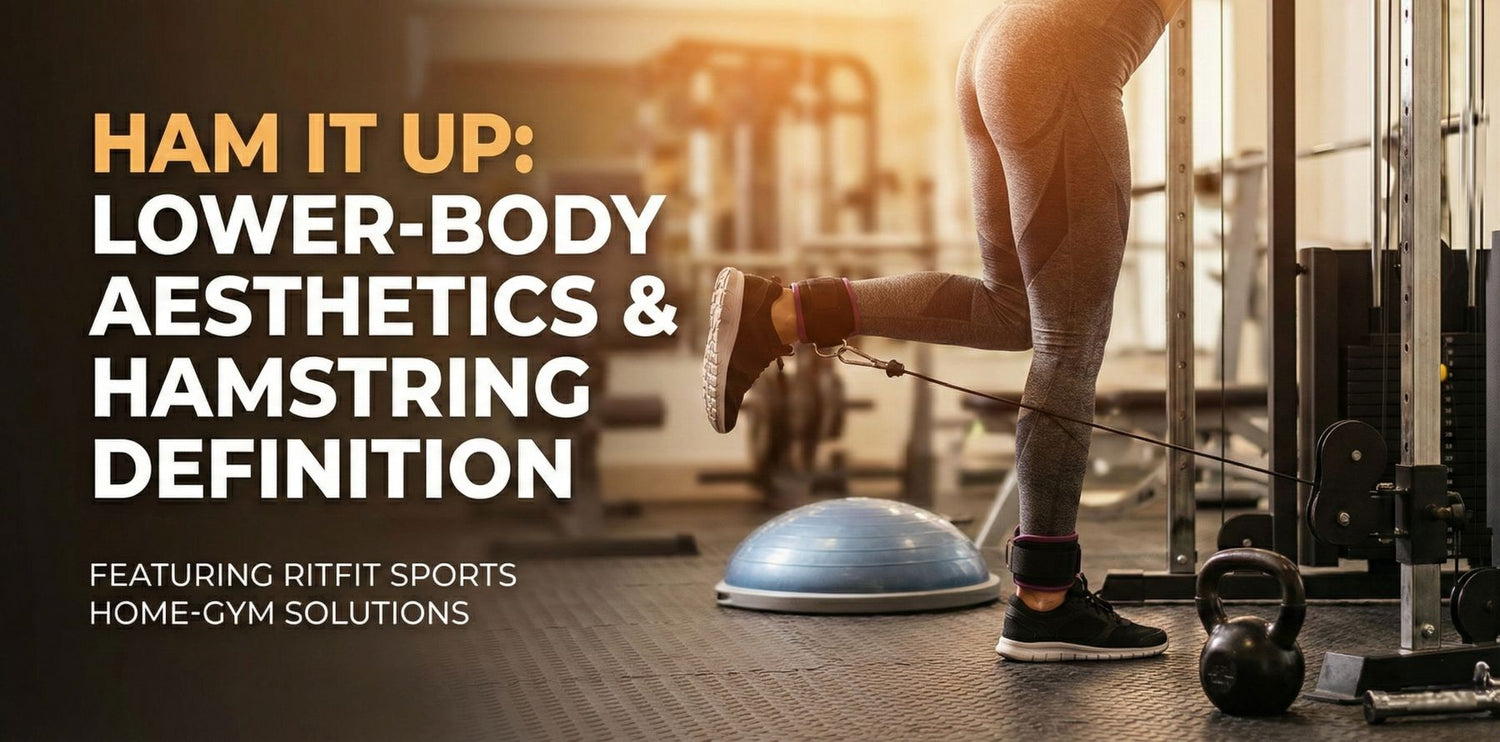
Straight leg cable kickbacks train hip extension with steady cable tension and are best performed with a low pulley and ankle strap.
- Setup: Attach an ankle strap to a low cable, stand tall, brace your core, and hold the machine for balance.
- Execution: Keep the working knee mostly straight and drive the leg back only until hamstring tension peaks.
- Key cue: Stop before the lower back arches or the glute takes over the movement.
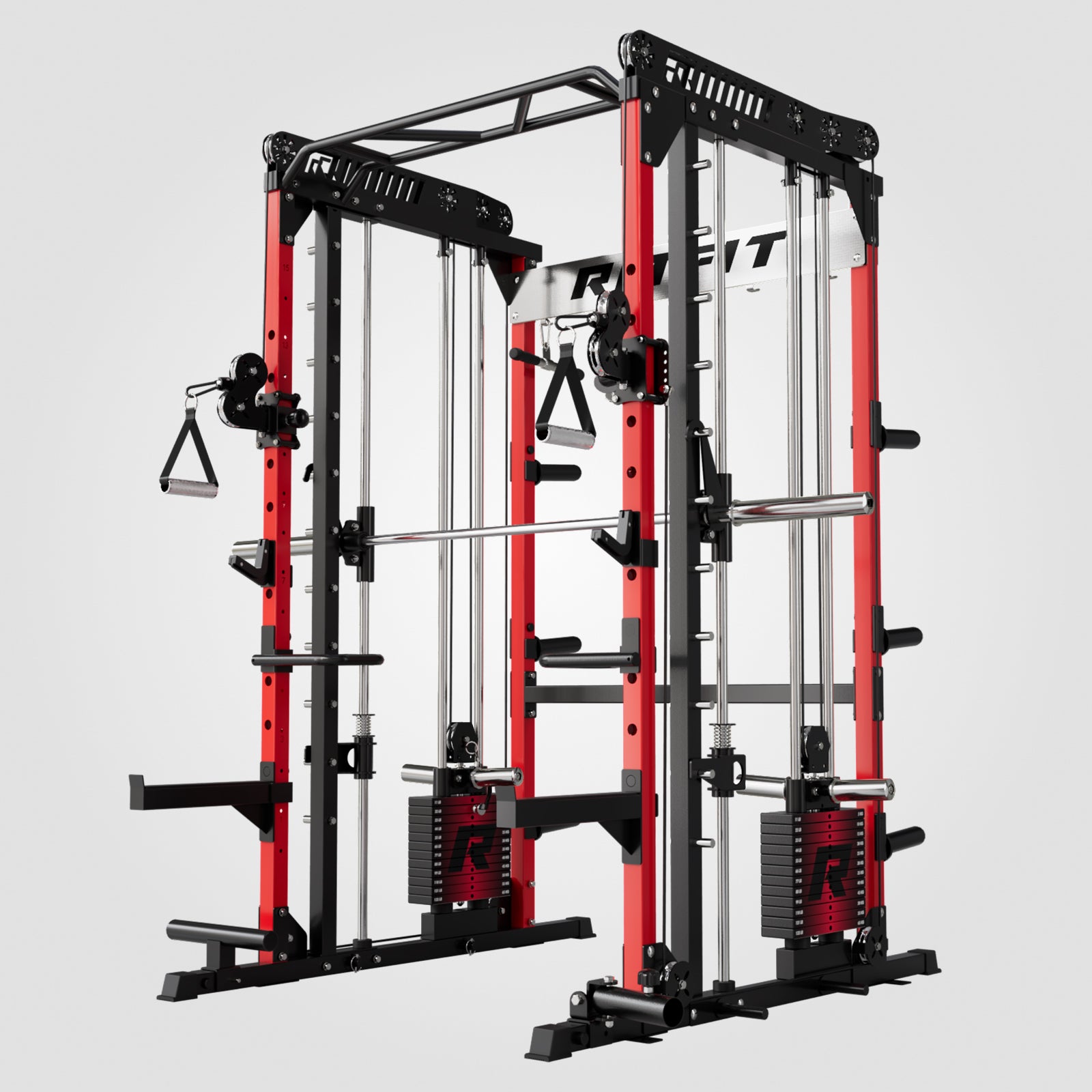
- Home gym option: A cable capable setup such as the RitFit M1 PRO Smith Machine Weight Stack Home Gym Package can support cable accessory training when configured correctly.
Two Step Prone Leg Curls
Two step prone leg curls combine partial reps and full reps to build fatigue in the knee flexion pattern.
- Phase one: Perform controlled partial reps in the strongest range without swinging the hips.
- Phase two: Move directly into full reps and keep the lowering phase slow.
- Form cue: Keep the pelvis anchored and avoid lifting the hips off the bench.
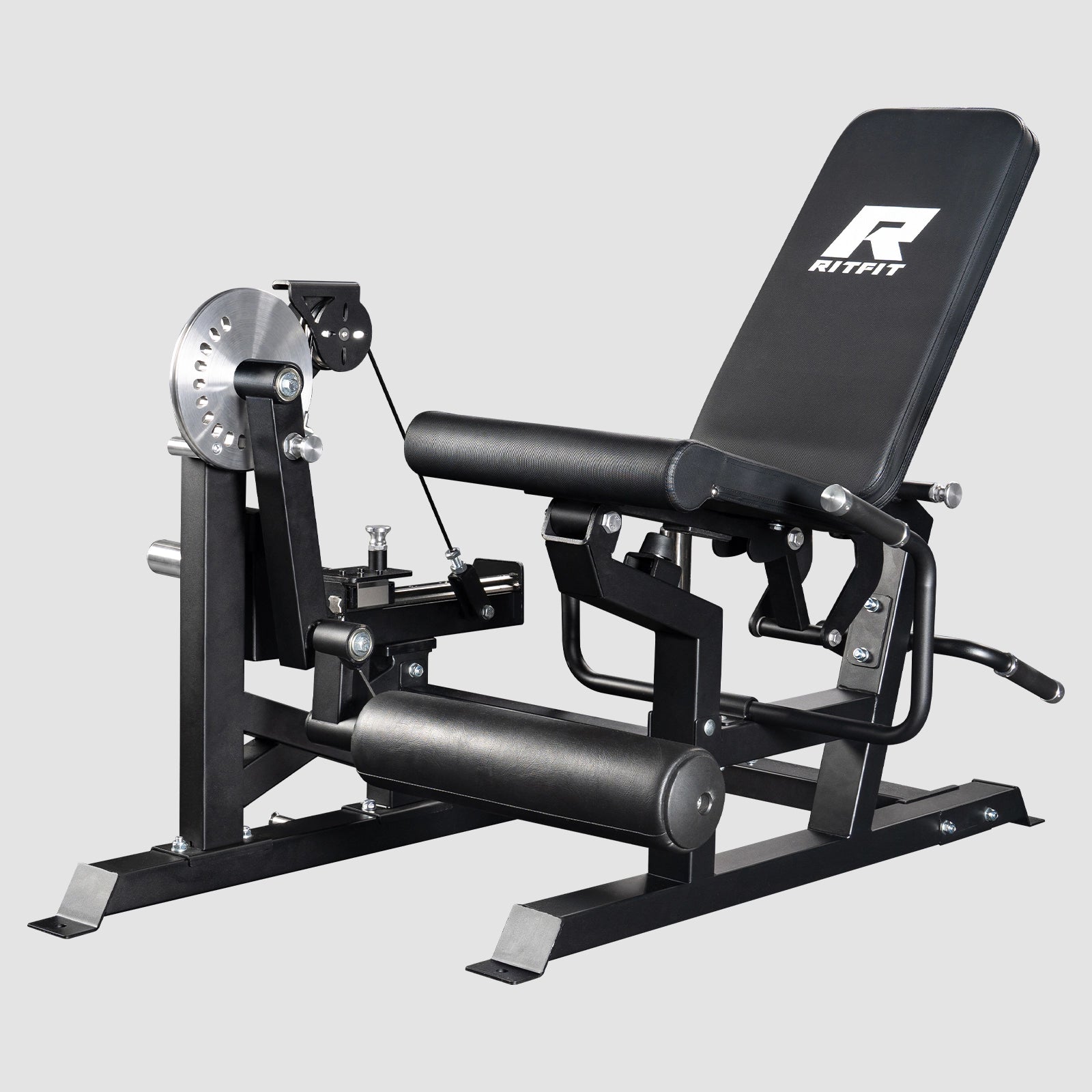
- Alternative: If you do not have a leg curl machine, use cable standing leg curls with an ankle strap.
Stiff Leg Deadlifts
Stiff leg deadlifts are a primary hamstring builder because they load the posterior thigh through a controlled hip hinge.
- Setup: Stand with feet about hip width, brace the trunk, and keep the bar close to the legs.
- Execution: Push the hips back, lower until the hamstrings are strongly stretched, then return by driving the hips forward.
- Safety cue: Stop the descent before your lower back rounds.
- Equipment option: Use a barbell with stable plates or a guided Smith machine path if you need less balance demand.
Romanian and Stiff Leg Deadlift Evidence
Romanian deadlift and stiff leg deadlift variations can produce meaningful posterior chain muscle excitation, including biceps femoris and semitendinosus activity, when performed with trained form and appropriate loading.[2]
- For beginners: Start with a shorter range and lighter load before chasing deep stretch.
- For hypertrophy: Use slow eccentrics, repeatable tension, and one to three reps in reserve.
- For home gyms: The RitFit Patriotic Star Olympic Bar 20KG pairs well with controlled hinge training.
Bosu Medicine Ball Single Leg Deadlift
The Bosu medicine ball single leg deadlift trains balance and control, but beginners should first master the movement on flat ground.
- Flat ground first: Practice the single leg hinge without instability before adding a balance trainer.
- Posture cue: Keep the hips square, ribs down, and working foot rooted.
- Progression: Add an overhead medicine ball only after you can control the trunk and pelvis.
- Training goal: Use this movement for symmetry and stability, not maximum load.
Kettlebell Swings
Kettlebell swings train the hamstrings through a fast hip hinge and should feel like a hip snap rather than a squat.
- Setup: Start with the kettlebell in front of the feet, hinge back, and hike it toward the hips.
- Execution: Drive the hips forward and let the bell float from lower body power.
- Safety cue: Do not lift with the shoulders or lean back at the top.
- Flooring: Use protective flooring such as RitFit Rubber High Density Interlocking Gym Flooring Mats Tiles to protect your training space.
"It is my opinion that a weak posterior chain and weak glutes in particular are largely responsible for the alarming number of low back pain in the U.S. Anything that strengthens the posterior chain might lead to less low back pain and injury."
Bret Contreras, PhD, PhD in Sports Science, known as The Glute Guy, Contreras Strength Institute
What Equipment Do You Need for Home Hamstring Exercises?
A strong home hamstring setup should support cable isolation, hinge loading, stable bench work, and safe floor based power movements. The goal is to recreate the most useful resistance profiles without needing a full commercial gym.
The Central Hub
A Smith machine or power cage with cables gives home users the most flexibility for kickbacks, standing curls, hinge work, rows, and accessory movements.
- Best all in one direction: The RitFit M1 PRO Smith Machine Weight Stack Home Gym Package is a strong fit for users who want Smith machine and cable based training in one setup.
- Alternative Smith machine option: The RitFit BPC06 All In One Smith Machine Home Gym Package can support a broad home gym layout for strength training.
- Power cage option: The RitFit P3 1200LBS Power Cage With Smooth Cable System is relevant for users who prefer a rack based training station.
Bench and Cable Attachments
An adjustable bench and cable attachments make hamstring training more versatile because they support prone work, seated setup support, and single leg cable movements.
- Bench support: The RitFit GATOR Adjustable Weight Bench is useful for home gym users who want a stable bench for accessory work.
- Cable variety: The RitFit Lat Pulldown Attachments Cable Machine Attachments can expand cable training options when compatible with your station.
- Lower body accessories: Confirm attachment fit before using any ankle strap, leg holder, or cable setup for repeated hamstring work.
Free Weights and Leg Machines
Free weights and leg machines help complete the routine by adding hinge load, swing work, and optional compound lower body training.
- Dumbbell option: RitFit Hex Rubber Dumbbells can support Romanian deadlift variations and single leg hinge practice.
- Leg press option: The RitFit GAZELLE PRO 3 In 1 Leg Press And Hack Squat Machine can complement hamstring work with glute and leg focused compound patterns.
- Programming note: Treat leg press work as a complement, not a replacement for hinge and curl patterns.
How Much Hamstring Exercise Volume Should You Use?
The Ham It Up routine works best when volume builds gradually instead of jumping straight into the hardest version. Most users should begin with fewer sets, cleaner reps, and enough recovery to keep hinge mechanics consistent.
Hypertrophy and Resistance Training Variables
Resistance training is consistently associated with improvements in muscle mass and strength, and training volume is one of the key variables that can influence adaptation.[3]
- Beginner range: Start with 2 to 3 sets of 10 to 15 reps per exercise.
- Intermediate range: Use 3 to 4 sets of 12 to 20 reps when form is stable.
- Advanced range: Use selected high rep finishers only when recovery and technique remain strong.
- Effort target: Finish most working sets with one to three reps in reserve.
Six Week Progression Model
A simple six week model should increase only one major variable at a time, such as reps, sets, load, or density.
- Weeks 1 and 2: Use 3 sets of 12 to 15 reps and focus on form, range, and tension.
- Weeks 3 and 4: Increase to 3 or 4 sets and add reps only when the movement stays controlled.
- Weeks 5 and 6: Add load on the hinge movement or shorten rest slightly on isolation movements.
- Deload option: Reduce volume for one week if hamstring soreness, grip fatigue, or lower back tightness accumulates.
Warm Up and Preparation
A good warm up prepares the hips, hamstrings, glutes, and trunk before heavy or high rep posterior chain work.
- Step 1: Start with five minutes of light cycling, walking, or low intensity movement.
- Step 2: Add hip hinges, glute bridges, bodyweight good mornings, and leg swings.
- Step 3: Perform one or two light ramp up sets before your first weighted hinge.
- Step 4: Avoid long static hamstring stretching before heavy hinge work if it reduces control or strength.
Who Should Modify This Workout
Anyone with a current hamstring strain, sharp knee pain, lower back pain, or hip injury should modify the routine and get professional guidance when needed.
- New lifters: Remove Bosu work and start with flat ground single leg deadlifts.
- Lower back sensitive users: Shorten the hinge range and use lighter loads.
- Knee sensitive users: Keep leg curls slow and avoid forcing the end range.
- Post injury users: Avoid aggressive high rep work until cleared by a qualified professional.
How Can You Progress Hamstring Exercises for the Posterior Chain?
Advanced hamstring training should add variety without losing the core purpose of the routine. The safest progression is to expand movement quality before adding heavy load or unstable surfaces.
Using Smith Machine Variations
Smith machine hinge variations can reduce balance demands, but they still require proper bracing, hip movement, and controlled bar path.
- Smith Romanian deadlift: Use a smooth hip hinge and keep the bar close to the thighs.
- Smith hip thrust: Add glute focused posterior chain work after hamstring movements.
- Smith rack pull: Use a higher starting position to train top range hinge strength.
- Technique rule: Do not use the guided path as a reason to overload before form is ready.
Adding Eccentric Emphasis
Eccentric hamstring training can support biceps femoris architectural adaptations and eccentric strength when programmed progressively.[4]
- Slow lowering: Use a three second lowering phase on stiff leg deadlifts and curls.
- Lengthened control: Maintain tension at the bottom of hinges without bouncing.
- Low frequency start: Add eccentric emphasis once per week before expanding.
- Recovery rule: Reduce volume if soreness affects walking, sprinting, or next session form.
Leg Press Integration
Leg press work can complement hamstring training when foot placement and range support a posterior chain emphasis.
- Foot placement: A higher foot position may shift more demand toward glutes and hamstrings.
- Range control: Use a range that keeps the hips stable and the lower back supported.
- Exercise order: Place leg press after hinge and curl work if hamstring focus is the priority.
- Balance rule: Keep both hinge and knee flexion movements in the program.
What Accessories Make Hamstring Exercises Easier at Home?
The right accessories improve comfort, repeatability, and safety during high volume hamstring workouts. Choose accessories based on the exercises you actually perform, not based on a long product checklist.
Essential Training Tools
The most useful accessories for this routine are the tools that directly support cable isolation, hinge loading, and stable floor contact.
- Ankle strap: Use it for cable kickbacks and standing cable leg curls.
- Adjustable bench: Use it for supported accessory work and setup variety.
- Kettlebell or dumbbell: Use it for swings, Romanian deadlifts, and single leg hinge work.
- Rubber flooring: Use it to protect the floor and create a stable lifting surface.
Home Gym Setup Checklist
A clean setup makes the Ham It Up workout easier to follow because every movement has a clear station and purpose.
- Minimum setup: Dumbbells, stable flooring, and a flat training area.
- Recommended setup: Add a cable system, ankle strap, adjustable bench, and kettlebell.
- Advanced setup: Add a Smith machine, leg machine, and compatible cable attachments.
- Space check: Confirm ceiling height, cable travel, swing clearance, and bench footprint before training.
FAQs About Hamstring Exercises
What are the best hamstring workouts for sculpted legs?
The best hamstring workouts combine hip extension, knee flexion, single leg control, and explosive hinge work. Cable kickbacks, leg curls, stiff leg deadlifts, single leg deadlifts, and kettlebell swings cover the main movement patterns needed for stronger, fuller, more balanced posterior thighs.
Can I do hamstring workouts at home without a leg curl machine?
Yes.
You can train hamstrings at home with cable kickbacks, Romanian deadlifts, stiff leg deadlifts, sliders, bands, and kettlebell swings.
A cable system, adjustable bench, ankle strap, and stable flooring make the workout easier to scale and more comfortable for repeated sessions.
How often should I train hamstrings for growth and definition?
Most lifters can train hamstrings two times per week with enough recovery between hard sessions. Start with moderate volume, keep one to three reps in reserve, and increase sets, reps, or load only when your hinge form and knee flexion control stay consistent.
Are stiff leg deadlifts good for hamstring growth?
Yes.
Stiff leg deadlifts are effective because they load the hamstrings in a lengthened hip hinge position.
Keep the spine neutral, push the hips back, use a controlled lowering phase, and stop the range before your lower back rounds or your hamstrings lose tension.
Should beginners use a Smith machine for hamstring workouts?
Yes.
A Smith machine can help beginners practice hinge patterns with less balance demand.
It does not replace proper technique, so users should still control the bar path, keep the ribs down, avoid excessive range, and use light loads before increasing intensity.
What equipment do I need for the Ham It Up hamstring workout?
You need a low pulley or cable system, ankle strap, stable bench, barbell or Smith machine, kettlebell, and supportive gym flooring. A balance trainer can add single leg stability work, but beginners should first master the movement on flat ground.
How can I avoid lower back pain during hamstring exercises?
Use a neutral spine, hinge from the hips, brace your core, and stop each rep when your back wants to round. Lower the load, shorten the range, and avoid fatigue driven reps if you feel sharp pain or pressure in the lower back.
Can kettlebell swings build hamstrings?
Yes.
Kettlebell swings can train the hamstrings as part of an explosive posterior chain pattern.
They should feel like a hip snap, not a squat or shoulder raise, so the bell moves from hip drive while the spine stays braced and controlled.
Conclusion
The Ham It Up workout builds sculpted legs by training the hamstrings through cable isolation, knee flexion, hip hinges, single leg stability, and explosive swings. With smart progression and the right home gym setup, you can train the posterior chain with more control, better balance, and less guesswork.
For a guided home setup, browse the RitFit sales page and run your first hamstring session with this routine this week.
Disclaimer
This article is for general educational purposes only and is not medical advice. If you have a hamstring strain, lower back pain, knee pain, hip injury, balance limitation, or any medical condition, consult a qualified healthcare or fitness professional before starting this workout.
References
1. Yanagisawa O, Fukutani A. Muscle recruitment pattern of the hamstring muscles in hip extension and knee flexion exercises. J Hum Kinet. 2020;72:51-59. doi:10.2478/hukin-2019-0124
2. Coratella G, Tornatore G, Longo S, Esposito F, Cè E. An electromyographic analysis of Romanian, step Romanian, and stiff leg deadlift, implication for resistance training. Int J Environ Res Public Health. 2022;19(3):1903. doi:10.3390/ijerph19031903
3. Mcleod JC, Currier BS, Lowisz CV, Phillips SM. The influence of resistance exercise training prescription variables on skeletal muscle mass, strength, and physical function in healthy adults, an umbrella review. J Sport Health Sci. 2024;13(1):47-60. doi:10.1016/j.jshs.2023.06.005
4. Gérard R, Gojon L, Decleve P, Van Cant J. The effects of eccentric training on biceps femoris architecture and strength, a systematic review with meta analysis. J Athl Train. 2020;55(5):501-514. doi:10.4085/1062-6050-194-19