A lower chest push up workout can build a fuller, sharper chest line at home when the angle, range of motion, and weekly volume are set up correctly. You cannot fully isolate the lower chest, but you can bias the lower and outer pec area with push up variations that keep tension where you want it.
This guide explains how the lower chest responds to training, which variations bias it, and how to run a six week plan with nothing more than floor space and a bench. Every cue works for home training without machines.
Quick Answer: The most effective lower chest push up workout pairs hands elevated and incline push ups for volume, deficit push ups for a longer stretch, and feet elevated decline push ups as a harder strength variation. Train chest two to three times per week, stop most sets one to three reps short of failure, and progress one variable at a time.
Key Takeaways
- Bias, not isolation: Push ups train the whole chest, but body angle, hand height, and arm path shift emphasis for many lifters.
- Hands elevated first: Hands elevated push ups are the best starting point because they lower difficulty while reducing wrist and shoulder stress.
- Decline is not a lower chest fix: Feet elevated decline push ups often increase shoulder and upper chest demand instead of lower chest emphasis.
- Full range of motion matters: Controlled reps through a full bottom range create better tension than fast half reps.
- Progression drives results: Lower the hand height, slow the tempo, add pauses, or add load as your strength improves.
Why the Lower Chest Looks Different
The lower chest is the lower edge of the pectoralis major, where the chest meets the upper abs. It looks more defined when enough chest muscle, good posture, and a body fat level that lets the lower pec line show come together.
The pectoralis major is one large fan shaped muscle, so push ups cannot isolate one small section completely. You can still bias different fibers by adjusting body angle, arm path, grip width, range of motion, and loading.
A common reason the lower chest looks underdeveloped is that most people repeat the same flat push up pattern for months. Changing stability, loading, and setup can alter upper body muscle activation in push ups, which supports using several variations instead of relying on one version.[1]
Definition also depends on nutrition and recovery. You can build the chest with push ups, but a higher body fat level keeps the lower chest line hidden no matter how many reps you complete.
It starts with setting up the right height.
That asks the question of what are you actually trying to train.
What part of your chest?
Because depending upon how high you set this, you could train different areas.
Jeff Cavaliere, MSPT, CSCS, Physical Therapist and Strength Coach, former Head Physical Therapist for the NY Mets, Athlean-X, Jeff Cavaliere Cable Crossover Tips (FitnessVolt)
Decline Push Ups and the Lower Chest Question
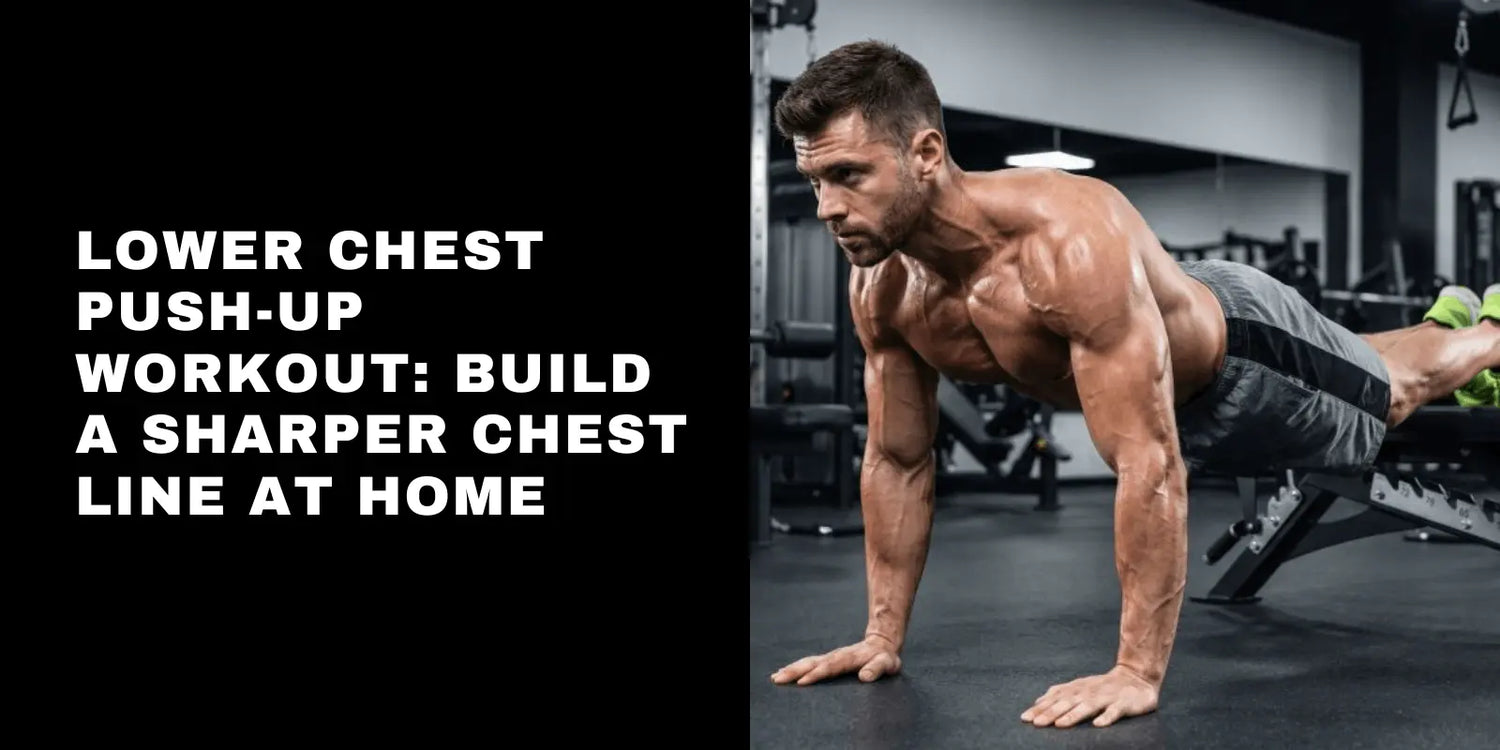
Decline push ups are useful, but they are not automatically the best lower chest exercise. Feet elevated push ups often shift more challenge toward the shoulders and upper chest because the body angle changes the pressing path.
- Feet elevated decline push ups: Use these for harder bodyweight pressing once your standard push up is strong and pain free.
- Hands elevated incline push ups: Use these to build volume, control the bottom range, and feel the chest with less joint stress.
- Deficit push ups: Use these when you can control a deeper stretch without shoulder discomfort.
Push ups can still be a serious strength tool when they are loaded and progressed. Loaded push ups and bench press produce similar upper body muscle activation patterns at comparable loads in trained men, which supports progressive push ups as a valid chest strength option.[2]
For machine based chest training ideas, see the RitFit Smith machine chest workout guide. It can help you compare bodyweight pressing with more stable loaded chest exercises.
The video below compares incline and decline pressing angles before you commit to one variation.
Two Rules That Make Lower Chest Push Ups More Effective
Two rules make lower chest push ups more effective: press down and forward instead of shrugging upward, and control the bottom of every rep. Both cues keep tension on the chest instead of the front shoulders.
Rule 1: Press down and forward instead of shrugging upward
Press the floor away while keeping the ribs down and the shoulders stable. This keeps tension on the chest instead of turning every rep into a front shoulder dominant movement.
- Body line: Keep your ribs down, glutes tight, and hips aligned from shoulders to ankles.
- Elbow path: Keep elbows about 30 to 60 degrees from the torso instead of flaring straight out.
- Pressing cue: Think about bringing your upper arms toward your ribs as you press.
Rule 2: Use a full range of motion and control the bottom
The bottom of the push up matters because the chest is under high tension when the rep stays controlled. Mechanical tension in lengthened positions may contribute to muscle growth adaptations, according to a narrative review on stretch mediated hypertrophy.[3]
- Depth: Lower until your chest comes close to your hands or the elevated surface.
- Pause: Hold the bottom for half a second if you tend to bounce.
- Control: Use a 2 to 3 second lowering phase when you want more tension without adding equipment.
Quick Warm Up in Three to Five Minutes
A three to five minute warm up prepares the wrists, shoulders, shoulder blades, and chest for better push up mechanics. Run through it before every lower chest push up session.
- Wrist prep: Do gentle wrist rocks on all fours for 30 to 45 seconds. Use fists or handles if your wrists are sensitive.
- Scapular push ups: Perform 8 to 12 reps with straight arms. Let the shoulder blades move without bending the elbows.
- Easy incline push ups: Do 8 to 10 light reps on a bench, box, or step. Focus on smooth reps and chest tension.
- Shoulder circles: Move slowly for 30 to 45 seconds. Stop if the shoulder feels sharp or unstable.
For a stable hands elevated setup, a strong adjustable bench makes progression easier. The RitFit GATOR Adjustable Weight Bench supports incline push up setups, dumbbell work, and future pressing progressions.
Best Push Up Variations for Lower Chest Bias
The hands elevated chest bias push up is the best starting point for most beginners, while the deficit push up gives the strongest stretch once the shoulders are ready. Feet elevated decline push ups work better as a strength variation than as a lower chest isolation move.
Hands Elevated Chest Bias Push Up
The hands elevated chest bias push up is the best starting point for most beginners because it lowers difficulty while improving control. Use a sturdy bench, box, step, or stable elevated surface.
- Setup: Place hands slightly wider than shoulder width on the elevated surface.
- Execution: Lower your chest toward your hands while keeping ribs down and glutes tight.
- Progression: Lower the hand height over time until you can perform strict floor push ups.
For more bench based training options, visit the RitFit weight benches collection. A stable bench bridges the gap between beginner incline push ups and harder floor variations.
Lean Forward Incline Push Up
The lean forward incline push up increases chest demand without requiring extra load. Move your shoulders slightly forward over your hands while keeping the body straight.
- Setup: Place hands on a bench or step and lean from the ankles, not the lower back.
- Execution: Lower under control and press through the base of your palms.
- Best use: Add this after standard incline push ups feel too easy.
Wide Grip Incline Push Up
The wide grip incline push up helps some lifters feel more outer chest tension. Keep the grip moderate because going too wide may irritate the shoulders.
- Setup: Place hands wider than shoulder width while keeping forearms close to vertical at the bottom.
- Execution: Lower slowly and avoid letting the shoulders roll forward.
- Safety cue: Narrow your hand position if you feel pinching in the front of the shoulder.
Deficit Push Up
The deficit push up increases range of motion and can create a stronger chest stretch. Only use this variation if your shoulders feel stable and pain free.
- Setup: Place hands on two stable blocks, push up handles, or dumbbells.
- Execution: Lower slightly below hand level while keeping shoulder blades controlled.
- Progression: Add a brief bottom pause before increasing reps or load.
If you prefer using handles, a pair of dumbbells can reduce wrist extension during deficit push ups. See the RitFit Hex Rubber Dumbbells for a simple home gym option that also supports rows, presses, and accessory work.
Dip Pattern Option
Dips are not push ups, but they can train a lower chest pressing pattern when done with control. Skip them if they cause shoulder pain or force you into an uncomfortable bottom stretch.
- Setup: Use stable parallel bars or a secure dip station.
- Execution: Lean slightly forward while keeping the chest lifted and ribs controlled.
- Stop point: Stop before your shoulders feel pinched or unstable.
A closer look at what muscles dips work explains why this pattern adds triceps and lower chest demand, and when it is worth rotating into a home plan.
Feet Elevated Decline Push Up
The feet elevated decline push up is best used as a harder strength variation, not as the only lower chest exercise. Many lifters feel this version more in the upper chest and shoulders.
- Setup: Place feet on a bench or step and hands on the floor.
- Execution: Keep the body straight and lower with control.
- Best use: Rotate it into the plan when standard floor push ups are already strong.

The 6 Week Lower Chest Push Up Plan
The plan runs three nonconsecutive training days per week, and each day has a different job: volume on day 1, strength on day 2, and pump work on day 3. Most sets should stop with one to three reps in reserve so form stays clean.
Weekly set volume matters for growth, and a systematic review of resistance training volumes places 12 to 20 weekly sets per muscle group in a useful hypertrophy range for trained young men.[4] Beginners should start lower and add sets only while recovery stays strong.
Progression Rules
Progress when you hit the top of the rep range on all sets for two sessions with good form. Make only one progression at a time so you can track what works.
- Lower hand height: Move from a high bench to a lower step.
- Slow the eccentric: Lower for 3 seconds on each rep.
- Add a pause: Hold the bottom position for 1 second.
- Add load: Use a weighted vest or secure backpack only when bodyweight reps are stable.
Day 1: Lower Chest Bias and Weekly Volume
Day 1 builds your main lower chest push up base with controlled reps and enough total work. Keep every rep smooth and stop before your shoulders take over.
- Hands elevated chest bias push up: 4 sets of 8 to 15 reps.
- Wide grip incline push up: 3 sets of 8 to 12 reps.
- Deficit push up or standard push up: 3 sets of 6 to 10 reps.
- Mechanical drop set finisher: Do low incline push ups near failure, then higher incline push ups near failure, then wall push ups for 15 to 25 reps.
Day 2: Strength Focus and Pressing Control
Day 2 makes the push up pattern harder while keeping shoulder comfort as the priority. Use longer rest periods and cleaner reps.
- Feet elevated decline push up: 5 sets of 5 to 8 reps if pain free.
- Lean forward incline push up: 4 sets of 6 to 10 reps with a bottom pause.
- Close grip push up: 3 sets of 8 to 12 reps for triceps support.
- Plank: 2 to 3 sets of 30 to 60 seconds to improve body line control.
Day 3: Pump Work and Chest Feel
Day 3 adds controlled volume and helps you practice chest tension from different angles. Keep the pace steady and avoid rushing the bottom position.
- Archer push up: 4 sets of 5 to 8 reps per side, using an incline if needed.
- Hands elevated chest bias push up: 3 sets of 10 to 20 reps.
- Light deficit push up: 2 sets of 8 to 12 reps.
- 10 minute density block: Alternate 8 incline push ups and 8 standard or knee push ups, resting as needed.
When bodyweight push ups stop feeling challenging, add accessory work through the RitFit dumbbells collection. Dumbbell presses, fly style movements, and rows help balance your upper body training.
Lower Chest Push Up Form Checklist
A quick form check before every set keeps lower chest push ups safer and more effective. Run through these six points before you add harder variations or extra load.
- Hands: Press evenly through the palm and avoid collapsing into the wrists.
- Elbows: Keep elbows about 30 to 60 degrees from the torso.
- Shoulders: Keep shoulders stable and avoid shrugging at the top.
- Body line: Keep ribs down, glutes tight, and hips from sagging.
- Range: Bring the chest close to the hands without bouncing.
- Breathing: Inhale as you lower and exhale as you press.
Common Problems and Fast Fixes
Most lower chest push up problems come from setup and control rather than from the exercise itself. Raising the hand height, slowing the lowering phase, and keeping the elbows closer to the ribs solves the two most common complaints.
I feel it in my shoulders, not my chest
Raise your hand height and slow down each rep. This usually reduces shoulder strain and makes it easier to feel the chest doing the work.
- Fix 1: Use a higher incline for 2 to 3 weeks.
- Fix 2: Bring elbows slightly closer to your sides.
- Fix 3: Reduce decline push ups until shoulder comfort improves.
My wrists hurt during push ups
Use a wrist friendly setup before increasing volume. Handles, fists, or dumbbells reduce wrist extension for many lifters.
- Fix 1: Warm up wrists longer before working sets.
- Fix 2: Try dumbbells as neutral grip handles.
- Fix 3: Use incline push ups to reduce load on the hands.
For handle style training tools and cable attachments, browse the RitFit gym accessories collection. The right setup makes high volume home training more comfortable.
I can do many reps, but my chest is not growing
Stop chasing endless reps and make the exercise harder. Muscle growth needs progressive overload, enough hard sets, and recovery.
- Fix 1: Add a slower lowering phase.
- Fix 2: Add a bottom pause.
- Fix 3: Add load only after strict reps feel easy.
Nutrition and Recovery Tips for Better Lower Chest Definition
Training builds the chest, while nutrition and recovery decide how visible the result becomes. Keep the plan simple enough to repeat for months.
- Protein: Aim for a consistent daily protein habit to support repair and growth. Protein supplementation supports resistance training induced gains in strength and muscle mass in healthy adults, according to a large meta analysis.[5]
- Sleep: Prioritize 7 to 9 hours when possible because poor sleep reduces training performance and recovery.
- Rest days: Keep at least 48 hours between hard chest sessions if soreness or performance drop is high.
- Body composition: Use a moderate calorie deficit if definition is the main goal. Avoid crash dieting because performance should stay stable or gradually improve.
If you want to progress beyond push ups, the RitFit GORILLA Chest and Shoulder Press Machine adds a more stable loaded pressing option for home gyms. You can also compare full body cable training ideas in the Smith machine with cable system workout guide.
FAQs About Lower Chest Push Ups
Can lower chest push ups really build the lower chest?
Yes. Lower chest push ups can help build the chest when they use full range of motion, progressive overload, and enough weekly volume. They cannot fully isolate one chest section, but smart incline, deficit, and controlled push up variations can bias the lower chest for many lifters.
Which lower chest push up is best for beginners?
The best lower chest push up for most beginners is a hands elevated chest bias push up. It lets you use a comfortable angle, better shoulder control, and enough reps to build volume before progressing to lower surfaces, deficit push ups, or added load.
Do decline push ups work the lower chest?
Yes. Decline push ups work the chest, but they are not always the best lower chest choice. Because your feet are elevated, many lifters feel more upper chest and shoulder demand, so decline push ups should be used as a strength variation, not the only solution.
How often should I train lower chest push ups?
Most people should train lower chest push ups two to three times per week. This frequency gives enough practice and volume while leaving time for recovery. Keep at least one rest day between hard sessions if soreness, shoulder fatigue, or performance drop becomes noticeable.
Should I do lower chest push ups to failure?
No. Most working sets should stop with one to three reps in reserve. Going to failure too often can reduce form quality and irritate shoulders or wrists. Save near failure work for the final finisher set, and only when your reps stay controlled.
Why do I feel lower chest push ups in my shoulders?
You usually feel lower chest push ups in your shoulders because the angle, elbow path, or depth is not controlled. Raise your hands, bring elbows slightly closer, slow the lowering phase, and avoid shrugging. If pain feels sharp, stop and choose an easier variation.
Can I build lower chest definition without gym machines?
Yes. You can build lower chest definition without machines by combining progressive push ups, enough weekly sets, protein, sleep, and body fat management. Machines can help add load later, but they are not required for beginners who train consistently with good form.
How long does it take to see lower chest push up results?
Most lifters notice better control and strength within two to four weeks. Visible lower chest changes usually take six to twelve weeks or longer, depending on training consistency, nutrition, recovery, and starting body fat level. Track reps, form, and photos instead of judging daily.
Conclusion
The best lower chest push up workout is a progression system, not a single magic exercise. Start with hands elevated push ups, build clean volume, and add harder variations gradually.
Support the work with protein, sleep, and consistent recovery, then move to the beginner push up workout plan when you want more total body volume.
Disclaimer
This article is for general educational purposes only and is not medical advice. If you have shoulder, wrist, elbow, neck, back, or chest pain, a recent injury, surgery, or numbness and tingling, consult a qualified clinician before training and stop any exercise that causes sharp pain.
How This Guide Was Created
RitFit built this guide from exercise programming principles, published training literature, and practical home progressions. The goal is clear cues, realistic expectations, and no exaggerated promise of spot reduction or perfect muscle isolation.
References
1. Calatayud J, Borreani S, Colado JC, Martin F, Rogers ME, Behm DG, et al. Muscle activation during push ups with different suspension training systems. J Sports Sci Med. 2014;13(3):502-510.
2. van den Tillaar R, Ball N. Push ups are able to predict the bench press 1 RM and constitute an alternative for measuring maximum upper body strength based on load velocity relationships. J Hum Kinet. 2020;73(1):7-18. doi:10.2478/hukin-2019-0133. PMCID: PMC7386139
3. Warneke K, Lohmann LH, Lima CD, Hollander K, Konrad A, Zech A, et al. Physiology of stretch mediated hypertrophy and strength increases: a narrative review. Sports Med. 2023;53(11):2055-2075. doi:10.1007/s40279-023-01898-x. PMCID: PMC10587333
4. Baz-Valle E, Balsalobre-Fernandez C, Alix-Fages C, Santos-Concejero J. A systematic review of the effects of different resistance training volumes on muscle hypertrophy. J Hum Kinet. 2022;81(1):199-210. doi:10.2478/hukin-2022-0017. PMCID: PMC8884877
5. Morton RW, Murphy KT, McKellar SR, Schoenfeld BJ, Henselmans M, Helms ER, et al. A systematic review, meta analysis and meta regression of the effect of protein supplementation on resistance training induced gains in muscle mass and strength in healthy adults. Br J Sports Med. 2018;52(6):376-384. doi:10.1136/bjsports-2017-097608. PMCID: PMC5867436