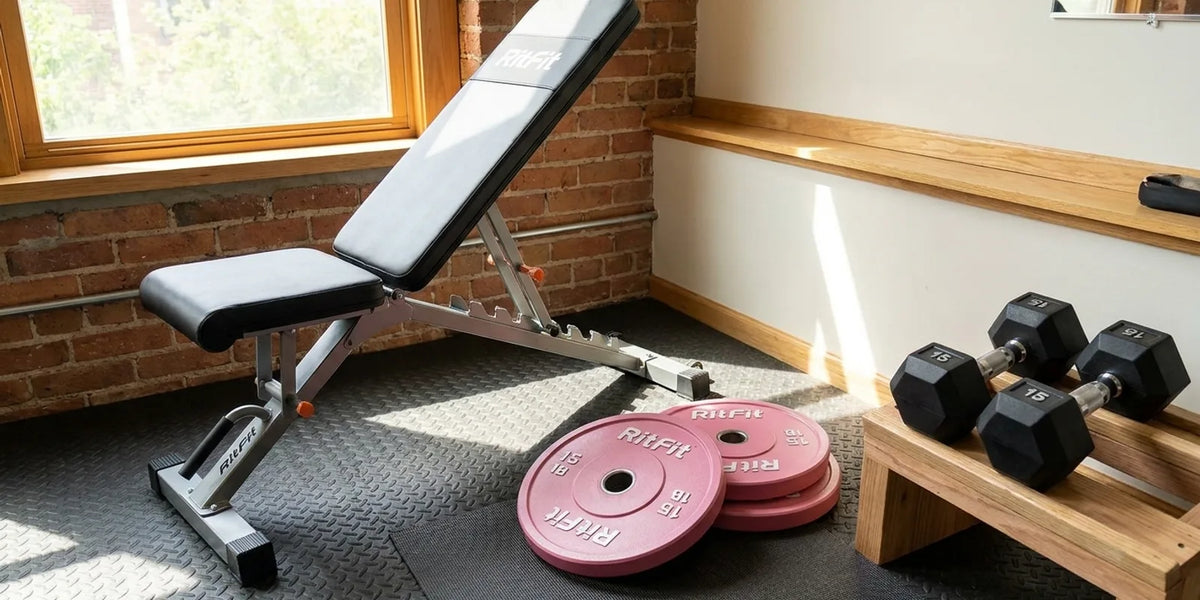
Best metal plates for weightlifting are steel or iron discs that load onto a standard barbell, and for most home gym owners they are the value core of a serious strength setup. This guide compares iron vs steel vs bumper plates, explains the specs that matter, and shows which RitFit metal plates fit your budget.
Whether you are building your first barbell set or upgrading a garage gym, you will learn how hole size, weight tolerance, finish, and grip affect everyday lifting, how many plates you need, and how to care for them so they last for decades.
Quick Answer: Metal plates for weightlifting are durable steel or iron discs that load onto a standard 2-inch Olympic barbell. They offer one of the lowest costs per pound, a thinner profile that loads more weight on the bar, and decades of service, making them the value choice for squats, presses, and deadlifts.
Key Takeaways
- Durability: Metal plates last for decades and hold their finish with basic care.
- Value: Iron plates offer one of the lowest costs per pound in all of weight training.
- Load capacity: The thin profile of metal plates lets you load more total weight on a standard bar than bumpers.
- Compatibility: Pick a 2-inch Olympic hole so your plates fit a standard barbell sleeve.
- Material: Steel is machined tighter and thinner but costs more; cast iron is the classic workhorse.
Metal Plates vs. Bumper Plates: Which Should You Choose for Your Home Gym?
Choose metal plates for slow strength lifts such as squats, bench presses, and deadlifts off the floor, because they are cheaper per pound, thinner, and quieter in use than rubber bumpers. Choose bumper plates only if you do Olympic lifts or CrossFit where the bar is dropped from overhead on a regular basis.
What Are Metal Weight Plates?
Metal weight plates are solid steel or iron discs with a machined center hole that slides onto a barbell sleeve. They are the classic garage gym staple, and cast iron plates in particular are among the cheapest per pound and thinner than bumpers, letting you load more weight on the bar for heavy strength work.
- Cost per pound: Cast iron is one of the most affordable plate materials you can buy.
- Profile: Metal plates are thinner than bumpers, so more total weight fits on a standard sleeve before you run out of space.
- Noise: Metal plates clink and clang, which is a minor trade-off in a dedicated gym space.
For lifters focused on the big three barbell lifts, metal plates are the practical choice. If your training includes overhead drops, keep a set of Bumper Plates on hand and fill the rest of your collection with Iron Plates.
Steel vs. Iron Plates: What's the Difference?
Iron plates are cast and are the affordable, durable classic, while steel plates are machined to tighter weight tolerances and a thinner profile, which costs more per pound. For most home gyms, quality cast iron is the smarter spend, and steel earns its place when you want precision loading for heavier lifts.
| Feature | Cast Iron Plates | Steel Plates |
|---|---|---|
| Cost per pound | Lower, one of the best values in home gyms | Higher, machined to tight tolerances |
| Weight tolerance | Often about 1 percent for mid-range sets | Tighter, closer to true weight |
| Profile | Thin enough to load heavy on a bar | Thinnest, maximum loading capacity |
| Best for | Squats, bench, deadlifts, general strength | Serious barbell lifters and powerlifting |
General category comparison based on industry weight plate buying guidance; exact specs vary by brand and model.
If you train the big three lifts and want dependable plates that will outlast the rest of your gear, cast iron is the value workhorse. If you are chasing maximum loading and tight precision, steel earns the higher price tag.
Why Metal Plates Are a Smart Choice for Strength Training
Metal plates are a smart choice because they give you a cheap, thin, durable way to load a barbell for progressive overload, and the research on resistance training load supports exactly that kind of home-based strength work. A 2026 overview of 137 systematic reviews found that lifting heavier loads of about 80 percent of your one-rep max enhances strength, and that home-based resistance training improves strength [1].
A 2021 systematic review and network meta-analysis on how training load affects muscle hypertrophy and strength gain reached the same practical conclusion: load is central to training progress [2]. Because metal plates are affordable, you can build the full range of increments you need to keep adding weight steadily.
- Steady progression: The right plates let you increase load in small, controlled steps.
- Space efficiency: A thin metal profile loads more weight before the sleeve fills.
- Long-term value: Metal plates are a buy-once investment that outlasts most other gear.
Browse the full Cast Iron Weight Plates collection to start building your load for progressive overload.
How to Choose the Best Metal Weight Plates for Your Home Gym
Choose metal plates by matching four specs to your setup: hole size, weight tolerance, finish, and grip. Get those right and your plates will load straight, hold accurate weight, resist rust, and feel good to handle every session.
Start With the Right Hole Size
Match your plate hole to your barbell sleeve: 2-inch holes for standard Olympic bars and 1-inch holes for standard bars, because a snug fit keeps plates loading straight and secure. The majority of home barbells are Olympic, so the 2-inch hole is the compatibility benchmark to shop for.
"The standard bar length is a little over 7 feet, has '2-inch'/50mm diameter sleeves for loading the plates on, and weighs 20kg/44.1lbs. For home gym purposes, a 28.5 or 29mm bar will be the most durable and provide the best service over time."
Mark Rippetoe, Strength Coach and Author of Starting Strength, Starting Strength
Check Weight Tolerance
Weight tolerance is how close a plate's true weight matches its label, and for a home gym a 1 to 2 percent tolerance is the practical sweet spot. Budget plates can vary by 3 to 5 percent, while mid-range machined plates hold closer to 1 percent, which keeps your loaded bar honest.
- Why it matters: Off-weight plates make your progression and your balance uneven.
- What to look for: Aim for a stated 1 to 2 percent tolerance or better on the plates you buy.
Look for a Rust-Resistant Finish
Choose plates with an e-coat or powder finish so they resist rust in humid garages, because bare iron on concrete can oxidize quickly. A protective coating is one of the cheapest insurance policies for a plate collection you want to keep for decades.
Consider Grip and Handling
Plates with molded grips or handles are much easier to load and unload, especially when you are changing weights between sets. Grip plates are a genuine convenience upgrade for frequent bar changes in daily strength training.
Review the full Weight Plates collection to compare hole sizes, tolerances, and finishes side by side.
Best RitFit Metal Weight Plates for Your Home Gym
The best RitFit metal plates depend on how you train: pick the AuraSpin Grip Plates for easy handling and frequent bar changes, and the Silver Steel Strip Olympic Plates for a classic metal set that loads onto a standard 2-inch Olympic bar. Both fit a standard home barbell, so the choice comes down to grip convenience versus classic plate design.
| RitFit Option | Best For | Why |
|---|---|---|
| RitFit AuraSpin Grip Plates | Everyday strength training and frequent loading | Metal grip plates with an easy-grip design for fast bar changes |
| RitFit Silver Steel Strip Olympic Plates | Classic metal plate collections on Olympic bars | 2-inch Olympic hole steel plates for a traditional strength setup |
Recommendations compare RitFit options only, based on product design and use case.
For lifters who change plates often, the RitFit AuraSpin Grip Plates make loading quick and comfortable. For a straightforward metal set on a standard barbell, the RitFit Silver Steel Strip Olympic Plates are the classic choice, and you can build out a full system from the Barbells Weight Plates collection.
How Many Weight Plates Do You Need to Get Started
A practical starter metal plate set is two 45 lb plates, two 25 lb plates, and two 10 lb plates, about 165 lb of plates plus your barbell, which covers squats, bench press, and deadlifts for most lifters through their first year or two. Add pairs of 45s as your strength grows, and consider fractional plates when smaller lifts start to stall.
- Starter total: Two 45s, two 25s, and two 10s cover the core lifts.
- Next step: Add pairs of 45s as your squat and deadlift climb.
- Micro-loading: Light fractional plates keep progress moving on presses and curls.
Build your set around the bar you already own, and expand in matching pairs so your plates stay consistent. Start with the Bars And Plates hub to coordinate a barbell with your plate collection.
How to Load, Store, and Care for Metal Weight Plates
Load metal plates with the big plates on the inside and the smaller plates on the outside, slide them on straight so they sit snug against the sleeve, and secure them with collars so nothing shifts during the lift. Proper loading is also a safety habit, and a 2017 study found bench press muscle activity rises significantly as load increases from 70 to 100 percent of one-rep max, so loading your bar correctly is the foundation of a productive session [3].
- Secure the load: Use collars to stop plates sliding off the sleeve under bar flex.
- Store off the floor: Keep plates on a tree or rack with airflow, not on concrete.
- Prevent rust: Wipe plates after sweaty sessions and touch up any chipped finish.
- Protect the floor: Set heavy metal plates down gently and use a mat for deadlifts.
Care for your plates the way you care for your bar, and the set will serve your family's gym for decades. Pair your plates with a compatible Olympic barbell so the 2-inch sleeves and holes match.
Common Mistakes to Avoid When Buying Metal Weight Plates
Avoid these buying mistakes so your first plate set is the one you keep for years: mismatching the hole size to your bar, ignoring weight tolerance, skipping rust protection, and overbuying weight you cannot use yet. Each is an easy fix at purchase time and an annoying problem after.
- Wrong hole size: A 1-inch plate on an Olympic bar rattles and loads unevenly.
- Sloppy tolerance: Off-weight plates make progression and balance unpredictable.
- Bare iron on concrete: Uncoated plates rust fast in humid garages.
- All the weight at once: Buy in phases so your set grows with your strength.
- No grip design: Heavy plates without grips are frustrating to move set after set.
Match the plates to your bar, buy a protected finish, and grow the collection in pairs as your lifts progress.
FAQs About Metal Plates for Weightlifting
Are metal weight plates better than bumper plates?
Metal plates suit slow strength lifts like squats, presses, and deadlifts, offering a thinner profile and more load per bar at a lower cost per pound.
Bumper plates are drop-safe for Olympic lifts and CrossFit workouts.
For most home gyms, metal plates are the practical value choice.
What is the difference between steel and iron weight plates?
Cast iron plates are affordable, durable, and the classic choice for home strength training. Steel plates are machined to tighter weight tolerances and a thinner profile, so you can load more weight on the bar, but they cost more per pound.
What weight tolerance should I look for in weight plates?
Weight tolerance is how close a plate's true weight matches its label.
Budget plates can vary by 3 to 5 percent, while mid-range cast iron often sits near 1 percent.
For home training, a 1 to 2 percent tolerance keeps your loaded bar honest.
How many weight plates do I need for a home gym?
A practical starter set is two 45 lb plates, two 25 lb plates, and two 10 lb plates, about 165 lb total, plus your barbell. Add pairs of 45s as your squat and deadlift grow, and fractional plates when smaller lifts stall.
Can I use metal plates on any barbell?
Metal plates come in two standard sizes: 1-inch holes for standard bars and 2-inch holes for Olympic bars. Check your barbell sleeve before buying, and choose plates with a snug machined hole so they load straight and stay secure during heavy sets.
How do I keep metal weight plates from rusting?
Wipe plates down after sweaty sessions, keep them off concrete floors, and store them on a plate tree or rack with airflow. A rust-resistant e-coat or powder finish helps, and light surface rust can be cleaned with a wire brush.
Conclusion
Metal plates for weightlifting are the durable, space-efficient value core of a home barbell setup, giving you cheap per-pound loading, a thin profile for heavy loads, and decades of service. Choose cast iron for classic value, consider steel for tighter tolerances, match your 2-inch Olympic hole, and grow the collection in pairs as your strength climbs.
Start with a practical starter set, protect your plates from rust, and add matching pairs as your lifts grow. For a complete strength setup, browse the RitFit sales and offers page to get the most value from your home gym build.
Disclaimer
This article is for general information only and is not medical, training, or safety advice. Consult a qualified professional before starting a new strength program, and always follow manufacturer instructions when loading and using weight training equipment.
References
1. Currier BS, D'Souza AC, Singh MAF, et al. American College of Sports Medicine Position Stand. Resistance Training Prescription for Muscle Function, Hypertrophy, and Physical Performance in Healthy Adults: An Overview of Reviews. Med Sci Sports Exerc. 2026;58(4):851-872. doi:10.1249/MSS.0000000000003897. PMCID: PMC12965823
2. Lopez P, Radaelli R, Taaffe DR, et al. Resistance Training Load Effects on Muscle Hypertrophy and Strength Gain: Systematic Review and Network Meta-analysis. Med Sci Sports Exerc. 2021;53(6):1206-1216. doi:10.1249/MSS.0000000000002585. PMCID: PMC8126497
3. Krol H, Golas A. Effect of Barbell Weight on the Structure of the Flat Bench Press. J Strength Cond Res. 2017;31(5):1321-1337. doi:10.1519/JSC.0000000000001816. PMCID: PMC5400411