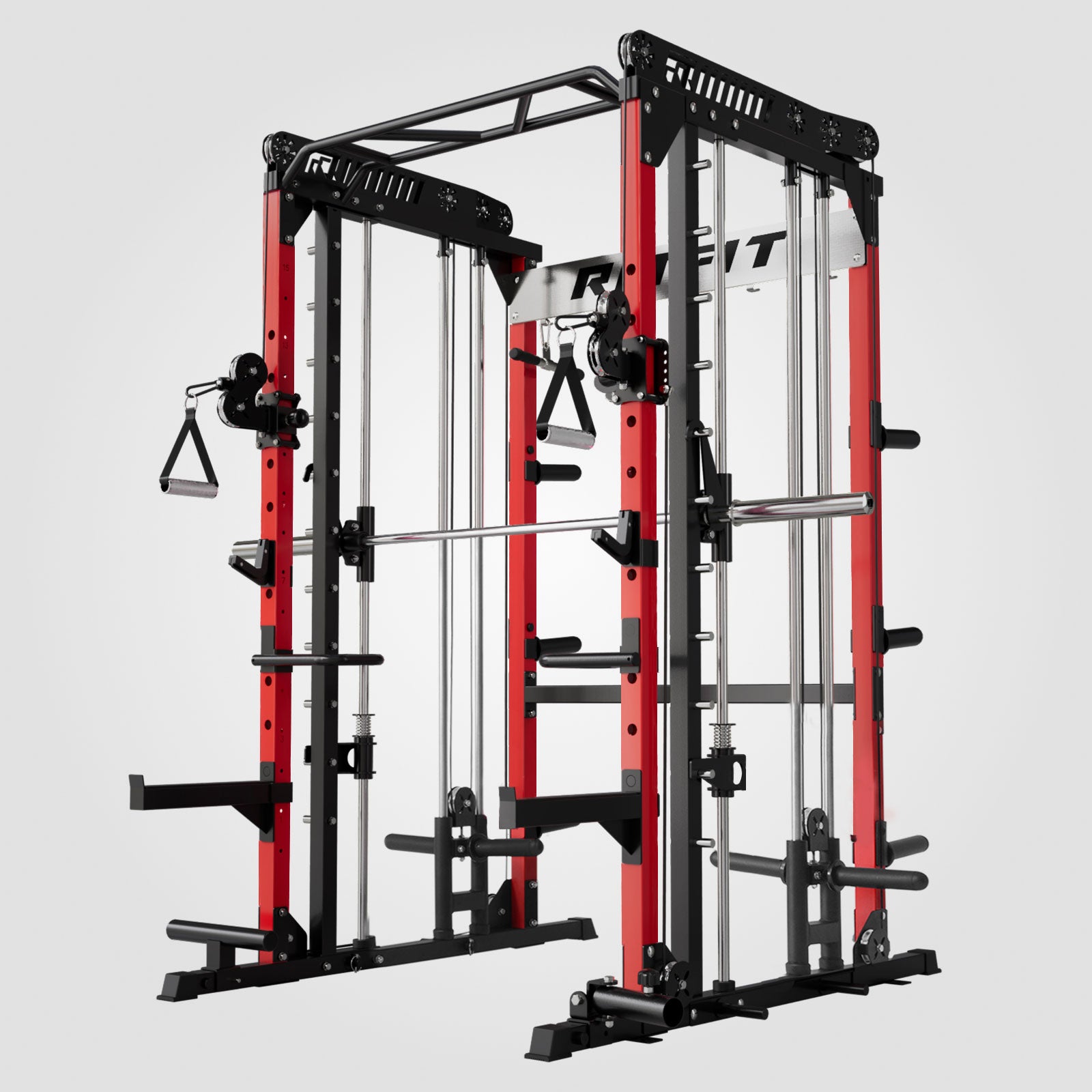
An Olympic barbell is usually the better long term choice for serious home gym strength training because it supports heavier loads, Olympic plates, rotating sleeves, and broader equipment compatibility. A standard barbell can still work for light training, small spaces, or users who already own 1 inch plates.
Choosing the right bar matters because a barbell is not just a handle for plates, it determines your plate system, rack compatibility, training ceiling, and future upgrade path.
Key Takeaways
- Olympic bars are best for long term progression: They fit 2 inch Olympic plates, support heavier training, and work with most modern racks and benches.
- Standard bars are best for light casual lifting: They can be useful for beginners, accessory lifts, and compact rooms, especially if you already own 1 inch plates.
- Plate compatibility is the biggest decision: Olympic plates do not fit standard bars, and standard plates do not fit Olympic sleeves without adapters.
- Rotating sleeves make Olympic bars more versatile: Sleeve rotation helps reduce torque during dynamic lifts and makes Olympic style movements more practical.
- Most new home gyms should start with Olympic equipment: The Olympic system gives you more upgrade options, better resale value, and easier compatibility with modern strength equipment.
Olympic Bar vs Standard Bar: Quick Comparison
The simplest difference is sleeve size, Olympic bars use 2 inch sleeves, while standard bars use 1 inch sleeves. That single detail affects plates, collars, racks, training capacity, and long term home gym value.
| Feature | Olympic Barbell | Standard Barbell |
|---|---|---|
| Sleeve Diameter | 2 inch Olympic sleeves | 1 inch standard sleeves |
| Typical Bar Weight | Commonly 20kg for men and 15kg for women | Often lighter, commonly 10 to 25 lb depending on model |
| Typical Length | Often 7 ft for full size bars | Often 5 to 6 ft |
| Plate Compatibility | Olympic plates and bumper plates | Standard 1 inch plates |
| Sleeve Rotation | Usually has rotating sleeves | Usually fixed sleeves |
| Best For | Progressive strength training, rack work, Olympic style lifting, home gym upgrades | Light training, compact setups, low budget starter sets |
What Is the Difference Between Olympic and Standard Barbells?
The main difference between an Olympic bar and a standard bar is the sleeve diameter where plates are loaded. Olympic bars use 2 inch sleeves, while standard bars use 1 inch sleeves.
Olympic Barbells
An Olympic barbell is built around the 2 inch Olympic plate system, which is the dominant format for modern home gyms, commercial gyms, bumper plates, and most rack based strength training.
Standard Barbells
A standard barbell is a lighter bar that uses 1 inch plates, making it more budget friendly but less scalable for heavy lifting and future equipment upgrades.
Resistance training can improve strength, muscle mass, and physical function in healthy adults, so your barbell should support steady progression instead of limiting it too early.[1]
Olympic Bar vs Standard Bar: Main Differences That Matter
The right choice depends on how heavy you plan to lift, how much space you have, what plates you own, and whether you want a system that can grow with your training.
- Sleeve diameter: Olympic bars use 2 inch sleeves for Olympic plates, while standard bars use 1 inch sleeves for standard plates.
- Plate ecosystem: Olympic plates are more common in serious home gyms, rack setups, bumper plate training, and long term equipment upgrades.
- Weight capacity: Olympic bars are usually rated for heavier loads, while many standard bars are better suited to moderate resistance training.
- Sleeve rotation: Olympic bars usually have rotating sleeves that help the plates spin separately from the shaft during dynamic movements.
- Rack compatibility: Most power racks, squat racks, bench stations, and modern home gym systems are designed around full size Olympic bars.
- Space requirement: A 7 ft Olympic bar needs more clearance than a shorter standard bar, especially for loading plates safely on both sides.
Why Sleeve Rotation Matters
Rotating sleeves help reduce unwanted twisting force on the wrists and elbows when the plates move during cleans, snatches, high pulls, or fast barbell transitions. This feature is one reason Olympic bars are preferred for more advanced and dynamic lifting styles.
Free weight training often has greater coordination demands than guided machine training, and research suggests training adaptations are highly specific to the exercises and equipment used.[2]
Plate Compatibility: The Decision That Locks In Your System
Once you choose Olympic or standard, you are also choosing a plate system. This matters because plates are often the most expensive and long lasting part of a barbell setup.
- Olympic plates: These use 2 inch center holes and pair with Olympic bars, bumper plates, power racks, Smith machines, and most modern strength equipment.
- Standard plates: These use 1 inch center holes and are usually better for light home training, older equipment, or compact starter sets.
- Adapters: Adapters can create a temporary workaround, but they are not ideal for serious strength training because they add movement and complexity.
For a cleaner upgrade path, most new lifters building from scratch should explore RitFit barbells and weight plates before buying plates that may not match future equipment.
Bar Weight and Length: Why 15kg and 20kg Bars Both Matter
Many full size Olympic bars are 7 ft long, with common training weights of 20kg for general men’s bars and 15kg for many women’s training bars. Standard bars vary more widely, so users should always check the actual product weight before calculating loaded weight.
If your main question is how much a bar weighs before adding plates, review RitFit’s guide on how much a bench press barbell weighs and the related article are all bench bars 45 pounds.
Weight Capacity and Long Term Progression
Olympic bars usually offer a higher training ceiling than standard bars, which makes them better for lifters who want to progress on squats, deadlifts, presses, rows, and hip thrusts. A standard bar may feel affordable at first, but it can become a limiting factor as your strength improves.
Studies comparing free weight and machine based training show that strength outcomes can depend on the tested movement, which reinforces the need to choose equipment that matches your long term training goals.[3]
Space Planning for a Home Gym Barbell
A full size Olympic bar usually needs at least 8 ft of clear width for safer loading, unloading, and bar movement. Standard bars can fit tighter spaces, but they may not work as well with full size racks or Olympic plate systems.
- Garage gym: Olympic bars are usually the better fit because garage gyms often have more width and support rack based lifting.
- Basement gym: Measure both width and ceiling height before choosing a full size bar and rack setup.
- Apartment gym: A shorter standard bar may be easier to store, but noise, floor protection, and plate compatibility still matter.
For broader setup planning, use RitFit’s home gym equipment guide under 2000 to match your barbell with racks, benches, plates, and storage.
Which Barbell Should You Choose?
Choose an Olympic barbell if you want serious strength training, rack compatibility, bumper plates, progressive overload, and a setup that can grow over time. Choose a standard barbell if you only need light lifting, already own 1 inch plates, or have very limited room and budget.
Choose an Olympic Barbell If
- You are building a home gym from scratch: Starting with Olympic equipment helps you avoid replacing plates and collars later.
- You want to lift heavier over time: Olympic bars usually give more room for progressive overload.
- You plan to use a rack: Most power racks and bench setups are designed for full size Olympic bars.
- You want bumper plates: Bumper plates are made for Olympic sleeves and are better suited to lifts that may return to the floor.
- You care about resale value: Olympic equipment usually has stronger long term demand in the fitness equipment market.
Choose a Standard Barbell If
- You already own standard plates: Keeping the same system may save money if your training goals are modest.
- You train with light loads: Standard bars can work for curls, light presses, and basic beginner movements.
- Your space is extremely tight: Shorter bars can be easier to store in apartments or small rooms.
- Your budget is the main constraint: A standard set can be a low cost starting point for casual training.
Best RitFit Olympic Barbell and Plate Options
For most new home gyms, a RitFit Olympic barbell setup is the cleaner long term choice because it works with Olympic plates, collars, racks, benches, and future strength equipment. Always confirm the latest product specifications on the product page before purchase.
- RitFit 15kg Pink Leopard Olympic Training Barbell: A strong option for lifters who prefer a 15kg Olympic training bar with a distinctive look.
- RitFit 7ft Olympic Barbell Bar: A practical choice for general strength training, home gym rack work, and progressive barbell programs.
- RitFit Patriotic Star Olympic Bar 20kg: A 20kg Olympic bar option for lifters who want a full size bar with bold visual styling.
- RitFit Patriotic Color Bumper Plates: A matching Olympic plate option for home gym owners who want durable 2 inch bumper plates.
- RitFit Olympic Barbell Clamps: A simple accessory that helps secure Olympic plates during training.
Training Safety Notes Before You Load the Bar
Barbell safety depends on matching the bar, plates, collars, rack, and exercise to your current skill level. A systematic review on resistance training safety highlights the importance of appropriate training method selection and injury risk awareness.[4]
- Check the rated capacity: Follow the bar manufacturer’s stated load rating and do not assume all Olympic bars have the same capacity.
- Use collars: Secure plates before lifting, especially for pressing, deadlifting, rows, and any movement where the bar may tilt.
- Measure your space: Make sure the bar can move and be loaded without hitting walls, mirrors, storage racks, or other equipment.
- Progress gradually: Add weight only when technique, bracing, and control are consistent.
FAQs
Is an Olympic bar better than a standard bar for a home gym?
Yes. An Olympic bar is usually better for a serious home gym because it fits Olympic plates, supports heavier training, and works with most modern racks. A standard bar still makes sense for light casual training, compact rooms, or users who already own 1 inch plates.
What is the biggest difference between an Olympic bar and a standard bar?
The biggest difference is sleeve diameter. Olympic bars use 2 inch sleeves for Olympic plates, while standard bars use 1 inch sleeves for standard plates. This affects plate compatibility, collars, rack setup, training capacity, and whether your equipment can grow with your strength goals.
Can beginners use an Olympic barbell?
Yes. Beginners can use an Olympic barbell if they start with manageable weight and learn correct setup. A 15kg Olympic training bar can be easier to handle than a 20kg bar, while still keeping the lifter inside the Olympic plate ecosystem.
Should I buy a standard barbell if I already own standard plates?
Yes. A standard barbell can be a practical choice if you already own 1 inch plates and only plan light to moderate training. If you want heavier lifting, bumper plates, rack compatibility, or long term progression, moving to Olympic equipment is usually cleaner.
How much space do I need for an Olympic barbell?
Most home gyms need at least 8 ft of clear width for a full size Olympic bar. This gives room to load plates, unrack safely, and move without hitting walls or storage. Smaller rooms may require careful layout planning before purchase.
Does an Olympic bar require Olympic plates?
Yes. An Olympic bar requires plates with 2 inch center holes. Standard plates with 1 inch holes will not fit Olympic sleeves. Adapters exist for some situations, but they are not the best solution for stable, heavy, or long term strength training.
Which RitFit barbell is best for a lighter Olympic training setup?
The RitFit 15kg Pink Leopard Olympic Training Barbell is a strong option for lifters who want a lighter Olympic setup. It keeps the user in the Olympic plate system while offering a lower starting bar weight than many 20kg bars.
Are Olympic bumper plates worth it for home gyms?
Yes. Olympic bumper plates are worth it if you want a more versatile home gym setup. They fit Olympic sleeves, support deadlifts and floor based lifting, and pair well with Olympic bars, racks, and future equipment upgrades.
Final Verdict: Olympic Bar or Standard Bar?
For most home gym owners, an Olympic barbell is the better long term investment because it supports heavier lifting, rotating sleeves, Olympic plates, rack compatibility, and future upgrades. A standard barbell is still useful for light training, compact rooms, and existing 1 inch plate collections, but it is usually less flexible as your strength grows.
Disclaimer
This article is for general fitness equipment education and does not replace professional coaching, medical advice, or product specific instructions. Always check the latest product specifications, rated capacity, safety guidance, and assembly requirements before purchase or use. Beginners should learn proper lifting form and use collars, spotter arms, or qualified supervision when training with heavy loads.
References
- Mcleod JC, Currier BS, Lowisz CV, Phillips SM. The influence of resistance exercise training prescription variables on skeletal muscle mass, strength, and physical function in healthy adults: an umbrella review. J Sport Health Sci. 2024;13:47-60. doi:10.1016/j.jshs.2023.06.005
- Haugen ME, Vårvik FT, Larsen S, Haugen AS, van den Tillaar R, Bjørnsen T. Effect of free-weight vs. machine-based strength training on maximal strength, hypertrophy and jump performance: a systematic review and meta-analysis. BMC Sports Sci Med Rehabil. 2023;15:103. doi:10.1186/s13102-023-00713-4
- Wirth K, Keiner M, Hartmann H, Sander A, Mickel C. Effect of 8 weeks of free-weight and machine-based strength training on strength and power performance. J Hum Kinet. 2016;53:201-210. doi:10.1515/hukin-2016-0023
- Serafim TT, de Oliveira ES, Maffulli N, Migliorini F, Okubo R. Which resistance training is safest to practice? A systematic review. J Orthop Surg Res. 2023;18:296. doi:10.1186/s13018-023-03781-x