








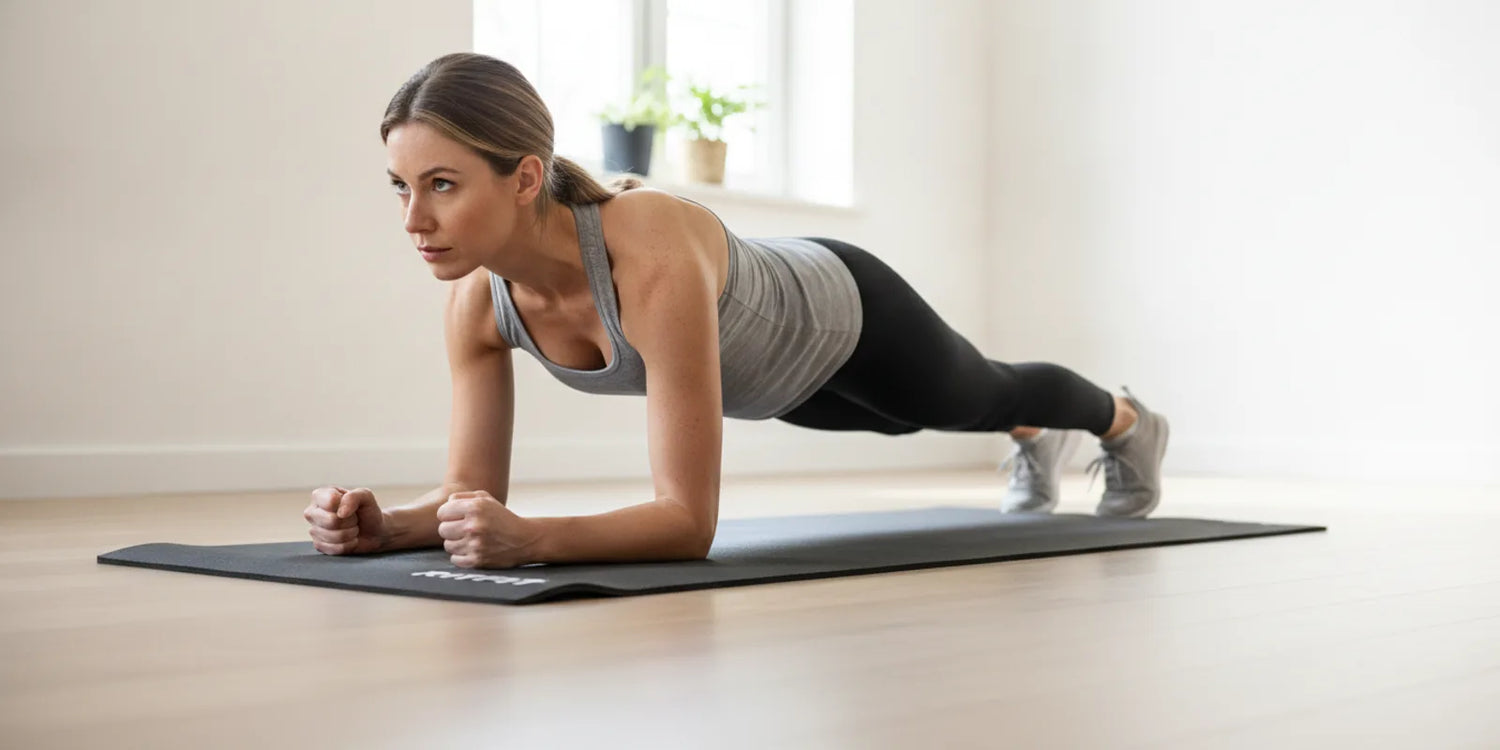
Choosing the right RitFit exercise mat can transform your home workouts, protecting your joints, improving grip, and giving you a dedicated surface for everything from yoga to high-intensity training.
This complete buying guide covers mat thickness, material types, the difference between yoga and gym mats, and how to match every feature to your actual workout routine.
Quick Answer: The best RitFit exercise mat for your home gym depends on your workout type: choose a 1/8 to 1/4 inch non-slip yoga mat for yoga and stretching, a 3/8 to 1/2 inch rubber or foam mat for weightlifting, or a 1/2 to 3/4 inch high-density mat for HIIT. The RitFit Pink Non-Slip Yoga Mat offers excellent grip and cushioning for most floor-based training sessions.
Key Takeaways
- Thickness Drives Performance: Match mat thickness to your activity, thin for yoga balance and thick for impact protection during HIIT and strength work.
- Non-Slip Surface Is Non-Negotiable: A non-slip texture prevents shifting during fast movements and reduces injury risk on any floor type.
- Material Determines Durability: TPE and rubber mats outlast PVC for heavy-use home gyms, while EVA foam offers excellent joint cushioning for floor exercises.
- Size and Density Both Matter: Standard 24 by 68 inch dimensions fit most users, but higher density foam provides better support under body weight and equipment.
- One Mat Rarely Fits All: Serious home gym users often benefit from a thin yoga mat for mobility work and a thicker gym mat for high-impact training.
Why Your Exercise Mat Matters for Home Gym Performance
A quality exercise mat cushions your joints against hard floors, provides a non-slip grip surface during dynamic movements, and protects your floor from sweat, impact, and equipment weight.
- Joint Cushioning: Hard floors transmit impact forces directly into knees, elbows, wrists, and hips during floor exercises, push-ups, and stretching.
- Grip and Stability: Without a textured non-slip surface, movements like downward dog, lunges, and burpees become unstable and hazardous.
- Floor Protection: Mats shield hardwood and tile from moisture, dropped weights, and repeated friction wear.
- Workout Boundary: A defined mat area mentally anchors your training space, improving focus and consistency.
- Hygiene: A personal mat creates a clean, easy-to-sanitize surface between you and shared or high-traffic floors.
- Temperature Comfort: Cold tile or concrete floors are uncomfortable for extended stretching, and a mat adds immediate thermal comfort for warm-ups and cooldowns.
Explore the full Mats & Flooring collection to find the right surface solution for every area of your home gym.
How Does Mat Surface Affect Landing and Joint Protection?
Mat construction directly influences how impact forces travel through your lower limbs during exercise, with softer, multi-layer mats producing lower peak ground reaction forces than stiff or bare surfaces.
A 2025 study found that mat structure, including layer count and mid-layer stiffness, significantly affected peak vertical ground reaction forces during drop landings. Stiffer surfaces generated higher peak forces than purpose-built shock-absorbing mats, findings that apply directly to HIIT and plyometric training at home.[1]
- Multi-Layer Design: Mats with a firm top layer for stability and a softer mid-layer for shock absorption deliver the best force profiles for repeated impact activities.
- Surface Compliance: More compliant surfaces extend landing duration, distributing impact over a longer time window and reducing peak load on joints.
- Stiffer Mats and Injury Risk: Training on a thin, hard mat exposes knees, ankles, and hips to higher cumulative mechanical loading, increasing long-term overuse injury risk.
- Beginner Benefit: Recreational athletes benefit most from softer mid-layers, as they naturally adopt more compliant landing mechanics than trained athletes.
Pair your mat with the right Exercise Weights to ensure your entire home gym setup supports safe and effective loading on every training day.
What Thickness Should Your Exercise Mat Be?
Exercise mat thickness should match your primary workout type, because the same thickness that protects joints during HIIT will compromise balance during yoga.
A study on standing mat interventions found that cushioned surfaces significantly reduced perceived exertion and plantar pressure, with participants reporting less fatigue and better balance stability when standing on a mat compared to hard ground.[2]
Use the thickness guide below to match your mat to your specific training style and floor surface.
Thickness by Workout Type
Matching thickness to your workout is the single most impactful mat decision you will make.
- Yoga and Stretching (1/8 to 1/4 inch): Thin mats maintain ground contact and proprioceptive feedback needed for balance-intensive poses and precise foot positioning.
- General Floor Work and Pilates (1/4 to 3/8 inch): Medium thickness offers cushioning for core exercises, sit-ups, and planks without sacrificing stability.
- Weightlifting and Strength Training (3/8 to 1/2 inch): Rubber or high-density foam mats absorb impact from loaded movements while keeping your stance stable under heavy loads.
- HIIT and Plyometrics (1/2 to 3/4 inch): Thicker mats protect knees and ankles during jump landings, lateral shuffles, and repeated high-impact movements.
- Calisthenics and Rolling Exercises (1.5 to 2 inch tri-fold): Folding gym mats provide deep cushioning for tumbling, gymnastics-style moves, and extended ground contact work.
Which Mat Material Is Right for Your Workout?
Mat material determines grip performance, durability, weight, and how the surface feels during floor exercises, making it as important as thickness in your buying decision.
Athletic cushioning research shows that superior cushioning material reduces tibial shock and mean loading rate during impact activities compared to minimal cushioning, underlining why material choice directly affects both comfort and injury prevention.[3]
| Material | Grip | Cushioning | Durability | Best For |
|---|---|---|---|---|
| PVC | Good | Moderate | High | Yoga, general floor work |
| TPE | Excellent | Good | High | Eco-friendly yoga and Pilates |
| Natural Rubber | Excellent | Good | Very High | Hot yoga, HIIT, strength |
| EVA Foam | Moderate | Excellent | Moderate | Core work, Pilates, floor exercises |
| Cork | Very Good | Moderate | Moderate | Yoga, antimicrobial environments |
Properties reflect general material characteristics across standard mat constructions.
- PVC Mats: Widely available, affordable, and easy to wipe clean. PVC provides consistent grip on most surfaces and holds up well under regular use.
- TPE Mats: Thermoplastic elastomer is a latex-free, eco-friendly option that combines rubber-like grip with foam-like lightness. TPE mats have minimal odor and are recyclable at end of life.
- Natural Rubber: Delivers the best grip in sweaty conditions and the most resilient structure for heavy-use gyms. Rubber mats are heavier but outlast most other materials under daily training loads.
- EVA Foam: Ethylene vinyl acetate foam offers superior joint cushioning and is used in interlocking floor tiles and tri-fold mats. EVA is lightweight but compresses over time under heavy equipment.
- Cork: A naturally antimicrobial surface that improves grip when wet. Cork is ideal for hot yoga or humid training environments and is biodegradable.
Pair your mat with a Ritfit Sports Towel to manage sweat during intense sessions and keep your mat surface clean and grippy.
Yoga Mat vs Gym Mat: Which One Do You Actually Need?
Yoga mats and gym mats are built for different purposes, with yoga mats optimized for grip and balance and gym mats engineered for impact absorption and floor protection during intense training.
- Yoga Mats (1/8 to 1/4 inch thick): Lightweight and portable, optimized for surface grip during static and flowing poses. Their thin profile preserves the ground connection needed for balance-intensive movements.
- Gym Mats (1/4 to 1 inch and thicker): Heavier and more padded, designed to protect joints during HIIT, strength training, calisthenics, and any floor exercise involving impact or rolling.
- Choose a Yoga Mat If: Your sessions focus on yoga, Pilates, stretching, or light bodyweight movements where balance precision matters more than cushioning.
- Choose a Gym Mat If: You do HIIT, plyometrics, strength circuits, or core work that demands sustained knee and elbow protection during extended floor contact.
- For Mixed Routines: A medium-thickness mat at 3/8 inch often serves as a functional compromise for home gym users who train across multiple disciplines.
The Ritfit Pink Non-Slip Yoga Mat bridges this gap for many home gym users, offering non-slip texture and sufficient cushioning for both yoga and bodyweight training. Browse the full Ritfit Pink Series for matching performance gear designed for athletes who value both function and style.
What Other Features Should You Look for in an Exercise Mat?
Beyond thickness and material, several additional features determine whether a mat enhances your sessions or frustrates you mid-workout.
- Non-Slip Bottom Surface: A textured or suction-cup base prevents the mat from sliding on hardwood, tile, or vinyl floors during lateral movements and jumps.
- Density: High-density foam maintains its shape and support under repeated body weight and equipment load, while low-density foam compresses quickly and loses cushioning value.
- Standard Size (24 by 68 inches): Standard dimensions fit most users for floor work. For tall users or wide-stance movements, look for extended size options.
- Portability and Storage: Roll-up mats with a carry strap store easily in small spaces, while folding mats stand upright in closets.
- Ease of Cleaning: Closed-cell foam and smooth PVC wipe down quickly with a damp cloth. Open-cell rubber mats require longer drying time after washing.
- Odor: New PVC mats sometimes off-gas a noticeable smell. TPE and cork mats typically have minimal odor from the start.
- Texture: A raised grid or waffle texture improves grip and reduces contact area against skin, improving airflow during extended floor sessions.
Stay hydrated with a Ritfit Water Bottle and track your progress with Ritfit Programs. Complete your home gym look with the Ritfit Sports Cap.
How to Care for and Maintain Your Exercise Mat
Proper care extends your exercise mat's lifespan, maintains its non-slip surface integrity, and prevents bacterial buildup during floor work.
- Wipe After Every Session: Use a damp cloth or diluted mild soap solution to remove sweat and body oils. Avoid harsh chemical cleaners that degrade surface materials.
- Air Dry Completely: Never roll or store a damp mat, as moisture trapped in foam layers encourages mold growth and breaks down layer adhesion.
- Roll Loosely, Foam Side Out: Rolling a mat with the practice side facing out reduces permanent curl at the edges, keeping it flat during workouts.
- Store Away from Direct Sunlight: UV exposure degrades rubber, PVC, and TPE over time, causing cracking and loss of grip texture.
- Deep Clean Monthly: Submerge rubber or PVC mats in a bathtub with mild soap and warm water for 5 minutes, then rinse and air dry flat.
- Check for Wear: Inspect your mat periodically for thinning, torn edges, or worn grip areas that signal it is time for a replacement.
Celebrate your progress with the Ritfit Athletes community and explore Ritfit Events for training sessions and product launches.
"Training surface matters. A quality mat keeps your joints in the right position and reduces unnecessary stress during ground-based movements."
Jeff Cavaliere, MSPT, CSCS, AthleanX
FAQs About Exercise Mats
What thickness is best for an exercise mat used in a home gym?
The best thickness depends on your workout type. Yoga and stretching work well with 1/8 to 1/4 inch mats, general strength training suits 3/8 to 1/2 inch, and HIIT or plyometrics benefit from 1/2 to 3/4 inch for adequate joint cushioning and impact absorption on hard floors.
What is the difference between a yoga mat and a gym mat?
Yoga mats are thinner, at 1/8 to 1/4 inch, prioritizing grip and ground-feel for balance poses. Gym mats are thicker, at 1/4 to 1 inch or more, providing cushioning for impact activities. A gym mat works for yoga, but a yoga mat often lacks sufficient protection for HIIT or heavy floor work.
How do I stop my exercise mat from sliding on the floor?
Choose a mat with a textured or suction-cup bottom surface designed for non-slip contact on smooth floors. A rubber-backed mat performs best on polished hardwood or tile. Placing a non-slip rug pad beneath any mat also works well for lateral exercises and directional changes.
Is a non-slip yoga mat good for HIIT workouts?
Yes, a non-slip yoga mat works for low-impact HIIT involving bodyweight exercises on smooth floors. For high-impact jump training or weighted movements, a thicker gym mat provides better joint protection. The Ritfit Pink Non-Slip Yoga Mat suits moderate HIIT intensity with its grip-focused construction.
How often should I replace my exercise mat?
Replace your exercise mat when you notice thinning foam, loss of grip texture, tears, or persistent odor that cleaning cannot remove. With regular care, a quality mat typically lasts one to three years depending on use frequency, material type, and how it is stored between sessions.
What material is the most durable for a home gym exercise mat?
Natural rubber and high-quality TPE are the most durable exercise mat materials for home gym use. Rubber withstands heavy daily use and maintains grip under sweat, while TPE offers a lighter and odor-free alternative with excellent longevity and eco-friendly credentials for regular training.
Can I use an exercise mat on carpet?
Yes, you can use an exercise mat on carpet, though stability may be reduced on thick pile. A firmer mat with a flat bottom works better on carpet than a soft foam mat that sinks and shifts. For heavy strength training on carpet, interlocking rubber floor tiles provide more stable coverage than a single mat.
Conclusion
The right RitFit exercise mat turns any hard floor into a safe, supportive training surface matched to your workout needs. Match thickness to your intensity, choose a material that fits your grip and durability requirements, and prioritize a non-slip surface that stays planted through every movement.
Start with the Ritfit Pink Non-Slip Yoga Mat for versatile daily training, and use code RFBLOG at checkout to save on your order.
Disclaimer
This article provides general fitness equipment information for educational purposes only and does not constitute professional medical, physical therapy, or sports science advice. Consult a qualified healthcare or fitness professional before beginning any new exercise program, especially if you have existing joint conditions or injuries.
Save on your next RitFit order
Tap the button to copy your code, then paste it at checkout.
References
1. Brtva P, Bizovska L, Canty B, Skypala J, Irwin G, Farana R. Modifying landing mat properties elicits different lower limb biomechanical responses in gymnasts and non-gymnasts. Sci Rep. 2025;15(1):42490. doi:10.1038/s41598-025-26522-y. https://pmc.ncbi.nlm.nih.gov/articles/PMC12660871/
2. Zhang Y, Xu Y, Gao Z, Yan H, Li J, Lu Y. The Effect of Standing Mats on Biomechanical Characteristics of Lower Limbs and Perceived Exertion for Healthy Individuals during Prolonged Standing. Appl Bionics Biomech. 2022;2022:8132402. doi:10.1155/2022/8132402. https://pmc.ncbi.nlm.nih.gov/articles/PMC9356849/
3. Wei Q, Wang Z, Woo J, et al. Kinetics and perception of basketball landing in various heights and footwear cushioning. PLoS One. 2018;13(8):e0201758. doi:10.1371/journal.pone.0201758. https://pmc.ncbi.nlm.nih.gov/articles/PMC6084914/





