Table of Contents
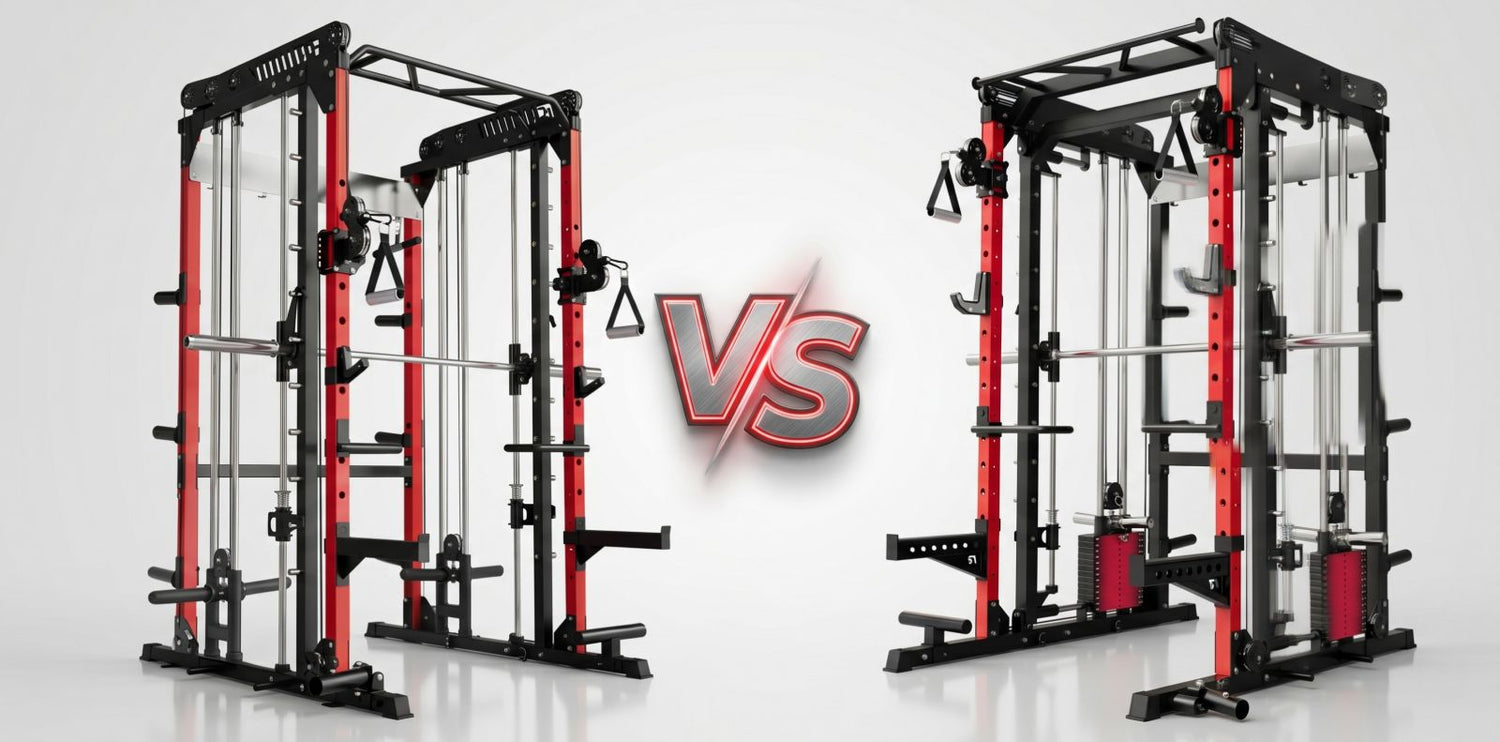
The RitFit M1 is the better choice for tighter budgets and smaller rooms, while the RitFit M2 is the better choice for buyers who want a more modular, premium platform with more room to grow. This guide compares space fit, training feel, versatility, upgrade path, and value so you can choose the right machine with less guesswork.
Key Takeaways
- The RitFit M1 is usually the smarter buy for first time home gym shoppers who want strong core functionality, easier room fit, and better entry value.
- The RitFit M2 is usually the stronger buy for users who want a more premium training feel, a more expandable platform, and a setup that feels closer to a long term final station.
- Space matters almost as much as price, because working clearance, bench position, and plate movement often affect day to day comfort more than headline specs do.
- The best decision is not about which machine is better in isolation, it is about which machine better matches your room, training style, and upgrade horizon.
- Before buying, verify the exact live package, included attachments, shipping terms, and current product page details on the official RitFit Smith machine collection.
Overview of the Brand
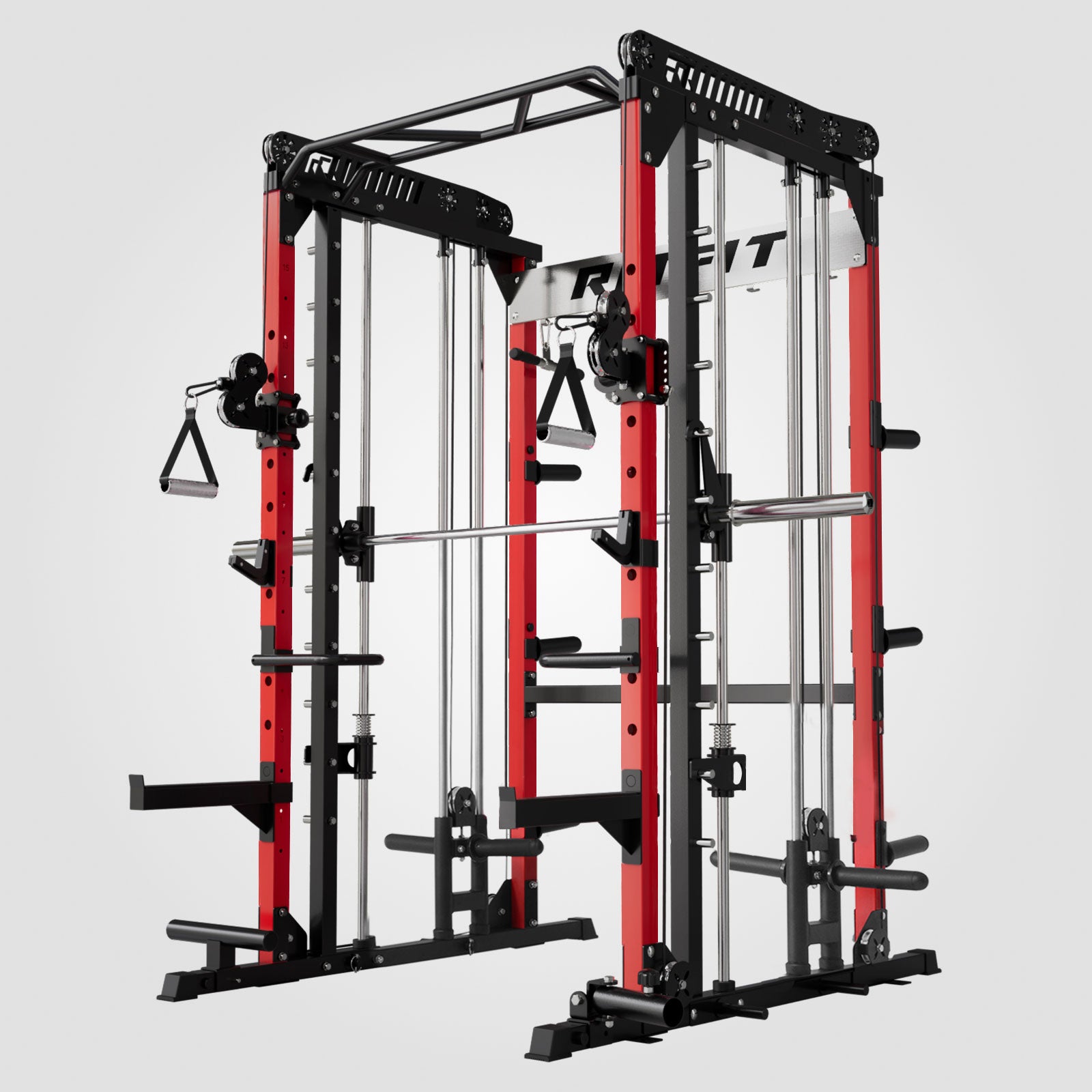
RitFit is known in the home gym market for combining Smith, rack, cable, and accessory training into more accessible all in one systems. That makes the brand especially relevant for garage gyms, spare room gyms, and buyers trying to avoid piecing together multiple large stations.
If you are comparing the RitFit M1 PRO Smith Machine with the RitFit M2 home gym Smith machine, you are really comparing two different ownership paths. One centers on practical value now, and the other centers on platform growth over time.
Purpose of This Guide
This guide is built to answer one practical question, which RitFit model makes more sense for your space, budget, and training goals. It keeps your original side by side structure, but adds stronger buying context, cleaner decision criteria, and more semantic coverage.
It also avoids overclaiming exact dimensions or hard spec numbers that vary by live listing and package configuration. That keeps the comparison more trustworthy and more useful for real buyers.
Quick Comparison Summary
At a Glance
The M1 is the more accessible all in one rack for buyers who want the essentials without stretching room or budget too far, while the M2 is the more premium modular platform for buyers who want more long term upside. That does not make the M1 entry level in a weak sense, it makes the M1 the more efficient answer for many real home gyms.
| Decision Point | RitFit M1 | RitFit M2 |
|---|---|---|
| Best for | First serious home gym, smaller room, value focused buyer. | Committed lifter, larger room, buyer planning for long term expansion. |
| Space logic | Usually easier to place and easier to justify in tighter layouts. | Usually rewards you more if you have better clearance and working room. |
| Training feel | Practical, versatile, and sufficient for most home routines. | More premium, more expansive, and usually more future minded. |
| Upgrade path | Better for buyers who want a complete solution now. | Better for buyers who already know they want more platform growth later. |
| Value logic | Higher function to cost value for many households. | Higher ownership value if you would otherwise upgrade later. |
- Choose the M1 first: If your top priorities are price discipline, compactness, and all around versatility in one station.
- Choose the M2 first: If your top priorities are premium feel, platform growth, and a setup you want to keep for years.
Design and Build Quality
Frame and Overall Feel
Build quality matters because it changes how predictable the station feels during squats, presses, pull ups, rows, and cable work. The M1 generally feels like the practical all around option, while the M2 generally feels like the more substantial machine built around longer term use.
- M1 advantage: It is easier to justify if you want a do everything rack without paying for a broader platform than you need.
- M2 advantage: It is easier to justify if you care more about overall station presence, working room, and a more premium training impression.
Footprint and Room Planning
Room planning should be based on true working clearance, not just the machine footprint listed on a page. Bench movement, plate loading space, walk around room, and ceiling clearance all shape daily usability.
- M1 fit: Usually the safer bet for apartments, smaller garages, and basement rooms where every inch matters.
- M2 fit: Usually the better bet when you have enough room to benefit from a larger training envelope instead of just accommodating it.
Visual Presence
Both models fit the modern home gym aesthetic, but they do not project the same message in a room. The M1 reads as leaner and more practical, while the M2 reads as more premium and more permanent.
Functional Differences
Exercise Versatility
Both models support the all in one home gym idea, which means both can cover squats, presses, rows, pulldowns, cable work, and general accessory training. For many users, that means either model can anchor a full weekly program without requiring multiple separate stations.
- M1 strength: It covers the core movements most home users actually repeat every week.
- M2 strength: It is the better fit if you want your station to feel more like a platform you can build around instead of a single purchase you simply use as is.
Included Training Ecosystem
The M1 is easier to understand as a classic all in one rack, while the M2 is easier to understand as the more growth oriented platform. That difference matters because buyers often overfocus on day one features and underfocus on year two ownership.
- M1 buyer logic: Get the essential Smith, rack, cable, and attachment functionality in one efficient package.
- M2 buyer logic: Spend more now if you already know modularity and future add ons matter to how you will train later.
Range of Motion and Working Comfort
Working comfort is not just a luxury issue, because cramped setup can make exercise transitions slower and less intuitive. Taller users and buyers doing more cable work usually notice this faster than beginners do.
- M1: Better when space efficiency is part of the buying brief.
- M2: Better when movement comfort and a less cramped training feel matter more than minimizing footprint.
Performance and Specifications
Strength Outcomes and Training Transfer
For most home users, the bigger question is not whether a guided machine can build strength, but whether the system matches their training preferences and consistency. Machine based and free weight based programs can both drive strong results in novices, which is why an all in one Smith setup can still be a valid primary station for many buyers.[1]
How Much Equipment Specificity Matters
The broader research base suggests that machine and free weight training can produce broadly similar hypertrophy and performance outcomes overall, but transfer tends to favor the equipment style that is tested. That means the better choice is often the one you will actually use consistently and the one that aligns with your preferred movement environment.[2]
Cable Feel and Exercise Flow
Cable smoothness affects the experience more than many shoppers expect, because it changes how easy it feels to move through accessory work, supersets, and daily training transitions. Buyers who are sensitive to that premium feel usually lean harder toward the M2, while buyers focused on core utility usually stay happy with the M1.
Stability Under Load
Different stability demands materially change training demands, so the way a station feels under load is not just about comfort or perception. That is part of why buyers who want a more planted feel often justify stepping up to the M2 even when the M1 already covers their basic movement list.[4]
Feature by Feature Comparison
Safety and Solo Training
Home gym buyers care about safety because they often train alone, and that makes rack structure, safeties, and predictable movement feel especially important. If solo training is a core reason you are shopping in this category, read RitFit's guide on safe solo workouts at home as a companion piece.
- M1: A strong fit for buyers who want solo friendly essentials without moving into a more expensive platform tier.
- M2: A stronger fit for buyers who want more reassurance during heavier use and a more premium overall package.
Storage and Organization
Built in storage improves workflow because it keeps plates and attachments off the floor and closer to the point of use. Cleaner organization also makes a home gym easier to share and easier to maintain.
- M1: Usually enough for the buyer building a compact, efficient setup.
- M2: Usually more attractive for the buyer who wants the station to feel like a more finished training hub.
Bench and Attachment Compatibility
Compatibility matters more over time than it does on day one, because most buyers add supporting pieces after the main machine arrives. If that is part of your plan, compare your machine choice with RitFit's adjustable weight benches and rack attachments before you finalize the order.
User Experience and Use Cases
Best for First Time Home Gym Buyers
The M1 is the more rational entry point for many first time buyers because it solves the main problem without overextending the budget. It gives you enough variety to learn your preferences before you spend for a broader platform.
- Best match: Buyers building their first serious home gym, especially in tighter rooms.
- Helpful companion read: See best Smith machine for beginners for a more beginner specific buying angle.
Best for Committed Long Term Lifters
The M2 makes more sense when your machine is not a starter piece, but a long term centerpiece. It is easier to justify when you already know consistent training, future add ons, and a more premium feel matter to you.
- Best match: Intermediate or advanced lifters, multi user households, and buyers building a more permanent garage gym.
- Helpful companion read: See best Smith machine for home gym if you want the M2 platform framed more directly as the lead option.
Best for Buyers Still Learning Their Preferences
Novices generally do better when exercise selection and setup simplicity match their current skill level, not their imagined future level. That is one reason the M1 often feels easier to recommend early, while the M2 often feels easier to recommend once training identity is already established.[3]
Price and Value
Price Position
The M1 usually sits in the lower price tier, and that alone will make it the default choice for many households. The M2 asks for more money because it is selling a larger platform idea, not just another list of exercises.
Function to Cost Value
If your goal is maximum usable function per dollar, the M1 often wins. If your goal is to avoid the feeling that you bought a transitional machine and may want to upgrade later, the M2 often wins.
Ownership Value Over Time
Home gym value should be judged across years of use, not across the first week after delivery. The machine that costs less today is not automatically the better value if it leaves you wanting a more premium or more expandable station later.
Pros and Cons of Each Model
RitFit M1 Pros and Cons
The M1 is strongest when you want a practical answer with broad usefulness and lower buying friction. Its main tradeoff is that some buyers will eventually want a more premium feel or a broader upgrade path.
- Pros: Better entry value, easier room fit, strong core exercise coverage, more rational for first time buyers.
- Cons: Less appealing if you already know you want a more expansive and future oriented training platform.
RitFit M2 Pros and Cons
The M2 is strongest when you want your station to feel like a longer term platform rather than a value buy. Its main tradeoff is that the extra spend only pays off if you truly value the bigger, more premium, more modular ownership path.
- Pros: More premium feel, better long term platform logic, stronger fit for larger rooms and committed lifters.
- Cons: Higher upfront cost, more demanding space requirements, easier to overbuy if you are still figuring out your training needs.
How to Choose Between the Two
Four Decision Filters
The cleanest way to choose is to rank your room, your budget, your training ceiling, and your need for future expansion. If two of those four clearly point in one direction, that is usually the right answer.
- Budget first: Choose M1 if cost discipline matters more than future platform ambition.
- Space first: Choose M1 if your room is tighter or your ceiling is less forgiving.
- Premium feel first: Choose M2 if the way the machine feels under use matters as much as the exercise menu itself.
- Expansion first: Choose M2 if you already know you want more room to grow later.
Simple Buyer Guide
You do not need the most advanced machine to make the correct purchase, you need the most suitable one. That is why the M1 is often the better answer for the average buyer, while the M2 is often the better answer for the more committed buyer.
- Choose the M1 if: You want strong value, compact practicality, and one station that covers the essentials right now.
- Choose the M2 if: You want more premium ownership, more modular upside, and a setup you are building around for years.
- Helpful next step: If you are still undecided, read how to use a Smith machine at home to sanity check whether your exercise list truly requires the broader platform.
FAQs
Which RitFit Smith machine is better for beginners, M1 or M2?
The RitFit M1 is usually better for beginners. It gives you the core Smith, rack, and cable functions at a lower entry cost, and that simpler value proposition makes it easier to build a first serious home gym without paying for expansion features you may not use yet.
Is the RitFit M2 worth it over the M1 for a home gym?
Yes. The RitFit M2 is worth it if you want a more premium training feel, a bigger platform, and better room to grow. If your space, budget, and long term training plans are more modest, the M1 usually gives you the more efficient buy.
Can the RitFit M1 fit better in a small garage or basement gym?
Yes. The RitFit M1 is usually the easier choice for smaller rooms, tighter garages, and more restrictive ceiling situations. It is still essential to confirm total machine height, working clearance, bench position, and plate storage space before you order any large home gym unit.
Does the RitFit M2 give you more upgrade potential than the M1?
Yes. The RitFit M2 is the stronger option for buyers who already know they want a more expandable setup. Its bigger value comes from future flexibility, not just from what it does on day one, so it makes more sense for long term home gym planning.
Should you choose a weight stack or plate loaded setup with a RitFit Smith machine?
It depends on your priorities. Weight stacks usually make workouts faster, smoother, and more convenient, while plate loaded systems can reduce upfront cost and let you reuse plates you already own, so the right choice comes down to budget, convenience, and training flow.
Is the RitFit M1 stable enough for serious home strength training?
Yes. For most home lifters, the RitFit M1 is stable enough for consistent strength training, hypertrophy work, and regular solo sessions. Buyers pushing heavier loads more often, or wanting a more planted premium feel, are usually the ones who benefit more from the M2.
Does the RitFit M2 make more sense for tall lifters or larger training spaces?
Yes. The RitFit M2 usually makes more sense when you have the room to benefit from a larger setup and a less cramped training envelope. Taller lifters and buyers who care about overall movement comfort often appreciate that extra space more quickly.
How do you choose between the RitFit M1 and M2 without overspending?
Start with your space, budget, and likely training ceiling. If you want strong value and core versatility, choose the M1, but if you want a more premium platform with better expansion potential and you know you will keep training hard, the M2 is easier to justify.
Conclusion
Choose the RitFit M1 if your goal is strong value, easier room fit, and a clean all around solution that covers the essentials. Choose the RitFit M2 if you have the budget, the space, and the long term intent to justify a more premium and more modular home gym platform.
Disclaimer: This guide is for general product comparison and educational use. Final value depends on the exact live package, included attachments, pricing, shipping terms, and room measurements on the official product pages, so verify the current listing before you buy.
References
- Aerenhouts D, D'Hondt E. Using Machines or Free Weights for Resistance Training in Novice Males? A Randomized Parallel Trial. Int J Environ Res Public Health. 2020;17(21):7848. doi:10.3390/ijerph17217848
- Haugen ME, Vårvik FT, Larsen S, et al. Effect of free-weight vs. machine-based strength training on maximal strength, hypertrophy and jump performance, a systematic review and meta-analysis. BMC Sports Sci Med Rehabil. 2023;15(1):103. doi:10.1186/s13102-023-00713-4
- Kompf JM, Rhodes RE, Lee S. Selecting Resistance Training Exercises for Novices: A Delphi Study with Expert Consensus. Am J Lifestyle Med. 2022;19(3):437-449. doi:10.1177/15598276221115662
- Saeterbakken AH, Olsen A, Behm DG, Bardstu HB, Andersen V. The short- and long-term effects of resistance training with different stability requirements. PLoS One. 2019;14(4):e0214302. doi:10.1371/journal.pone.0214302