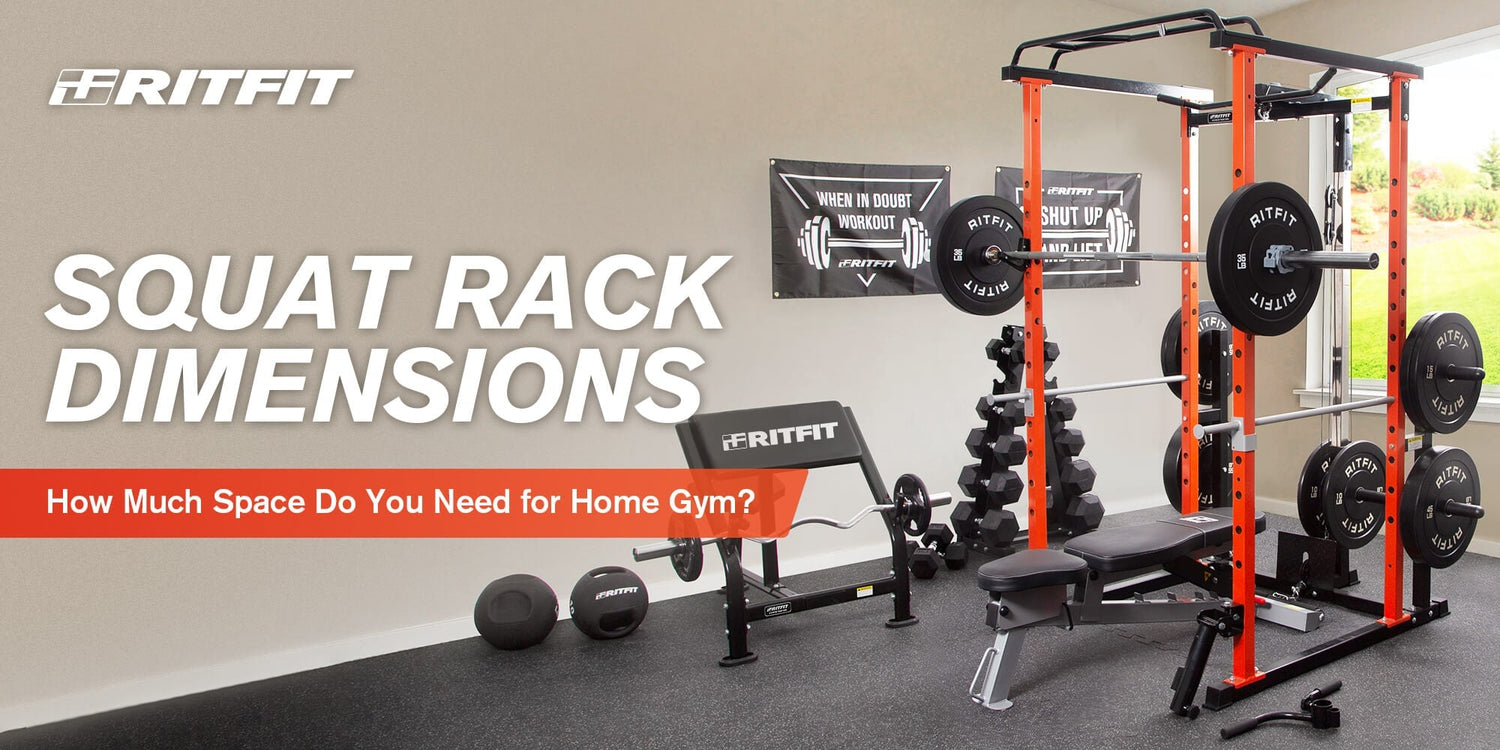
Most home gyms need about 8 to 10 feet of usable width, 6 to 8 feet of depth, and 8.5 to 9 feet of ceiling height for a comfortable squat rack setup. The rack itself may look compact, but your full plan must include the barbell, plates, walkout space, bench position, and safety clearance.
Table of Contents
- What Is a Squat Rack?
- Standard Squat Rack Dimensions
- Quick Reference: Squat Rack Size Chart
- How Wide Is a Squat Rack?
- How Tall Is a Squat Rack?
- How Deep Is a Squat Rack?
- How Much Space Do You Need by Room Type?
- How to Measure Your Room for a Squat Rack
- How to Set Up and Use a Squat Rack Safely
- Which Squat Rack Style Should You Choose?
Key Takeaways
- Most squat racks are about 40 to 52 inches wide, 24 to 50 inches deep, and 72 to 96 inches tall.
- A full home gym training zone usually needs about 10 feet of width when using a standard Olympic barbell.
- Ceiling height matters because pull ups, overhead clearance, lights, beams, and garage tracks can limit usable space.
- Rack depth affects walkout room, bench setup, plate storage, and how safely you can rerack heavy squats.
- The best rack size depends on your room type, training goals, barbell length, and whether you need a full rack, half rack, wall mounted rack, or compact stand.
What Is a Squat Rack?

A squat rack is a steel strength training station that holds a loaded barbell at a safe starting height for squats, bench press, overhead press, and other barbell movements. It usually includes upright posts, J hooks, and safety arms or pins that help support the bar before and after each set.
A squat rack is a major step up from basic home workout tools like dumbbells, barbells, and weight benches. Resistance training can support strength, muscle, and bone health when it is programmed and performed appropriately.[1]
The main reason to measure squat rack dimensions carefully is simple, a rack that fits on paper can still feel cramped or unsafe in real use. You need enough space to load plates, step back from the hooks, move around the bar, and place your bench without hitting a wall.
Standard Squat Rack Dimensions

Standard squat rack dimensions usually range from 40 to 52 inches wide, 24 to 50 inches deep, and 72 to 96 inches tall. These numbers describe the rack footprint, not the full training area you need around it.
- Typical width: Plan for about 40 to 52 inches across the rack frame.
- Typical depth: Plan for about 24 to 50 inches depending on rack style and rear support design.
- Typical height: Plan for about 72 to 96 inches depending on whether the rack includes a pull up bar.
- Training zone: Plan for about 8 to 10 feet of total width and 6 to 8 feet of total depth for more comfortable lifting.
- Ceiling height: Aim for 8.5 to 9 feet if you want pull ups, overhead movement, and easier bar handling.
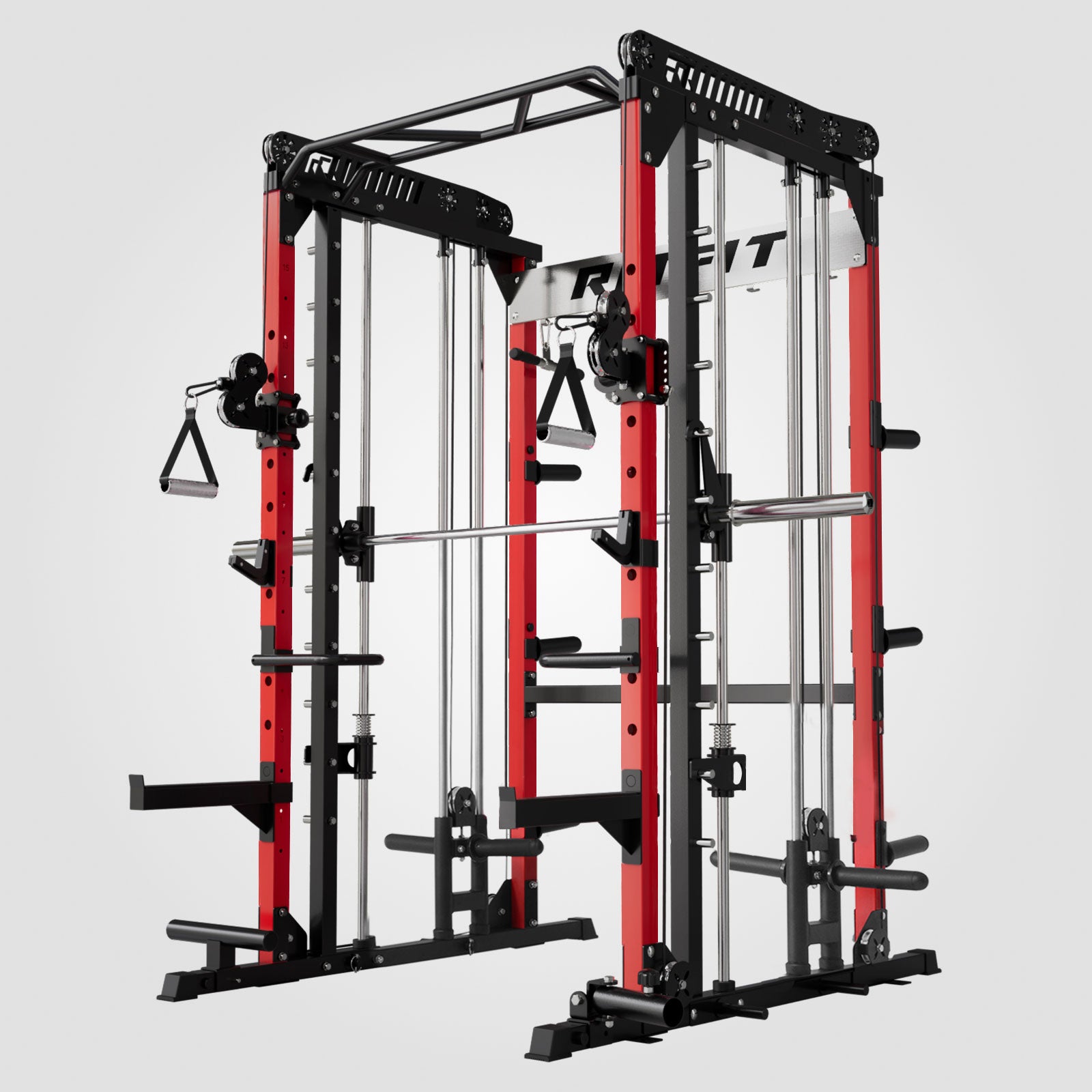
There is no single universal squat rack size because full racks, half racks, Smith machines, squat stands, and wall mounted racks are built for different spaces. For an all in one setup, a RitFit M1 Smith Machine home gym package may require more planning than a simple squat stand because it combines rack, cable, and guided bar functions.
Quick Reference: Squat Rack Size Chart
The table below gives practical planning ranges for common home gym rack types. Always confirm the exact product dimensions before buying because attachments, plate storage, pull up bars, and cable systems can increase the usable space required.
| Rack Type | Typical Rack Footprint | Recommended Training Space | Recommended Ceiling Height | Best For |
|---|---|---|---|---|
| Full Power Rack | 48 to 52 in wide, 40 to 50 in deep | 10 ft wide, 8 ft deep | 8.5 to 9 ft or higher | Garage gyms and heavy barbell training |
| Half Rack | 48 to 52 in wide, 30 to 40 in deep | 10 ft wide, 6 to 7 ft deep | 8 to 9 ft | Lifters who want open access and a smaller footprint |
| Wall Mounted Rack | 48 to 52 in wide, 20 to 30 in deep | 10 ft wide, 5 to 6 ft deep | 8 to 9 ft | Compact garages and spare rooms |
| Squat Stands | 40 to 48 in wide | 8 to 10 ft wide, 5 to 6 ft deep | 8 ft or higher | Small rooms and basic barbell training |
| Smith Machine Rack | Varies by model and cable system | 10 ft wide, 8 ft deep | 8.5 to 9 ft or higher | Guided bar training and all in one home gyms |
These ranges include the barbell, sleeves, plate loading area, and a basic movement buffer. If your setup includes bumper plates, rear plate storage, or a cable station, add more side and rear clearance.
How Wide Is a Squat Rack?
A typical squat rack is about 40 to 52 inches wide, but the full lifting width is closer to 8 to 10 feet once you add a 7 foot Olympic barbell. For comfortable plate loading, plan about 2 feet of clear space on each side of the bar sleeves.
Full Sized Rack
A full sized rack usually has an outside width around 47 to 52 inches. With a standard Olympic barbell and side loading room, the real wall width should be about 10 feet for safer use.
Small Rack
A small rack may be closer to 40 inches wide, but the barbell still determines your real space requirement. This is why a compact rack does not always mean a compact training zone.
- Olympic barbell clearance: A 7 foot Olympic bar is wider than the rack, so measure the bar first when planning wall space.
- Plate loading room: Leave enough space to slide plates on and off without scraping walls, mirrors, or storage shelves.
- Side walking path: Keep a small walking path around both bar ends so the rack does not block room access.
How Tall Is a Squat Rack?
Most home gym squat racks are about 72 to 96 inches tall. Choose the height by measuring the lowest usable point in your room, not just the main ceiling.
A compact rack may fit under an 8 foot ceiling, but pull ups may feel restricted if your head or feet approach the ceiling. Squat biomechanics are also affected by trunk position, depth, and movement control, so your setup should let you brace and move without awkward compensation.[2]
Full Sized Rack
A full sized rack often stands around 90 inches or taller. This height works best in garages, open rooms, or spaces with 8.5 to 9 foot ceilings.
Short Rack
A short rack often stands around 72 to 80 inches tall. This can work better for basements, low ceilings, and rooms with beams or ductwork.
- Measure ceiling obstructions: Check garage door tracks, openers, lights, fans, beams, and ducts before choosing rack height.
- Check pull up clearance: Add headroom above the pull up bar if pull ups are part of your training plan.
- Plan overhead lifts separately: Standing overhead press may need more ceiling room than squats or bench press.
How Deep Is a Squat Rack?
Most squat racks are about 24 to 50 inches deep, but the usable depth should include walkout space and bench placement. A rack that is too close to the wall can make squatting, benching, and reracking feel unsafe.
- Walkout space: Leave enough room to take 1 to 2 controlled steps back after unracking the bar.
- Rear safety buffer: Keep space behind the bar path so the plates do not strike the wall during setup or reracking.
- Bench press clearance: Make sure your bench can roll or slide into position without blocking your feet or spotter path.
- Plate storage clearance: If your rack has rear storage pegs, add depth for loaded plates and hand access.
Depth matters because your body position changes across squat styles, stance widths, and individual mobility. Research shows that stance width and foot placement can affect knee, hip, and trunk motion during squatting, so your space should let you use a natural stance without crowding the rack.[3]
How Much Space Do You Need by Room Type?

The right squat rack dimensions depend on the room as much as the rack itself. A garage, basement, apartment, and spare bedroom each create different clearance problems.
Garage Gym
A garage gym usually gives you the best chance of fitting a full rack with barbell clearance. Aim for a 10 by 10 foot zone if you want squats, bench press, pull ups, and plate storage in one area.
Basement Gym
A basement gym usually needs extra ceiling checks because beams, ducts, and pipes can reduce usable height. If your ceiling is under 8 feet, consider a shorter rack or a low ceiling setup guide like low ceiling home gym planning tips.
Apartment or Spare Bedroom
An apartment setup usually works best with compact racks, squat stands, or wall mounted options. Use protective flooring and confirm that the rack plus bar will not block doors, closets, windows, or walking paths.
- Garage priority: Check door tracks and openers before assuming the ceiling is clear.
- Basement priority: Measure the lowest point, not the highest point.
- Apartment priority: Consider floor protection, noise control, and total loaded equipment weight.
- Spare room priority: Keep the bar ends away from glass, furniture, and tight corners.
How to Measure Your Room for a Squat Rack
Measure the training zone before comparing rack models. The goal is to confirm that your rack, barbell, plates, bench, and body can all move safely in the same space.
- Step 1: Measure wall width: Measure the clear wall area where the barbell will sit. Subtract doors, shelves, windows, and storage items that must remain accessible.
- Step 2: Measure usable ceiling height: Measure the lowest point above the rack. Include beams, lights, fans, garage tracks, and openers.
- Step 3: Tape the rack footprint: Mark the rack width and depth on the floor with tape. Walk around it to see whether the space feels usable.
- Step 4: Mark the barbell line: Tape a 7 foot line across the floor to represent a standard Olympic bar. Make sure both ends have loading clearance.
- Step 5: Test your walkout path: Stand where the bar would start, take 1 to 2 small steps back, and check that you can rerack without hitting a wall.
If the taped layout feels tight before equipment arrives, it will feel tighter after you add steel, plates, collars, and a bench. For flooring protection, consider using rubber interlocking gym flooring mats under the rack and bar path.
How to Set Up and Use a Squat Rack Safely

Safe squat rack setup starts with correct J hook height, safety pin position, balanced loading, and a clear walkout path. Traditional resistance training can be safe when technique, progression, and supervision are appropriate, but poor setup can increase injury risk.[4]
- Set J hooks at upper chest height: The bar should let you unrack with a slight knee bend. Avoid setting it so high that you must lift onto your toes.
- Set safeties before lifting: Safety pins or straps should sit just below your lowest controlled squat depth. They should catch the bar without changing your normal movement.
- Load both sides evenly: Add the same weight to both sleeves and secure the plates with collars. Uneven loading can make the bar shift during unracking.
- Keep the walkout short: Take 1 to 2 controlled steps back and stay inside the safety zone. Walking too far from the rack makes reracking harder.
- Rerack with control: Step forward until both sides of the bar touch the uprights, then lower the bar into the hooks. Do not twist or drop one side first.
If you are comparing rack training with guided bar training, read Smith machine vs free weights before choosing your setup. The right choice depends on your goals, space, training experience, and preference for guided or free bar movement.
Which Squat Rack Style Should You Choose?
Choose your squat rack style by matching your room size, ceiling height, training goals, and accessory needs. The best option is the one that gives you enough clearance to train consistently without feeling boxed in.
| Your Situation | Best Rack Style | Why It Fits |
|---|---|---|
| You have a garage with open floor space | Full power rack | It offers stronger safety coverage, more attachments, and better long term training flexibility. |
| You have a low ceiling basement | Short rack or compact rack | It reduces height problems while still supporting basic barbell training. |
| You train in an apartment or spare room | Squat stands or wall mounted rack | It saves depth and keeps the room easier to navigate. |
| You want guided lifting plus cable work | Smith machine rack | It combines guided bar movement, cable stations, and rack style training in one footprint. |
| You want a value focused home gym build | Power cage package | It can support squats, bench press, pull ups, and accessories without needing several separate stations. |
For a space conscious rack setup, compare options in the RitFit squat racks and power racks collection. If you want a rack plus guided bar system, browse the RitFit Smith machine collection instead.
If you want a heavier all in one option, the RitFit Buffalo home gym equipment guide can help you compare a larger multi function setup. If your goal is a budget friendly rack foundation, the RitFit 1000LB Power Cage is worth reviewing for footprint, capacity, and home gym compatibility.
Common Squat Rack Space Planning Mistakes
Most squat rack sizing mistakes happen because lifters measure the rack only, not the full training zone. A better plan includes the rack, barbell, plates, bench, storage, and human movement.
- Only measuring the rack footprint: The rack footprint does not include the barbell, sleeves, plates, or walkout path.
- Ignoring ceiling obstructions: Garage tracks, ceiling fans, lights, and beams can reduce the usable height by several inches.
- Placing the rack too close to a wall: You need enough rear clearance to step back, brace, squat, and rerack safely.
- Forgetting bench press setup: A rack that works for squats may still feel cramped when a bench is placed inside it.
- Skipping floor protection: Rubber flooring helps protect surfaces, reduce noise, and improve stability around heavy equipment.
FAQs
What are the standard squat rack dimensions?
Standard squat rack dimensions are usually 40 to 52 inches wide, 24 to 50 inches deep, and 72 to 96 inches tall. Exact sizing depends on rack style, pull up bar height, rear support design, cable attachments, plate storage, and whether it is a full rack or compact stand.
How much space do you need around a squat rack?
You usually need about 8 to 10 feet of width and 6 to 8 feet of depth around a squat rack. This space covers the rack frame, Olympic barbell, plate loading room, bench position, walkout path, and enough clearance to rerack safely without hitting walls.
Is an 8 foot ceiling enough for a squat rack?
Yes. An 8 foot ceiling can fit many compact squat racks, but it may not allow comfortable pull ups or overhead movement. Always measure the lowest point in the room, including beams, lights, ducts, fans, garage tracks, and openers before choosing rack height.
How wide is a squat rack with an Olympic barbell?
A squat rack with an Olympic barbell usually needs about 8 to 10 feet of total usable width. The rack may only be around 50 inches wide, but the 7 foot bar extends beyond the frame and needs side clearance for loading plates safely.
Can a squat rack fit in an apartment?
Yes. A squat rack can fit in some apartments if you choose a compact rack, squat stand, or wall mounted design. You should confirm ceiling height, floor protection, noise control, total loaded weight, doorway clearance, and whether the barbell blocks closets, windows, or walking paths.
What is the difference between rack footprint and training space?
Rack footprint is the physical floor area covered by the rack frame, while training space is the full area needed to lift safely. Training space includes barbell length, sleeve clearance, plate loading room, walkout space, bench placement, storage, and your movement around the rack.
How far should a squat rack be from the wall?
A squat rack should be far enough from the wall to allow a short walkout, safe reracking, and plate clearance. Many home gyms feel better with at least 2 to 3 feet behind the lifting area, especially if the rack includes rear plate storage or cable attachments.
Should you choose a full rack or half rack for a home gym?
Choose a full rack if you have enough floor space and want stronger safety coverage for barbell training. Choose a half rack if your room is tighter and you prefer easier access, smaller depth, and a more open layout for squats, bench press, and accessory work.
Conclusion
The best squat rack dimensions are the ones that fit both your equipment and your real movement space. Before buying, measure rack width, rack height, rack depth, Olympic barbell clearance, ceiling height, walkout room, bench placement, and plate storage.
If your space supports a 10 foot wide training zone and about 8.5 to 9 feet of ceiling height, most home gym rack setups become much easier to use. When space is limited, choose a shorter, compact, or wall mounted rack that matches your actual room instead of forcing a full size frame into a tight area.
Disclaimer: This article is for general fitness equipment planning and education only. Always follow the manufacturer assembly instructions, inspect hardware before lifting, use collars and safeties, train with controlled technique, and consult a qualified coach or medical professional if you have pain, injury history, mobility limits, or uncertainty about proper squat setup.
References
- Hong AR, Kim SW. Effects of resistance exercise on bone health. Endocrinol Metab (Seoul). 2018;33(4):435-444. doi:10.3803/EnM.2018.33.4.435
- Straub RK, Powers CM. A biomechanical review of the squat exercise: implications for clinical practice. Int J Sports Phys Ther. 2024;19(4):490-501. doi:10.26603/001c.94600
- Lorenzetti S, Ostermann M, Zeidler F, et al. How to squat? Effects of various stance widths, foot placement angles and level of experience on knee, hip and trunk motion and loading. BMC Sports Sci Med Rehabil. 2018;10:14. doi:10.1186/s13102-018-0103-7
- Serafim TT, de Oliveira ES, Maffulli N, Migliorini F, Okubo R. Which resistance training is safest to practice? A systematic review. J Orthop Surg Res. 2023;18(1):296. doi:10.1186/s13018-023-03781-x