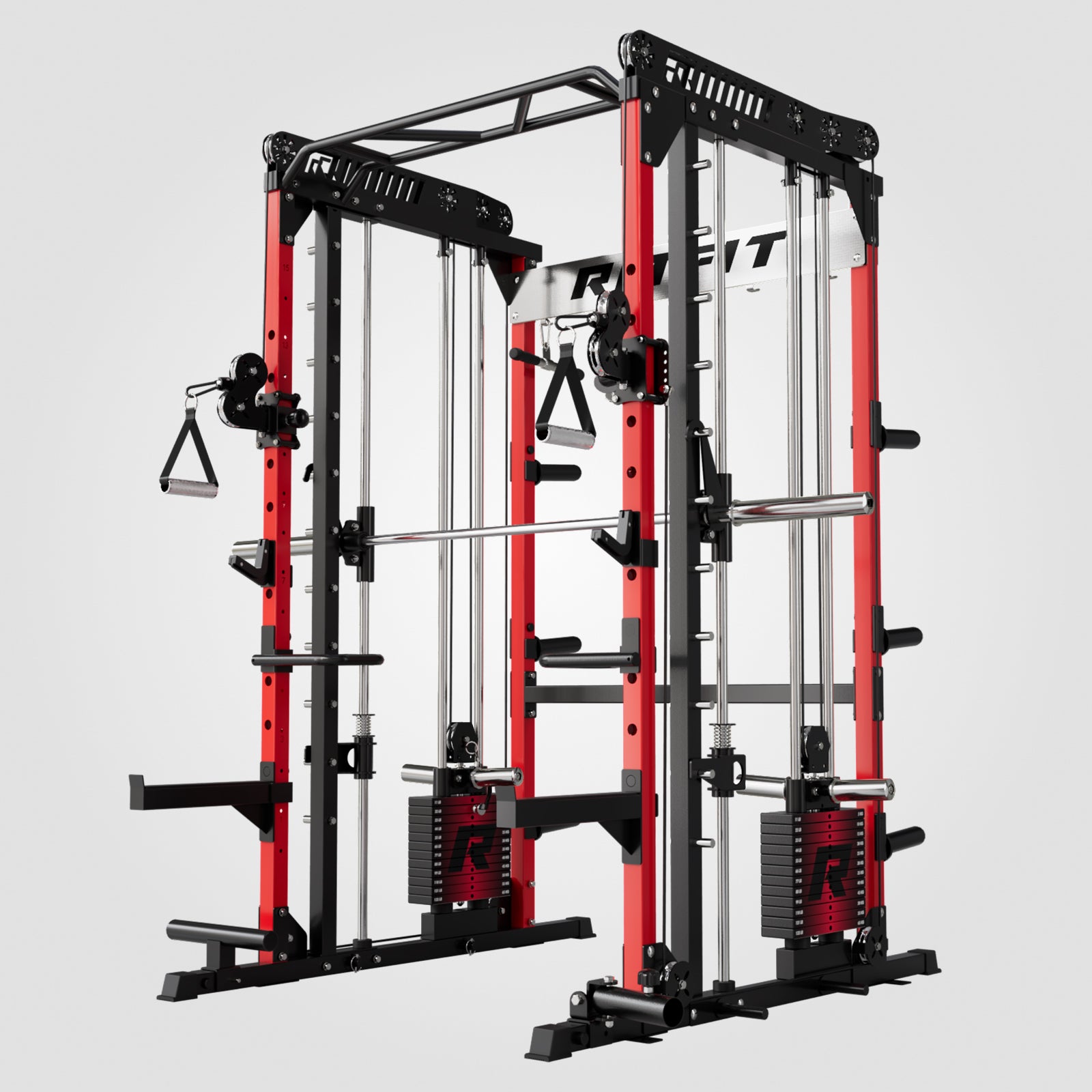
A stair climber is better for cardio, calorie burn, and lower body endurance, while a Smith machine is better for full body strength, muscle growth, and long term home gym value. The right choice depends on your main goal, available space, training style, and whether you need cardio conditioning or resistance training first.
Table of Contents
- Quick Comparison
- What Is a Stair Climber Machine?
- What Is a Smith Machine?
- Stair Climber vs Smith Machine: Head to Head Comparison
- Which Machine Is Right for You?
- How to Combine Both Machines for Better Results
- Smith Machine Workouts That Complement Stair Climbing
- Stair Climber Techniques for Maximum Benefit
- Common Myths Debunked
- Equipment Recommendations for Home Gyms
Key Takeaways
- Choose a stair climber for cardio: It is best for heart rate elevation, lower body endurance, and low impact conditioning.
- Choose a Smith machine for strength: It supports squats, presses, rows, hip thrusts, lunges, and progressive overload.
- Space matters: A stair climber usually needs less floor space, while a Smith machine needs more room for the frame, bench, plates, and safe movement.
- Both machines can support fat loss: A stair climber burns energy during the session, while a Smith machine helps build and preserve lean muscle.
- The best home gym uses both training types: Combine cardio and resistance training for stronger conditioning, better muscle balance, and more complete fitness.
Quick Comparison
The stair climber wins for cardio, while the Smith machine wins for full body strength. Use this quick comparison before reviewing the detailed buying guide.
| Category | Stair Climber Machine | Smith Machine |
|---|---|---|
| Best For | Cardio, calorie burn, lower body endurance | Muscle building, strength, full body training |
| Main Muscles | Glutes, quads, hamstrings, calves, core | Chest, back, shoulders, arms, legs, glutes, core |
| Training Style | Continuous stepping and interval cardio | Guided bar strength training and accessory lifts |
| Space Need | Usually more compact | Larger footprint with bench and plates |
| Learning Curve | Easy to start | Requires exercise setup and form practice |
| Home Gym Value | Strong cardio value | Broader full body training value |
What Is a Stair Climber Machine?
A stair climber machine is a cardio machine that simulates climbing stairs. It trains the lower body while raising heart rate through repeated stepping against gravity.
Stair climbing can be an efficient conditioning method because it uses large lower body muscles and can improve cardio metabolic outcomes when performed consistently over time.[1]
Key Benefits of Stair Climbers
A stair climber is best when your priority is low impact cardio with strong lower body involvement. It can fit users who want conditioning without the repetitive landing impact of running.
- Cardio conditioning: The stepping pattern raises heart rate quickly and can support aerobic capacity when used consistently.
- Lower body endurance: The glutes, quads, hamstrings, and calves work repeatedly through each step.
- Low impact movement: Your feet stay supported on the pedals or steps, which may feel gentler than running for some users.
- Simple workout flow: Most users can start with a short steady pace session and progress to intervals later.
- Compact home use: Many stair climbers take less floor area than a large strength station, although height clearance still matters.
What Is a Smith Machine?
A Smith machine is a strength training station with a barbell fixed to vertical or angled guide rails. It allows squats, presses, rows, lunges, hip thrusts, and other lifts with built in rack points.
For home gym users, the biggest advantage is safer solo lifting when the safety stops are set correctly. Browse RitFit Smith machine options if your main goal is full body strength training at home.
Key Benefits of Smith Machines
A Smith machine is best when your priority is muscle building, strength, and exercise variety. It offers more complete resistance training coverage than a cardio only machine.
- Solo training safety: The guided bar and rack points help users train without a spotter when safety stops are positioned correctly.
- Progressive overload: You can increase resistance over time with weight plates and structured programming.
- Full body coverage: One machine can train chest, back, shoulders, legs, glutes, and arms.
- Beginner friendly structure: The guided path reduces balance demands and lets newer lifters focus on setup and control.
- Home gym centerpiece: A Smith machine can pair with a bench, plates, cable attachments, and accessories to create a complete setup.
Resistance training prescription variables can influence muscle mass, strength, and physical function, which is why a strength focused machine has long term value beyond a single workout session.[2]
Stair Climber vs Smith Machine: Head to Head Comparison
The stair climber and Smith machine solve different home gym problems. One improves conditioning, while the other builds strength and muscle through resistance training.
1. Primary Training Goal
The stair climber is better for cardio, while the Smith machine is better for strength. Choose based on the result you want most over the next six to twelve months.
- Stair climber: Best for heart rate training, step endurance, lower body stamina, and conditioning finishers.
- Smith machine: Best for squats, presses, rows, glute training, hypertrophy, and progressive overload.
- Best combined use: Use the Smith machine first for strength, then finish with stair climber intervals or steady cardio.
2. Muscle Groups Targeted
The stair climber mainly trains the lower body, while the Smith machine can train every major muscle group. This makes the Smith machine more versatile as a first home gym anchor.
- Stair climber muscles: Glutes, quads, hamstrings, calves, hip flexors, and core.
- Smith machine muscles: Chest, back, shoulders, triceps, biceps, quads, hamstrings, glutes, calves, and core.
- Training gap: Stair climbing does not replace upper body pushing and pulling work.
3. Calorie Burn and Fat Loss
A stair climber usually burns more energy during the cardio session, while a Smith machine helps build lean muscle that supports long term body composition. Neither machine guarantees fat loss without consistent training and nutrition.
- Stair climber advantage: It keeps the body moving continuously, which supports higher session energy expenditure.
- Smith machine advantage: It supports muscle retention and growth, which is valuable during fat loss phases.
- Best fat loss setup: Combine resistance training, cardio, daily movement, and a sustainable nutrition plan.
4. Safety
Both machines can be safe when used correctly. The stair climber is simple to operate, while the Smith machine requires correct safety stop placement and exercise setup.
- Stair climber safety: Start slow, stand tall, use the rails lightly, and step off if balance or fatigue becomes an issue.
- Smith machine safety: Set the safety stops before heavy lifts and practice the rack motion before training near failure.
- Important note: Users with heart conditions, joint pain, or injury history should get professional guidance before intense training.
5. Space Requirements
A stair climber usually needs less floor space, while a Smith machine needs more working room. The Smith machine also requires space for a bench, weight plates, and safe entry around the frame.
- Small apartment: A stair climber may fit better if strength equipment is already limited.
- Garage gym: A Smith machine can become the primary strength station when ceiling height and floor area allow.
- Complete setup: Pair a Smith machine with RitFit weight benches and barbells and weight plates for more complete training.
6. Price and Long Term Value
The best value depends on what you will use most. A stair climber is valuable for cardio, but a Smith machine usually supports more exercise categories per square foot.
- Cardio value: Choose a stair climber if you already have dumbbells, bands, or another strength setup.
- Strength value: Choose a Smith machine if you want one central machine for muscle building and solo lifting.
- Upgrade value: Add RitFit gym accessories over time to expand training options.
7. Learning Curve
A stair climber is easier to start, while a Smith machine takes more practice. The extra learning curve is worthwhile if your goal is strength, muscle, or full body training.
- Stair climber learning curve: Start with posture, pace, and step depth.
- Smith machine learning curve: Learn bar position, foot placement, bench setup, and safety stop height.
- Beginner path: Start with light loads and master repeatable form before increasing resistance.
Which Machine Is Right for You?
Choose the machine that matches your main training priority first. A home gym works best when the first major equipment purchase solves the most important problem.
Choose the Stair Climber If
Choose the stair climber if your main goal is cardio fitness, calorie burn, and lower body endurance. It is also a strong choice if your space is limited and you want simple workouts.
- Your goal is cardio: You want better conditioning, more daily movement, and a sweat focused training option.
- You prefer simple sessions: You want to step on the machine and train without complex setup.
- You already lift: You already own weights or strength equipment and need a cardio addition.
- You need lower impact cardio: You want less landing impact than running, while still challenging the legs.
Choose the Smith Machine If
Choose the Smith machine if your main goal is strength, muscle, and full body training. It is usually the stronger first investment for a home gym built around resistance training.
- You train alone: Safety hooks and stops support solo lifting when properly set.
- You want full body workouts: You can train squats, presses, rows, lunges, hip thrusts, and calf raises.
- You want progressive overload: You can add plates and track strength progress over time.
- You want a modular setup: Consider the RitFit M1 PRO Smith Machine package if you want a strength focused centerpiece with room to expand.
Choose Both If
Choose both if you want a complete home gym that covers cardio and strength. This combination works well for general fitness, fat loss, muscle gain, and long term training variety.
- Best weekly balance: Lift three to four days per week and use the stair climber two to three days per week.
- Best session order: Strength usually comes first when muscle and performance matter most.
- Best recovery use: Easy stair climbing can support low intensity movement between lifting days.
How to Combine Both Machines for Better Results
The best program uses the Smith machine for progressive strength and the stair climber for conditioning. This gives your home gym both resistance training and cardio capacity.
Sample Weekly Program
This weekly structure balances muscle building, cardio fitness, and recovery. Adjust volume based on your training age, schedule, and recovery.
- Monday: Smith machine lower body, then ten minutes of easy stair climbing.
- Tuesday: Stair climber intervals, then light core work.
- Wednesday: Smith machine upper body with presses, rows, and shoulder work.
- Thursday: Rest, mobility, or easy walking.
- Friday: Smith machine full body training, then a short stair climber finisher.
- Saturday: Moderate stair climber endurance session.
- Sunday: Rest and recovery.
Strength First or Cardio First?
Do strength training first if your main goal is muscle or performance. Do stair climbing first only when cardio is the main priority for that day.
- Muscle goal: Lift first so fatigue does not reduce load, control, or rep quality.
- Cardio goal: Use the stair climber first when conditioning is the focus.
- Fat loss goal: Pick the order you can follow consistently without skipping either part.
Smith Machine Workouts That Complement Stair Climbing
The Smith machine fills the strength gaps that stair climbing does not cover. It adds upper body work, heavier glute training, and progressive resistance for long term muscle development.
For hypertrophy, research indicates that different loading ranges can build muscle when sets are performed with sufficient effort and total training variables are managed well.[3]
Upper Body Push
Upper body pushing trains muscles that stair climbing barely challenges. Use controlled reps and a stable bench position.
- Smith machine bench press: Builds chest, shoulders, and triceps with a guided bar path.
- Smith machine incline press: Targets the upper chest and front shoulders.
- Smith machine shoulder press: Trains the deltoids and triceps while reducing lateral bar control demands.
Upper Body Pull
Upper body pulling balances pressing work and supports posture. It is important because stair climbing does not train the back through heavy pulling.
- Smith machine bent over row: Trains the lats, mid back, and rear delts.
- Smith machine inverted row: Uses body weight and bar height to scale back training.
- Cable row variation: Add a cable setup from RitFit strength machines if you want more pulling variety.
Lower Body Strength
Lower body strength work makes stair climbing more productive. Stronger glutes, quads, and hamstrings can improve power, stability, and training tolerance.
- Smith machine squat: Trains quads and glutes with a guided bar path.
- Smith machine hip thrust: Adds direct glute overload that a stair climber cannot match as easily.
- Smith machine split squat: Builds single leg strength and helps address side to side imbalances.
- Bench support: Use a stable option like the RitFit GATOR adjustable weight bench for presses, hip thrusts, and incline work.
Stair Climber Techniques for Maximum Benefit
Better stair climber form improves training quality and reduces wasted effort. Keep posture tall, use the rails lightly, and control each step instead of hanging on the handles.
Proper Stair Climber Form
Good form keeps the work in your legs and hips instead of shifting it into your arms. Start with a pace that lets you breathe hard while staying controlled.
- Posture: Stand tall with a slight forward lean from the ankles.
- Foot placement: Place enough of the foot on the step to press through the heel and midfoot.
- Rail use: Use the rails for balance, not body weight support.
- Step control: Avoid bouncing, twisting, or rushing the step pattern.
HIIT Stair Climber Protocol
Intervals are best for users who already tolerate moderate cardio well. Brief vigorous stair climbing has been studied as a practical way to improve cardiorespiratory fitness in cardiac rehabilitation settings, but intense protocols should be cleared by a professional when medical risk exists.[4]
- Warm up: Use five minutes at an easy pace.
- Work interval: Climb hard for thirty seconds while keeping safe posture.
- Recovery interval: Slow down for sixty to ninety seconds.
- Repeat: Complete six to ten rounds based on fitness level.
- Cool down: Finish with five minutes of easy stepping.
Glute Focused Technique
Use slower and deeper steps if your goal is more glute involvement. Keep your torso controlled and avoid pulling your body upward with the rails.
- Step depth: Take deliberate steps instead of short rushed steps.
- Heel pressure: Press through the heel and midfoot to feel the glutes work more.
- Hip extension: Finish each step by extending the hip without arching the lower back.
Common Myths Debunked
The biggest mistake is treating one machine as a complete replacement for the other. Cardio and strength training overlap, but they do not create the same adaptations.
Myth 1. A Smith Machine Cannot Build Real Muscle
A Smith machine can build muscle when training effort, volume, range of motion, and progression are programmed well. The guided path changes stabilization demands, but the target muscles can still receive meaningful resistance.
Myth 2. A Stair Climber Is Only for Cardio
A stair climber is mainly a cardio machine, but it also trains lower body muscular endurance. It does not replace heavier strength work if your goal is maximum glute, quad, or hamstring development.
Myth 3. You Need Both Machines to Get Fit
You do not need both machines to improve fitness. You should choose the machine that solves your biggest training gap first, then add the second category when space and budget allow.
Equipment Recommendations for Home Gyms
Choose equipment based on training goal, space, stability, safety features, and upgrade path. The best home gym purchase is the one you will use consistently and safely.
Stair Climber Buying Checklist
A good stair climber should feel stable, smooth, and easy to control. Check height clearance before buying because many users measure floor space but forget vertical space.
- Frame stability: Choose a machine that does not wobble during faster steps.
- Resistance or speed control: Use adjustable settings so the machine can match your fitness level.
- Console feedback: Time, steps, pace, and heart rate tracking can help structure workouts.
- Noise level: A quieter machine works better for apartments and shared homes.
- Clearance: Confirm ceiling height with your body elevated on the steps.
Smith Machine Buying Checklist
A good Smith machine should support safe solo lifting, smooth bar travel, and future expansion. Check frame size, safety stops, bar path, attachment compatibility, and bench clearance before buying.
- Safety stops: Adjustable stops are essential for squats, presses, and solo training.
- Bar path: Choose a vertical or angled path based on lift feel and exercise preference.
- Attachment options: Cable systems, pull up bars, and storage can increase total training value.
- Bench compatibility: Confirm your bench fits the frame and movement path.
- Plate storage: Organized storage makes a garage gym safer and easier to use.
If strength training is your priority, start with a Smith machine setup and build around it with a bench, plates, cable attachments, and storage. For broader product browsing, explore RitFit home gym equipment.
Frequently Asked Questions
Which is better for a home gym, a stair climber or Smith machine?
A Smith machine is better for full body strength, while a stair climber is better for cardio. Choose the Smith machine if muscle building matters most, and choose the stair climber if conditioning, calorie burn, and lower body endurance are your main goals.
Can a Smith machine help with weight loss like a stair climber?
Yes. A Smith machine can support weight loss by building and preserving lean muscle. It does not usually burn energy as continuously as a stair climber during the session, but it supports long term body composition when paired with cardio, nutrition, and consistent training.
Is a stair climber enough for building leg muscle?
No. A stair climber can improve lower body endurance and glute engagement, but it does not replace progressive strength training. For more leg muscle, combine stair climbing with Smith machine squats, hip thrusts, split squats, and loaded calf raises.
Should beginners choose a stair climber or Smith machine first?
Beginners should choose based on their main goal. A stair climber is easier for simple cardio, while a Smith machine is better for learning structured strength training. If home gym value matters most, the Smith machine usually offers more exercise variety.
How much space do I need for a Smith machine at home?
You need enough space for the frame, bench, weight plates, and safe movement around the machine. Always check the product dimensions, ceiling height, and working clearance before buying, especially if your gym is in a garage, basement, or compact spare room.
What equipment should I pair with a Smith machine?
Pair a Smith machine with an adjustable bench, Olympic weight plates, barbell accessories, cable handles, and floor protection. This setup supports presses, rows, squats, hip thrusts, lunges, cable work, and safer solo strength training inside a home gym.
Does a stair climber replace lower body strength training?
No. A stair climber trains endurance and conditioning, but it does not fully replace loaded squats, hip thrusts, deadlift patterns, or split squats. Use it with strength training if your goals include stronger glutes, bigger legs, and better muscle balance.
The Bottom Line
The stair climber is the better choice for cardio, while the Smith machine is the better choice for strength and full body home gym value. If you can only choose one, pick the machine that supports your main goal, then add the other training type when space and budget allow.
Disclaimer: This article is for general educational purposes only and is not medical advice. Exercise needs vary by age, fitness level, injury history, and medical status. If you have heart disease, joint pain, balance issues, recent surgery, or any health concern, consult a qualified healthcare professional before starting stair climber intervals or strength training.
References
- Ghosal AM Chandrasekaran B. Stair climbing interventions on cardio metabolic outcomes in adults, a scoping review. J Taibah Univ Med Sci. 2024;19(1):136-150. doi:10.1016/j.jtumed.2023.10.003. PMCID: PMC10656261.
- Mcleod JC Currier BS Lowisz CV Phillips SM. The influence of resistance exercise training prescription variables on skeletal muscle mass, strength, and physical function in healthy adults, an umbrella review. J Sport Health Sci. 2024;13(1):47-60. doi:10.1016/j.jshs.2023.06.005. PMCID: PMC10818109.
- Schoenfeld BJ Grgic J Van Every DW Plotkin DL. Loading recommendations for muscle strength, hypertrophy, and local endurance, a re examination of the repetition continuum. Sports Basel. 2021;9(2):32. doi:10.3390/sports9020032. PMCID: PMC7927075.
- Dunford EC Valentino SE Dubberley J Oikawa SY McGlory C Lonn E et al. Brief vigorous stair climbing effectively improves cardiorespiratory fitness in patients with coronary artery disease, a randomized trial. Front Sports Act Living. 2021;3:630912. doi:10.3389/fspor.2021.630912. PMCID: PMC7921461.