A weightlifting bar is one of the most important pieces of equipment in any home gym. The right barbell helps you train more safely, match your plates correctly, and build a setup that supports squats, presses, deadlifts, rows, curls, and accessory work.
This guide explains the main types of weightlifting bars, the specs that matter before buying, and how to choose the right bar for your training goal, space, and experience level.
Table of Contents
Key Takeaways
- A full size Olympic barbell is the best first bar for most home gyms because it supports the widest range of strength movements.
- Standard bars and Olympic bars are not interchangeable because sleeve diameter and plate compatibility are different.
- Trap bars are often easier for beginner deadlifts because the load stays closer to the body.
- EZ curl bars and tricep bars are useful accessory bars, but they should not replace your main barbell.
- Safety squat bars can help lifters train legs hard when straight bar squats bother the shoulders, wrists, or elbows.
What Is a Weightlifting Bar and Why It Matters for Home Gyms
A weightlifting bar is a long metal bar designed to hold weight plates for strength exercises like squats, deadlifts, bench presses, overhead presses, rows, curls, and carries. Although many bars look similar at first glance, their sleeve size, shaft diameter, knurling, spin, whip, and shape all affect how they feel during training.
For a home gym, choosing the right bar matters because you usually have less space, fewer machines, and a tighter equipment budget than a commercial gym. A smart barbell choice lets you cover more exercises with fewer pieces of equipment.
- Better training coverage: One quality bar can support full body strength training across lower body, upper body, and core movements.
- Safer loading: A suitable bar helps you match your plates, rack, and lifting style more reliably.
- Joint comfort: Specialty bars can reduce stress on the wrists, elbows, shoulders, or lower back for certain lifters.
- Long term value: Buying the correct bar first can prevent wasted money on plates or accessories that do not fit your setup.
Resistance training can be safe and effective when it is matched to the lifter, taught with proper technique, and progressed gradually.[1] That is why your barbell decision should be based on your goal, your body, and your available space.
Key Barbell Specs You Should Know Before Buying
The best weightlifting bar is not always the most expensive one. The best choice is the bar that matches your plates, rack, strength level, training style, and storage space.
Length and Shaft Diameter
Most full size Olympic barbells are about 86 to 87 inches long, while shorter bars can be useful in compact home gyms. Shaft diameter usually ranges from about 25 mm to 29 mm, with thinner shafts feeling easier to grip and thicker shafts feeling stiffer for heavy powerlifting style work.
- 25 mm shafts: Common on women’s Olympic training bars and easier for smaller hands to grip.
- 28 mm shafts: Common on Olympic lifting bars because they support grip and bar whip.
- 28.5 mm to 29 mm shafts: Common on multi purpose and power bars because they feel stiffer under heavy load.
Sleeve Diameter and Plate Compatibility
Sleeve diameter determines which plates fit your bar. Standard bars usually use 1 inch sleeves, while Olympic bars use 2 inch sleeves that fit Olympic plates and bumper plates.
- Choose standard sleeves: This can work for very light training and basic starter sets.
- Choose Olympic sleeves: This is usually better for progressive strength training, bumper plates, and long term home gym upgrades.
- Check before buying: Your barbell, collars, and plates must all match the same sleeve size.
If you are building a long term setup, start with Olympic barbells and weight plates so your bar, plates, and collars remain easier to upgrade over time.
Knurling, Spin, and Whip
Knurling controls grip feel, spin controls sleeve rotation, and whip controls how much the bar flexes under load. These three details shape how the bar feels during curls, presses, deadlifts, and explosive lifts.
- Knurling: Moderate knurling is best for most home gyms because it balances grip and comfort.
- Spin: Rotating sleeves help reduce wrist and elbow torque during Olympic lifts and dynamic pulls.
- Whip: More whip can help Olympic lifts, while less whip feels more stable for squats and heavy presses.
Load Capacity and Finish
Load capacity tells you how much weight the bar is designed to handle, while finish affects corrosion resistance and grip feel. Chrome, zinc, black oxide, and stainless steel finishes all perform differently over time.
- For beginners: Choose a bar that safely exceeds your current strength level and leaves room to progress.
- For heavy lifters: Check tensile strength, sleeve construction, and stated weight rating before buying.
- For garage gyms: Choose a finish that can handle humidity, sweat, and temperature changes.
Standard vs Olympic Weightlifting Bar
The biggest difference between a standard weightlifting bar and an Olympic barbell is sleeve size. Standard bars usually use 1 inch plates, while Olympic barbells use 2 inch plates and are generally the better long term choice for serious home strength training.
| Feature | Standard Bar | Olympic Barbell |
|---|---|---|
| Sleeve Size | Usually 1 inch | Usually 2 inches |
| Best For | Light training and basic starter setups | Progressive strength training and heavier lifting |
| Plate Compatibility | Standard plates only | Olympic plates and bumper plates |
| Home Gym Priority | Budget starter option | Best first bar for most lifters |
For most home gyms, an Olympic barbell is the smarter first purchase because it supports heavier progression and broader equipment compatibility. If you want a direct starting point, view the RitFit 7ft Olympic Barbell Bar before choosing plates and collars.
Types of Weightlifting Bars
Standard Straight Bar

A standard straight bar is the simplest barbell style, with a straight shaft and plate loading sleeves on both ends. It can be used for basic squats, deadlifts, bench presses, overhead presses, and rows when the bar and plates are matched correctly.
- Best use: General strength training, basic presses, rows, curls, and beginner deadlifts.
- Ideal user: Beginners who already own standard plates or need a lower cost starter option.
- Pros: Simple, familiar, budget friendly, and easy to store.
- Cons: Usually less durable, less smooth, and less upgrade friendly than an Olympic barbell.
Olympic Barbell
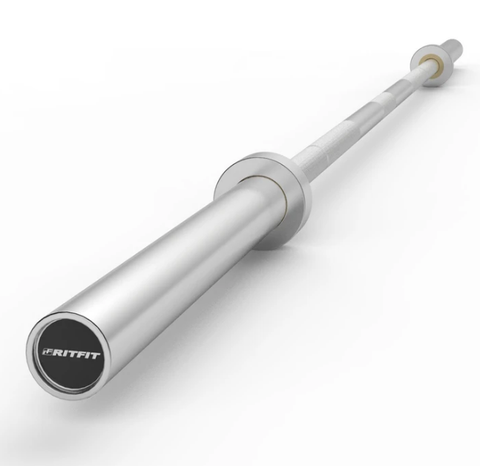
An Olympic barbell is the best all around bar for most serious home gyms. It uses 2 inch rotating sleeves and can support compound lifts like squats, bench presses, deadlifts, rows, overhead presses, and Olympic lifting variations.
- Best use: Heavy strength training, Olympic lifts, power movements, and full body barbell programs.
- Ideal user: Intermediate lifters, serious beginners, and anyone building a long term home gym.
- Pros: Strong upgrade path, better plate compatibility, rotating sleeves, and high movement versatility.
- Cons: Higher upfront cost and a full length footprint that needs enough room around the rack.
Olympic lifting and overhead pressing derivatives require coordinated force production, bar control, and technical consistency, so beginners should start light and build skill before chasing speed or load.[3]
EZ Curl Bar

An EZ curl bar is a shorter bar with angled grips that place your wrists in a more natural position. It is best for arm training and accessory work rather than heavy compound lifts.
- Best use: Biceps curls, skull crushers, triceps extensions, upright rows, and lighter accessory work.
- Ideal user: Lifters who feel wrist or elbow discomfort during straight bar curls.
- Pros: Compact, joint friendly, and excellent for higher rep arm training.
- Cons: Not designed for heavy squats, deadlifts, bench presses, or rack based strength work.
If arm training is a priority, you can pair a main barbell with EZ curl bar exercises to add more wrist friendly biceps and triceps options.
Hex Bar or Trap Bar

A hex bar, also called a trap bar, lets you stand inside the frame and hold neutral grip handles at your sides. This keeps the load closer to your center of mass and often makes deadlifts feel more natural for beginners.
- Best use: Deadlifts, loaded carries, shrugs, jumps, and lower body power work.
- Ideal user: Beginners learning to hinge, athletes building power, and lifters who prefer neutral grip pulling.
- Pros: More upright torso, easier grip position, and strong carryover to leg and trap development.
- Cons: Takes more floor space and does not replace a straight bar for pressing or rack work.
Safety Squat Bar or Yoke Bar

A safety squat bar has padded shoulder supports and forward facing handles. It lets you train squats and good mornings without forcing the shoulders and wrists into a tight straight bar back squat position.
- Best use: Squats, good mornings, lunges, split squats, and lower body accessories.
- Ideal user: Lifters with shoulder, wrist, or elbow mobility limits during straight bar squats.
- Pros: Comfortable upper body position, strong leg stimulus, and useful squat variation.
- Cons: More specialized, usually more expensive, and not ideal as your only home gym bar.
Tricep Bar or Multi Grip Bar
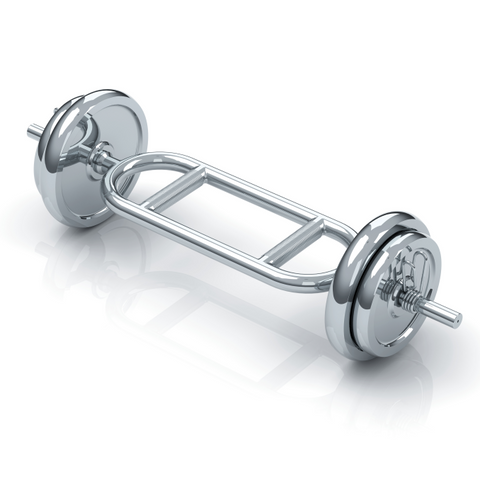
A tricep bar or multi grip bar uses neutral handles so your palms face each other during presses, curls, and extensions. This grip often feels easier on the shoulders and elbows than a straight bar.
- Best use: Triceps extensions, hammer curls, neutral grip presses, and shoulder friendly upper body work.
- Ideal user: Lifters who want more pressing variety or more comfortable arm training.
- Pros: Compact, joint friendly, and useful for accessory movements.
- Cons: Limited lower body value and not a full replacement for an Olympic barbell.
For cable and accessory training, you can also explore barbell accessories for home gym training to round out your setup without adding large machines.
How to Choose the Right Bar for Your Training Style
Start by choosing the bar that supports the movements you will perform most often. Most home gym owners should buy one quality Olympic barbell first, then add specialty bars only when they solve a specific training need.
1. Match the Bar to Your Main Goal
Your goal should decide your first barbell purchase. General strength training usually starts with an Olympic barbell, while arm focused bodybuilding can later add an EZ curl bar or tricep bar.
- General strength: Choose an Olympic barbell for squats, bench presses, deadlifts, rows, and overhead presses.
- Olympic lifting: Choose a bar with smooth spin and controlled whip.
- Back friendly pulling: Add a trap bar after your main bar if deadlifts bother your lower back.
- Accessory training: Add an EZ curl bar or neutral grip bar after your main barbell is already covered.
2. Match the Bar to Your Experience Level
Beginners should keep the first purchase simple and compatible. A reliable Olympic barbell with matching plates is usually more useful than buying several specialty bars early.
- Beginner: Choose one main bar, learn the basic lifts, and progress slowly.
- Intermediate: Add a trap bar, EZ curl bar, or safety squat bar based on your weak points.
- Advanced: Select specialty bars for targeted variation, joint management, or sport specific performance.
Periodized resistance training uses planned changes in volume, load, intensity, and recovery, which makes progressive barbell training easier to manage over months instead of single workouts.[2]
3. Match the Bar to Your Space
Measure your training area before buying a full length barbell. A 7 foot bar needs room for the bar itself, plate loading, walking space, and safe movement around your rack.
- Garage gym: Check ceiling height, wall clearance, rack width, and storage space.
- Basement gym: Prioritize rack compatibility and movements that do not require aggressive overhead clearance.
- Small room: Choose one versatile bar first and store specialty bars vertically or on wall storage.
If your home gym is still being built, review home gym equipment for beginners before buying multiple bars, benches, or machines.
4. Match the Bar to Your Joints
Choose a specialty bar when a straight bar position creates repeated joint discomfort. A safety squat bar, trap bar, EZ curl bar, or neutral grip bar can keep training productive while reducing irritating positions.
- Shoulder discomfort: Consider a safety squat bar for squats or a neutral grip bar for pressing.
- Wrist discomfort: Consider an EZ curl bar for curls and extensions.
- Lower back concerns: Consider a trap bar for deadlift style training with a more centered load.
Barbell Buying Checklist for Home Gyms
Use this checklist before buying a weightlifting bar. It helps prevent the most common home gym mistakes, especially mismatched plates, poor rack fit, and buying specialty bars too early.
- Check sleeve size: Confirm whether the bar uses 1 inch standard plates or 2 inch Olympic plates.
- Check bar length: Make sure the bar fits your rack and leaves enough side clearance for loading plates.
- Check shaft diameter: Choose a grip size that matches your hands and training style.
- Check knurling: Choose moderate knurling if multiple people will use the bar.
- Check spin: Choose rotating sleeves if you plan to do cleans, snatches, or dynamic pulls.
- Check storage: Use proper vertical or wall storage to protect the bar and save floor space.
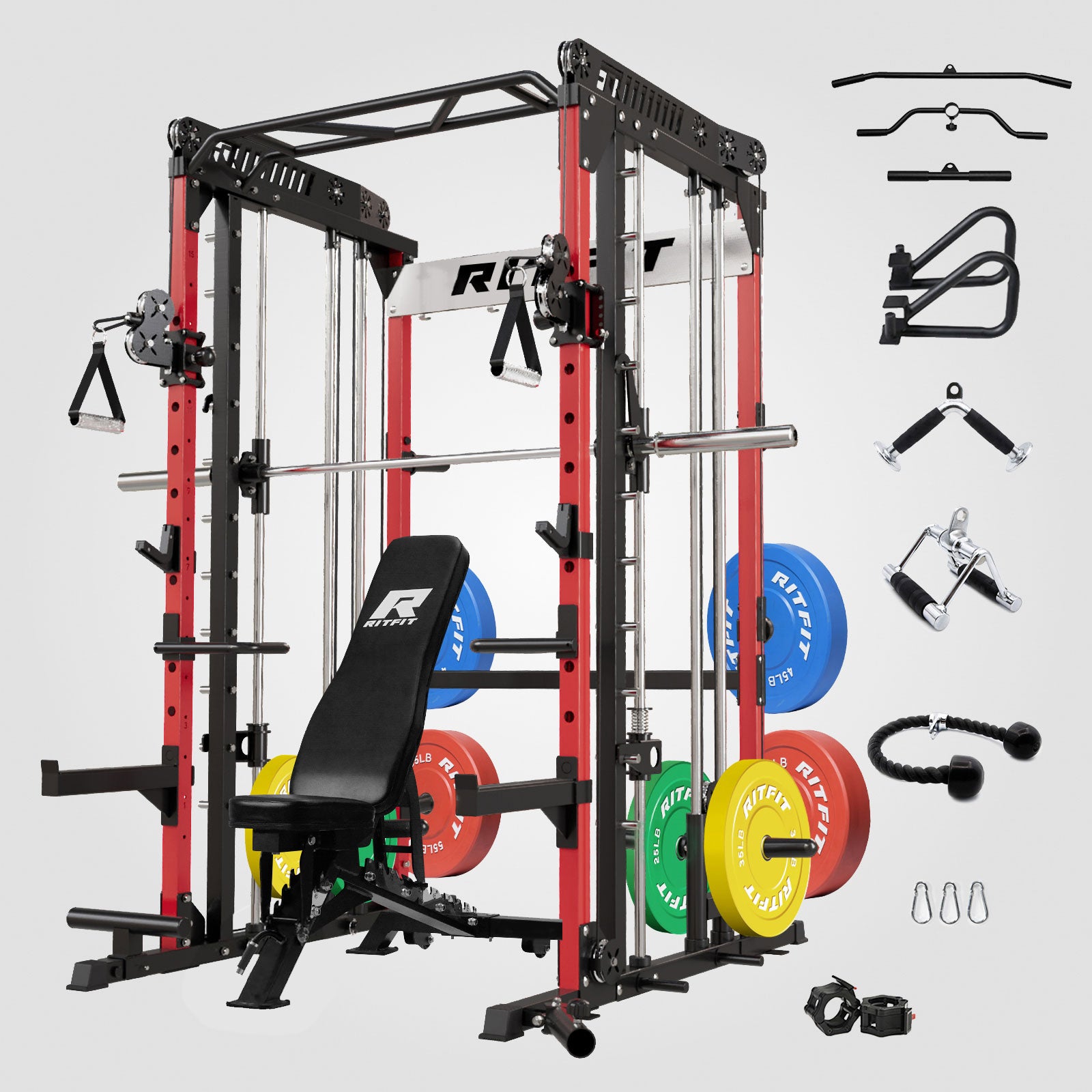
For complete setups, pair your bar with weight storage solutions, a stable rack, and a bench that matches your pressing and accessory work.
Sample Barbell Only Workouts You Can Do With One Bar
You can build strength with one barbell when the routine is simple, progressive, and matched to your skill level. Start with light loads, controlled reps, and enough rest to keep technique clean.
A. Full Body Strength With an Olympic or Straight Bar
This routine trains the squat, hinge, push, pull, and core patterns with one bar. Perform 3 to 4 sets of 5 to 8 reps per lift, then adjust load based on form quality.
- Squat pattern: Back squat or front squat.
- Horizontal press: Bench press or barbell floor press.
- Horizontal pull: Bent over row.
- Hip hinge: Romanian deadlift.
- Vertical press: Overhead press.
- Core finisher: Barbell rollout or plank for 3 rounds.
Bench press performance can be influenced by load, bar velocity, and how plates are distributed on the bar, so consistent setup matters when tracking progress.[4]
B. Trap Bar Lower Body Power
This routine is useful when you want a lower body session with simple loading and a neutral grip. Perform 3 to 4 sets of 4 to 6 reps on the main lift and 8 to 12 reps on accessories.
- Main lift: Trap bar deadlift.
- Hinge accessory: Trap bar Romanian deadlift.
- Upper back accessory: Trap bar shrugs.
- Single side work: Suitcase split squat if space and control allow.
- Carry finisher: Farmer’s walks if you have enough open floor space.
C. EZ Curl Bar Arm Finisher
This short accessory routine adds focused arm work after your main compound lifts. Perform 2 to 3 rounds with controlled tempo and moderate weight.
- Biceps: EZ bar curl for 10 to 12 reps.
- Triceps: Lying EZ bar extension for 10 to 12 reps.
- Forearms: Reverse curl for 10 to 15 reps.
- Control rule: Stop each set before your wrists or elbows feel irritated.
Traditional resistance training is generally considered among the safer resistance training methods when technique, load selection, supervision, and progression are managed responsibly.[5]
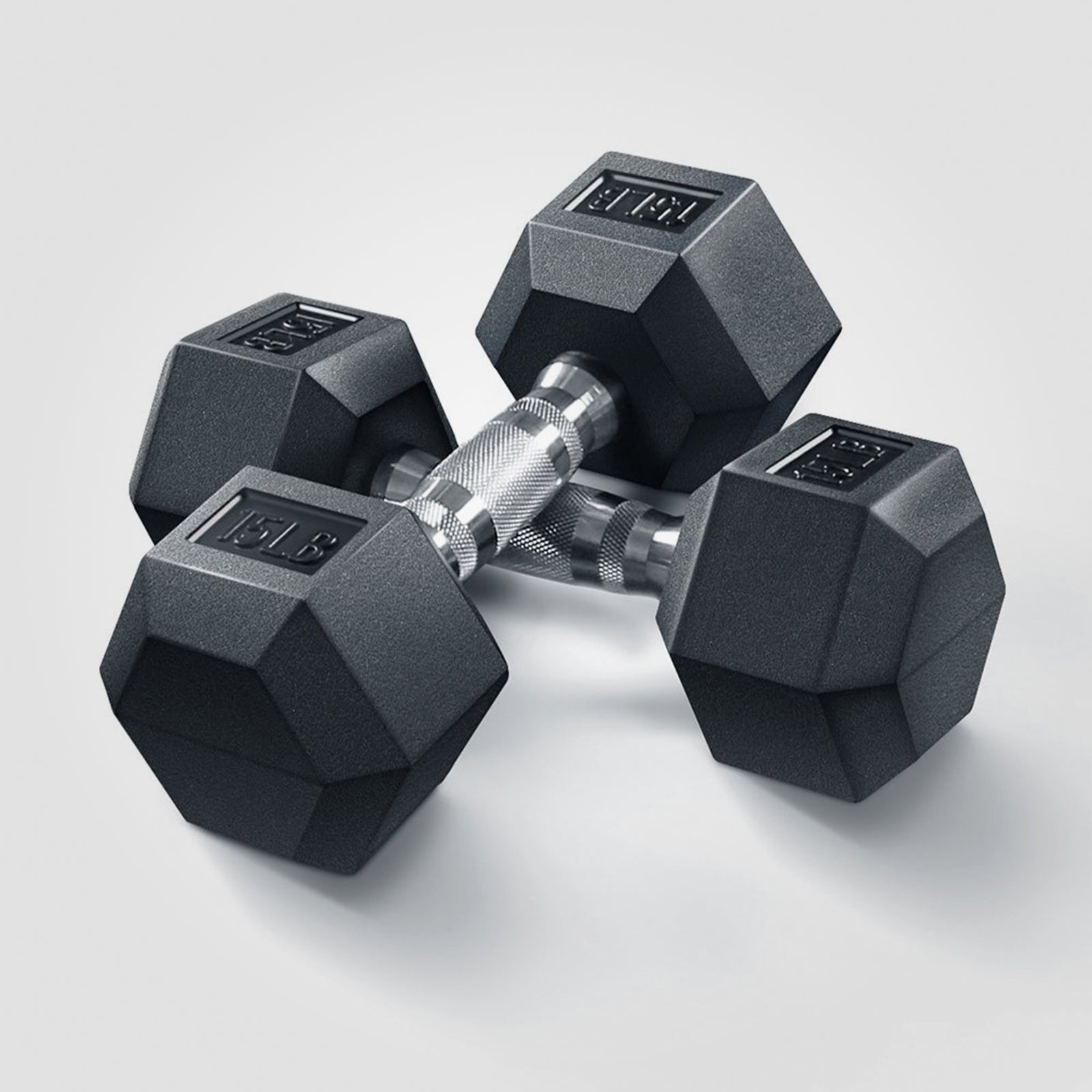
For broader free weight training, combine your barbell work with dumbbells for home gym accessory training and an adjustable bench from the RitFit weight bench collection.
Frequently Asked Questions About Weightlifting Bars
What type of weightlifting bar is best for a home gym?
An Olympic barbell is best for most home gyms because it supports the widest range of strength exercises. It works for squats, presses, deadlifts, rows, and progressive loading, while specialty bars are better added later for comfort or variety.
How do I know if my plates fit my weightlifting bar?
Check the sleeve diameter before buying or loading plates. Standard bars usually use 1 inch plates, while Olympic bars use 2 inch plates, so your bar, plates, and collars must match the same sleeve size.
Is an Olympic barbell better than a standard weightlifting bar?
Yes. An Olympic barbell is usually better for long term strength training because it supports heavier loading, smoother sleeve rotation, and broader plate compatibility. A standard bar can work for light training, but it is less upgrade friendly.
Can beginners use a trap bar for deadlifts?
Yes. A trap bar can be beginner friendly because the lifter stands inside the frame and holds neutral handles. This setup often keeps the load closer to the body, which can make deadlift technique feel easier to learn.
Which weightlifting bar should I buy first?
Buy a quality Olympic barbell first if you want one bar for total body strength training. It gives you the best foundation for squats, bench presses, deadlifts, rows, and overhead presses before adding specialty bars.
How much space do I need for a 7ft Olympic barbell?
You need more than 7 feet of width because plate loading and safe movement require extra side clearance. A rack area with open space on both sides is ideal, especially if you plan to squat, bench, or deadlift regularly.
Do I need an EZ curl bar if I already own a barbell?
No. You do not need an EZ curl bar, but it can be useful if straight bar curls irritate your wrists or elbows. Treat it as an accessory bar for arm work, not as a replacement for your main barbell.
Final Thoughts
The right weightlifting bar depends on your goals, plates, rack, space, and body. For most home gyms, start with one quality Olympic barbell, then add a trap bar, EZ curl bar, safety squat bar, or tricep bar only when it solves a real training need.
Explore RitFit bars and plates when you are ready to build a stronger and more compatible home gym setup.
Disclaimer: This article is for general fitness education and equipment selection support only. It is not medical advice. If you have pain, injury history, medical concerns, or uncertainty about barbell technique, consult a qualified fitness professional or healthcare provider before starting or changing your training program.
References
- Faigenbaum AD, Myer GD. Resistance training among young athletes: safety, efficacy and injury prevention effects. Br J Sports Med. 2010;44(1):56-63. doi:10.1136/bjsm.2009.068098.
- Lorenz DS, Reiman MP, Walker JC. Periodization: current review and suggested implementation for athletic rehabilitation. Sports Health. 2010;2(6):509-518. doi:10.1177/1941738110375910.
- Soriano MA, Suchomel TJ, Comfort P. Weightlifting overhead pressing derivatives: a review of the literature. Sports Med. 2019;49(6):867-885. doi:10.1007/s40279-019-01096-8.
- Ferri Marini C, Shoaei V, Micheli L, Francia P, Grossi T, Maggio S, Benelli P, Federici A, Lucertini F, Zoffoli L. Barbell load distribution and lifting velocity affect bench press exercise volume and perceived exertion. PLoS One. 2022;17(12):e0278909. doi:10.1371/journal.pone.0278909.
- Serafim TT, de Oliveira ES, Maffulli N, Migliorini F, Okubo R. Which resistance training is safest to practice? A systematic review. J Orthop Surg Res. 2023;18(1):296. doi:10.1186/s13018-023-03781-x.