








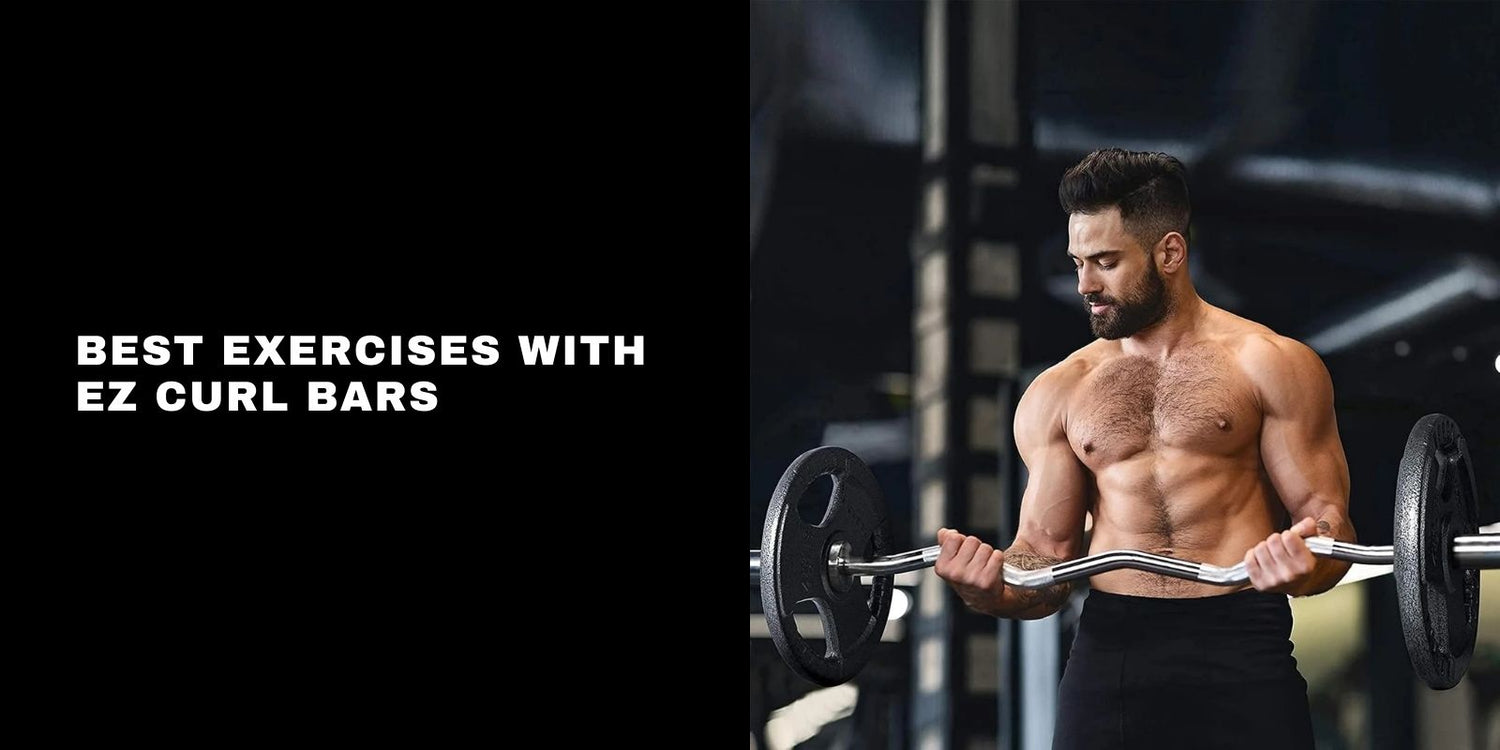
An EZ curl bar can train your full body at home, not just your biceps. With one compact bar you can load arm, shoulder, chest, back, leg, glute, core, and conditioning work into a single setup.
This guide covers 30 EZ curl bar exercises and the full-body workouts you can build from them, plus an exercise chart, setup rules, sets and reps, sample training templates, and progression tips for home gym training.
Quick Answer: EZ curl bar exercises can train the biceps, triceps, back, chest, shoulders, legs, glutes, and core at home. This guide lists 30 EZ curl bar exercises with an exercise chart, sets, reps, and full-body workout templates that turn one compact bar into a complete training plan.
Key Takeaways
- An EZ curl bar is best known for curls, but it can support full body home workouts.
- The angled grip may feel more natural for many curls, extensions, rows, and presses.
- Strict form, steady tempo, and controlled progression matter more than swinging heavier weight.
- Legs, glutes, posterior chain, and core can all be trained with smart exercise selection.
- A simple weekly plan with a few key movements is enough for effective home strength training.
Benefits of Training with an EZ Curl Bar
An EZ curl bar is valuable because it combines compact storage, angled grips, and broad exercise variety. It works especially well for home gym users who want one bar for controlled strength and hypertrophy training.
More Comfortable for Many Upper Body Exercises
The angled grip can place the wrists and elbows in a more natural position for many lifters. Comfort still depends on your anatomy, grip width, load, and technique.
Useful Beyond Arm Training
An EZ curl bar can be used for curls, extensions, presses, rows, squats, lunges, hinges, bridges, and loaded carries. This makes it more versatile than many beginners expect.
Strong Fit for Small Home Gyms
The shorter bar length makes setup easier in apartments, spare rooms, garages, and compact home gyms. You can pair it with compatible weight plates and secure collars for a simple training system.
Effective for Hypertrophy Training
Hypertrophy focused training relies on repeatable tension, sufficient effort, and well planned volume. Research reviews describe mechanical tension and metabolic stress as important factors in muscle growth, which makes controlled EZ curl bar training a practical option.[1]
Easy to Build Workouts Around
The EZ curl bar fits full body days, upper lower splits, and short accessory sessions. It is simple enough for beginners and still useful for experienced lifters who want focused home training.
If you want the background first, start with what an EZ curl bar is before you plan your first session.
How This Guide Works
This guide is organized by body part and movement pattern so you can find exercises quickly. Each movement lists the main muscles, the core execution cue, and one form priority.
Use the exercise list to build a complete workout, add accessory work, or replace gym based movements when training at home. Choose exercises that match your current skill, space, and equipment.
EZ Curl Bar Exercise Chart: Muscles Worked and Difficulty
The chart below maps every movement in this guide to its primary muscles, difficulty level, and best use so you can pick exercises fast.
| Exercise | Primary Muscles Worked | Level | Best For |
|---|---|---|---|
| Wide Grip EZ Bar Curl | Biceps brachii, brachialis | Beginner | Arm size and curling strength |
| Close Grip EZ Bar Curl | Biceps brachii, forearms | Beginner | Biceps peak and forearm work |
| Reverse Curl | Brachialis, brachioradialis, forearms | Beginner | Forearm and grip strength |
| Drag Curl | Biceps, long head emphasis | Intermediate | Long head tension with light load |
| Hanging Curl | Biceps, forearms | Intermediate | Strict biceps control |
| Skull Crusher | Triceps | Intermediate | Triceps size and elbow extension |
| Close Grip Press | Triceps, chest, front delts | Beginner | Triceps pressing strength |
| Kneeling Overhead Extension | Triceps long head, core | Intermediate | Triceps stretch and overhead control |
| Floor Press | Chest, triceps, front delts | Beginner | Home chest pressing |
| EZ Bar Squeeze Press | Chest, triceps, front delts | Intermediate | Inner chest tension |
| Pullover | Lats, chest, serratus | Intermediate | Lat and chest stretch |
| Supinated Row | Upper back, lats, biceps | Beginner | Back thickness |
| Rear Delt Row | Rear delts, upper back | Intermediate | Rear delt and posture work |
| EZ Bar Upright Row | Side delts, upper traps | Intermediate | Shoulder and trap work |
| Kneeling Overhead Press | Shoulders, triceps | Intermediate | Overhead pressing strength |
| Slow Eccentric Squat | Quads, glutes | Beginner | Leg strength with light plates |
| Zercher Squat | Quads, glutes, core | Advanced | Full body leg strength |
| Jump Squat | Quads, glutes, calves | Advanced | Power and conditioning |
| Pendulum Lunge | Quads, glutes, hamstrings | Intermediate | Single leg strength and balance |
| Reverse Lunge | Glutes, hamstrings, quads | Beginner | Glute and knee friendly lunging |
| Alternating Forward Lunge | Quads, glutes | Beginner | Leg balance and control |
| Split Squat | Quads, glutes | Intermediate | Unilateral leg strength |
| Split Stance Deadlift | Hamstrings, glutes, lower back | Intermediate | Hinge strength on one leg |
| Stiff Leg Deadlift | Hamstrings, glutes, lower back | Intermediate | Posterior chain size |
| Good Morning | Hamstrings, glutes, spinal erectors | Advanced | Posterior chain strength |
| Calf Raise with a 2 Second Hold | Gastrocnemius, soleus | Beginner | Calf size and control |
| Glute Bridge | Glutes, hamstrings | Beginner | Glute activation and hip drive |
| Single Leg Glute Bridge | Glute max, hamstrings, core | Intermediate | Unilateral glute work |
| Glute Bridge Crunch | Glutes, abs | Intermediate | Glute and core combo |
| Single Arm Farmer's Carry | Grip, traps, obliques, core | Beginner | Grip and trunk stability |
| EZ Bar Curl to Press | Biceps, shoulders, triceps, core | Intermediate | Full body hybrid sets |
The Level column reflects the control and coordination each movement demands, not the load on the bar. Treat the levels as a home training guide and move to the next one only when every rep keeps a neutral spine and a controlled tempo.
What Equipment Do You Need?
You need an EZ curl bar, compatible plates, secure collars, and enough clear floor space to train safely. A mat, bench, and storage setup can make training more comfortable, but they are not required for every movement.
- EZ Curl Bar: Check your bar length, sleeve type, and load rating before training. You can review the original EZ curl bar specifications if you need sizing details.
- Weight Plates: Use plates that match your bar sleeve and load gradually. Browse Olympic barbells if you want a second bar for heavier squat and hinge work.
- Collars: Secure every loaded set with collars to keep plates from shifting. A pair of barbell collars is especially important for carries, bridges, and unilateral work.
- Training Surface: Use a stable floor and avoid slippery surfaces. interlocking gym flooring mats can help protect your floor and improve training stability.
- Straight Bar Option: A full length bar adds heavier pressing and pulling options. Compare the RitFit 7FT Olympic barbell or read the 7FT Olympic barbell guide before you expand your setup.
EZ Curl Bar vs Straight Bar vs Dumbbells
An EZ curl bar is best when you want angled grips for curls, extensions, rows, presses, and compact home workouts. A straight bar is usually better for heavier barbell lifts, while dumbbells allow more freedom for single arm and unilateral training.
For most home gym users, the EZ curl bar works best as a versatile secondary bar rather than a full replacement for every tool. You can also pair it with dumbbells for more single side and range of motion options.
If you mainly care about arm training, this breakdown of the EZ curl bar versus the straight bar for biceps covers wrist angle and grip width in detail.
Safety, Setup, and General Guidelines
Safe EZ curl bar training starts with controlled loading, stable body position, and repeatable form. Research on training loads suggests strength, hypertrophy, and endurance can be trained across different rep ranges when effort and execution are appropriate.[2]
Choosing the Right Weight
Start with a weight you can control for every rep. For many exercises, 2 to 4 sets of 8 to 15 reps is a practical range for home training.
Grip and Hand Position
Use the inner or outer angled sections based on comfort and exercise goal. Keep your wrists neutral and avoid bending them back during curls, presses, and extensions.
Body Positioning and Bracing
Brace your core before standing lifts, hinges, rows, squats, and carries. A stable torso helps you control the bar and reduces unwanted movement through the lower back.
Warm Up and Progression
Warm up your wrists, elbows, shoulders, hips, knees, and ankles before loaded work. Progress by adding reps, improving control, slowing tempo, increasing range, or adding weight gradually.
This video demonstrates EZ curl bar exercise variety for home workouts. Use it as a visual reference, then choose movements that match your space, control, and current strength level.
Upper Body: Biceps and Forearms
EZ curl bar arm exercises are effective when the elbows stay controlled and the wrists remain neutral. Use strict reps before increasing weight.
Wide Grip EZ Bar Curl
Primary Muscles: Biceps brachii and brachialis. Hold the outer angled grips, keep your elbows close to your sides, curl without leaning back, and lower under control.
Close Grip EZ Bar Curl
Primary Muscles: Biceps brachii and forearms. Hold the inner angled grips, keep your wrists neutral, and use a smooth curl path without letting your shoulders roll forward.
Reverse Curl
Primary Muscles: Brachialis, brachioradialis, and forearms. Use an overhand grip, keep your elbows tucked, and avoid leaning back to finish the rep.
Drag Curl
Primary Muscles: Biceps with long head emphasis. Pull your elbows back as the bar travels close to your torso, then lower slowly without swinging.
Hanging Curl
Primary Muscles: Biceps and forearms. Hinge slightly forward, let your arms hang under your shoulders, and curl without letting your upper arms drift forward.
Exercises such as preacher curls and concentration curls (where the upper arm is positioned in front of the torso) work more in the short head, as do exercises such as cross cable curls on a high pulley apparatus.
Brad Schoenfeld, PhD, Exercise Science Researcher specializing in Muscle Hypertrophy, CUNY Lehman College, The Science of Biceps Training
Upper Body: Triceps and Pushing Movements
EZ curl bar triceps and pressing movements work best with moderate weight and smooth joint control. Stop any exercise that causes sharp elbow or shoulder pain.
Skull Crusher and Close Grip Press
Primary Muscles: Triceps, chest, and front delts. Lower the bar toward your forehead with control, extend the elbows, then press from the chest to increase triceps time under tension.
Kneeling Overhead Extension
Primary Muscles: Long head of the triceps and core. Kneel tall, lower the bar behind your head, keep the elbows pointed up, and avoid flaring your ribs.
Floor Press
Primary Muscles: Chest, triceps, and front delts. Lie on the floor, press the bar above your chest, and lower until your upper arms lightly touch the floor.
Chest and Upper Back
The EZ curl bar can train the chest and upper back through stable presses, pullovers, and rows. Pair these with a sturdy weight bench if you want more pressing and pullover options.
EZ Bar Squeeze Press
Primary Muscles: Chest, triceps, and front delts. Press the bar while keeping your elbows slightly tucked, and focus on squeezing through the chest instead of bouncing the bar.
Pullover
Primary Muscles: Lats, chest, and serratus. Hold the bar over your chest, lower it behind your head in a controlled arc, and pull back without overextending your shoulders.
Supinated Row
Primary Muscles: Upper back, lats, and biceps. Hinge with a flat back, row the bar toward your lower torso, and squeeze your shoulder blades at the top.
Rear Delt Row
Primary Muscles: Rear delts and upper back. Use a wider overhand grip, pull toward your upper chest, and keep the weight lighter than your standard row.
If heavier pressing is part of your plan, this guide to choosing the best barbell for bench press explains sleeve and knurl differences.
Shoulders and Upper Traps
Shoulder exercises with an EZ curl bar require a comfortable range and controlled bar path. If a movement pinches, shorten the range or choose another variation.
EZ Bar Upright Row
Primary Muscles: Side delts and upper traps. Pull the bar toward your lower chest, lead with the elbows, and stop before any shoulder pinching starts.
Kneeling Overhead Press
Primary Muscles: Shoulders and triceps. Kneel with glutes tight, brace your core, and press overhead without leaning back.
Lower Body: Squats and Lunges
The EZ curl bar can train legs effectively when you use controlled reps and stable foot positions. Slow tempo is especially useful when your available home gym weight is limited.
Slow Eccentric Squat
Primary Muscles: Quads and glutes. Lower for 3 to 5 seconds, stand with control, and use tempo as a practical progression tool since research shows different controlled eccentric durations can support lower body strength and hypertrophy.[3]
Zercher Squat
Primary Muscles: Quads, glutes, and core. Cradle the bar in the crooks of your elbows, keep your torso tall, and drive through the midfoot as you stand.
Jump Squat
Primary Muscles: Quads, glutes, and calves. Use very light weight, land softly, and only use this advanced movement if you can control every landing.
Pendulum Lunge
Primary Muscles: Quads, glutes, and hamstrings. Step forward into a lunge, return to standing, then step backward with the same leg for one complete rep.
Reverse Lunge
Primary Muscles: Glutes, hamstrings, and quads. Step backward under control, lower the rear knee toward the floor, and push through the front foot to stand.
Alternating Forward Lunge
Primary Muscles: Quads and glutes. Step forward into a balanced lunge, keep the knee tracking over the toes, and alternate sides with control.
Split Squat
Primary Muscles: Quads and glutes. Hold a static split stance, lower straight down, and complete all reps on one side before switching.
Split Stance Deadlift
Primary Muscles: Hamstrings, glutes, and lower back. Place one foot slightly forward, hinge at the hips, and let the front hamstring stretch set your depth.
Can You Squat With an EZ Curl Bar?
Yes, you can squat with an EZ curl bar if the bar has enough sleeve length for your plates and you can hold it in a front rack, Zercher, or goblet position. A curl bar for squats works best as a front loaded variation because the angled bends sit awkwardly across the upper back.
Load lighter than you would on a straight bar, keep the bar close to your body, brace your core, and stop the set if your wrists, elbows, or lower back lose position. Slow eccentric squats, Zercher squats, and split squats are the most useful squat patterns for an EZ curl bar.
Lower Body: Hinge and Posterior Chain
Posterior chain exercises train the hamstrings, glutes, and spinal erectors. Keep the bar close and stop the range before your lower back rounds.
Stiff Leg Deadlift
Primary Muscles: Hamstrings, glutes, and lower back. Keep a small knee bend, push your hips back, and lower only as far as you can maintain a neutral spine.
Good Morning
Primary Muscles: Hamstrings, glutes, and spinal erectors. Set the bar across your upper back, brace hard, hinge forward, and return by driving the hips forward.
Calf Raise with a 2 Second Hold
Primary Muscles: Gastrocnemius and soleus. Rise onto the balls of your feet, pause for two seconds, and lower slowly without bouncing.
Glutes and Core
Glute and core movements make the EZ curl bar more useful for full body training. Use padding on the hips when needed and keep your ribs down during bridge variations.
Glute Bridge
Primary Muscles: Glutes and hamstrings. Place the bar across your hips, drive through your heels, and squeeze your glutes at the top without arching your lower back.
Single Leg Glute Bridge
Primary Muscles: Glute max, hamstrings, and core. Lift one foot off the floor, bridge on one side, and keep your pelvis level through the full rep.
Glute Bridge Crunch
Primary Muscles: Glutes and abs. Hold the bar over your chest, bridge your hips, lift your shoulder blades into a crunch, and lower both with control.
Loaded Carries and Functional Strength
Loaded carries train grip, traps, posture, and trunk stability. Use collars, walk slowly, and keep your shoulders level.
Single Arm Farmer's Carry
Primary Muscles: Grip, traps, obliques, and core. Hold the bar at the center with one hand, walk for distance or time, and resist leaning toward the loaded side.
Full Body and Hybrid Movements
Hybrid exercises combine multiple movement patterns in one set. Use lighter weight than normal because fatigue can quickly reduce form quality.
EZ Bar Curl to Press
Primary Muscles: Biceps, shoulders, triceps, and core. Curl the bar to shoulder height, press overhead with control, lower it back to the shoulders, and return to the starting position.
Most of these patterns also appear in this collection of weighted bar exercises for beginners if you want more variations to rotate in.
Sample Training Templates
Use these templates to turn the exercise list into a weekly plan. Weekly training volume can influence hypertrophy, so build volume gradually instead of adding too many sets at once.[5]
| Day | Focus | Key Exercises | Sets x Reps |
|---|---|---|---|
| Day 1 | Full body | Slow eccentric squat, floor press, supinated row, glute bridge | 3 x 8 to 12 |
| Day 2 | Rest or easy walk | Recovery between full body sessions | 1 day off |
| Day 3 | Upper body | EZ bar upright row, floor press, supinated row, skull crusher | 3 x 8 to 12 |
| Day 4 | Lower body | Zercher squat, stiff leg deadlift, reverse lunge, calf raise | 3 x 10 to 15 |
| Day 5 | Arms and shoulders | Drag curl, hanging curl, kneeling overhead extension, rear delt row | 2 to 3 x 10 to 15 |
| Day 6 | Conditioning | Jump squat, pendulum lunge, single arm farmer's carry, good morning | 3 x 8 to 12 |
Sets and reps are starting points for a home gym with limited plates, so add reps, slow the lowering phase, or add weight only when every rep stays controlled.
Beginner Full Body Routine
Train this routine 2 to 3 times per week with at least one rest day between sessions. Use 2 to 3 sets per exercise and stop each set with 1 to 3 reps left in reserve.
- Slow Eccentric Squat: 3 sets of 8 to 12 reps.
- Floor Press: 3 sets of 8 to 12 reps.
- Supinated Row: 3 sets of 8 to 12 reps.
- Glute Bridge: 3 sets of 10 to 15 reps.
- Wide Grip EZ Bar Curl: 2 sets of 10 to 15 reps.
- Calf Raise with a 2 Second Hold: 2 sets of 12 to 20 reps.
Upper and Lower Split
Train 4 times per week and alternate upper and lower sessions. This split gives each muscle group more weekly practice while keeping sessions manageable.
- Upper Day: EZ bar upright row, floor press, supinated row, skull crusher and close grip press, reverse curl.
- Lower Day: Zercher squat, stiff leg deadlift, reverse lunge, single leg glute bridge, calf raise.
- Rest: Rest 60 to 120 seconds between most sets.
- Progression: Add reps first, then add weight when your form stays clean.
Arm and Shoulder Finisher Circuit
Use this circuit at the end of an upper body workout when you want extra arm and shoulder volume. Keep the weight moderate and rest only as long as needed to maintain clean reps.
- Drag Curl: 10 to 12 reps.
- Hanging Curl: 10 to 15 reps.
- Kneeling Overhead Extension: 10 to 12 reps.
- Rear Delt Row: 12 to 15 reps.
Conditioning and Power Circuit
Use this circuit only when you can maintain control under fatigue. Choose conservative loads because power and conditioning work can break down quickly.
- Jump Squat: 5 to 8 reps.
- Pendulum Lunge: 6 to 8 reps per side.
- Single Arm Farmer's Carry: 20 to 40 seconds per side.
- Good Morning: 8 to 10 slow reps.
These curl bar workouts reuse the same movements in different orders, so you can run a beginner routine, a four day split, or a short finisher with one bar and one set of plates.
Common Mistakes and Troubleshooting
Most EZ curl bar mistakes come from using too much weight, rushing reps, or losing body position. Fix the basics first before adding harder variations.
- Using Too Much Weight: Use a load you can control from the first rep to the last. Swinging reduces muscle tension and increases joint stress.
- Rounding the Back: Keep your chest up and brace during rows, hinges, and good mornings. Reduce the range if your spine position changes.
- Bending the Wrists: Keep your wrists neutral during curls, presses, rows, and extensions. The angled grip helps only when your wrist position stays controlled.
- Skipping Warm Ups: Prepare your joints and practice lighter reps before working sets. Home training still needs structured preparation.
- Never Progressing: Do not repeat the same weight and reps forever. Add reps, slow the lowering phase, improve range, or increase load gradually.
How to Progress with Limited Weight
You can still build muscle with limited plates by making each set more controlled and harder to execute. A systematic review found that different resistance training loads can contribute to hypertrophy when training is properly programmed, which supports practical home gym progression strategies.[4]
- Add Reps: Move from 8 reps toward 12 or 15 reps before adding weight.
- Slow the Lowering Phase: Use a 3 to 5 second eccentric to increase control.
- Add Pauses: Pause at the hardest point of the rep to reduce momentum.
- Use Single Side Variations: Split squats, single leg bridges, and single arm carries make lighter loads more challenging.
- Improve Range: Use safe extra range only when you can control your joints and spine.
FAQs
Can you build muscle with an EZ curl bar at home?
Yes. You can build muscle with an EZ curl bar at home if you train close to effort, use enough weekly volume, and progress over time. It works best for arms, shoulders, rows, glutes, and controlled lower body accessories when paired with plates and consistent programming.
What EZ curl bar exercises are best for beginners?
The best beginner EZ curl bar exercises are curls, reverse curls, floor presses, supinated rows, glute bridges, split squats, and calf raises. These movements are easier to control than advanced power exercises and help new lifters learn grip, bracing, tempo, and safe bar path.
Is an EZ curl bar better than a straight bar for wrists?
Yes. An EZ curl bar can feel better for many wrists because the angled grips reduce the need for a fully straight hand position. It is not automatically pain free for everyone, so adjust grip width, reduce load, and stop any movement that creates sharp joint pain.
How heavy should you go on EZ curl bar exercises?
Use a weight you can control for the full range of motion. Most home workouts work well with 8 to 15 controlled reps, while calves, bridges, and finishers may use higher reps. If form breaks, lower the load before adding more plates.
Can you train legs with an EZ curl bar?
Yes. You can train legs with an EZ curl bar through squats, Zercher squats, lunges, split squats, stiff leg deadlifts, good mornings, bridges, and calf raises. The key is using slow reps, stable foot placement, and enough effort to challenge the target muscles.
How do you progress EZ curl bar workouts with limited plates?
You progress by adding reps, slowing the lowering phase, adding pauses, improving range, or switching to single side variations. These methods make lighter loads more demanding without needing a large plate collection. Track your sets and increase difficulty only when form stays clean.
Is an EZ curl bar enough for full body workouts?
Yes. An EZ curl bar can support full body workouts, especially for home gym users with limited space. It can train pushing, pulling, squatting, hinging, glute, core, and carry patterns, but dumbbells, a bench, or a rack can add more exercise variety.
Should beginners use an EZ curl bar for overhead exercises?
Yes. Beginners can use an EZ curl bar for overhead exercises if shoulder mobility, ceiling clearance, and core control are good. Start with light kneeling presses or extensions, move slowly, and avoid overhead work if it causes pinching, sharp pain, or lower back arching.
Can you squat with an EZ curl bar?
Yes, you can squat with an EZ curl bar when you hold it in a front rack, Zercher, or goblet position and keep the load light. The angled bends feel awkward across the upper back, so front loaded squat variations work better than heavy back squats.
Which muscles do EZ curl bar exercises work?
EZ curl bar exercises work the biceps, triceps, forearms, chest, upper back, shoulders, quads, hamstrings, glutes, calves, and core. Grip width and exercise choice shift the emphasis, which is why one bar can cover every major muscle group in a home gym.
Conclusion
An EZ curl bar can support a complete home workout plan when you choose the right exercises and train with control. Use it for arms, shoulders, back, chest, legs, glutes, core, and carries while progressing gradually.
The best results come from consistency, not complexity. Start with a few reliable movements, track your reps, and build strength one clean set at a time.
Disclaimer: This article is for general educational purposes only and is not medical advice.
If you have pain, injury history, recent surgery, numbness, dizziness, or unexplained weakness, consult a qualified clinician before training.
Stop any exercise that causes sharp pain or symptoms that feel unsafe.
References
1. Krzysztofik M, Wilk M, Wojdała G, Gołaś A. Maximizing muscle hypertrophy: a systematic review of advanced resistance training techniques and methods. Int J Environ Res Public Health. 2019;16(24):4897. doi:10.3390/ijerph16244897
2. Schoenfeld BJ, Grgic J, Van Every DW, Plotkin DL. Loading recommendations for muscle strength, hypertrophy, and local endurance: a re-examination of the repetition continuum. Sports. 2021;9(2):32. doi:10.3390/sports9020032
3. Azevedo PHSM, Oliveira MGD, Schoenfeld BJ. Effect of different eccentric tempos on hypertrophy and strength of the lower limbs. Biol Sport. 2022;39(2):443-449. doi:10.5114/biolsport.2022.105335
4. Lopez P, Radaelli R, Taaffe DR, Newton RU, Galvao DA, Trajano GS, Teodoro JL, Kraemer WJ, Häkkinen K, Pinto RS. Resistance training load effects on muscle hypertrophy and strength gain: systematic review and network meta-analysis. Med Sci Sports Exerc. 2021;53(6):1206-1216. doi:10.1249/MSS.0000000000002585
5. Schoenfeld BJ, Contreras B, Krieger J, Grgic J, Delcastillo K, Belliard R, Alto A. Resistance training volume enhances muscle hypertrophy but not strength in trained men. Med Sci Sports Exerc. 2019;51(1):94-103. doi:10.1249/MSS.0000000000001764





