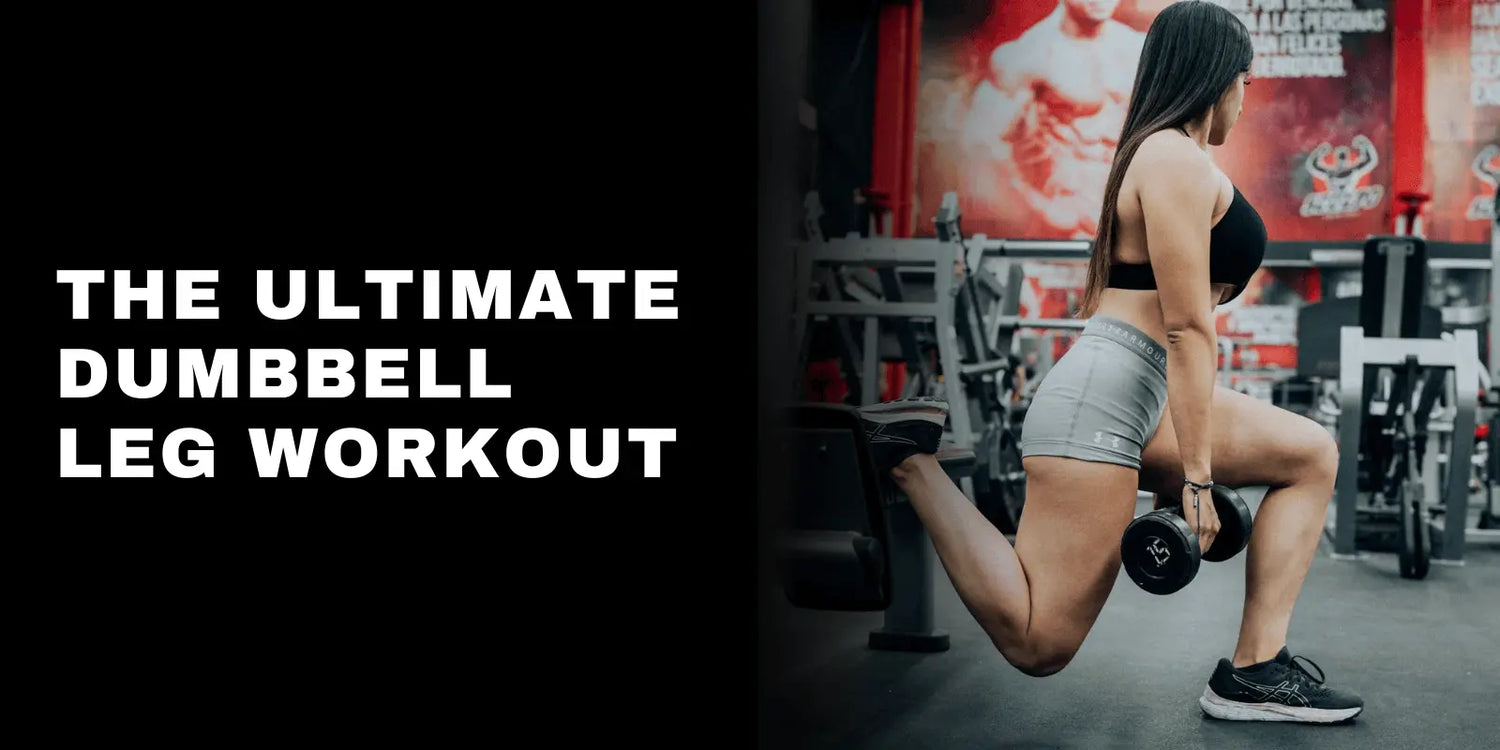
You can build stronger legs with dumbbells if your workout uses enough range of motion, controlled reps, balanced exercise selection, and progressive overload. This guide shows you the best dumbbell leg exercises, a complete routine, form tips, weight selection advice, and home gym equipment recommendations.
A dumbbell only leg workout is especially useful for home gym users, apartment training, hotel gyms, and anyone who wants lower body strength without a squat rack or leg press machine. The goal is simple, train the quads, hamstrings, glutes, calves, and stabilizers with movements you can repeat safely and progress over time.
Key Takeaways
- Dumbbells can build strong legs: The key is using deep range of motion, clean form, enough effort, and gradual progression.
- A complete dumbbell leg workout should train every major lower body muscle: Include squat, hinge, lunge, single leg, hip extension, and calf raise patterns.
- Single leg exercises are essential: Bulgarian split squats, step ups, and lunges help reveal and correct strength differences between sides.
- You do not always need heavier dumbbells: You can progress with more reps, slower tempo, longer range of motion, shorter rest, or harder exercise variations.
- Home equipment matters: A durable dumbbell set, stable bench, and organized storage make leg training easier to scale and repeat.
Table of Contents
- Can You Build Strong Legs With Dumbbells?
- Why Dumbbells Work So Well for Home Leg Day
- Muscles Worked in a Dumbbell Leg Workout
- Best Dumbbell Leg Exercises for Home Workouts
- Complete Dumbbell Leg Workout Routine
- How Heavy Should Your Dumbbells Be?
- How to Progress Your Dumbbell Leg Workout
- Common Dumbbell Leg Workout Mistakes
- Recommended Home Gym Equipment for Dumbbell Leg Day
Can You Build Strong Legs With Dumbbells?
Yes, you can build strong legs with dumbbells when the workout provides enough effort, volume, and progression. Research on resistance training load suggests that a range of loads can support hypertrophy when sets are performed with sufficient effort and good technique.[1]
Dumbbells are most effective when you train both bilateral and single leg patterns. This helps you challenge the legs even when the absolute weight is lighter than a barbell.
Why Dumbbells Work So Well for Home Leg Day
Dumbbells work well for leg day because they are simple, space efficient, and easy to adjust for different exercises. They also let you train safely at home without needing a spotter or a full commercial gym setup.
- Lower setup barrier: You can start a dumbbell workout for legs with only a pair of weights and a clear floor area. This makes it ideal for small home gyms, apartments, and garage gyms.
- Better single leg training: Dumbbells make split squats, lunges, step ups, and single leg RDLs easier to load. A meta analysis on unilateral and bilateral training suggests unilateral work can be useful for lower body performance and side to side development.[2]
- Flexible loading positions: You can hold dumbbells at your sides, in a goblet position, on your shoulders, or in a suitcase position. Each position changes balance demand and muscle emphasis.
- Easy scaling: You can increase reps, slow the lowering phase, use a deeper range of motion, or choose heavier dumbbells. This makes dumbbells useful for beginners and intermediate lifters.
- Home friendly safety: Dumbbells are easier to set down than a barbell when fatigue builds. Still, sharp knee, hip, or back pain means you should stop and review your form.
Muscles Worked in a Dumbbell Leg Workout
A complete dumbbell leg workout should target the quads, hamstrings, glutes, calves, and core stabilizers. Resistance exercise may also support balance ability in adults, which makes controlled lower body training useful beyond muscle size alone.[3]
- Quads: Goblet squats, split squats, step ups, and lunges train knee extension and front thigh strength.
- Hamstrings: Dumbbell Romanian deadlifts and single leg RDLs train hip hinging and the back of the thigh.
- Glutes: Bulgarian split squats, hip thrusts, sumo squats, and lunges train hip extension and lower body power.
- Calves: Standing dumbbell calf raises train ankle strength and lower leg stability.
- Core stabilizers: Goblet squats, walking lunges, and suitcase holds train trunk control while the legs move.
Best Dumbbell Leg Exercises for Home Workouts
The best dumbbell leg exercises combine squat, hinge, lunge, step up, hip thrust, and calf raise patterns. Use controlled reps first, then add load only when your form stays consistent.
Dumbbell Goblet Squat
The dumbbell goblet squat is one of the best beginner friendly leg exercises because the front loaded position helps many lifters keep a more upright torso.
- Best for: Quads, glutes, core control.
- Step 1: Hold one dumbbell close to your chest with both hands.
- Step 2: Sit your hips down between your feet while keeping your chest lifted.
- Step 3: Drive through your midfoot and heel to stand tall without bouncing.
- Form tip: Keep your knees tracking in the same direction as your toes.
- Common mistake: Do not round your lower back at the bottom of the squat.
Dumbbell Romanian Deadlift
The dumbbell Romanian deadlift trains the posterior chain by emphasizing hip hinging instead of deep knee bending.
- Best for: Hamstrings, glutes, hip hinge strength.
- Step 1: Hold a dumbbell in each hand in front of your thighs.
- Step 2: Push your hips back while keeping a soft bend in your knees.
- Step 3: Lower the dumbbells until you feel a strong hamstring stretch, then squeeze your glutes to stand.
- Form tip: Keep the dumbbells close to your legs throughout the movement.
- Common mistake: Do not turn the RDL into a squat by bending your knees too much.
Bulgarian Split Squat
The Bulgarian split squat is a high value dumbbell leg exercise because it challenges one leg at a time with limited equipment.
- Best for: Quads, glutes, balance, single leg strength.
- Step 1: Stand in front of a stable bench and place one foot behind you.
- Step 2: Lower your back knee toward the floor while keeping your front foot planted.
- Step 3: Push through your front foot to return to the starting position.
- Form tip: Lean slightly forward to emphasize glutes, or stay more upright to emphasize quads.
- Common mistake: Do not let the front knee collapse inward as you stand.
Dumbbell Walking Lunge
The dumbbell walking lunge trains the legs and core together because each step requires control, balance, and force production.
- Best for: Quads, glutes, coordination, core stability.
- Step 1: Hold a dumbbell in each hand at your sides.
- Step 2: Step forward and lower your back knee toward the floor with control.
- Step 3: Push through the front foot and bring the back leg forward into the next step.
- Form tip: Use a medium stride that feels stable and smooth.
- Small space option: Replace walking lunges with reverse lunges if you train in an apartment.
Dumbbell Step Up
The dumbbell step up builds practical single leg strength because it trains you to push through one leg while controlling the hip and knee.
- Best for: Quads, glutes, balance, home gym training.
- Step 1: Stand in front of a stable box or bench with dumbbells at your sides.
- Step 2: Place one foot fully on the surface and push through that foot to stand.
- Step 3: Step down with control and repeat on the same side or alternate legs.
- Form tip: Choose a step height that lets your knee and hip stay controlled.
- Common mistake: Do not push too much from the floor leg.
Dumbbell Hip Thrust
The dumbbell hip thrust is one of the most direct glute exercises you can do at home with a bench and one dumbbell.
- Best for: Glutes, hip extension, posterior chain strength.
- Step 1: Place your upper back against a stable bench and rest a dumbbell across your hips.
- Step 2: Keep your feet flat and drive your hips upward until your torso is nearly level.
- Step 3: Pause briefly at the top, then lower with control.
- Form tip: Keep your chin slightly tucked and avoid overextending your lower back.
- Common mistake: Do not let the dumbbell roll or shift during the set.
Standing Dumbbell Calf Raise
The standing dumbbell calf raise strengthens the lower legs and helps support ankle stability during squats and lunges.
- Best for: Calves, ankles, lower leg control.
- Step 1: Hold one or two dumbbells and stand tall near a wall or rack for balance.
- Step 2: Rise onto the balls of your feet as high as you can.
- Step 3: Lower slowly until you feel a calf stretch, then repeat.
- Form tip: Pause at the top and bottom to reduce bouncing.
- Common mistake: Do not rush the reps just to finish the set.
Complete Dumbbell Leg Workout Routine
This dumbbell only leg workout trains every major lower body pattern in one session. Perform it 1 to 2 times per week, depending on your recovery, training age, and full body routine.
Warm up with 5 minutes of light cardio, bodyweight squats, hip hinges, glute bridges, and leg swings. If you want to pair this leg day with upper body work, use it alongside the Ultimate 5 Day Workout Routine for Men.
| Exercise | Sets | Reps | Rest | Main Focus |
|---|---|---|---|---|
| Dumbbell Goblet Squat | 3 to 4 | 10 to 12 | 60 seconds | Quads and glutes |
| Dumbbell Romanian Deadlift | 3 to 4 | 10 to 15 | 60 seconds | Hamstrings and glutes |
| Bulgarian Split Squat | 3 | 8 to 12 per leg | 75 to 90 seconds | Single leg strength |
| Dumbbell Step Up | 3 | 8 to 12 per leg | 75 seconds | Quads and glutes |
| Dumbbell Hip Thrust | 3 | 12 to 15 | 60 seconds | Glutes |
| Standing Dumbbell Calf Raise | 3 | 15 to 20 | 45 seconds | Calves |
Beginners can perform 2 sets per exercise and skip one single leg movement until form feels stable. Intermediate lifters can use the full plan and add load when the final reps are challenging but controlled.
How Heavy Should Your Dumbbells Be?
Your dumbbells should feel challenging by the final 2 to 3 reps while still allowing clean form. For muscle growth, systematic review evidence suggests that different training loads can support hypertrophy when effort and total work are appropriate, while heavier loads may be especially useful for maximal strength.[4]
- Beginners: Choose a weight you can control for 10 to 15 reps without knee collapse, back rounding, or balance loss.
- Intermediate lifters: Use heavier dumbbells for squats, RDLs, lunges, and split squats while keeping 1 to 3 reps in reserve.
- Small home gyms: A compact pair from the RitFit dumbbells collection can support squats, hinges, lunges, calf raises, and carries.
- Progression focused users: The RitFit Hex Rubber Dumbbells are a practical option when you want stable free weights for home leg training.
How to Progress Your Dumbbell Leg Workout
You progress a dumbbell leg workout by increasing the challenge while keeping form stable. Research comparing load progression and repetition progression found that both can be viable strategies for muscular adaptations over an 8 week cycle.[5]
- Add reps first: Move from 10 reps to 12 or 15 reps before choosing a heavier dumbbell.
- Add load gradually: Increase dumbbell weight only when every rep looks controlled and repeatable.
- Slow the lowering phase: Lower for 2 to 4 seconds on squats, RDLs, lunges, and split squats to improve control.
- Use fuller range of motion: Squat deeper or step higher only if your joints feel comfortable and your form stays aligned.
- Shorten rest slightly: Reduce rest by 10 to 15 seconds when your conditioning improves.
- Track your numbers: Record weight, reps, sets, rest time, and notes after each session.
Common Dumbbell Leg Workout Mistakes
The most common mistakes are using too little effort, rushing reps, skipping hamstrings, and ignoring single leg work. Movement tempo can influence strength and hypertrophy responses, so slower controlled reps can be useful when lighter dumbbells are your main training tool.[6]
- Only doing squats: Squats are valuable, but you also need hinges, lunges, hip thrusts, and calf raises for a complete lower body session.
- Going too light forever: Light dumbbells can work at first, but you need progression through load, reps, tempo, or harder variations.
- Rushing the eccentric phase: Lower with control instead of dropping into each rep.
- Letting knees cave inward: Keep the knees tracking with the toes on squats, lunges, and split squats.
- Ignoring discomfort signals: Muscle burn is normal, but sharp joint pain is a reason to stop and adjust.
- Skipping storage: Loose dumbbells can clutter small training spaces, so use a dedicated storage solution like the RitFit A Frame Dumbbell Rack Stand.
Recommended Home Gym Equipment for Dumbbell Leg Day
The best equipment for a home dumbbell leg workout is simple, stable, and easy to store. Start with dumbbells, a bench, a mat or safe floor surface, and enough space for lunges or step ups.
- Dumbbells: A pair of RitFit PVC Coated Round Head Dumbbells Set With Rack can support squats, lunges, step ups, RDLs, and calf raises.
- Stable bench: A strong bench makes Bulgarian split squats, step ups, and hip thrusts more practical. The RitFit GATOR Adjustable Weight Bench is a relevant choice for home lower body and full body training.
- Bench collection: If you want to compare options, browse the RitFit weight benches collection before choosing your setup.
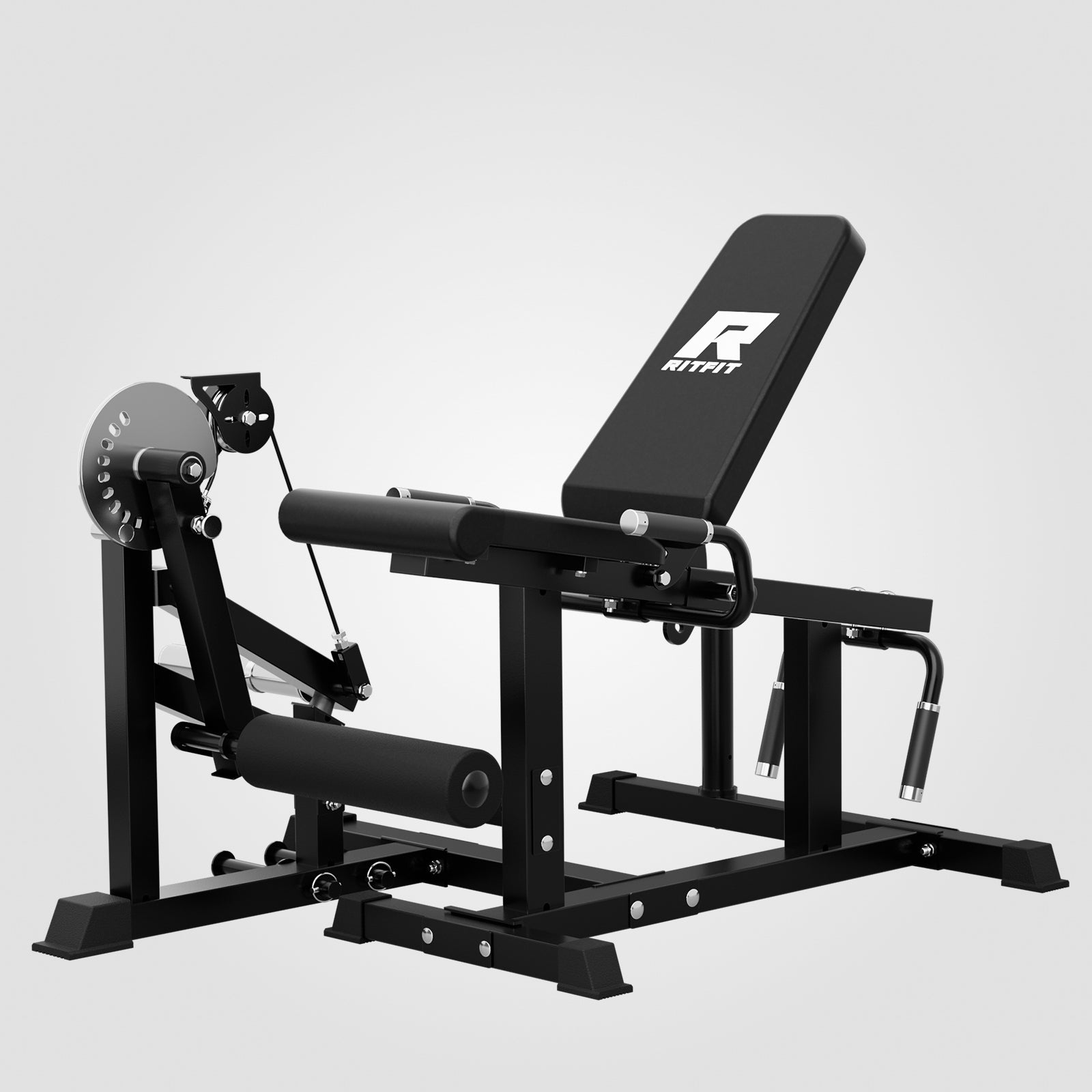
- Leg equipment upgrade: If you eventually want machine based training, compare options in the complete guide to home gym equipment for legs.
- Space plan: Clear enough room for one forward step, one reverse lunge, and a safe dumbbell set down area.
FAQs
Can you build legs with just dumbbells?
Yes. You can build stronger legs with dumbbells if you train hard enough, use full range of motion, and progress over time. Squats, RDLs, lunges, split squats, step ups, hip thrusts, and calf raises can cover the major lower body muscles without machines.
What is the best dumbbell leg exercise?
The best dumbbell leg exercise depends on your goal, but the goblet squat is the best starting point for most people. It trains the quads, glutes, and core, and it is easier to learn than many heavy barbell movements.
How heavy should dumbbells be for leg workouts?
Your dumbbells should be heavy enough that the final two to three reps feel challenging while your form stays clean. Beginners should start with a controllable weight, while stronger lifters may need heavier pairs for squats, RDLs, lunges, and split squats.
How many times per week should I do a dumbbell leg workout?
Most people can train legs with dumbbells one to two times per week, depending on recovery and total training volume. Beginners can start with one focused session, while intermediate lifters can add a second session if soreness and performance are well managed.
Are dumbbell leg workouts good for beginners?
Yes. Dumbbell leg workouts are good for beginners because they are simple, scalable, and easier to set up than many barbell or machine exercises. Start with goblet squats, RDLs, step ups, and calf raises before adding more demanding single leg movements.
Can dumbbell leg workouts replace squats and leg press machines?
Yes. Dumbbell leg workouts can replace machine based leg training for many home gym users, especially when equipment space is limited. However, advanced lifters who need very heavy loading may still benefit from barbells, leg press machines, or dedicated strength machines.
What dumbbell leg exercises work the glutes most?
Dumbbell hip thrusts, Bulgarian split squats, Romanian deadlifts, sumo squats, and walking lunges are strong choices for glute training. Use controlled reps, a full hip extension, and enough load to make the final reps challenging without losing pelvic or knee control.
Should I use one dumbbell or two for leg exercises?
Use one dumbbell for goblet squats, beginner step ups, and hip thrusts when you want simple setup and better control. Use two dumbbells for RDLs, lunges, split squats, and heavier lower body work when you need more total load.
Conclusion
A dumbbell leg workout can build strong, athletic legs when it includes balanced movement patterns and progressive overload. Start with clean form, train consistently, and increase difficulty only when your reps stay controlled.
For home gym users, the best setup is simple, a durable dumbbell range, a stable bench, safe flooring, and enough space to move well. With those basics, dumbbell leg day can become a complete lower body strength plan.
Disclaimer: This article is for general educational purposes only and is not medical advice. If you have knee, hip, ankle, or back pain, or if you are returning from injury, consult a qualified healthcare or fitness professional before starting a new dumbbell leg workout. Stop any exercise that causes sharp pain, numbness, dizziness, or unusual discomfort.
References
- Schoenfeld BJ, Grgic J, Van Every DW, Plotkin DL. Loading recommendations for muscle strength, hypertrophy, and local endurance: a re-examination of the repetition continuum. Sports (Basel). 2021;9(2):32. doi:10.3390/sports9020032
- Zhang W, Chen X, Tang Y, Li X, Xu Y, Liu J. Effect of unilateral training and bilateral training on physical performance: a meta-analysis. Front Physiol. 2023;14:1198940. doi:10.3389/fphys.2023.1198940
- Šarabon N, Kozinc Ž. Effects of resistance exercise on balance ability: systematic review and meta-analysis of randomized controlled trials. Life (Basel). 2020;10(11):284. doi:10.3390/life10110284
- Lopez P, Radaelli R, Taaffe DR, Newton RU, Galvão DA, Trajano GS, et al. Resistance training load effects on muscle hypertrophy and strength gain: systematic review and network meta-analysis. Med Sci Sports Exerc. 2021;53(6):1206-1216. doi:10.1249/MSS.0000000000002585
- Plotkin D, Coleman M, Van Every DW, Maldonado J, Oberlin D, Israetel M, et al. Progressive overload without progressing load? The effects of load or repetition progression on muscular adaptations. PeerJ. 2022;10:e14142. doi:10.7717/peerj.14142
- Wilk M, Zajac A, Tufano JJ. The influence of movement tempo during resistance training on muscular strength and hypertrophy responses: a review. Sports Med. 2021;51(8):1629-1650. doi:10.1007/s40279-021-01465-2