Choosing the right home gym equipment for legs is the difference between a leg day you finish and one you skip. Bodyweight squats stop challenging your legs within a few weeks, so progressive overload against real resistance becomes unavoidable.
This guide covers the few versatile pieces of gear that let you squat, lunge, and press heavy safely while training alone in a garage, basement, or small apartment. It ends with two tiered setups and a plug-and-play routine you can run this week.
Quick Answer: The best home gym equipment for legs combines a safety-first station like a Smith machine or power rack, an adjustable bench, and space-saving free weights such as adjustable dumbbells and kettlebells. Together these allow heavy squats, lunges, and hip thrusts with progressive overload, plus unilateral work to correct imbalances and bands for glute pre-hab.
Key Takeaways
- Safety first: A Smith machine or power rack lets you squat heavy without a spotter, thanks to built-in safety catches and a fixed movement plane.
- Compound over isolation: Heavy squats, lunges, and hip thrusts drive more lower-body strength than single-joint machines alone.
- Go unilateral: Adjustable dumbbells force each leg to work independently, correcting strength imbalances that fixed barbells can hide.
- Space is not a limit: An adjustable bench plus compact dumbbells and kettlebells replaces a full rack of fixed weights in a small corner.
- Accessorize smart: Bands and floor sliders add horizontal resistance for glute activation and pre-hab that gravity-based weights cannot provide.
Why Do Legs Need Heavy Compound Lifts?
Legs house the largest muscle groups in your body, the quadriceps, hamstrings, and glutes, so they respond best to movements that load them against heavy resistance [1]. This is why progressive overload on compound lifts is the foundation of any lower-body program.
Heavy leg training is not only about size. It drives a meaningful metabolic and hormonal response that supports overall body composition change.
- Progressive overload: To keep building strength, you must gradually increase the load your legs lift over time.
- Core bracing: A loaded squat forces your abdominals to brace hard to protect your spine, turning leg day into functional core training.
- Evidence backed: Research shows muscular adaptations occur across a wide range of loads [2], so goal-focused variation outlets more reliably than any single rep scheme.
This guide is written for home lifters training alone in garages, basements, or small apartments who want heavier leg training without sacrificing safety. If you are just starting to plan your space, this home gym guide helps you map out the room before you buy.
Is a Smith Machine the Safest Solo Option for Squats?
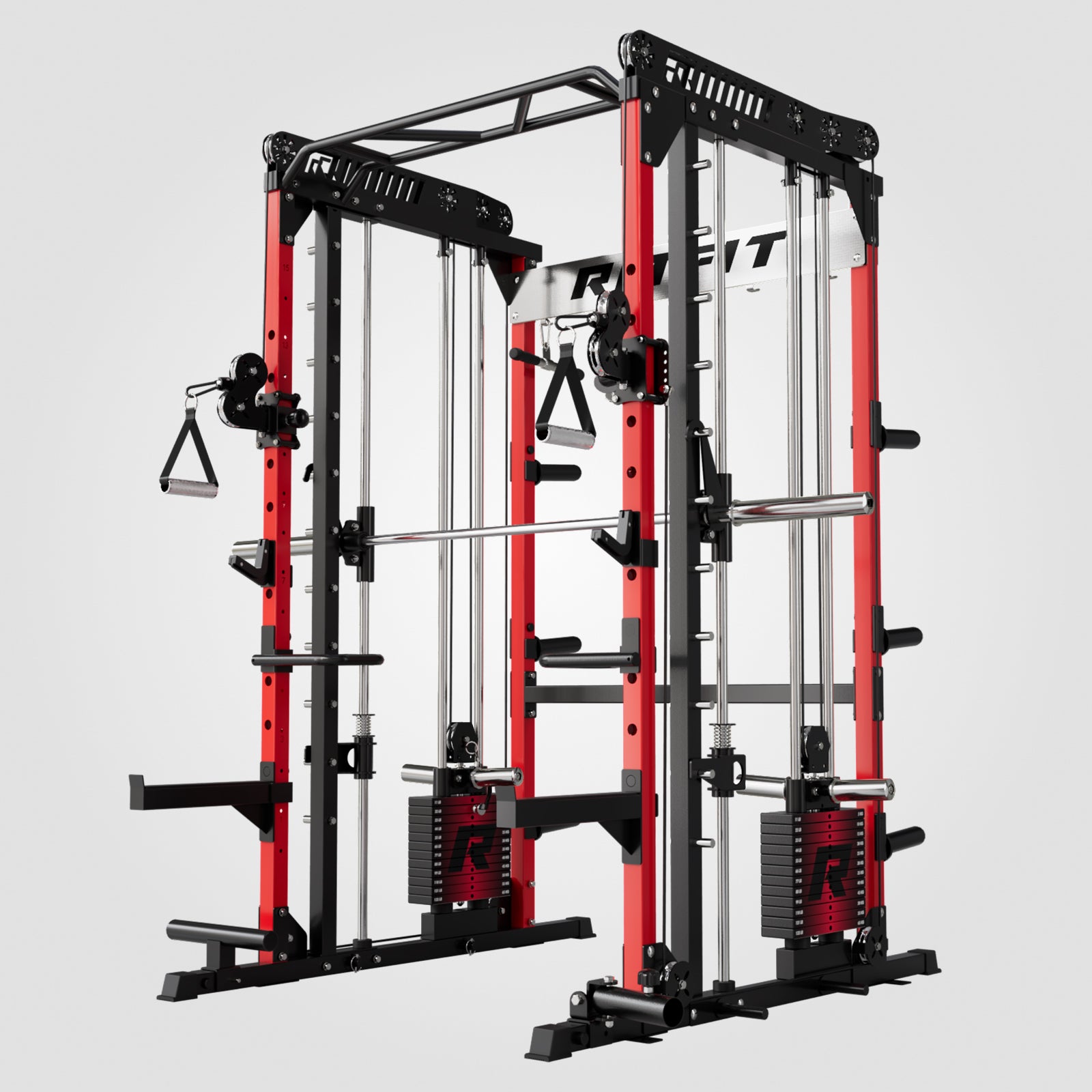
The Smith machine is one of the safest ways to squat heavy alone because the bar glides on a fixed vertical plane with built-in safety catches. If you fatigue mid-rep, you twist the bar to lock it in place instead of depending on a spotter.
Because you spend less energy stabilizing a wobbling free bar, you can direct more focus and tension into the quadriceps.
- Squats: Position your feet slightly forward to shift emphasis to the quads more than a free-weight squat allows.
- Bulgarian split squats: The guided track acts as a stabilizer, letting you load the exercise heavily while you drive up through the glutes.
- Standing calf raises: Load hundreds of pounds onto your shoulders without worrying about balance while you hammer the calf muscles.
For home gym builders, the M1 Multi-Functional Smith Machine acts as a centerpiece, combining the safety of a fixed plane with multiple attachments so one unit covers squatting and pressing.
What Are the Best Dedicated Leg Machines for Home?
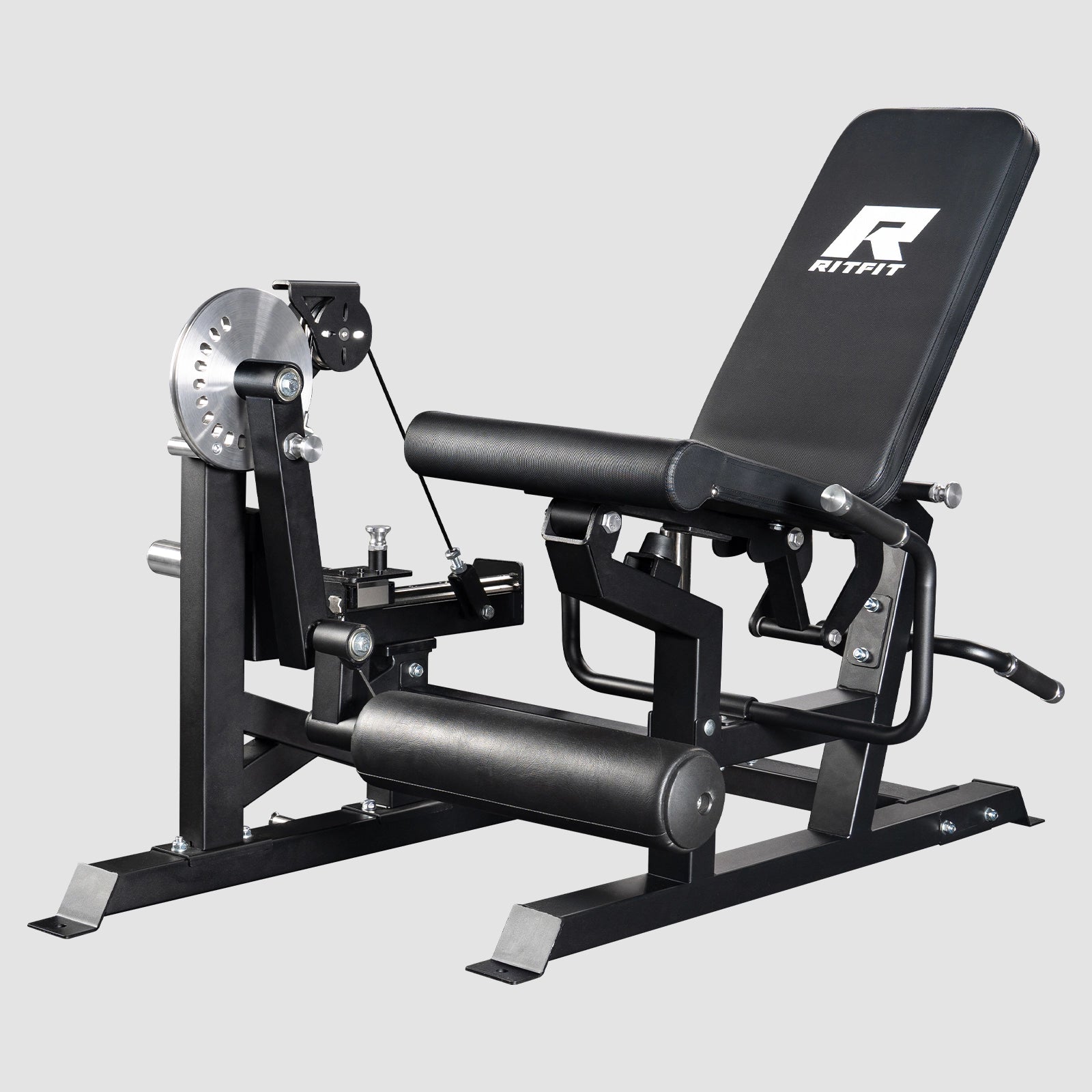
For lifters who want to load the legs heavily without turning every session into a balancing act, a dedicated leg press or hack squat machine is the answer. Browsing a dedicated leg press machine collection helps you compare guided-track options side by side.
Because your back is supported and the path is fixed, leg presses and hack squats generally place less direct compressive stress on the spine than a comparable barbell squat, a real advantage for sensitive lower backs and taller athletes.
Consider the RitFit GAZELLE PRO Leg Press and Hack Squat Machine for its compact footprint and combination design.
- Three stations in one: Move between leg presses, hack squats, and calf raises without changing equipment.
- Adjustable stance: Multiple footplate and backrest angles let you shift emphasis from quads to glutes or the posterior chain.
Pair this commercial-grade station with a Leg Adduction and Abduction Machine if you want to round out inner and outer thigh work that presses and squats miss.
The Adjustable Weight Bench
An adjustable bench is non-negotiable because it is the platform for hip thrusts, step-ups, and seated dumbbell leg curls. Look for a high weight capacity and a seat-to-backrest gap small enough to stay comfortable under load.
Which Free Weights and Bands Work Best for Leg Day?
Free weights and bands cover the parts of leg training that machines cannot, namely unilateral work, ballistic power, and horizontal resistance from angles gravity alone cannot reach.
Adjustable Dumbbells
Adjustable dumbbells correct strength imbalances because each leg carries its own load [3]. If your right leg is noticeably stronger than your left, barbell squats let the strong side take over, but dumbbell lunges and single-leg RDLs force each side to work independently.
- Goblet squats: Holding one dumbbell at chest height forces your thoracic spine to extend and your abs to brace, making it a two-in-one leg and core movement.
- Romanian deadlifts: Dumbbells let you keep the weight closer to your center of gravity than a barbell, which is safer for the lower back while still hammering the hamstrings.
- Walking lunges: A functional movement that trains dynamic balance and coordination while building quad and glute endurance.
"If your space is limited, a good set of adjustable dumbbells might be your better option. They will allow you to progress to heavier weight as you get stronger."
Jeff Cavaliere, MSPT, CSCS, Athlean-X
Kettlebells
Kettlebells are distinct from dumbbells because their offset center of gravity makes them ideal for ballistic, power-based hip movements. The kettlebell swing targets the posterior chain, the back, glutes, and hamstrings, while teaching your hips to hinge explosively, a skill that transfers to better running, jumping, and lifting mechanics.
Resistance Bands and Floor Sliders
Resistance bands add horizontal resistance that gravity-based weights cannot supply. Placing a mini-band around your knees during warm-up lateral steps wakes up the glute medius, the small muscle that keeps your knees from caving inward during a heavy squat.
Floor sliders let you perform sliding hamstring curls and sliding side lunges, placing constant tension on the muscle through the full range of motion for a burn that builds endurance and joint stability. For more budget-friendly ways to stock your space, this best affordable home gym equipment roundup is a useful starting point.
How Do You Build a Tiered Leg Day Setup?
Your ideal setup depends on how much space and budget you have. Below are two options so you never skip leg day again.
Option A: The Heavy Hitter (Maximum Strength and Hypertrophy)
- Core piece: M1 Multi-Functional Smith Machine or a P3 Power Cage for heavy squatting and bench pressing.
- Resistance: Olympic barbell and weight plates (300 lb set minimum).
- Support: Adjustable bench for hip thrusts and split squats.
- Accessory: Pull-up bar with ab straps for hanging leg raises.
Option B: The Compact and Agile (Functional Fitness and Toning)
- Core piece: Adjustable dumbbells (5-50 lb or 5-80 lb range).
- Power: One or two moderate-weight kettlebells.
- Accessory: Set of resistance bands and floor sliders.
- Support: Yoga mat and a compact bench.
What Does a Home Leg and Abs Routine Look Like?
The sample routine below uses the equipment covered in this guide and hits the legs from every angle while keeping the core engaged throughout.
Compound Strength (The Big Lift)
- Exercise: Smith machine squats or goblet squats for the compact setup.
- Sets and reps: 4 sets of 8-10 reps.
- Focus: Control the descent for 3 seconds, pause briefly, and drive up explosively. Keep your chest up and push your knees slightly out in line with your toes.
Unilateral Stability
- Exercise: Dumbbell reverse lunges.
- Sets and reps: 3 sets of 12 reps per leg.
- Focus: Step back far enough that your front knee stays stacked over your ankle. Lean your torso slightly forward to engage the glutes.
Posterior Chain Endurance
- Exercise: Kettlebell swings or dumbbell RDLs.
- Sets and reps: 3 sets of 15-20 reps.
- Focus: Snap your hips forward; do not raise the weight with your arms. If you feel your lower back taking over, reduce the load and focus on the hip hinge.
Core Finisher
- Exercise: Hanging knee raises or weighted planks.
- Sets and reps: 3 sets to failure.
- Focus: Avoid swinging. Move slowly to eliminate momentum and maximize abdominal tension.
FAQs About Home Gym Equipment for Legs
What is the best home gym equipment for legs with limited space?
Yes. Adjustable dumbbells and kettlebells take up very little floor space and cover squats, lunges, RDLs, and swings. Add a compact adjustable bench for hip thrusts and step-ups, and you have a full leg workout in a small apartment corner.
Can you build leg muscle with only dumbbells at home?
Yes. Dumbbells allow progressive overload through goblet squats, reverse lunges, single-leg RDLs, and walking lunges at home. The key is increasing the weight over time and training each leg unilaterally to avoid strength imbalances that machines can hide over time.
Is a Smith machine good for leg day?
Yes. A Smith machine supports squats, Bulgarian split squats, standing calf raises, and even hip thrusts. The fixed track removes the balancing demand so you can focus tension on the target muscles while built-in catches protect you when training alone.
Do I need a leg press machine for home?
No, but it helps. A leg press lets you load the quads and glutes heavily without spinal compression, which is valuable for lifters with lower back sensitivities. A 3-in-1 unit that combines leg press, hack squat, and calf raises saves space.
How often should I train legs at home?
Two times per week is optimal for strength and hypertrophy at home. Allow at least 48 hours between sessions for recovery. Each session should include one compound lift, one unilateral movement, and one posterior chain exercise for balance in your program.
What equipment do I need for home leg day as a beginner?
Start with adjustable dumbbells, a kettlebell, a resistance band set, and an adjustable bench. This combination covers squats, lunges, swings, glute activation, and hip thrusts without taking up much space or requiring a large budget for most home lifters to begin.
Conclusion
Building strong legs at home is not about filling a room with single-use machines. A Smith machine for safe heavy squatting, an adjustable bench for hip thrusts, and compact free weights for unilateral work give you a complete leg day setup without the commercial gym footprint.
Start with one tiered option above, pick a routine, and stay consistent. For premium gear that fits your space and budget, explore the collections at RitFit Sports and check the RitFit discount guide for savings on your first purchase.
Disclaimer
This article is for educational purposes only and is not a substitute for professional medical advice. Consult your physician before starting any new training program, especially if you have existing injuries or medical conditions.
References
1. Jung R, Gehlert S, Geisler S, Isenmann E, Eyre J, Zinner C. Muscle strength gains per week are higher in the lower-body than the upper-body in resistance training experienced healthy young women-A systematic review with meta-analysis. PLoS One. 2023;18(4):e0284216. doi:10.1371/journal.pone.0284216. PMCID: PMC10101404
2. Schoenfeld BJ, Grgic J, Van Every DW, Plotkin DL. Loading Recommendations for Muscle Strength, Hypertrophy, and Local Endurance: A Re-Examination of the Repetition Continuum. Sports (Basel). 2021;9(2). doi:10.3390/sports9020032. PMCID: PMC7927075
3. Sun W, Li H, Qu L, et al. Unilateral plyometric training effectively reduces lower limb asymmetry in athletes: a meta-analysis. Front Physiol. 2025;16:1551523. doi:10.3389/fphys.2025.1551523. PMCID: PMC12014563