

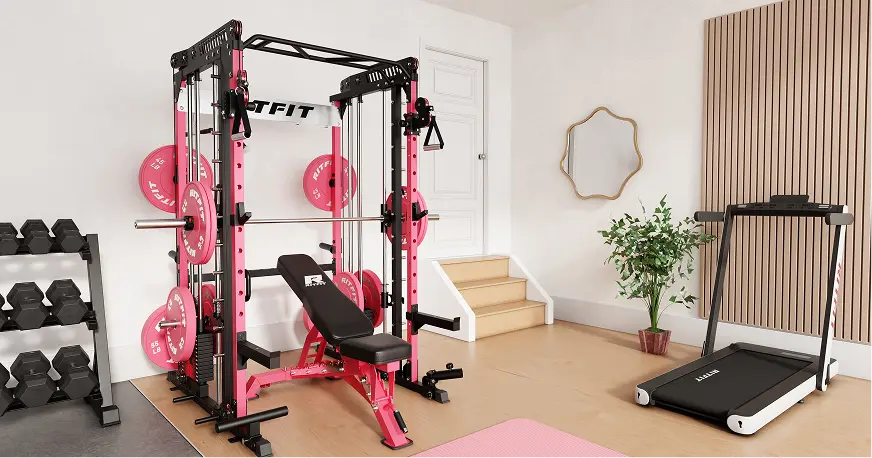
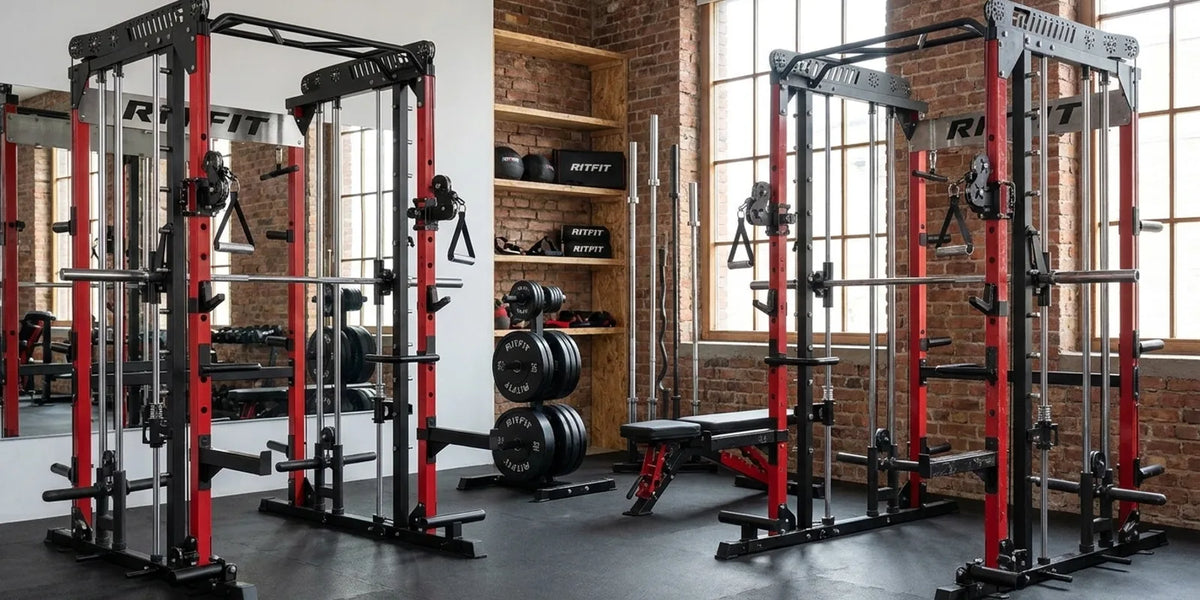
Used Smith machine over $1,000 vs new M1 PRO is a conditional value decision, not an automatic used-equipment rejection. Its real value depends on condition, transport, missing parts, and warranty exposure. In 2026, the new RitFit M1 PRO gives buyers a current, documented reference point for that comparison.
This guide is for US home-gym buyers comparing a local listing with a new M1 PRO. It does not invent repair costs or used-market averages, and it shows what to inspect before money changes hands.
Quick Answer: A used Smith machine over $1,000 can make sense only when its landed cost, wear points, missing hardware, transport plan, and warranty status are verified, while the new RitFit M1 PRO offers a clearer current-price and support baseline.
Key Takeaways
- Landed cost: Compare the used asking price with pickup, moving, assembly, missing hardware, and unknown service exposure.
- Inspection: Rails, linear bearings, cables, pulleys, welds, safety catches, and attachment points deserve a hands-on check before payment.
- New baseline: The official M1 PRO page displayed a $1,299.99 sale price and $1,399.99 regular price when checked.
- Warranty boundary: RitFit states that its warranty starts from the order date and is non-transferable.
- Conditional choice: A complete, well-maintained used unit can fit an experienced buyer, while an uncertain listing is harder to justify near the new price.
What does a $1,000-plus used Smith machine really cost?
A used Smith machine costs more than its listing price because the buyer also assumes the logistics and condition uncertainty. The correct comparison is the amount required to own, move, assemble, complete, and support the machine at home.
- Start with the full handoff: Add the seller's asking price to pickup time, vehicle or mover requirements, stairs and doorway planning, disassembly, reassembly, alignment, and any missing hardware you can verify.
- Separate known from unknown: A seller can document the model and included parts, but an unverified cable, pulley, bearing, or weld condition is still an exposure rather than a guaranteed bill.
- Set a stop rule: If you cannot inspect the complete machine under load or confirm the parts list, treat the unknowns as a reason to renegotiate or walk away, not as an assumed zero cost.
This approach avoids pretending that every used machine has the same repair bill. It also gives the Smith machine collection a useful role as a live comparison set rather than a promise about any particular used listing.
Which used Smith machine wear points deserve a no-payment inspection?
The best used-equipment inspection follows the load path from frame to bar, then checks every cable and safety interface. A machine that looks clean can still deserve a no if the bar binds, a cable is damaged, or a required catch is missing.
| Inspect | What to verify | Decision signal |
|---|---|---|
| Rails and linear bearings | Run the bar through its travel and feel for binding, rough spots, noise, or uneven resistance. | Any unexplained binding needs a cause before payment. |
| Cables and pulleys | Look for fraying, crushed sections, poor routing, wobble, damaged sheaves, and missing guards or pins. | Do not price an unknown cable as if it were new. |
| Frame and welds | Check uprights, base joints, weld beads, fastener holes, bent tubing, corrosion, and unauthorized alterations. | Structural uncertainty is a stop condition. |
| Safety hardware | Confirm safety catches, J-hooks, spotter arms, bolts, collars, and adjustment pins are present and functional. | Missing safety hardware changes the purchase decision. |
| Completeness | Match attachments, brackets, manuals, and hardware against the model's parts list. | Missing proprietary parts may be difficult to source. |
Machine-based training is not universally superior to free-weight training, so the purchase question is practical rather than ideological. A systematic review compared both modes without supporting a blanket equipment verdict, which is why this article focuses on condition and ownership risk instead of declaring every used machine worse.[1]
What does the new RitFit M1 PRO deliver at its current listed price?
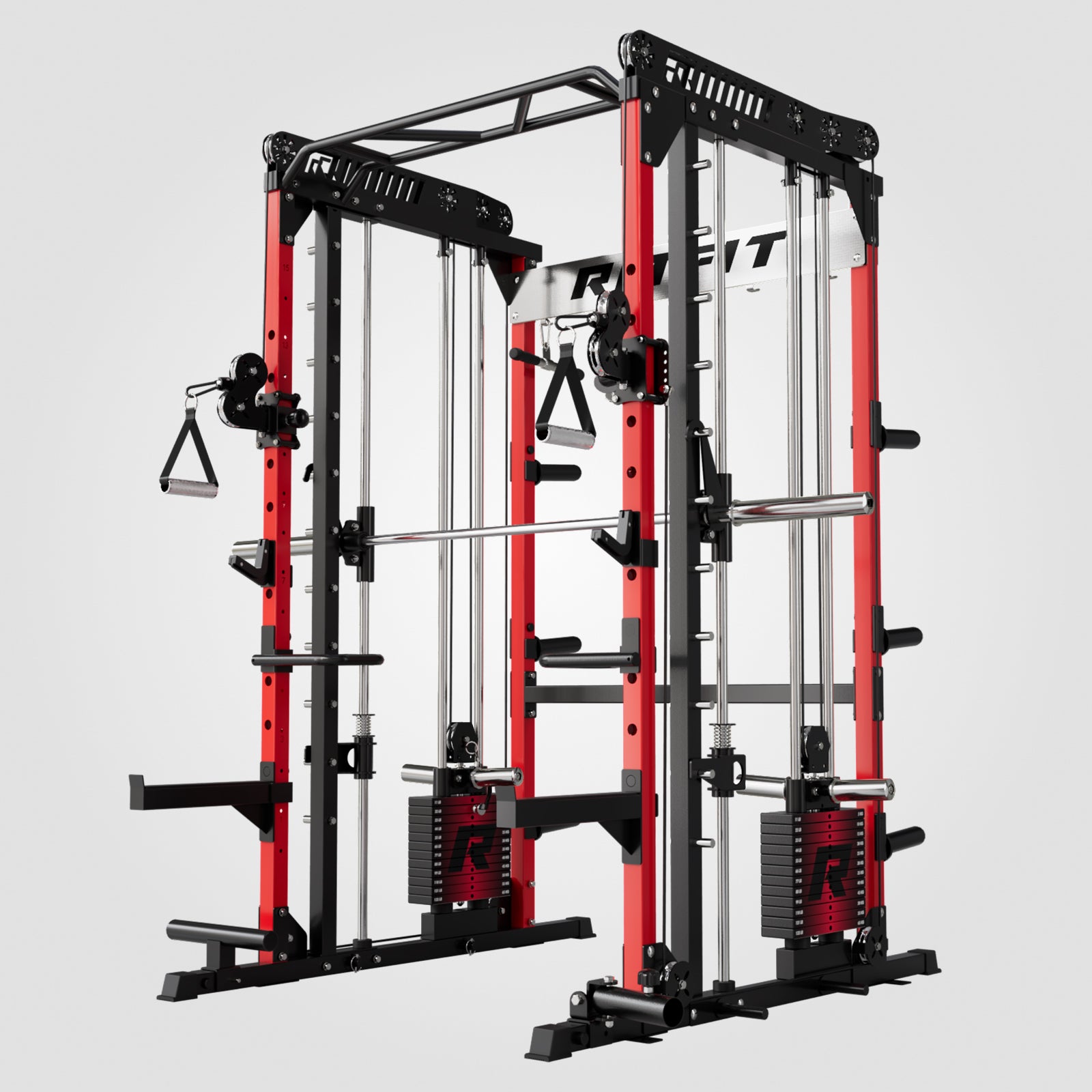
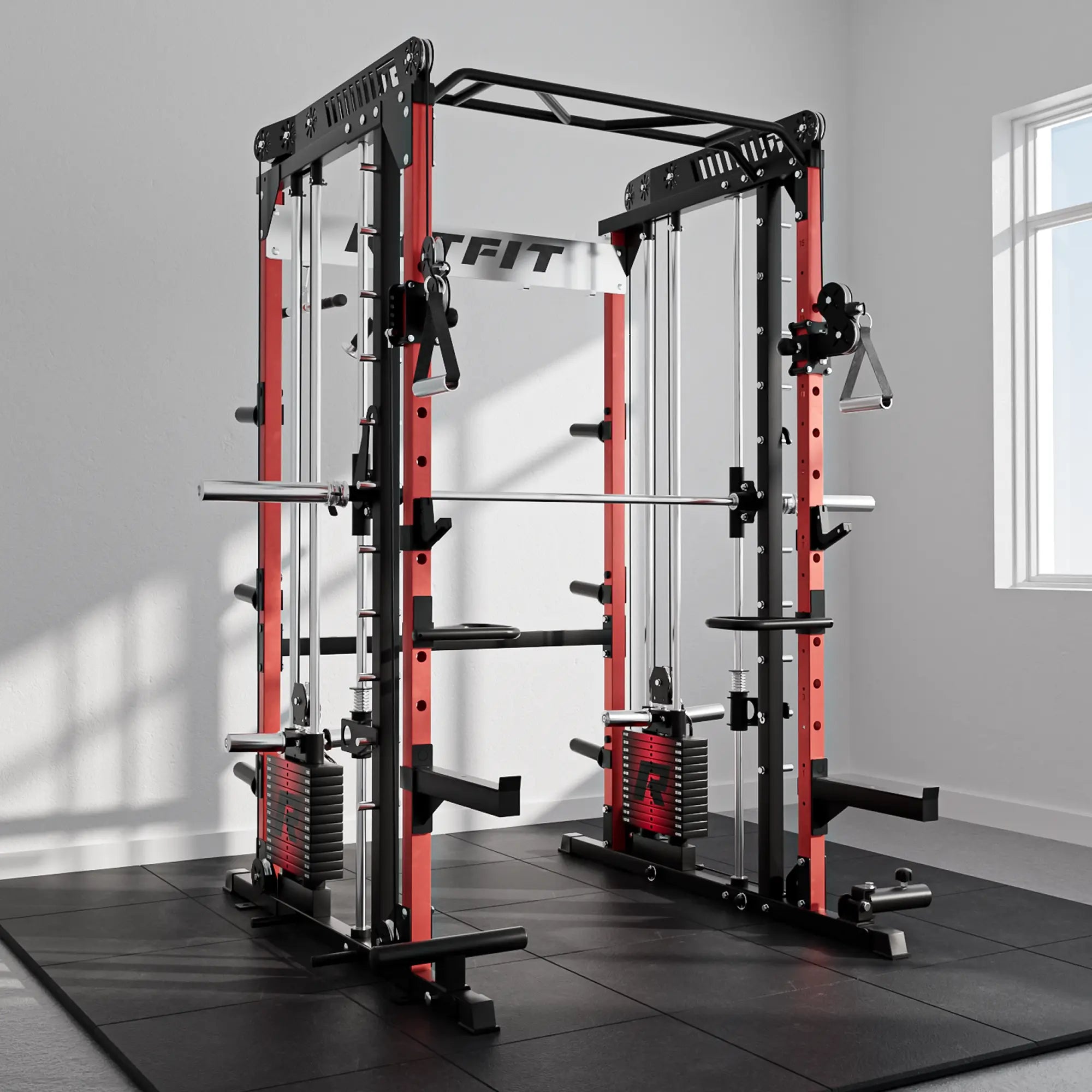
The new RitFit M1 PRO provides a documented configuration and a live price reference, not a promise that every buyer will prefer it. The official product page displayed $1,299.99 on sale and $1,399.99 as the regular price when checked for this article.
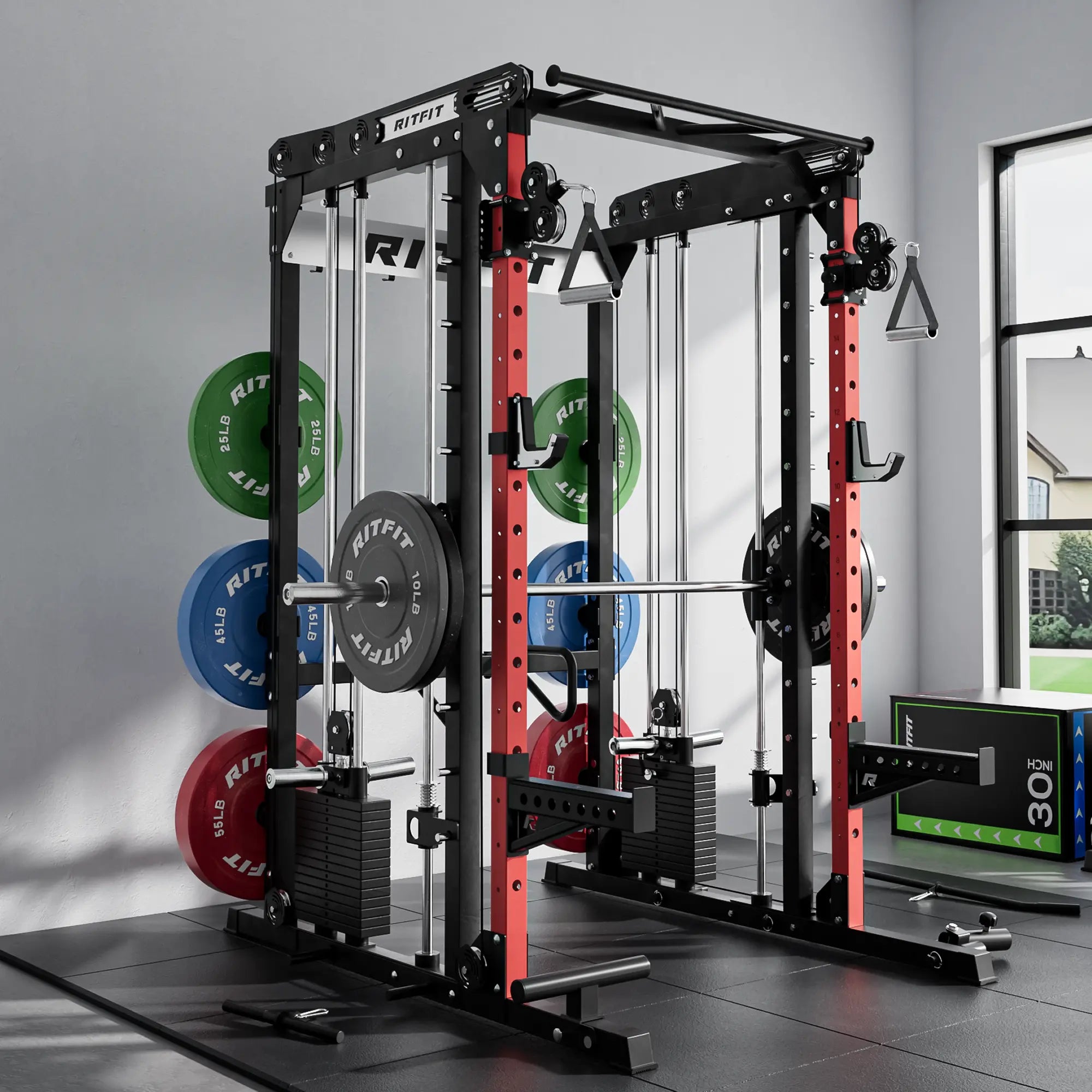
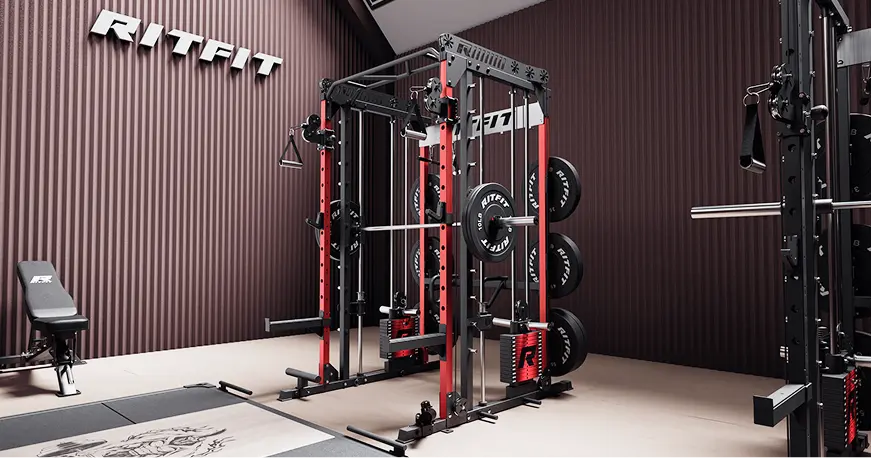
- Frame and footprint: The PDP lists 2-by-2 14-gauge steel, a 1,600 lb frame capacity, an 85.3 inch height, a 79.1 inch length, a 63 inch width, a 20.9 sq ft footprint, and a 339 lb rack weight.
- Smith path: The listed configuration includes a 33 lb Smith bar, 352 lb Smith capacity, linear-bearing Smith bar system, and 11 height settings.
- Cable system: The page lists a 2:1 pulley ratio, 420 lb single-side pulley capacity, stainless-steel cable rails, aluminum pulleys, and compatibility with several M1 PRO attachments.
"Few pieces of equipment in the home exercise industry are as comprehensive and versatile as this all-in-one gym system."
Tom Eskey, CF-L1, CPT, Garage Gym Revisited M1 Multi-functional Smith Machine review
Garage Gym Revisited describes the M1 as an all-in-one system with a centered bar path, dual cable crossover, and attachments. That published review is context, not a substitute for a current inspection or a rating of every M1 PRO package.
"Nice machine. Smooth cables and pulleys. Bought the package deal and it comes with everything you need to get going right away. Assembly straight forward. The hardware is packaged very nice and corresponds to each step in the instruction manual. Probably need an extra person on a few of the steps and an impact driver with socket will save you a bunch of time. Shipping was good. Ordered Saturday evening and had it by Wednesday. Very happy."
John C. Verified Buyer, RitFit M1 PRO Smith Machine Weight Stack Home Gym Package
How do transport, parts, assembly, and warranty change the value equation?
Ownership friction can erase a used machine's apparent savings when the buyer must solve transport, alignment, missing parts, and support alone. A new M1 PRO still requires assembly and space planning, but the official listing provides a documented configuration and a direct support path.
- Transport: Confirm whether the used machine can leave the current room without unsafe disassembly, and confirm who handles loading, stairs, doorways, and reassembly.
- Assembly: Ask for the manual and fastener inventory before pickup, then plan time to level the frame and verify bar and cable travel after assembly.
- Parts: Record the exact model and compare proprietary brackets, pins, pulleys, cables, and catches with currently available replacement paths before treating the unit as complete.
- Warranty: Never assign a used unit unverified remaining coverage. RitFit's current policy says the warranty starts from the order date and is non-transferable.
Home equipment access and setup are practical parts of adherence, but a general facility source cannot determine a used machine's repair bill. Use published research for context and use the listing, inspection, and policy documents for the purchase decision.[2]
Which buyer profile fits each purchase path?
The used path fits an experienced buyer who can inspect condition and solve logistics. The new M1 PRO path fits a buyer who values documented specifications and a clearer support starting point.
| Buyer situation | More defensible path | Why |
|---|---|---|
| Experienced inspector, complete unit, smooth travel, large verified price gap | Used machine may fit | Known condition and logistics can reduce uncertainty. |
| First home gym, no inspection experience, unclear parts list | New M1 PRO may fit | Current listing and support documents create a clearer starting point. |
| Basement or difficult access | Compare both logistics plans | Box delivery and used pickup each require doorway and assembly planning. |
| Buyer relying on warranty for peace of mind | Verify policy before buying | A second owner should not assume a non-transferable warranty applies. |
If the used listing fails any inspection stop condition, do not rescue it with optimism. If it passes, compare the remaining uncertainty against the live M1 PRO page and the value of documented support.
"This thing is amazing for the price. Solid build quality. Shipped super fast, packing was done very well. Lifts have improved from my previous routine and now are much safer due to the smith machine benefits."Walter S. Verified Buyer, RitFit M1 PRO Multi-Functional Smith Machine with Cable Crossover System and Squat Rack for Home Gym
How does the current warranty affect ownership value?
RitFit's current warranty policy gives buyers a category-based reference, while its non-transferability clause limits what a used buyer can assume. The policy page lists strength-equipment coverage of 3 years for frame and welding, 1 year for bushings and bearings, and 6 months for parts and pads.
- Original order matters: The warranty period starts from the order date unless otherwise specified, so a used buyer should not calculate remaining time without documentation.
- Location matters: The policy says it does not apply to products that leave the lower 48 states in the United States.
- Category wording matters: The policy table is the authority for coverage, and the buyer should confirm how the relevant M1 PRO configuration is categorized before relying on it.
Read the current RitFit warranty policy before buying new or used, and ask RitFit directly when a second-owner question is material to the decision.
How should you choose between the two purchase paths?
The decision matrix should be completed with evidence from the exact listing, not with assumptions about all used machines. A new M1 PRO becomes the clearer choice when the used machine cannot pass inspection or its unknowns erase the price difference.
| Question | Used Smith machine over $1,000 | New RitFit M1 PRO |
|---|---|---|
| Can you verify condition? | Require live inspection of frame, bar, rails, bearings, cables, pulleys, welds, and catches. | Use the published configuration as the starting specification, then inspect after assembly. |
| Can you verify completeness? | Match every part and attachment with the model list before paying. | Confirm the selected configuration and included items on the live PDP. |
| Can you explain total cost? | Include asking price, pickup, moving, assembly, missing parts, and unknown service exposure. | Start with the live listed price, delivery terms, assembly, and chosen accessories. |
| Can you rely on warranty? | Do not assume a second-owner warranty transfers. | Read the current policy and preserve the order record. |
| Is the buyer equipped to manage uncertainty? | Best fit for an experienced inspector with a verified unit. | Best fit when documented specifications and a clearer support baseline matter. |
For an expansion path, compare the M1 PRO weight stack package and available M1 PRO lat pulldown attachment against the exact used unit's included equipment. A published comparison of training modes also supports a measured choice rather than a universal verdict.[3]
FAQs About Used Smith Machine Over $1,000 vs New M1 PRO
Is a used Smith machine over $1,000 automatically a bad buy?
No. A used Smith machine can make sense when the exact model, ownership history, complete parts set, smooth bar travel, cable condition, safety hardware, transport plan, and final landed cost are documented before payment. The purchase becomes harder to defend when the seller cannot demonstrate those basics or when repair exposure is unknown.
What should I inspect first on a used Smith machine?
Start with the frame and welds, then cycle the bar through its full travel while listening and feeling for binding. Inspect rails, linear bearings, cables, pulleys, guide points, safety catches, J-hooks, bolts, and attachment interfaces. Compare every included component with the current manual or parts diagram before committing.
What is the current listed price of the RitFit M1 PRO?
The official M1 PRO product page displayed a $1,299.99 sale price and a $1,399.99 regular price when checked for this article. Prices and availability can change, so treat the live product page as the current reference and compare the used listing against your delivered, assembled, and complete purchase cost.
Does the RitFit warranty transfer to a used buyer?
Do not assume it does. RitFit's current warranty policy states that the warranty starts from the order date and is non-transferable. A used buyer should request written confirmation from RitFit before relying on coverage, and should not count unverified remaining warranty time as part of the used machine's value.
Why do transport and assembly matter in the comparison?
A used machine may require pickup labor, a suitable vehicle, stairs or doorway planning, disassembly, reassembly, alignment, and time away from training. A new M1 PRO also requires assembly and space planning, but its official listing documents the rack footprint, box shipment information, support path, and current configuration more clearly than an unknown local listing.
When is the new M1 PRO the more defensible choice?
The new M1 PRO is usually the more defensible path when its live price is close to the used asking price and the used machine lacks service records, complete hardware, verified smooth travel, or a realistic transport plan. The conclusion is conditional, not universal, because a complete, well-maintained used unit with a large price gap may still fit an experienced buyer.
Conclusion
A used Smith machine over $1,000 is not automatically worse than a new RitFit M1 PRO. Choose the used path only when the exact unit passes inspection, the complete landed cost is clear, and you are comfortable with warranty and parts uncertainty. Choose new when a documented configuration and current support baseline are worth more than an uncertain discount.
Save the listing, parts list, inspection notes, and current policy page before you pay. Then compare the exact evidence, not a generic used-versus-new slogan.
Disclaimer
This article provides general equipment buying information and does not replace inspection by a qualified technician or the current manufacturer policy. Stop using equipment with suspected structural or cable damage and seek professional help for repairs, installation, or safety questions.
References
1. Schwindinger F, et al. Effect of free-weight vs. machine-based strength training on maximal strength, hypertrophy and jump performance: a systematic review and meta-analysis. 2023. PMCID: PMC10426227
2. Schwanbeck S, et al. Using Machines or Free Weights for Resistance Training in Novice Males? A Randomized Parallel Trial. 2020. PMCID: PMC7662789
3. Incorporating a Gym Facility in a Lifestyle Medicine Practice. 2023. PMCID: PMC10248370