








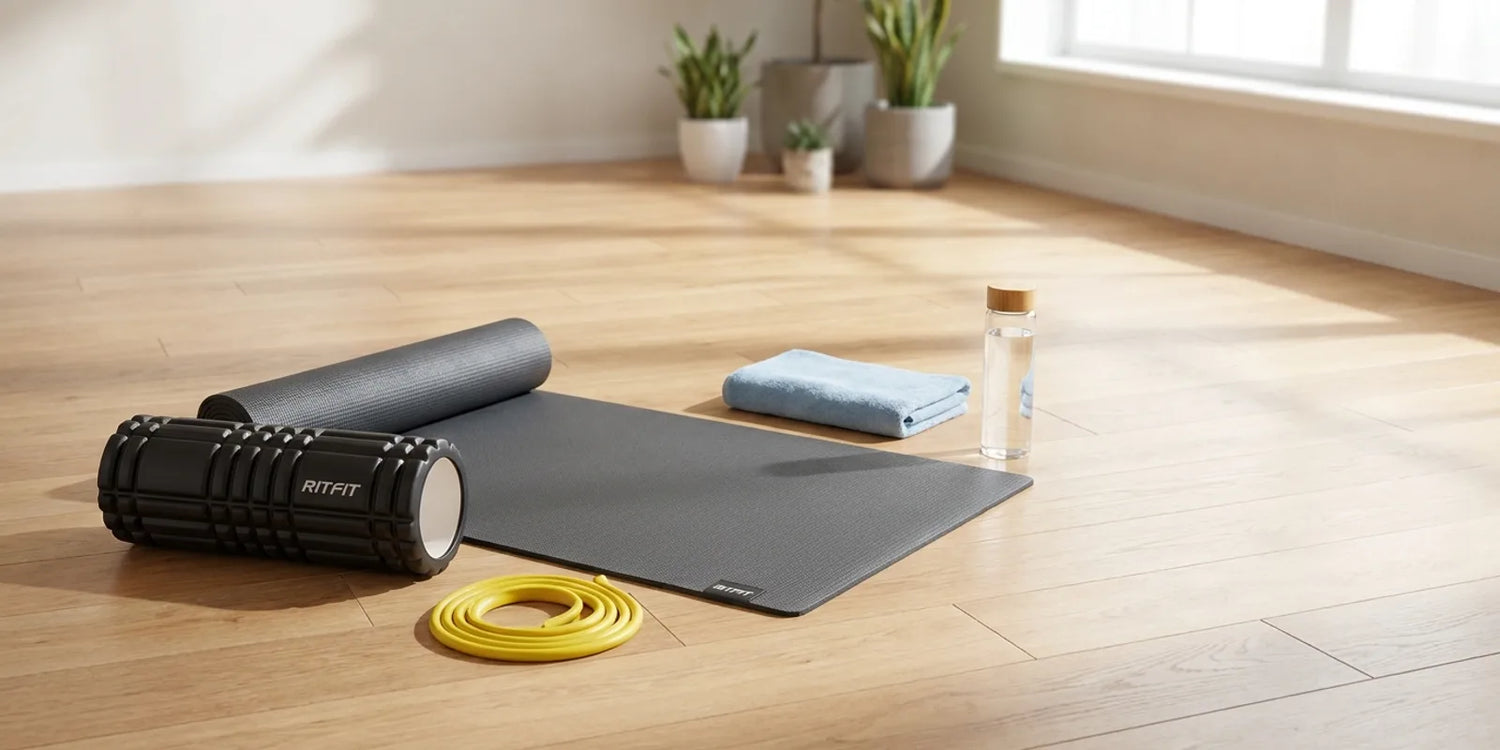
Learning how to warm up before workout for beginners is one of the most useful habits you can build. A short dynamic warm up raises your heart rate, loosens stiff joints, and prepares your muscles for the work ahead, so your first working set feels smooth instead of cold.
This guide covers a 6 to 10 minute warm up routine you can do at home or in the gym, how long to spend before each session, and the beginner mistakes to skip. You will finish with a repeatable routine that takes the guesswork out of every workout.
Quick Answer: The best way to warm up before workout for beginners is a short dynamic routine that raises your heart rate and moves the joints you will use. March in place, add arm circles, leg swings, and glute bridges, then finish with light bodyweight reps of your main exercises before the real work begins.
Key Takeaways
- Keep it short: A 6 to 10 minute dynamic warm up is enough for most beginners before strength or cardio work.
- Move, don't stretch: Dynamic movements prepare muscles better than long static holds before training.
- Match the session: Warm up the muscles and joints you will actually use that day.
- Ramp up gently: Finish with light versions of your main exercises, never a cold first working set.
- Stop signals: Sharp joint pain during a warm up means adjust the movement or rest before continuing.
What Is a Warm Up and Why Do Beginners Need It?
A warm up is a short block of low intensity movement you do before your main workout to raise body temperature, increase blood flow, and prepare your muscles and joints for harder work. For beginners it matters most because it makes the first exercises feel smoother and gives your nervous system time to wake up.
- Raises body temperature: Light full body movement gradually increases your core temperature, which helps muscles contract more efficiently once you start lifting.
- Improves joint mobility: Moving your hips, shoulders, and ankles through their range loosens stiffness that often feels worse in the first few minutes of a session.
- Activates key muscles: Glute bridges, leg swings, and bodyweight squats switch on the muscles you will rely on for squats, deadlifts, and presses.
- Builds a routine: A consistent warm up gives you a clear starting point every session, which is especially helpful when you are new and unsure where to begin.
The goal is to feel ready, not tired. A warm up should leave you slightly warmer and looser, with energy still saved for the workout itself.
How Long Should You Warm Up Before a Workout?
Most beginners should spend about 6 to 10 minutes warming up before each workout, and UK health guidance recommends at least 6 minutes for a basic warm up. You can extend to 10 or more minutes on cold mornings or before a heavy leg day.
- Cold mornings: Add a few extra minutes of full body movement so your joints feel loose before the first set.
- Heavy leg day: Spend closer to 10 minutes on hip, ankle, and glute prep because squats and deadlifts need the most range.
- Upper body day: Keep it closer to 6 to 8 minutes with arm circles, band pull-aparts, and shoulder mobility.
Researchers still debate the ideal warm up design, but the evidence is clear that some structured preparation beats jumping straight into hard work.[1] Pair your warm up with a structured plan like this beginner workout plan for females if you want a full starting schedule.
Beginner Warm Up Routine: 6 to 10 Minute Step by Step
Follow this 6 to 10 minute warm up routine before any beginner workout, from raising your heart rate to rehearsing your main movements. Do each step for 30 to 60 seconds and aim for a light sweat, not fatigue.
- Step 1: March in place (1 to 2 minutes): March on the spot and pump your arms in rhythm with your steps. Keep your elbows bent and your fists relaxed.
- Step 2: Arm circles and shoulder rolls (30 to 60 seconds): Circle your arms forward and backward, then roll your shoulders up, back, and down to open your upper body.
- Step 3: Leg swings and hip rotations (30 to 60 seconds): Swing each leg forward and backward, then side to side. Add gentle hip circles to loosen the joints that carry most squat and lunge work.
- Step 4: Glute bridges (10 to 15 reps): Lie on your back with knees bent, drive through your heels, and lift your hips to activate your glutes before any squat or deadlift work.
- Step 5: Bodyweight squats and lunges (10 reps each): Move through your full squat range and add a few lunges to wake up your quads, hamstrings, and hips.
- Step 6: Light rehearsal sets (1 to 2 minutes): Do 1 to 2 light sets of your main lift with just the bar or a very light weight, climbing toward your working weight.
If you want extra core prep before you train, add a few moves from this list of five ab exercises to warm up. Follow the movement flow below for a complete no-equipment option you can run at home.
Warm Up Exercises by Workout Type
The right warm up matches the session you are about to do, so a cardio warm up looks different from a leg day warm up. Pick the drills that mirror the movements and muscles you will use in your main workout.
Warm Up Before Cardio
Warm up before cardio with 5 to 7 minutes of easy, rhythmic movement that raises your heart rate gradually. This helps your body transition smoothly into steady state or interval work.
- Marching and high knees: Start easy, then lift your knees higher to increase intensity.
- Butt kicks: Alternate heels toward your glutes to warm up your hamstrings and quads.
- Jumping jacks: Add these once your legs feel loose to raise your heart rate a little more.
If interval training is your goal, these best HIIT workouts for beginners include ready-made sessions to follow.
Warm Up Before Strength Training
Warm up before strength training with movements that activate your shoulders, back, and glutes, then add light ramp-up sets. This prepares your body to handle heavier loads with good form.
- Band pull-aparts: Open your chest and wake up your upper back before presses and rows.
- Scapular slides and arm circles: Loosen your shoulders before any pressing work.
- Light ramp-up sets: Take the empty bar or a light weight and climb in a few easy steps toward your working weight.
Building a complete strength session around a good warm up starts with the right equipment, so keep progression simple by following a structured plan from day one.
Warm Up Before Leg Day
Warm up before leg day with extra time on your hips, ankles, and glutes because squats and deadlifts demand the most range of motion. Spend closer to 10 minutes on lower body prep.
- Leg swings and hip rotations: Open your hips before any squat or lunge pattern.
- Air squats: Move through your full depth to groove the pattern you will use under load.
- Glute bridges and walking lunges: Activate your glutes and warm up your quads and hamstrings.
For machine based lower body work, this guide to best Smith machine leg workout warm up exercises shows the exact prep to run before leg presses and squats.
"What I advise in most cases is, instead of looking for a spotter to take you through those areas of a lift that are more difficult, think of other ways you can improve your ability to complete that lift, if strength is your goal."
Jeff Cavaliere, MSPT, CSCS, Physical Therapist and Strength Coach, former Head Physical Therapist for the NY Mets, Workout Spotting Tips
Dynamic Warm Up vs Static Stretching: What to Do Before Exercise?
Before a workout, choose dynamic movement over long static holds because dynamic warm ups prepare your muscles for the exact demands of your session. A 2025 review described dynamic warm ups as pivotal for performance and injury prevention,[2] and a systematic review found long static stretching before activity can reduce short-term power and sprint performance.[3]
- Dynamic warm up: Controlled movement through full range, like leg swings, lunges, and arm circles. This raises temperature and rehearses the patterns you will use.
- Static stretching: Holding a position for 30 seconds or more. This is better saved for after your workout, during your cool down, to help restore range of motion.
- Short holds are fine: A quick 5 to 10 second pause within a dynamic flow does not cause the same performance drop as long static holds.
The simple rule for beginners is to move before you lift and stretch after you finish. This keeps your muscles primed for the workout and avoids the fatigue that long holds can create before heavy work.
Common Warm Up Mistakes to Avoid
Most warm up problems come from going too hard, skipping the routine entirely, or holding long static stretches before heavy work. Avoid these beginner mistakes to keep every session safe and effective.
- Skipping the warm up: Jumping straight into heavy sets leaves your joints and muscles cold, which raises the risk of feeling stiff and struggling with form.
- Turning it into a workout: If you are out of breath before your first working set, your warm up was too intense. Back off and keep it easy.
- Cold first working set: Never load your heaviest weight on the first set. Use a few light ramp-up sets to climb gradually.
- Long static holds before lifting: Holding stretches for a minute or more before strength work can blunt your power output, so keep pre-workout movement dynamic.
- Ignoring sharp pain: A warm up should feel warm and loose, never painful. Stop if you feel a sharp or unusual sensation in a joint.
Building a reliable home routine also means having the right surface, and a comfortable gym mat for floor work makes ground exercises like glute bridges and core drills feel much better.
How to Warm Up at Home Before an Early Morning Workout
You can complete a full warm up at home in a small space with no equipment before an early morning or before work workout. Start with gentle full body movement to raise your core temperature, then mobilize your hips, shoulders, and ankles before adding a few bodyweight reps.
- Wake up gradually: Begin with slow marching and deep breathing for a minute so your body eases into the day instead of shocking your system.
- Use a mat for comfort: Floor work feels better on a padded surface, especially for glute bridges and core moves on a hard garage or apartment floor.
- Warm the space: A cool morning room means your muscles take longer to warm up, so give yourself the full 10 minutes and layer up if needed.
- Budget 6 to 10 minutes: Keep the same routine as any other session so you stay consistent even when you are short on time before work.
A quick at home warm up fits naturally into a busy morning schedule, and pairing it with the right fuel matters too, so check this guide on what is a good meal before a workout to round out your pre-training prep.
How to Progress Your Warm Up as a Beginner
As your conditioning improves, you can make your warm up slightly longer or add light resistance without turning it into a workout. Progress gradually and keep the goal the same: feel ready, not tired.
- Add time: Move from 6 minutes toward 10 as your workouts get harder, especially before lower body days.
- Add light weight: Use a light pair of dumbbells for goblet squats, lunges, or shoulder raises to give your warm up a little more load as you get stronger.
- Match the demand: As your main lifts get heavier, your ramp-up sets become more important. Keep climbing toward your working weight in smooth steps.
- Listen to your body: If a movement feels tight or uncomfortable, spend an extra 30 to 60 seconds on that area instead of pushing through.
Light resistance is easy to add at home with a versatile set of RitFit hex rubber dumbbells, and once you master your warm up you can build out a full plan with this beginner kettlebell workout guide.
FAQs About Warming Up Before a Workout
How long should a beginner warm up before a workout?
Plan for about 6 to 10 minutes before most sessions.
UK health guidance recommends at least 6 minutes for a basic warm up, and you can go a little longer on cold mornings or before a heavy leg day.
The warm up should raise your heart rate and get a light sweat going without leaving you tired.
What is the best warm up for beginners?
The best beginner warm up is a short dynamic routine that raises your heart rate and moves the joints you will use.
Start with light cardio like marching in place or jumping jacks, then add mobility moves like arm circles, leg swings, and glute bridges.
Finish with a few light bodyweight versions of your main exercises.
Should I stretch before or after a workout?
Do dynamic movement before your workout and save long static holds for after.
A systematic review found long static stretching before activity can reduce short-term power and sprint performance.
Use dynamic warm up moves before training to raise temperature and mobilize joints, then stretch statically in your cool down.
Can I warm up at home before a workout without equipment?
Yes, a fully effective warm up needs no equipment.
March on the spot, do arm circles, leg swings, hip rotations, glute bridges, and bodyweight squats in a small space.
These moves raise your heart rate and prepare your joints for strength training or cardio at home, and you can do them on a mat.
Why do I feel tight even after warming up?
Mild tightness can linger if you are new to a movement or your joints simply need more range than one short warm up provides.
Add a few extra minutes of the mobility moves that target that area.
Stop and check your form if you feel sharp pain, and let any true joint pain settle before you continue.
Conclusion
Learning how to warm up before workout for beginners is simple once you have a structure. Spend 6 to 10 minutes moving your heart rate up, mobilizing the joints you will use, and finishing with light rehearsal sets before your main work.
Keep the routine short, match it to your session, and always stop for sharp pain. Start your next session with a proper warm up and you will feel the difference in your very first working set, whether you train at home or in the gym.
Disclaimer
This article is for general information only and does not replace professional medical advice, diagnosis, or treatment. Consult a qualified healthcare provider before starting any new exercise program, especially if you have an existing injury or medical condition.
References
1. Afonso J, Brito J, Abade E, et al. Revisiting the 'Whys' and 'Hows' of the Warm-Up: Are We Asking the Right Questions?. Sports Med. 2024;54(1):23-30. doi:10.1007/s40279-023-01908-y. PMCID: PMC10798919
2. Sople D, Wilcox RB 3rd. Dynamic Warm-ups Play Pivotal Role in Athletic Performance and Injury Prevention. Arthrosc Sports Med Rehabil. 2025;7(2):101023. doi:10.1016/j.asmr.2024.101023. PMCID: PMC12034053
3. Ullman ZJ, Fernandez MB, Klein M. Effects of Isometric Exercises versus Static Stretching in Warm-up Regimens for Running Sport Athletes: A Systematic Review. Int J Exerc Sci. 2021;14(6):1204-1218. doi:10.70252/FDTW6296. PMCID: PMC8758156





