Weight machine workouts are the most beginner-friendly way to start strength training because each machine guides the movement and locks in your form. This guide delivers a complete full body machine routine, the exact weight selection rule, and the setup mistakes to avoid.
You will learn which machines to use, how often to train, and when to add weight. Whether you train at home on an all-in-one smith machine or in a commercial gym, this plan removes the guesswork so you can build strength with confidence.
Quick Answer: A weight machine workout for beginners is a full body routine done two to three times a week on guided machines. Start with the leg press, chest press, lat pulldown, and shoulder press at 2 to 3 sets of 12 to 15 reps, using a weight where the last few reps feel challenging but your form stays clean.
Key Takeaways
- Machines guide your form: Guided weight machines lock in the movement path, which makes them the safest starting point for a first-year lifter who has not yet mastered free weight technique.
- Three sessions a week is enough: A full body routine using the leg press, chest press, lat pulldown, and shoulder press covers every major muscle group in only three short days.
- Start light and add slowly: Choose a weight where the last few reps feel challenging, and only increase it when you hit the top of your rep range with clean form for two sessions in a row.
- Rest between sessions matters: Training two to three days a week with at least one rest day between sessions gives your muscles time to recover and grow.
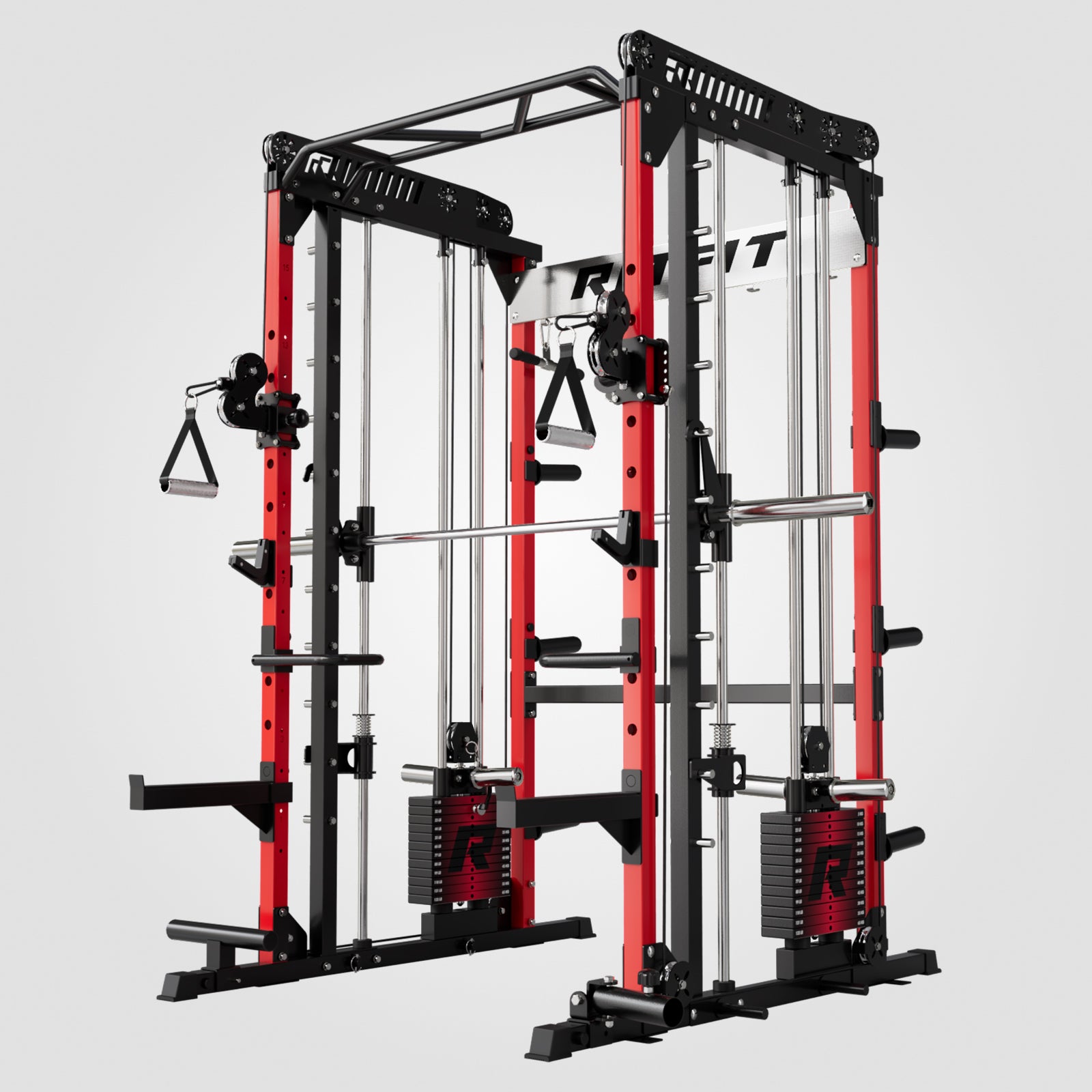
- Home machines remove the guesswork: An all-in-one smith machine with a built-in weight stack replaces several stations and lets you train safely without a spotter.
Why are weight machines the smartest starting point for beginners?
Weight machines are the safest and most confidence-building starting point for beginners because the machine controls the path of every movement and supports the weight while you exercise. This lets you build a foundation of strength and technique before you add the balance and stability demands of free weights.
- Guided movement lowers risk: The machine keeps the bar or handle on a fixed path, so a beginner is far less likely to lose control of the weight.
- Fast setup: Most machines only need a seat adjustment and a weight pin, so you spend your session training instead of searching for a free bench and a spotter.
- Easy muscle targeting: Each machine isolates a clear muscle group, which helps a new lifter learn how each movement should feel.
- Progress you can measure: A weight stack or numbered plates gives you an exact load, so tracking increases is simple.
Research on resistance-based core training found that changing resistance settings can meaningfully increase muscle activation during a movement.[1] Start your machine journey with a smith machine at home or browse the weights section to see the lineup that fits a first-year plan.
How do you set up a weight machine and choose a starting weight?
To set up a weight machine, adjust the seat and pads so the moving handle lines up with your joint, then choose a weight where the last few reps feel challenging but your form stays clean. The setup takes under a minute and protects every joint during the set.
- Adjust the seat and backrest: Line the machine pivot up with the joint you are training, such as your knee for a leg extension or your shoulder for a chest press.
- Choose the lightest setting first: On a stack machine, set the pin to a light plate, complete a warm up set, and then move up in small steps.
- Count the whole resistance: One study calculated leg press effective load as the seat weight plus the external stacks plus your body weight, and another study counted the loaded plates plus the sled weight, so the real load is higher than the plates alone.[2][3]
- Test with one easy set: Do one set of ten reps and add weight only if the movement feels smooth and you can keep control to the last rep.
"The smith machine is great because it's going to take a lot of the pressure out of your shoulders because it's supporting itself and you can do a little bit more weight on here. So it can help you break some barriers too, and also if you don't have a spotter you can utilize the tabs. Put that right here so if you drop it it'll just bounce and then you won't hurt yourself."
Jeff Cavaliere, MSPT, CSCS, Physical Therapist and Strength Coach, former Head Physical Therapist for the NY Mets, Athlean-X
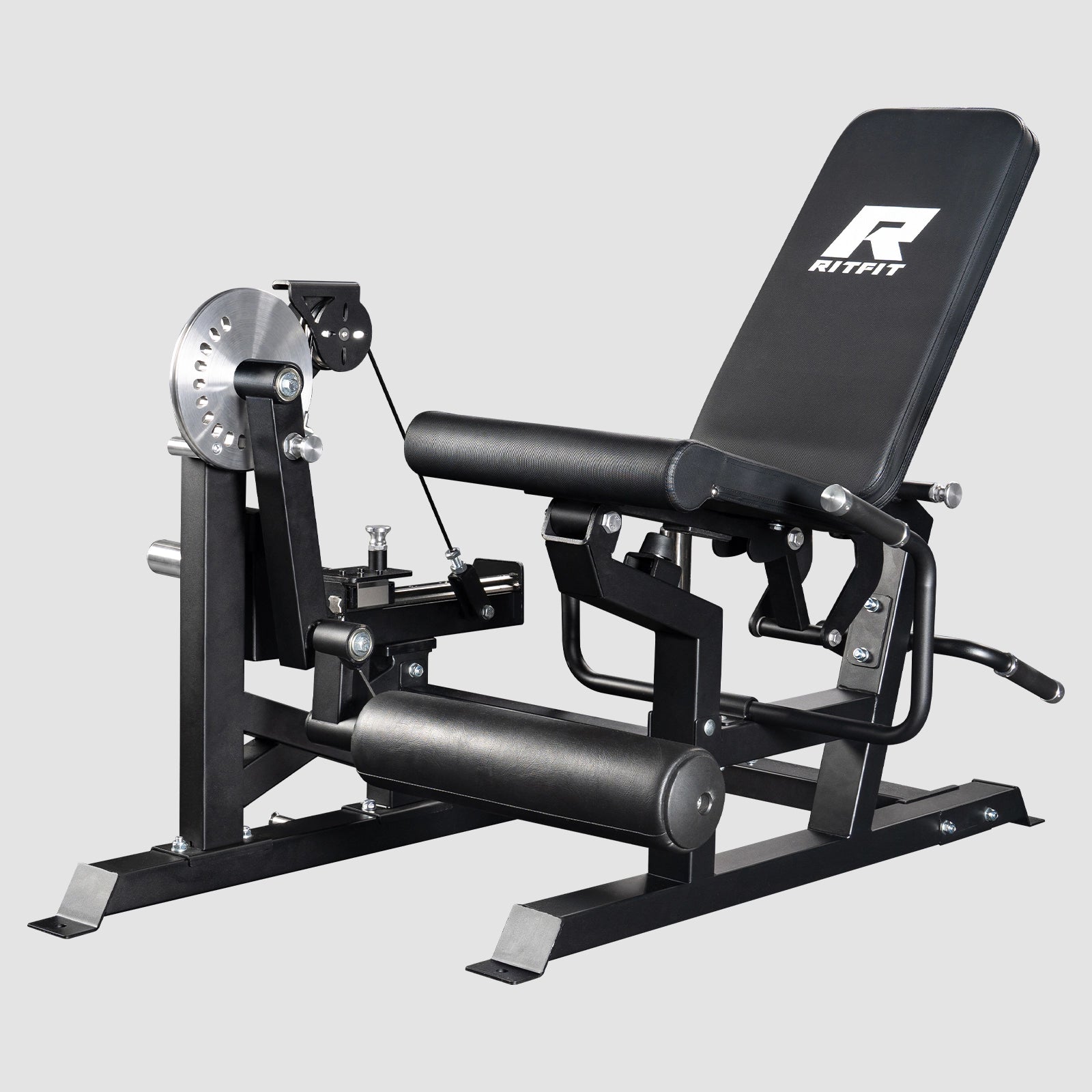
If you are building a home setup, a leg press machine pairs well with a smith machine for a balanced lower body start.
What is the best beginner weight machine workout?
The best beginner weight machine workout is a full body plan done three days a week, built from one lower body compound, one pushing move, one pulling move, and one shoulder move. The routine below uses only guided machines and takes about 30 minutes per session.
| Day | Exercises and Sets |
|---|---|
| Day 1 Lower Body | Leg Press 3 x 12, Leg Curl 2 x 12, Calf Raise 3 x 15 |
| Day 2 Upper Body | Chest Press 3 x 10, Lat Pulldown 3 x 10, Shoulder Press 3 x 10, Biceps Curl 2 x 12, Triceps Pressdown 2 x 12 |
| Day 3 Full Body and Core | Cable Squat 3 x 12, Seated Row 3 x 10, Ab Crunch 2 x 15 |
Rest 60 to 90 seconds between sets and 2 minutes between exercises.
- Compound first: Lead each session with the leg press, chest press, or lat pulldown, since these work multiple muscle groups at once.
- Follow with isolation: Finish with single-joint moves such as leg curls, biceps curls, and triceps pressdowns.
- Pair push and pull: Balance a chest press with a seated row so opposing muscles develop evenly.
- Match the guideline: The American College of Sports Medicine beginner guidelines recommend 8 to 10 full body exercises for a balanced routine, and the machines above cover that range.
Use a cable machine for the lat pulldown, row, and pressdown work in the upper body day.
What are the most common mistakes beginners make on weight machines?
The most common beginner mistake on weight machines is loading too much weight too soon, which forces sloppy form and raises the risk of injury. Avoid the short list below and your first months of training will stay smooth.
- Starting too heavy: Heavy loads make the machine do the work and teach you bad habits, so start light and build up.
- Locking out joints: Locking the knees or elbows at the top of a rep puts needless strain on the joint, so stop just short of full lockout.
- Skipping the seat adjustment: A misaligned seat changes the machine geometry, so line the pivot up with your joint before every exercise.
- Rushing reps: Fast, sloppy reps remove the tension from the working muscle, so use a slow and controlled tempo on every rep.
- Holding your breath: Breathe out during the effort and in on the return to keep blood pressure stable.
- Training through pain: Sharp or joint pain is a stop signal, so reduce the weight or end the set and reassess your setup.
Keep a set of weight plates on hand so you can fine tune the load in small steps.
How do you choose your first home gym machine?
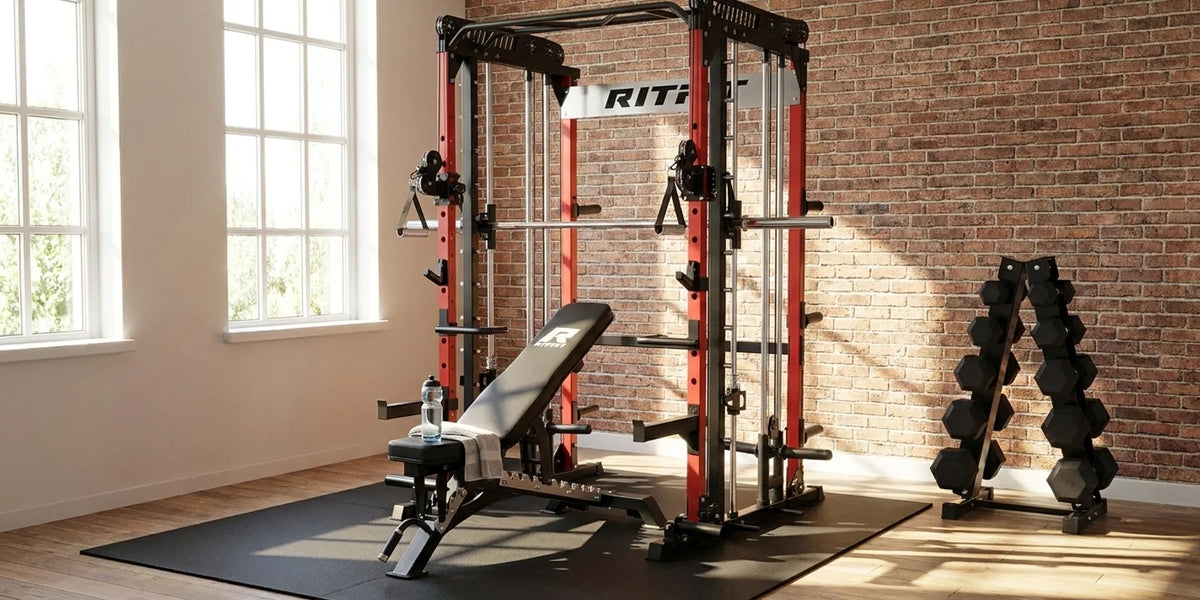
The easiest first home gym machine is an all-in-one smith machine with a built-in weight stack, because one compact unit replaces a rack, bench, and several cable stations. It fits a garage, works without a spotter, and covers the full body routine in this guide.
- Weight stack first: A built-in stack means no loading plates and no math, so you pin a number and start lifting right away. The RitFit BPC06 All-In-One Smith Machine with 260lb Weight Stacks gives you plenty of room to progress for years.
- Safety hooks for solo training: Catch bars stop the bar at a safe height, so you can bench and squat hard without a spotter watching every rep.
- A guided bar path: The fixed smith track removes the need to balance the bar, which is exactly the training help a first-year lifter needs.
- All-in-one attachments: A cable crossover adds lat pulldown, low row, and arm work, so one machine covers the whole routine. The RitFit Buffalo Smith Machine Home Gym Package bundles the attachments with the machine.
- Compare within the family: A 260 lb stack holds more top end than a lighter entry stack, so if you plan to train for years, the bigger stack delays the day you need extra plates.
- Compact footprint: A multifunction machine such as the RitFit M1 Pro Smith Machine Weight Stack Home Gym Package tucks into a garage corner and still covers every major muscle group.
Pair your machine with an adjustable weight bench later when you are ready to add pressing work beyond the stack.
How often should beginners train with machines and when should they add weight?
Train with weight machines two to three days a week with at least one rest day between sessions, and increase the weight only when you complete the top of your rep range with clean form for two sessions in a row. This frequency builds strength without overtaxing a new lifter.
- Two to three sessions a week: Three days covers every major muscle group twice, which is the sweet spot for steady progress.
- Rest 48 hours: Give each muscle group a full recovery day before training it again.
- Add weight in small steps: When you hit 15 reps on the top of your range for two straight sessions, move up by the smallest plate or pin setting available.
- Stop when form breaks: If you cannot keep your last reps clean, the load is too high, so drop back and build up again.
- Pain is a stop signal: Any sharp or joint pain means reduce the weight and check your seat position before continuing.
A multifunctional smith machine is a smart upgrade when you want to add volume across more stations without adding floor space.
FAQs About Weight Machine Workouts for Beginners
What is the best weight machine workout for a beginner?
A full body routine three days a week using guided machines is best for beginners. Start with one lower body compound like the leg press, one chest press, one lat pulldown, and one shoulder press, plus an isolation move or two. Do 2 to 3 sets of 12 to 15 reps.
How much weight should a beginner start with on a machine?
Start light and aim for a weight where the last few reps feel challenging but your form stays clean. Most beginners can begin with the lightest setting on a stack machine and add weight only when they complete the top of their rep range with good form for two sessions in a row.
How many days a week should a beginner use weight machines?
Two to three sessions per week is ideal for beginners, with at least one rest day between sessions.
Training three days a week covers every major muscle group twice, which supports strength and muscle growth while leaving plenty of time to recover.
Consistency matters more than training volume in the first year.
Are weight machines or free weights better for a beginner?
Machines are the better starting point for most beginners because they guide your movement and lock in the path of each exercise, so you build form confidence before adding free weight stability demands. A smith machine bridges the gap by letting you bench, squat, and press in a guided line without a spotter.
Can you build muscle with machine-only workouts?
Yes, machine-only training can build strength and muscle, especially in the first year, because machines allow progressive overload through an adjustable weight stack or plates. Adjusting the resistance on a machine changes how much the muscles work, so this is a safe way to build a base.
What is the easiest first home gym machine to buy?
An all-in-one smith machine with a built-in weight stack is the easiest first machine because one compact unit replaces a rack, bench, and several cable stations. Look for safety hooks, an adjustable seat, and a weight stack that grows with you.
Conclusion
Weight machine workouts give a beginner a safe, guided path to strength in the first year. A three day full body routine on the leg press, chest press, lat pulldown, and shoulder press at 2 to 3 sets of 12 to 15 reps is enough to build a solid foundation.
Start with the routine above, pick a home machine that fits your garage, and raise the weight only when your form stays clean. Visit the RitFit sales page to see current deals on smith machines and weight stacks.
Disclaimer
Always consult a physician before beginning a new strength training program, especially if you have an existing injury or medical condition. Stop any exercise that causes sharp or joint pain and adjust the machine to your body before each set.
References
1. Kim HJ, Sung JH, Ryu JK, Jung HC, Wang J. Effect of Reformer Spring Resistance Modifications on Core Muscle Activity During Basic Core Muscle Exercises. Healthcare (Basel). 2024;12(23). PMCID: PMC11641042
2. Migliaccio GM, Dello Iacono A, Ardigo LP, et al. Leg Press vs. Smith Machine: Quadriceps Activation and Overall Perceived Effort Profiles. Front Physiol. 2018;9:1481. PMCID: PMC6206431
3. Effects of Different Types of Lower Body Resistance Exercise on Upper-body Strength in Men and Women, with Special Reference to Anabolic Hormones. Int J Exerc Sci. 2021;14(3):1052-1069. PMCID: PMC8439705