








Kegel workouts are pelvic floor exercises that strengthen and coordinate the muscles supporting your bladder, bowel, and pelvic organs. This guide explains what Kegels are, who may benefit, how to do them correctly, and how they fit into a balanced home fitness routine with RitFit home gym equipment.
You can practice Kegels at home in just a few minutes a day with no equipment. This guide covers the basics, a beginner plan, common mistakes, and when to consult a pelvic floor physical therapist.
Quick Answer: Kegel workouts are pelvic floor exercises that strengthen and coordinate the muscles supporting the bladder, bowel, and pelvic organs. Done correctly with full relaxation between contractions, they can help improve bladder control, support postpartum recovery, and complement a balanced home strength routine. Technique matters more than intensity, so start gently and progress slowly.
Key Takeaways
- Kegel workouts train the pelvic floor: They involve controlled contraction and full relaxation of the muscles that help support the bladder, bowel, and pelvic organs.
- Technique matters more than intensity: A correct gentle contraction is more useful than squeezing the abs, glutes, or thighs.
- Kegels may help bladder control: Pelvic floor muscle training is commonly used as a conservative strategy for stress urinary incontinence and related symptoms.
- Relaxation is part of the workout: Overtraining or never relaxing fully can worsen tightness, pain, or urinary discomfort.
- Medical guidance matters: People with pelvic pain, pregnancy concerns, recent surgery, or worsening symptoms should speak with a healthcare professional first.
What Are Kegel Workouts?
Kegel workouts are targeted exercises that strengthen and coordinate the pelvic floor muscles, also called pelvic floor muscle training, or PFMT. They are commonly used for bladder control, bowel control, postpartum recovery, and pelvic support.
The exercise is simple in concept, but correct technique is essential. A proper Kegel feels like a gentle lift and squeeze inside the pelvis, followed by a complete release.
Pelvic Floor Basics
The pelvic floor is a layered group of muscles and connective tissues at the base of the pelvis. These muscles help support the bladder, bowel, and reproductive organs while assisting with continence and pressure control.
- Bladder support: The pelvic floor helps control urine leakage during coughing, sneezing, jumping, and lifting.
- Bowel support: These muscles help control gas and bowel movements.
- Pelvic organ support: A coordinated pelvic floor helps support pelvic organs during daily movement and exercise.
- Pressure management: The pelvic floor works with breathing, the diaphragm, deep abdominal muscles, and posture.
Who Can Benefit From Kegel Workouts?
Kegel workouts may benefit people who need better pelvic floor strength, endurance, coordination, or awareness. Research supports pelvic floor muscle training as a conservative option for many women with urinary incontinence.[1]
- Women with stress leakage: Kegels may help reduce leakage that happens during coughing, sneezing, jumping, or exercise.
- Pregnant and postpartum people: PFMT is commonly recommended during pregnancy and after birth for preventing or treating urinary and faecal incontinence, but individual guidance is important.[2]
- Men after prostate surgery: Pelvic floor training may help some men improve continence and sexual function, especially when supervised or combined with biofeedback.[3]
- People with mild pelvic organ support concerns: PFMT may help improve symptoms in some people with pelvic organ prolapse, but prolapse severity should be evaluated by a clinician.[4]
- Active women and athletes: PFMT interventions have been studied in female athletes for improving pelvic floor strength and reducing urine leakage during impact activities.[5]
Who Should Be Careful With Kegel Workouts?
Not everyone should start Kegels without guidance. People with pain, pressure, urinary difficulty, or recent pelvic surgery should ask a qualified healthcare professional or pelvic floor physical therapist first.
- Pelvic pain: Pain during or after Kegels may signal an overactive or tight pelvic floor.
- Pain during sex: Kegels may not be appropriate if pelvic floor tension is part of the problem.
- Trouble urinating: Difficulty starting or emptying urine should be assessed before adding contractions.
- Recent surgery: Follow medical instructions before starting pelvic floor exercises after pelvic, abdominal, or prostate surgery.
- Worsening symptoms: Stop and seek guidance if leakage, pressure, pain, or tightness gets worse.
How to Do Kegel Workouts Correctly
Correct Kegel technique starts with isolating the pelvic floor, not squeezing the abs, thighs, or glutes. Begin in a quiet position, breathe normally, and focus equally on contraction and release.
- Step 1: Empty your bladder: Start with an empty bladder so you can focus on muscle control. Do not practice Kegels by repeatedly stopping urine flow.
- Step 2: Find the right muscles: Imagine gently holding back gas and lifting the muscles upward. The feeling should be internal, not a hard butt squeeze.
- Step 3: Contract gently: Lift and squeeze the pelvic floor for 3 to 5 seconds. Keep your jaw, shoulders, belly, thighs, and glutes relaxed.
- Step 4: Release fully: Relax for the same amount of time as the contraction. Full relaxation helps prevent tension and overtraining.
- Step 5: Repeat with control: Complete 5 to 10 slow reps. Stop if you feel pain, pressure, cramping, or difficulty relaxing.
Beginner Kegel Workout Plan
A beginner Kegel workout should build control before volume. Start small, progress slowly, and treat the pelvic floor like any other muscle group that needs recovery.
| Phase | Frequency | Slow Holds | Quick Pulses | Goal |
|---|---|---|---|---|
| Week 1 | Once daily | 5 reps, 3 second hold | 5 gentle pulses | Learn muscle isolation |
| Weeks 2 to 3 | Once or twice daily | 8 reps, 4 to 5 second hold | 8 gentle pulses | Build endurance |
| Weeks 4 to 6 | Twice daily if comfortable | 10 reps, 5 to 8 second hold | 10 gentle pulses | Improve control |
| Maintenance | 3 to 5 days weekly | 10 reps, controlled hold | 10 gentle pulses | Maintain coordination |
A general progressive plan for pelvic floor muscle training at home. Pause and reduce volume if you feel pain, tightness, or fatigue, and ask a pelvic floor specialist for an individualized plan.
Common Kegel Mistakes
The most common Kegel mistakes happen when people squeeze harder instead of moving better. Good pelvic floor training should feel controlled, precise, and pain free.
- Squeezing the wrong muscles: Do not grip the abs, glutes, or thighs. Place one hand on your belly to check that it stays relaxed.
- Holding your breath: Breathe normally during each contraction. Breath holding increases pressure and can make leakage or pressure management worse.
- Skipping relaxation: Release fully after every rep. A tight pelvic floor can create pain, urgency, or difficulty urinating.
- Training too much: More is not always better. Reduce volume if you feel soreness, tightness, or fatigue.
- Ignoring symptoms: Do not train through pain or worsening leakage. Ask a pelvic floor specialist for an assessment.
Kegels and Home Gym Training
Kegels can complement strength training by improving pelvic floor awareness during bracing, breathing, and pressure control. They should not replace proper lifting technique, progressive loading, or professional care for pelvic symptoms.
If you train with a Smith machine, strength machine, barbell and weight plate setup, or dumbbells, coordinate your breath before heavy reps. Exhale through effort, avoid unnecessary breath holding, and stop if lifting causes leakage, pressure, or pain.
- Before lifting: Practice 3 to 5 gentle contractions to improve awareness, not fatigue the muscles.
- During strength work: Focus on controlled breathing and neutral posture during squats, deadlifts, presses, and lunges.
- After training: Use a short relaxation focused pelvic floor routine during cooldown.
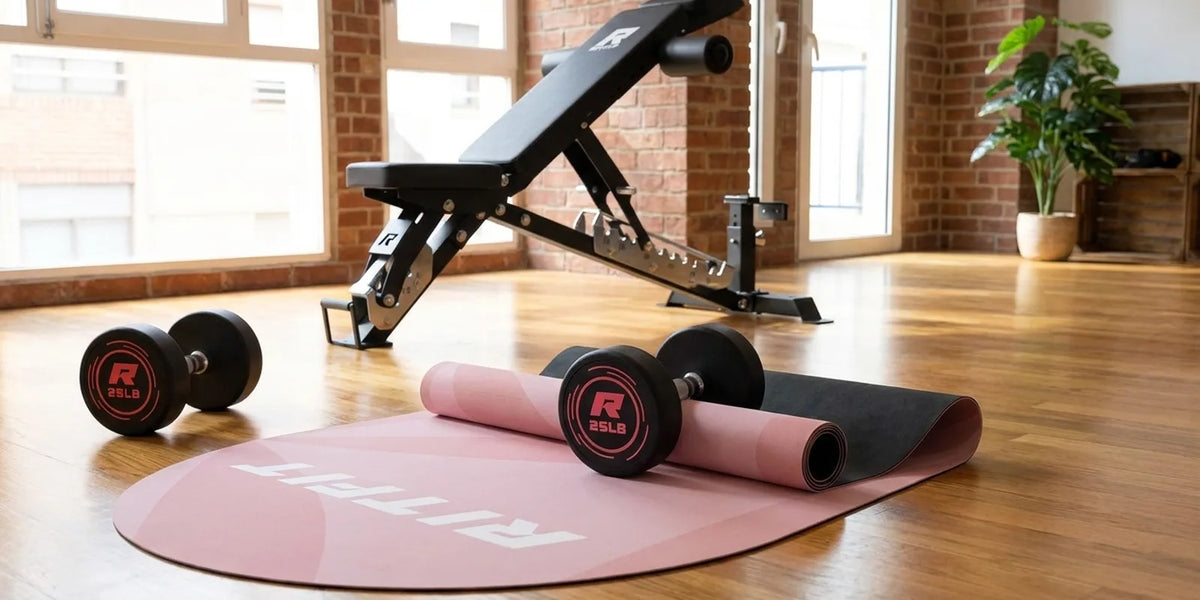
- For home setup: A stable adjustable weight bench can support comfortable lying practice, while a compact folding squat rack can help build a space efficient strength routine.
"What I advise in most cases is, instead of looking for a spotter to take you through those areas of a lift that are more difficult, think of other ways you can improve your ability to complete that lift, if strength is your goal."
Jeff Cavaliere, MSPT, CSCS, Physical Therapist and Strength Coach, former Head Physical Therapist for the NY Mets, Workout Spotting Tips (Men's Health)
When to Expect Results
Many people need several weeks of consistent practice before noticing better control. Progress depends on technique, symptom severity, consistency, breathing habits, and whether the pelvic floor is weak, tight, or poorly coordinated.
Track simple signs such as fewer leaks, better awareness, improved control during coughing, and less pelvic heaviness. If symptoms do not improve or get worse, professional assessment is the safest next step.
Frequently Asked Questions
How do I know if I am doing Kegel workouts correctly?
You are likely doing Kegel workouts correctly if you feel a gentle internal lift without squeezing your abs, thighs, or glutes.
The contraction should feel controlled and comfortable, followed by a full release.
If you feel pain or cannot relax, ask a pelvic floor specialist.
Can Kegel workouts make pelvic floor symptoms worse?
Yes.
Kegel workouts can make symptoms worse if your pelvic floor is already tight, painful, or overactive.
Signs include pelvic pain, pressure, urgency, or trouble urinating.
Stop the exercises and seek professional guidance if symptoms increase after practice.
Should men do Kegel workouts?
Yes.
Men may benefit from Kegel workouts for bladder control, especially after prostate surgery or with age related leakage.
Some men may also improve pelvic awareness and sexual function.
Men with pain, urinary difficulty, or prostate symptoms should speak with a clinician first.
How often should beginners do Kegel workouts?
Beginners can start with one short session per day, using 5 to 10 slow contractions and full relaxation between reps. Increase volume only when the movement feels easy and pain free. Quality matters more than doing many contractions.
Can I do Kegel workouts while lifting weights?
Yes.
You can use light pelvic floor awareness during lifting, but you should not constantly squeeze through every rep.
Focus on breathing, bracing, and controlled technique first.
If lifting causes leakage, pressure, or pain, reduce load and seek professional advice.
What is the difference between Kegels and pelvic floor relaxation?
Kegels train contraction, while pelvic floor relaxation trains the ability to release tension.
Both skills matter because a strong but constantly tight pelvic floor can still cause problems.
A complete routine includes gentle squeezing, full release, calm breathing, and symptom awareness.
Do Kegel workouts help after pregnancy?
Yes.
Kegel workouts may help some postpartum people improve bladder control and pelvic floor awareness.
Timing depends on delivery, symptoms, healing, and medical guidance.
If there was tearing, surgery, pain, heaviness, or worsening leakage, get clearance before starting.
When should I see a pelvic floor physical therapist?
You should see a pelvic floor physical therapist if you have pain, pressure, leakage, trouble relaxing, or symptoms that do not improve with careful practice. A specialist can check whether your pelvic floor needs strengthening, relaxation, coordination training, or a different plan.
Conclusion
Kegel workouts are simple but highly technique dependent exercises for pelvic floor strength, control, and coordination. When performed correctly, they may support bladder control, postpartum recovery, pelvic awareness, and safer strength training habits.
Use Kegels as one part of a balanced routine that includes breathing, mobility, strength, recovery, and professional guidance when symptoms are present. For home strength training, explore RitFit home gym equipment that supports consistent, space efficient workouts.
Disclaimer
This article is for general educational purposes only and is not medical advice. If you are pregnant, postpartum, recovering from surgery, experiencing pelvic pain, or dealing with urinary, bowel, or sexual health symptoms, speak with a qualified healthcare professional or pelvic floor physical therapist before starting a new pelvic floor routine.
References
1. Dumoulin C Cacciari LP Hay-Smith EJC. Pelvic floor muscle training versus no treatment, or inactive control treatments, for urinary incontinence in women. Cochrane Database Syst Rev. 2018;10(10):CD005654. doi:10.1002/14651858.CD005654.pub4.
2. Woodley SJ Lawrenson P Boyle R Cody JD Morkved S Kernohan A Hay-Smith EJC. Pelvic floor muscle training for preventing and treating urinary and faecal incontinence in antenatal and postnatal women. Cochrane Database Syst Rev. 2020;5(5):CD007471. doi:10.1002/14651858.CD007471.pub4.
3. Dorey G Speakman M Feneley R Swinkels A Dunn C Ewings P. Randomised controlled trial of pelvic floor muscle exercises and manometric biofeedback for erectile dysfunction. Br J Gen Pract. 2004;54(508):819-825.
4. Espiño-Albela A Castaño-García C Díaz-Mohedo E Ibáñez-Vera AJ. Effects of pelvic-floor muscle training in patients with pelvic organ prolapse approached with surgery vs conservative treatment: a systematic review. J Pers Med. 2022;12(5):806. doi:10.3390/jpm12050806.
5. Rodríguez-Longobardo C López-Torres O Guadalupe-Grau A Gómez-Ruano MÁ. Pelvic floor muscle training interventions in female athletes: a systematic review and meta-analysis. Sports Health. 2024;16(5):766-775. doi:10.1177/19417381231195305.





