








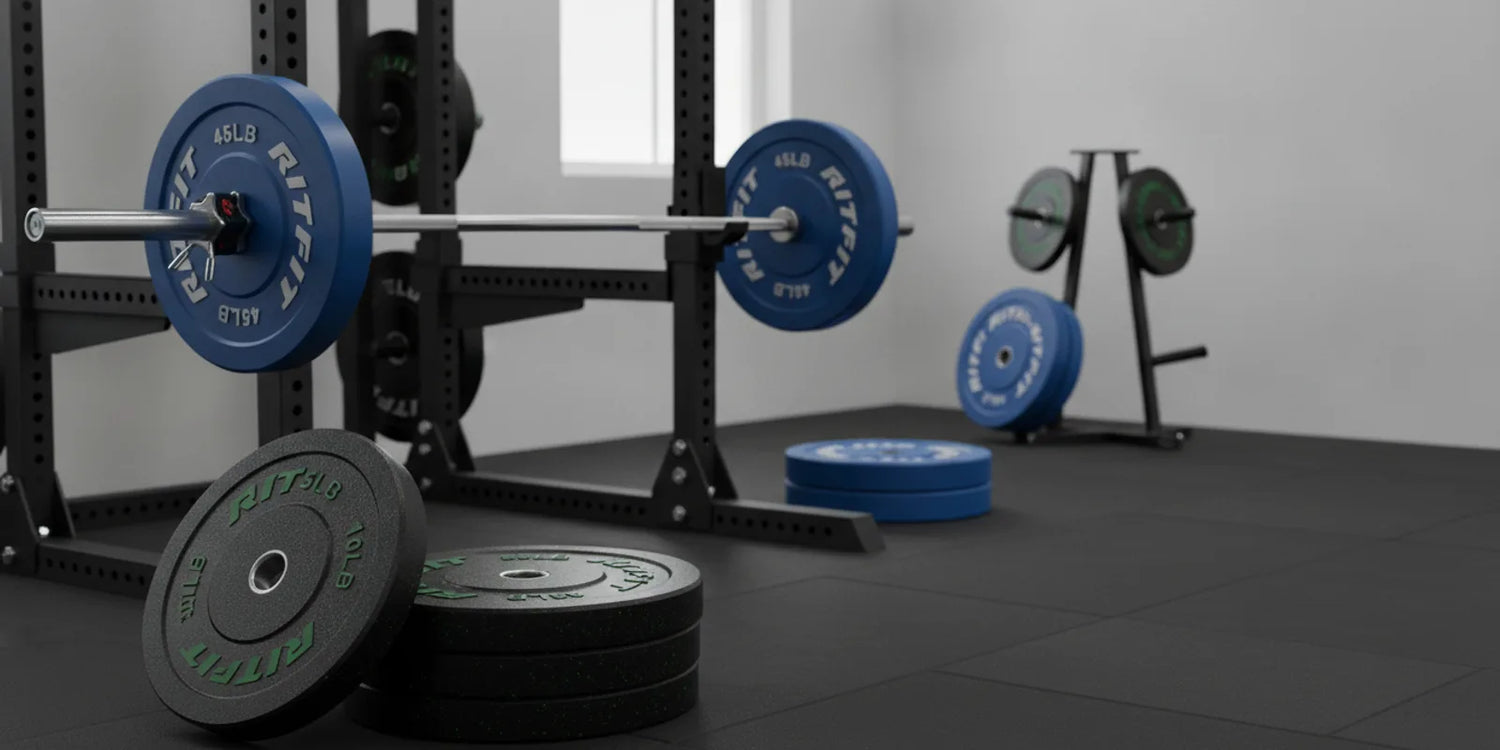
A bumper plate is a rubber-coated Olympic weight plate built to be dropped from overhead without damaging your gear or floor. Unlike bare iron, a bumper plate has a solid rubber body bonded to a metal center insert, and every weight shares the same 450 mm diameter.
This guide covers the exact dimensions and weight options, how bumpers differ from iron and calibrated plates, and when a thin change plate is the better call. You will also see how to load, store, and drop bumpers safely at home.
Quick Answer: A bumper plate is a weight plate with a solid rubber body bonded to a steel insert and a 2-inch center hole that fits Olympic barbell sleeves. Standard bumper plates measure 450 mm (17.7 inches) across every weight from 10 LB to 55 LB, so the bar sits at the same height and can be dropped safely.
Key Takeaways
- Definition: A bumper plate is a solid rubber body bonded to a metal insert with a 2-inch center hole, built to be dropped rather than carefully set down.
- Size standard: Olympic bumper plates measure 450 mm (17.7 inches) in diameter at every weight, from 10 LB to 55 LB, which keeps the bar at one height.
- Core difference: Bumpers can be dropped and are quieter, while iron plates are thinner and cheaper but can crack floors and gear.
- Thickness grows with weight: RitFit lists 0.94 inches on a 10 LB plate and 3.3 inches on a 55 LB plate, so a heavy stack takes real sleeve space.
- Loading: Load heaviest plates closest to the collar, keep bumpers on the inside, and always lift over rubber flooring.
What Is a Bumper Plate?
A bumper plate is a weight plate made of high-density rubber surrounding a steel or stainless steel center insert, with a two-inch hole that fits Olympic barbell sleeves. The rubber body is thick enough to absorb the shock of a dropped barbell, which protects the plate, the bar, and your training surface.
- Material: A solid rubber body bonded to a metal hub, not a thin rubber coating over cast iron.
- Fit: The two-inch hole matches standard Olympic bar sleeves, so bumpers and most iron plates load onto the same barbell.
- Purpose: Absorbing impact is the entire job, which is why bumpers are the standard plate in Olympic weightlifting and CrossFit.
You will find bumper plates across the RitFit bumper plates collection, from solid black to color-coded options for different training setups.
"These bumper plates are nicely molded and the paint is clean. Looking forward to purchasing more."
Miguel M. Verified Buyer, RitFit Olympic Bumper Weight Plates - 2-inch
Bumper Plate Specs: Diameter, Thickness, and Hole Size
Standard Olympic bumper plates measure 450 millimeters (17.7 inches) in diameter with a 2-inch (50 mm) center hole, so every plate in a set loads onto the same barbell sleeve. RitFit publishes a thickness for each weight, starting at 0.94 inches on a 10 LB plate and reaching 3.3 inches on a 55 LB plate.
| Weight | Thickness | Diameter | Hole Diameter |
|---|---|---|---|
| 10 LB | 0.94 in | 17.7 in (450 mm) | 2 in (50 mm) |
| 15 LB | 1.33 in | 17.7 in (450 mm) | 2 in (50 mm) |
| 25 LB | 1.67 in | 17.7 in (450 mm) | 2 in (50 mm) |
| 35 LB | 2.3 in | 17.7 in (450 mm) | 2 in (50 mm) |
| 45 LB | 2.9 in | 17.7 in (450 mm) | 2 in (50 mm) |
| 55 LB | 3.3 in | 17.7 in (450 mm) | 2 in (50 mm) |
Weight, thickness, diameter, and hole size from RitFit published bumper plate specifications. 17.7 inches is the inch equivalent of the 450 mm competition diameter.
- Material: A solid rubber body bonded to a steel insert, with no thin coating to wear through.
- Drop behavior: RitFit describes its rubber plates as low bounce with high resistance to bending, which keeps the bar from springing away on a missed lift.
- Weight options: Singles in 10, 15, 25, 35, 45, and 55 LB, sold as pairs and in sets from 100 LB to 370 LB.
- Warranty: RitFit covers its weight plates with a one-year warranty against defects in materials and workmanship.
Any Olympic bar with 2-inch sleeves accepts these plates, and the published table lists weight, thickness, diameter, and hole size only, with no tolerance rating, so treat these as training plates rather than certified competition discs. The full chart lives on the bumper plate technical specifications page.
"The standard bar length is a little over 7 feet, has '2-inch'/50mm diameter sleeves for loading the plates on, and weighs 20kg/44.1lbs. For home gym purposes, a 28.5 or 29mm bar will be the most durable and provide the best service over time.
NEVER buy a 32mm bar. They are either junk, or a specialty squat bar that a home gym doesn't need."
Mark Rippetoe, Strength Coach and Author of Starting Strength, How to Build a Home Gym, Starting Strength
How Do Bumper Plates Differ From Iron Plates?
Bumper plates differ from iron plates mainly in material and drop safety, since bumpers use rubber that can be dropped while iron plates are bare metal that can crack or damage floors. Bumpers are also quieter and thicker, while iron plates are thinner and usually cheaper per pound.
| Factor | Bumper Plates | Iron Plates | Calibrated Plates |
|---|---|---|---|
| Material | High-density rubber with a steel insert | Cast iron or solid metal | Machined metal, often with a chrome finish |
| Drop safety | Designed to be dropped | Can crack or damage floors if dropped | Safe to drop, but usually handled with care in competition |
| Noise | Quieter, absorbs impact | Louder on contact | Loudest, metal on metal |
| Thickness | Thicker per plate, and thickness grows with weight | Thinner, so more weight fits on the bar | Thin and dense for maximum load on the sleeve |
| Typical use | Olympic lifting, CrossFit, deadlifts | Powerlifting, general strength | Weightlifting meets and record attempts |
Comparison based on general equipment guides, not a controlled study.
Calibrated plates are the third option, and they exist for a different job. A calibrated plate is machined to a tighter weight tolerance and certified for sanctioned competition, so it is the plate you would see on the platform at a weightlifting meet rather than in a garage gym.
If you want a deeper breakdown, see our guide on the difference between bumper plates and weight plates.
Bumper Plates vs. Change Plates: Which Do You Need?
Bumper plates are full-size drop plates built for the main lifts, while change plates are thin, small-diameter plates that fine-tune the load once the bumpers are on the bar. A change plate is never the only plate on the bar, because a small plate alone leaves the bar sitting far lower than a full-size bumper does.
- Diameter: Bumpers use the full 450 mm (17.7 inch) diameter at every weight, while change plates are much smaller and load outside the bumper stack.
- Thickness: An extra thin plate adds a small jump without pushing the collar far out along the sleeve.
- Drop safety: Change plates sit outside the rubber, so they are not built to take a drop on their own.
- Choose bumpers when: The lift ends with a drop, such as the snatch, the clean and jerk, or a heavy deadlift.
- Choose thin plates when: You press, bench, or pull without dropping and need a smaller jump than the bumper increments allow.
A study of the back squat and hex bar deadlift found that lifting velocity and power output track the load on the bar, which is why small jumps matter once a lift gets heavy.[1] Most home setups end up with both, a bumper set for pulling and Olympic work plus a pair of thin plates for fine adjustments, and the fleck bumper plate specifications page shows how the standard sizes line up.
Why Do Bumper Plates Share One Diameter?
Bumper plates share one outer diameter so the barbell always sits at the same height off the floor, no matter how much weight you load. The 450 mm (17.7 inch) figure matches the diameter used in Olympic weightlifting competition.
- Consistent start height: A light warm-up bar and a heavy working bar begin at the same position, which keeps your technique repeatable.
- Better mechanics: This matters for Olympic lifts and deadlifts, where a changing bar height would alter your setup.
- Loadable range: Because a 45 LB and a 10 LB plate are the same size, you can build a full warm-up ladder without changing your pulling position.
What Weights and Colors Do Bumper Plates Use?
Bumper plates come in standard weight increments and, in color versions, follow a coding system so lifters can read the load at a glance.
- Weight jumps: RitFit lists 10, 15, 25, 35, 45, and 55 LB plates, which step up in increments suited to barbell training.
- Color coding: The RitFit RitFit Color Bumper Plates follow a recognizable color scheme, with the full chart on the color bumper plate specifications page.
- Finish options: Beyond solid black, RitFit offers high-grade color, pink, and patriotic finishes for lifters who want the plates to match the space.
"Love the color bumper weights the coating on them makes it easier to handle. The steal weights dug in my wife's hands when moving them around the bumper plates are way more safe on your floor and toes lol plus safer and easy to move around we will never go back to steel plates"
Clifford J. Verified Buyer, RitFit Color Olympic Bumper Weight Plates - 2-Inch
Who Needs Bumper Plates?
You need bumper plates if you perform Olympic lifts, CrossFit-style training, or heavy deadlifts where dropping the bar is normal, or if noise and floor protection matter in your space. Lifters who only do slow, controlled barbell work and never drop weight can get by with iron plates.
- Olympic lifters: The snatch and clean and jerk end with the bar dropping from overhead, which demands drop-safe plates.
- CrossFit athletes: High-volume, high-intensity workouts often require setting the bar down fast between reps.
- Home and garage gyms: Bumpers reduce noise and protect concrete or wood floors during deadlifts and cleans.
- Beginners: Because light bumpers share the full diameter, new lifters can practice pulls from the correct floor height.
- Athletes sharing one bar: A single bumper set in 10 through 55 LB covers two lifters with very different working weights.
Pair a set with the RitFit RitFit Black Bumper Plates to cover most home training needs.
How Do You Use and Care for Bumper Plates?
You use bumper plates by loading them onto an Olympic bar, securing them with collars, and lifting over protective flooring so drops stay safe. Proper storage and surface choice keep the rubber from cracking over years of use.
- Load order: Place the heaviest plate closest to the collar and lighter plates outward, then clip the bar.
- Flooring: Drop over rubber or a lifting platform, never bare concrete, to protect both the plate and the slab.
- Storage: Keep plates indoors and out of direct sun, since heat and UV exposure can degrade rubber over time.
- Thin plates outside: If you use change plates, keep them on the outside of the bumper stack so the rubber still takes the impact.
What Are Common Bumper Plate Mistakes?
The most common mistake is dropping bumpers on unprotected hard floors, which can chip the rubber and crack the surface.
- Loading iron outside bumpers: Keep bumpers on the inside so the rubber absorbs impact if the bar falls.
- Skipping collars: Unsecured plates can slide off during dynamic lifts and create a hazard.
Are Bumper Plates Worth It?
Bumper plates are worth it for most home gym owners because they protect floors, reduce noise, and let you drop the bar safely during explosive lifts. They cost more per pound than iron, but the durability, safety, and versatility usually justify the price.
- Value: One set covers Olympic lifts, deadlifts, and general training without swapping equipment.
- Versatility: The same plates fit any 2-inch Olympic bar, and the light plates share the full diameter for technique work.
- Warranty: RitFit backs its weight plates with a one-year warranty against defects in materials and workmanship.
- Loading standard: A study describes loading discs in descending order by weight, with the heaviest plate closest to the collar, a habit that applies to bumper sets too.[2]
- Options: Premium finishes like the RitFit Fleck Bumper Plates add style to a working setup, and the pink leopard print version does the same for a home space.
Modern tracking tools can log your loads, though most apps still rely on basic manual entry of weight and reps.[3] If you are still deciding on a set, our roundup of the best American flag bumper plates for home gyms can help.
"Purchased the set and additional heavier weights - well worth it! Very durable and great for working out at home, especially with the cage, leg press and other items!"
Jon P. Verified Buyer, RitFit Olympic Bumper Weight Plates - 2-inch
FAQs About Bumper Plates
What is a bumper plate?
A bumper plate is a weight plate made from high-density rubber wrapped around a steel center insert. It has a two-inch hole that fits Olympic barbells and is built to be dropped from overhead without damaging the plate, the bar, or your floor, which makes it popular for weightlifting.
What is the difference between bumper plates and iron plates?
Bumper plates are rubber-coated, share one diameter across weights, and can be dropped safely, while iron plates are bare metal, vary in size by weight, and can crack or damage floors if dropped. Iron plates are thinner and cheaper, so powerlifters loading very heavy bars often prefer them.
Why are all bumper plates the same diameter?
Most bumper plates follow the IWF standard of 450 millimeters across every weight so the barbell always sits at the same height off the floor. This consistent height matters for Olympic lifts and deadlifts, where starting position and lifting mechanics should not change as you add or remove weight.
Do I need bumper plates for a home gym?
You need bumper plates if you do Olympic lifts, CrossFit-style training, or deadlifts where you drop the bar, or if noise and floor protection matter in a garage or apartment. If you only do controlled powerlifting and never drop weights, iron plates can be a cheaper alternative.
Are bumper plates worth the extra cost?
For most home gym owners, bumper plates are worth it because they protect your floor, reduce noise, and let you drop the bar safely during explosive lifts. They cost more per pound than iron, but the added durability, safety, and versatility usually justify the price for everyday training.
How should I load bumper plates on a barbell?
Load bumper plates in descending order by weight, placing the heaviest plate closest to the collar and lighter plates outward, then secure with barbell clips. Keeping the rubber plates on the inside lets them absorb impact if the bar is dropped, and always lift over rubber flooring for extra protection.
How thick are bumper plates?
Thickness grows with weight. RitFit lists 0.94 inches for a 10 LB plate, 1.33 inches for 15 LB, 1.67 inches for 25 LB, 2.3 inches for 35 LB, 2.9 inches for 45 LB, and 3.3 inches for 55 LB. Every one of those sizes keeps the same 17.7 inch diameter and 2 inch hole, so a heavy stack takes up more sleeve space than a light one.
Conclusion
A bumper plate is a rubber-encased, drop-safe Olympic weight plate that protects your floor, bar, and plates while keeping the barbell at a consistent height. For anyone doing Olympic lifts, deadlifts, or training at home, bumpers are the versatile, quiet, and durable choice.
Start with a balanced set, add a pair of thin change plates for fine adjustments, and always lift over proper flooring. Explore current offers on the RitFit sales page or check the RitFit discount guide before you build your setup.
Disclaimer
This article is for general informational and educational purposes only and does not replace professional fitness, medical, or safety guidance. Consult a qualified coach or healthcare provider before beginning any new strength training program.
Save on your next RitFit order
Tap the button to copy your code, then paste it at checkout.
References
1. Gantois P, Fonseca FS, Nakamura FY, Fortes LS, Fernandez-Fernandez J, Batista GR. Analysis of velocity- and power-load relationships of the free-weight back-squat and hexagonal bar deadlift exercises. Biol Sport. 2023;40(1):201-208. PMCID: PMC9806758
2. Ferri Marini C, Shoaei V, Micheli L, et al. Barbell load distribution and lifting velocity affect bench press exercise volume and perceived exertion. PLoS One. 2022;17(12):e0278909. PMCID: PMC9733861
3. Coates W, Wahlstrom J. LEAN: Real-Time Analysis of Resistance Training Using Wearable Computing. Sensors (Basel). 2023;23(10):4602. PMCID: PMC10222347





