The bench press muscles are the pectoralis major, the anterior deltoid, and the triceps brachii, and those three drive every rep. How much each one contributes depends on your bench angle and grip width, not on the bar alone.
This guide ranks each muscle by the job it does, compares flat, incline, and decline angles and grip widths, sets the bench press against the chest press machine, and answers the questions lifters ask most about the lift.
Quick Answer: The bench press works the pectoralis major as the main mover, with the anterior deltoid and triceps brachii assisting, while the serratus anterior, rotator cuff, lats, and core stabilize the bar. A flat press loads the whole chest, an incline press shifts work toward the upper chest and front delts, and a narrower grip gives the triceps more of the lockout.
Key Takeaways
- Primary movers: The bench press works the pectoralis major, anterior deltoid, and triceps brachii, with the chest and triceps carrying the heaviest load.
- Support crew: The serratus anterior, rotator cuff, lats, and core stabilize the bar rather than drive it.
- Angle changes the target: A flat press loads the whole chest, an incline press shifts emphasis to the upper chest and front delts, and a decline press favors the lower chest.
- Grip width matters: A narrower grip raises triceps involvement, while a wider grip moves more of the work to the pectoralis major.
- Not a back or biceps builder: The bench press trains your back and biceps only as stabilizers, so keep rows and curls in your program.
What muscles does the bench press work?
The bench press works the pectoralis major, the anterior deltoid, and the triceps brachii as its prime movers, with smaller muscles stabilizing the bar.[1] A systematic review of surface electromyography studies of the bench press reports that the chest and triceps show the highest muscle activity during the flat press, with the front deltoid assisting as the bar travels up.[1]
Every other muscle in the lift plays a supporting role. The table below sorts them by job and shows how to shift more work toward each one without changing the exercise itself.
| Muscle | Role in the press | When it works hardest | How to load it more |
|---|---|---|---|
| Pectoralis major, sternal head | Prime mover | Through the middle of the press, from the chest to just short of lockout | Press on a flat bench with a moderate to wide grip |
| Pectoralis major, clavicular head | Prime mover at pressing angles | Early in the press, when the bench is inclined | Set the bench to a low incline rather than a steep one |
| Anterior deltoid | Assisting mover | Near lockout and at steeper bench angles | Raise the incline, or widen the grip |
| Triceps brachii | Assisting mover | The last third of the rep, as the elbows straighten | Narrow the grip and pause at lockout |
| Serratus anterior | Stabilizer | As the shoulder blades rotate and slide on the bench | Keep the bar path controlled instead of bouncing it |
| Rotator cuff | Stabilizer | Throughout the press, centering the shoulder joint | Tuck the elbows under the bar instead of flaring them wide |
| Latissimus dorsi and teres major | Stabilizer | At the bottom, controlling the descent | Pull the bar apart and keep the lats switched on |
| Core and legs | Stabilizer | Throughout, transferring force from the floor to the bar | Plant the feet and brace before every rep |
Role labels follow the prime mover, assistant, and stabilizer categories used in bench press electromyography reviews.[1]
If you want to compare your pressing strength against typical numbers for your bodyweight and training age, this breakdown of the average bench press for men puts the lift in context.

Do flat, incline, and decline presses work different muscles?
Flat, incline, and decline presses work the same prime movers, but the bench angle changes how much each one contributes. The incline position hands more of the work to the upper chest and front delts, while the flat and decline positions keep the load closer to the middle and lower chest.
| Bench angle | Muscles that gain emphasis | Setup note |
|---|---|---|
| Flat | Whole pectoralis major, front delts, triceps | The reference press for measuring progress |
| Incline | Upper (clavicular) chest, front delts | Use a shallow incline, since steep angles hand the lift to the shoulders |
| Decline | Lower chest, triceps | Shortens the bar path and keeps the elbows closer to the ribs |
Angle effects are a shift in emphasis, not a case of one position training a muscle in isolation, because the pectoralis major works as a single fan-shaped unit on every press.
On incline work the setup matters more than the movement. Jeff Cavaliere, MSPT, CSCS, a physical therapist and strength coach, puts the practical ceiling on that angle in the expert note further down this guide.
For the full setup walkthrough, see the incline bench press upper chest guide.
How does grip width change the muscles you use?
Grip width changes the share of the work between the chest and the triceps on every rep. A narrow grip keeps the elbows tucked and shortens the bar path, so the triceps carry more of the lockout, while a wide grip spreads the load across the pectoralis major.
- Narrow (close) grip: Elbows travel close to the torso, the bar moves a shorter distance, and the triceps and front delts pick up more of the press.
- Medium grip: Roughly shoulder width, this is the balance point that keeps the chest as the main mover while still letting the triceps finish the rep.
- Wide grip: The chest takes on more of the load, but the shoulders travel further from the torso and the bar path gets shorter.
Most lifters should build their working sets around a medium grip, then rotate in wide and narrow variations for extra chest or triceps work. The close grip bench press for big triceps guide covers the narrow variation in detail.
Bench press vs chest press machine: same muscles?
A chest press machine works the same three prime movers as the barbell bench press, the pectoralis major, anterior deltoid, and triceps brachii, but it removes almost all of the stabilizing demand. The machine fixes the bar path, so your rotator cuff, serratus anterior, and core do far less work and the set becomes easier to control.
| Factor | Barbell bench press | Chest press machine |
|---|---|---|
| Prime movers | Pectoralis major, anterior deltoid, triceps brachii | Pectoralis major, anterior deltoid, triceps brachii |
| Stabilizer demand | High, since you control the bar path yourself | Low, since the machine guides the handles |
| Range of motion | Set by your technique and shoulder position | Set by the machine, with limited adjustment |
| Best use | Building pressing strength and heavier loading | Learning the pattern or pushing close to failure without a spotter |
Both tools train the same muscles, so pick between them by how much stability you want to manage, not by which one grows the chest.
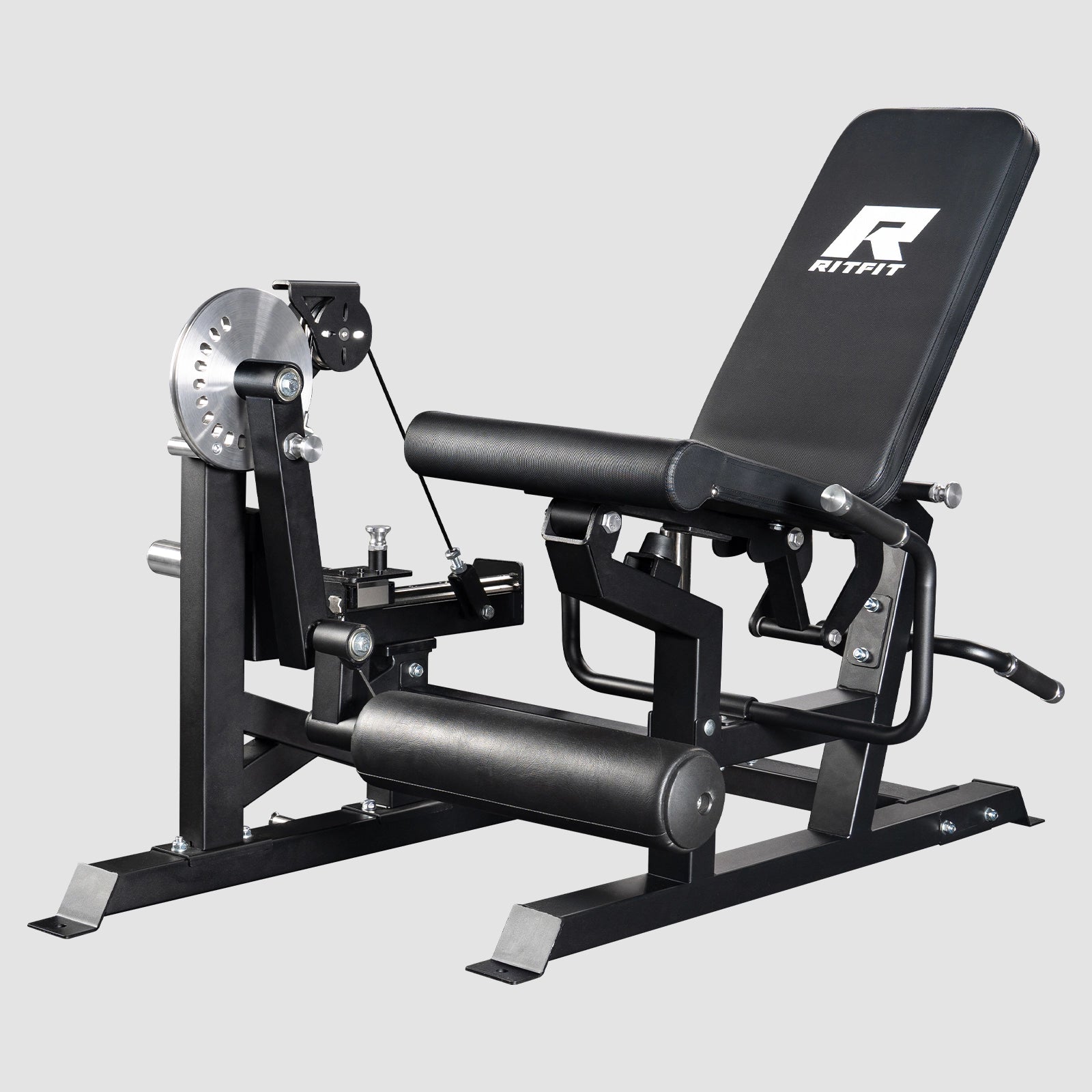
If you train at home and want a fixed path for high-rep work, a dedicated station such as the RitFit Gorilla 2 in 1 chest and shoulder press machine covers the pressing pattern with the shoulder press in the same frame.
"This makes my 4th RitFit purchase. I have the squat rack cable system. The leg press hack squat, leg extension leg curl and now the shoulder/chest press. I enjoy the brand enjoy the company. Great products. People see it all and think I'm sponsored. I tell them no. Just a huge fan of the brand and would recommend it to anyone."
Preston G. Verified Buyer, RitFit Gorilla 2-in-1 Chest and Shoulder Press Machine
Does the bench press work your core, biceps, or back?
The bench press works your core, biceps, and back, but only as stabilizers, which is not enough to build them. Your core braces against the bench, your biceps hold the bar in place, and your lats and mid back keep the shoulder blades pinned down while the chest and triceps do the pressing.
- Core: Bracing against the bench and driving through the feet turns the trunk into a rigid platform, which is a stability job rather than a training stimulus for the abs.
- Biceps: The elbows stay nearly straight throughout the press, so the biceps hold position instead of shortening under load.
- Back: The lats and the muscles between the shoulder blades assist at the bottom of the rep, which is why a stronger upper back usually helps the press rather than the reverse.
Keep rows, pull-ups, and direct arm work in your program if those muscles matter to you, because a pressing-only routine leaves the back and biceps under-trained in relative terms.
Why can't you feel your chest during the bench press?
You usually cannot feel your chest during the bench press because the front delts take over when the bar path is too high, the elbows flare too wide, or the weight is heavier than you can control. Fix the setup and the load before you look for a different exercise.
- Bar path too high: Touching near the collarbone stacks the press over the shoulders instead of the sternum, so the front delts finish the rep.
- Elbows flared: A wide elbow position rotates the shoulders forward and hands the first part of the press to the delts.
- Shoulder blades loose: Setting the shoulder blades by pulling them down and back gives the chest a stable base to press from.
- Load too heavy: A weight you can only bounce through the middle of the range never loads the chest through the part of the movement it controls best.
Try a lighter load with a controlled two second descent and a pause an inch off the chest, then add weight back once you feel the chest working through the middle of the rep.
How do you build chest muscle with bench press variations?
The bench press is the most effective chest exercise because a barbell lets you move the heaviest load with control. Starting flat and progressing to inclines builds a more complete chest.
- Barbell bench press: Move the heaviest weight and control the bar through a consistent path. Master the movement with our best bench press form guide.
- Dumbbell bench press: Work each side independently with a larger range of motion and more stabilizer recruitment.[3]
- Incline angles: Hitting the chest from different angles builds a more thorough, chiseled chest. Pick the right setup with best incline for your bench press.
If you are deciding between the two main tools, this comparison of the dumbbell vs barbell bench press covers how stability and range of motion change the stimulus.
Range of motion changes how much the chest is loaded, so full reps matter for growth.[4] Pair the exercise with a quality RitFit PWB01 Adjustable Bench to train every angle at home.
"There's a little bit of confusion around what the best angle is for the bench on an incline bench press to hit the upper chest.
It's pretty conclusive.
30 degrees is a really good place for most of us!
"
Jeff Cavaliere, MSPT, CSCS, Physical Therapist and Strength Coach, Athlean-X


"Great bench I love this bench nice and light to move around strong sturdy great for bench pressing and it's a great price I'm glad I found this"
Adriano Meneses, Verified Buyer, RitFit PWB01 Adjustable Foldable Weight Bench
How does one adjustable bench train your whole body?
One adjustable bench lets you train every major muscle group at home, because the incline and decline positions open up angles a flat bench cannot reach. It also replaces several gym machines and removes the commute, which matters more for consistency than any single exercise choice.
The sections below cover the bench-based work that sits outside the bench press itself, starting with legs and finishing with arms.
Which bench exercises build your legs?
Bench leg exercises like Bulgarian split squats and step ups build your quads, hamstrings, and glutes without a squat rack. These unilateral moves also improve balance and single-leg stability.
- Bulgarian split squat: A single-leg exercise that adds real muscle to your quads, hamstrings, and glutes.
- Step up: Improves leg symmetry and balance, which carries over to your squat and deadlift strength.
- Hip and thigh work: Bench-based moves shape the hip and thigh muscles naturally.
Bench step ups save your lower back while building explosive leg power, which makes them a sensible alternative to barbell squats if heavy spinal loading is a problem for you. Browse weight benches to match one to your space.
How do you build core strength with a bench?
A bench makes ab work harder by adding decline and elevation angles. Decline crunches, feet-elevated pushups, and plyometric pushups all build your core at home.
- Decline crunches: Set the bench to a decline to make sit ups, reverse crunches, and oblique work more effective.
- Feet-elevated pushup: A compound move that works every ab muscle at once while engaging your hip abductors.
- Plyometric bench pushup: Challenges your whole core, raises your heart rate, and adds fat burning to the session.
Pushups and the bench press recruit similar upper body muscles, so the two pair well in one workout.[2] A strong core improves posture and carries over to every other lift.


How do you target your back with bench rows?
Incline dumbbell rows and chest supported rows build your back with added stability. Supporting your chest on the bench reduces rocking, isolates the lats, and lowers injury risk.
- Incline dumbbell row: A stable row variation that lets you move more weight and target your back precisely.
- Chest supported dumbbell row: An easy, beginner-friendly way to strengthen the latissimus dorsi and trapezius.
- Daily back strength: Consistent back work can reduce back pain and improve posture.
Rows are often prescribed as an alternative to surgery for back problems, so the movement pattern matters. Use a bench to keep your form strict and your spine supported.

How do you build arms and shoulders with a bench?
Bench exercises build the biceps, rear deltoids, and triceps with better stability than standing variations. Incline curls, lying rear deltoid raises, and tricep dips cover the whole arm.
- Incline dumbbell curl: Activates the biceps and works the long head through a deep stretch and hard contraction.
- Lying rear deltoid raise: Targets the posterior deltoid across both shoulder joints.
- Tricep dips: A compound move that builds upper body strength that carries over to pressing.
Compound arm work like tricep dips makes your upper body significantly stronger, and that strength transfers to heavier pressing in your other workouts.

FAQs About Bench Press Muscles
What muscles does the bench press work?
The bench press primarily works the pectoralis major, anterior deltoid, and triceps brachii.
The chest and triceps show the highest muscle activity during the lift, while the front deltoid assists as the bar moves up.
Grip width and bench angle change how much each muscle contributes to the press.
Does the bench press work your biceps?
No, the bench press is not a biceps exercise.
Your biceps act mainly as stabilizers while the triceps extend the elbow during the press.
To build the biceps, add curls and rows to your program instead of relying on the bench press for arm work.
Is a flat or incline bench press better for your chest?
Neither is universally better because each angle targets a different area.
A flat bench press loads the whole chest, while an incline press shifts emphasis to the upper chest and front deltoid.
Training both angles builds a more complete chest over time.
How many times a week should you bench press?
Most lifters can bench press two to three times per week with adequate recovery between sessions.
Beginners often start with once or twice a week and add volume as technique improves.
Prioritize consistent form and progressive overload over frequency alone.
Do you need a spotter for the bench press?
A spotter is recommended for heavy bench press because the bar can trap you if you fail a rep. Training alone with safety pins, a smith machine, or a weight you can control lowers the risk. Follow our smith machine bench press guide for a safe solo setup.
Can you get a full-body workout with just a weight bench?
Yes, a single adjustable bench supports legs, core, back, arms, and chest exercises at home.
Bulgarian split squats, step ups, decline crunches, rows, and presses cover every major muscle group.
One quality bench can replace several gym machines for a complete routine.
Does the bench press work your back?
The bench press uses your back to stabilize the bar, not to move it.
Your lats and mid back keep the shoulder blades pinned to the bench while the chest and triceps press, so rows and pull-ups remain the way to build back muscle.
Why can't I feel my chest during the bench press?
The usual causes are a bar path that lands too high on the chest, elbows flared wide so the front delts take over, and a load too heavy to control.
Pin the shoulder blades, touch just below the nipples, and lower the weight until the chest does the work.
Close grip vs wide grip: which muscles do they work?
A close grip keeps the elbows tucked and gives the triceps more of the lockout, while a wide grip spreads the load across the pectoralis major.
A moderate grip, roughly shoulder width, is the balance point most lifters should train first.
Is incline bench press enough for chest?
No, an incline press alone leaves the lower and mid chest under-trained because the angle shifts work to the upper chest and front delts.
Pair a flat press with an incline or decline angle across the week to cover the whole pectoralis major.
Conclusion
The bench press works the pectoralis major, anterior deltoid, and triceps brachii, making it the foundation of chest training. With an adjustable bench you can extend that work into a full-body routine that builds legs, core, back, arms, and chest at home.
Start with a flat press and add incline and decline angles as you progress. Explore the RitFit sales page to build your home setup on budget.
Disclaimer
This article is for general information only and does not replace professional medical, training, or fitness advice. Consult a qualified physician or certified trainer before starting any new exercise program, especially if you have an existing injury or medical condition.
References
1. Stastny P, Gołaś A, Blazek D, et al. A systematic review of surface electromyography analyses of the bench press movement task. PLoS One. 2017;12(2):e0171632. doi:10.1371/journal.pone.0171632. PMCID: PMC5295722
2. Tillaar RVD. Comparison of Kinematics and Muscle Activation between Push-up and Bench Press. Sports Med Int Open. 2019;3(3):E74-E81. doi:10.1055/a-1001-2526. PMCID: PMC6728153
3. Wang L, Qiao M, Tao H, et al. A comparison of muscle activation and concomitant intermuscular coupling of antagonist muscles among bench presses with different instability degrees in untrained men. Front Physiol. 2022;13:940719. doi:10.3389/fphys.2022.940719. PMCID: PMC9486837
4. Tsoukos A, Wilk M, Krzysztofik M, Zajac A, Bogdanis GC. The Impact of Range of Motion on Applied Force Characteristics and Electromyographic Activity during Repeated Sets of Bench Press Exercise. J Hum Kinet. 2024;91(Spec Issue):189-204. doi:10.5114/jhk/186341. PMCID: PMC11057621