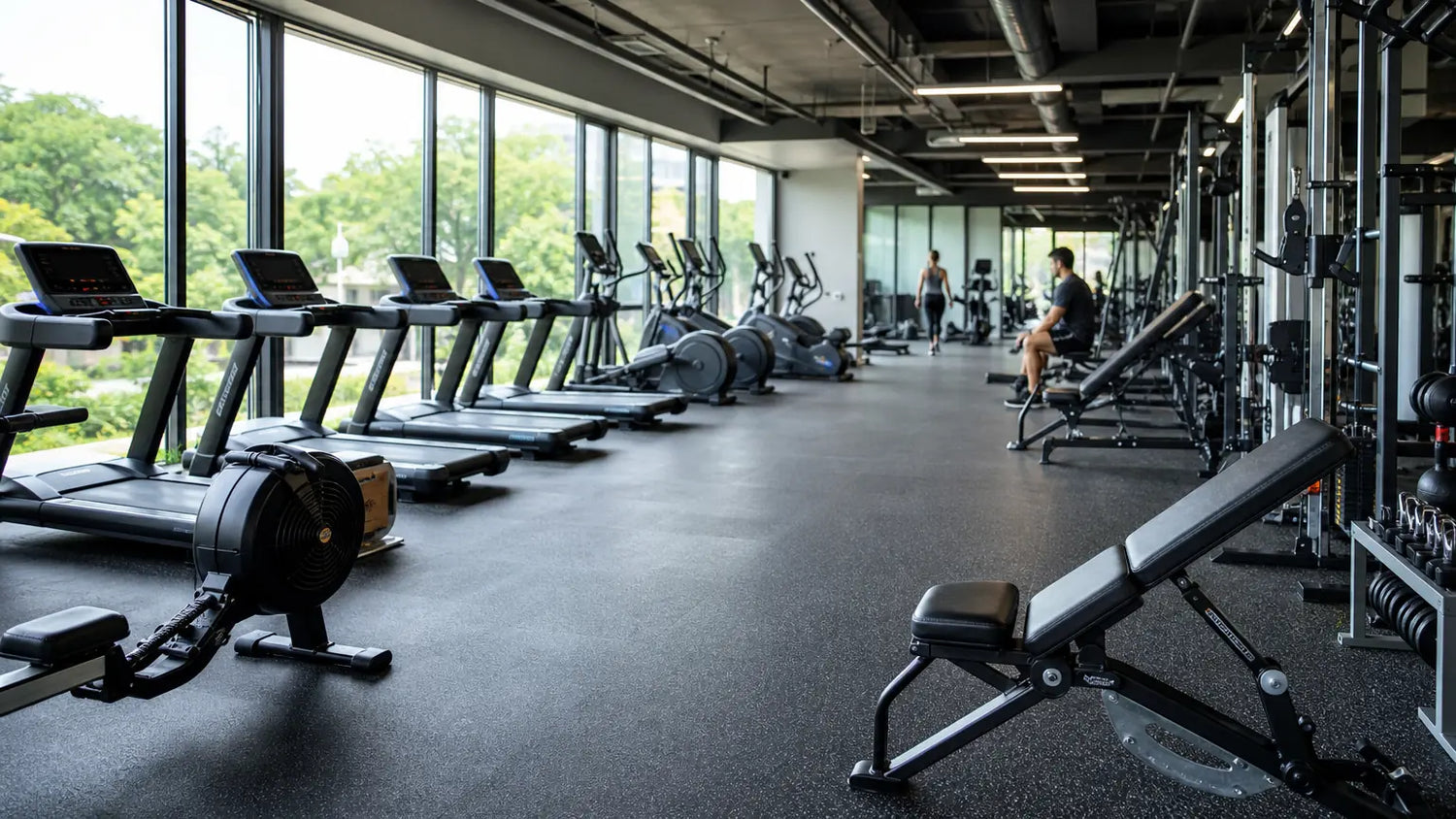
The best gym to go to is not a specific chain, it is the one that fits your goals, your budget, and your daily route so well that you actually keep showing up. This guide gives you a goal-first framework to evaluate any gym.
You will learn how to match a gym type to your goal, spot contract traps, weigh location over amenities, and decide when a home gym beats a membership.
Quick Answer: The best gym to go to is the one you will use consistently, so match a gym type to your primary goal and keep it close enough to your home or route to remove friction. Confirm the price and contract fit your budget, because convenience matters more than a fancy brand.
Key Takeaways
- Consistency wins: The best gym is the one you will visit often, so convenience outweighs brand or shiny equipment.
- Start with your goal: Weight loss, muscle, coaching, and general fitness each point to a different gym type.
- Know the price tiers: Budget gyms run about ten to twenty-five dollars a month, mid-range gyms roughly thirty to sixty.
- Read the contract: Ask about sign-up fees, annual charges, and cancellation steps before you sign anything.
- A home gym can win long term: If you are self-motivated, building your own setup often pays off over several years.
| Brand | RitFit Sports |
|---|---|
| Featured Products | Home strength gear like power cages and free weights |
| Key Decision Factors | Goal fit, location within about 10 minutes, price and contract terms, hours, cleanliness |
| Best For | Beginners and returning exercisers deciding between a membership and a home setup |
| Price Range | Budget gym approx $10-$25/mo, mid-range approx $30-$60/mo, premium higher |
What actually makes a gym the best one for you?
The best gym for you is the one that removes barriers to showing up rather than the one with the most equipment. Adherence, or training consistently over time, is the single biggest driver of results, so a slightly plainer gym you visit four times a week beats a premium club you skip.
- Goal fit: The gym should have what your main goal needs, whether that is squat racks, cardio machines, or coached classes.
- Friction: Distance, hours, and crowding decide whether visiting feels easy or like a chore.
- Comfort: A space where you feel at ease keeps you coming back, while intimidation quietly ends memberships.
Different club models attract different members, and clubs built around enjoyment and a social community tend to keep people engaged longer.[1] Start your search with the home gym guide if you are also weighing a home setup.
How do you match your goal to a gym type?
You match your goal to a gym by naming your primary outcome first, then choosing the gym type that best supports it. A weight-loss goal leans toward cardio and classes, while a muscle goal leans toward free weights and racks.
| Your Goal | Best Gym Type | Why It Fits |
|---|---|---|
| Weight loss | Mid-range with group classes | Cardio variety plus accountability from scheduled sessions |
| Build muscle | Well-equipped strength gym | Free weights, benches, and racks are the priority |
| General fitness | Any convenient gym | Location and hours matter more than specialty gear |
| Learn a skill | Studio or specialty gym | You are paying for coaching and expertise |
| Social motivation | Group fitness or bootcamp | Community drives accountability and consistency |
General category guidance, not a ranking of specific gym brands.
If your goal points toward strength, note the equipment that matters most so you can build a similar setup with dumbbells at home later.
How much should a gym cost and what are the contract red flags?
A gym should cost what fits your budget without locking you into terms you cannot escape. One buyer's guide notes budget gyms often run about ten to twenty-five dollars a month, while mid-range gyms with classes typically cost thirty to sixty dollars.
- Sign-up fees: Ask whether there is an initiation or enrollment fee on top of the monthly rate.
- Annual charges: Some gyms bill a once-a-year maintenance fee that budget shoppers often miss.
- Cancellation terms: Confirm exactly how you cancel, since some contracts require written notice or in-person visits.
- Trial offers: A free week or day pass lets you test the fit before committing to a long contract.
Carry your essentials easily with a waterproof gym bag, and always read the fine print before signing.
Why does location beat amenities?
Location beats amenities because convenience is the strongest predictor of whether you keep going. A common rule of thumb is that a gym more than ten minutes from your home or route sees far lower attendance over time.
- Commute time: A short trip removes the biggest daily excuse, while a long drive quietly erodes your streak.
- Hours that fit: Confirm the gym is open when you actually train, whether that is early mornings or late nights.
- Route alignment: A gym near your work or daily path is easier to reach than one requiring a special trip.
Sustained use among long-term members tends to hinge on habit and easy access rather than premium features.[2]
What should you check on a tour or free trial?
You should visit at the exact time you plan to train and inspect the details a website cannot show. A trial run reveals real crowding, cleanliness, and whether the equipment you need is available.
- Peak crowding: Watch how busy the racks, machines, and cardio floor get during your usual window.
- Cleanliness: Check the floors, equipment, and locker rooms, since neglect signals how the gym is run.
- Equipment condition: Look for well-maintained gear and enough of it so you are not waiting in line.
- Privacy: Decide whether the locker rooms and changing areas match your comfort level.
Browse the RitFit fitness blog for more guidance on evaluating equipment quality.
When is a home gym a better choice than a membership?
A home gym is the better choice when you are self-motivated and value zero commute more than social energy or coaching. It removes travel time entirely and can pay off over several years of consistent training.
- You train alone happily: If you do not need a crowd or classes, a home setup fits naturally.
- Your schedule is tight: No commute means you can train in small windows a membership would waste.
- You plan to stick with it: The upfront cost of gear rewards people who train for years, not weeks.
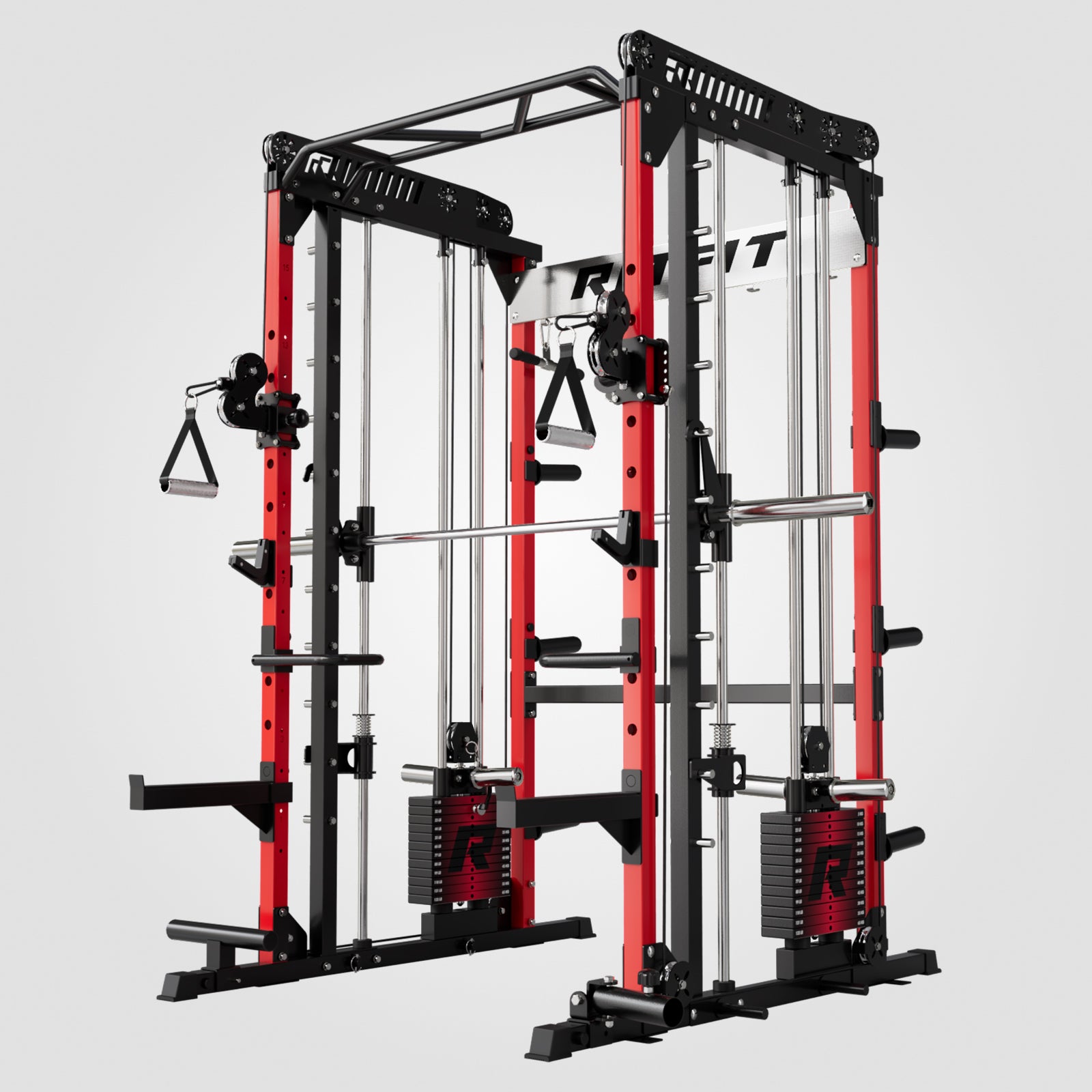
A capable strength setup starts with a rack, a bench, and free weights. Explore home gym setup ideas, choose from gym racks and weight benches, or browse the full range to shop all fitness equipment.
The video above walks through practical home gym choices that mirror the goal-first framework in this guide.
What are the common mistakes when choosing a gym?
The most common mistake is choosing a gym for its amenities instead of your actual routine. People often pay for features they never use and skip the plain gym they would have visited daily.
- Overvaluing amenities: A pool or sauna adds cost but does nothing if you never touch it.
- Ignoring the commute: A distant gym feels fine on signup day and impossible three weeks later.
- Signing long contracts early: Commit month to month until the habit sticks, then lock in savings.
- Skipping the trial: Never judge crowding or cleanliness from photos alone.
Matching your motivation and removing friction are what sustain long-term training, more than any single feature.[3]
"If you look across the literature for many years now, the strongest predictor of success with training programs, fitness programs, exercise programs, and nutrition programs, number one predictor of success, short and long term, is adherence."
Andy Galpin, PhD, Professor of Exercise Science and Human Performance, Parker University
FAQs About Choosing the Best Gym
What is the best gym to go to?
There is no single best gym for everyone, because the best gym is the one that matches your primary goal, sits close enough that you will go consistently, and fits your budget without a punishing contract. Convenience and consistency matter far more than a fancy brand, so choose the place you will keep showing up to.
How much should a gym membership cost?
Prices vary widely by tier, with budget gyms often running around ten to twenty-five dollars a month, mid-range gyms with classes typically costing about thirty to sixty dollars, and premium clubs costing more. Always read the contract for sign-up fees, annual charges, and cancellation terms before committing to any long-term membership.
Is a home gym better than a gym membership?
It depends on your habits and space, since a home gym removes commute time and pays off over several years if you train consistently and are self-motivated, while a commercial membership is better if you value social energy, coaching, or specialty equipment. Many people start with a membership and build a home setup gradually as their routine sticks.
How do I choose a gym for my goal?
Start with your goal, then match it to a gym type, looking for cardio and group classes for weight loss, or free weights, benches, and racks for building muscle, or a studio and specialty gym for coaching and new skills. General fitness works almost anywhere, so weigh location and hours most heavily.
What should I check before signing a gym contract?
Take a tour or free trial at the time you would normally work out, and check cleanliness, crowding at peak hours, equipment availability, and locker-room privacy. Confirm the hours match your schedule, and ask directly about cancellation steps and any hidden fees so you are not locked into terms that are hard to escape later.
Conclusion
The best gym to go to is the one you will actually use, so lead with your goal, keep it convenient, and confirm the price and contract fit. Amenities and brand names matter far less than the friction between you and your next workout.
Name your goal, do a trial run at your usual training time, and start month to month. If a commute keeps derailing you, compare a home setup and see the minimum home gym equipment you need to train on your own schedule.
Disclaimer
This article is for general informational purposes only and does not constitute medical, financial, or professional fitness advice. Consult a qualified healthcare provider before starting any new exercise program, especially if you have existing health conditions.
Save on your next RitFit order
Tap the button to copy your code, then paste it at checkout.
References
1. Gjestvang C, Tangen EM, Arntzen MB, Haakstad LAH. How Do Fitness Club Members Differentiate in Background Characteristics, Exercise Motivation, and Social Support? A Cross-Sectional Study. J Sports Sci Med. 2023;22(2):235-244. doi:10.52082/jssm.2023.235
2. Riseth L, Nost TH, Nilsen TIL, Steinsbekk A. Long-term members' use of fitness centers: a qualitative study. BMC Sports Sci Med Rehabil. 2019;11:2. doi:10.1186/s13102-019-0114-z
3. Gjestvang C, Abrahamsen F, Stensrud T, Haakstad LAH. Motives and barriers to initiation and sustained exercise adherence in a fitness club setting-A one-year follow-up study. Scand J Med Sci Sports. 2020;30(9):1796-1805. doi:10.1111/sms.13736