








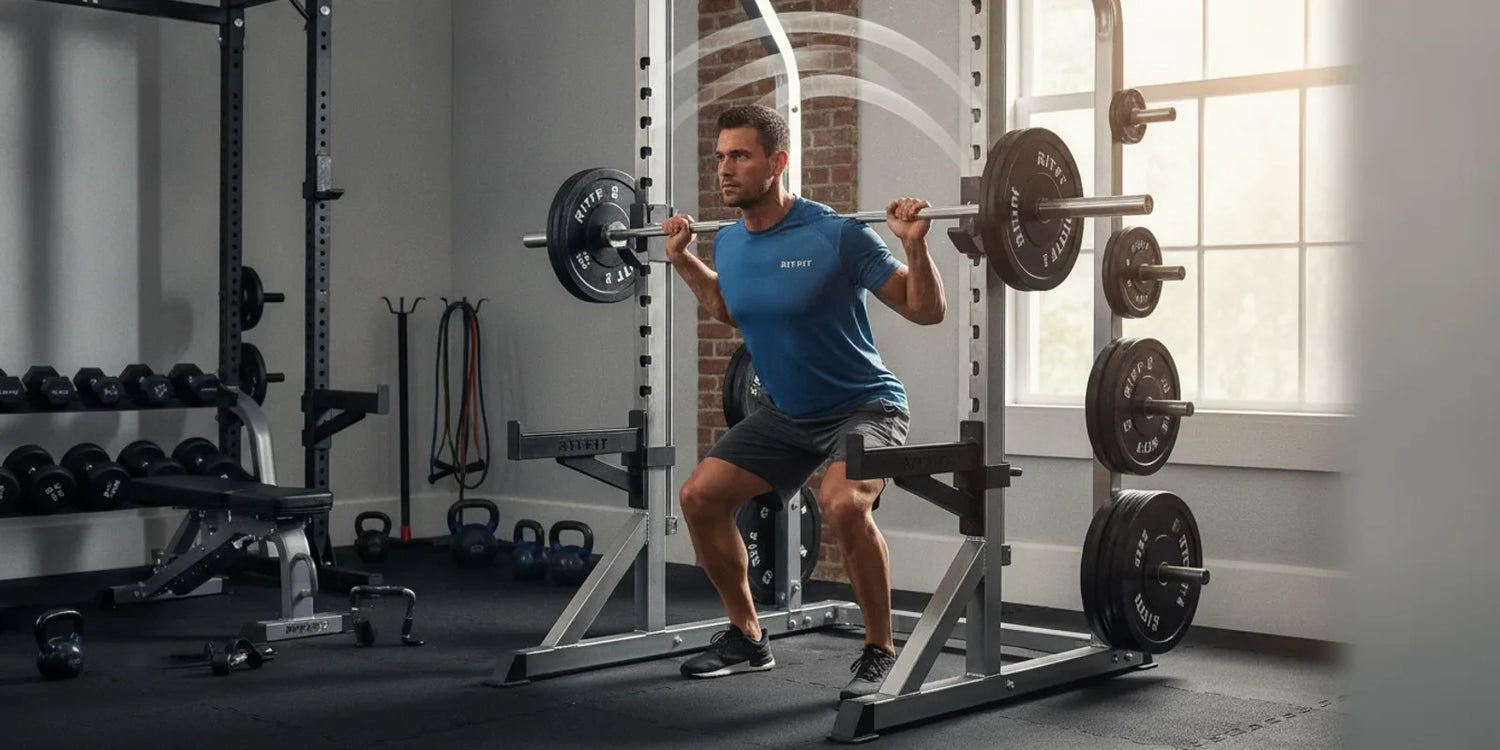
The Smith machine with the smoothest bar path is one built with linear ball bearings on an angled rail, because rolling bearings cut friction and a slight tilt follows your natural lifting arc. Smoothness is an engineering outcome you can inspect before buying.
This guide explains the two real drivers of glide quality, gives a budget-based pick within the RitFit lineup, and lists the spec questions that separate a buttery carriage from a grabby one.
Quick Answer: The Smith machine with the smoothest bar path combines linear ball bearings on a roughly seven-degree angled rail, so the carriage rolls with low friction and tracks your natural squat and press arc. In the RitFit lineup, premium bearing-carriage models such as the M3 deliver the smoothest, most repeatable travel.
Key Takeaways
- Glide mechanism rules smoothness: Linear ball bearings roll along hardened rods and feel far smoother than sliding bushings.
- Bushings grab under load: Nylon or bronze sleeves cost less but can stutter as weight climbs and loosen with wear.
- Angle changes the feel: A roughly seven-degree angled rail follows your natural arc, while a vertical rail gives a perfectly straight path.
- Match the model to your lifts: Premium bearing carriages suit heavy squat and press work, lighter units suit pressing and accessory training.
- Maintenance protects the glide: Clean rods and light silicone lubricant keep travel smooth, especially on bushing-based machines.
What Does a Smooth Bar Path Actually Mean?
A Smith machine with a smooth bar path travels up and down with consistent, low friction and no grinding, catching, or lateral play, even under heavy load. That feel is set mostly by the glide hardware, not by how the machine looks.
- Consistent travel: The bar should feel identical at the bottom, middle, and top of every rep.
- No stutter under weight: A smooth carriage does not get heavier or grabbier as you add plates.
- Quiet and controlled: Minimal noise and no side-to-side wobble signal a quality glide.
The guided path also changes how the lift loads your body. One study reported maximum strength was about 7.7 percent greater in the Smith machine squat than the free weight squat in trained women, and nearly 7 percent greater in the Bulgarian split squat.[1]
To compare options confidently, review the glide and rail details on each model, and if you train at a gym first, see how the Smith machine bar weighs at Planet Fitness for context.
Linear Bearings vs Bushings, Which Glide Is Smoother?
A Smith machine with linear ball bearings delivers the smoothest glide because the bearings roll between hardened guide rods instead of sliding, and this hardware choice drives more of the feel than any other spec. The difference becomes most obvious as the load climbs.
Why linear ball bearings feel like the gold standard
Bearings roll along chromed, case-hardened guide rods, which keeps friction low and resistance even through both the lifting and lowering phases.
- Even glide at any weight: Bearings maintain a uniform feel whether you lift light or heavy.
- Better load cycling: Rolling contact distributes load and resists wear over thousands of reps.
- Less tempo disruption: A frictionless path means you rarely adjust mid rep to fight the machine.
Why nylon and bronze bushings can feel grabby
Bushings are softer sleeves, often nylon or bronze, that let two surfaces slide against each other, which introduces more friction than rolling bearings.
- Stutter under load: Sliding contact can create a catching feel that makes the weight seem heavier on the way down.
- Wear over time: Bushings may feel tight at first and looser as they age, changing the glide.
- Budget friendly: They work fine for lighter, occasional use and keep entry prices down.
If smooth, repeatable travel matters most for your training, prioritize a model with a bearing-based carriage such as the RitFit M1 home gym package. Our explainer on what a Smith machine is covers the basics first.
Is an Angled or Vertical Rail Smoother to Use?
An angled Smith machine rail, usually tilted around seven degrees, feels smoother to use because it follows the arc your body traces during squats and presses. A vertical rail gives a perfectly straight path, and friction smoothness still depends on the bearings rather than the angle.
The fixed vertical bar path constrains natural forward and backward movement, encouraging a more upright trunk and reducing posterior chain involvement during squats, which shifts joint torque at the hip and lumbosacral spine.[2] An angled rail eases some of that compensatory lean.
- Angled rail: Better for squats and bench because the bar tracks back toward your face or hips naturally.
- Vertical rail: Ideal for strict isolation, calf raises, shrugs, and seated pressing where the path should stay plumb.
A guided angled path keeps that control built in, which is why it suits movements like the Smith machine lunge so well.
"The free weights DEMAND participation and help from 'assistance' or 'stabilizer' muscles when you're lifting. With the fact that the weights can usually float into 3D space, it is very important that you don't allow this drift and instead control it."
Jeff Cavaliere, MSPT, CSCS, Athlean-X
Which RitFit Smith Machine Has the Smoothest Path?
Within the RitFit lineup, the model with the smoothest, most natural bar path is the one with a premium linear bearing carriage built for heavy squat and press work, such as the M3. Your best pick depends on budget, available space, and main lifts.
| RitFit Model | Best For | Glide and Feel | Why Choose It |
|---|---|---|---|
| Multifunctional Smith Machine | Budget and compact spaces, pressing plus accessory work | Solid fixed path, value-oriented carriage | Best value entry pick for steady home training |
| M1 Smith Machine | Squats, presses, and cable work in one footprint | Smooth carriage travel for mixed training | Best all-rounder for a complete home gym |
| M3 Power Rack with Smith Machine | Serious heavy squats and presses with dual cables | Smoothest premium carriage glide | Best for the smoothest, most natural path |
Match the model to your heaviest planned lifts and training frequency. Confirm exact rail angle and bearing type on each product page.
- Tight on space and budget: Choose the Multifunctional Smith Machine and lift at moderate loads.
- Want one machine for everything: Choose the M1 for squats, presses, and cable training.
- Train heavy and want premium feel: Choose the M3 for the smoothest carriage glide.
Is a Smoother Bar Path Worth the Extra Cost?
A smoother bar path is worth the extra cost if you train heavy and often, because consistent, low-friction travel protects your tempo and lets you focus on the lift rather than fighting the machine. For light, occasional use, a quality bushing setup can be enough.
Smoothness will not magically add muscle, but training transfers regardless of the tool. In one 10-week study of 35 resistance-trained men performing chest press training on a Smith machine, dumbbells, or a Swiss ball barbell, improved strength altered the sticking region and adaptations transferred toward the non-trained barbell bench press.[3]
A smoother path simply makes those reps more comfortable and repeatable.
- Heavy and frequent training: Bearings pay off in comfort, durability, and consistent tempo.
- Light or occasional use: A well-maintained bushing machine can serve well for years.
If you are weighing your options against a free barbell setup, our comparison of the Smith machine vs squat rack can help frame the decision.
How Do You Keep the Bar Path Smooth Over Time?
You keep the bar path smooth by cleaning the guide rods and applying a light silicone lubricant on a regular schedule, which reduces friction and prevents stuttering. This matters most on bushing-based machines that rely on sliding contact.
- Wipe the rods: Remove chalk, dust, and grime that increase friction.
- Lubricate lightly: Use a silicone spray on the rods, not heavy grease that attracts dirt.
- Check for play: The carriage should move freely without side-to-side wobble.
Bearing carriages need less frequent upkeep but still benefit from clean, dry rods. While you maintain the machine, it helps to know how much a Smith machine bar weighs so you load it accurately.
What Should You Check Before You Buy?
Before you buy a Smith machine, verify the glide mechanism and rail geometry first, since those decide smoothness more than any marketing label. Asking a few specific questions prevents the most common buying mistakes.
- What is the carriage glide type: Linear ball bearings or sliding bushings.
- Is the rail angled or vertical: And at what degree if angled.
- Is the bar counterbalanced: And what is the effective starting bar weight.
- What is the weight capacity: Of both the carriage and the frame.
- What are the assembled dimensions: Including total height for ceiling clearance.
- What does the warranty cover: And for how long.
Common mistakes to avoid: Judging smoothness by price alone, ignoring rail angle for squat-focused training, and skipping the warranty terms. For lifters chasing maximum hypertrophy, see our guide to the best Smith machine for bodybuilding.
FAQs About Smith Machine Bar Path Smoothness
What makes a Smith machine bar path smooth?
Smoothness comes mainly from the glide mechanism, where linear ball bearings roll along hardened guide rods to reduce friction and keep travel consistent even under heavy load. Plastic or bronze bushings instead slide and can feel grabby or stuttery as weight climbs, and rail geometry matters too since an angled rail follows your natural arc.
Are linear bearings or bushings better for a smooth bar path?
Linear ball bearings deliver the smoothest, most consistent glide because they roll rather than slide, and they hold up better over many load cycles. Bushings cost less and can feel fine for light, occasional use, but they introduce more friction and tend to loosen or stiffen with wear, so heavy regular lifters generally prefer bearings.
Is an angled or vertical Smith machine smoother?
Angled rails, usually tilted about seven degrees, follow the natural arc your body traces during squats and presses, so the movement feels more natural and reduces compensatory lean. Vertical rails give a perfectly straight path that suits isolation work and pressing, and while friction smoothness depends on bearings, the angle affects how natural travel feels.
Which RitFit Smith machine has the smoothest bar path?
Within the RitFit lineup, premium models with linear bearing carriages and angled rails deliver the smoothest, most natural travel for serious squatting and pressing, while lighter or entry options work well for accessory and pressing work on a budget. Match the model to your main lifts, training frequency, and available space to get the right balance.
How do I keep my Smith machine bar path smooth over time?
Wipe the guide rods clean and apply a light silicone lubricant periodically to reduce friction, especially on bushing-based machines, and check that the carriage moves freely without lateral play while keeping the rails free of chalk and dust. Bearing carriages need less frequent upkeep but still benefit from clean, dry rods.
Conclusion
The Smith machine with the smoothest bar path pairs linear ball bearings with an angled rail, so the carriage glides with low friction and the path follows your natural arc. Match that smoothness to how heavy and often you train.
Decide your budget and main lifts first, then compare glide type and rail angle on each product page. Browse the full Smith machine collection, and when you are ready to buy, check the RitFit sales page for current pricing and bundles.
Disclaimer
This article is for general informational and educational purposes only and does not replace professional fitness, medical, or product fitting advice. Consult a qualified trainer or healthcare provider before starting new equipment or training, and verify current specifications on the official product pages.
References
1. Tsoukos A, Bogdanis GC. Effects of Transducer Placement on Load-Velocity Relationships in Smith Machine and Free Weight Squats in Trained Women. J Funct Morphol Kinesiol. 2025;10(2):178. doi:10.3390/jfmk10020178. PMCID: PMC12101428.
2. van den Tillaar R, Larsen S. Kinematic and EMG Comparison Between Variations of Unilateral Squats Under Different Stabilities. Sports Med Int Open. 2020;4(2):E59-E66. doi:10.1055/a-1195-1039. PMCID: PMC7365712.
3. Saeterbakken AH, Andersen V, van den Tillaar R, et al. The effects of ten weeks resistance training on sticking region in chest-press exercises. PLoS One. 2020;15(7):e0235555. doi:10.1371/journal.pone.0235555. PMCID: PMC7347144.





