Table of Contents
If you train hard, sit a lot, or just wake up feeling stiff, a muscle roller stick can be one of the smallest tools with the biggest impact on how your body feels.
Instead of booking a massage every time your calves, quads, or back tighten up, you can use a simple stick roller to create that “hands-on” pressure yourself in just a few minutes a day.
Below, we’ll break down what a muscle roller stick actually does, how to use it correctly, and 10 real-world benefits you can expect, plus safety tips and who will get the most out of this tool.
Key Takeaways
- A muscle roller stick is a small, handheld tool that lets you put pressure on specific tight muscles to help them relax and heal.
- Rolling on a regular basis can help your blood flow better, make you feel less stiff, and make your next workout or workday go more smoothly.
- Using the stick 5–10 minutes before or after training, or at night before bed, can help with flexibility, performance, and overall comfort.
- You still need smart training, good sleep, and recovery habits—think of the roller as a powerful assistant, not a magic fix.
What Do Muscle Roller Sticks Do
The first time I ever saw a muscle roller stick was when I ran the Marathon. One of the other girls had brought one with her. It was a lifesaver!
After each one of us ran our leg we took a turn with the stick. If you plan on running Marathon this Muscle Roller Stick is a must!
Running 3-8 miles and then immediately having to hop in a van and sit for the next few hours until your next turn is not good for your muscles. A lot of people end up with injuries because they do not stretch enough during Marathon. But we were able to stretch while sitting in the car because we had a muscle roller stick.
A lot of people tried bringing foam rollers to use while running, but you can't use them while riding in a vehicle. And they are huge! Six people sharing one vehicle for 2 days and needing 4-5 outfits and plenty of fluids and food means that you don't have a lot of room for a huge foam roller.
And most pit stops are only long enough to get out of the vehicle and hop back in. You don't have time to lay on the ground and roll out all your muscles. Even if you're not a crazy athlete, a Muscle Roller Stick can be very beneficial for your body.
You may not think you have sore muscles, but you do. Try rolling them out with a stick and you'll notice immediate relief. It is amazing how much better you feel after using one even when you don't think you need to.
How to Use a Muscle Roller Stick (Step-by-Step)
A few minutes of focused, smart rolling beats 20 minutes of random, painful grinding. Here’s a simple, safe way to use your stick.
Basic Steps
- Sit or stand in a comfortable position so the target muscle is relaxed.
- Hold the stick by both handles.
- Start with light to moderate pressure and roll slowly—about 1–2 inches (2–5 cm) per second—along the length of the muscle.
- Move in the direction of the muscle fibers (for example, from knee toward hip when rolling the quads).
- If you find a tender spot, pause and roll gently over that area for 15–20 seconds.
How Long and often?
- Per area: 30–60 seconds, up to 2–3 passes on very tight spots
- Before workouts: 3–5 minutes total as part of your warm-up
- After workouts or on rest days: 5–10 minutes total for recovery
How Much Pressure?
Use a “good discomfort” scale, not a pain contest.
Aim for a 4–6 out of 10 in pressure—enough to feel it working, but not so intense that you tense up or hold your breath. Sharp, burning, or electric pain is a sign to back off immediately.
10 Muscle Roller Stick Benefits
1. Eases sore and tense muscles
The best thing about a muscle roller stick is that it makes sore, tight muscles feel better and more relaxed.
Muscle fibers can feel shorter and more protected after a long run, a tough leg day, or hours at a desk. Rolling puts gentle pressure and movement on your legs, which can help get rid of that "cement legs" feeling and make it easier to walk, squat, or climb stairs the next day.
2. Lessens the Pain of DOMS (Delayed Onset Muscle Soreness)
DOMS, which refers to the deep, achy pain experienced 24 to 72 hours after a tough workout, may not disappear entirely, but rolling can reduce its intensity.A study in Medicine & Science in Sports & Exercise confirmed that using a roller massager significantly attenuates exercise-induced muscle damage and soreness, leading to faster recovery of vertical jump height[1].
A roller stick helps your body get fresh blood and get rid of metabolic waste more quickly by encouraging circulation and movement in the area. This often means less stiffness and a quicker return to normal training.
3. Increases flexibility and range of motion
When your muscles are stiff, they slow down your joints. If you relax the muscle, the joint will usually move more easily. Short bouts of rolling can acutely increase joint range of motion (ROM) without the performance deficits often associated with static stretching[2].
Rolling your quads, hamstrings, calves, or hip flexors before doing squats or deadlifts can help you move more freely and comfortably.
Over time, using the roller with dynamic stretching can help you move more easily and powerfully and improve your flexibility.
4. Helps blood flow and recovery get better
When you roll, you press and release tissue, which makes a pump effect that can help blood flow in the area. Rolling massage can improve arterial function and vascular endothelial response, aiding localized blood flow[3]. Better blood flow means that oxygen and nutrients get to where they need to go more quickly and that waste products from exercise get out of the body more swiftly.
This doesn't take the place of rest, water, or good food, but it's a simple daily habit that makes recovery happen faster.
5. Helps get muscles ready to work out
Don't just use the roller to recover; use it as part of your warm-up.
Before heavy lifting, sprints, or long runs, a quick rolling session can:
- Make tight muscles feel more supple.
- Reduce the feeling of stiffness when you start moving.
- Help your brain “connect” to the muscles you’re about to use.
Follow your rolling with a few dynamic movements (e.g., leg swings, bodyweight squats, light lunges), and you’ve built an effective, time-efficient prep routine to perform better and feel safer under the bar.
6. May Lower the Risk of Overuse Discomfort
Nothing can guarantee you’ll never get injured, but keeping tissues mobile and well-recovered is one piece of a smart injury-reduction strategy.
When you regularly address tight calves, quads, IT bands, or hip flexors, you’re less likely to let small issues build into bigger problems. Using a muscle roller stick a few times a week can help you catch and calm hotspots early, especially if you’re ramping up training volume or returning from a break.
7. Eases Desk-Job Stiffness and Everyday Aches
You don’t need to be an athlete to benefit. If you spend hours sitting at a computer or driving, a roller stick is a powerful “anti-desk” tool.
A few minutes on:
- Quads and hip flexors (from knee to hip)
- Upper back (while someone else rolls for you, or by bracing the stick against a wall)
- Calves and shins
can offset some of the stiffness that builds up from sedentary posture, making it easier to stand tall and move comfortably after a long day.
8. Helps you relax and sleep better at night
Rolling isn't just for your body; it can also help you relax mentally.
A short, gentle rolling session before bed, especially on the calves, hamstrings, and back of the shoulders, can help your nervous system know it's time to slow down. Many people find it easier to relax and fall asleep when they roll around while breathing slowly and following a regular pre-sleep routine.
9. Lifts your mood and helps you deal with stress
We hold a lot of stress in our bodies, like tight traps, clenched glutes, and locked-up hips.
You often feel a big change in your mood when you physically let go of some of that stress.
The combination of rhythmic pressure, breathing, and the feeling of taking care of your body can:
- Lower the amount of stress you feel.
- Help you feel calmer and more in charge
- In just a few minutes, you can make a difficult day easier to handle.
10. "Massage on Demand" that is portable and cheap
A muscle roller stick is much easier to carry around than a big foam roller or massage gun.
You can throw it in a gym bag, keep one at the office, or pack it in a suitcase. That means:
- Quick calf rolls after airport walking or long drives
- Pre-race warm-ups for runners right at the start line
- Post-workout recovery in the locker room
You get many of the benefits of hands-on muscle care without needing an appointment, a plug, or a lot of space.
Safety Tips: When to Be Careful or Avoid Rolling
Muscle roller sticks are usually safe if you use them with common sense, but there are a few simple rules you should follow to be safe.
Don't roll right over:
- Wounds that are open, bruised, or infected skin
- Acute injuries (new sprains, strains, or swelling)
- Bones in places like the front of the knee, the spine, or the ankle
If you have any of the following, talk to a doctor before using:
- Having had blood clots or deep vein thrombosis (DVT) before
- Cardiovascular disease that isn't under control
- Bad varicose veins in the area you want to roll
- Recent surgery in the area
If you stop rolling and need medical help,
- Pain is getting worse instead of better, and it hurts a lot.
- You feel new numbness, tingling, or a lot of swelling.
- After light to moderate rolling, pain and discomfort can last for hours or get worse.
Keep in mind that the goal is not to "beat up" your muscles, but to feel better, move better, and heal faster.
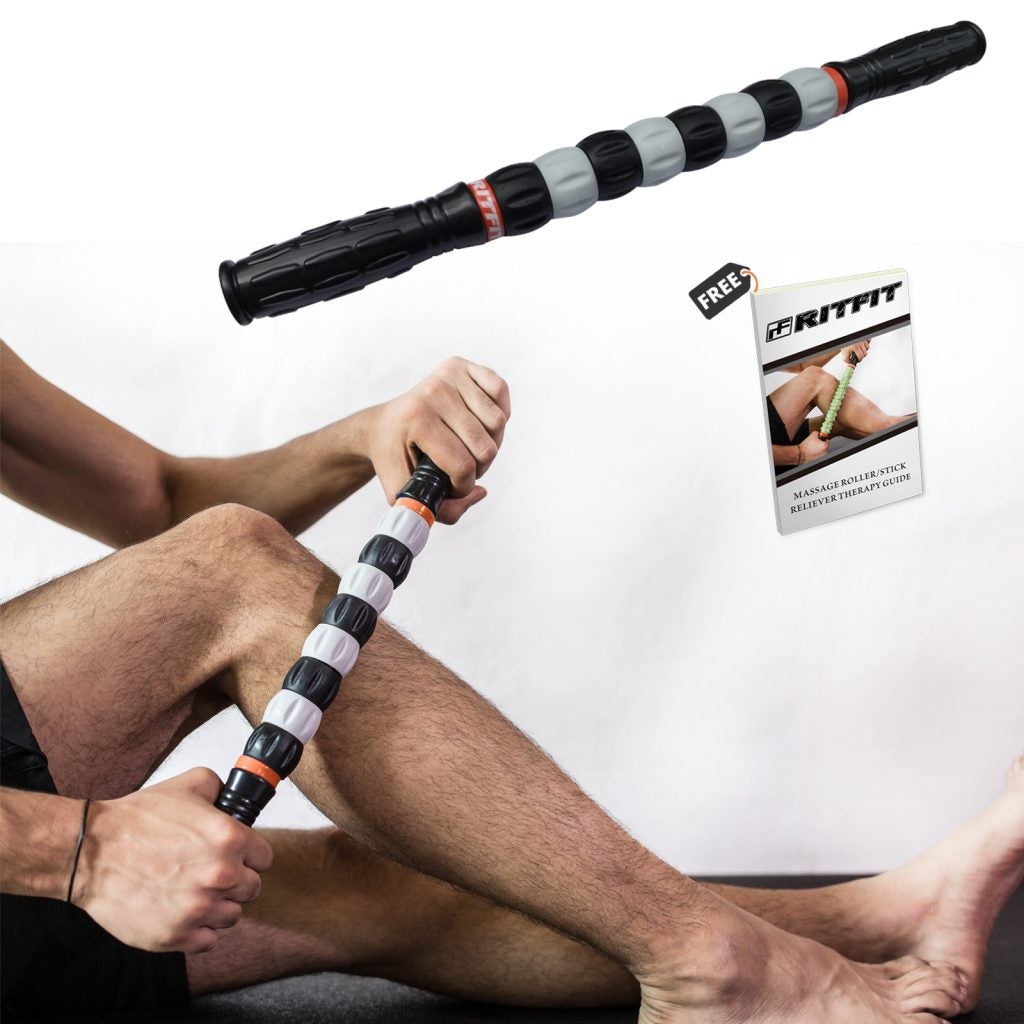
Why Choose the RitFit Muscle Roller Stick?
You can find many sticks on the market, but the design details are what make the difference when you’re using it every day. The RitFit Muscle Roller Stick is made to be:
- Small but powerful. It's long enough to work on big muscles like your quads and hamstrings, but short enough to fit in your gym bag or suitcase.
- Easy to hold on to—ergonomic, non-slip handles let you keep pressure on without straining your hands, even when you're sweaty.
- Smooth but firm: Multi-segment rollers glide over the skin without pinching, but they are still firm enough to reach deeper layers of muscle.
If you want a simple, durable stick that you’ll actually use several times a week, RitFit’s design makes it easy to build rolling into your routine and stick with it long term.
Bottom line
In short, a muscle roller stick is one of the easiest things you can put in your home or gym bag to help your body feel better before, during, and after your workouts. If you use it regularly and combine it with smart training and good recovery habits, your muscles will thank you every day.
Quick FAQ About Muscle Roller Sticks
Can I use a muscle roller stick every day?
Yes—as long as you use light to moderate pressure and your muscles feel better, not worse, after rolling, daily use is generally fine.
How hard should I press when I roll?
Aim for a “good discomfort” level, not sharp pain. You should be able to breathe normally and relax the muscle you are rolling.
Is it normal to be a little sore after rolling?
You might feel a little sore, especially if you're new to rolling, but it should feel like soreness after a massage, not sharp or long-lasting pain.
Should I roll before or after I work out?
They both work. Before training, do shorter, lighter sessions to get your muscles ready. After training or on rest days, do longer, more relaxed sessions to help your muscles recover.
If I'm not an athlete, should I still use one?
Definitely. A muscle roller stick can be a small but powerful tool to use every day if you sit a lot, walk for work, or just want your body to feel less stiff.
References
- Macdonald GZ, Button DC, Drinkwater EJ, Behm DG. Foam rolling as a recovery tool after an intense bout of physical activity. Med Sci Sports Exerc. 2014;46(1):131-142. doi:10.1249/MSS.0b013e3182a123db
- MacDonald GZ, Penney MD, Mullaley ME, et al. An acute bout of self-myofascial release increases range of motion without a subsequent decrease in muscle activation or force. J Strength Cond Res. 2013;27(3):812-821. doi:10.1519/JSC.0b013e31825c2bc1
- Jay K, Sundstrup E, Søndergaard SD, et al. Specific and cross over effects of massage for muscle soreness: randomized controlled trial. Int J Sports Phys Ther. 2014;9(1):82-91.