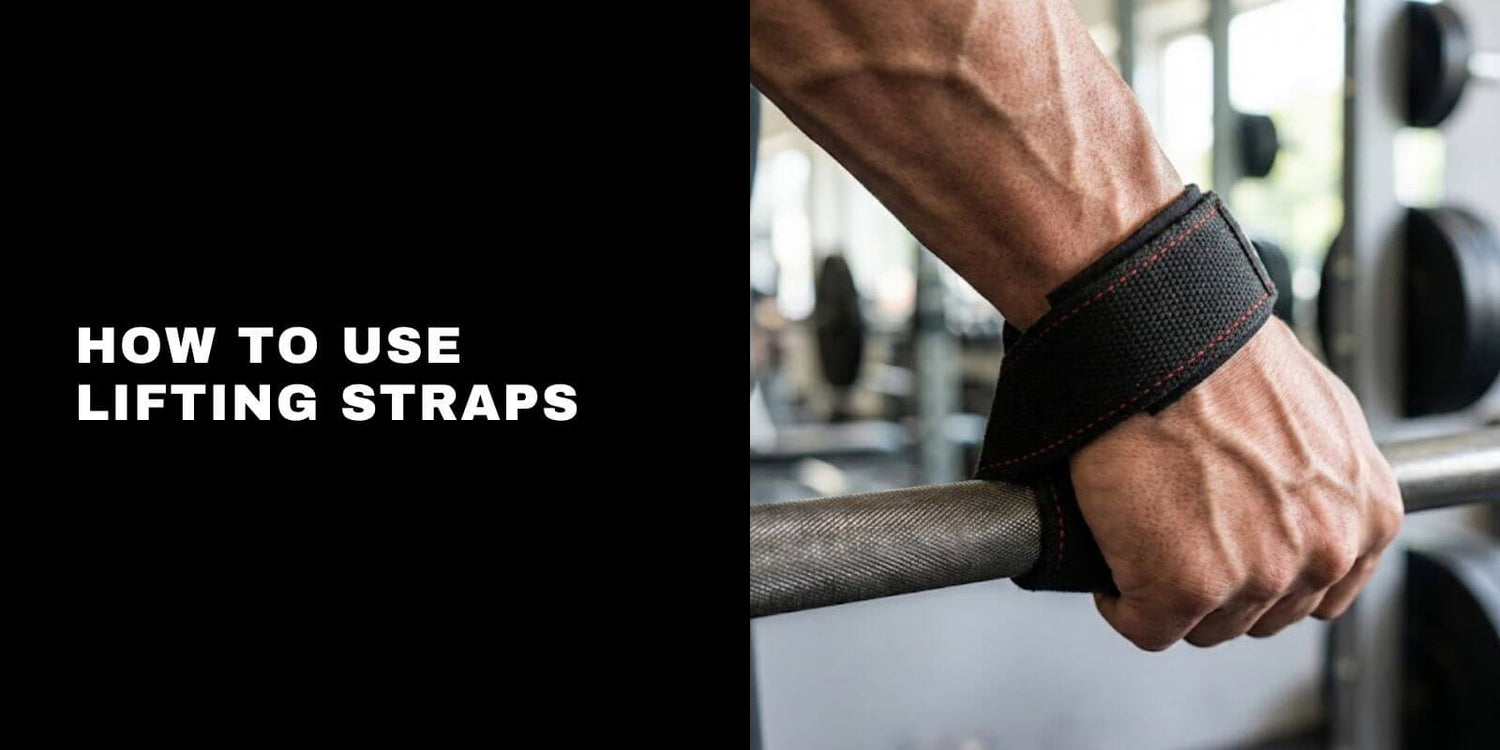
Learning how to use lifting straps correctly allows lifters to bypass grip fatigue and fully overload major muscle groups during heavy pulling exercises. When your hands give out before your back and hamstrings, training intensity drops and muscle stimulation stalls.
This comprehensive guide details the mechanics of threading, wrapping, and securing lifting straps for deadlifts, rows, and pulldowns while keeping your natural grip strong.
Quick Answer: Learning how to use lifting straps involves slipping the loop over your wrist, passing the tail under the barbell in the opposite direction of your fingers, and rolling the bar backward like a motorcycle throttle to create a secure mechanical lock that prevents grip failure on heavy sets.
Key Takeaways
- Grip Isolation: Lifting straps transfer barbell load directly to your wrists so that forearm fatigue does not stop heavy pulling sets.
- Opposing Wrap Rule: Wrapping the strap under the bar against your fingers creates friction that locks the barbell into your palm.
- Strategic Application: Reserve lifting straps for heavy top sets and Romanian deadlifts while doing warm-ups with bare hands.
- Strap Style Selection: Traditional lasso straps provide the best balance of tension adjustment and fast emergency release for general training.
- Mechanical Overload: Eliminating hand slippage preserves bar speed and lets you safely hit higher training volumes on back day.
Why Does Grip Fail Before Target Muscles?
Grip strength fails before major posterior chain muscles because the finger flexors in your forearms are substantially smaller than your latissimus dorsi, glutes, and hamstrings. While your large back and leg muscles can handle hundreds of pounds, your digital flexor tendons fatigue rapidly under prolonged isometric tension.
When the barbell starts slipping from your fingers, your central nervous system reflexively reduces motor unit recruitment to protect the joints from sudden load loss. Research confirms that lifting straps eliminate grip friction as the primary bottleneck, maintaining bar velocity and total completed repetitions during pulling movements[1].
Using supportive weight lifting accessories ensures you exhaust the target prime movers rather than ending a set due to sweaty palms or finger cramps.
"When people start to see a drop off of 10% or so of their grip output, you really should skip the gym that day."
Jeff Cavaliere, MSPT, CSCS, Physical Therapist and Strength Coach, via Optimize Your Exercise Program with Science-Based Tools
What Are the Main Types of Lifting Straps?
Lifting straps are manufactured in three distinct designs that cater to specific lifting styles, safety priorities, and grip preferences. Understanding the functional differences between lasso straps, figure 8 straps, and Olympic closed-loop straps helps you select the best design for your gym goals.
| Strap Style | Primary Benefit | Safety & Release | Best Exercise Application |
|---|---|---|---|
| Lasso (Standard Loop) | Adjustable tension and versatile fit across all bar sizes | Quick release by opening fingers | Deadlifts, rows, lat pulldowns, shrugs |
| Figure 8 (Double Loop) | Maximum security with zero wrap slippage | Locked in place until bar rests on floor | Heavy conventional deadlifts, strongman lifts |
| Olympic (Single Closed Loop) | Instant release during missed dynamic overhead lifts | Fastest release of all styles | Snatches, clean pulls, power cleans |
| Micro-Adjustment Straps | Fine-tuned fit for variable wrist circumferences | Controlled single-motion release | Hypertrophy accessory work, dumbbell pulls |
Comparison of standard lifting strap architectures and their respective functional mechanics.
For most lifters training at home or in commercial gyms, standard lasso straps or specialized micro adjustment lifting straps provide the highest degree of versatility across barbells, dumbbells, and cable attachments.
Lifters wondering weightlifting straps do you need them should evaluate whether grip failure or back fatigue currently limits their progressive overload.
How Do You Put On and Wrap Lifting Straps?
Putting on lifting straps correctly requires threading the tail through the loop so it runs along the inside of your palm toward your thumb. Once the wrist loop is seated snugly above your wrist bone, the remaining strap material must wrap tightly around the bar in a specific opposing direction.
- Step 1: Thread the Loop: Pass the straight end of the strap through the sewn loop to create an open circle. Slide your hand through so the neoprene padding rests against the back of your wrist.
- Step 2: Check Tail Orientation: Verify that the free strap tail extends parallel to your thumb across your open palm. If the tail points away toward your pinky finger, remove the strap and flip it over.
- Step 3: Approach the Bar: Place your hand on the knurled bar and pass the tail underneath the shaft from back to front. The strap must wrap in the exact opposite direction of your curling fingers.
- Step 4: Execute the Motorcycle Rev: Wrap the tail around the bar once or twice without overlapping the fabric excessively. Rotate the barbell toward you like revving a motorcycle throttle to take up slack and tighten the grip.
- Step 5: Repeat for the Second Hand: Use your non-dominant hand to wrap first, then use your dominant hand to flick the remaining strap under the bar and cinch it tight with your fingers.
Pairing a secure strap wrap with a sturdy RitFit Olympic barbell bar creates a rigid, non-slip lifting platform for heavy compound pulls.
Always ensure you know how to use barbell collars safely to keep weight plates securely clamped during vigorous barbell sets.
When Should You Use Lifting Straps in Your Training?
You should use lifting straps on heavy working sets and high-rep pulling exercises where targeting muscular hypertrophy outweighs grip endurance testing. Straps should not replace basic grip training; instead, they serve as a strategic training tool when unassisted hands become a limiting factor.
Scientific analysis indicates that using wrist straps during deadlifts alters pull kinematics, reducing subjective exertion ratings and preserving spinal alignment during challenging sets[2]. Combining straps with a supportive core brace, while understanding how tight should a lifting belt be, reinforces total body rigidity under maximum loads.
To preserve natural grip capability, perform all warm-up sets, light technique drills, and direct forearm holds unstrapped. Strap in only when the barbell weight reaches approximately eighty percent of your one-rep maximum or during high-volume Romanian deadlifts.
How Do You Use Lifting Straps on Different Exercises?
Using lifting straps across varied equipment requires slight adjustments in wrapping mechanics to accommodate rotating sleeves, thick handles, and overhead cable positions. Mastering these nuances ensures consistent barbell, dumbbell, and cable machine control across your entire workout.
Research confirms that compound deadlifts and barbell pulls deliver exceptional posterior chain and back adaptations when mechanical overload is properly sustained[3]. Whether lifting inside a rack after learning how to use a squat rack or operating cables, proper strap tension keeps the targeted muscles fully engaged.
- Conventional and Sumo Deadlifts: Step up to the barbell, lock your non-dominant strap first, and cinch the dominant side before wedging your hips into position.
- Heavy Dumbbell Rows: Rest the heavy dumbbell on an elevated bench, wrap the strap snugly around the center knurling, and stand up into your rowing stance.
- Lat Pulldowns and Cable Rows: Reach up to the attachment while standing, thread the strap around the revolving bar, cinch the tension, and then sit down to pull.
- Smith Machine Shrugs: Straps perform exceptionally well on guided bars; learn how to use a smith machine at home to maximize upper trapezius overload without grip slips.
What Are the Most Common Lifting Strap Mistakes?
Common lifting strap mistakes include wrapping in the same direction as your fingers, overlapping fabric excessively, and over-tightening the wrist loop so tightly that circulation is cut off. Wrapping in the same direction as your fingers causes the strap to unspool instantly under heavy load.
Another frequent error is wrapping too many layers around a single point on the barbell, which increases the effective grip diameter and makes the bar harder to hold. Aim for one and a half smooth, flat wraps around the knurling so your palm maintains direct contact with the steel.
Finally, avoid relying on lifting straps for pressing exercises like the bench press or overhead press. Straps offer zero mechanical advantage on push movements and prevent you from dumping the barbell safely in an emergency.
FAQs About Lifting Straps
Do lifting straps make your grip weaker?
No, lifting straps do not weaken your natural grip strength when used strategically during top-end working sets. You should perform all warm-up sets, light technique work, and dedicated forearm drills without straps to maintain active neuromuscular grip development. Using straps solely on heavy sets prevents small forearm flexors from prematurely bottlenecking large back and leg prime movers.
When should beginners start using lifting straps?
Beginners should introduce lifting straps once barbell loading exceeds their unassisted double overhand grip capacity on heavy pulls. While initial training months build foundational hand endurance, relying entirely on bare hands during heavy deadlifts or Romanian deadlifts often causes premature spinal flexion and missed reps. Using straps selectively allows novice lifters to target their posterior chain safely without form breakdown.
What is the difference between lasso straps and figure 8 straps?
Lasso straps feature a single loop that threads around the wrist and wraps tightly around the bar, offering adjustable tension and an instant emergency release. Figure 8 straps form two fixed loops that lock the wrist directly to the barbell without manual wrapping, delivering superior security for heavy deadlifts but preventing rapid disconnection during missed lifts.
Should you wrap lifting straps over or under the barbell?
You should wrap lifting straps under the barbell first, following the opposite direction of your fingers around the knurled shaft. If your fingers wrap over the top and curl downward, the strap tail must feed underneath and loop upward between the bar and your palm. This opposing tension creates a secure mechanical lock that prevents the bar from rolling free.
Can you use lifting straps for pull-ups and lat pulldowns?
Yes, lifting straps are highly effective for pull-ups and lat pulldowns when targeting latissimus dorsi hypertrophy rather than grip conditioning. By securing your wrists to the pull-up bar or cable attachment, straps eliminate forearm fatigue and help you focus on depressing the scapula and driving elbows down. This direct mechanical connection maximizes upper back muscle fiber recruitment across high-volume working sets.
Conclusion
Mastering how to use lifting straps empowers you to overload your back, hamstrings, and traps without letting forearm fatigue dictate your training limits. With proper wrapping technique and selective programming, straps become an invaluable asset for long-term strength and muscle growth.
Upgrade your home training setup today and explore the RitFit discount guide to find premium strength accessories at the best value.
Disclaimer
This article provides educational guidance on weightlifting equipment and exercise technique for healthy adults. Always consult a qualified physician or strength professional before undertaking heavy resistance training or rehabilitating hand and wrist conditions.
References
1. Miras-Moreno S, García-Ramos A, Rojas-Ruiz FJ, Pérez-Castilla A. Impact of Lifting Straps on the Relationship Between Maximum Repetitions to Failure and Lifting Velocity During the Prone Bench Pull Exercise. Sports Health. 2025;17(2):332-341. doi:10.1177/19417381241235163. PMCID: PMC11569576
2. Fong SSM, Chung LMY, Gao Y, Lee JCW, Chang TC, Ma AWW. The influence of weightlifting belts and wrist straps on deadlift kinematics, time to complete a deadlift and rating of perceived exertion in male recreational weightlifters: An observational study. Medicine (Baltimore). 2022;101(7):e28918. doi:10.1097/MD.0000000000028918. PMCID: PMC9282110
3. Nigro F, Bartolomei S. A Comparison Between the Squat and the Deadlift for Lower Body Strength and Power Training. J Hum Kinet. 2020;73:145-152. doi:10.2478/hukin-2019-0139. PMCID: PMC7386153